Pagurus hirsutiusculus
Cold-water find in British Columbia and the Pacific Northwest, hairy hermit crabs turn up year-round in waters as low as 7.8 C.
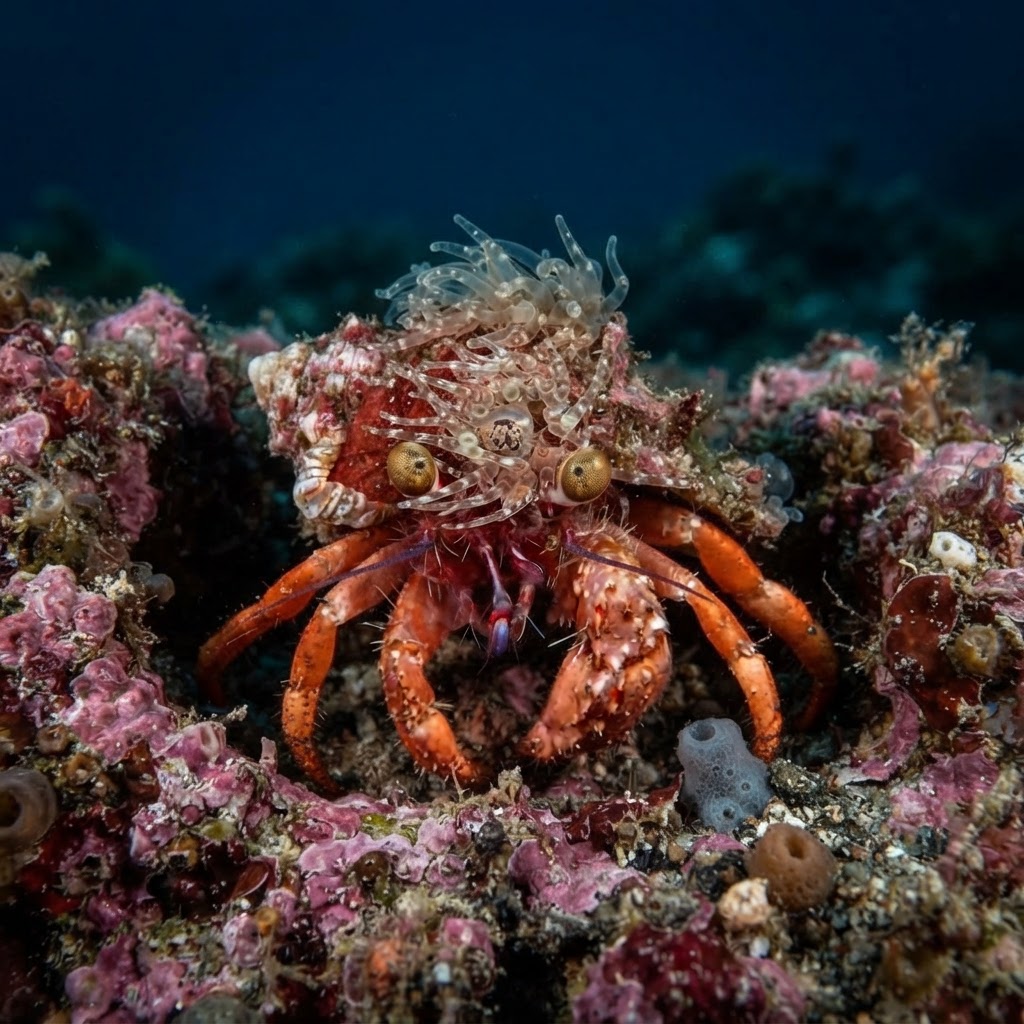
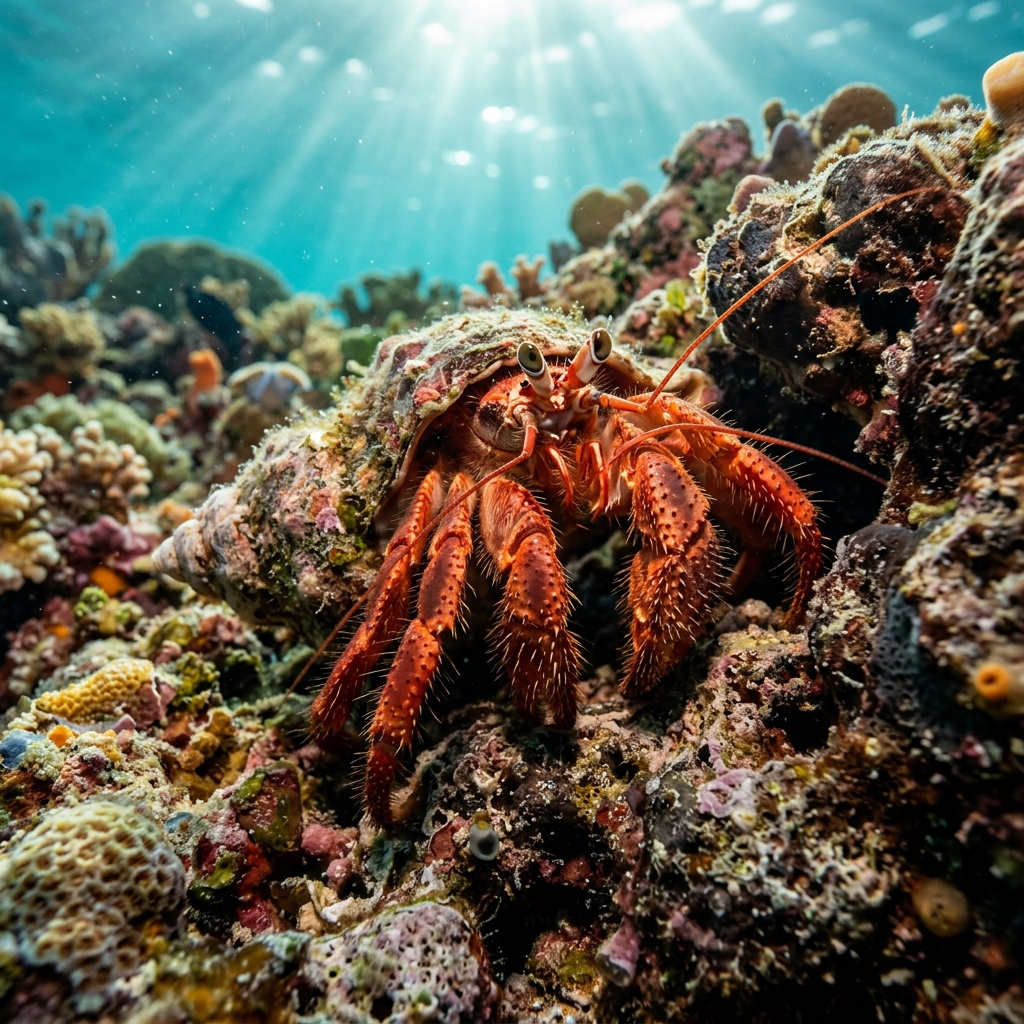
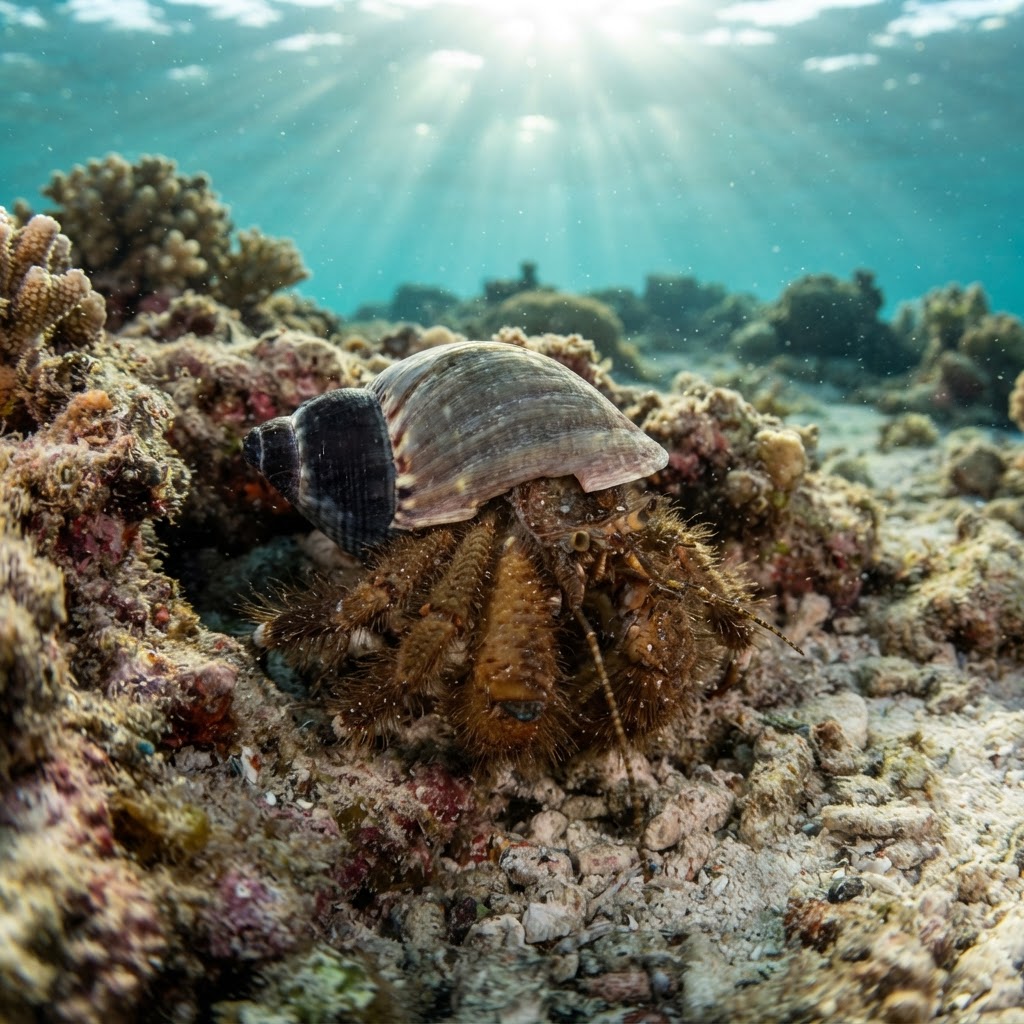
Small hermit crab, usually tucked into a scavenged snail shell, with noticeably bristly (hairy) legs and walking legs banded in white and dark brown or blue-green. Look for white-tipped claws and antennae ringed in white and rust, which is the quickest tell against other cold-water hermits sharing the same rubble. Body colour underneath the shell tends toward olive-brown to greenish, but the fuzzy leg texture is the giveaway even at a glance.
Expect to find it picking its way over cobble and shell debris, often at the base of rocks or in eelgrass beds, scavenging for scraps of algae and detritus rather than actively hunting. It is not shy exactly, but it will often withdraw into its borrowed shell if a torch beam or hand gets too close, only to re-emerge and carry on foraging once you back off. Most sightings are low on the reef, right at the substrate, rather than up in the water column or on structure.
Like all hermit crabs it does not grow its own shell, it evicts a snail and upgrades to a bigger borrowed shell as it grows, so the same individual can look quite different in size and shell shape from one dive to the next.
No clear seasonal pattern shows up in the sightings, and with a temperature niche of 7.8 to 13.8 C it stays active in cold Pacific water through the year, so any month works for a look.
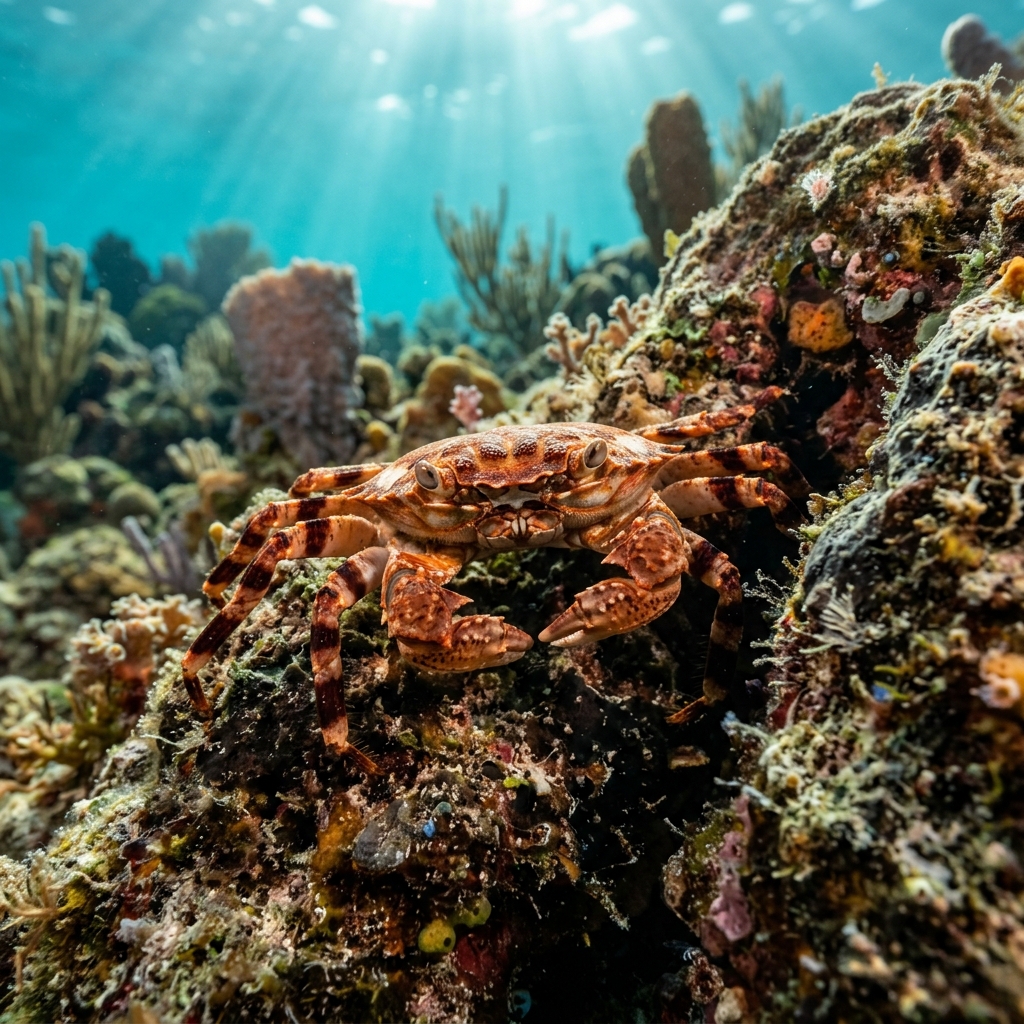
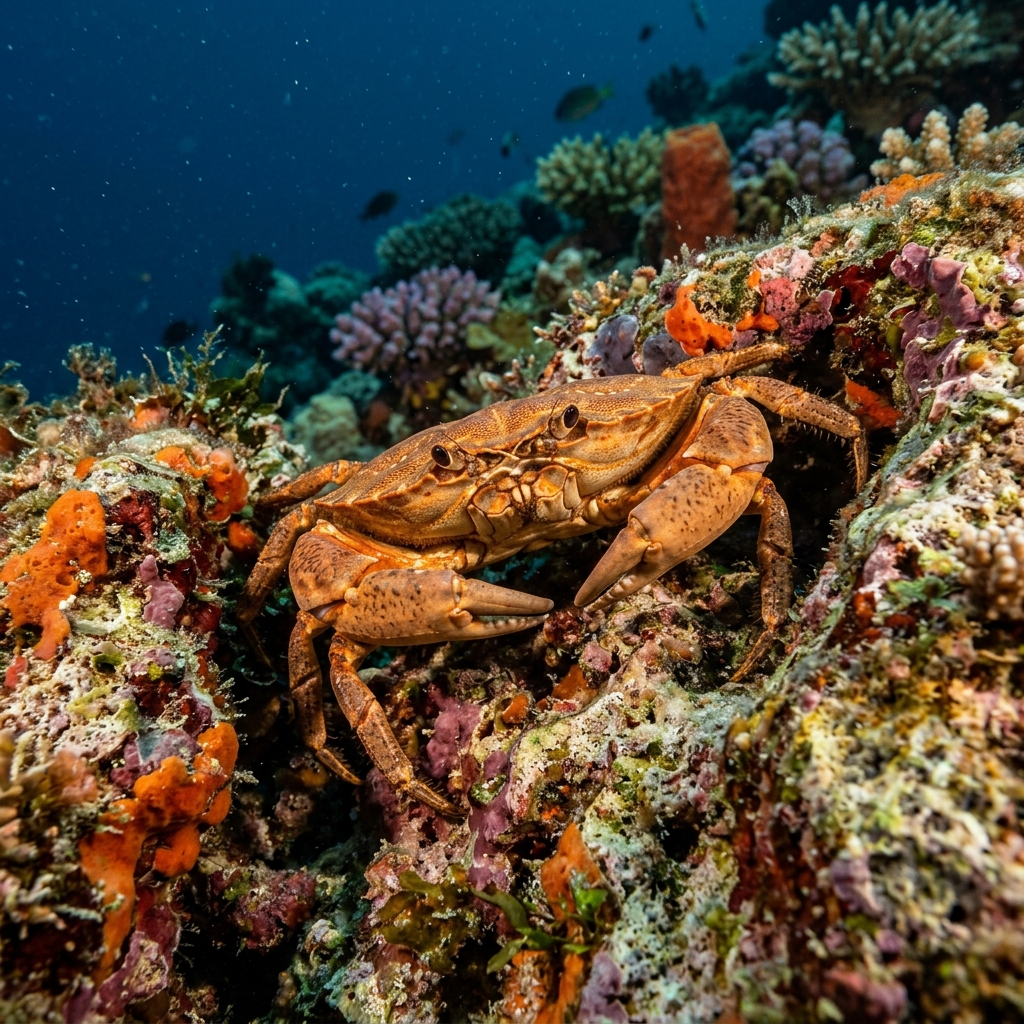
Reef neighbours a diver could mistake it for. Use the identification notes above to tell them apart.
This is a Pacific coast regular, most reliably logged in British Columbia, Canada, and across the Pacific Northwest in the United States, with a smaller but steady presence in California and Alaska. Divers doing cold-water rubble, eelgrass, and rocky reef sites in these regions should expect to find it tucked among shells and cobble rather than on open sand.
Mapping where Pacific Hairy Hermit Crab is logged…
British Columbia in Canada and the Pacific Northwest in the United States are the strongholds, with additional sightings logged in California and Alaska. It favours cold rocky and rubble-strewn seabeds rather than tropical reef.
There is no strong seasonal signal in the sightings, and it tolerates the cold water of the Pacific Northwest year-round, so divers log it across all months.
Check for bristly, hair-covered legs banded in white and dark tones, white-tipped claws, and antennae ringed in white and rust. It is almost always seen inside a borrowed snail shell rather than exposed.
Exact size data is not available, but like most Pagurus hermit crabs it is a small species, easily overlooked among cobble and shell debris unless you are looking closely.
No. It is a small, harmless scavenger that will simply withdraw into its shell if disturbed rather than pose any threat to divers.
Site and sighting data is aggregated from diver logs, iNaturalist and GBIF. For taxonomy and conservation status:
European Green Crab
2,469 sites