Hapalogaster mertensii
Cold-water find in the Pacific Northwest and Alaska, seen year-round in 5.6 to 11.6C water. Uncommon but worth the search.
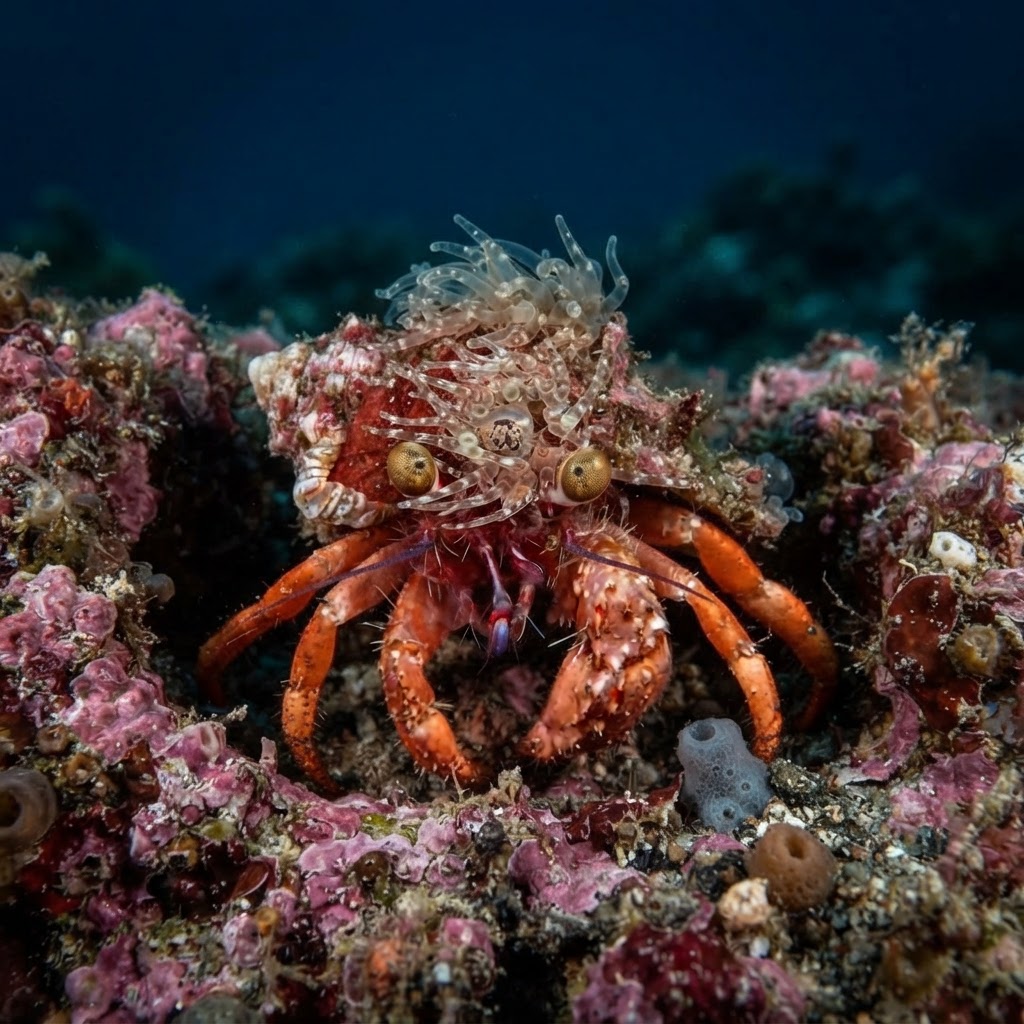
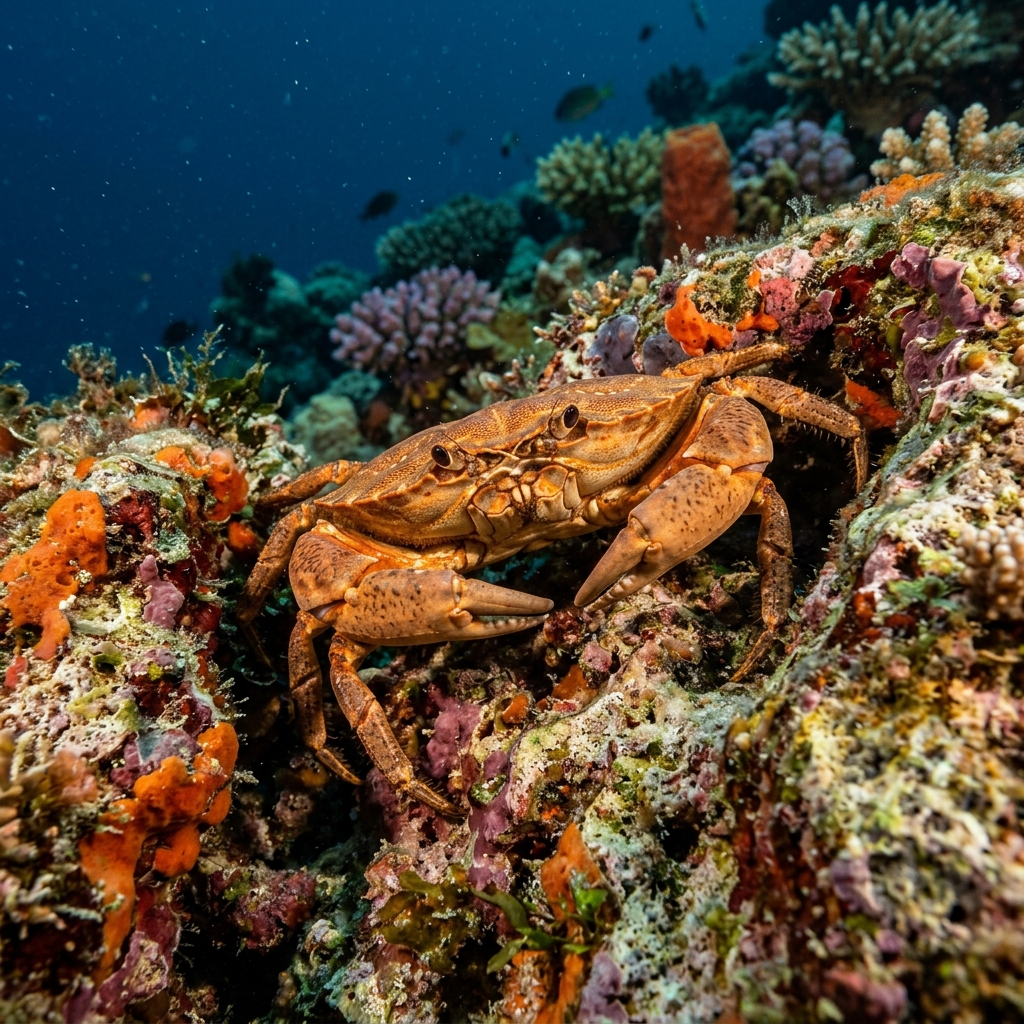
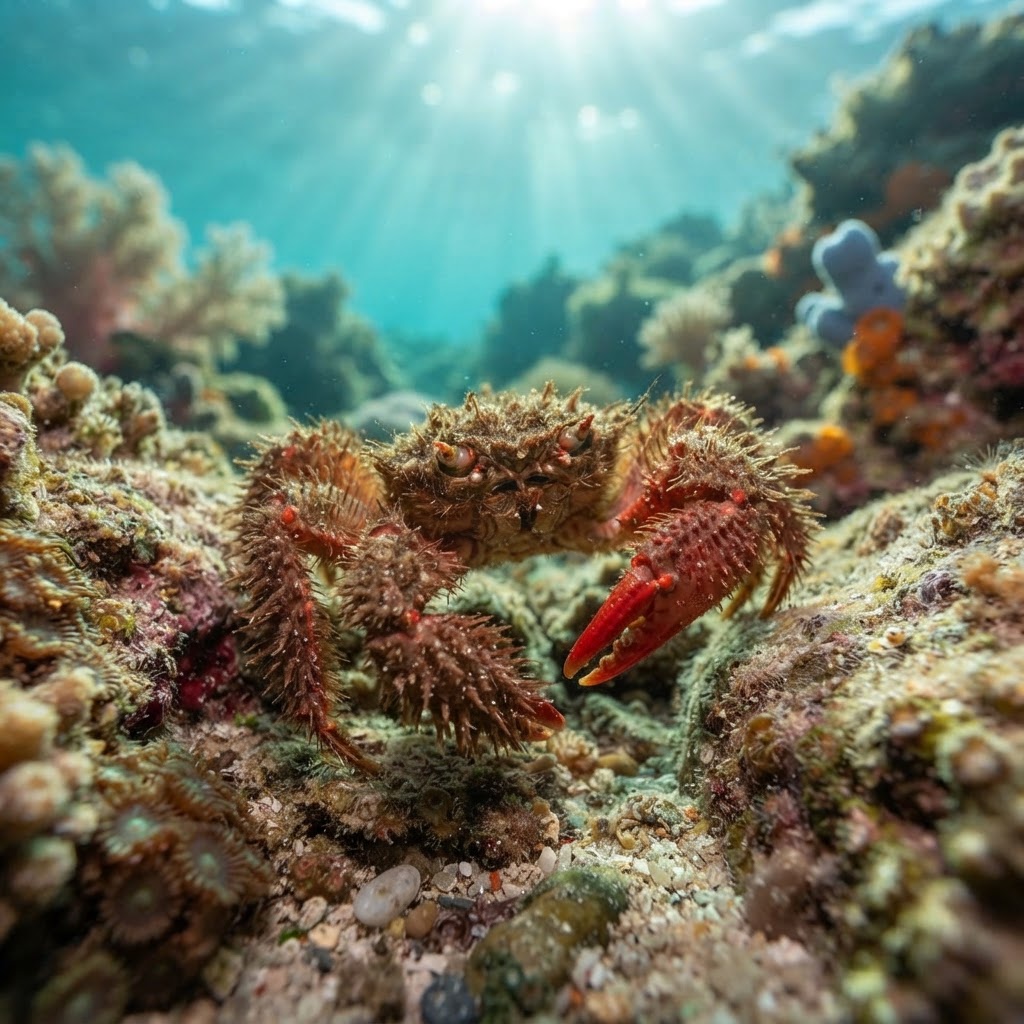
Small, squat crab with a rounded, bristly carapace covered in fine hair-like setae that trap silt and give it a shaggy, camouflaged look. Colouring runs brown to reddish, blending it into the rocky, encrusted surfaces it clings to. It sits low and tucked against rock rather than out in the open, which is often the bigger giveaway than the shell itself.
Found tucked into crevices and against rocky, invertebrate-covered surfaces rather than out in the open water column. It moves slowly and relies on its hairy, silt-catching shell to stay unnoticed rather than fleeing when divers approach. Look for it during slow, close-focus reef scans rather than mid-water swims, since it's easy to swim right past.
The bristly setae covering its shell aren't just texture, they trap sediment and debris, turning the crab into a small walking camouflage patch against the rock it sits on.
Sighting data doesn't point to a distinct season, and with a water-temperature niche of 5.6 to 11.6C matching these cold-water regions year-round, it's reasonable to look for it on any dive there, any month.
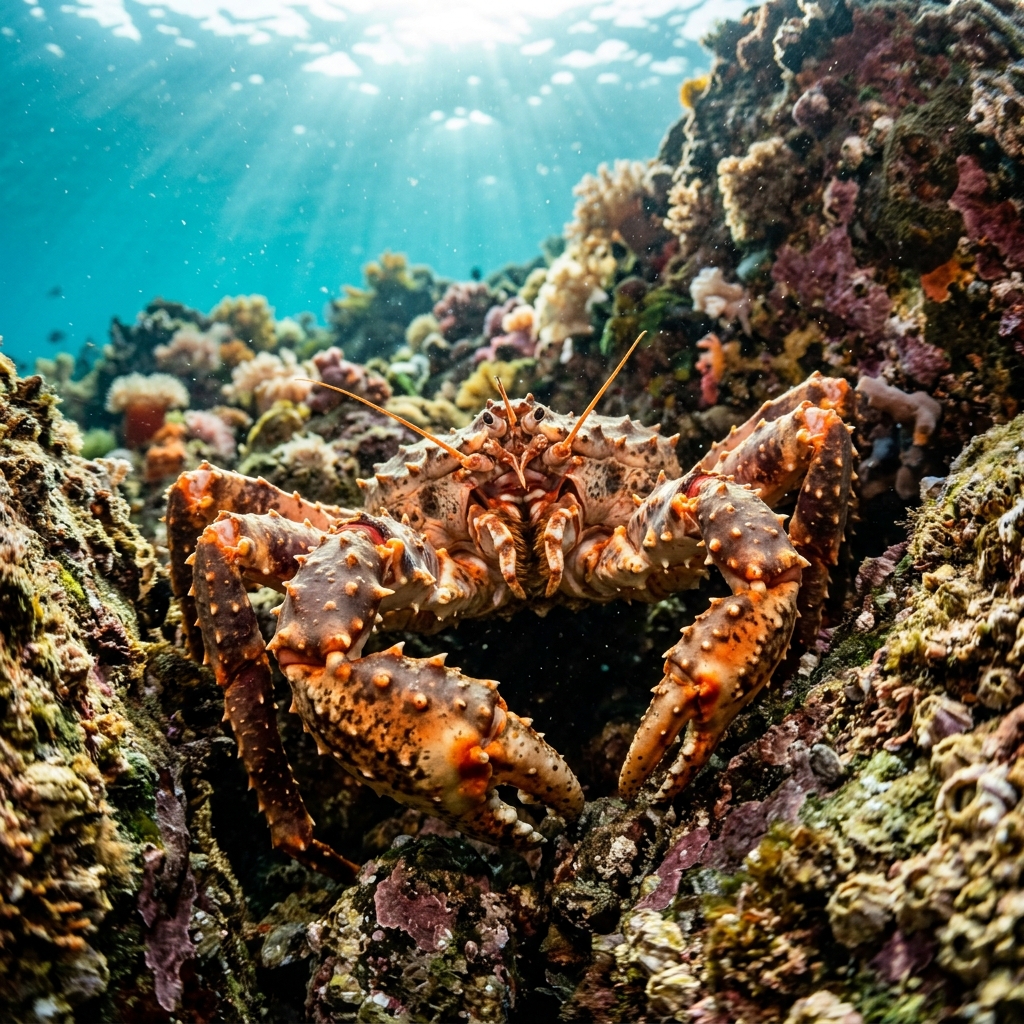
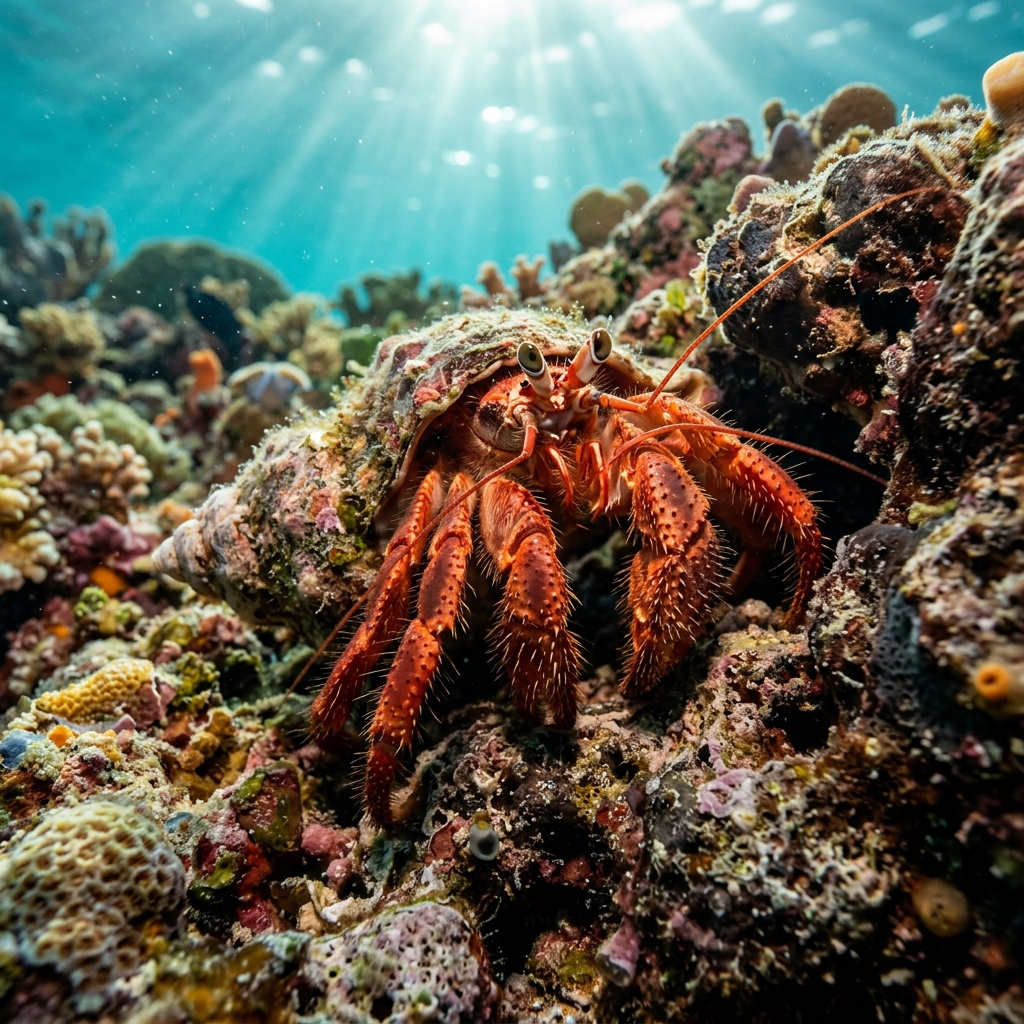
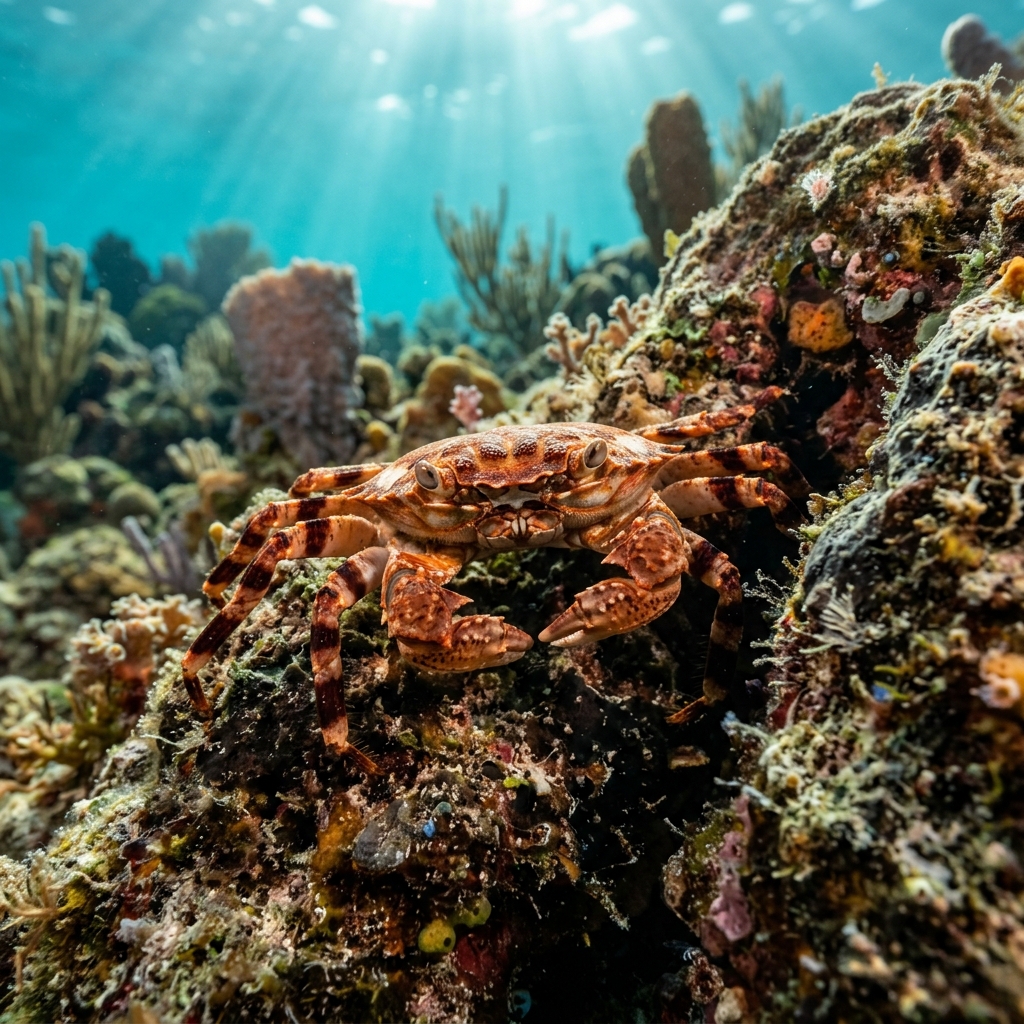
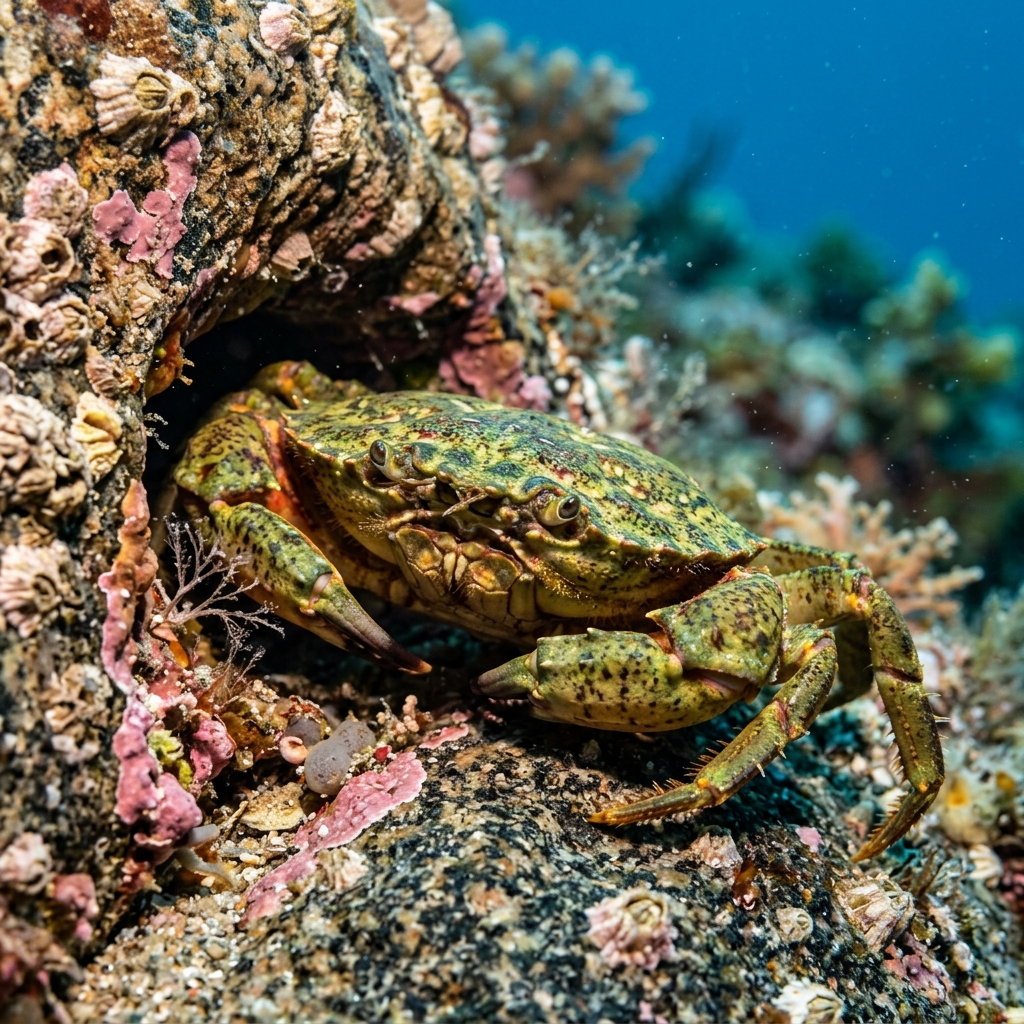
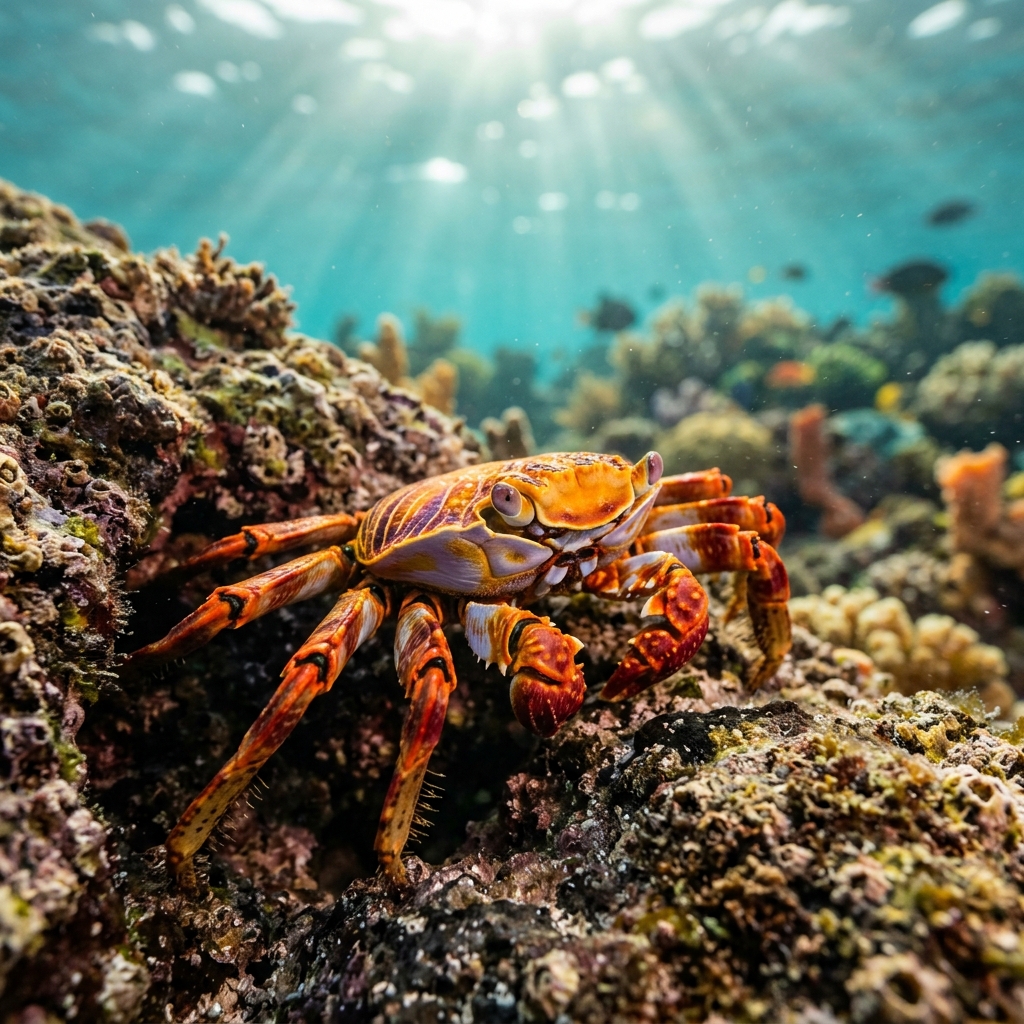
Reef neighbours a diver could mistake it for. Use the identification notes above to tell them apart.
This is a cold-water Pacific species, most logged in the Pacific Northwest and Alaska in the United States, with a further presence in British Columbia, Canada. Divers searching rocky reefs and wall dives in these regions have the best odds, though sightings across all known sites lean towards uncommon to rare.
Mapping where Hairy Crab is logged…
Best known from the Pacific Northwest and Alaska in the United States, with additional sightings in British Columbia, Canada. It's a cold-water rocky-reef species rather than a tropical one.
There's no clear seasonal pattern in the sighting data, and its temperature niche of 5.6 to 11.6C is present in its range year-round, so it can turn up on any dive in those regions regardless of month.
Look for a small, squat crab with a shaggy, bristle-covered shell in brown to reddish tones, usually tucked tight against rock rather than exposed. The hairy texture, which often traps silt, is the main visual cue.
Exact size data isn't available, but it's a small crab typical of the lithodid family, easy to overlook against rocky, encrusted reef surfaces unless you're looking closely.
No, they pose no danger to divers. They're small, slow-moving, and rely on camouflage rather than any defensive threat.
Its shell is covered in fine, hair-like setae that trap sediment and debris, effectively camouflaging it against the rocky surfaces it clings to.
Site and sighting data is aggregated from diver logs, iNaturalist and GBIF. For taxonomy and conservation status:
European Green Crab
2,469 sites