Labrisomus nuchipinnis
Chunky reef blenny with tufted eyebrows, most reliably spotted in Tenerife and Saint Croix in warm 24-28C shallows year-round.
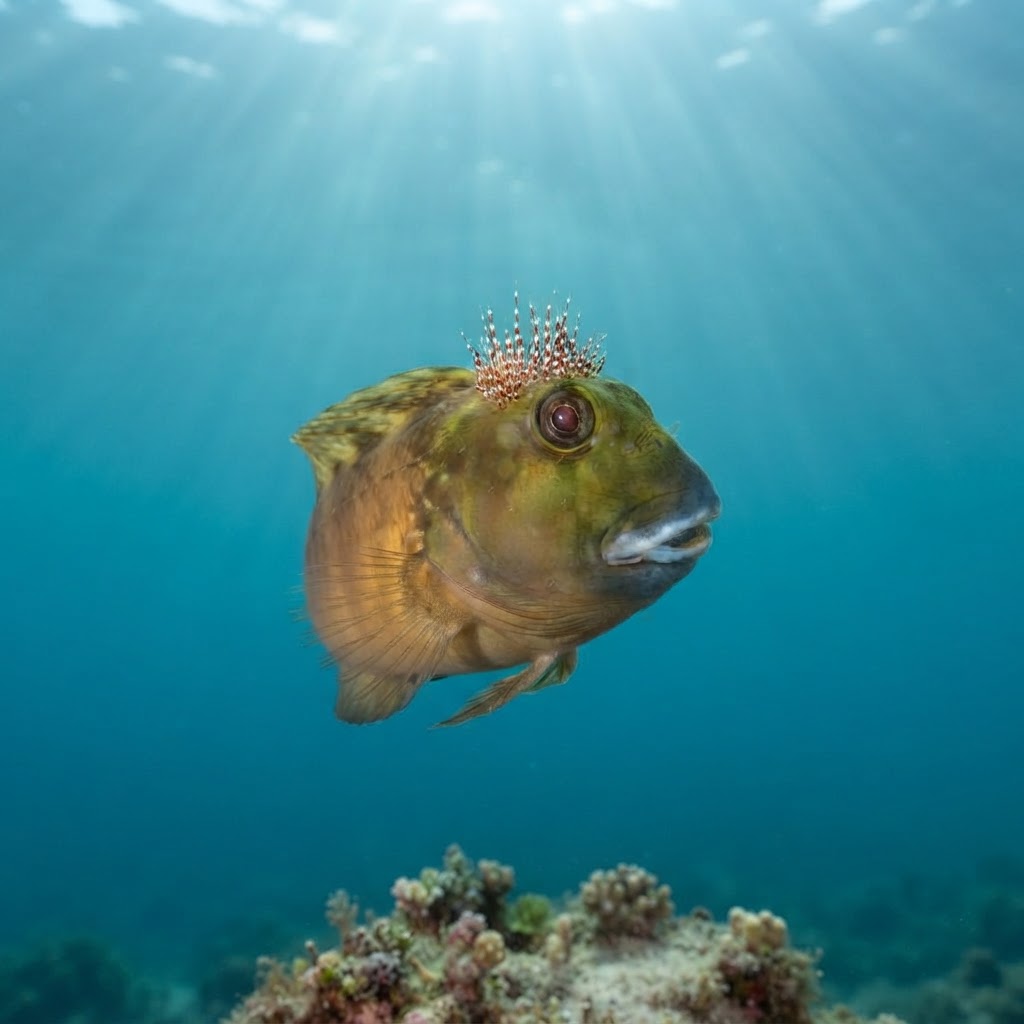
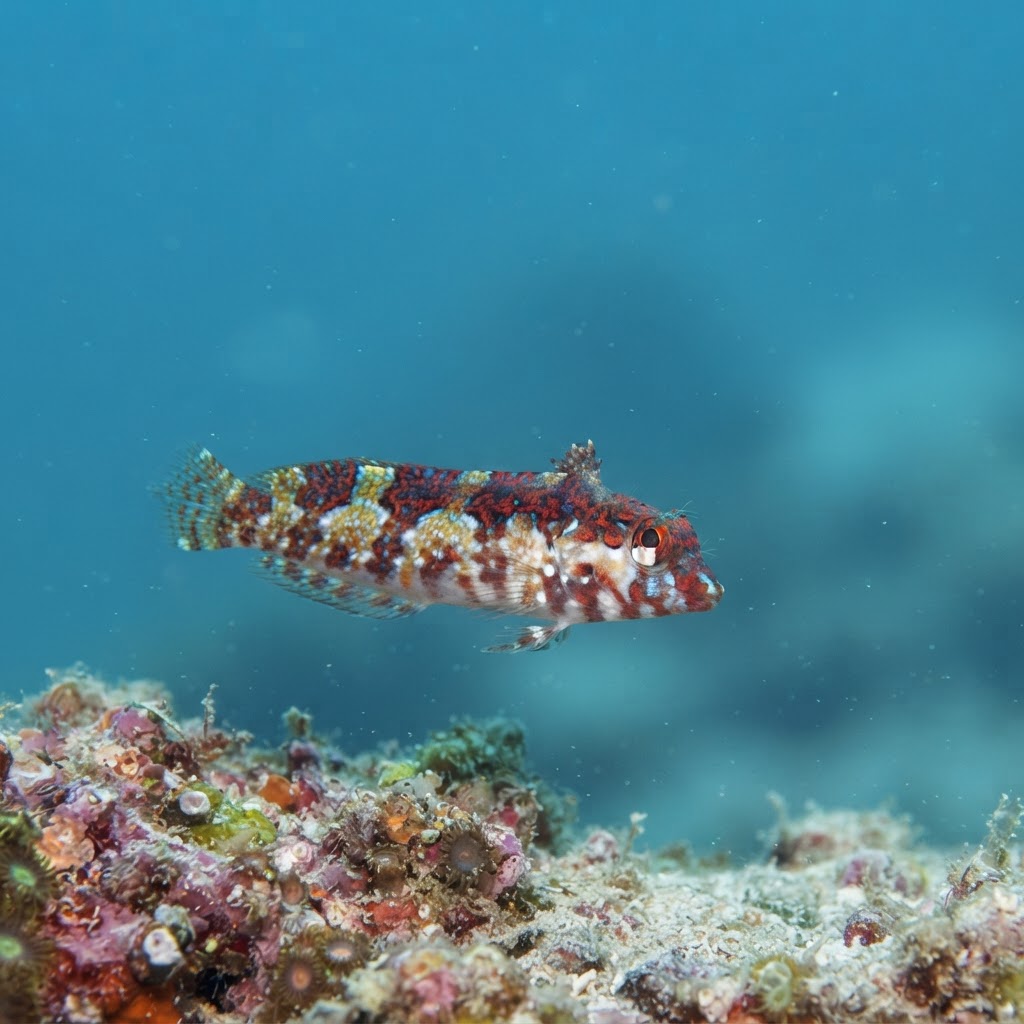
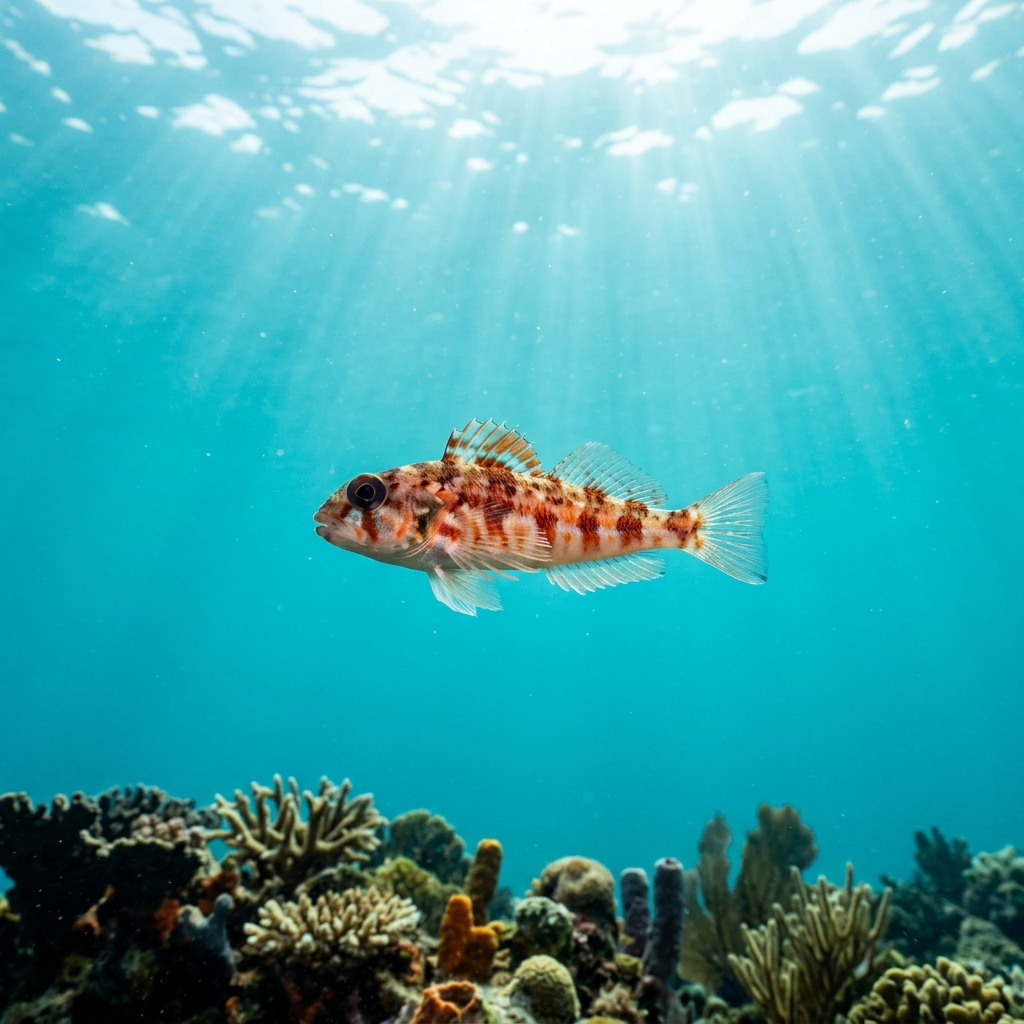
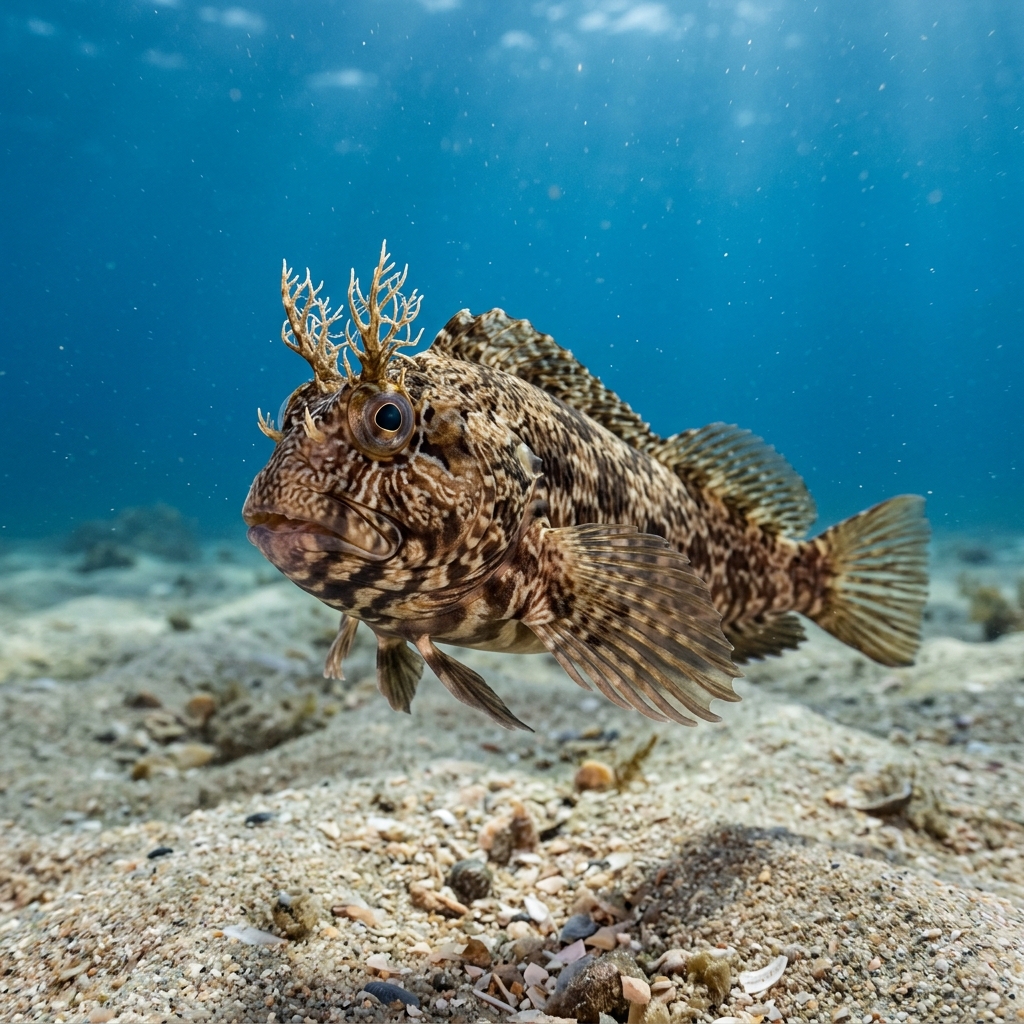
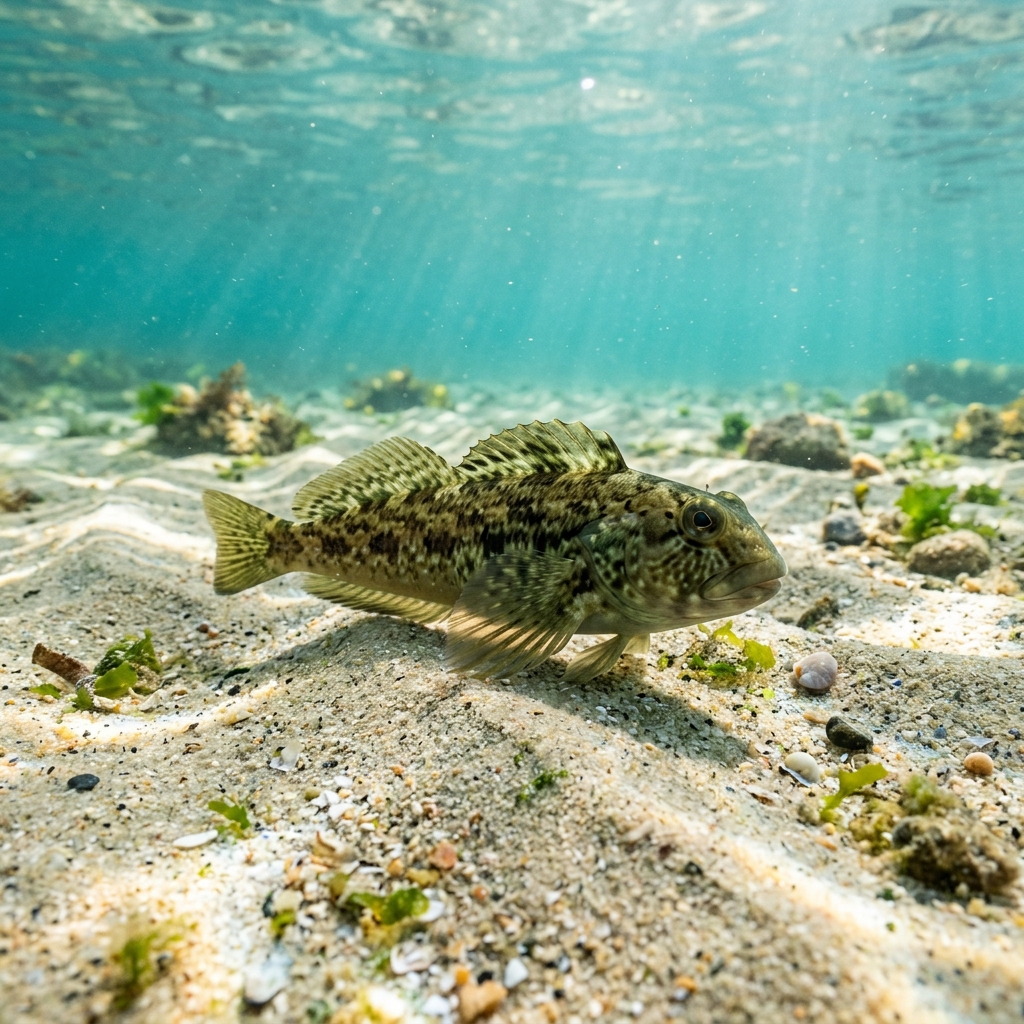
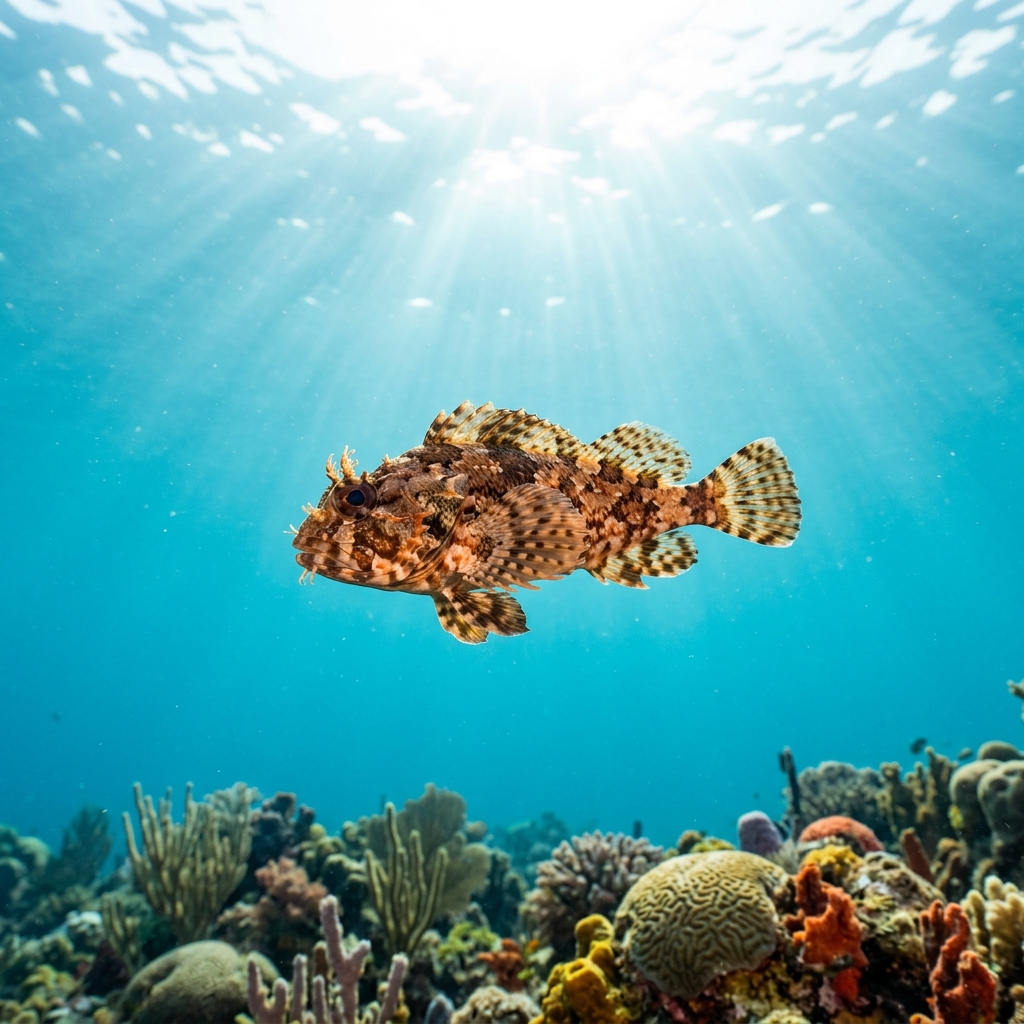
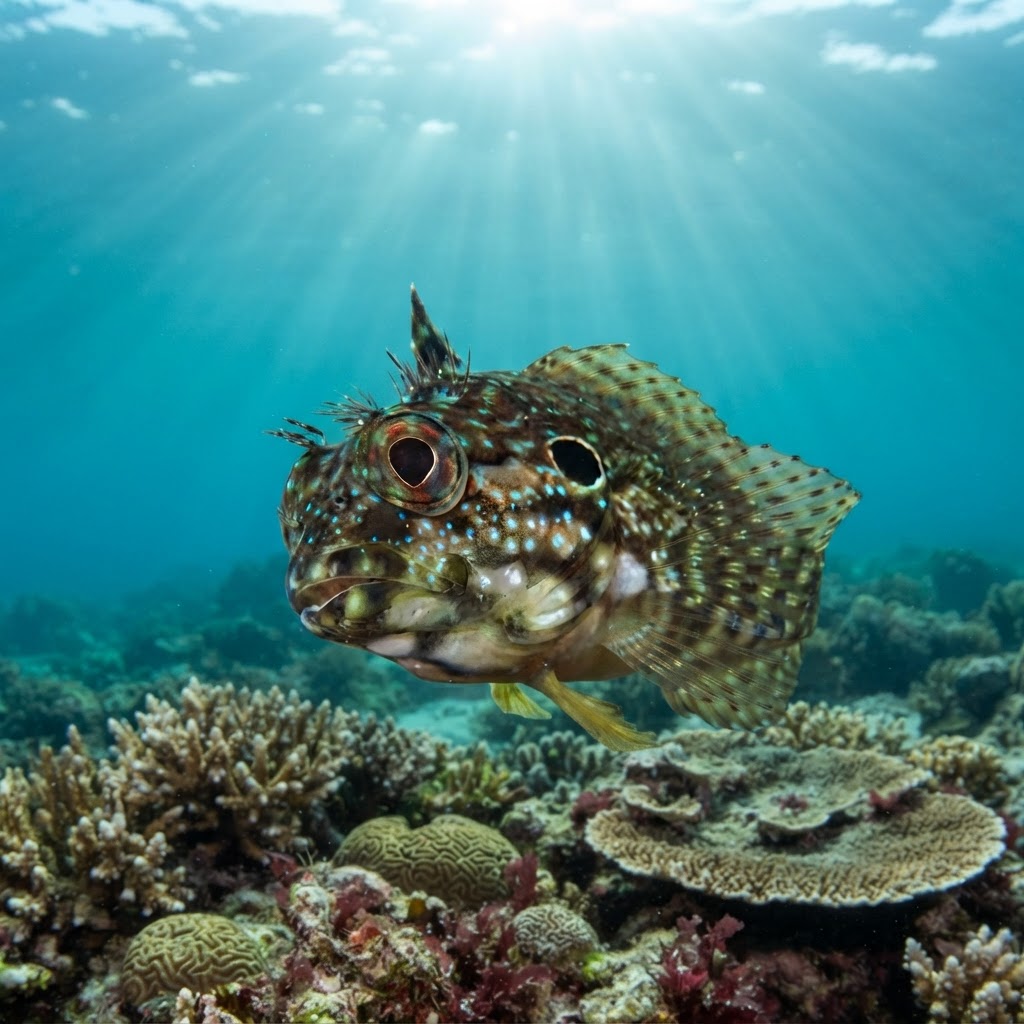
Chunky, thick-bodied blenny to about 16 cm, mottled brown to olive-grey with darker blotches that break up its outline against rock and rubble. The giveaway is the tuft of branched hair-like growths (cirri) above each eye, giving it a permanently eyebrowed look. It rests propped on its pectoral fins on rock, coral rubble or sand rather than swimming in open water, and its big head and thick lips give it a blunt, almost toad-like profile.
Look for it sitting still on a rock ledge or patch of rubble in shallow water, often no deeper than 10 metres, using its perch to watch for passing prey rather than actively cruising the reef. It tolerates a slow, careful approach reasonably well but will dart into a crevice if you get too close or move quickly. Most logged sightings describe it as uncommon to rare at any given site, so it rewards divers who scan rock and rubble patches closely rather than mid-water.
Those branched tufts above its eyes aren't decorative, they're thought to help break up its silhouette against mottled rock, part of a broader camouflage strategy shared by many blennies that ambush prey from a fixed perch rather than chasing it down.
Sightings run year-round with no clear seasonal peak in the data, which fits its comfort range of roughly 23.6 to 28.1 C, warm enough on these reefs most months. Plan around whichever season suits the destination's diving conditions rather than the blenny itself.
Reef neighbours a diver could mistake it for. Use the identification notes above to tell them apart.
Most commonly logged in the Canary Islands, especially around Tenerife and Lanzarote, with strong numbers also in Cape Verde's Santiago region. In the Caribbean it turns up reliably in Saint Croix (US Virgin Islands) and San Juan, Puerto Rico, plus scattered sightings along the Florida and Texas coasts.
Mapping where Hairy Blenny is logged…
The strongest sightings come from the Canary Islands, particularly Tenerife and Lanzarote, and from Cape Verde's Santiago region. In the Caribbean, Saint Croix in the US Virgin Islands and San Juan in Puerto Rico are the most reliable spots.
There's no strong season in the sighting data, it shows up year-round on reefs where the water sits between about 24 and 28C. Any time you're diving its usual regions, keep an eye on rocky, rubble-strewn patches.
Look for a stocky brown to olive blenny around 16 cm long, perched on rock or rubble rather than swimming, with tufted growths above each eye that look like eyebrows. Its mottled blotchy pattern and blunt-lipped face help separate it from smoother, plainer blennies nearby.
They typically reach around 16 cm in length, making them a mid-sized reef blenny, bulkier than many of the small blennies divers spot tucked into crevices.
No, they pose no threat to divers. They're a small, sedentary reef fish that will simply retreat into a crevice if approached too closely.
Site and sighting data is aggregated from diver logs, iNaturalist and GBIF. For taxonomy and conservation status:
Rusty Blenny
2,605 sites