Gymnothorax mordax
Spot California Moray along the US Pacific Coast and northern Mexico in cool 15-21°C water. Best sightings run July to September.
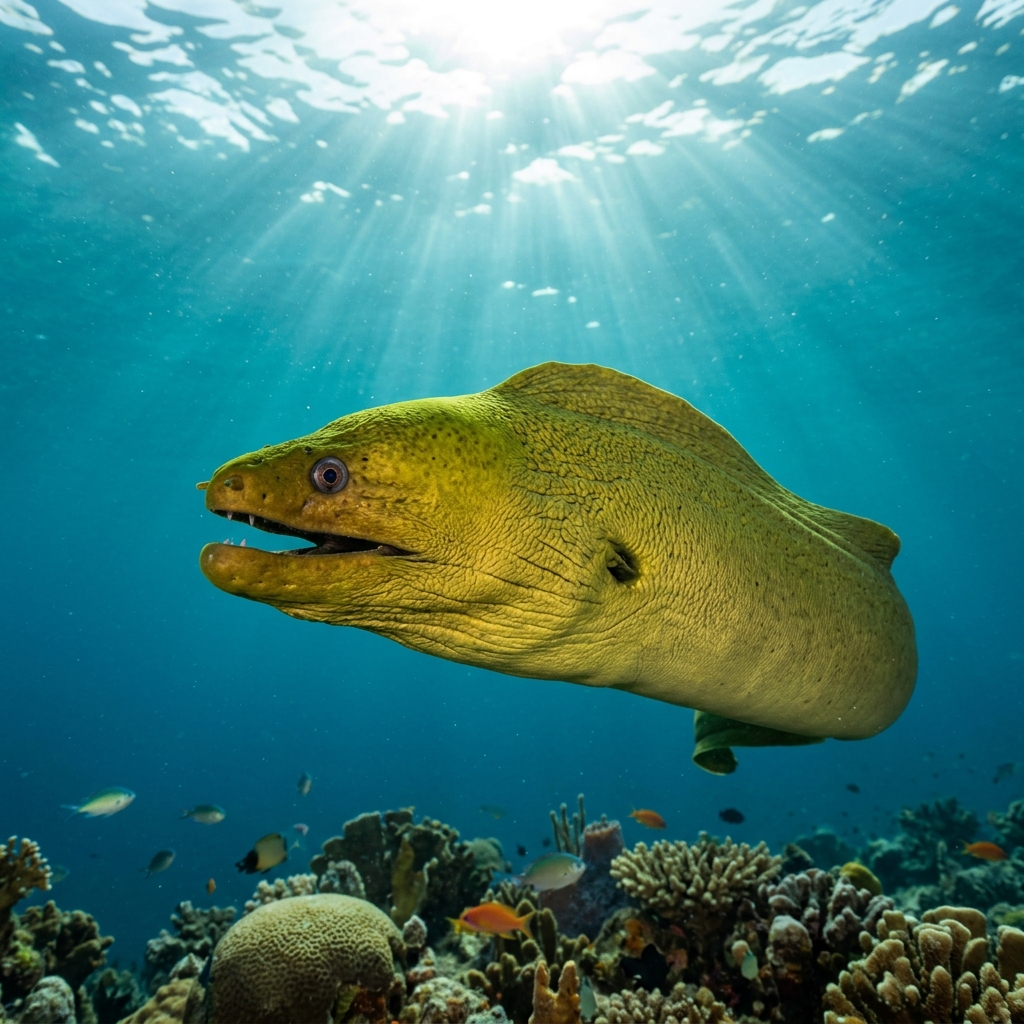
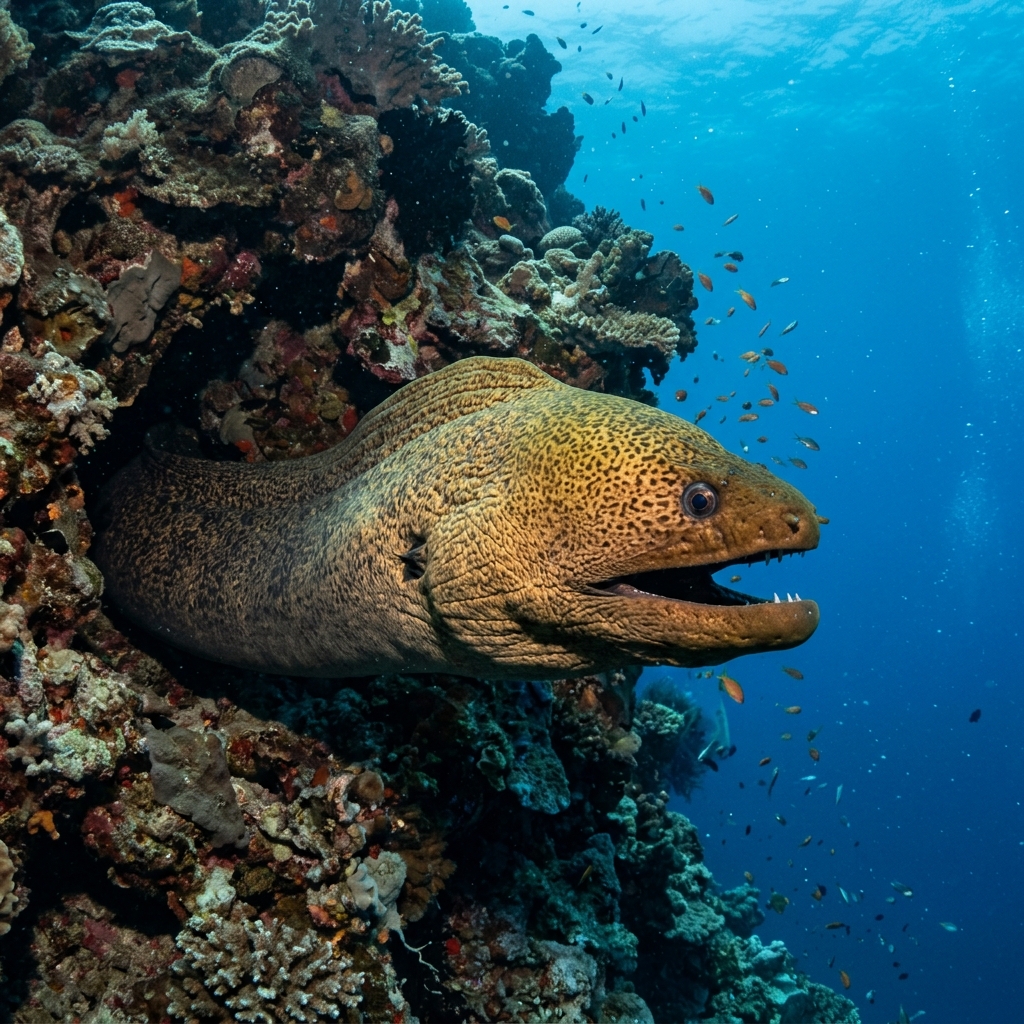
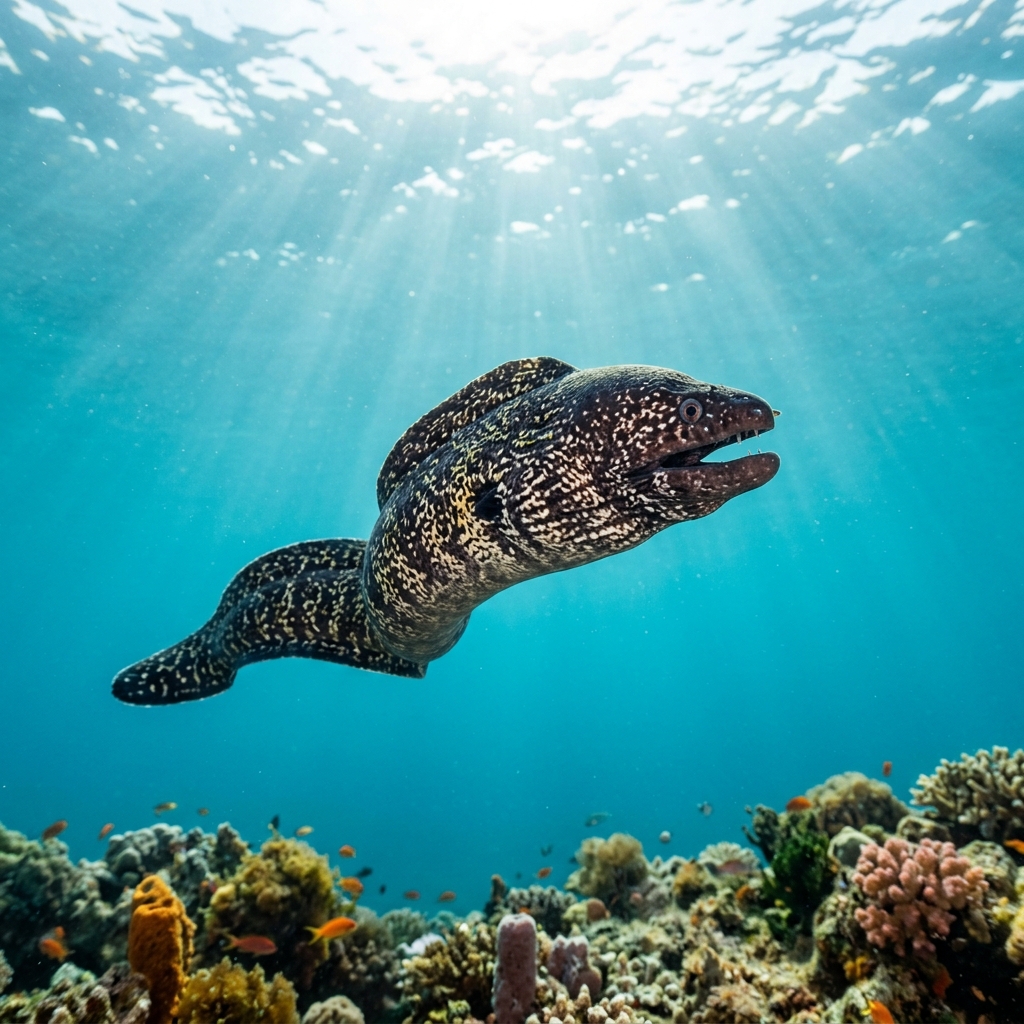
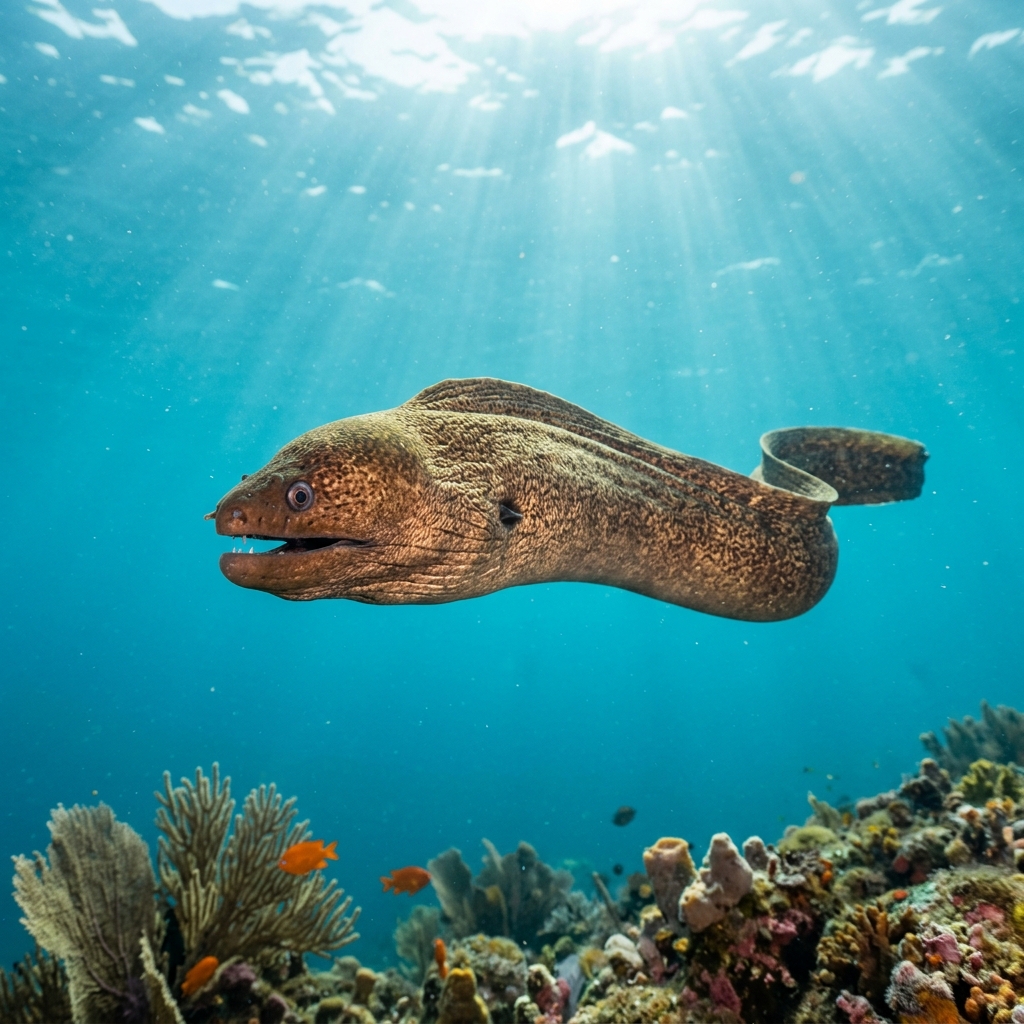
A robust, muscular eel with brown to olive-green colouration and a subtly mottled or marbled pattern that helps it blend into rocky reef walls. The skin is scaleless and the body tapers to a pointed tail, with a continuous dorsal fin running from behind the head to the tail tip. Look for the characteristically blunt snout and large, fixed-open jaws lined with visible teeth. In the cool, low-visibility kelp and rocky reef environments where it lives, that mottled brown body against dark rock is the key field mark.
California Morays spend most of their time wedged into rocky crevices or lurking beneath kelp reef ledges with just their heads protruding, the classic moray posture for ambush hunting. The open-mouthed gaping that can look threatening is simply how they ventilate their gills, not aggression. Divers who move slowly and avoid reaching into crevices will generally find them indifferent to observation.
Like all morays, California Morays have a second set of jaws, called pharyngeal jaws, hidden in their throat. When they strike prey, these inner jaws shoot forward to grip and drag the catch backward, allowing them to swallow without the suction mechanism most other fish rely on.
Based on recorded sightings, July through September is when California Moray encounters peak in the Northern Hemisphere, likely linked to slightly warmer seasonal water temperatures within its cool 15 to 21°C niche.
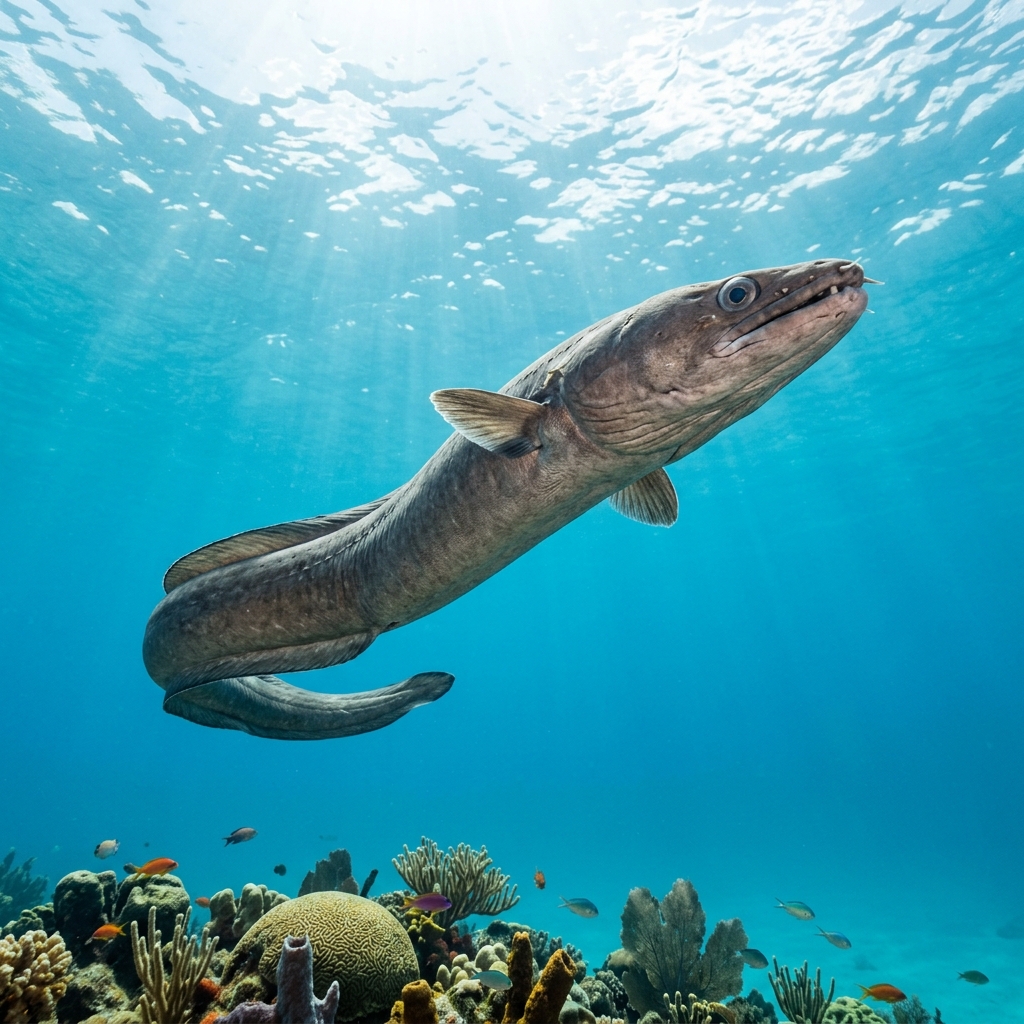
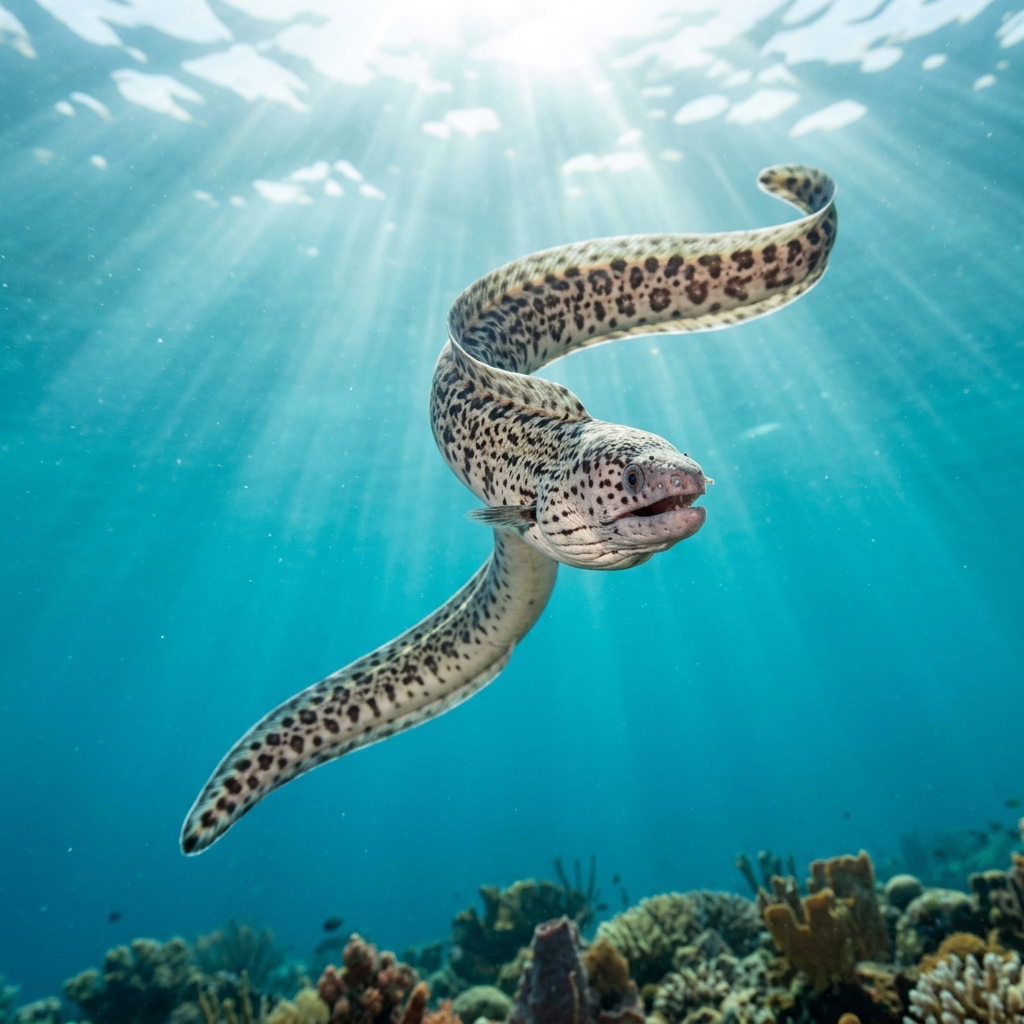
Reef neighbours a diver could mistake it for. Use the identification notes above to tell them apart.
Most commonly logged along the US Pacific Coast, which accounts for the overwhelming majority of recorded sightings and spans rocky reefs and kelp forests from Southern California northward. A secondary population is documented in northern Pacific Mexico, making the Baja California region a worthwhile alternative for divers already in the area.
Mapping where California Moray is logged…
California Moray is strongly concentrated along the US Pacific Coast, with rocky reefs and kelp forest dive sites accounting for the vast majority of logged sightings. Northern Pacific Mexico, including the Baja California area, also holds a documented population worth seeking out.
Recorded encounters peak between July and September in the Northern Hemisphere. This summer window coincides with the most active conditions across its cool-water Pacific range, roughly 15 to 21°C.
Look for a large, muscular, scaleless eel in brown to olive-green with a mottled pattern, a blunt snout, and a continuous fin along the back. It lives in cool, rocky Pacific reef environments and kelp beds, which already narrow the field considerably. The open-mouthed gaping posture is typical of morays generally.
California Moray is not considered dangerous to divers. The open-jaw posture is respiratory, not aggressive. Bites can occur if a diver pushes a hand into a crevice where one is hiding, so avoid doing that and keep a respectful distance.
California Moray is one of the larger eastern Pacific moray species, capable of reaching around 1.5 metres in length, though most individuals encountered on dives are somewhat shorter. Their thick, muscular bodies make them look substantial even at moderate lengths.
Site and sighting data is aggregated from diver logs, iNaturalist and GBIF. For taxonomy and conservation status:
Garden Eel
2,448 sites