Gymnomuraena zebra
Spot the zebra moray's bold white-and-dark banding on reefs in Hawaii, Oman, and Costa Rica. Tips on when and where to find this unmistakable eel.
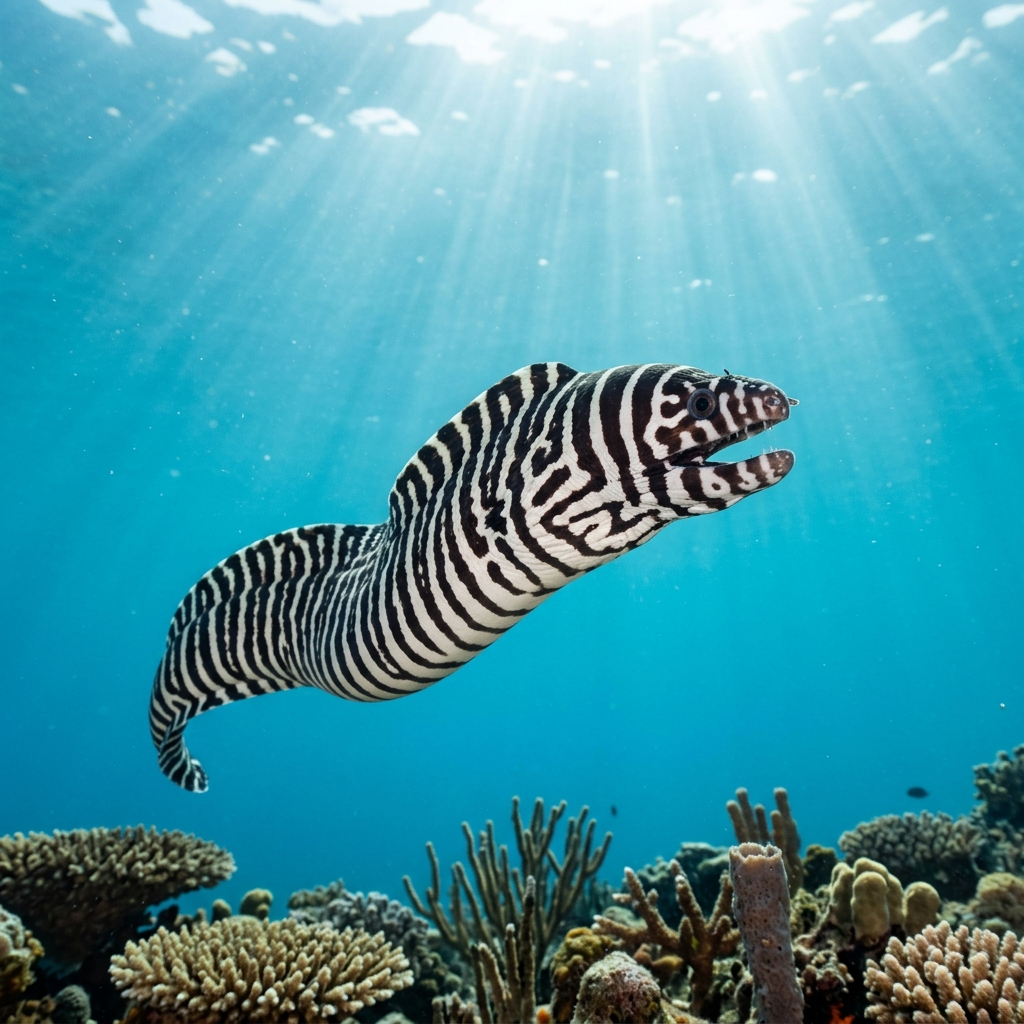
Bold, alternating dark-brown and white bands wrapping the full length of the body make this one of the easiest morays to name on the reef. The bands are narrow and evenly spaced, giving it a look closer to a barcode than the blotchy patterns of most moray relatives. Its head is notably blunt and rounded compared to other morays, and the jaw is lined with short, pebble-like teeth rather than the long fangs you see on the green or giant moray. Juveniles share the same banded pattern as adults, so size is the main difference at any age.
Divers nearly always find zebra morays tucked into reef crevices, rocky ledges, or rubble, with only the head and a coil or two of body visible. They are calm around divers and rarely retreat unless touched or closely cornered. Sightings tend to be daytime encounters where the eel is resting or very slowly scanning nearby rock for crustaceans and sea urchins, which its rounded teeth are purpose-built to crush.
Unlike most morays, the zebra moray specialises almost entirely in hard-shelled prey: crabs, shrimps, and urchins. Its blunt, molar-like teeth are an adaptation for crushing shells rather than gripping fish, which is why it poses almost no threat to divers even at close range.
Northern Hemisphere sightings concentrate from November through April, which aligns with the cooler end of its observed 24 to 29 °C temperature window. In consistently warm tropical destinations like Hawaii and Oman, the species is present year-round, so visiting outside those peak months still gives you a reasonable chance.
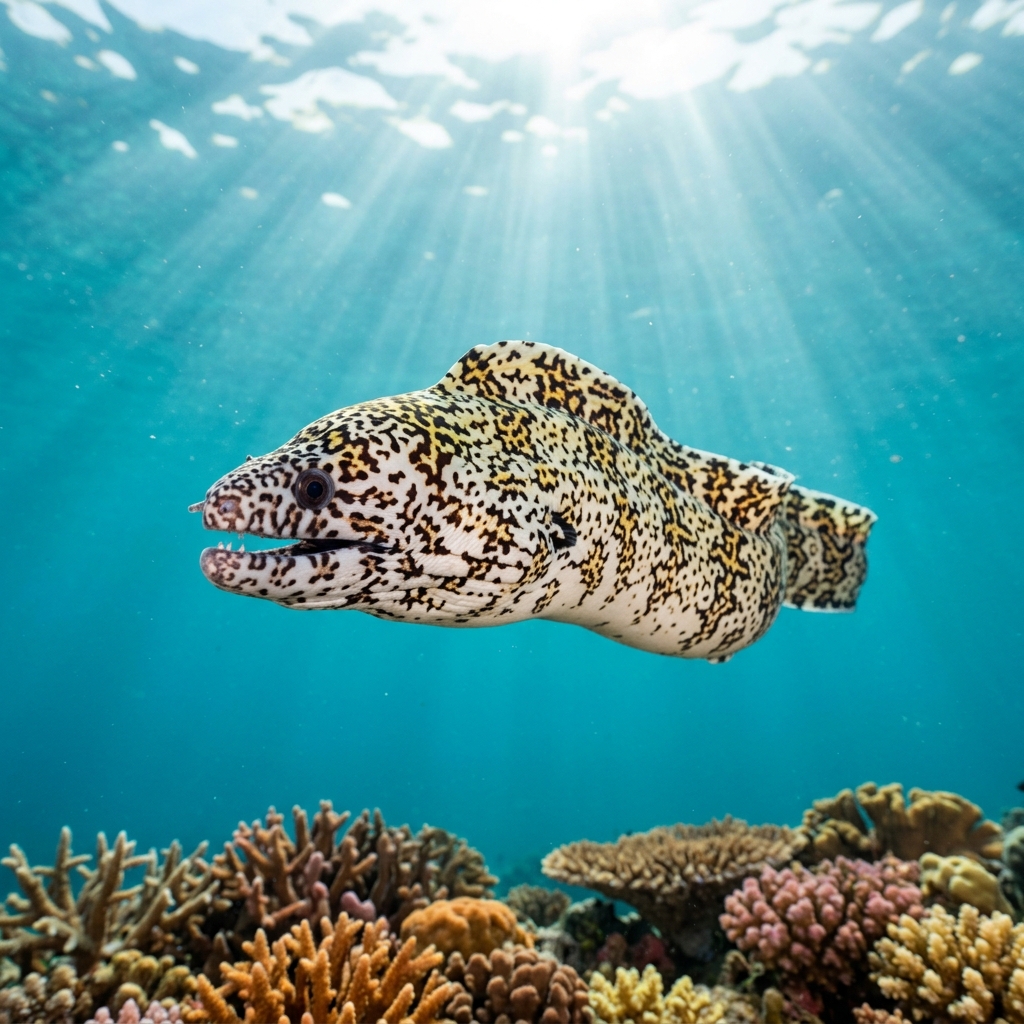
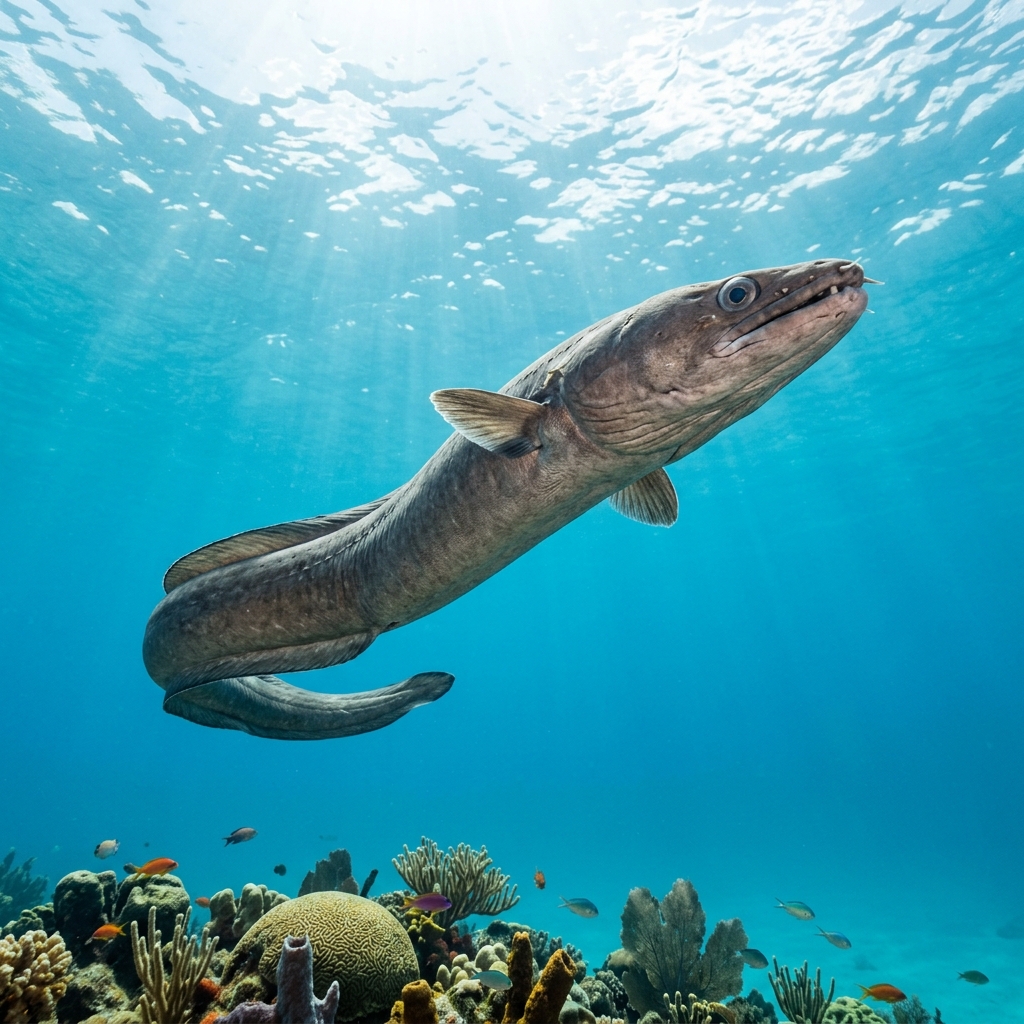
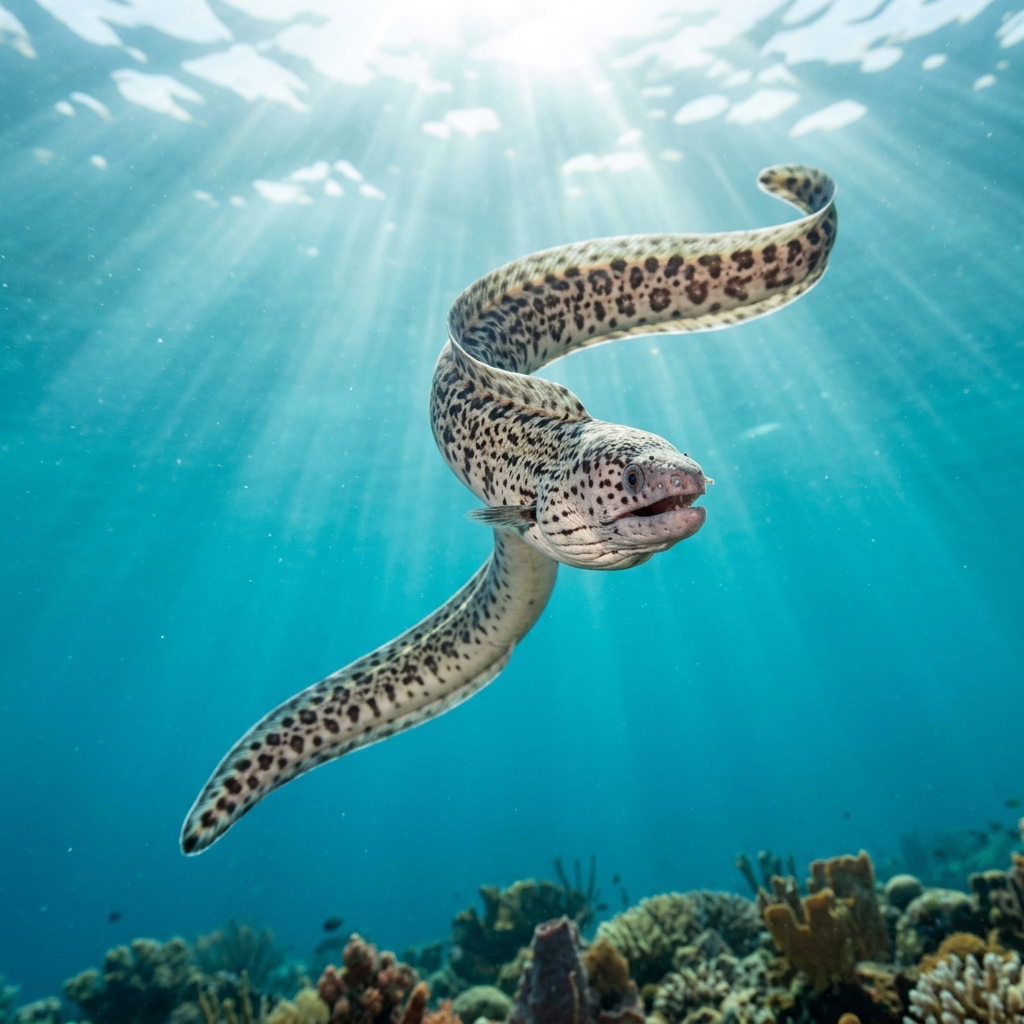
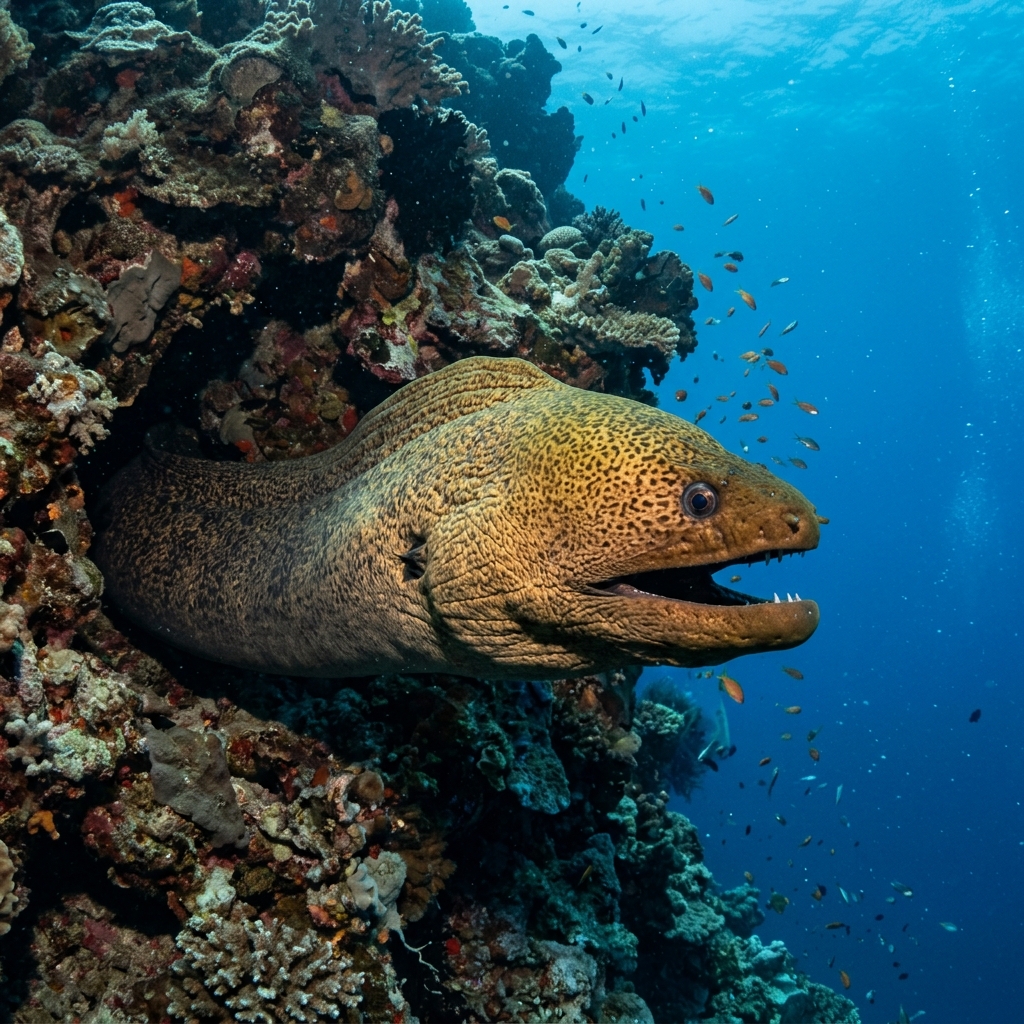
Reef neighbours a diver could mistake it for. Use the identification notes above to tell them apart.
Most commonly logged in Hawaii, which leads all regions by a wide margin, followed by the reefs around Muscat in Oman and the Phuket and Phi Phi islands of Thailand. Strong sightings also come from Costa Rica's Papagayo Gulf and Coiba National Park in Panama, so the Indo-Pacific and the tropical eastern Pacific both offer solid chances.
Mapping where Zebra Moray is logged…
Hawaii is the single most reliable place to find them, with sightings spread across a large number of sites. Oman's Muscat reefs, Thailand's Phuket and Phi Phi area, Costa Rica's Papagayo Gulf, and Panama's Coiba National Park all have solid track records too.
In Northern Hemisphere destinations, sightings peak between November and April. That said, they live comfortably in water from 24 to 29 °C, so on consistently warm tropical reefs like those in Hawaii or Oman you can encounter them at any time of year.
Look for evenly spaced, narrow white and dark-brown bands running the full length of the body, and a distinctly blunt, rounded head. No other commonly dived moray combines both features. The snowflake moray also has pale patterning but shows irregular flower-like blotches rather than clean bands.
No. Zebra morays are considered one of the least threatening morays you can encounter. Their teeth are rounded and adapted for crushing shellfish, not for gripping flesh, and they consistently behave calmly around divers. Simply avoid reaching into crevices where any moray is resting.
Zebra morays typically reach around 1.2 metres in length, though individuals close to 1.5 metres have been recorded. On the reef they often look shorter because much of the body is tucked away inside a crevice.
They feed almost exclusively on hard-shelled invertebrates: crabs, shrimps, and sea urchins. Their blunt, pebble-like teeth are built for crushing shells rather than catching fish, making them unusual among morays and explaining their docile attitude toward divers.
Site and sighting data is aggregated from diver logs, iNaturalist and GBIF. For taxonomy and conservation status:
Garden Eel
2,448 sites