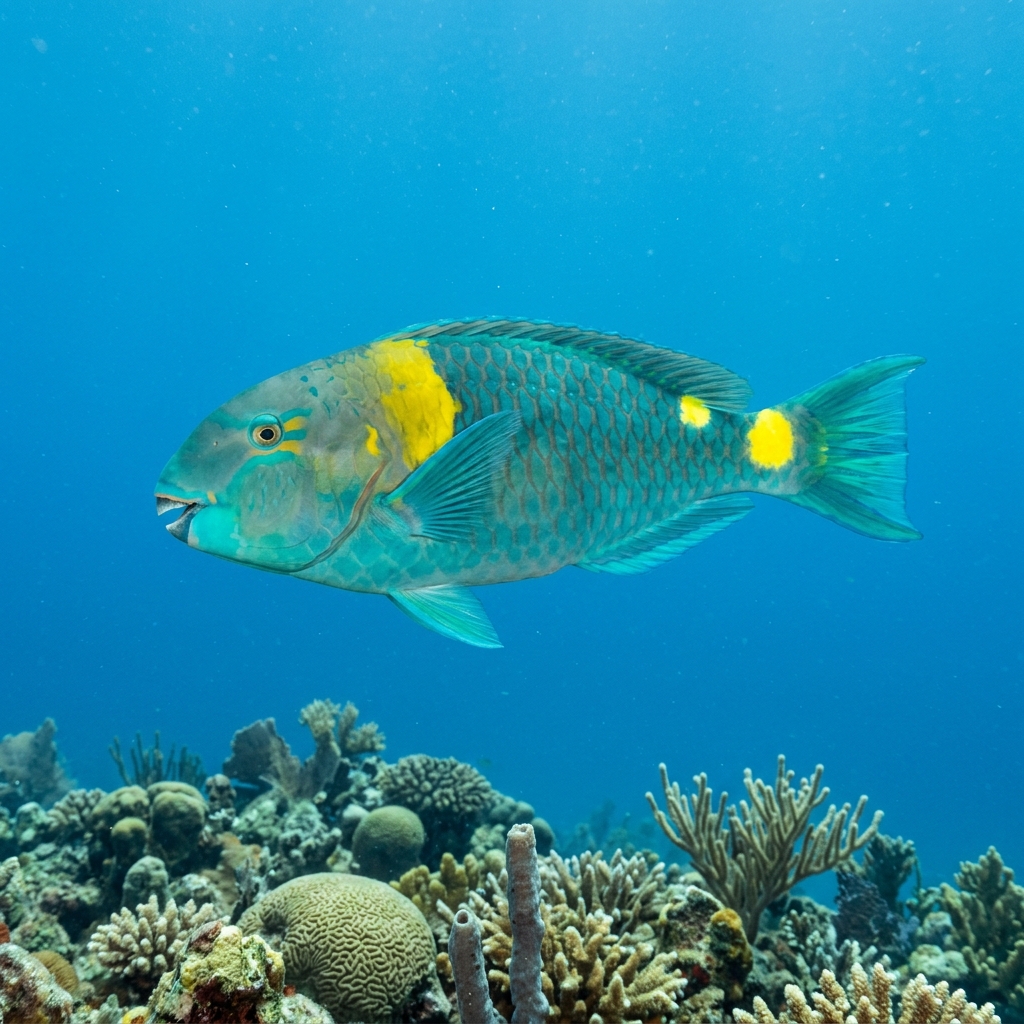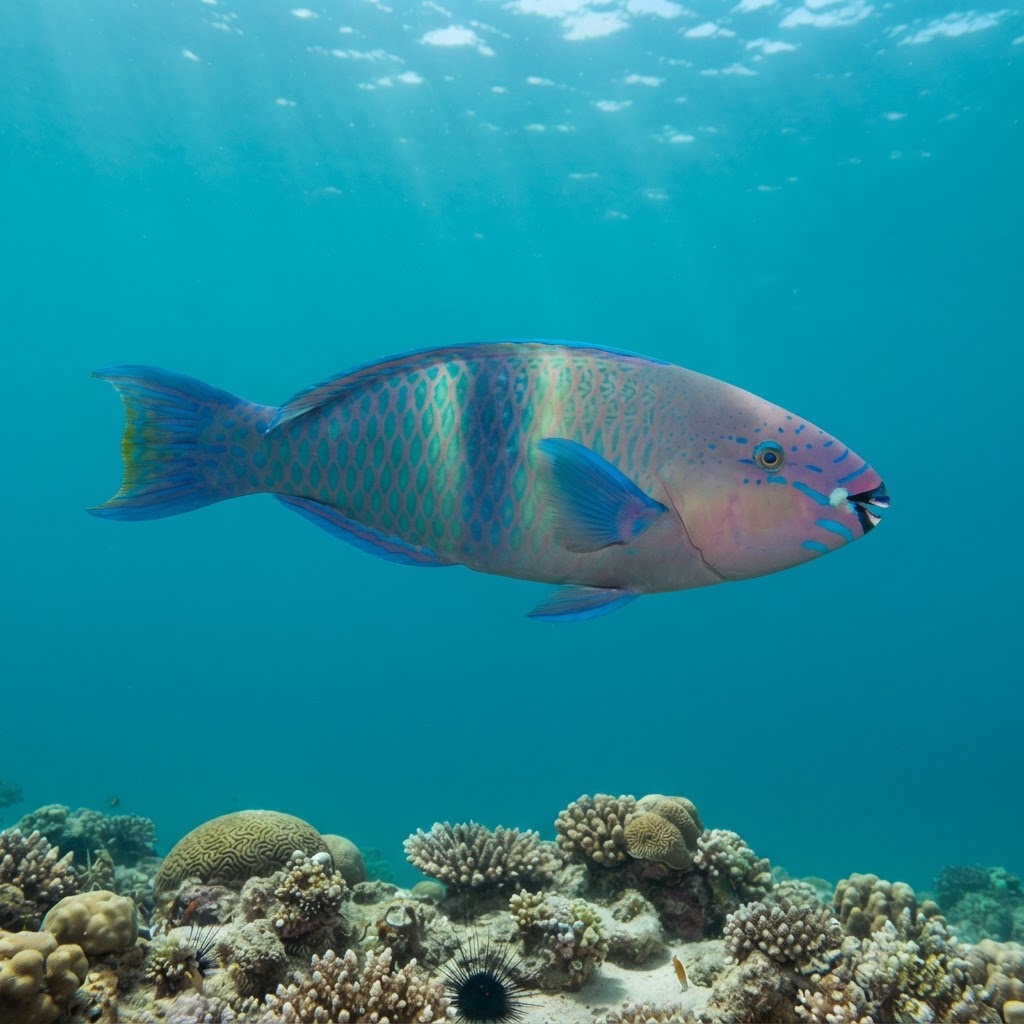
Scarus persicus
Common on reefs around the Daymaniyat Islands and Muscat, this Gulf parrotfish grazes coral year-round in 25-29C water.
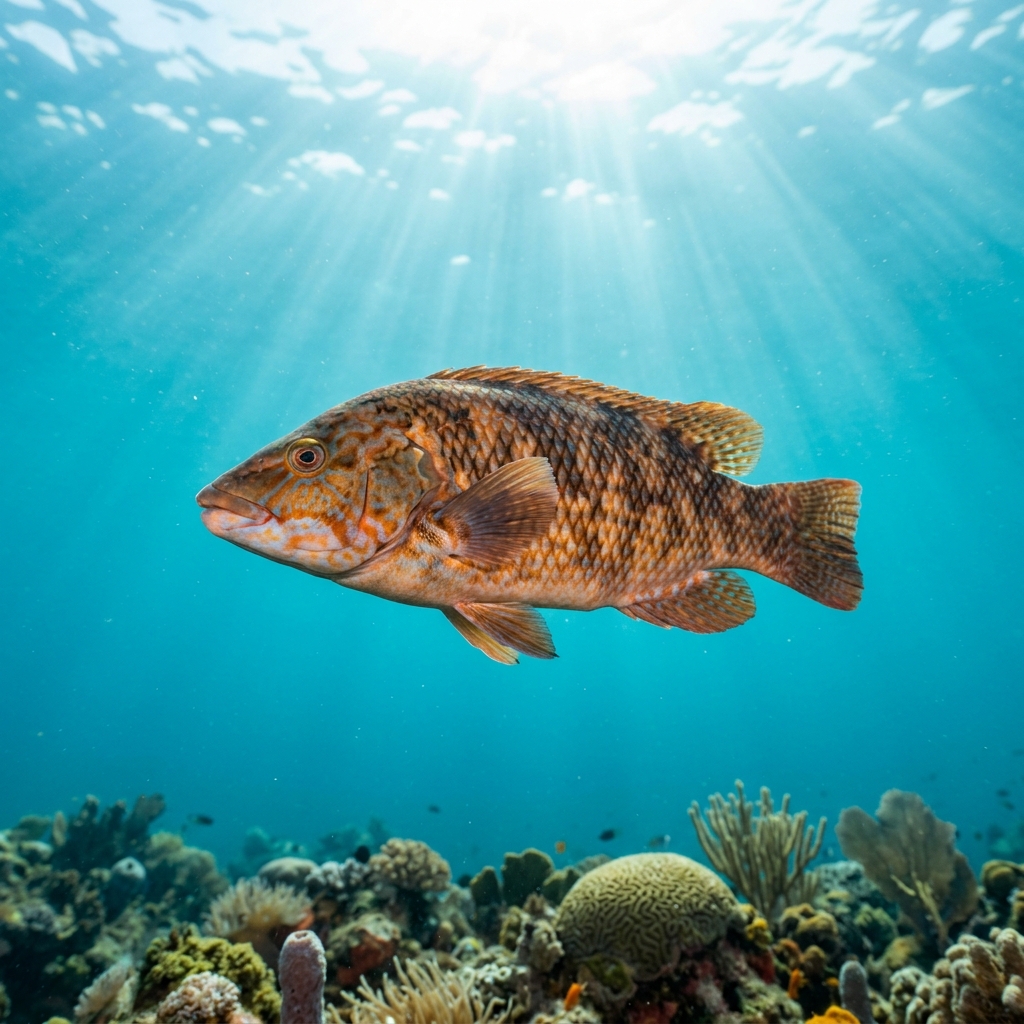
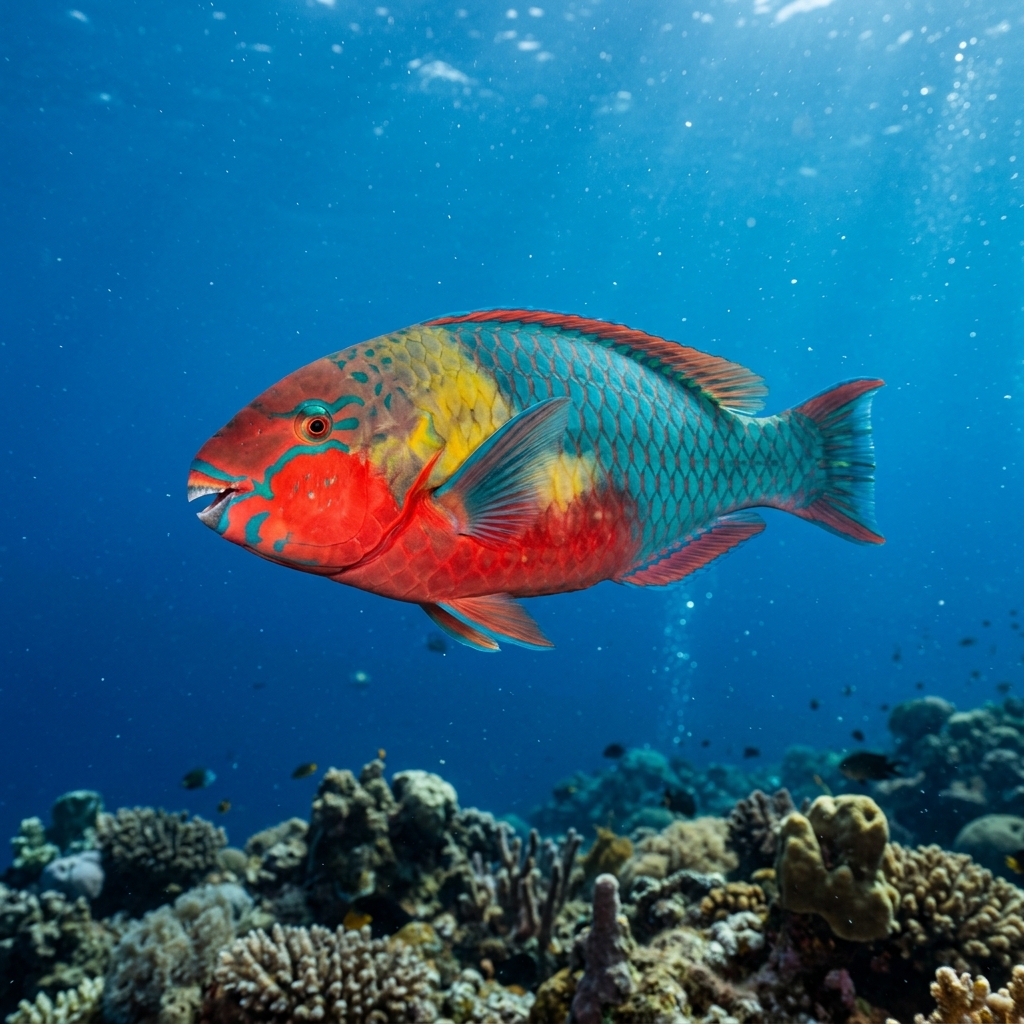
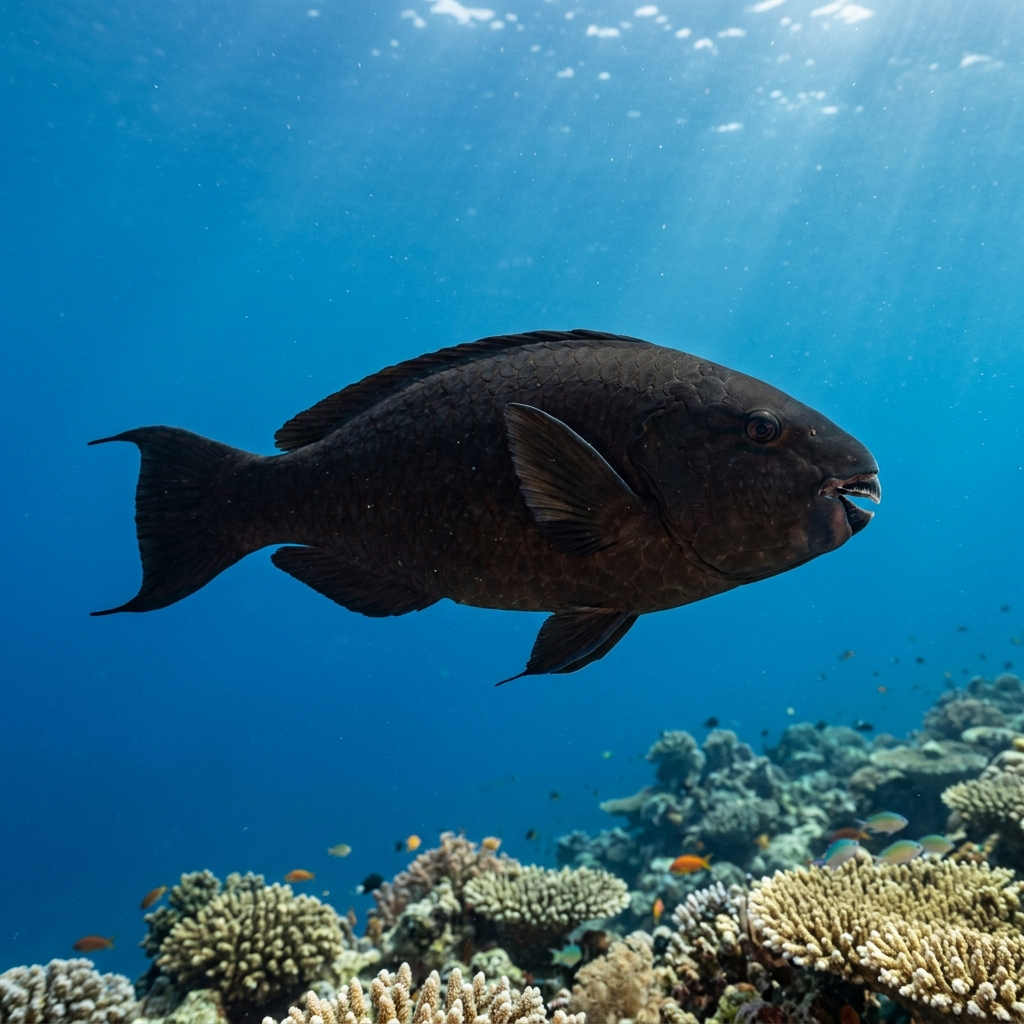
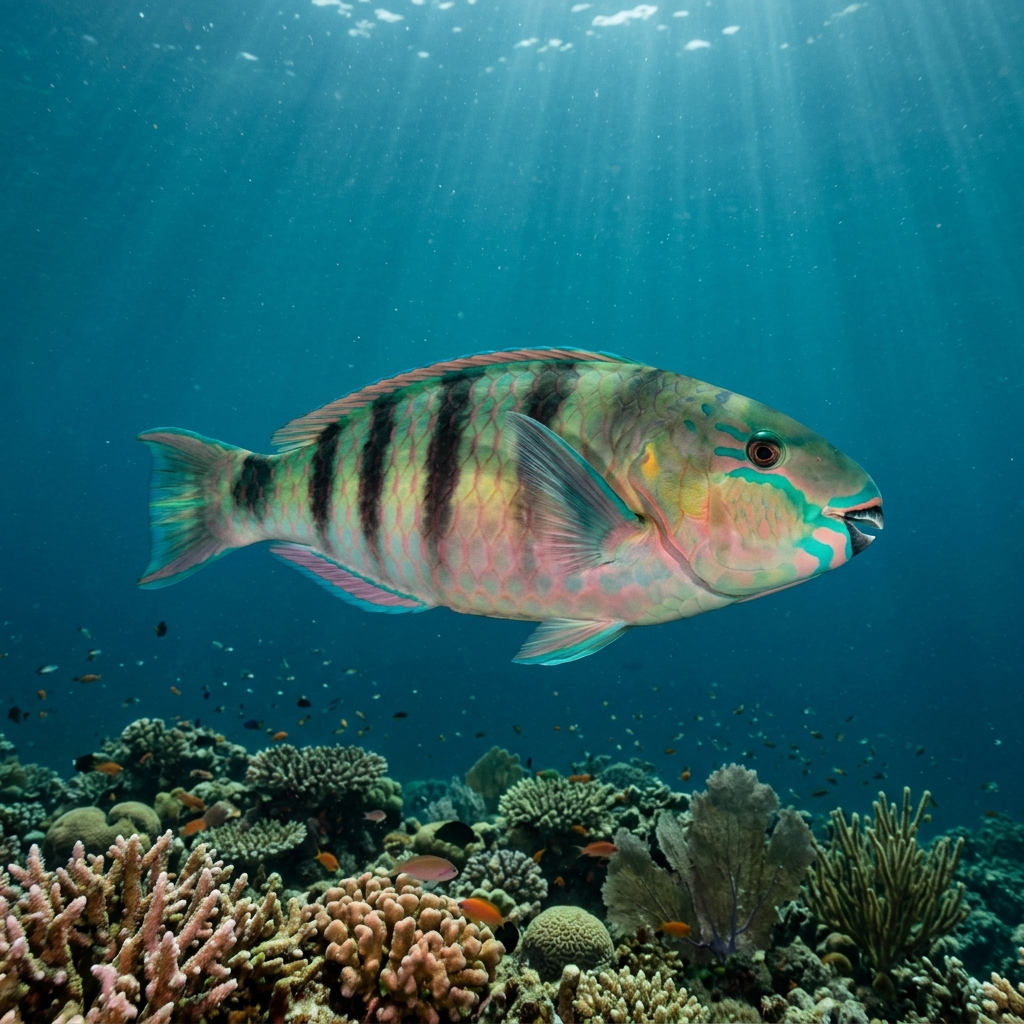
A stocky, beak-mouthed grazer that grows to around 35 cm, with a body that reads greenish-blue to olive under a torch light and paler scale edges giving a faint cross-hatched pattern. The fused, parrot-like beak used for scraping algae off rock and coral is the giveaway feature at any size. It swims with the same rowing pectoral-fin stroke as other parrotfish, usually low over hard substrate rather than in open water.
Expect to find it working over rocky and coral reef ground, using its beak to scrape algae and turf off hard surfaces, often in the company of other reef grazers. It tends to hold its distance from divers rather than approach, moving off at a steady pace if you get too close, and is most active during daylight hours when the grazing light is good.
Like other parrotfish, it likely plays a reef-cleaning role by scraping algae off rock and coral, which helps keep hard surfaces open for new coral growth.
No clear seasonal pattern shows up in the sightings, and the water it is found in ranges from about 25 to 29.4C year-round in Oman and the UAE, so any month works for a look.
Reef neighbours a diver could mistake it for. Use the identification notes above to tell them apart.
This is very much an Oman fish first: it turns up most reliably around the Daymaniyat Islands and Muscat, with the United Arab Emirates' East Coast a secondary spot. Across the sites where it has been logged it sits mostly in the common to very common range, so on a Daymaniyat Islands dive it is one of the more expected reef fish rather than a lucky find.
Mapping where Gulf Parrotfish is logged…
Oman is the stronghold, especially around the Daymaniyat Islands and Muscat, with additional sightings along the East Coast of the United Arab Emirates. It is one of the more regularly logged reef fish at these sites.
There is no strong seasonal pattern in the sightings, and it is found across a warm 25 to 29.4C temperature range, so it can be seen on Oman and UAE reefs at any time of year.
Look for a stocky, greenish-blue to olive body around 35 cm long with a fused beak-like mouth. It stays close to rock and coral, moving with slow rowing strokes of its pectoral fins as it grazes.
They typically reach around 35 cm in length, making them a mid-sized reef fish that is easy to spot against smaller grazers on the same patch of reef.
No, they are not considered dangerous to divers. They tend to keep their distance and simply move away if approached while grazing.
Site and sighting data is aggregated from diver logs, iNaturalist and GBIF. For taxonomy and conservation status:
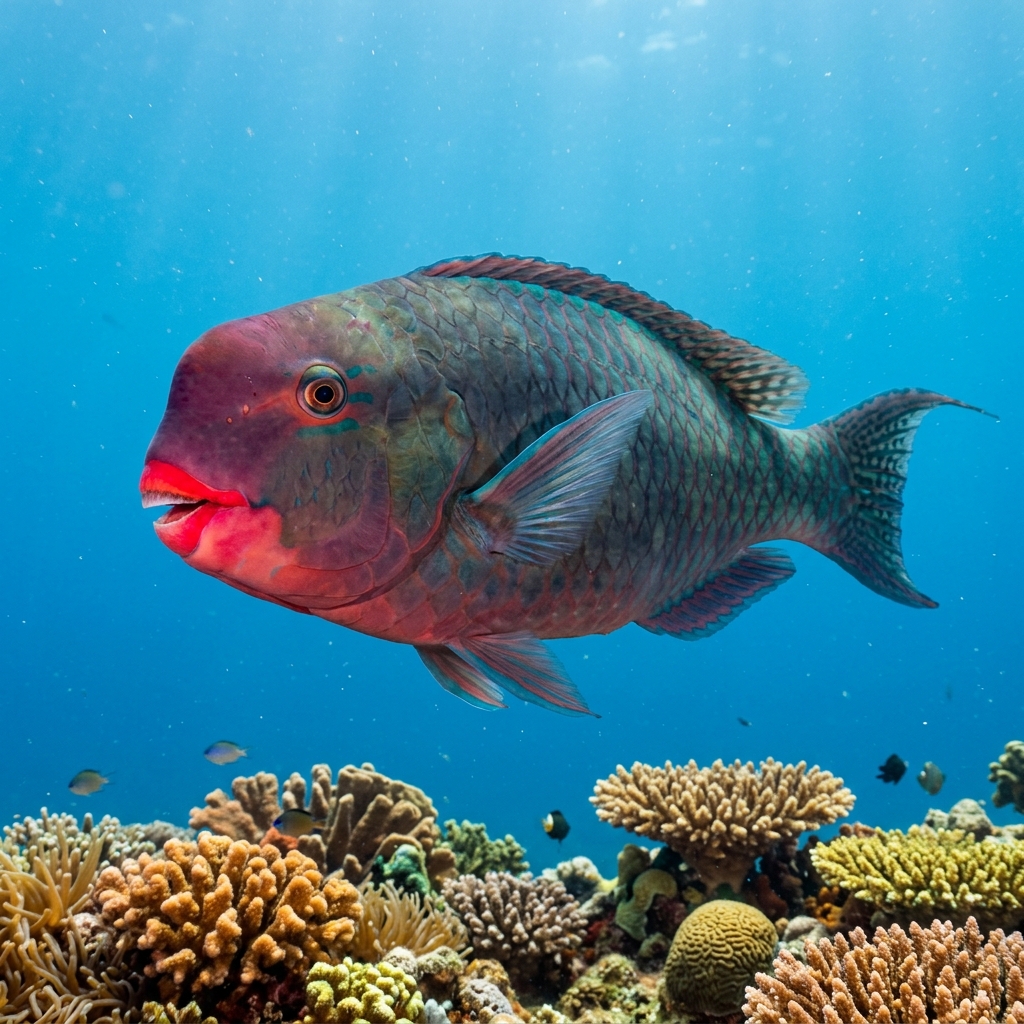
Redlip Parrotfish
2,789 sites