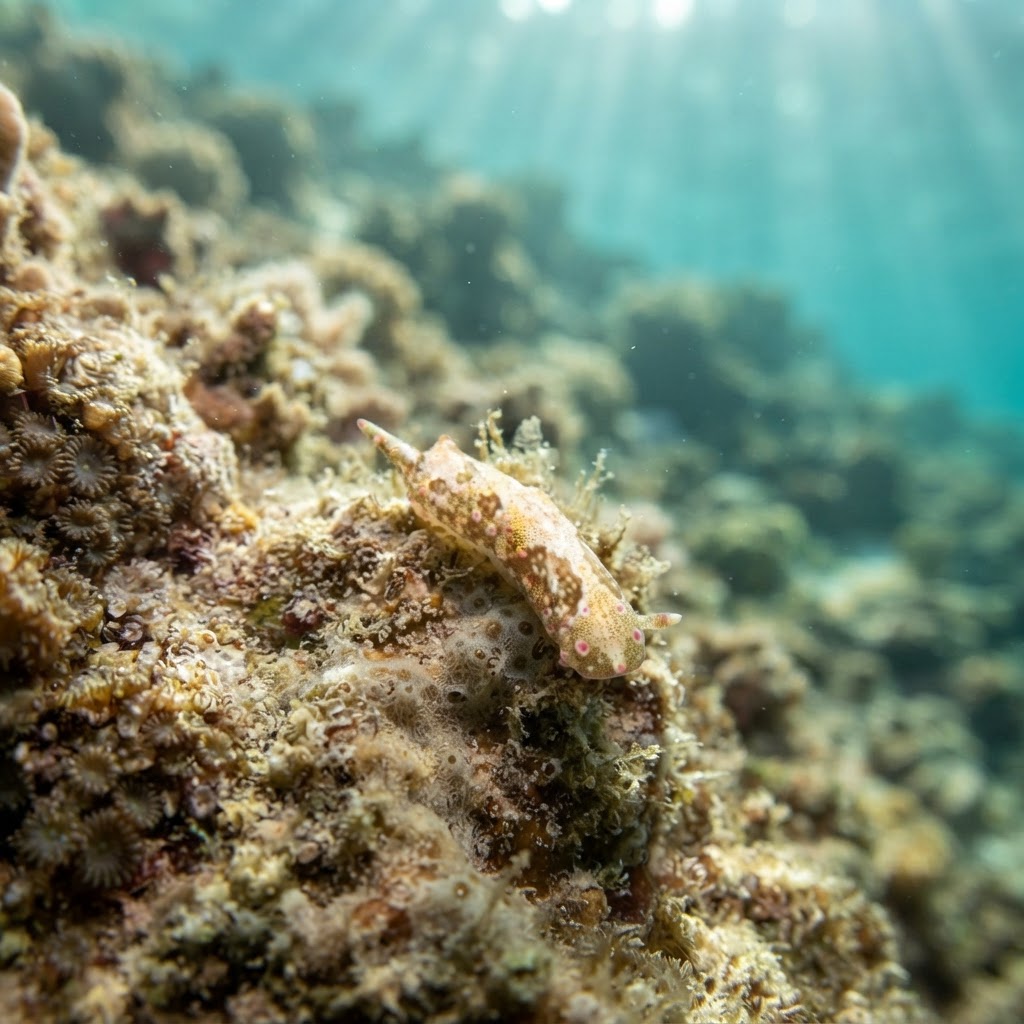
Odontoglaja guamensis
A 1cm slug rarely logged outside Luzon, Philippines, and Kwajalein Atoll, in warm 25-31C reef water year-round.
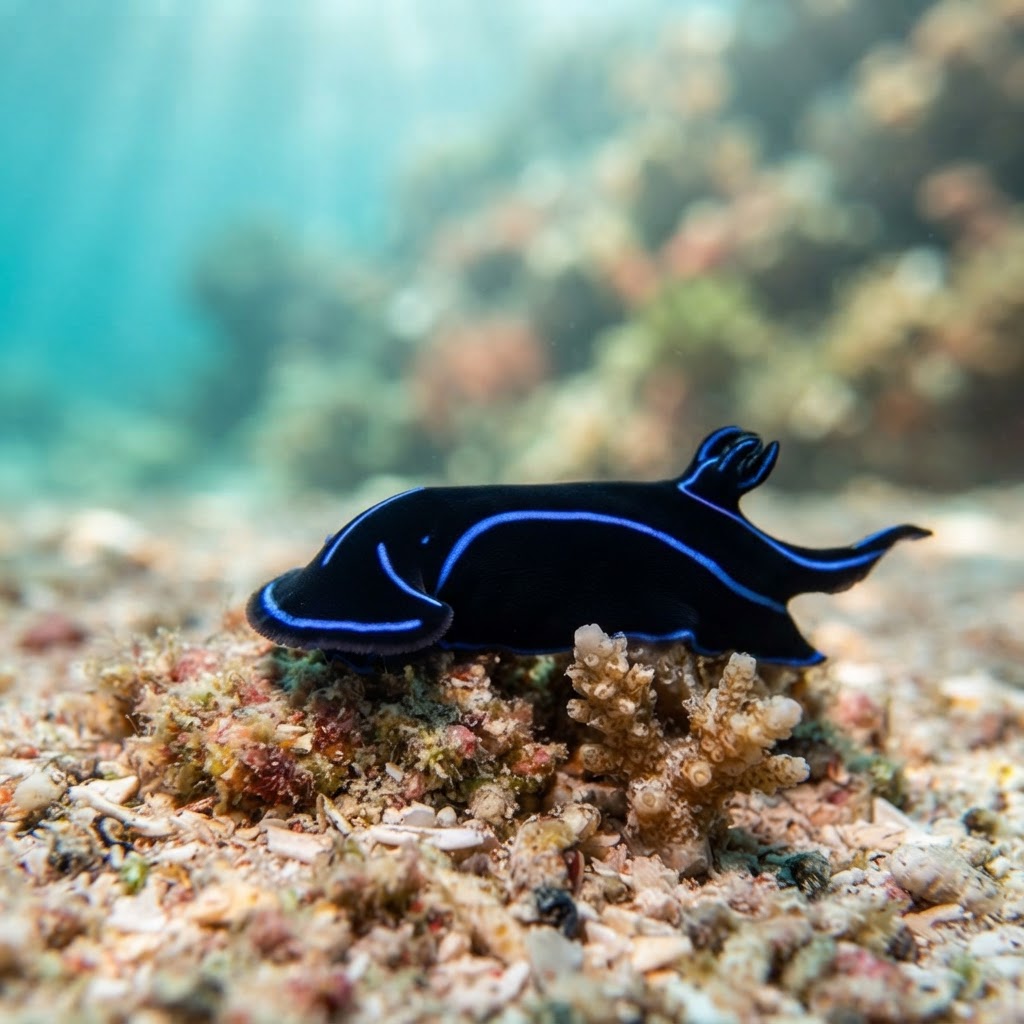
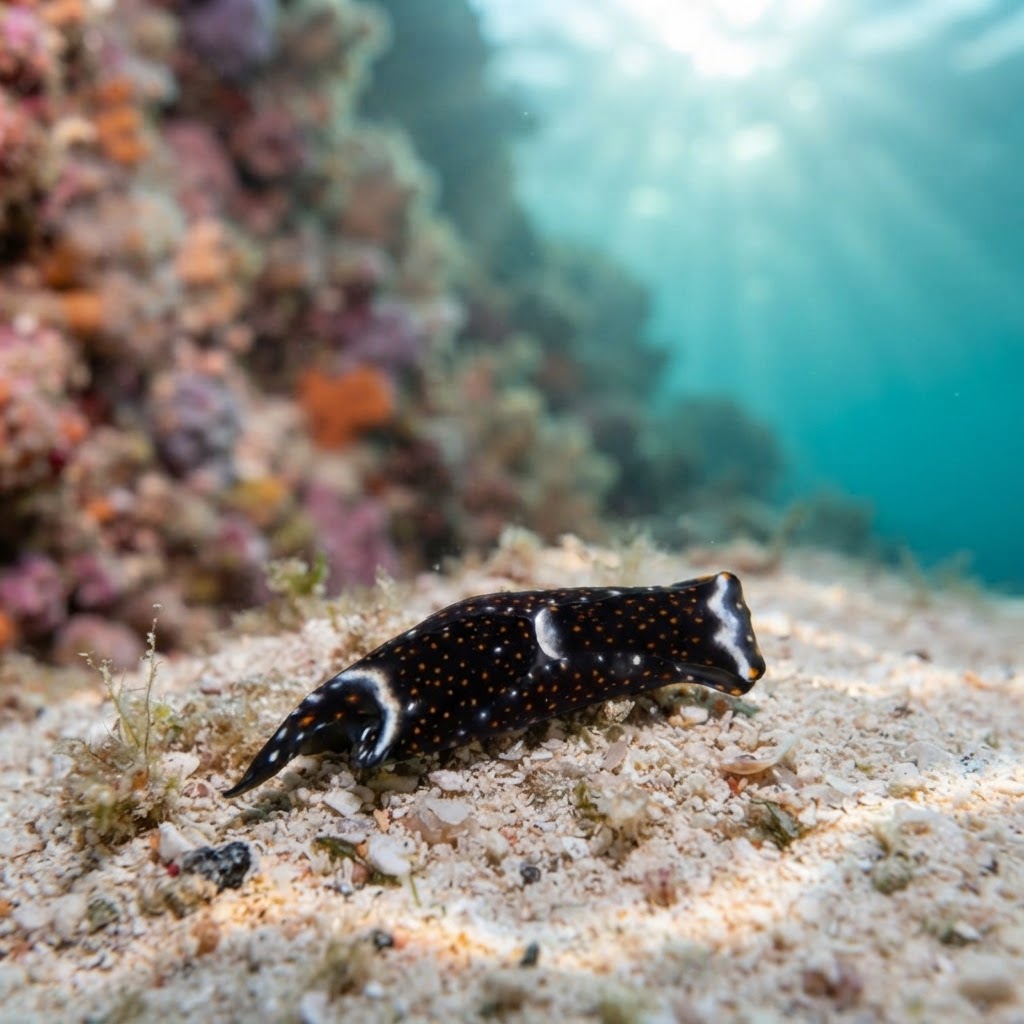
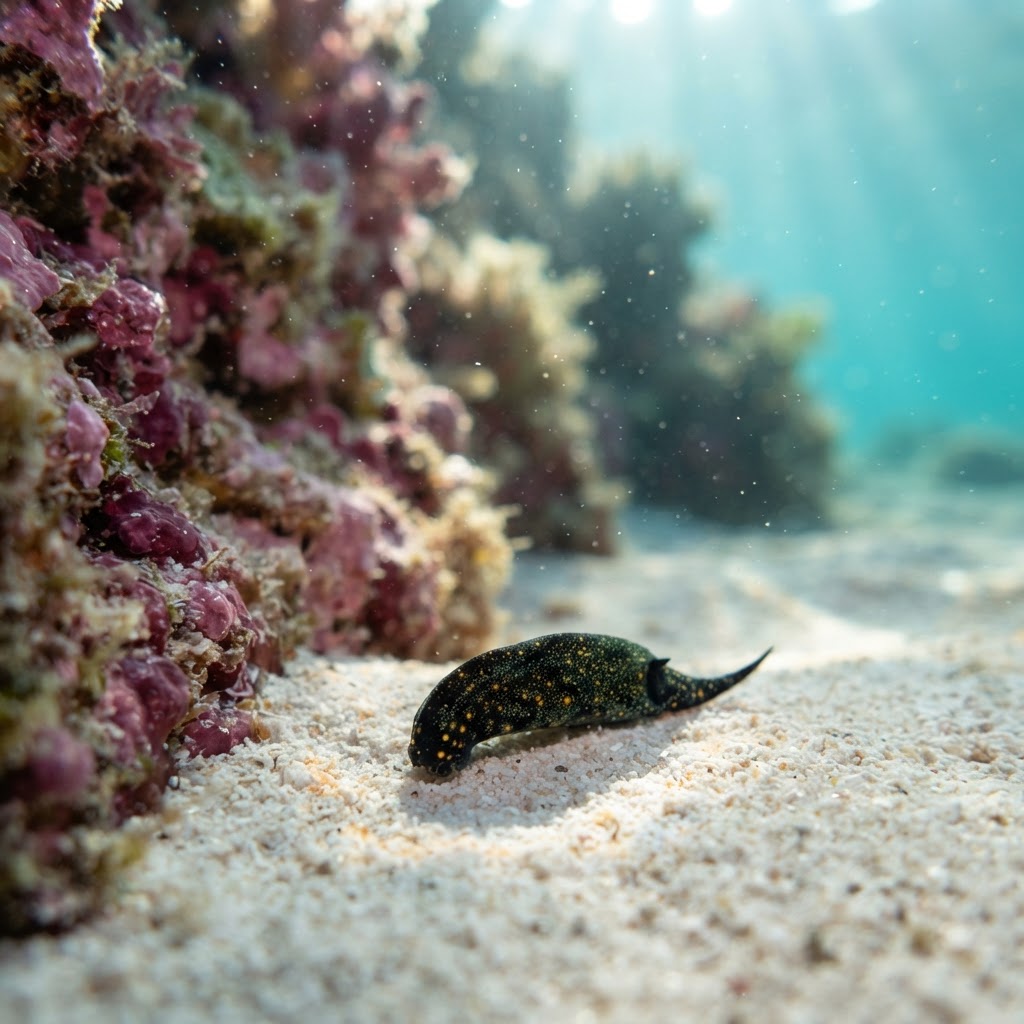
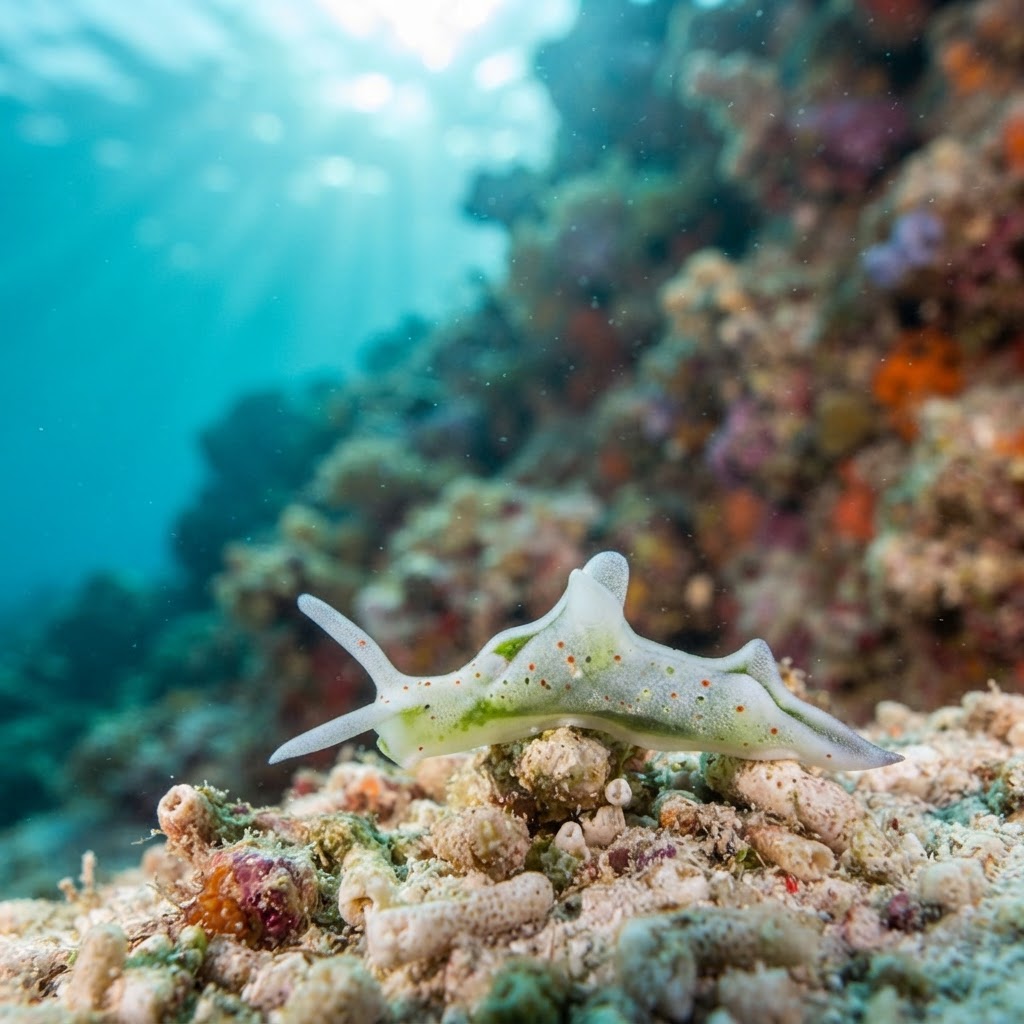
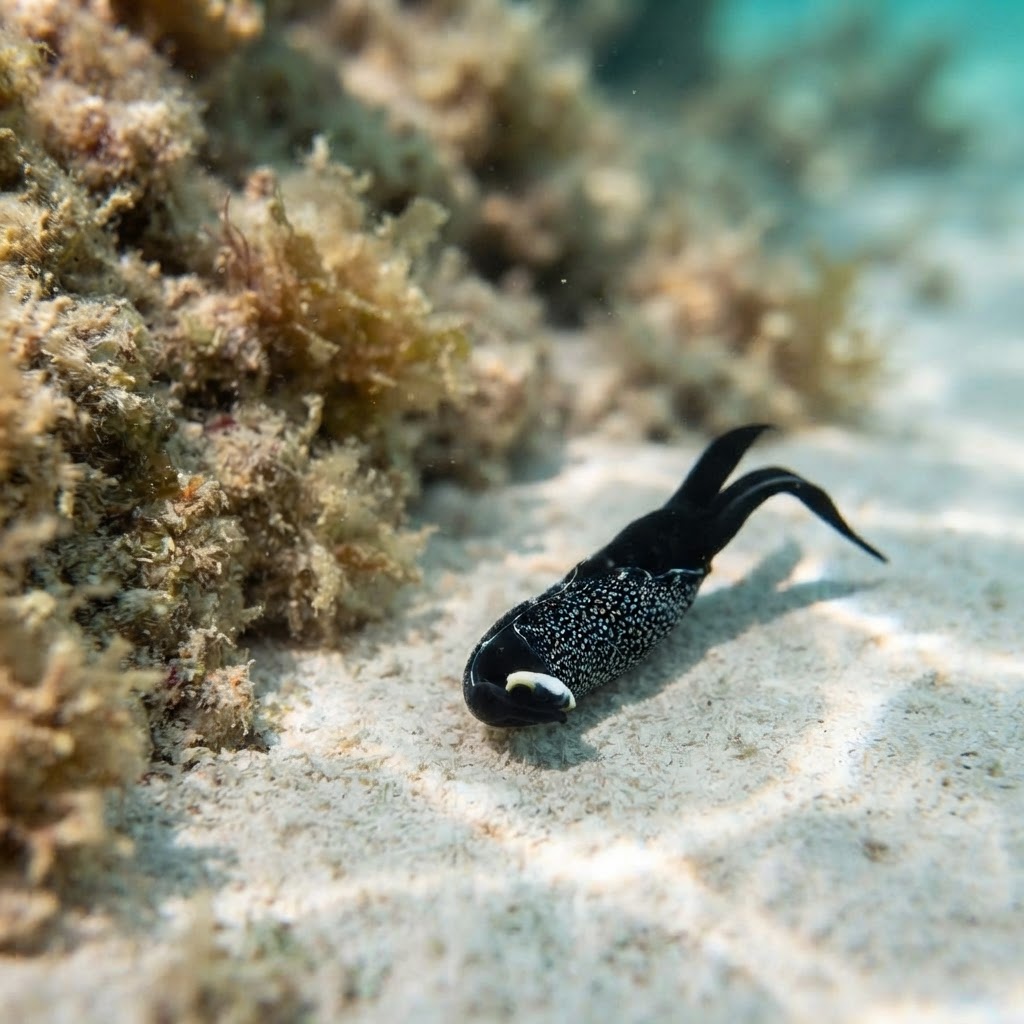
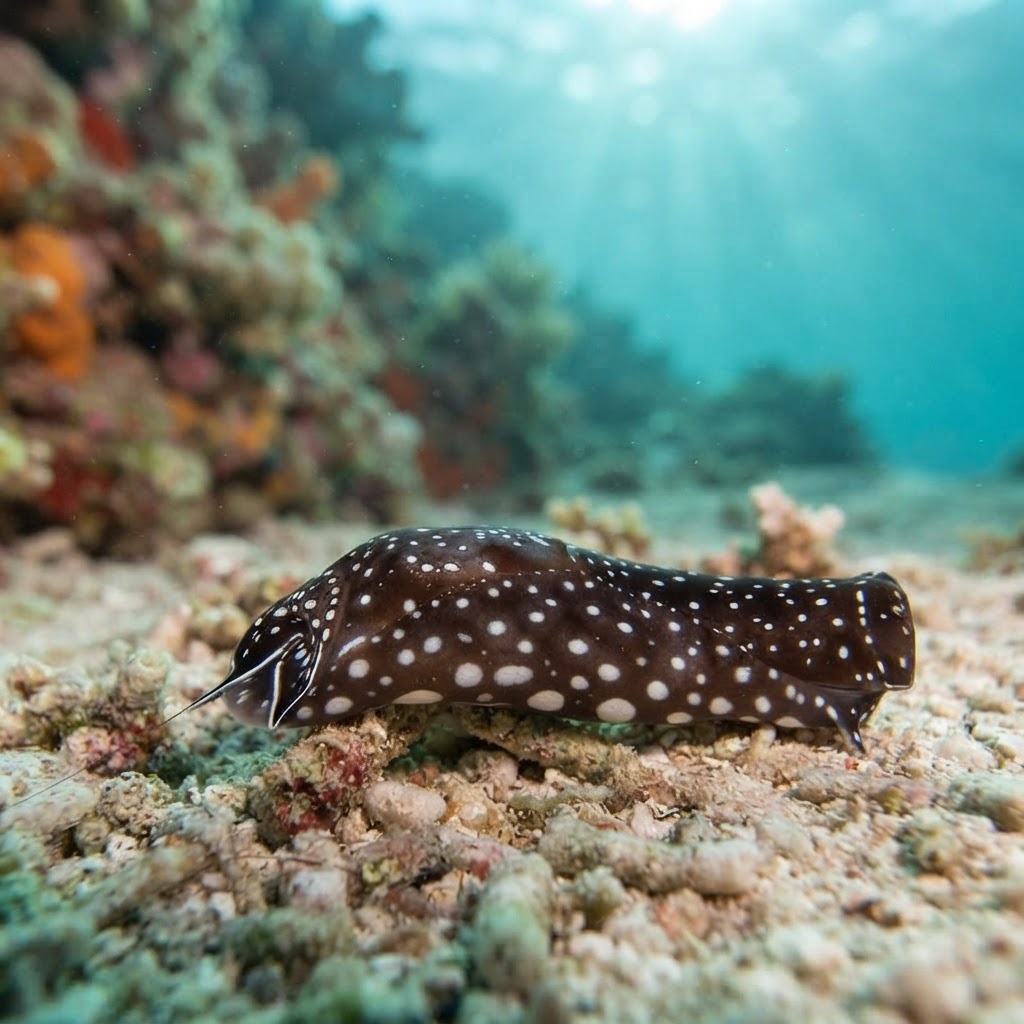
A headshield slug barely a centimetre long, so you're hunting for a small soft-bodied smear on rubble or sand rather than anything with an obvious silhouette. Look for the flattened, shield-shaped head plate typical of this slug group, held low against the substrate as it glides. Its small size and pale, low-contrast body make it easy to swim straight past unless you're already scanning close-focus on a muck or rubble patch.
Divers find it moving slowly over sand and rubble, tucked in among debris where its small size and dull colouring make it blend in rather than stand out. It shows no reaction to divers beyond simply continuing its crawl, so a careful, unhurried look with a torch or magnifier is the best way to actually spot one. Most logged sightings describe it as rare to uncommon, so finding one at all counts as a good result on a muck dive.
Headshield slugs in this family use their flattened head plate to plough through loose sediment while hunting, which is exactly the low, gliding posture divers report seeing in the water.
Sightings don't show a clear season, and with a comfortable range of 25.3 to 31.3C this slug likely stays active on tropical reefs all year. Plan around good visibility and calm conditions for close-focus muck diving rather than a particular month.
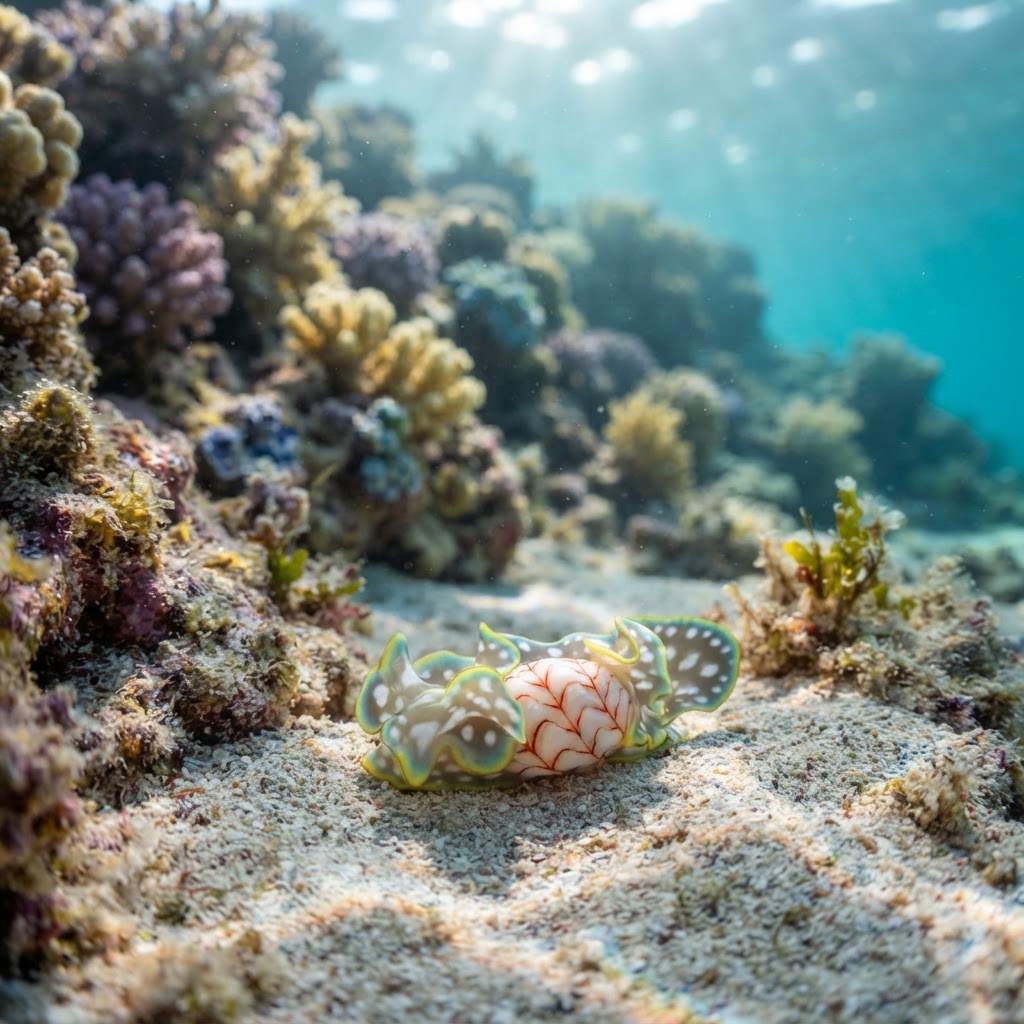
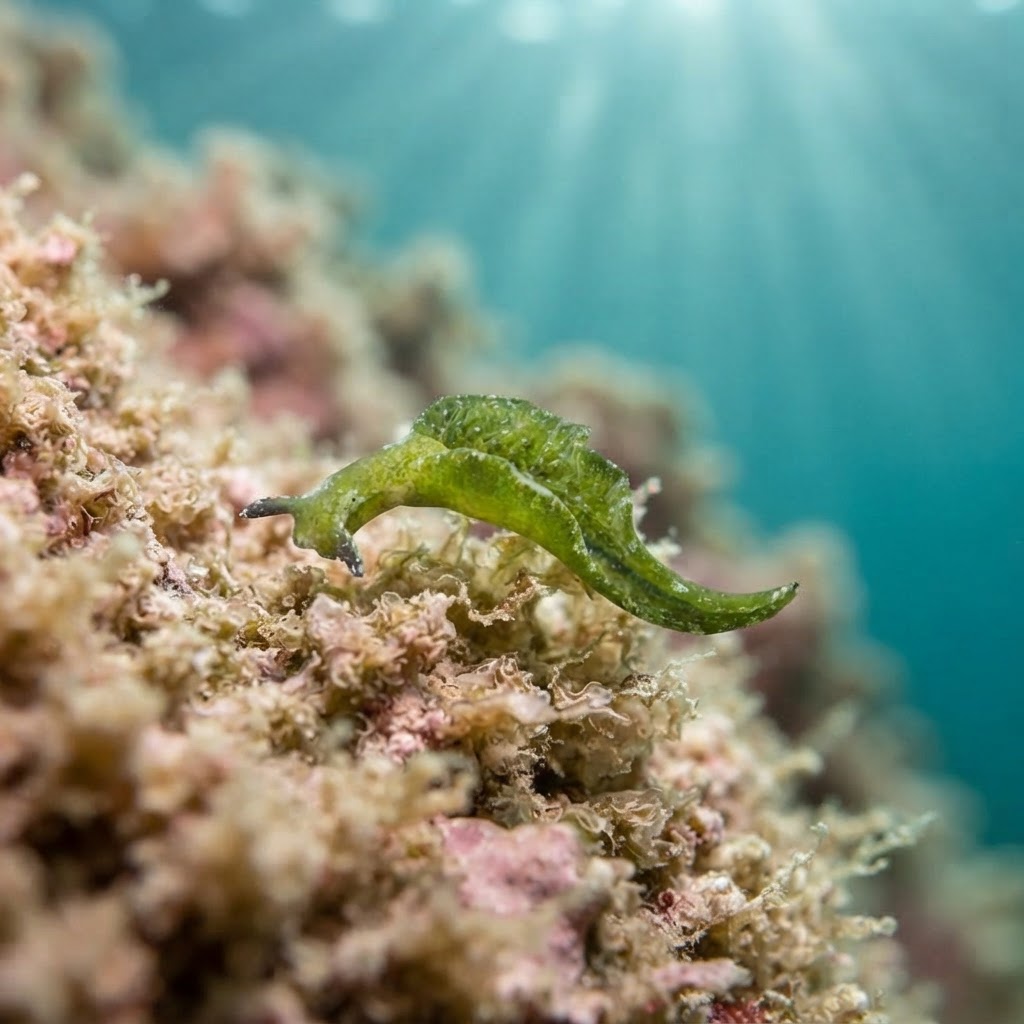
Reef neighbours a diver could mistake it for. Use the identification notes above to tell them apart.
Most records come from Luzon in the Philippines, which currently holds the strongest run of sightings for this species. A single confirmed site in Kwajalein Atoll, Marshall Islands, extends its known range into Micronesia, so it's worth a slow look on rubble and sand patches in both regions.
Mapping where Guam Odontoglaja is logged…
Luzon in the Philippines has produced the most sightings by far, with a single additional record from Kwajalein Atoll in the Marshall Islands. Outside these two regions it hasn't been reliably logged.
There's no detected season in the sighting data, and its comfortable temperature range of 25.3 to 31.3C spans typical tropical reef conditions year-round, so any time of year is fair game.
Look for a pale, soft-bodied slug about 1cm long with a flattened headshield, gliding low over sand or rubble. Its small size means you need to be scanning close range rather than the open reef.
It stays tiny, topping out around 1cm, so it's easy to miss unless you're deliberately looking at rubble and sand patches at close range.
No. It poses no threat to divers and there's nothing to avoid beyond the usual care not to touch or disturb small reef life.
Like other headshield slugs, it uses its flattened head plate to plough through sand and rubble while foraging, which is the low gliding motion divers typically report seeing.
Site and sighting data is aggregated from diver logs, iNaturalist and GBIF. For taxonomy and conservation status:
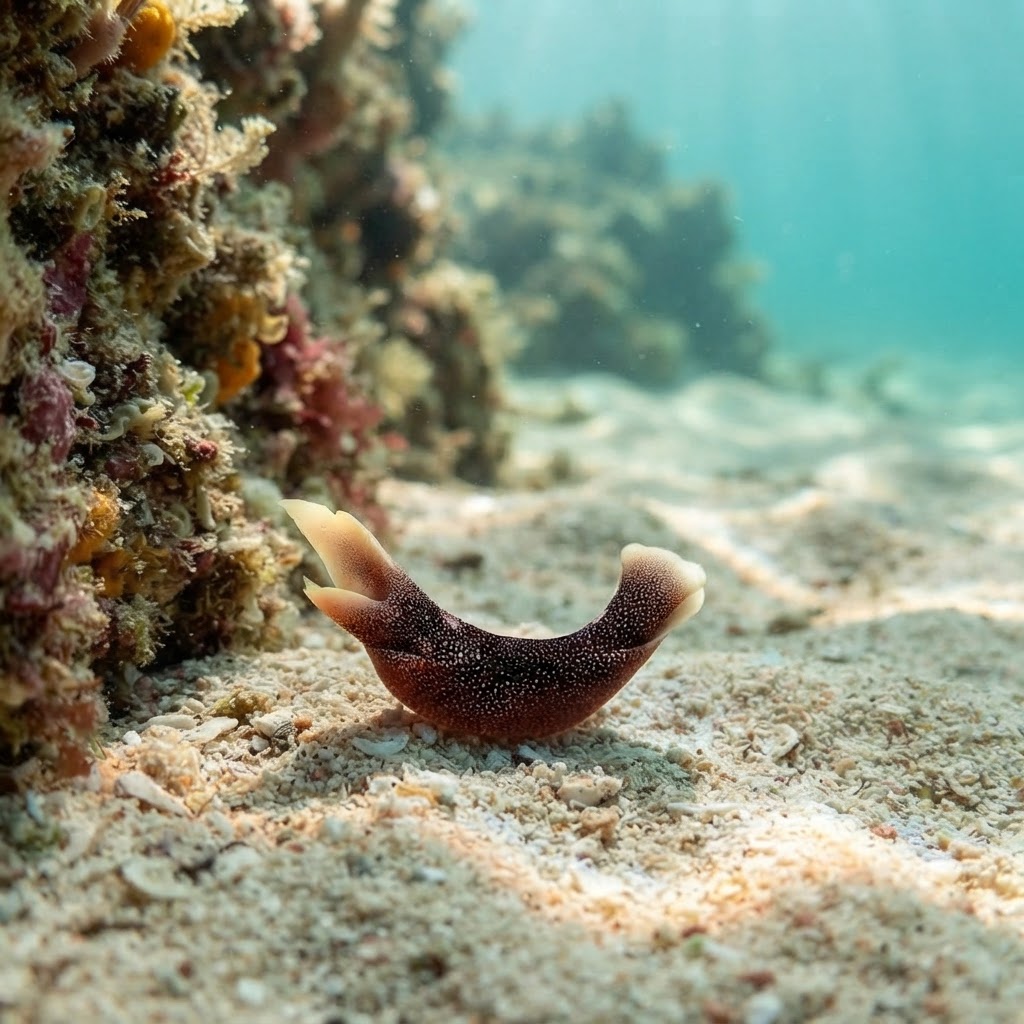
Chelidonura amoena
Elysia Timida
573 sites