Calcinus guamensis
An uncommon reef find logged across Hawaii's dive sites, comfortable in water from 21 to 27C year-round.
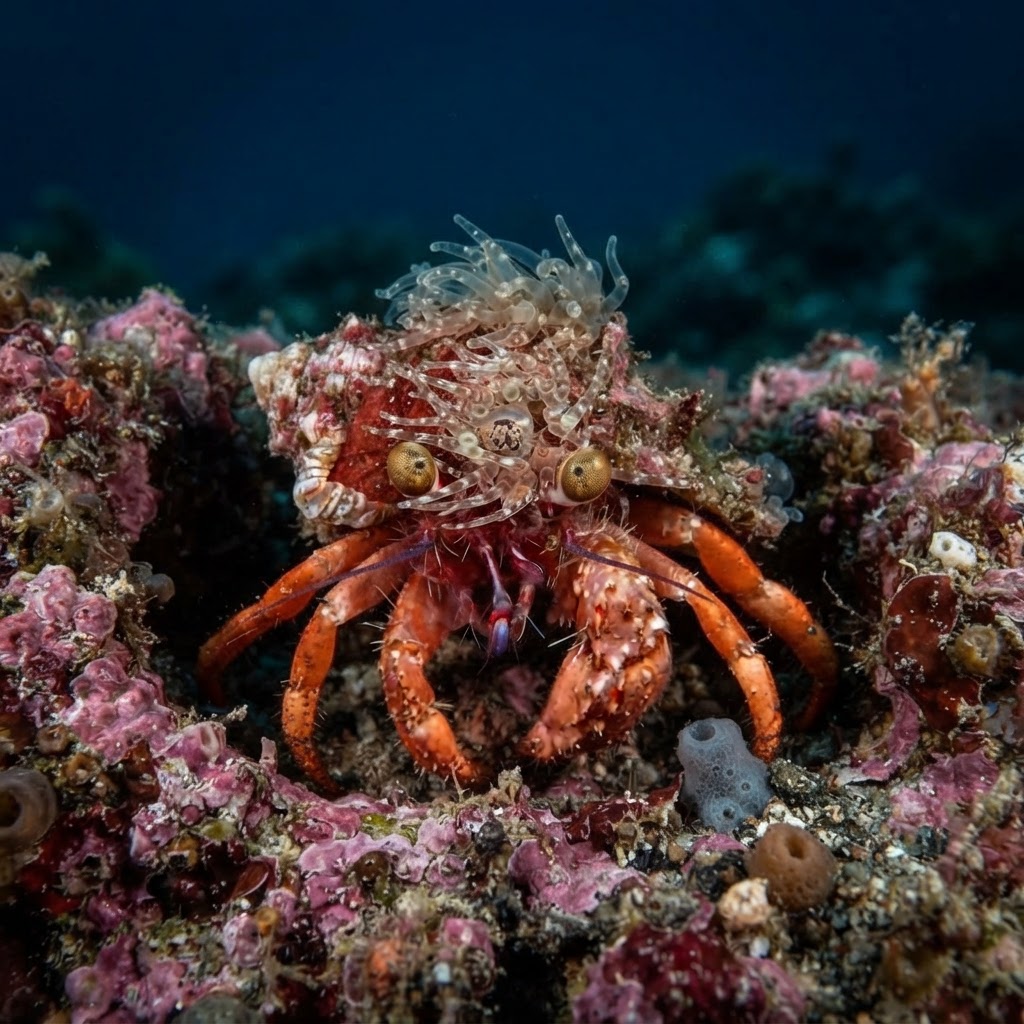
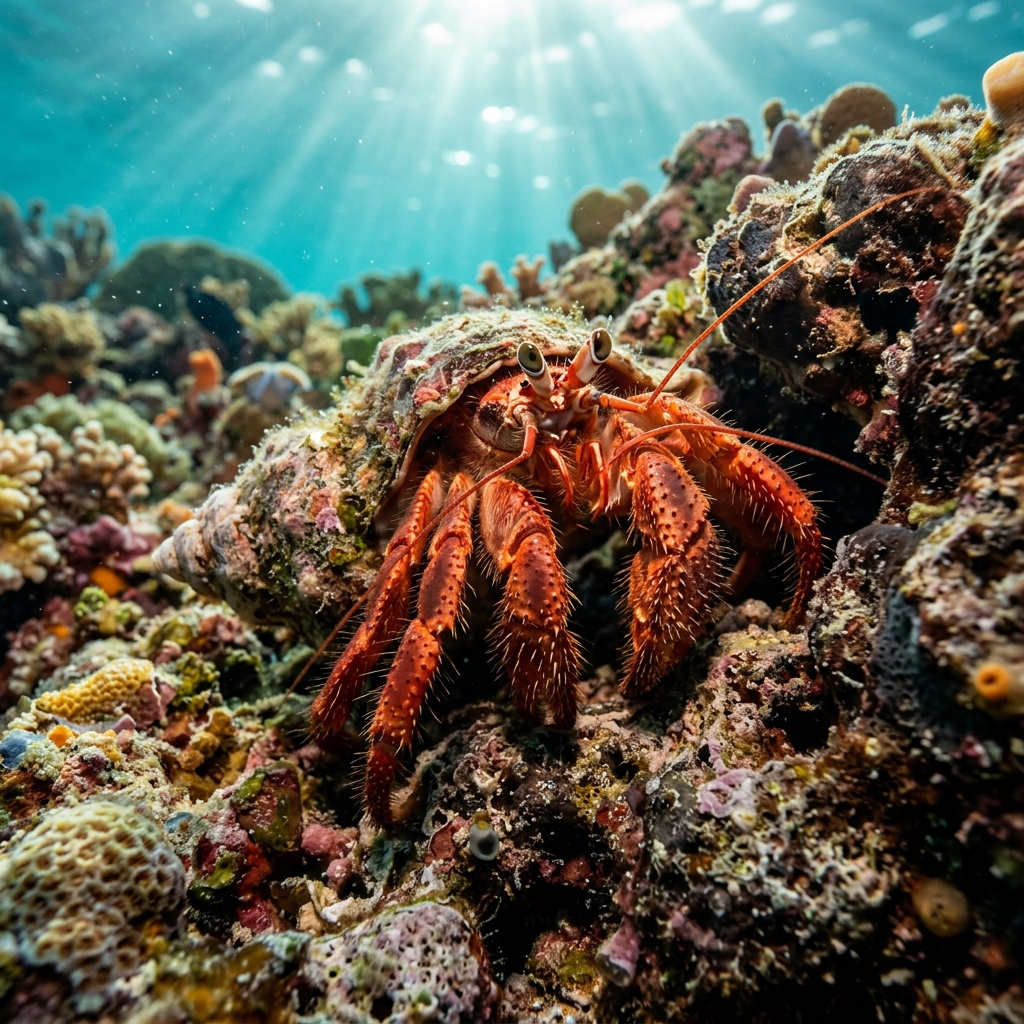
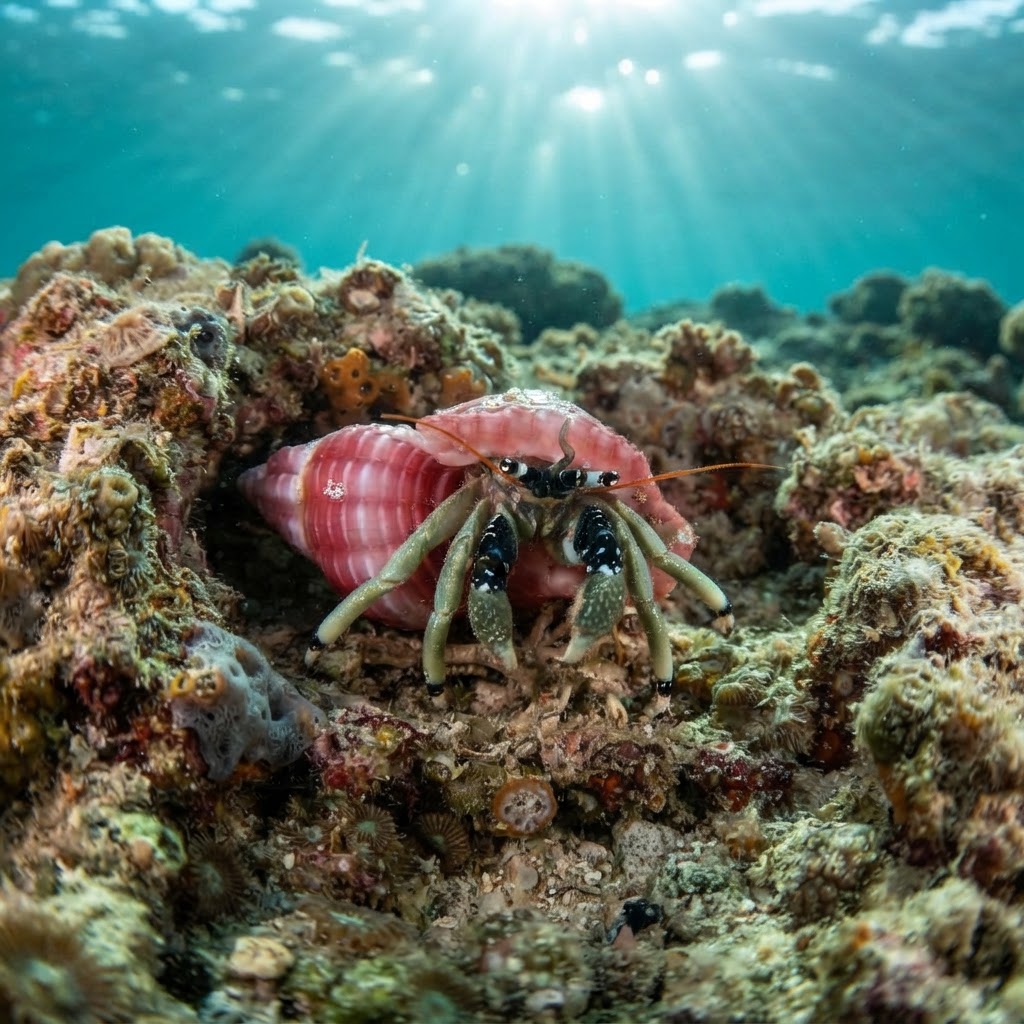
A small hermit crab that tucks into a salvaged shell rather than growing its own, so what you actually spot is the shell shape plus a pair of banded legs and claws poking out. Look for reddish or orange-tinted legs with paler bands and eyestalks that catch torchlight at night. Body size is modest, easily overlooked among rubble and rock crevices unless you slow down and scan closely.
Spends most of the day wedged into crevices and under rubble, then becomes easier to spot picking over the reef surface for scraps once light drops. Divers who go slow and check ledges and shell debris on the reef floor have the best luck, since it isn't an animal that comes out to meet you. Reacts to a close approach by withdrawing into its borrowed shell rather than fleeing.
Like all hermit crabs, it doesn't grow its own shell but scavenges and swaps abandoned snail shells as it grows, so the same individual may be found in a different-looking shell on a return visit.
There's no detected seasonal pattern, and with a comfortable range of 21.2 to 27.2C, Hawaii's reefs sit in that window year-round, so any month is fair game.
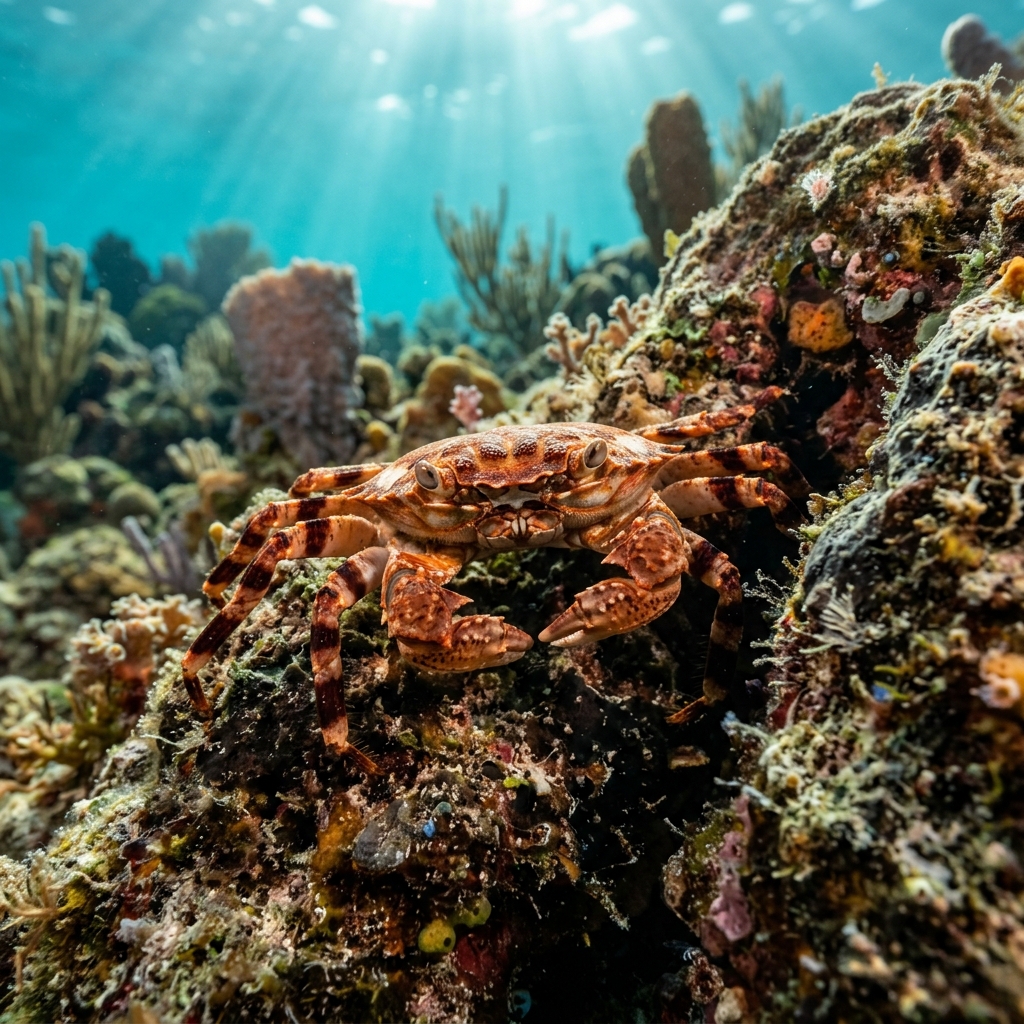
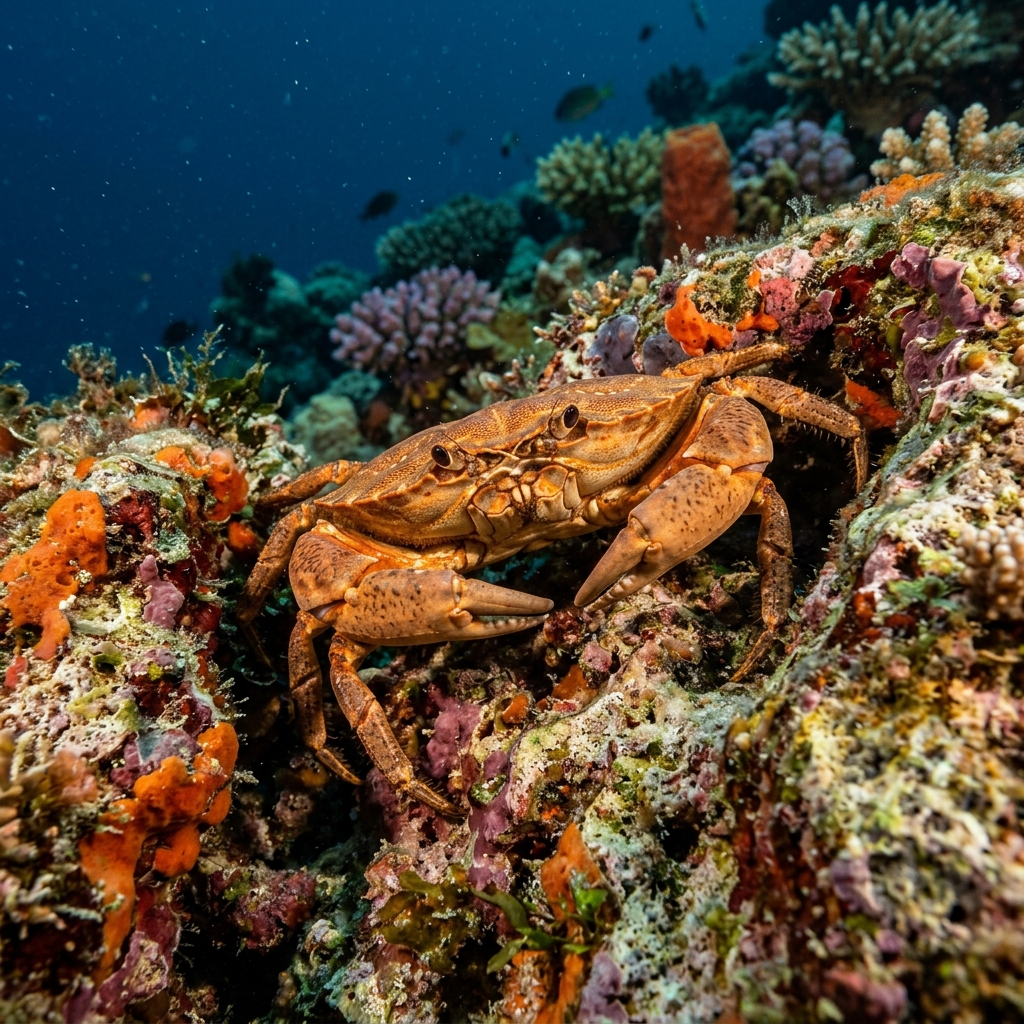
Reef neighbours a diver could mistake it for. Use the identification notes above to tell them apart.
Every logged sighting in this data comes from the United States, specifically Hawaii, where it turns up across a spread of reef and rocky sites. It hasn't been reported elsewhere in real diver observations, so Hawaii is currently the place to look for it.
Mapping where Guam Hermit Crab is logged…
Hawaii is currently the only region with confirmed diver sightings, spread across a number of reef and rocky sites there. It's logged as uncommon at most of those sites and rare at a few.
There's no clear seasonal pattern in the sighting data, and Hawaii's water stays within its comfortable 21 to 27C range all year, so it can turn up on any dive.
Look for a small hermit crab in a scavenged shell with banded reddish-orange legs and claws poking out. It's easy to miss among rubble, so check crevices and shell debris closely rather than scanning open reef.
No, they pose no danger to divers. They're small, defensive rather than aggressive, and simply retreat into their shell if approached.
It doesn't build its own shell but occupies and later swaps abandoned snail shells as it grows, so its appearance can change slightly between sightings depending on which shell it's currently wearing.
Site and sighting data is aggregated from diver logs, iNaturalist and GBIF. For taxonomy and conservation status:
European Green Crab
2,469 sites