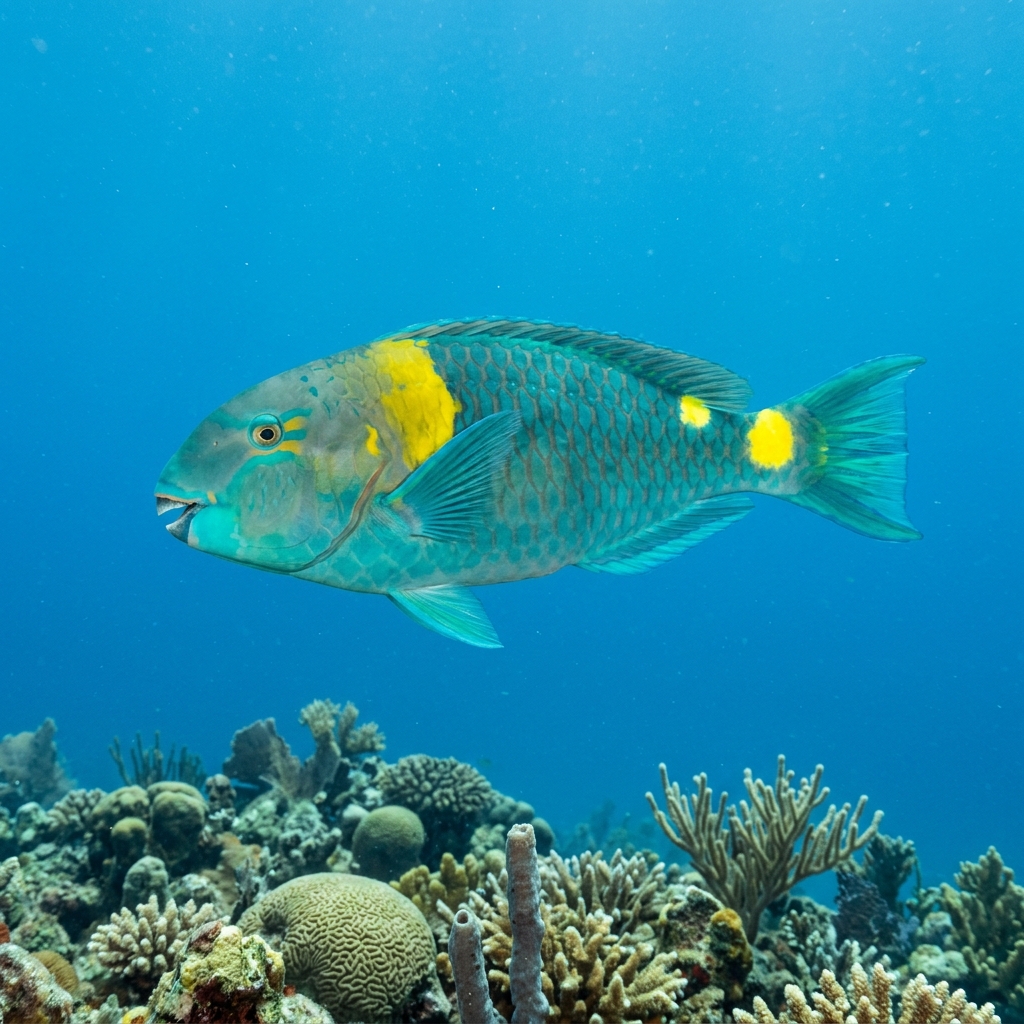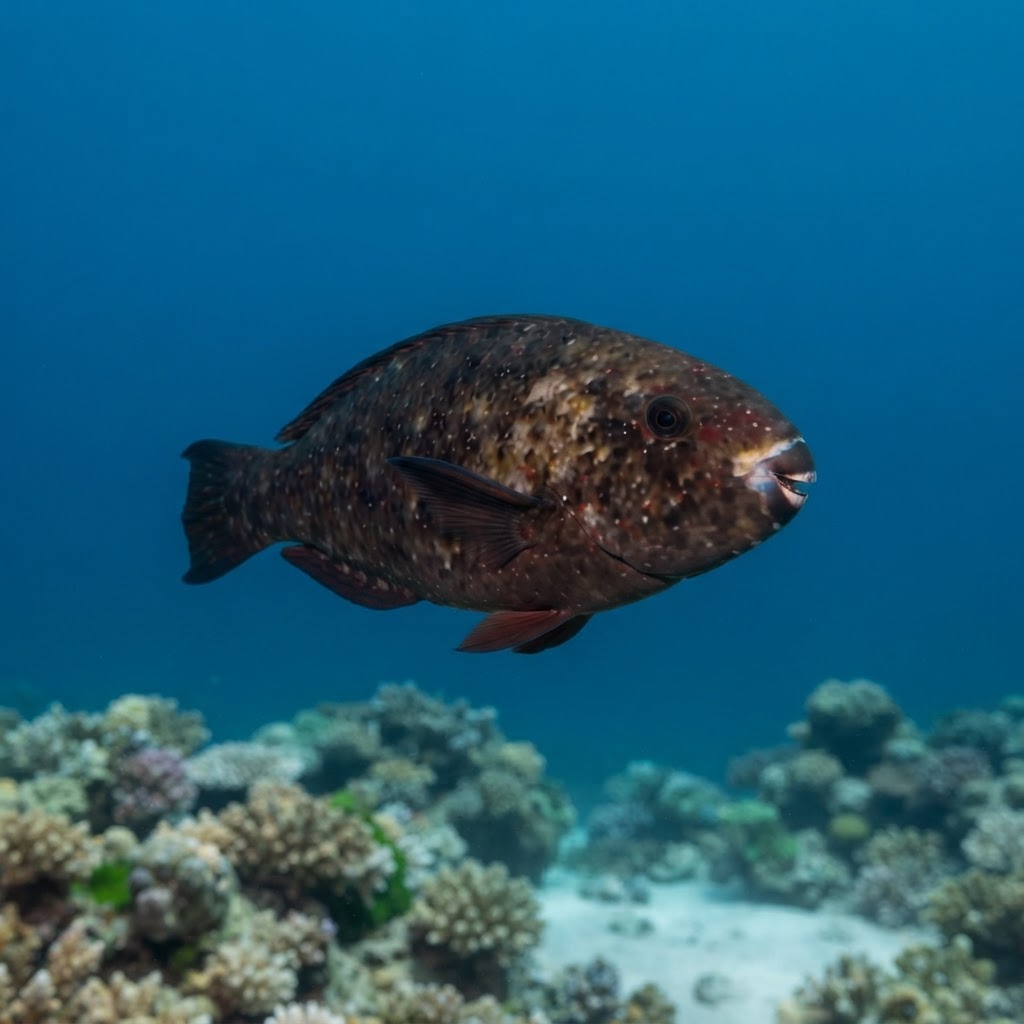
Scarus spinus
Greensnout parrotfish turn up on reefs from Peninsular Malaysia to Fiji's Taveuni in warm 25-29C water, year-round and usually solo or in small groups.
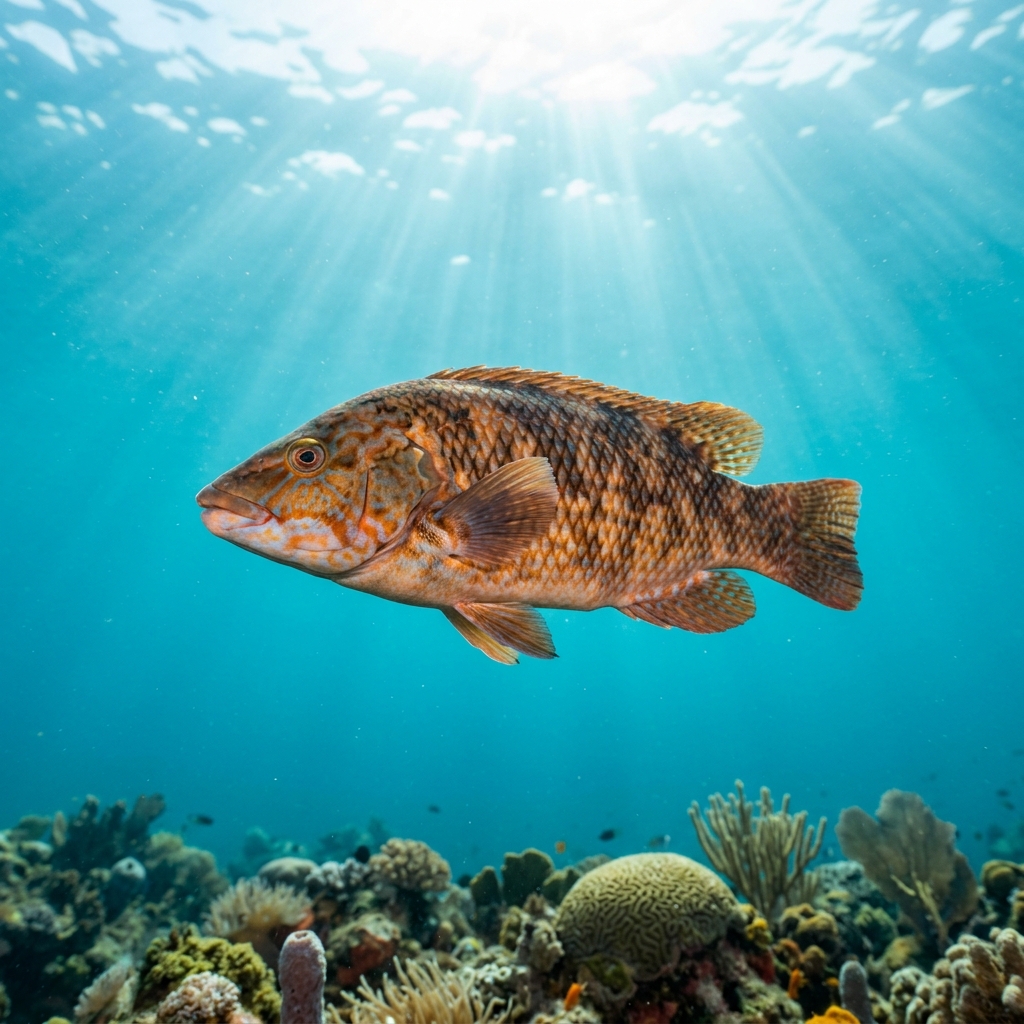
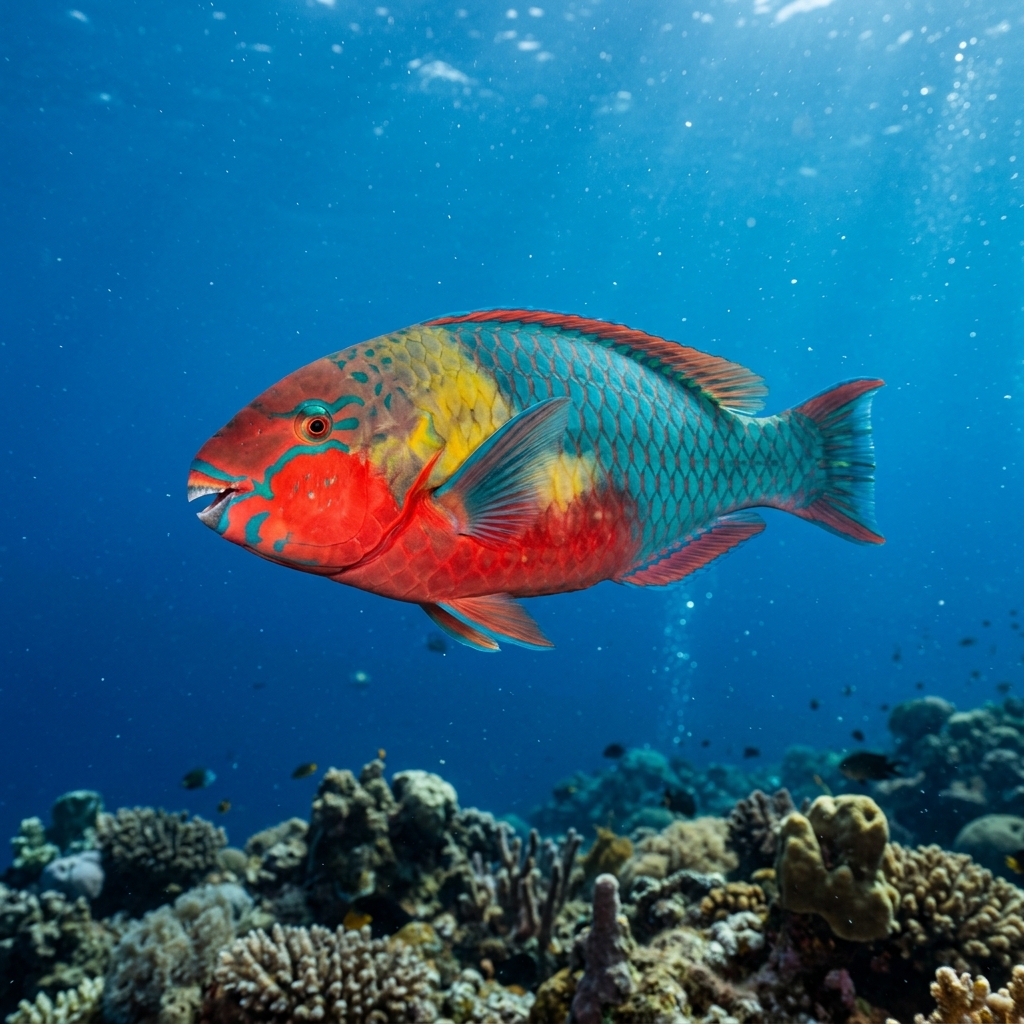
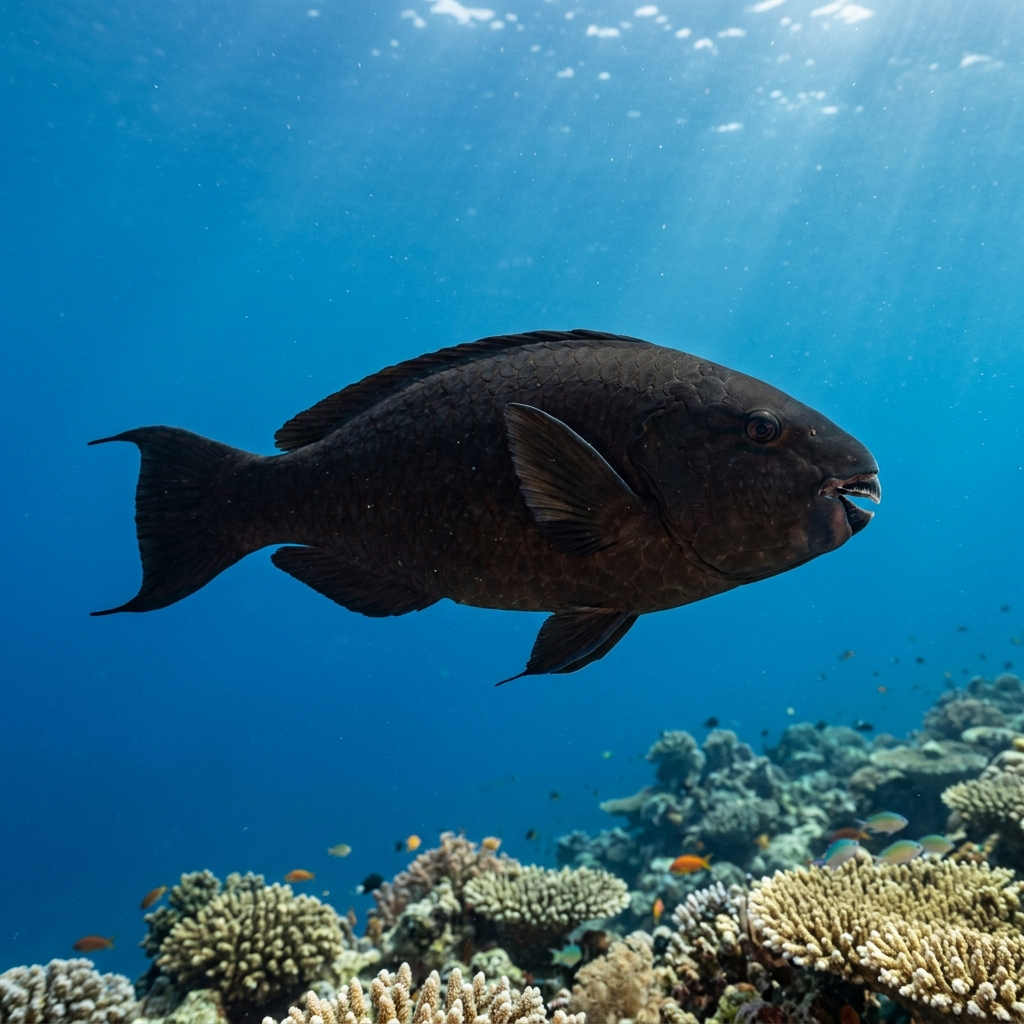
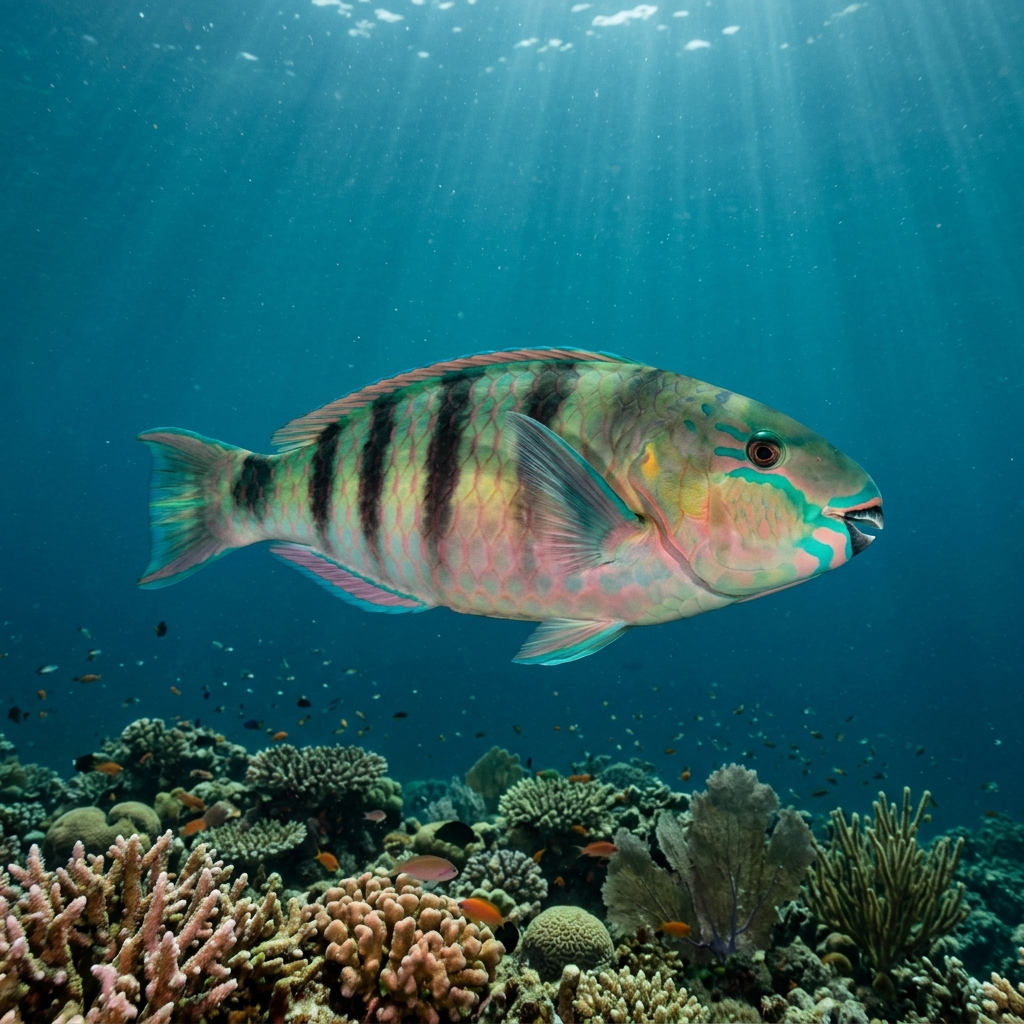
A compact parrotfish reaching around 21 cm, with a stocky body and the fused, beak-like teeth typical of the group used for scraping algae off rock and coral. Look for a greenish body tone that pales noticeably around the snout, giving the fish its name, set against a more uniform darker body colour further back. Like most parrotfish it has a fused dental plate rather than individual teeth, which is often the easiest giveaway even before colour registers underwater.
Expect to see it grazing steadily over reef flats and rubble patches, rasping algae off hard surfaces with that fused beak, usually during daylight hours when reef activity is highest. It's logged as uncommon at most sites and only reaches common status at a handful of locations, so sightings tend to be brief, solitary or in small loose groups rather than large schools. It's generally unbothered by divers at a respectful distance, continuing to feed rather than bolting for cover.
Like other parrotfish, its grazing on algae-covered reef surfaces helps keep space open for coral to settle and grow, making it a small but steady contributor to reef health wherever it's found.
No clear seasonal pattern shows up in the sightings data, and with a comfortable water-temperature niche of 25 to 29.3C it's a year-round reef resident across its range rather than a seasonal visitor. Plan around good visibility and calm conditions at your chosen site rather than a particular month.
Reef neighbours a diver could mistake it for. Use the identification notes above to tell them apart.
Most reliably logged in Peninsular Malaysia's East Coast and Sabah, which together account for the bulk of sightings, making Malaysia the strongest bet overall. It also turns up consistently in the Visayas in the Philippines and on Queensland's reefs in Australia, with a smaller but steady presence in Indonesia (Sulawesi, Raja Ampat, Bali) and around Taveuni in Fiji.
Mapping where Greensnout Parrotfish is logged…
Peninsular Malaysia's East Coast and Sabah offer the strongest chances, with the Visayas in the Philippines and Queensland in Australia also reliable. Smaller but consistent sightings come from Sulawesi, Raja Ampat and Bali in Indonesia, and Taveuni in Fiji.
There's no strong seasonal signal in the sightings, and it favours warm water between about 25 and 29.3C year-round, so it can be seen on tropical reefs across the calendar rather than during a specific window.
Look for a small, stocky parrotfish around 21 cm with a greenish body that pales towards the snout, and the fused beak-like teeth all parrotfish use to scrape algae. It's usually seen alone or in small numbers grazing over reef rubble rather than schooling.
They typically reach around 21 cm, making them one of the smaller members of the parrotfish group divers encounter on Indo-Pacific reefs.
No. They're harmless herbivores that spend their time grazing on algae and will simply continue feeding or move off if approached calmly.
They use a fused, beak-like dental plate to scrape algae from hard reef surfaces, and that grazing action helps clear space for coral to settle, giving them a quiet but useful role in reef upkeep.
Site and sighting data is aggregated from diver logs, iNaturalist and GBIF. For taxonomy and conservation status:
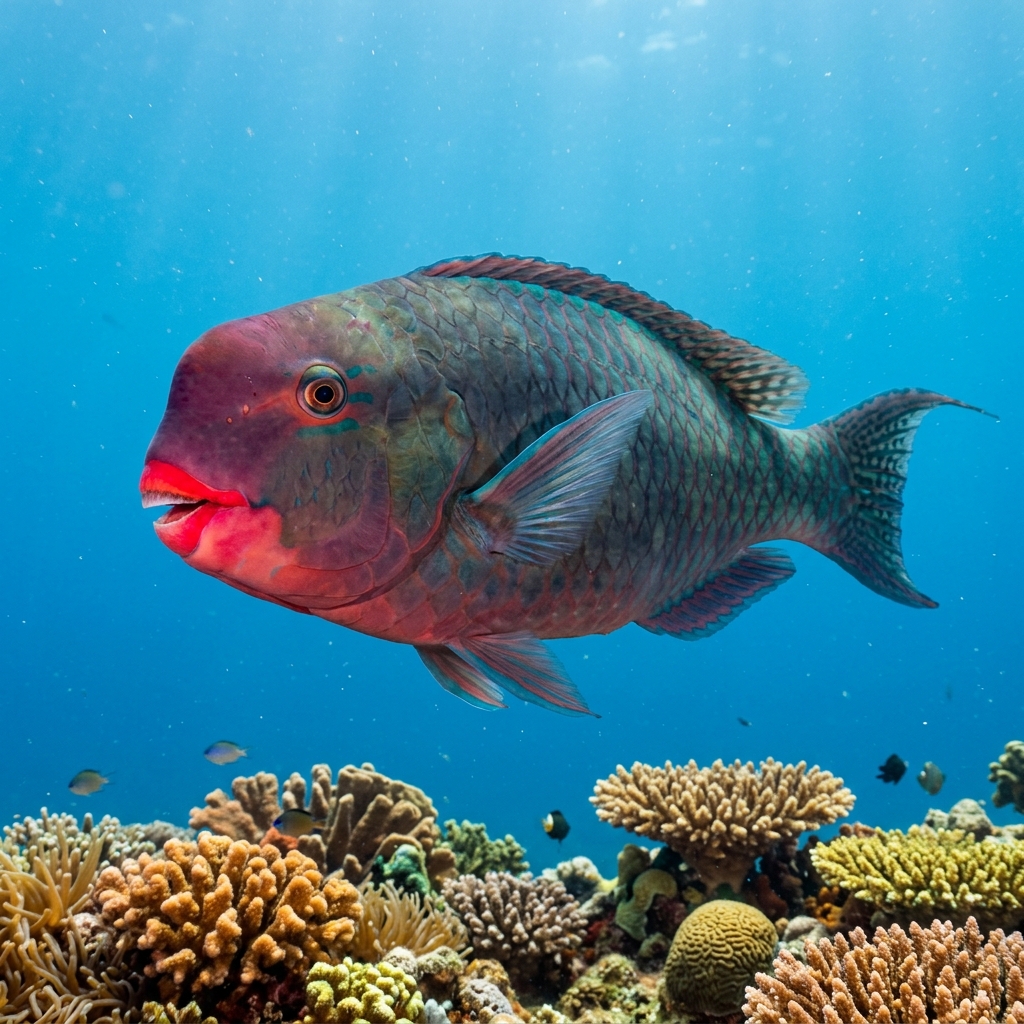
Redlip Parrotfish
2,789 sites