Tubastraea micranthus
Green Tree Coral grows in the Indo-Pacific's warmest reefs. Best chances in Indonesia, Philippines and the Maldives. Here's how to spot and identify it.
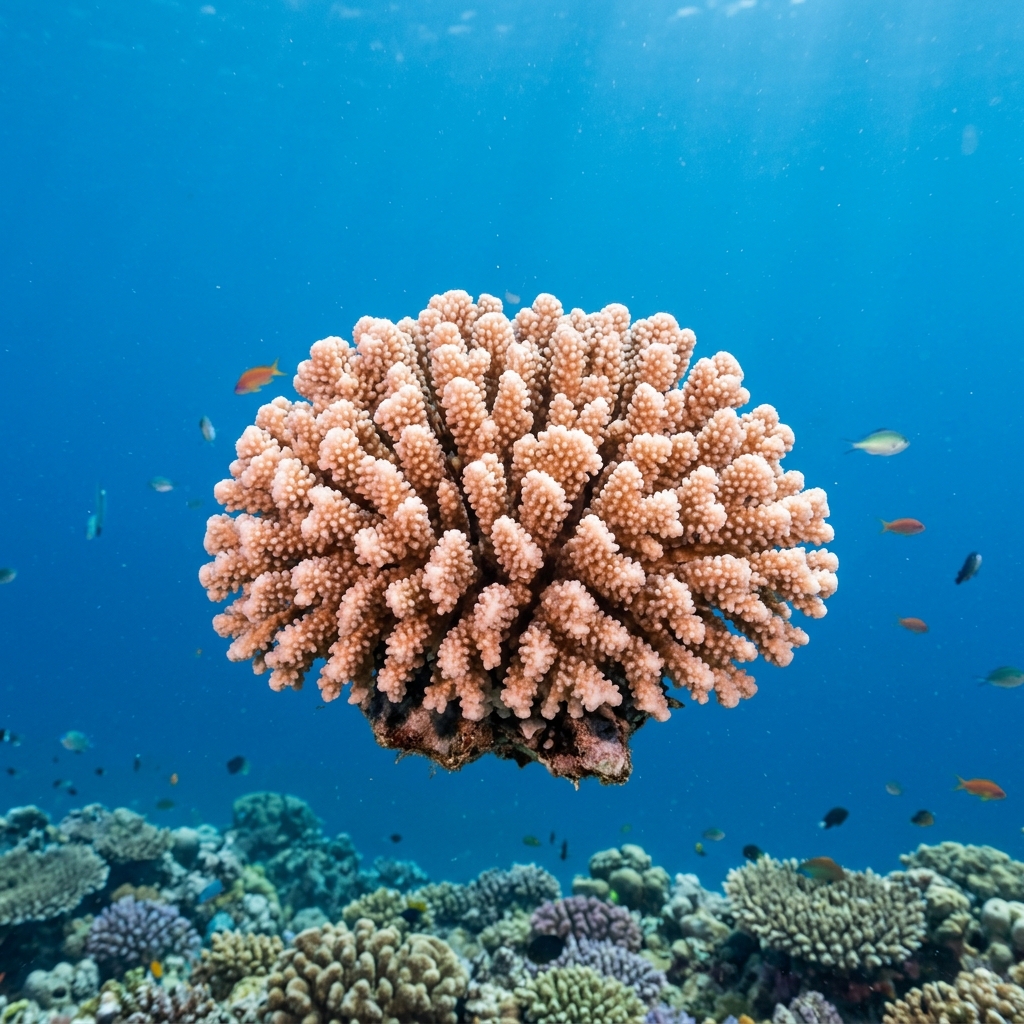
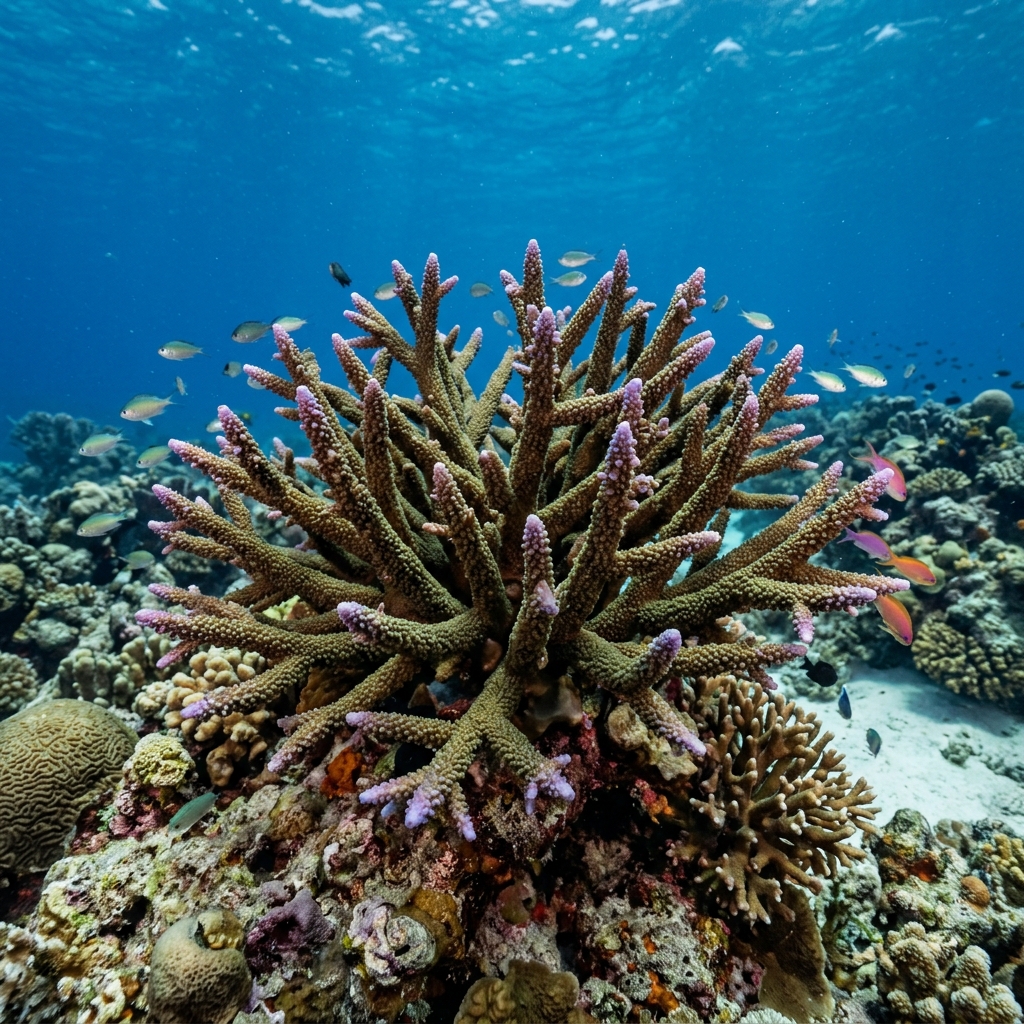
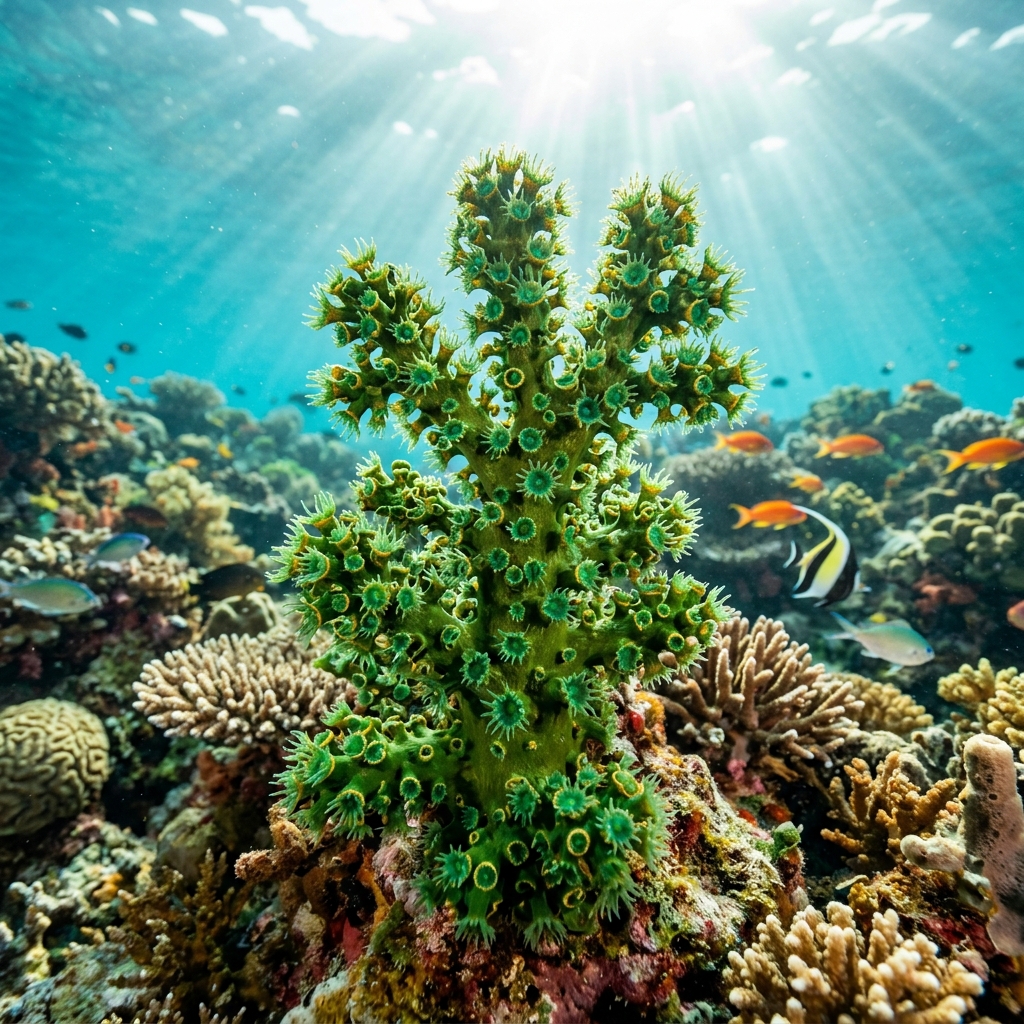
Dark olive-green to near-black branching colonies are the key field mark, with a heavily arborescent (tree-like) growth form that sets it apart from most other hard corals on the reef. Individual polyps are small and typically retracted during the day, giving branches a smooth, almost woody appearance. The colony can spread broadly, resembling a miniature canopy. That dark colouration combined with the branching silhouette is your best underwater ID clue.
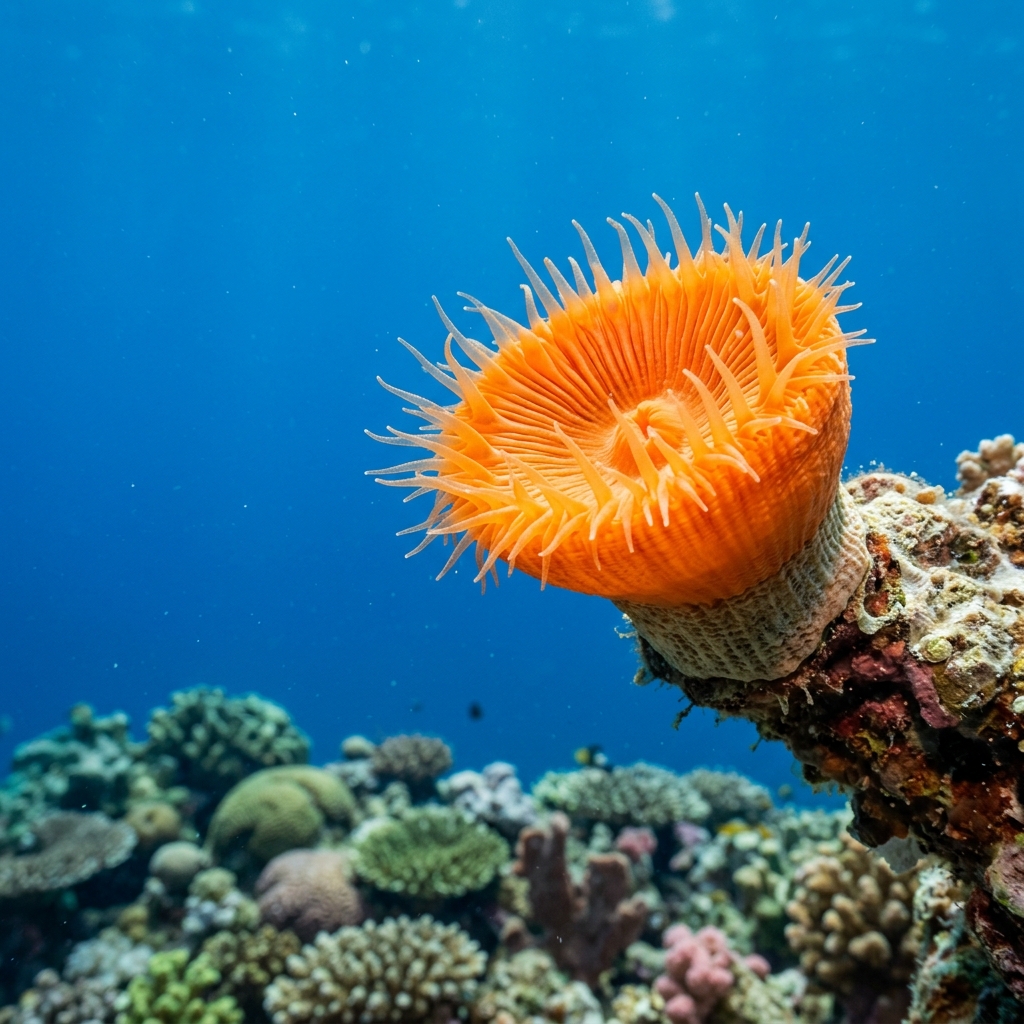
Colonies are sessile (fixed in place), so you will find them attached to hard substrate on reef walls, slopes, and overhangs rather than moving across the bottom. Polyps remain largely retracted during the day; come back at night or in low-light conditions and you may catch them extended and feeding. Divers report no reaction to approach, though brushing against the colony is worth avoiding.
Unlike most reef-building corals, Tubastraea micranthus is azooxanthellate, meaning it contains no photosynthetic algae and does not rely on sunlight for energy. It feeds entirely on plankton, which is why you can find colonies thriving on shaded walls and overhangs where light-dependent corals cannot survive.
Northern Hemisphere sighting data concentrates around September, though the species' preference for water temperatures in the 25 to 29 °C range means it is present on tropical reefs throughout the year. In southern destinations such as Queensland, follow local tropical season conditions rather than a fixed calendar window.
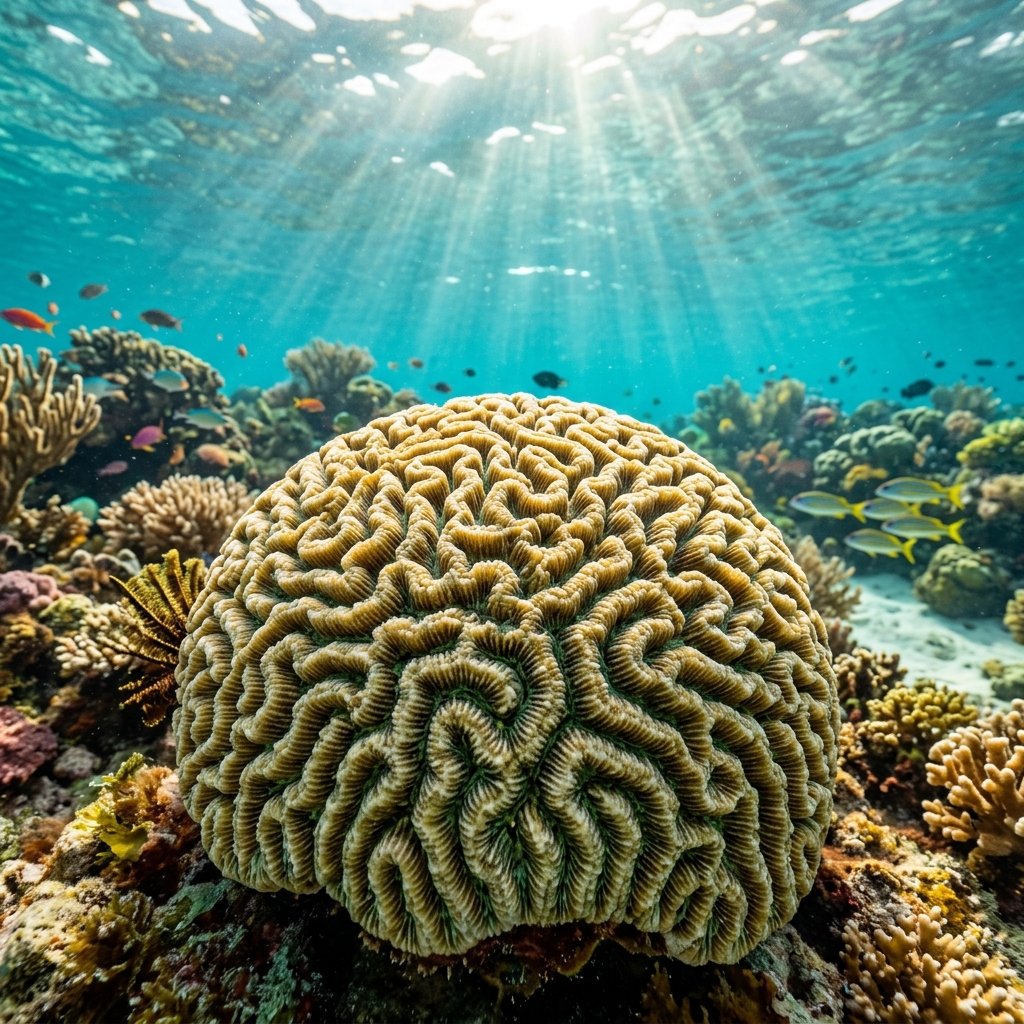
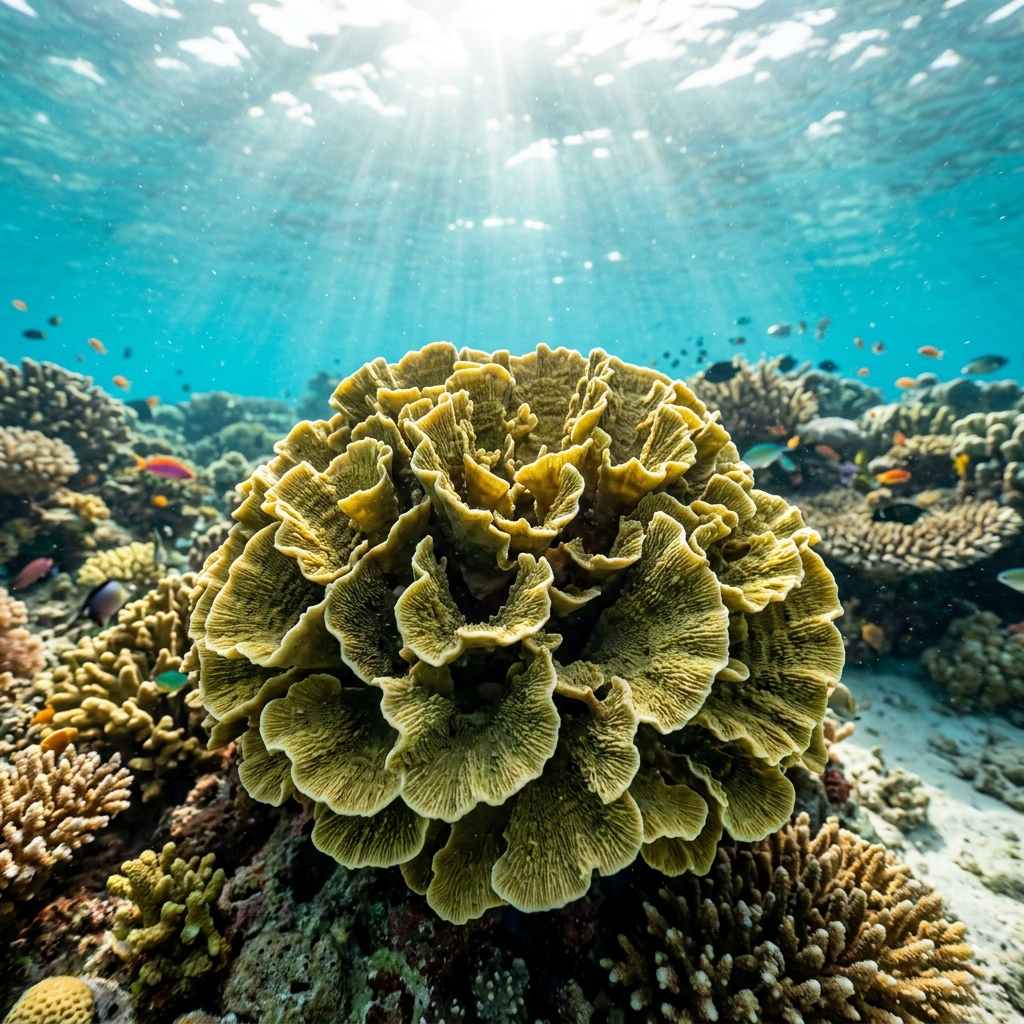
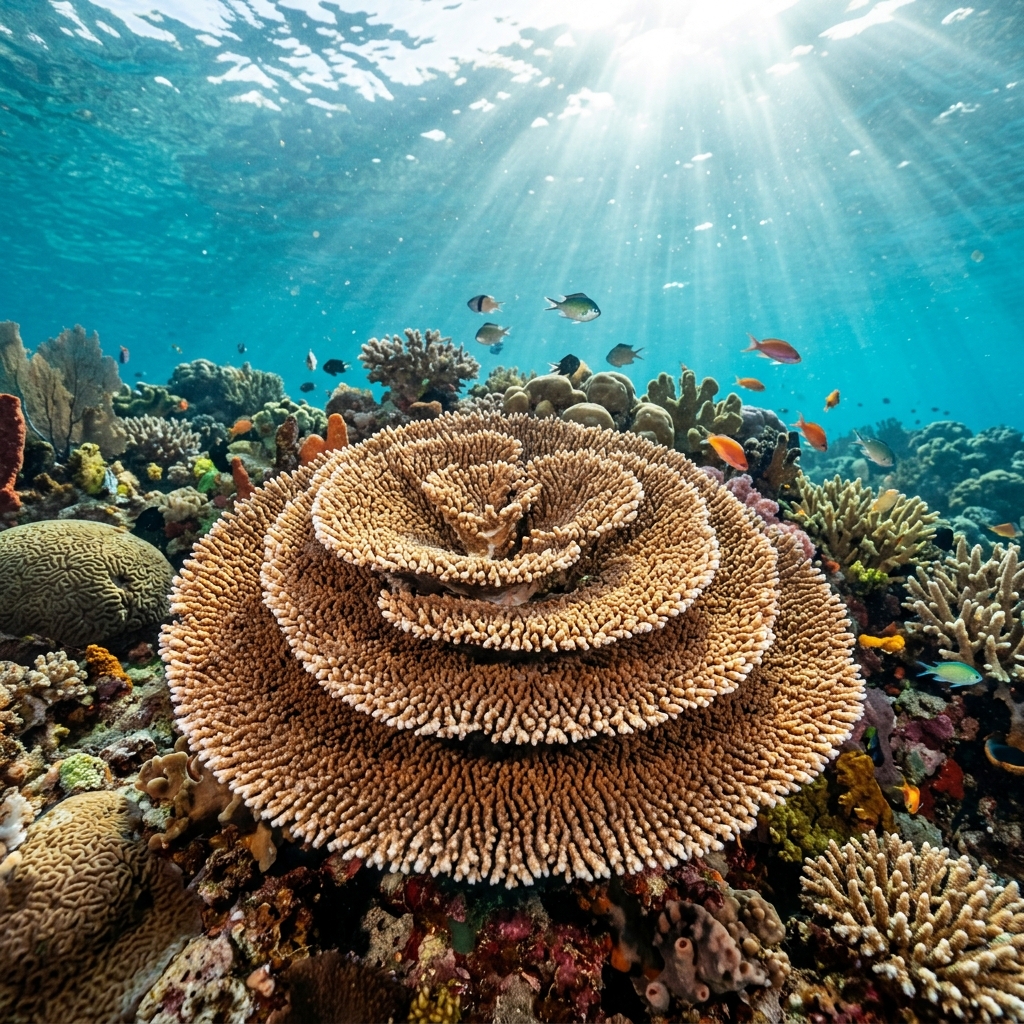
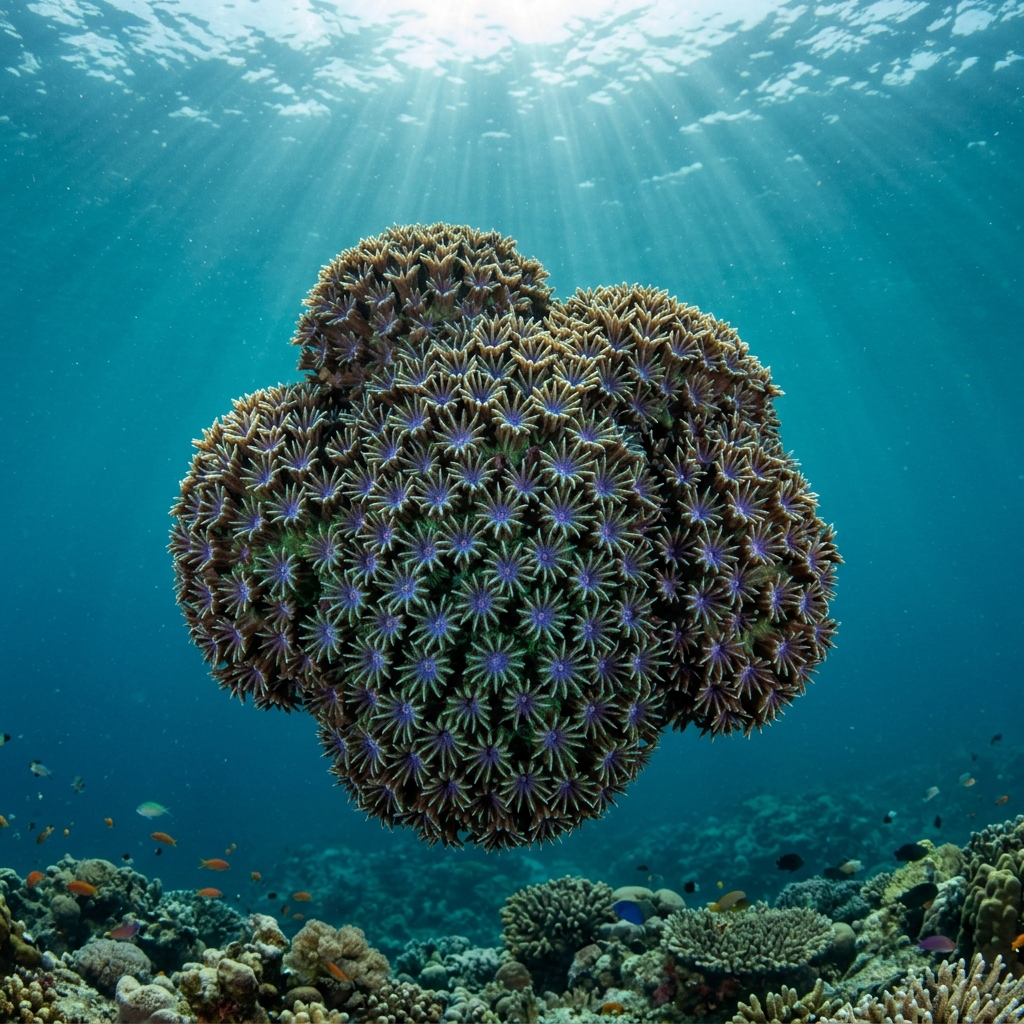
Reef neighbours a diver could mistake it for. Use the identification notes above to tell them apart.
Green Tree Coral turns up across the Indo-Pacific, with the strongest sighting records coming from Indonesia, the Philippines, and the Maldives. Within Indonesia, Maluku and Papua, Sumatra and Kalimantan, and Sulawesi are the standout regions, while Palawan and Apo Reef and the Visayas in the Philippines also produce consistent records. Queensland in Australia and sites across Malaysia and Thailand round out the reliable destinations.
Mapping where Green Tree Coral is logged…
The best chances are in Indonesia, the Philippines, and the Maldives. Within those countries, look to Maluku and Papua, Palawan and Apo Reef, the Visayas, and the Male and Ari Atolls. Queensland in Australia, Malaysia, and Thailand also have documented populations.
Northern Hemisphere sighting records concentrate in September, but because the species thrives at temperatures between 25 and 29 °C, it is present on tropical Indo-Pacific reefs year-round. Choosing a night dive or a shaded wall dive will improve your chances of seeing extended polyps.
Look for a dark olive-green to near-black branching colony that resembles a small tree or canopy on the reef. During the day the polyps are retracted, giving branches a smooth texture. That dark branching silhouette on a reef wall or overhang is the reliable ID cue.
No. Unlike most reef-building corals, it contains no photosynthetic algae and gets all its energy by catching plankton directly from the water. This means it can thrive on shaded overhangs and walls where light never reaches, which is one reason colonies turn up in such varied microhabitats.
Site and sighting data is aggregated from diver logs, iNaturalist and GBIF. For taxonomy and conservation status:
Plate Coral
2,991 sites