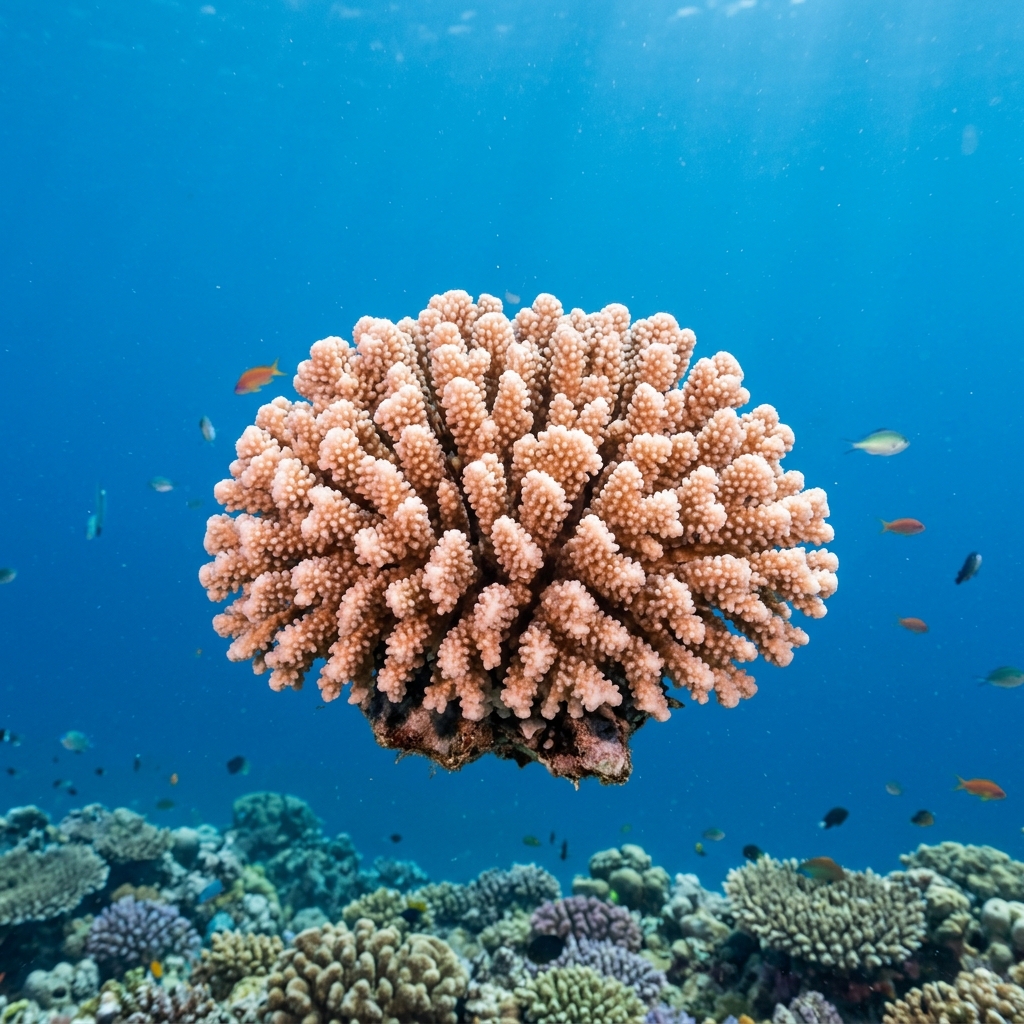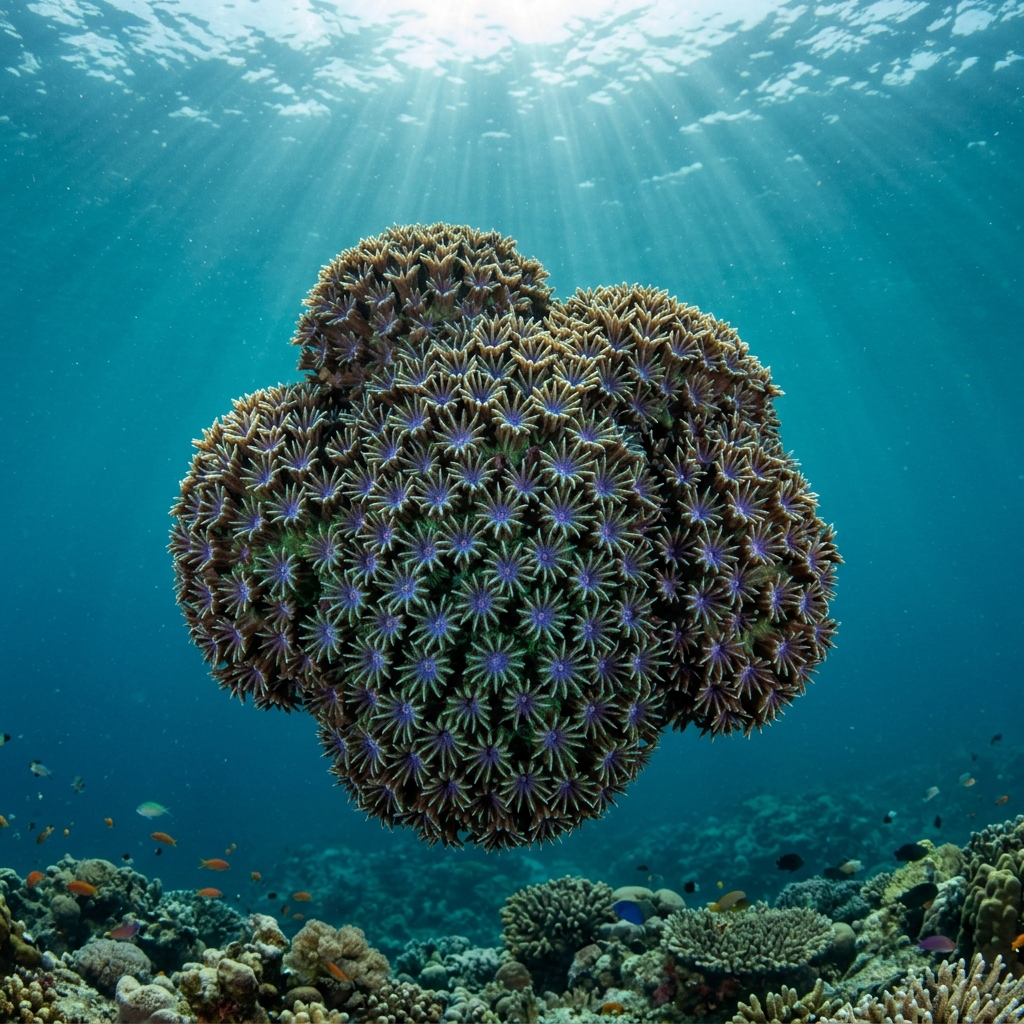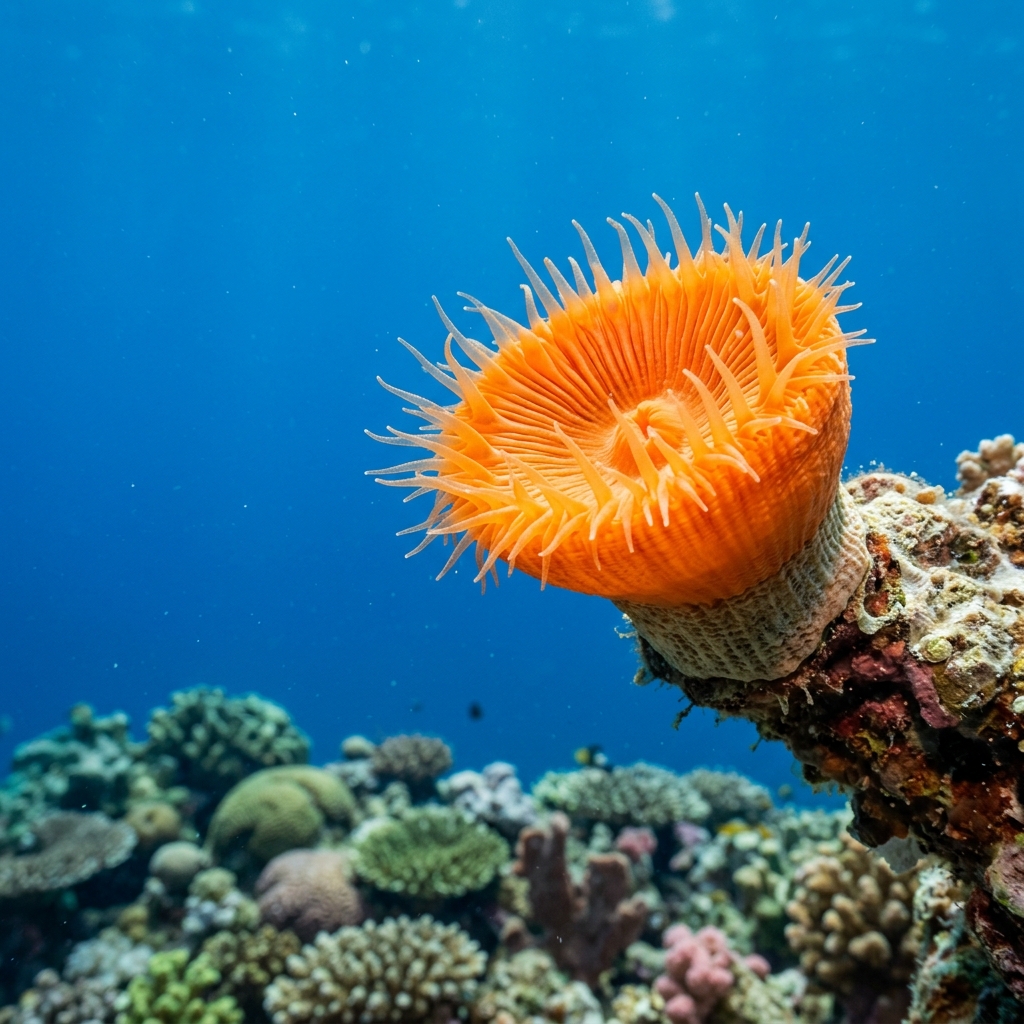
Balanophyllia elegans
Spot Orange Cup Coral along British Columbia and the US Pacific Coast in chilly 8-14 °C water. Here's how to find and recognise this small solo coral.
Look for a solitary polyp no bigger than a fingernail, glowing orange against dark rocky reef. Unlike colonial corals that form large heads or fans, each individual sits alone in its own small cup-shaped skeleton. The tentacles are short and arranged in a ring around a central disc, giving it a daisy-like silhouette. That vivid, uniform orange colour in cold-water conditions is the single most reliable field mark.
Orange cup coral does not move, retract dramatically when approached, or show any curiosity about divers passing by. During daylight it keeps its tentacles largely withdrawn, so the feeding display most people picture is a night-dive treat rather than a daytime one. Find it tucked into shaded rock faces or overhangs, typically on vertical or undercut surfaces where current delivers food.
This is one of the very few reef-building corals adapted to cold temperate water, thriving in temperatures as low as 8 °C where tropical coral species simply cannot survive. It builds a hard calcite skeleton just like its tropical relatives, making it a true stony coral in an environment most divers associate only with soft corals and kelp.
Northern Hemisphere data concentrates sightings between February and May, so late winter through spring is your best window along the BC and Pacific Coast.
Most sightings come from British Columbia and the US Pacific Coast, with the BC coast accounting for the lion's share of logged observations. Alaska and the Central and Mountain West regions of the United States also have recorded sites, and a small number of sightings reach as far as Mexico's Pacific Coast and the British Virgin Islands.
Mapping where Orange Cup Coral is logged…
The strongest concentration of sites is along the British Columbia coast and the US Pacific Coast, including documented sites in Alaska. Smaller numbers of sightings exist along Mexico's Pacific Coast and in the British Virgin Islands. Cold, rocky reef habitats are the common thread across all these locations.
Based on logged sightings in the Northern Hemisphere, February through May is the peak window. Winter and spring diving along the BC and Pacific Coast lines up well with this pattern, though the species is present year-round in its cold-water habitat.
Look for a solitary, cup-shaped coral about 1 cm across with a distinctly bright orange colour. Each polyp lives alone rather than in a colony, which immediately separates it from most other hard corals. The small size and vivid orange on cold, dark rock are the key features to lock on to.
Each individual polyp reaches roughly 1 cm across. That makes it easy to overlook on a reef scan, so slow down and check shaded rock faces and overhangs rather than scanning open surfaces.
No, it is one of the rare hard corals adapted to cold temperate seas, observed in water between about 8 and 14 °C. It builds a true calcite skeleton just like tropical stony corals, but thrives in the cold Pacific waters of British Columbia and the western United States where most corals cannot survive.
Site and sighting data is aggregated from diver logs, iNaturalist and GBIF. For taxonomy and conservation status:
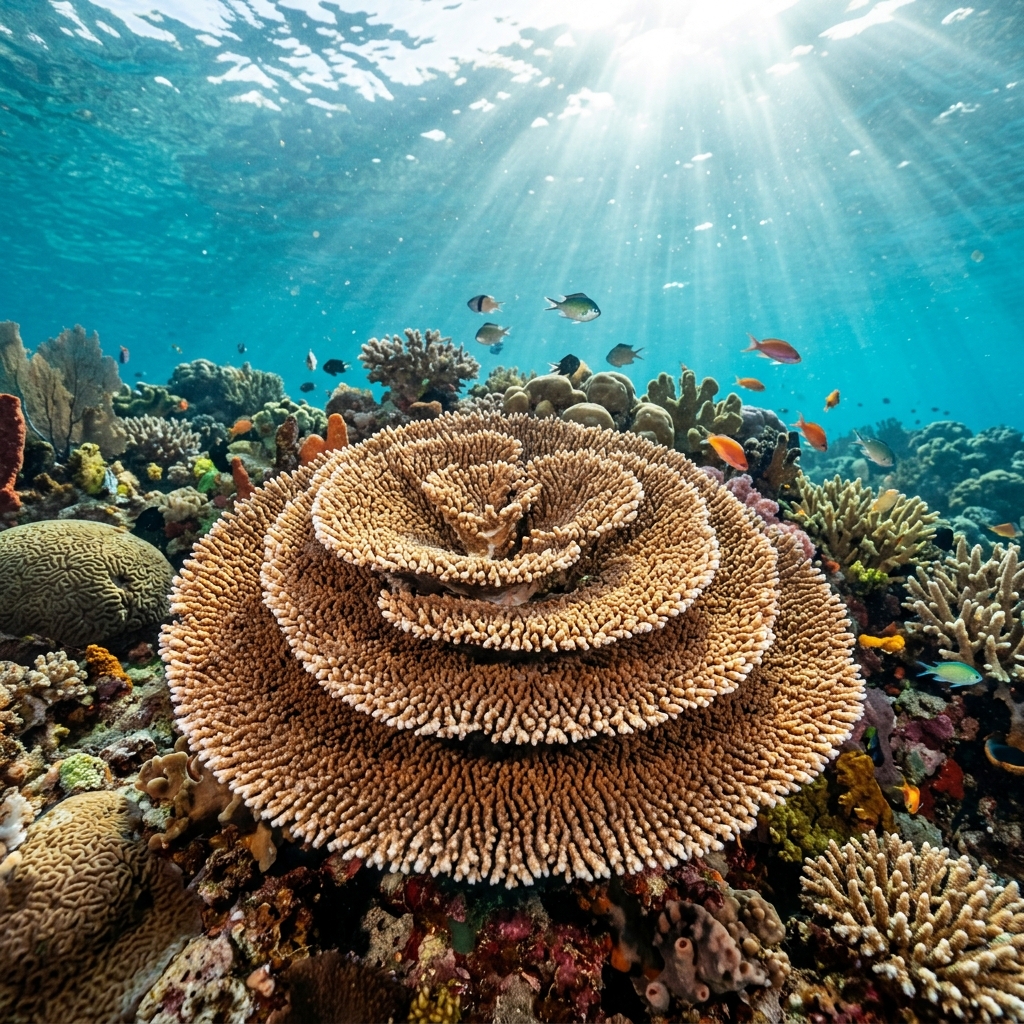
Plate Coral
2,991 sites