Panulirus gracilis
Long antennae, olive-green shell, tucked into reef cracks off Guanacaste and Cocos Island year-round in 24-30C water.
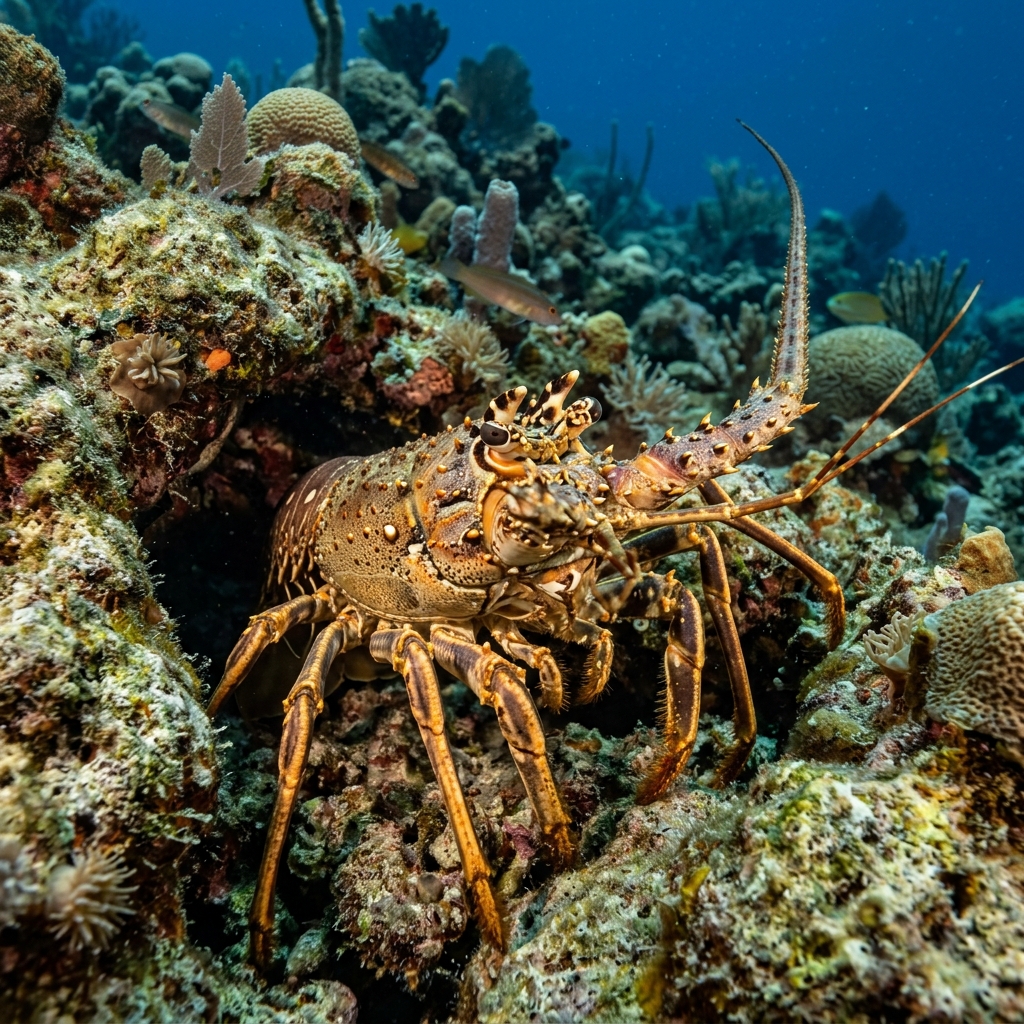
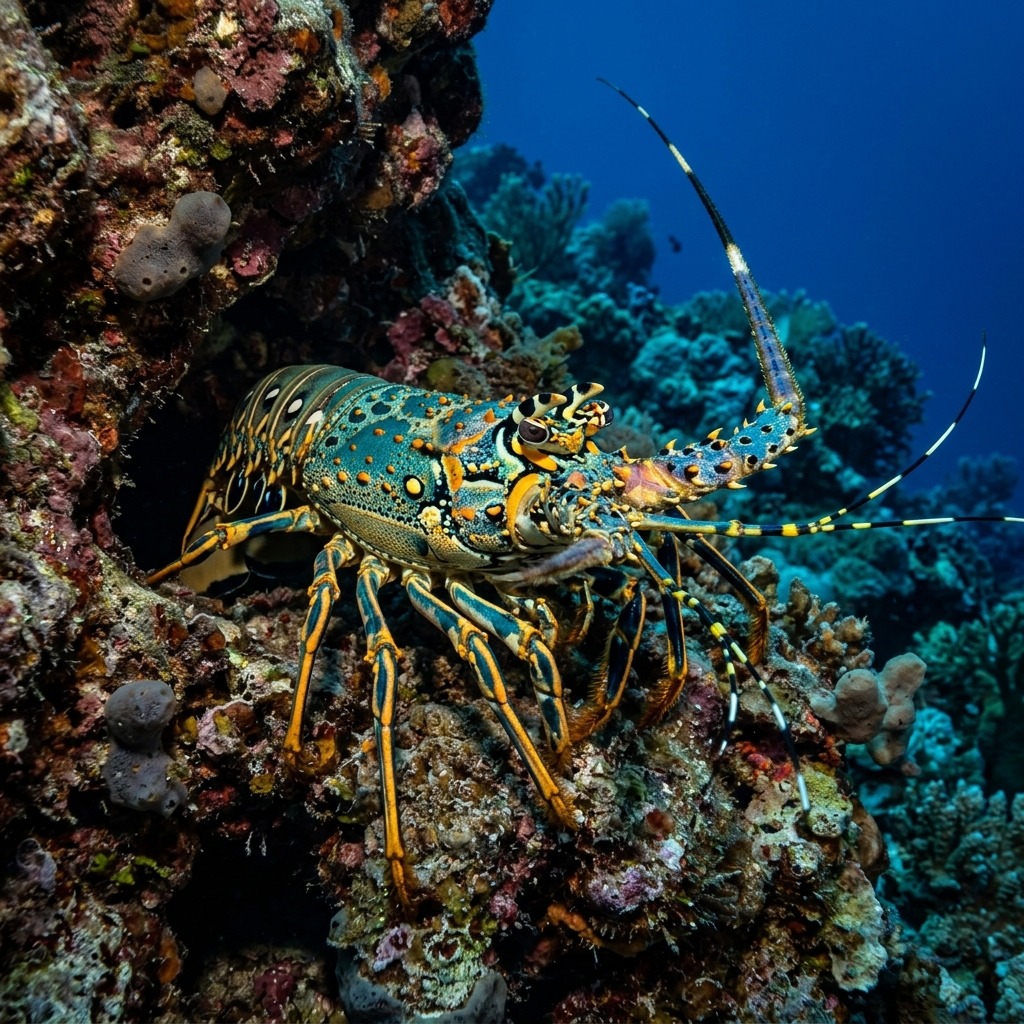
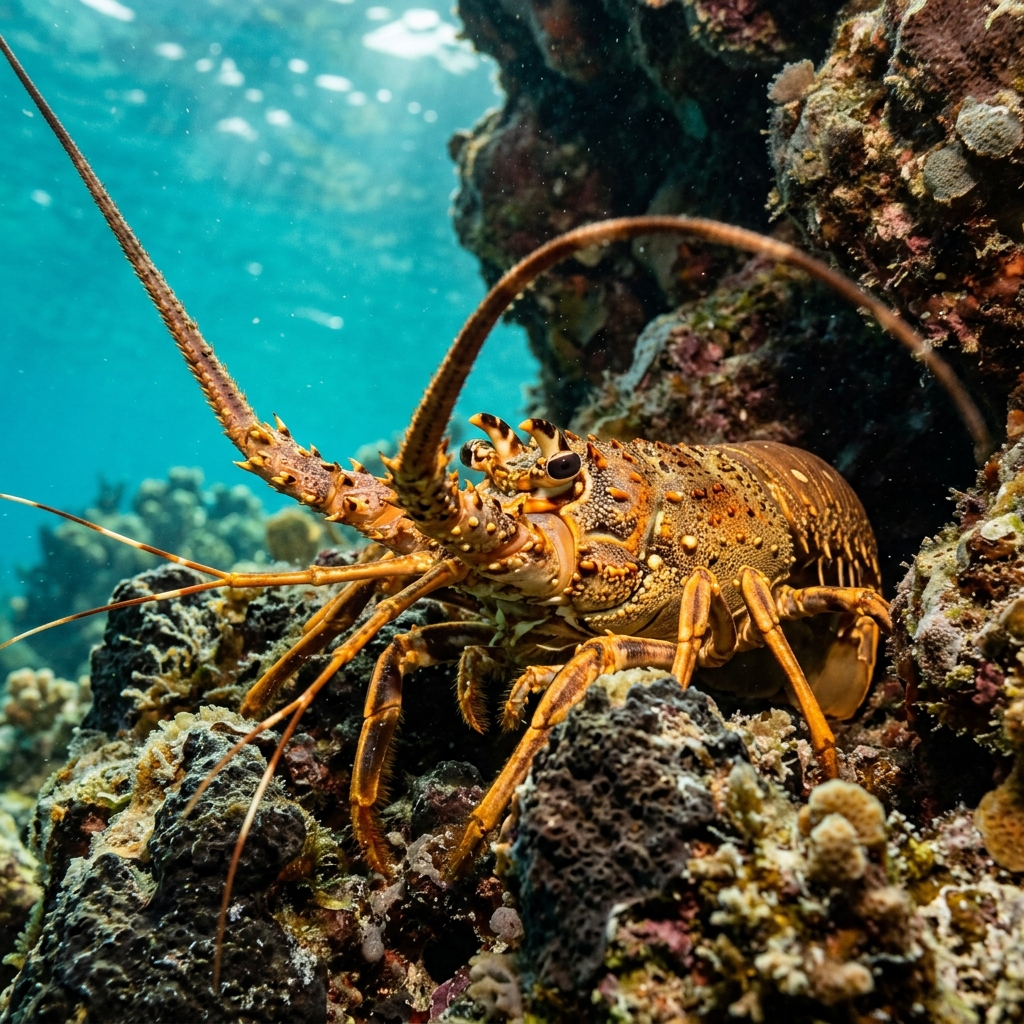
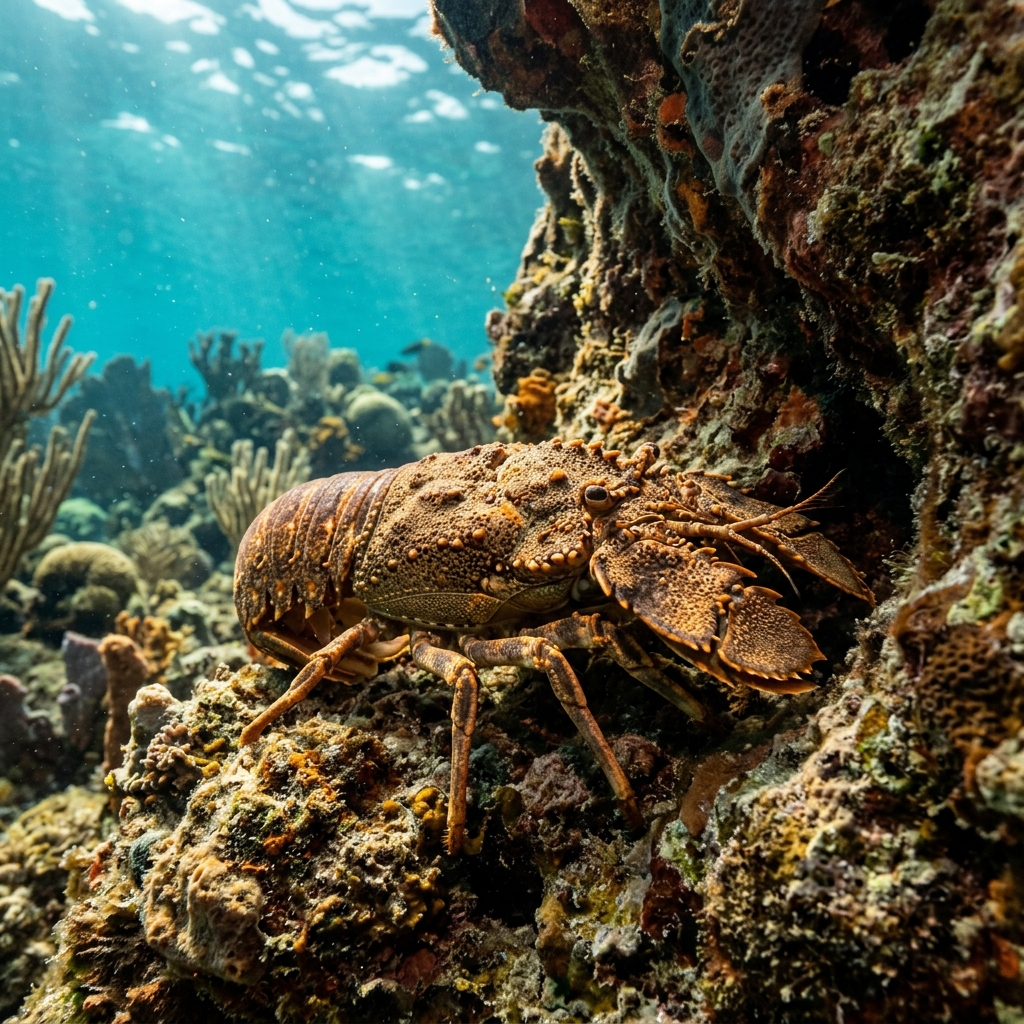
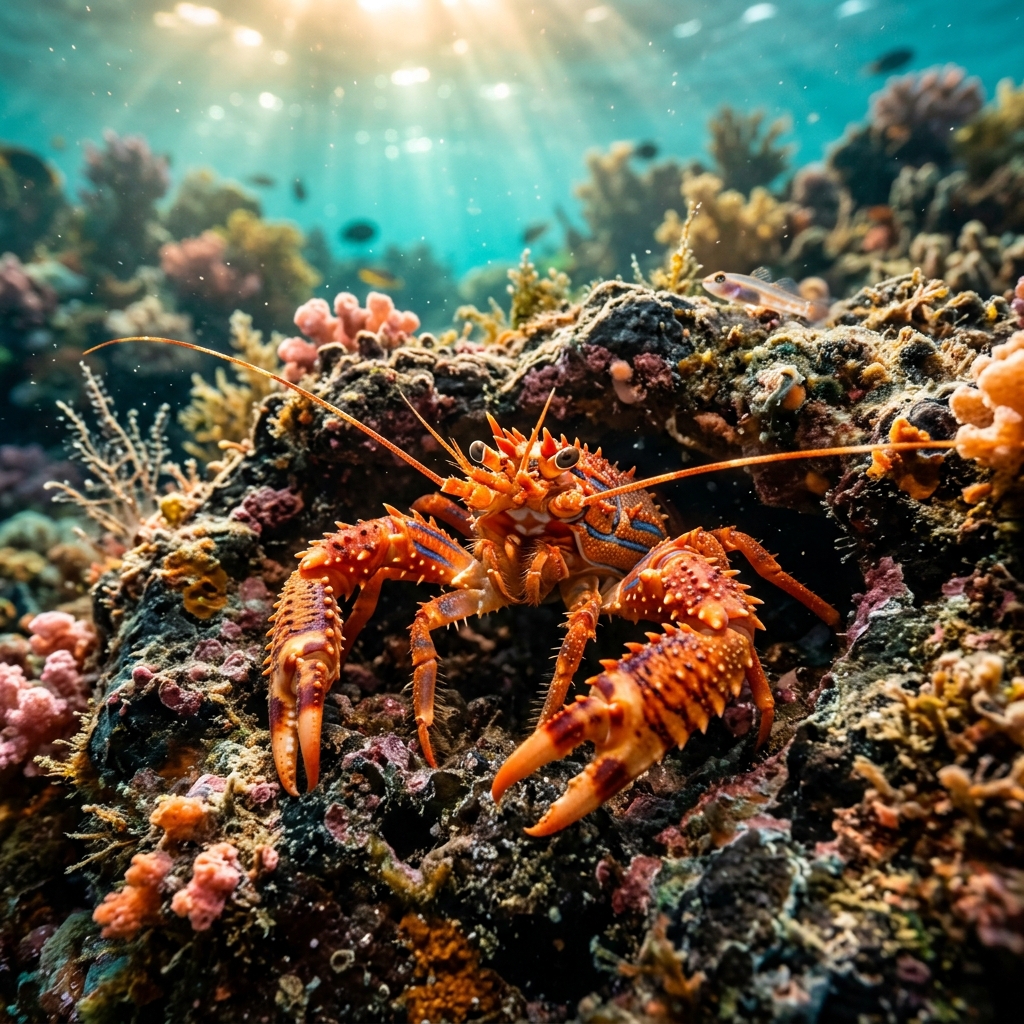
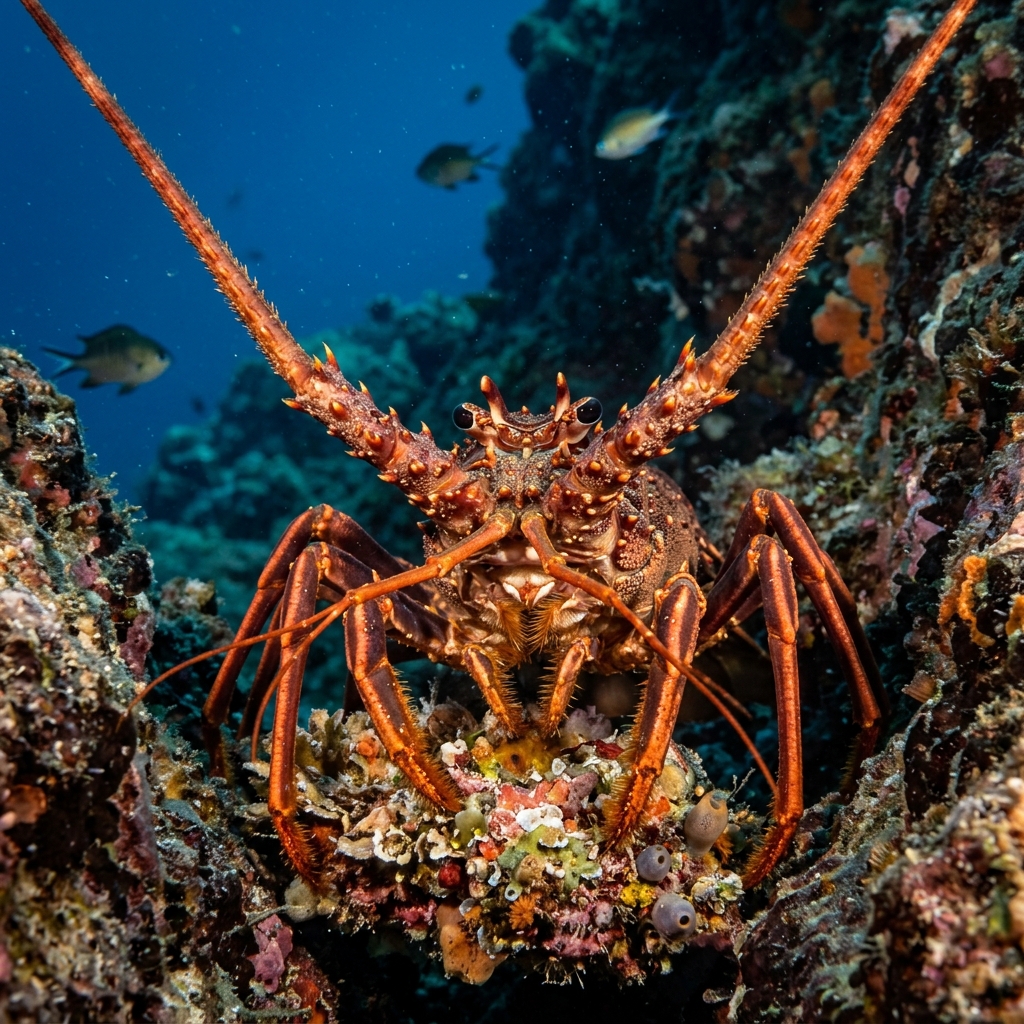
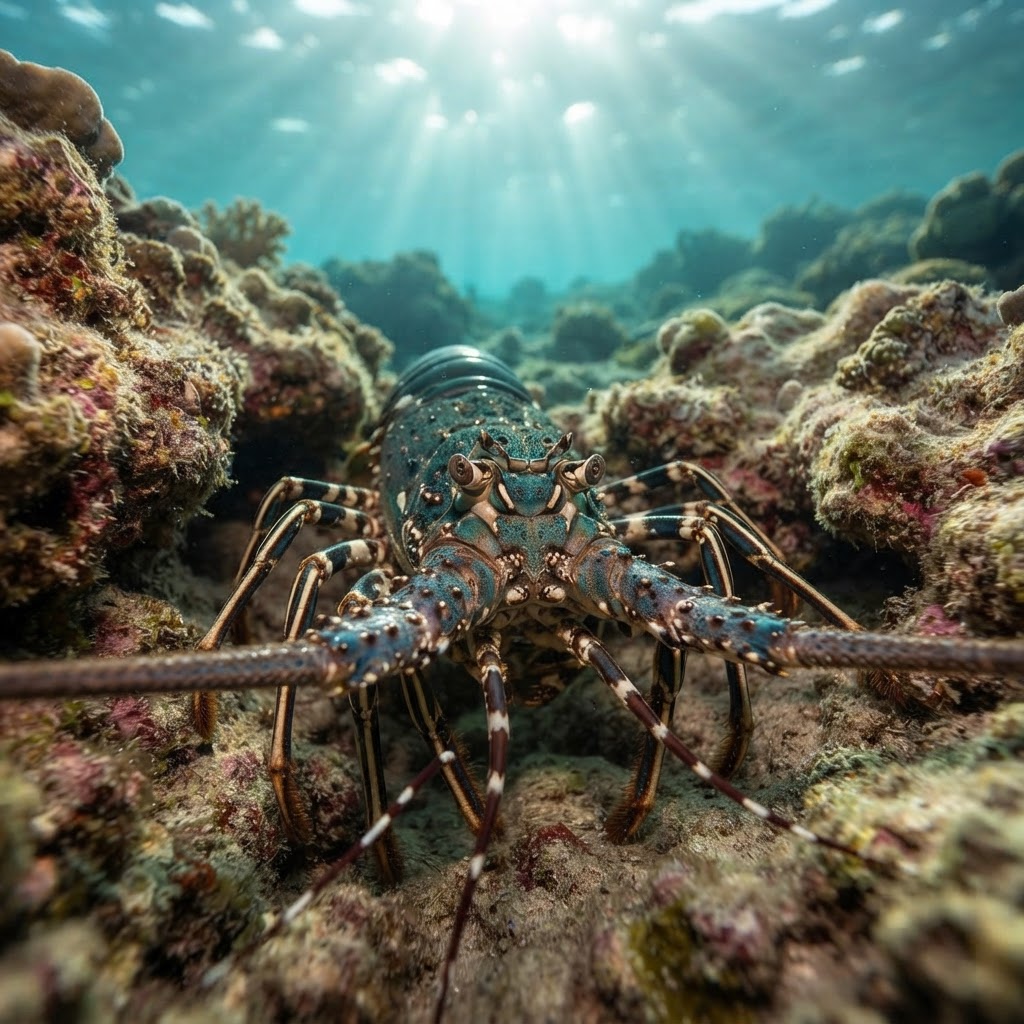
Look for a robust, spiny shell in olive to greenish-brown tones, usually growing to around 22 cm, with a pair of long, thick antennae swept back over the body. There's no obvious claw like a true lobster, and the whole body is covered in short forward-pointing spines that give it its name. Most sightings are of the animal wedged into a crevice or under a ledge with just the antennae and eye stalks visible.
Expect to find it wedged into rocky crevices, ledges, or under coral rubble during the day, antennae poking out as an early warning system. It's a nocturnal forager by nature, so daytime encounters are mostly of it resting rather than active, and it will usually back deeper into its hole rather than flee if a diver approaches closely.
Those long antennae aren't just for show, they're whip-like defensive tools the lobster flicks and rasps against attackers, which is why it relies on backing into a tight crevice rather than swimming away when threatened.
No clear seasonal pattern shows up in the sightings, and with a comfortable range of roughly 24 to 30C year-round off Costa Rica's Pacific coast, it's reasonable to expect a chance of seeing one on any dive at these sites.
Reef neighbours a diver could mistake it for. Use the identification notes above to tell them apart.
This is a Costa Rica specialty on the data logged so far, most commonly found around Guanacaste and the Central Pacific coast, with a solid presence at Cocos Island and a smaller showing in the South Pacific region. Divers tend to log it as an uncommon to rare find tucked into rocky reef structure rather than out in the open.
Mapping where Green Spiny Lobster is logged…
Costa Rica's Pacific coast is the strongest area on record, particularly Guanacaste and the Central Pacific, with additional sightings around Cocos Island and the South Pacific region.
There's no detected seasonal pattern, and water stays in a comfortable 24 to 30C range off Costa Rica year-round, so sightings are possible on any given dive rather than tied to a particular month.
Check for an olive-green spiny shell around 22 cm long with long, thick banded antennae, usually spotted with just the antennae and eyes showing from a rocky crevice.
They typically reach around 22 cm in body length, making them a mid-sized reef lobster rather than one of the giants of the group.
No, they pose no danger to divers. They rely on hiding in crevices and flicking their spiny antennae at threats rather than any behaviour that risks divers.
Their long antennae double as defensive weapons, rasped and flicked at predators, which is why they favour backing deep into a crevice over swimming into open water when disturbed.
Site and sighting data is aggregated from diver logs, iNaturalist and GBIF. For taxonomy and conservation status:
Caribbean Spiny Lobster
2,209 sites