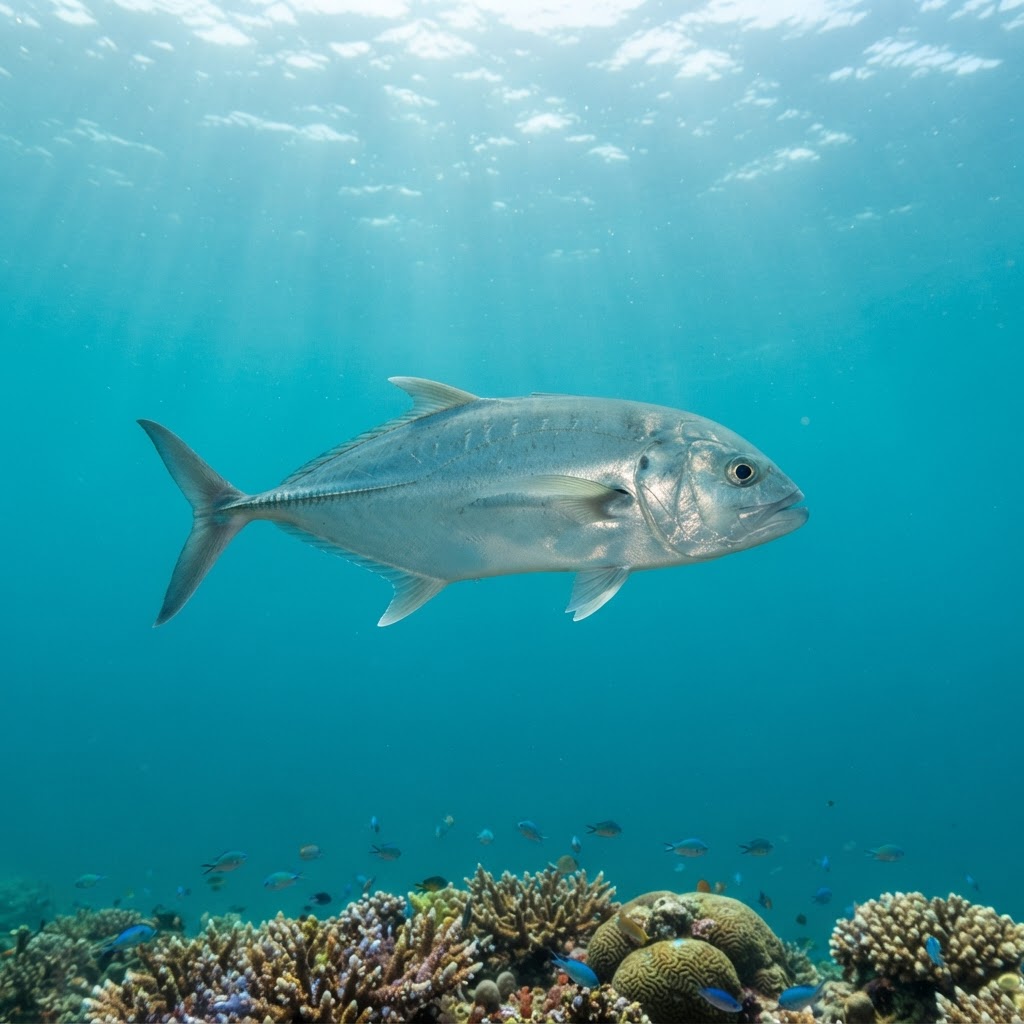
Caranx caballus
Silvery schooling jacks logged across Mexico's Pacific coast and Baja, in water from 18 to 29C. Here's how to spot them and where to look.
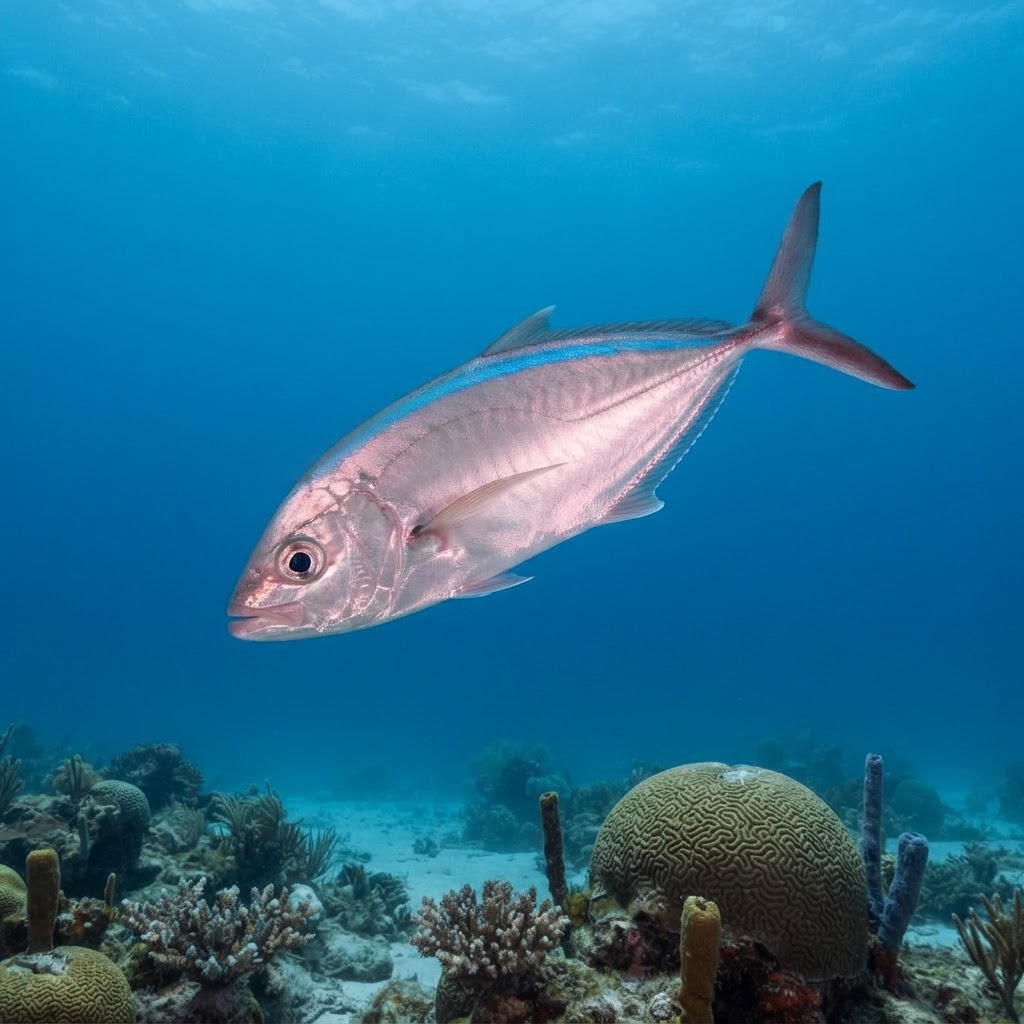
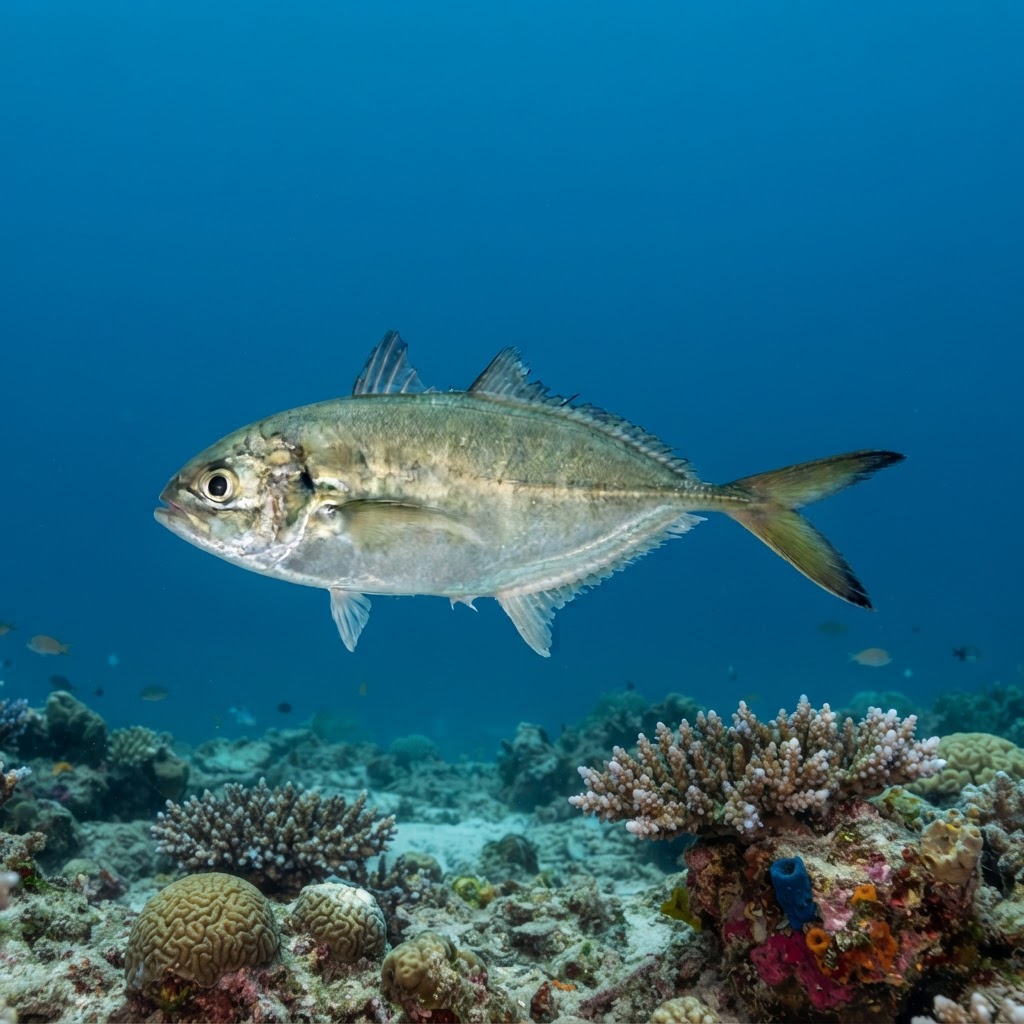
Streamlined, silvery jack with a faint greenish-bronze sheen along the back and a sharply forked tail. Grows to around 38 cm, smaller and slimmer than many reef jacks, with a steep forehead profile and a small dark spot near the gill cover. Usually seen moving in loose schools rather than as solitary fish, which helps separate it from bulkier lookalike species.
Typically spotted cruising in loose, open-water schools over rocky and mixed reef, often moving through mid-water rather than hugging the bottom. Divers describe it as an uncommon to rare sighting at most sites, so it tends to pass through rather than hold station, showing little interest in divers as it goes. Look for it mixed in with other jack species over structure where currents sweep past.
Being classed as uncommon or rare at the vast majority of its logged sites suggests it moves through as part of transient baitfish-style schools rather than holding fixed territory on a reef.
Sightings show no clear seasonal pattern, and the species tolerates a wide range from 18.1 to 28.9C, so it turns up year-round wherever divers log it. Treat it as a possible encounter on any dive in its range rather than a seasonal target.
Reef neighbours a diver could mistake it for. Use the identification notes above to tell them apart.
Most reliably logged along the Pacific Coast of Mexico and in Baja California, with a further cluster of sightings on Panama's Pacific coast. Smaller numbers turn up in Costa Rica, including the Central Pacific and Guanacaste regions, making Mexico's Pacific side the strongest bet overall.
Mapping where Green Jack is logged…
The strongest sightings come from Mexico's Pacific Coast and Baja California, with additional records along Panama's Pacific coast and smaller numbers in Costa Rica's Central Pacific and Guanacaste regions.
There's no detected seasonal pattern, and it's recorded across a wide temperature range from about 18 to 29C, so sightings happen year-round rather than in a specific window.
Look for a slim, silvery jack around 38 cm with a greenish-bronze back, forked tail, and a steep forehead, usually moving in a loose school rather than alone.
They typically reach around 38 cm, making them a mid-sized jack rather than one of the larger trevally species divers encounter on the same reefs.
No, they're not considered dangerous to divers and generally show little interest in people as they pass through on open-water schools.
Site and sighting data is aggregated from diver logs, iNaturalist and GBIF. For taxonomy and conservation status:
Bigeye Trevally
2,591 sites