Hippocampus kelloggi
A rare find off New South Wales, Australia, this 20cm seahorse turns up in waters between 23 and 28°C, year-round.
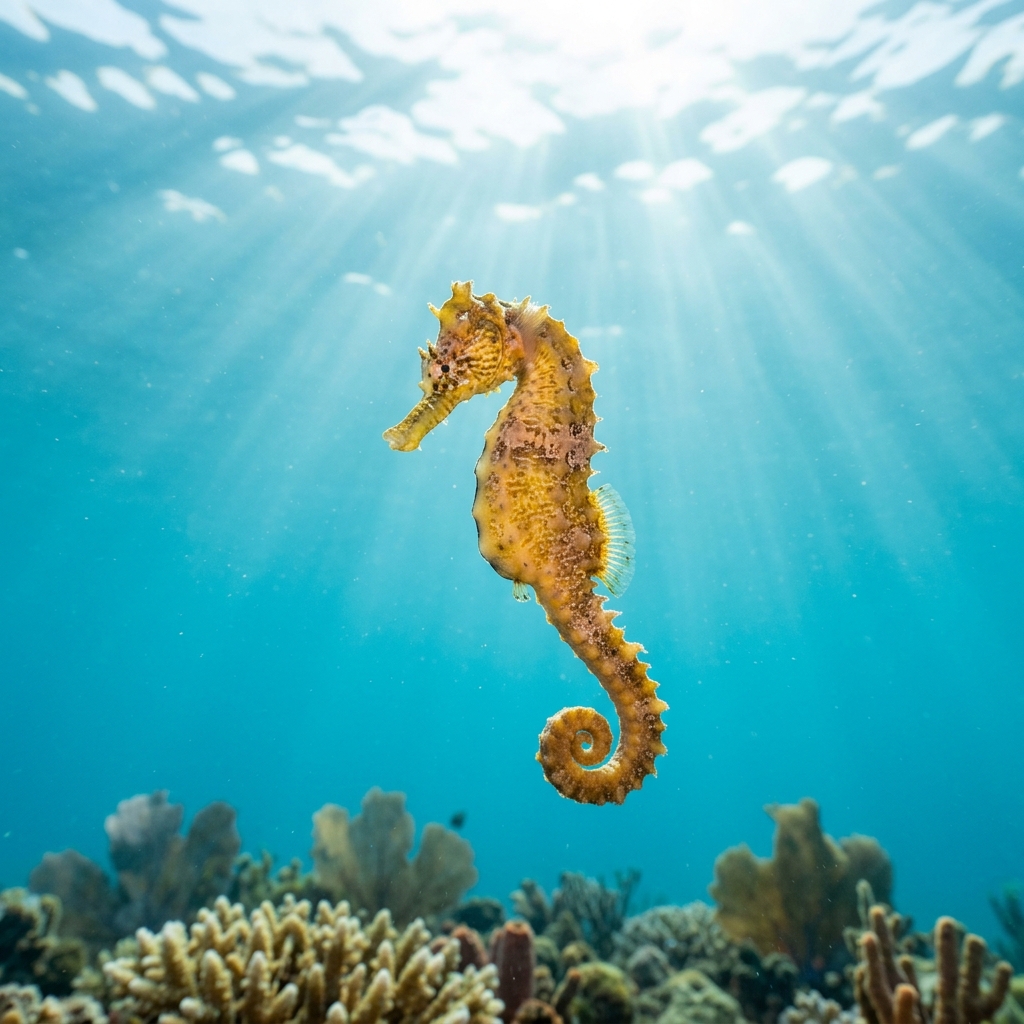
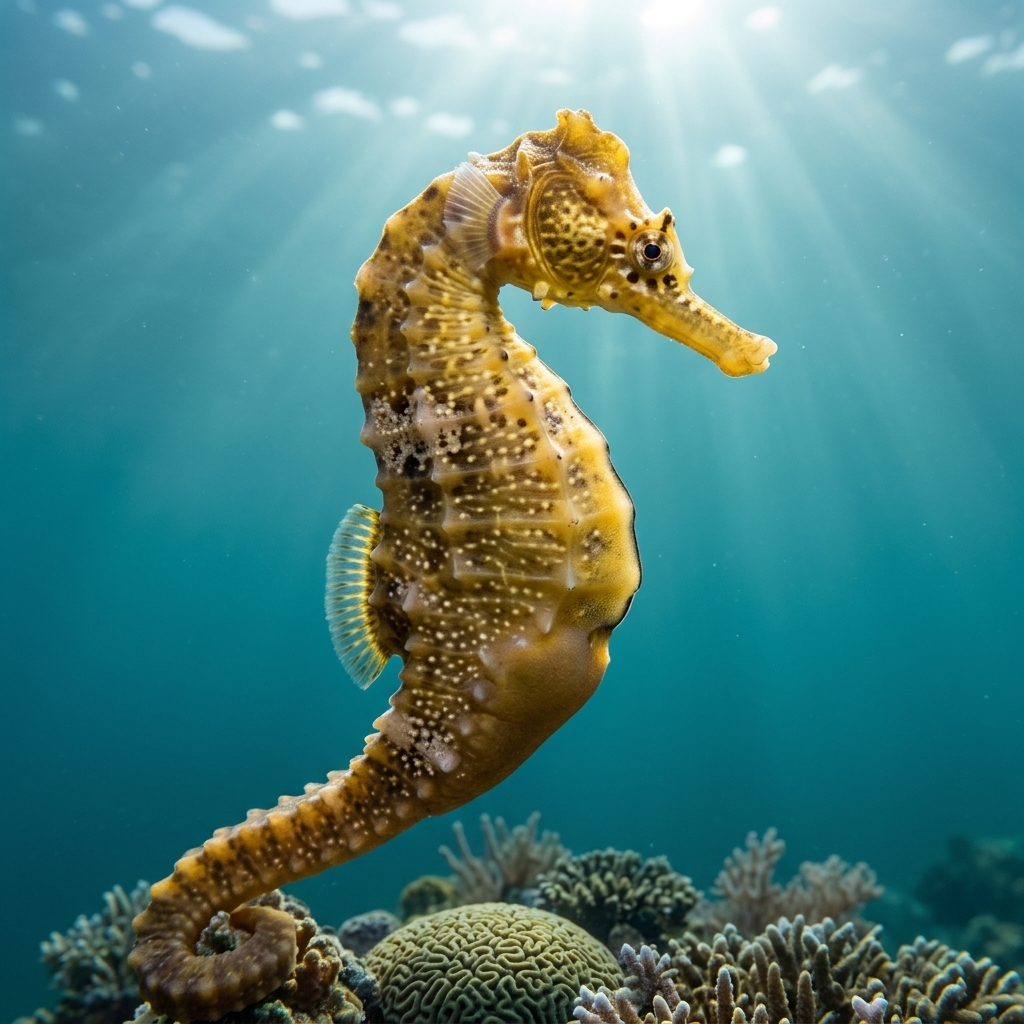
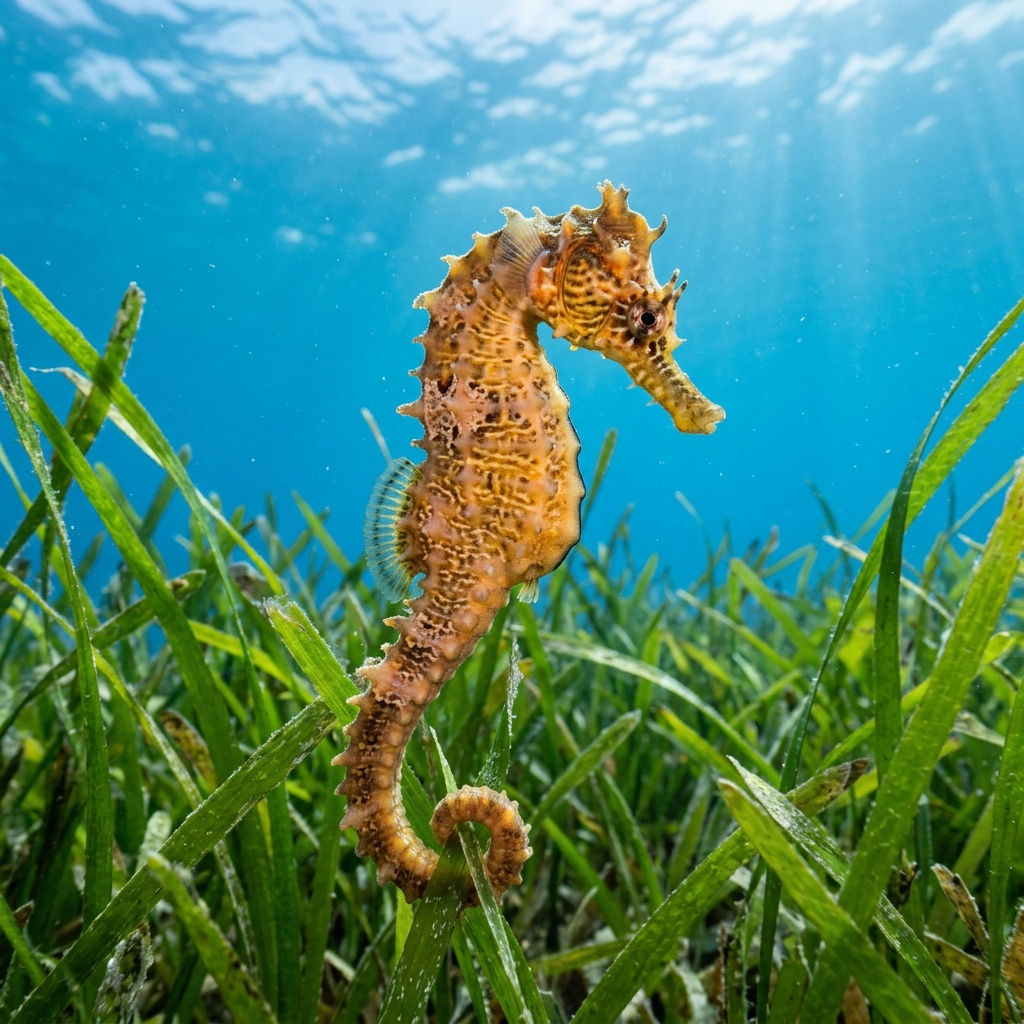
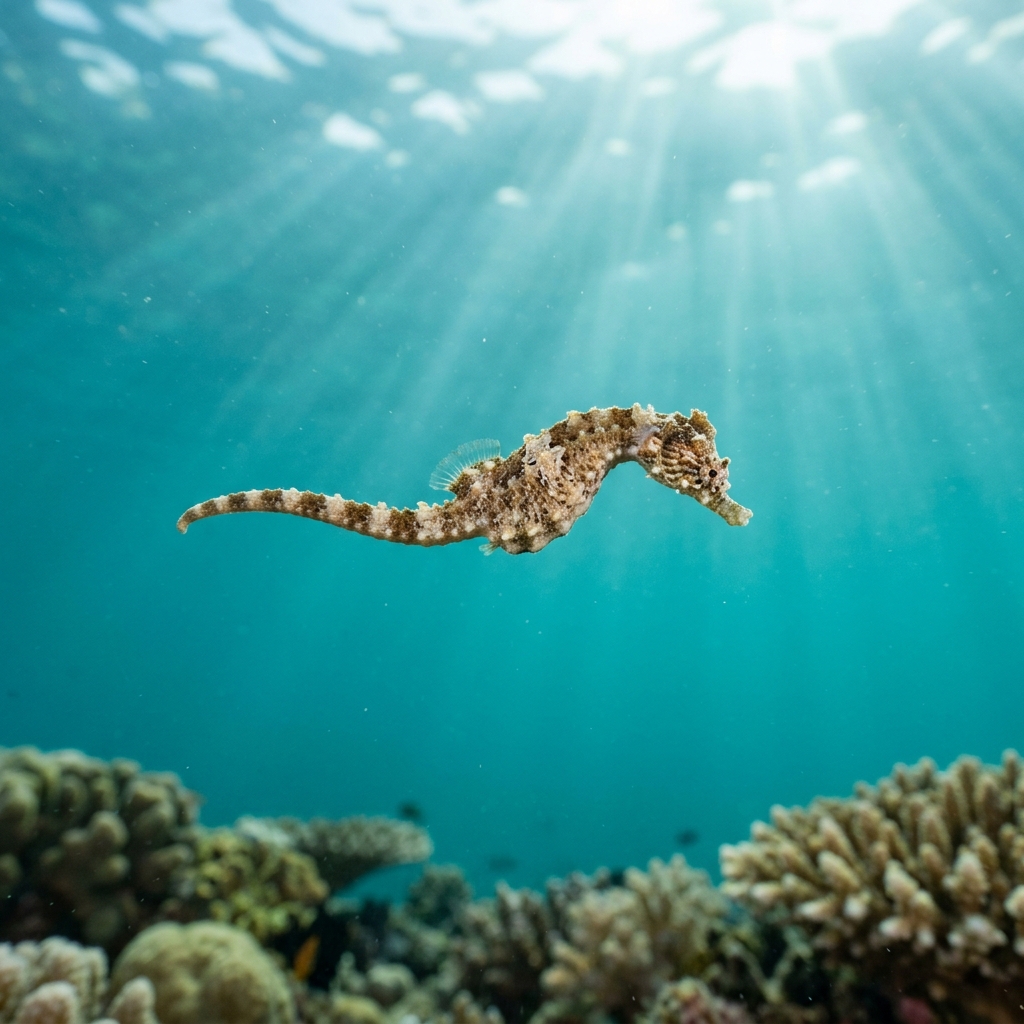
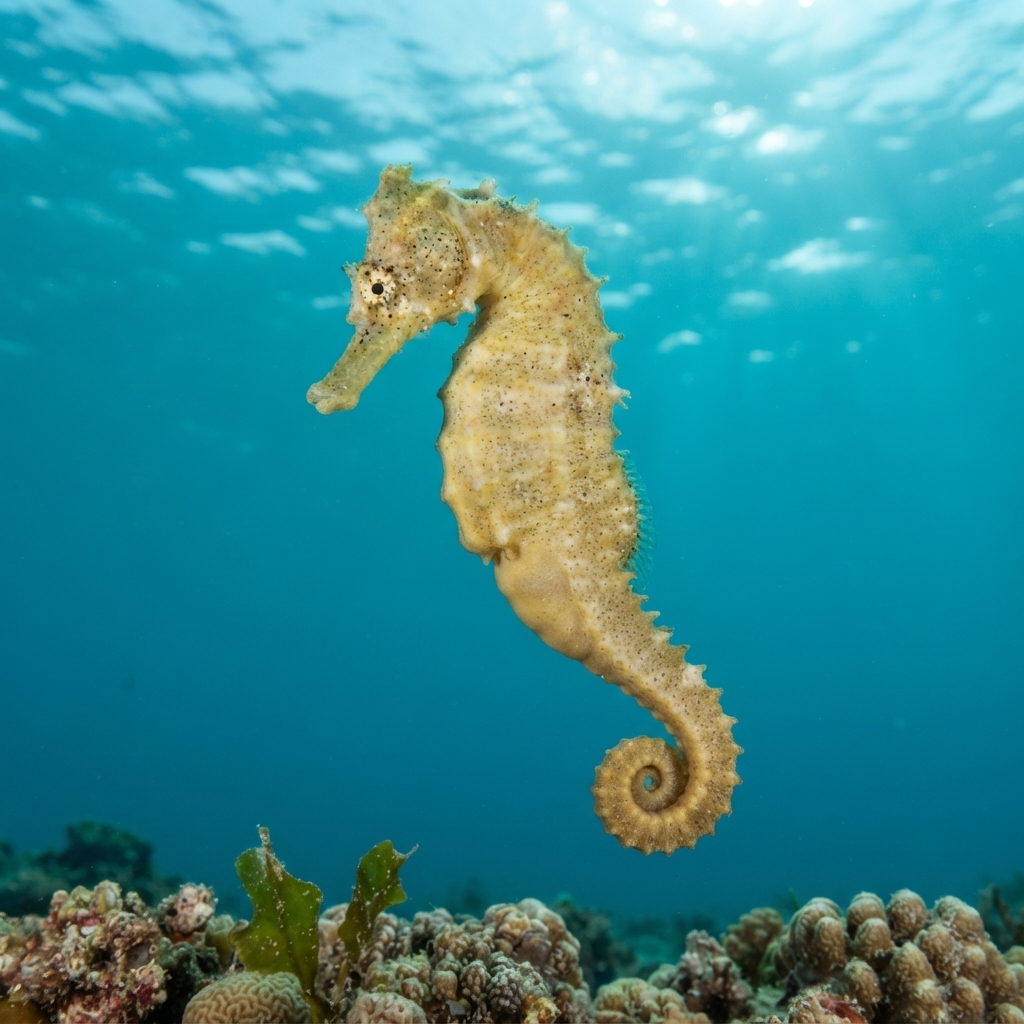
A large, robust seahorse for the genus, reaching around 20 cm, usually mottled in tan, grey or dull brown to blend against rock and reef structure. Look for a smooth or lightly spined body, a long snout, and the coiled tail wrapped tight around a holdfast rather than swimming freely. It sits still against the substrate, so the giveaway is often the shape rather than any bright colour.
Expect a slow, sedentary animal anchored by its tail to a rock ledge, sponge or piece of reef structure, barely moving even as divers pass close by. It relies on camouflage rather than flight, so most sightings come from divers scanning slowly along structure rather than seeing it swim into view.
Like all seahorses, males carry the fertilised eggs in a brood pouch and give birth to fully formed young, flipping reproductive roles compared to most fish.
There is not enough seasonal data yet to call a best month, so treat it as a year-round possibility. Observed water temperatures of 23.3 to 28.4°C suggest it favours warm temperate to subtropical reef conditions rather than a narrow seasonal window.
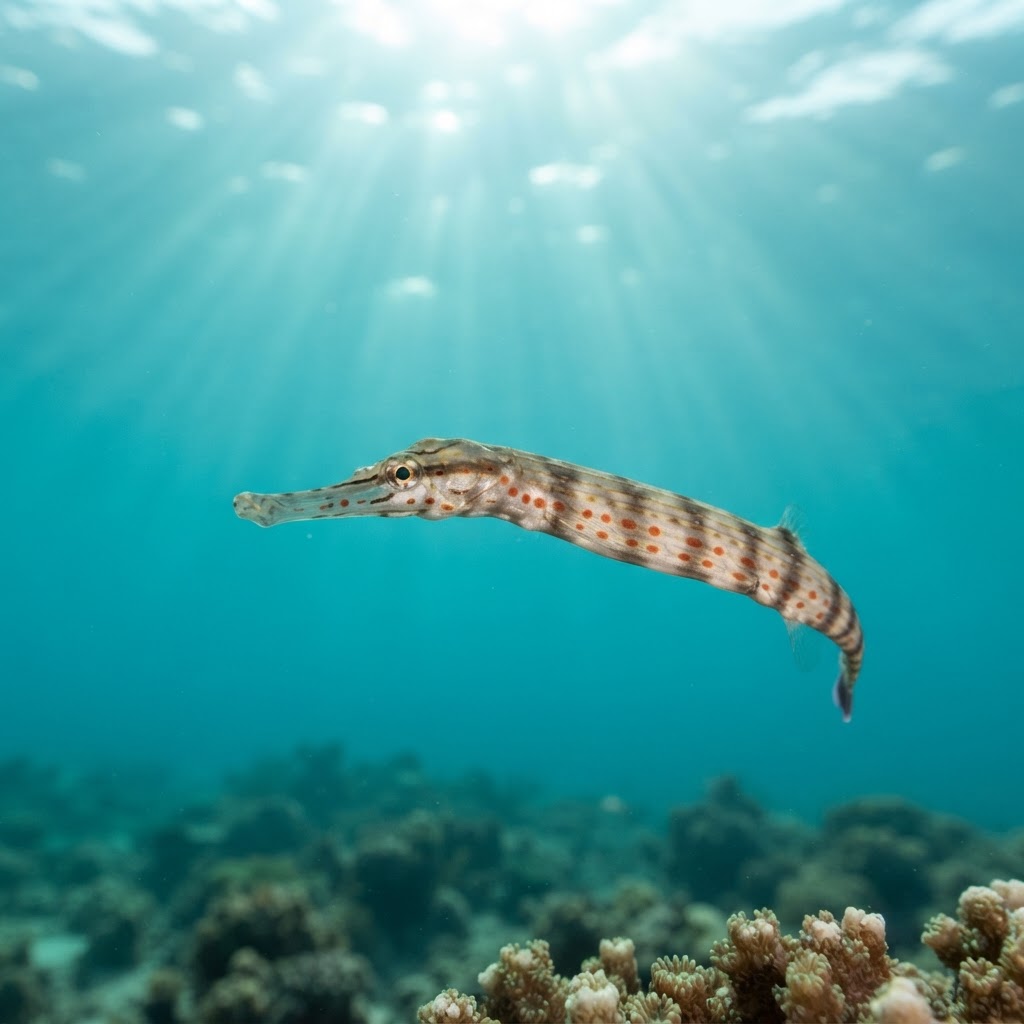
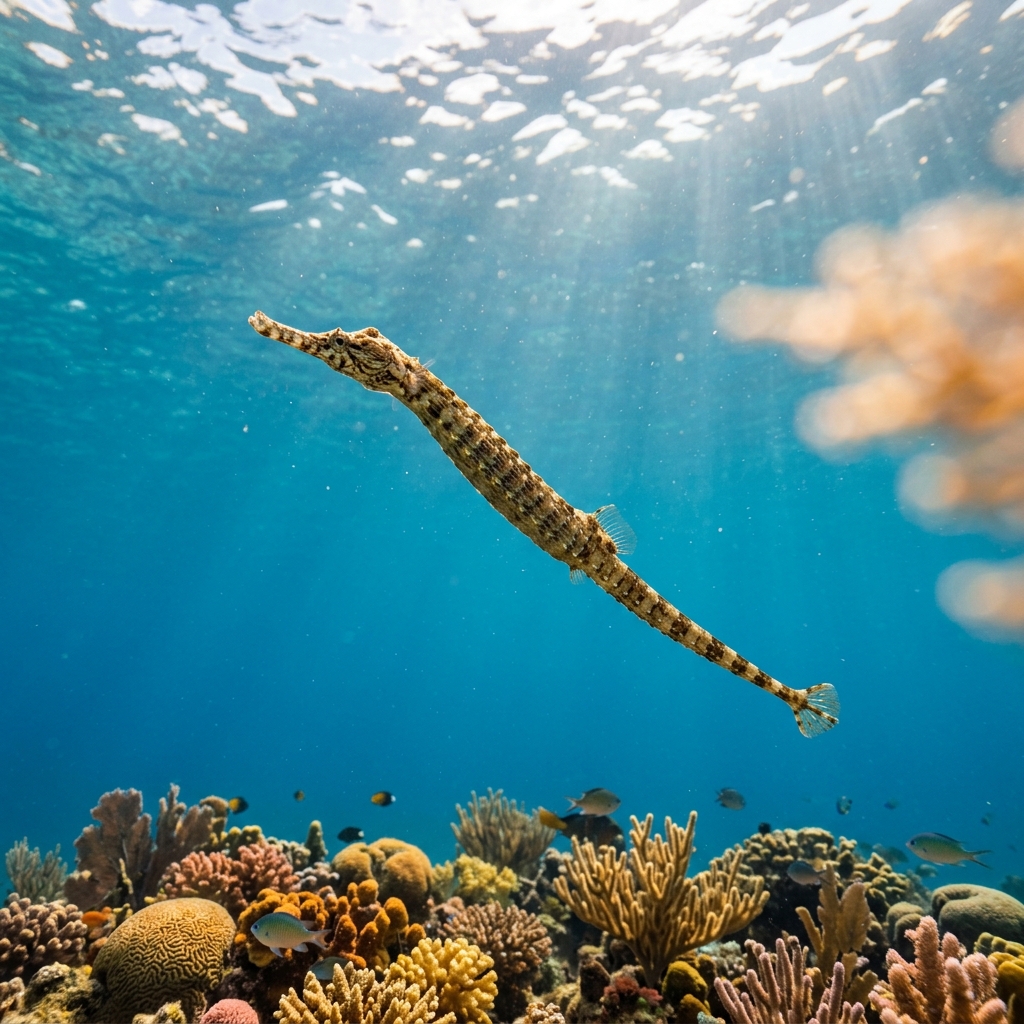
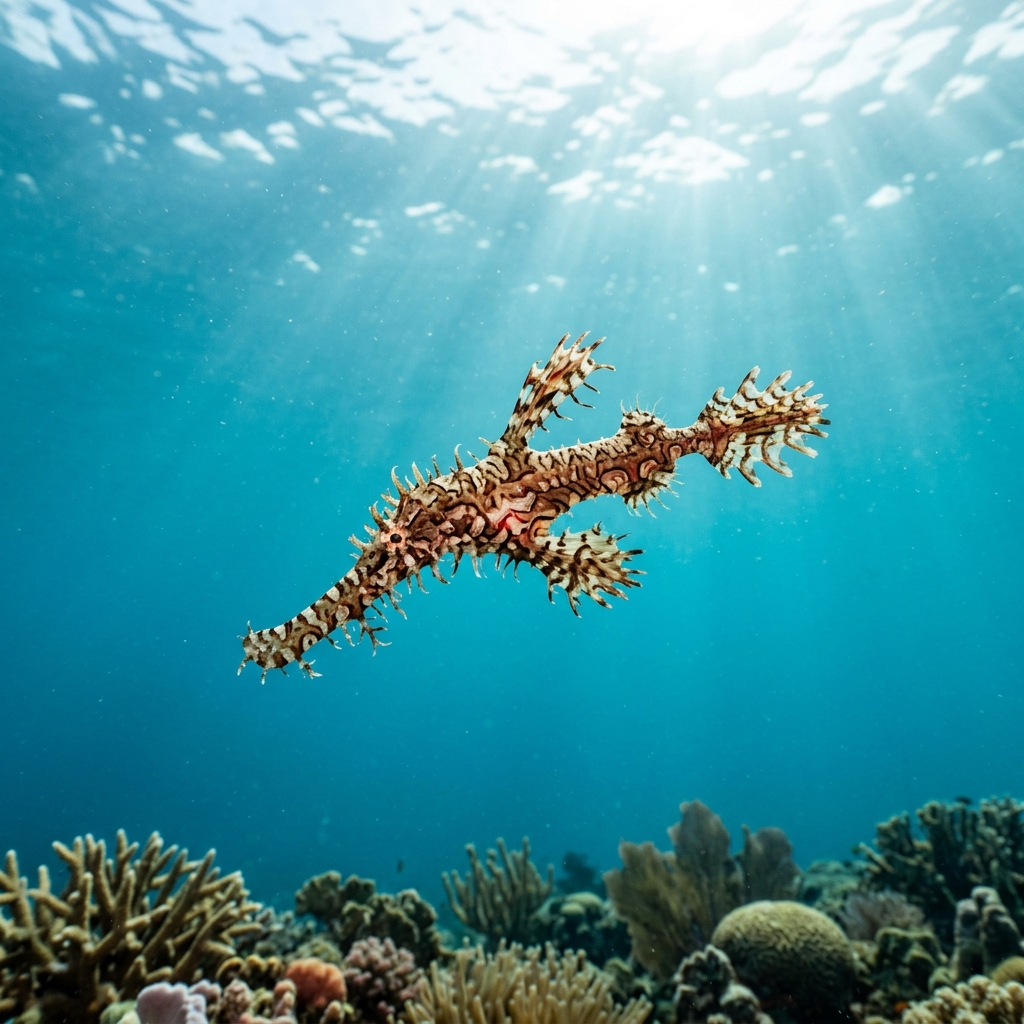
Reef neighbours a diver could mistake it for. Use the identification notes above to tell them apart.
Logged diving records point to New South Wales, Australia as the place to look, with sightings so far concentrated at a single known site there. Treat any encounter as a stroke of luck rather than a reliable plan, since this species is not widely reported across dive regions.
Mapping where Great Seahorse is logged…
The only confirmed dive records come from New South Wales, Australia, where it has been logged at a single site. It is not a species with a wide known dive-tourism range at this stage.
There is no clear seasonal pattern in current sightings, so it is treated as a year-round possibility. It has been recorded in water between 23.3 and 28.4°C.
They reach around 20 cm, making them one of the larger seahorse species a diver might encounter.
Look for a large, mottled tan or grey seahorse around 20 cm long, anchored by its tail to reef structure rather than swimming in open water. Its bulkier body and long snout help separate it from smaller seahorse species.
Males carry developing eggs in a belly pouch and give birth to live young, a reversal of typical fish reproduction. This trait is shared across all seahorse species.
Site and sighting data is aggregated from diver logs, iNaturalist and GBIF. For taxonomy and conservation status:
Seahorse
1,346 sites