Choerodon graphicus
Uncommon reef wrasse logged widely in Queensland and Nouméa, at home in warm 24-27C water year-round.
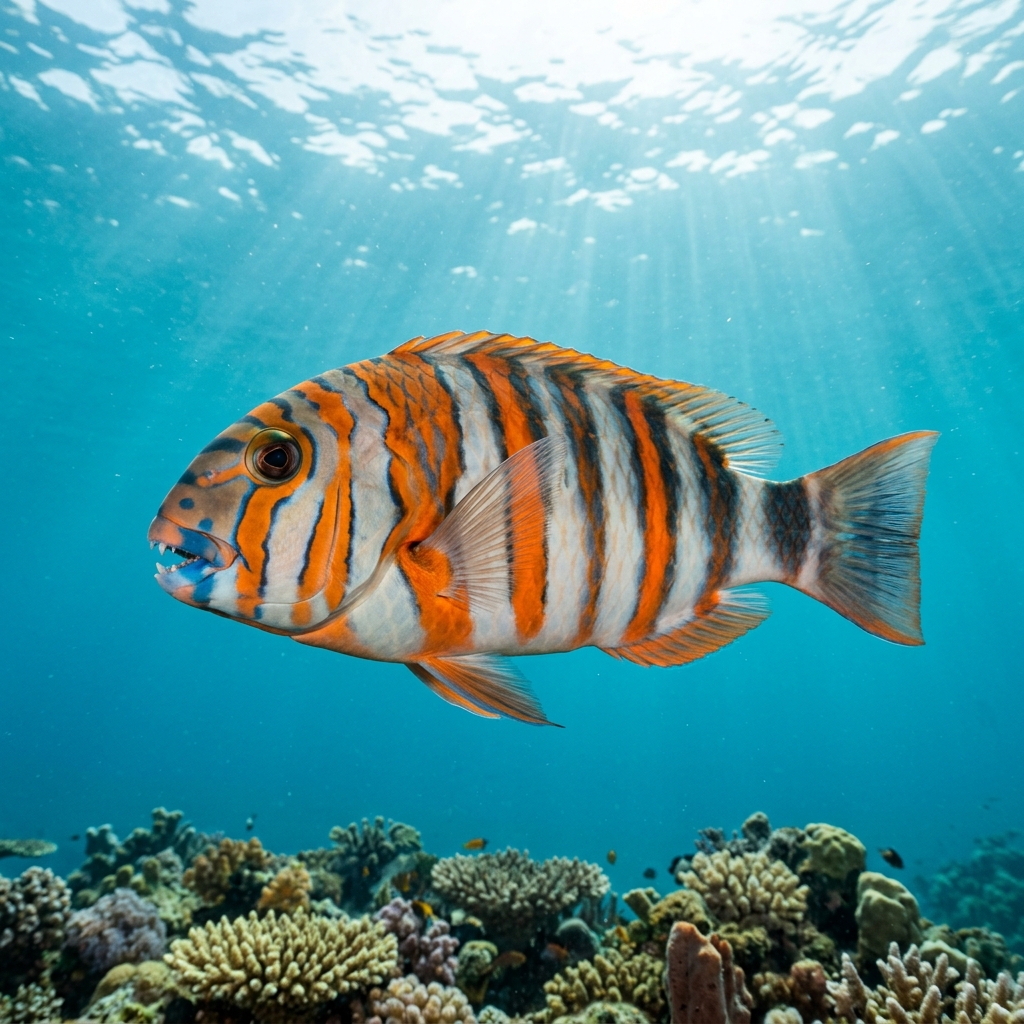
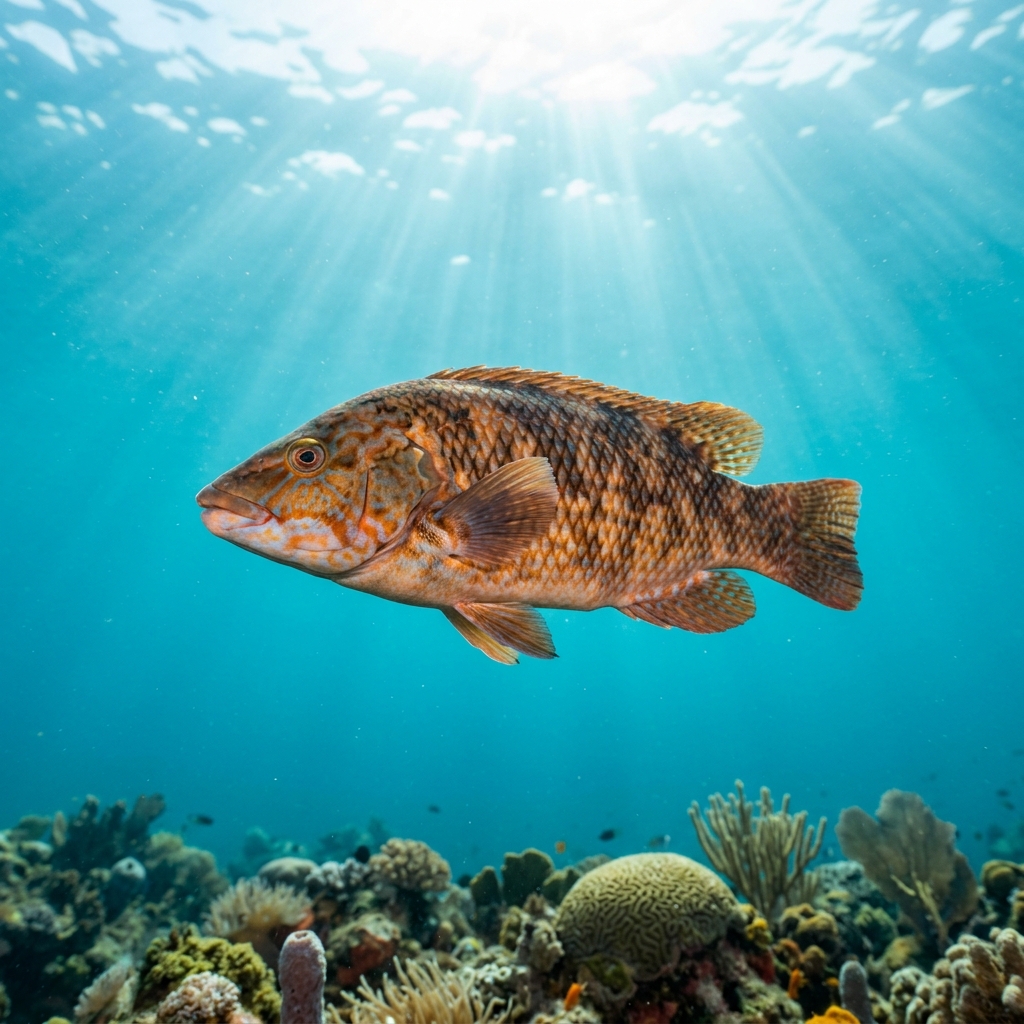
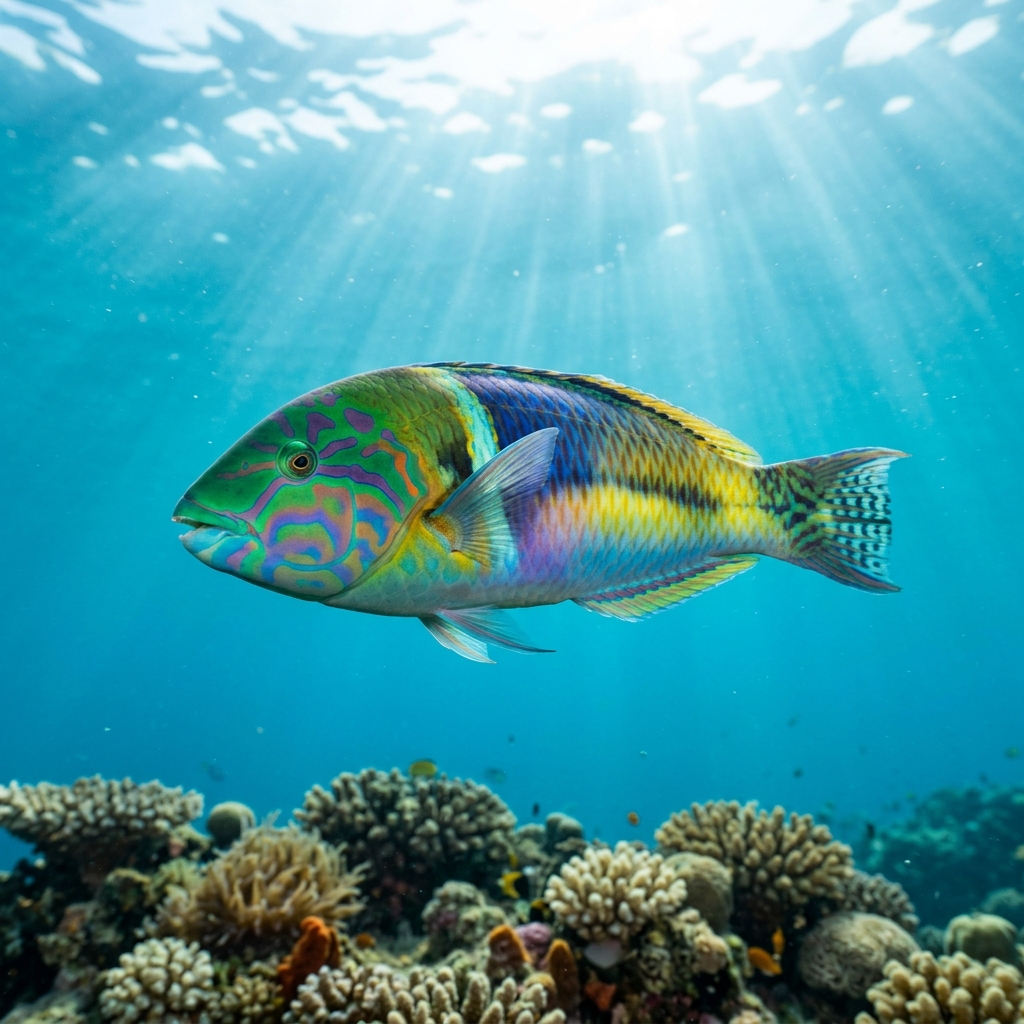
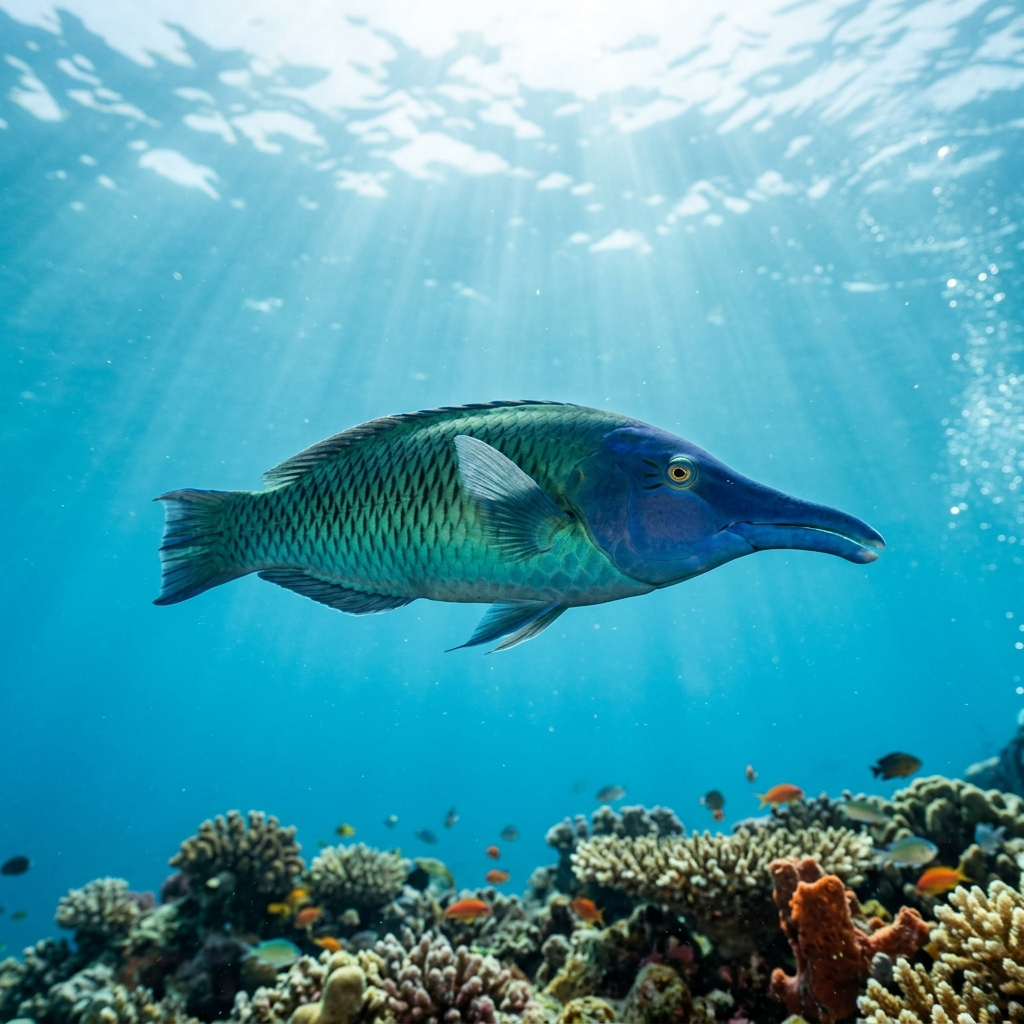
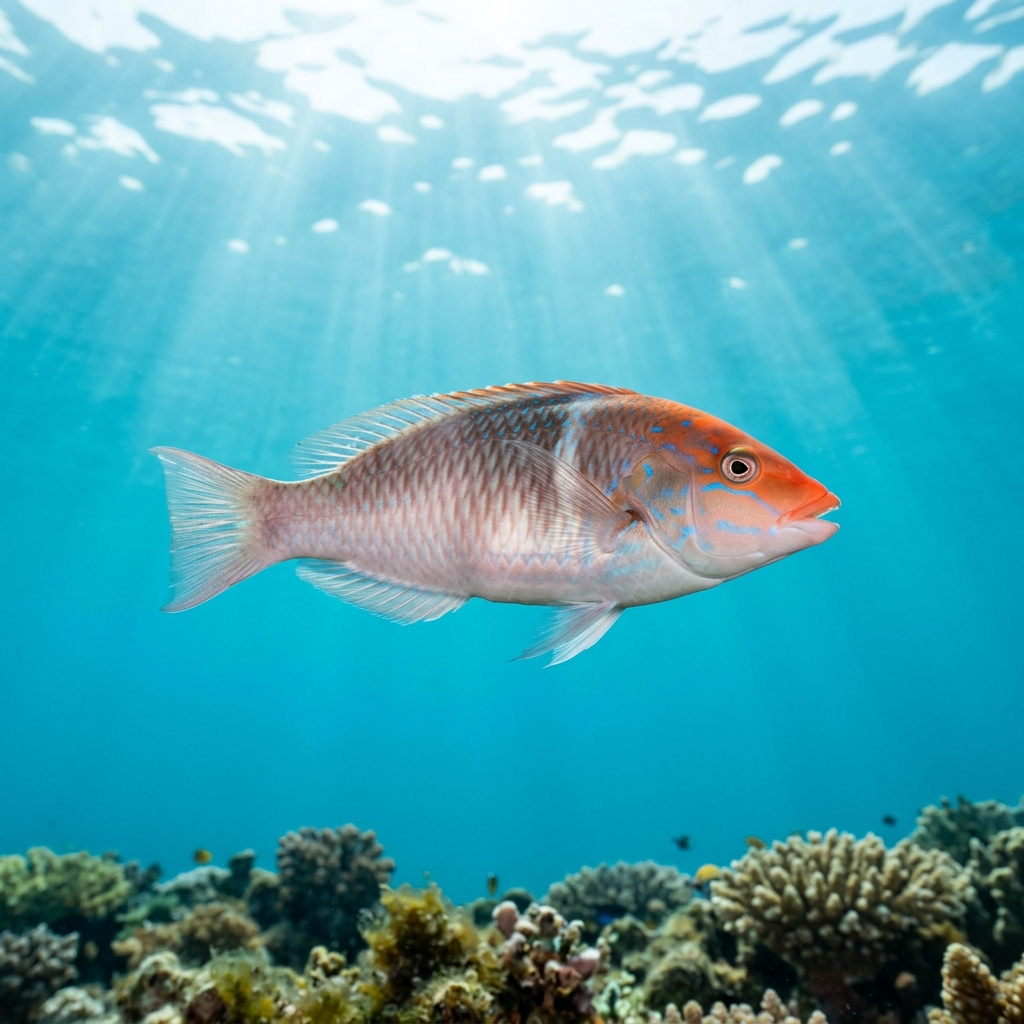
A stocky, thick-lipped wrasse reaching around 35 cm, with a body that shows patterned blue-green to turquoise markings across the face and flanks, the trait behind the name. It swims with the deliberate, low, hovering motion typical of tuskfish, staying close to the reef structure rather than out in open water. Look for the pronounced canine-like teeth at the front of the jaw, used for cracking hard-shelled prey.
Divers usually find it working low over the reef, picking at hard-bottomed patches and rubble as it hunts for shelled prey with its strong front teeth. It tends to hold its ground rather than bolt, giving a reasonable look before it slips into a crevice or behind coral structure. Most sightings come from mid-depth reef sections between 15 and 40 metres rather than shallow flats.
Those strong canine teeth are built for crushing molluscs and other armoured invertebrates, a feeding style shared across the tuskfish group and one reason they're often seen nosing into rubble rather than swimming in the open.
Sightings show no clear seasonal pattern, and with a comfortable range of about 24.5 to 26.6C it seems to stay put on these reefs year-round. Plan around good reef diving conditions in Queensland or Nouméa rather than a particular month.
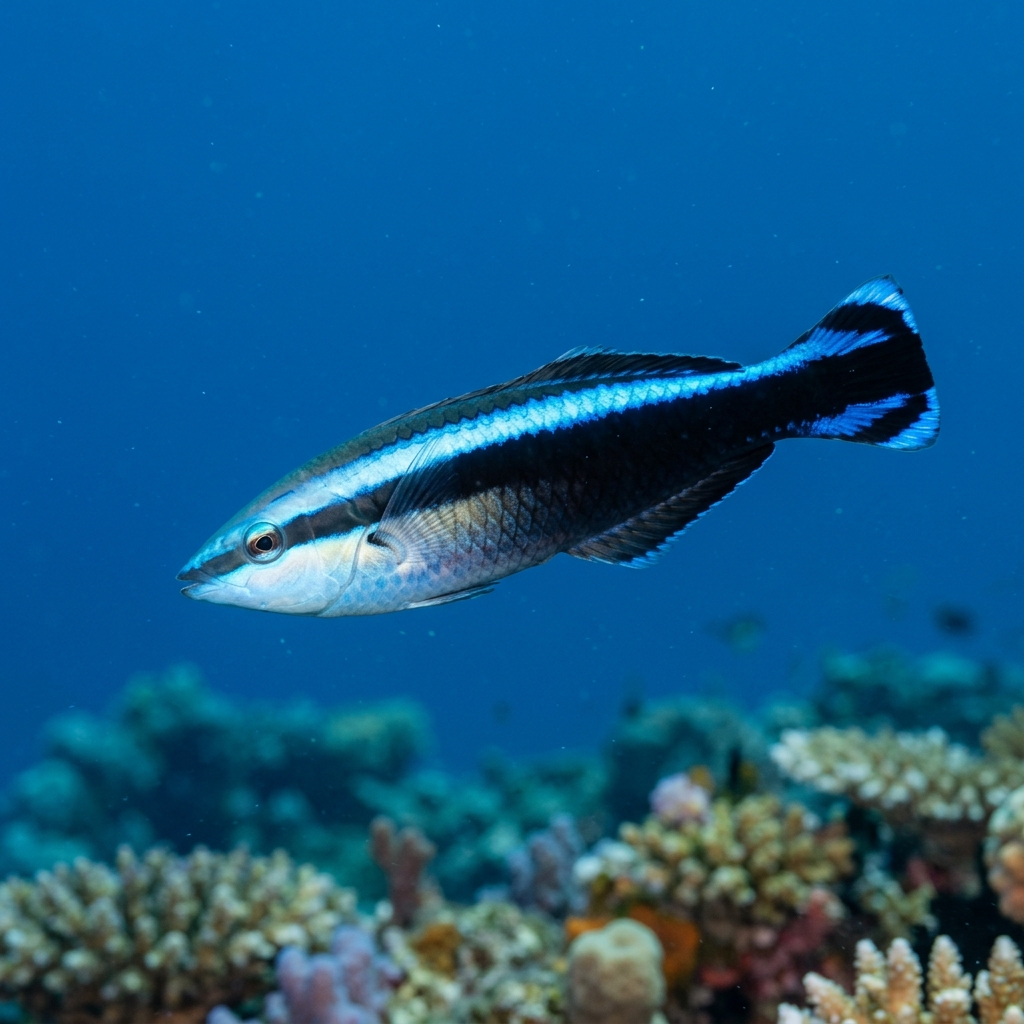
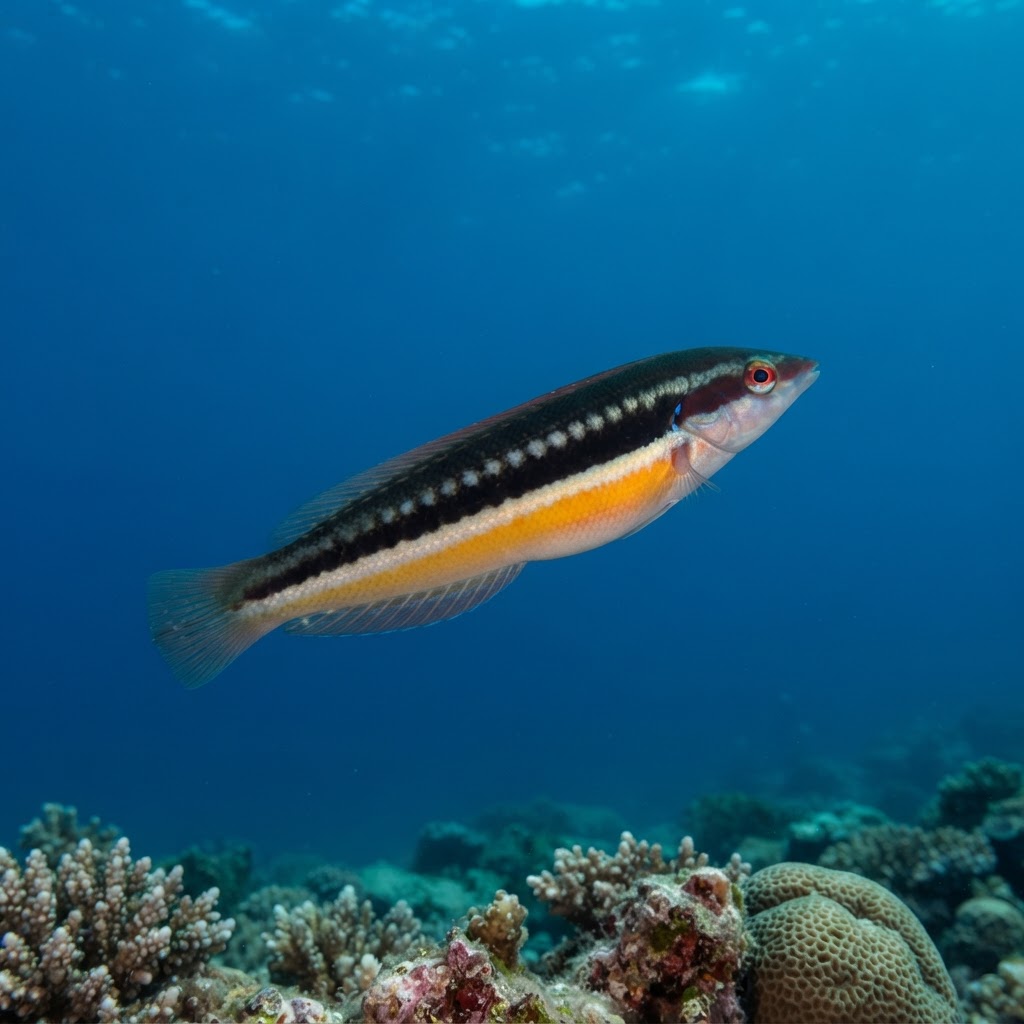
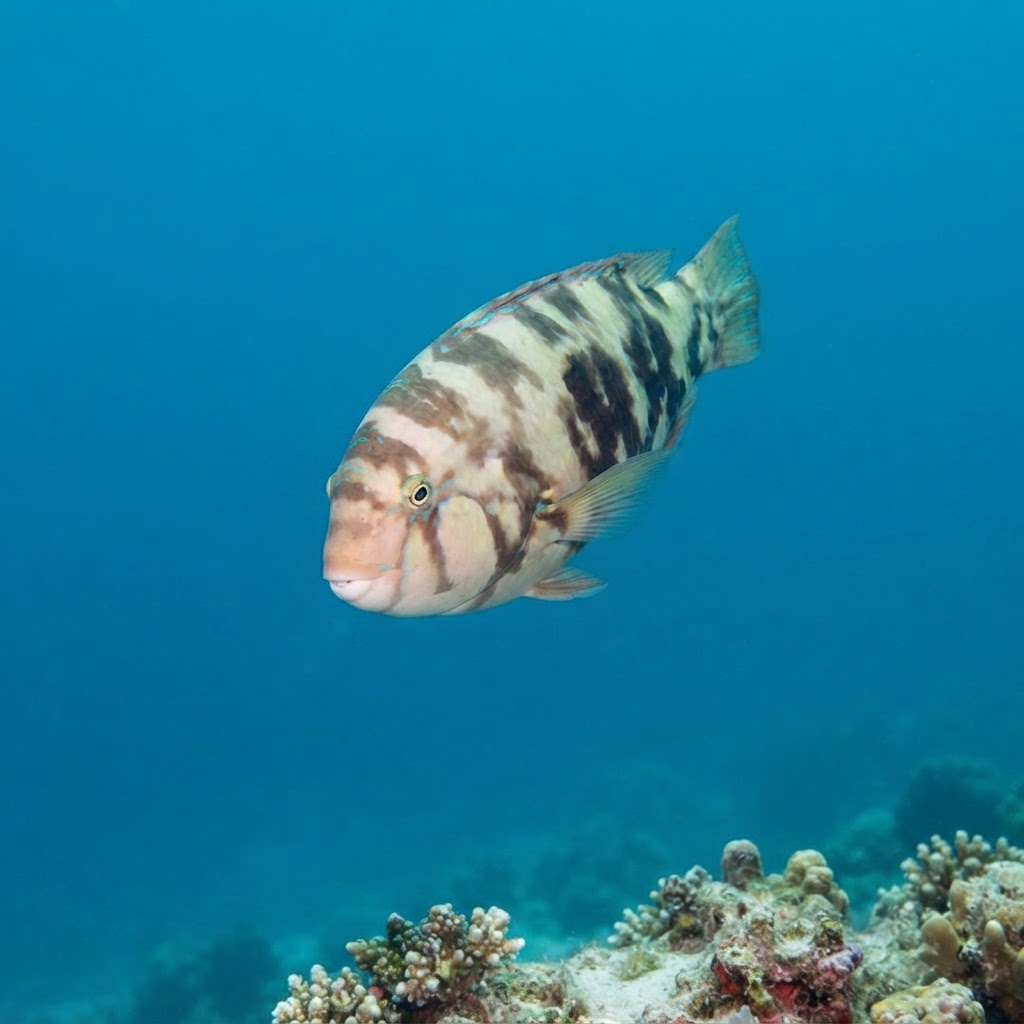
Reef neighbours a diver could mistake it for. Use the identification notes above to tell them apart.
Most reliably logged on reefs in Queensland, Australia, and around Nouméa in New Caledonia, with sightings spread across a good number of sites in both regions. It is not a fish tied to one famous dive site so much as a steady, if uncommon, find on healthy reef systems in these two areas.
Mapping where Graphic Tuskfish is logged…
Queensland in Australia and the Nouméa area of New Caledonia are the two regions where it's most consistently logged, usually on reef sections between 15 and 40 metres.
There's no strong seasonal pattern in the sightings, and its preferred water temperature of roughly 24.5 to 26.6C is available on these reefs most of the year, so it's a year-round possibility.
Look for a stocky wrasse around 35 cm with patterned blue-green markings on the face and flanks, thick lips, and prominent front teeth. It hovers low over reef and rubble rather than swimming in open water.
They typically reach about 35 cm in length, a mid-sized reef wrasse rather than a giant.
No, they're not considered dangerous to divers and generally keep their distance while feeding along the reef.
Site and sighting data is aggregated from diver logs, iNaturalist and GBIF. For taxonomy and conservation status:
Bird Wrasse
3,632 sites