Oedignathus inermis
A rare cold-water find on Pacific Northwest reefs, 8 to 14C, tucked into rock and cobble year-round.
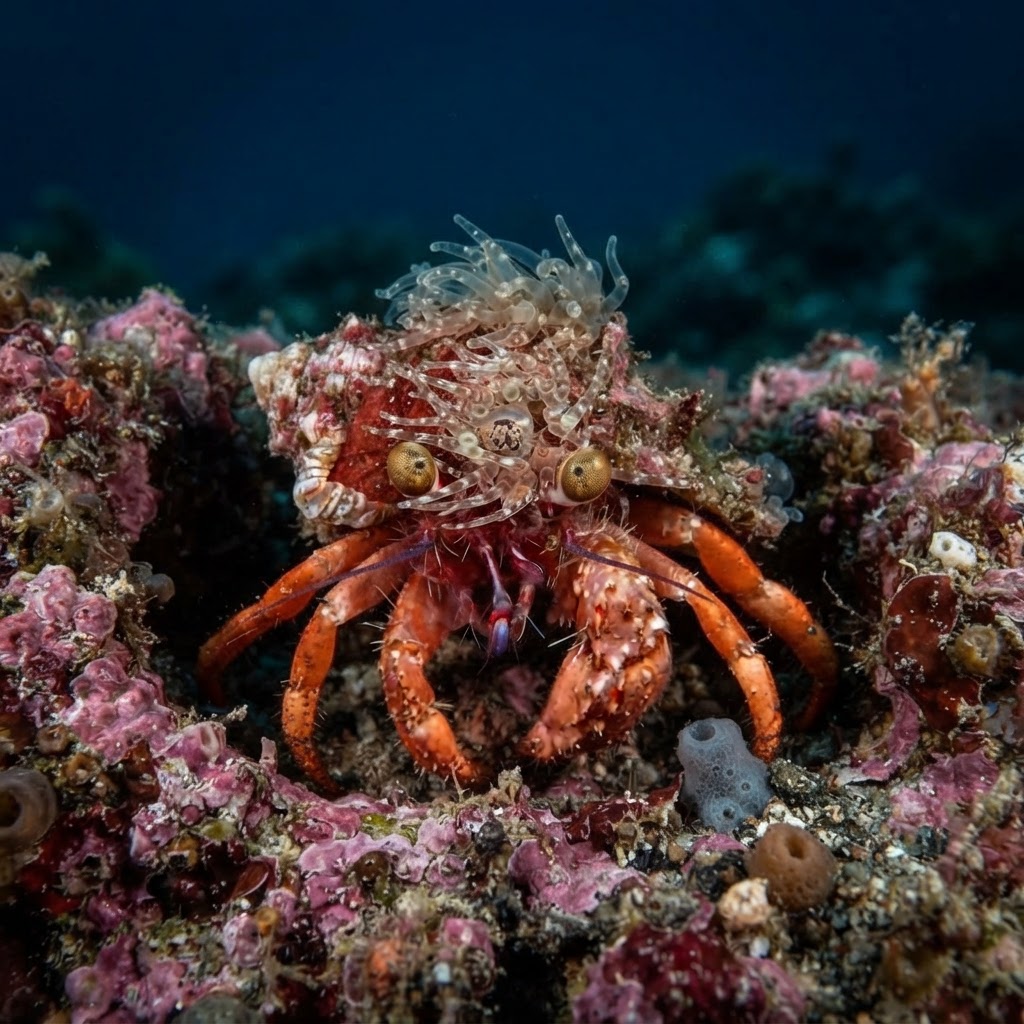
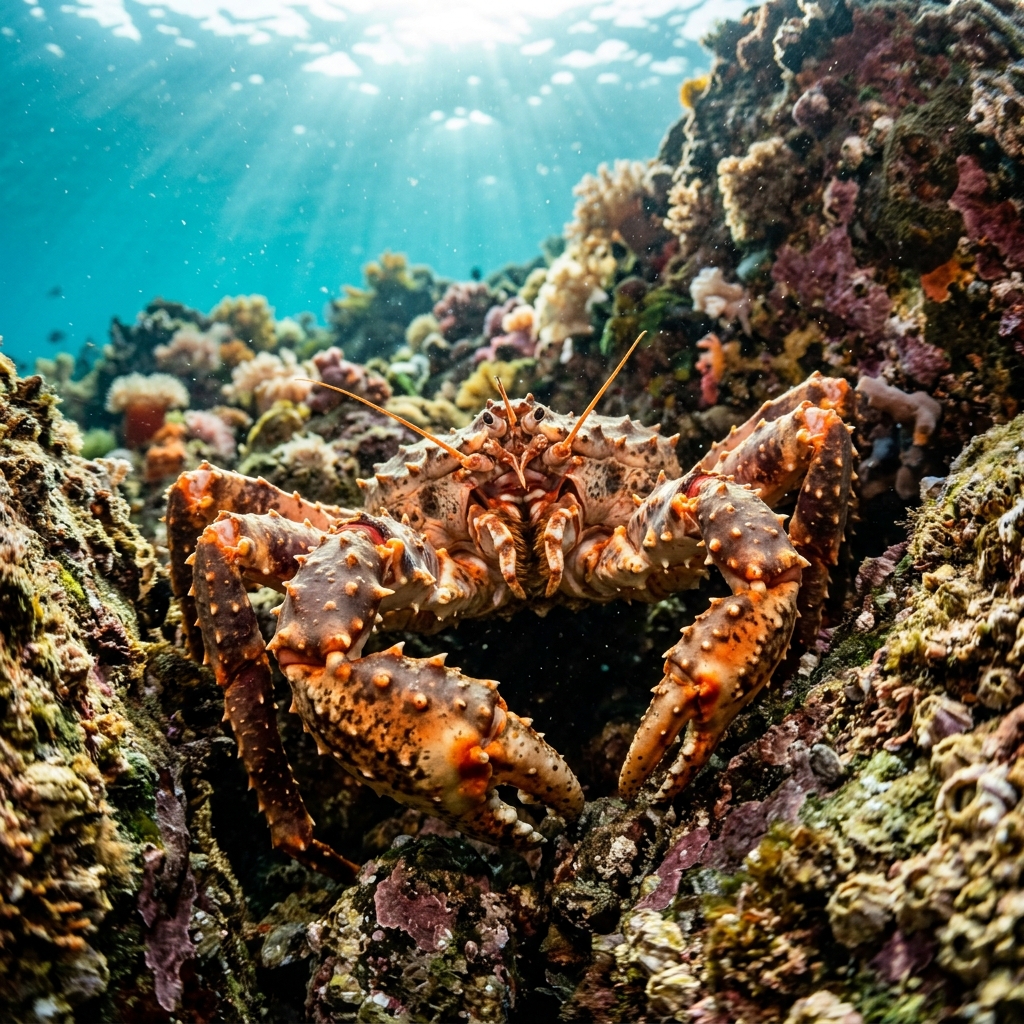
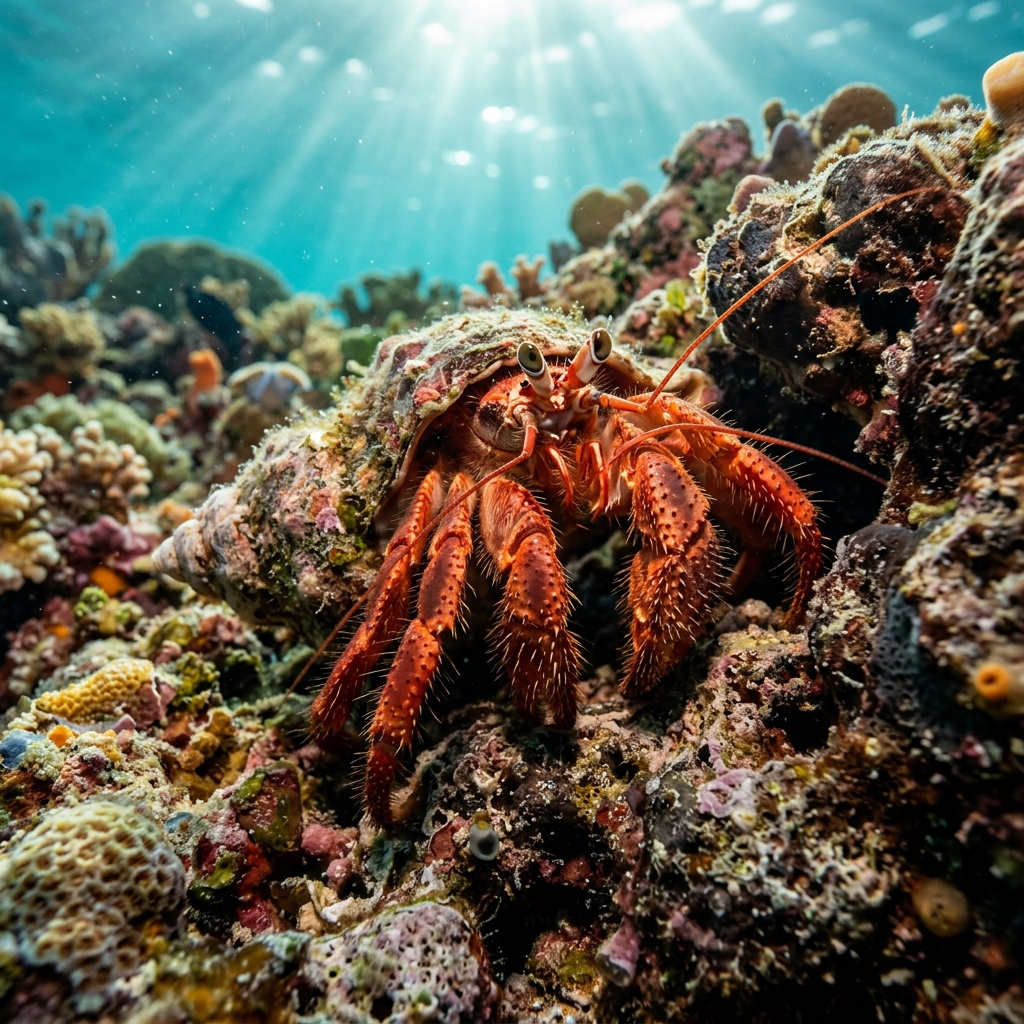
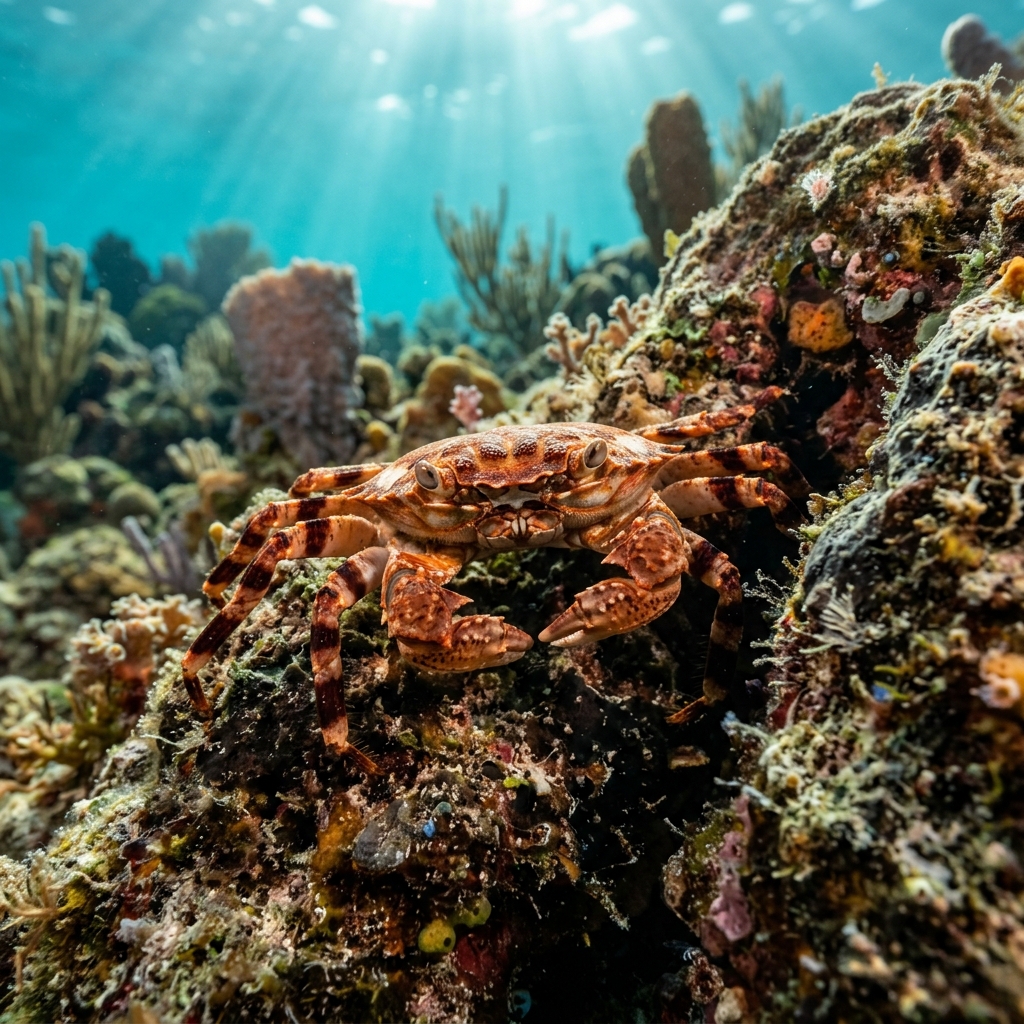
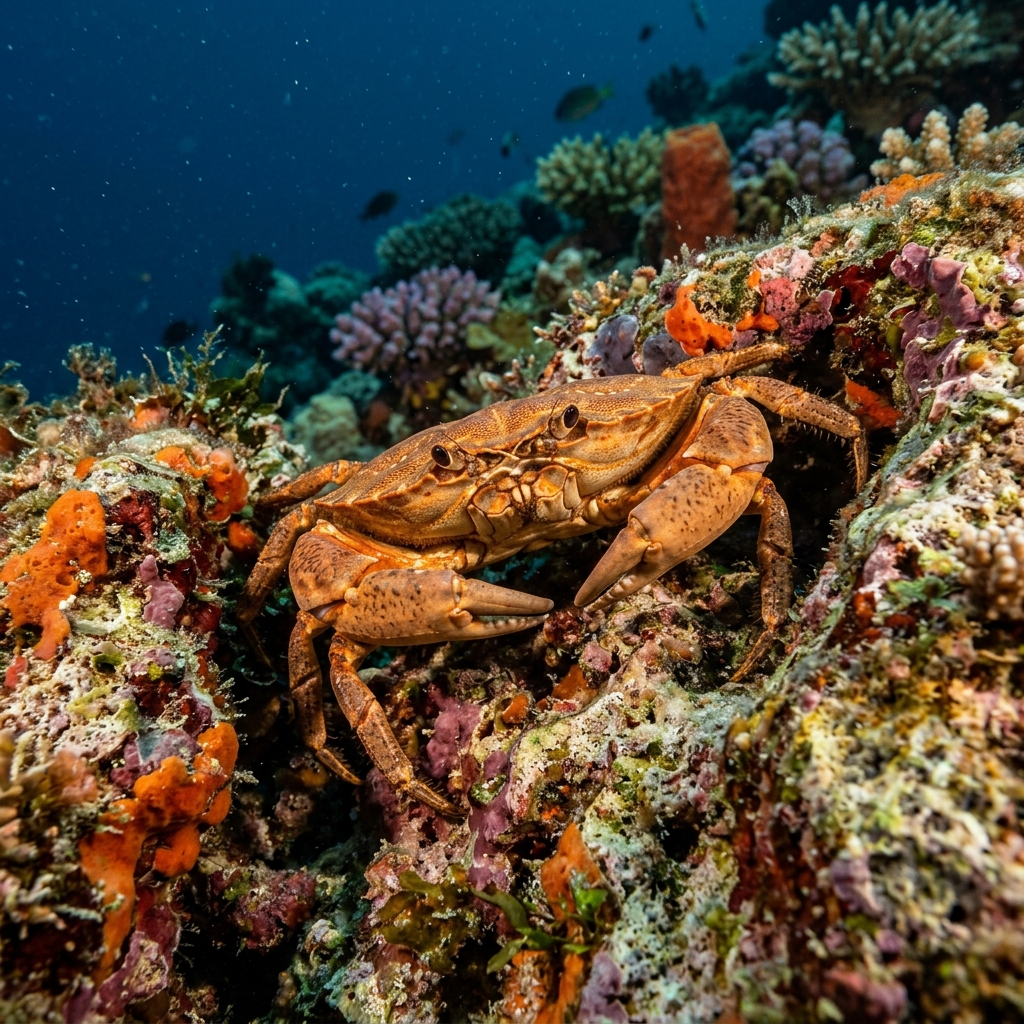
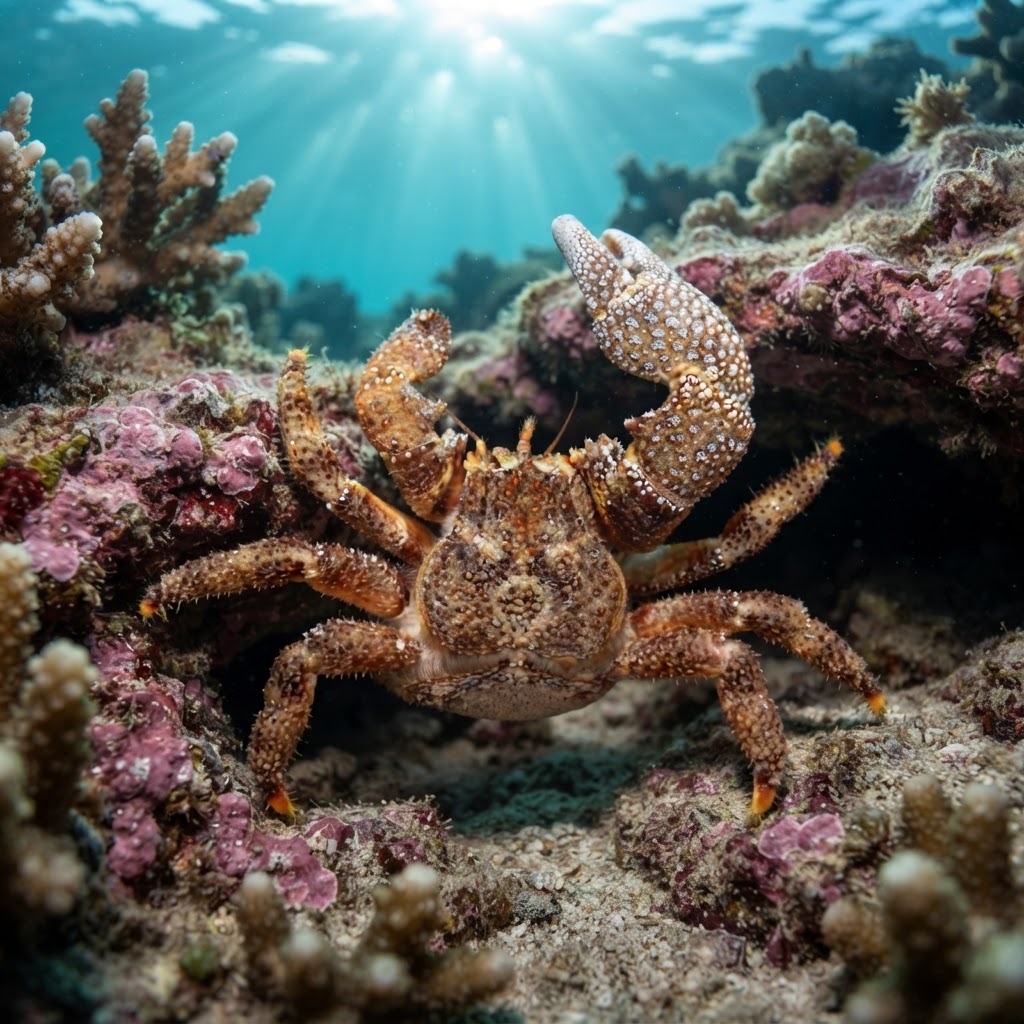
Small, stout-bodied crab with a knobbly, granular-textured carapace in mottled reddish-brown tones that blend into rock and cobble. One claw is noticeably larger and heavier than the other, a trait it shares with its hermit crab relatives despite not living in a shell. Look for it wedged into crevices or under rocks rather than out in the open, since its bumpy shell and hunched posture make it easy to mistake for a piece of encrusted rubble.
Divers typically find it tucked motionless into rock crevices, under cobble, or wedged against boulders rather than moving across open reef. It is a slow, secretive crab that relies on its rough, encrusted-looking shell to go unnoticed rather than fleeing or displaying when a diver's light passes over it. Most sightings come from patient divers scanning crevices closely rather than spotting it in open water.
Despite looking and behaving like a hermit crab wedged into a rocky nook, this species doesn't carry a snail shell at all, it uses natural crevices and holes as its portable shelter instead.
Sightings show no clear seasonal pattern, and it sits comfortably in 8.1 to 14.1C water that this region holds through most of the year, so divers log it across all seasons.
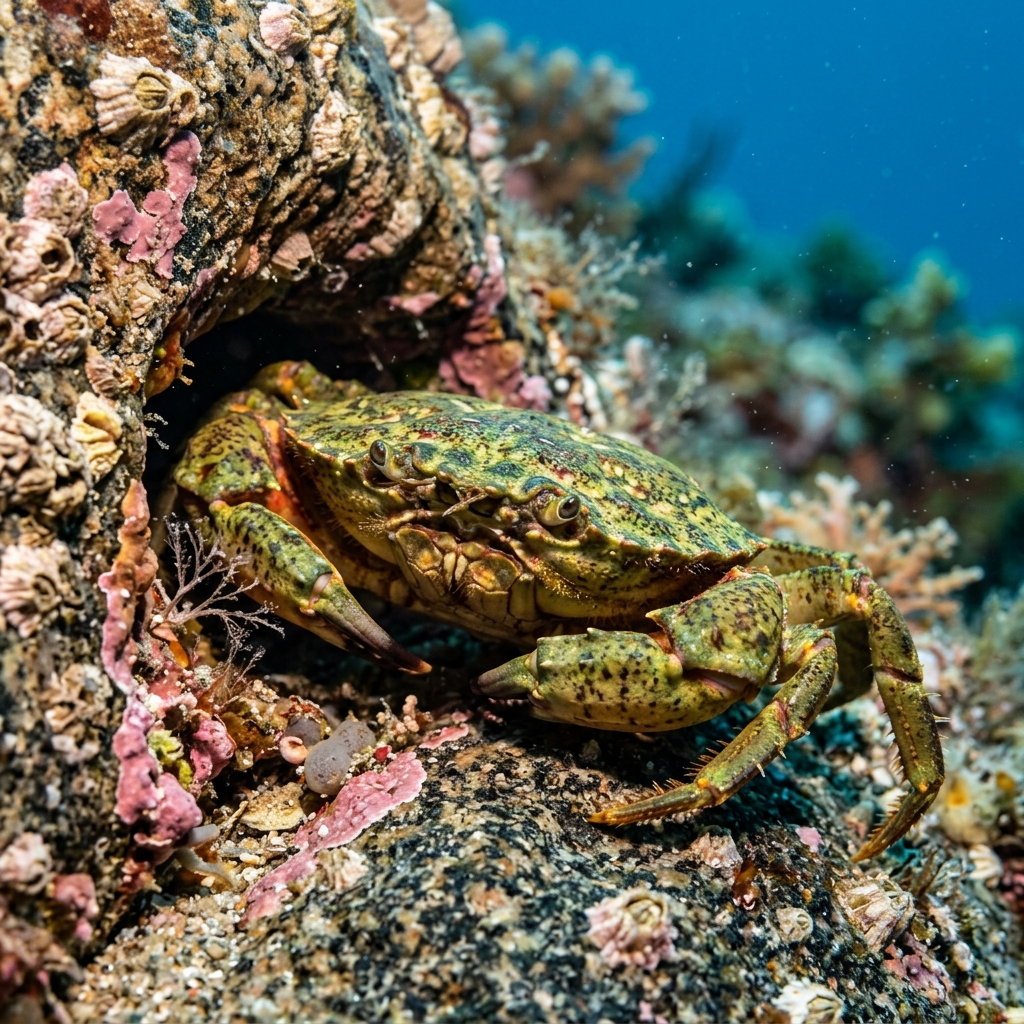
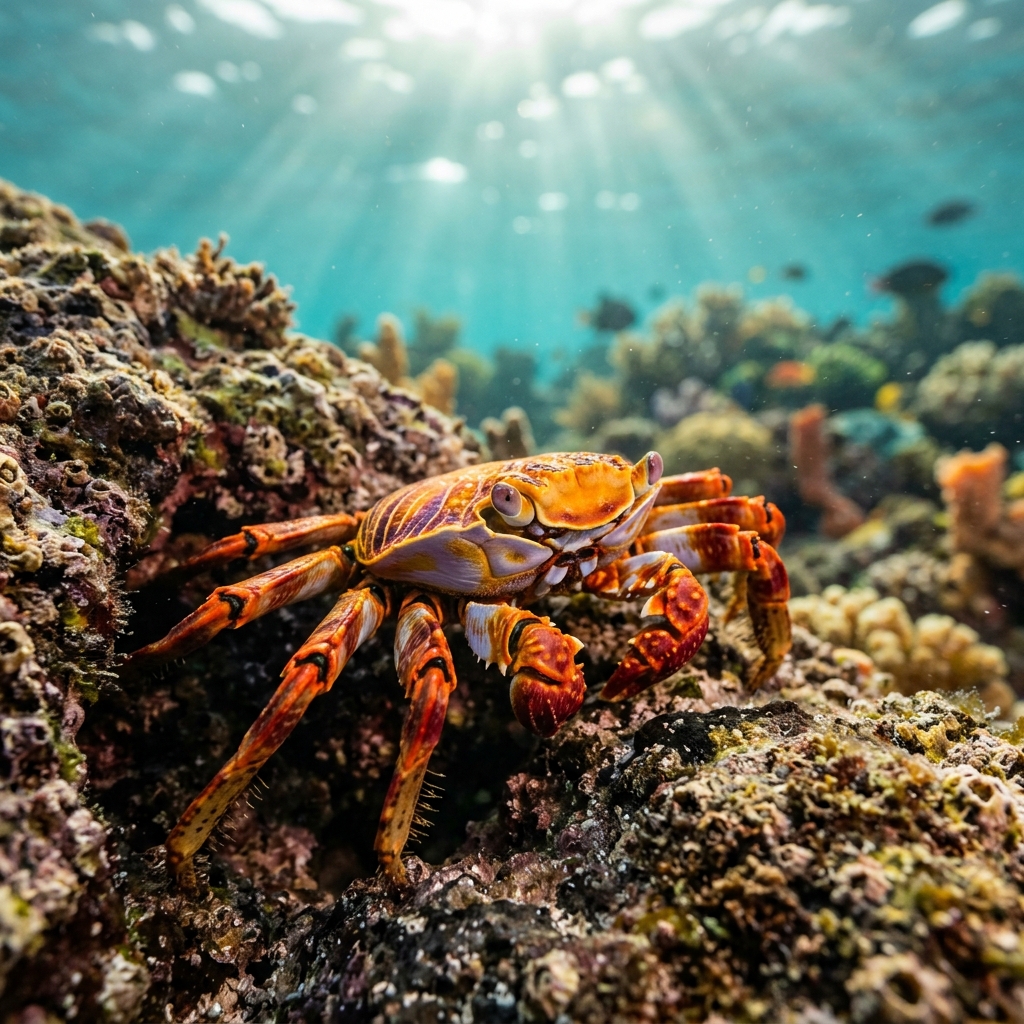
Reef neighbours a diver could mistake it for. Use the identification notes above to tell them apart.
Logged almost entirely in the Pacific Northwest, with the strongest showing across dive sites in the United States and a smaller number in British Columbia, Canada. This is a cold-water Northeast Pacific species, so look for it on rocky, current-swept sites in these regions rather than tropical destinations.
Mapping where Granular Claw Crab is logged…
It's most reliably found on rocky Pacific Northwest dive sites in the United States, with additional sightings across British Columbia, Canada. Look for cold, rocky reef with plenty of crevices and cobble.
There's no strong seasonal pattern in sightings, and it lives in a narrow cold-water range of 8.1 to 14.1C that the Pacific Northwest holds for much of the year, so it's a year-round find.
Look for a small, bumpy-shelled crab in mottled red-brown tones with one oversized claw, wedged into a rock crevice rather than out in the open. Its rough, granular shell texture helps it blend in with encrusted rock, so it takes a close look to spot.
Exact size data isn't confirmed for this species, but it's a small crab by diver standards, easily overlooked against rock and cobble unless you're scanning closely.
No, it poses no danger to divers. It's a small, shy crab that stays tucked into crevices and has no interest in interacting with anyone passing by.
It behaves like a hermit crab, complete with one enlarged claw, but never carries a shell, relying instead on natural rock crevices and holes for shelter.
Site and sighting data is aggregated from diver logs, iNaturalist and GBIF. For taxonomy and conservation status:
European Green Crab
2,469 sites