Plagiotremus goslinei
A 4cm impersonator lurking on Hawaii's reefs at 25-28C, ready to dart out and nip an unwary diver's leg.
Safety warning
Bites are small and superficial but can startle divers and occasionally draw blood, usually landing on bare skin like calves or hands. Keep hands tucked in near reef holes and don't hover still near crevices in areas where it's been logged, since sudden stillness is what it mimics its way close to.
If you're bitten
Venomous bite (mild)General first-aid guidance, not a substitute for professional medical care. In an emergency, call your local emergency number.
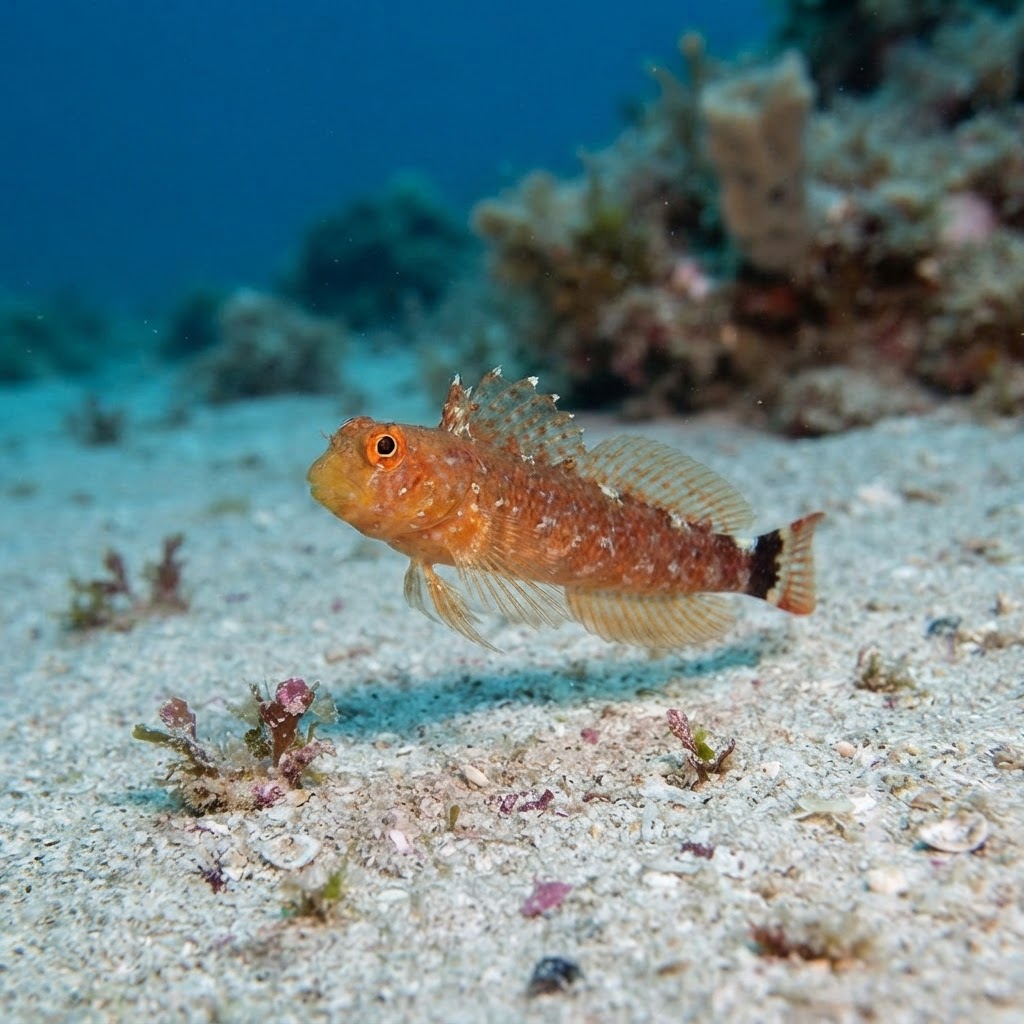
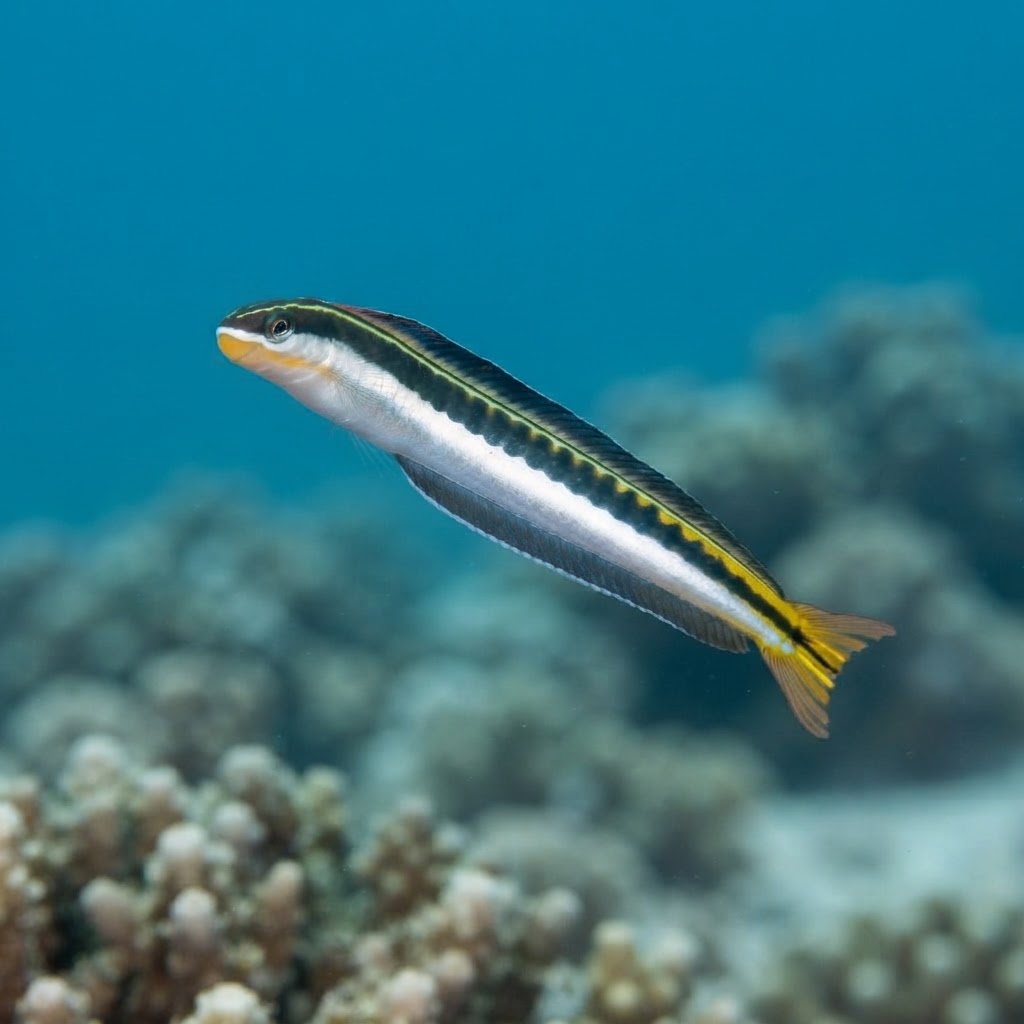
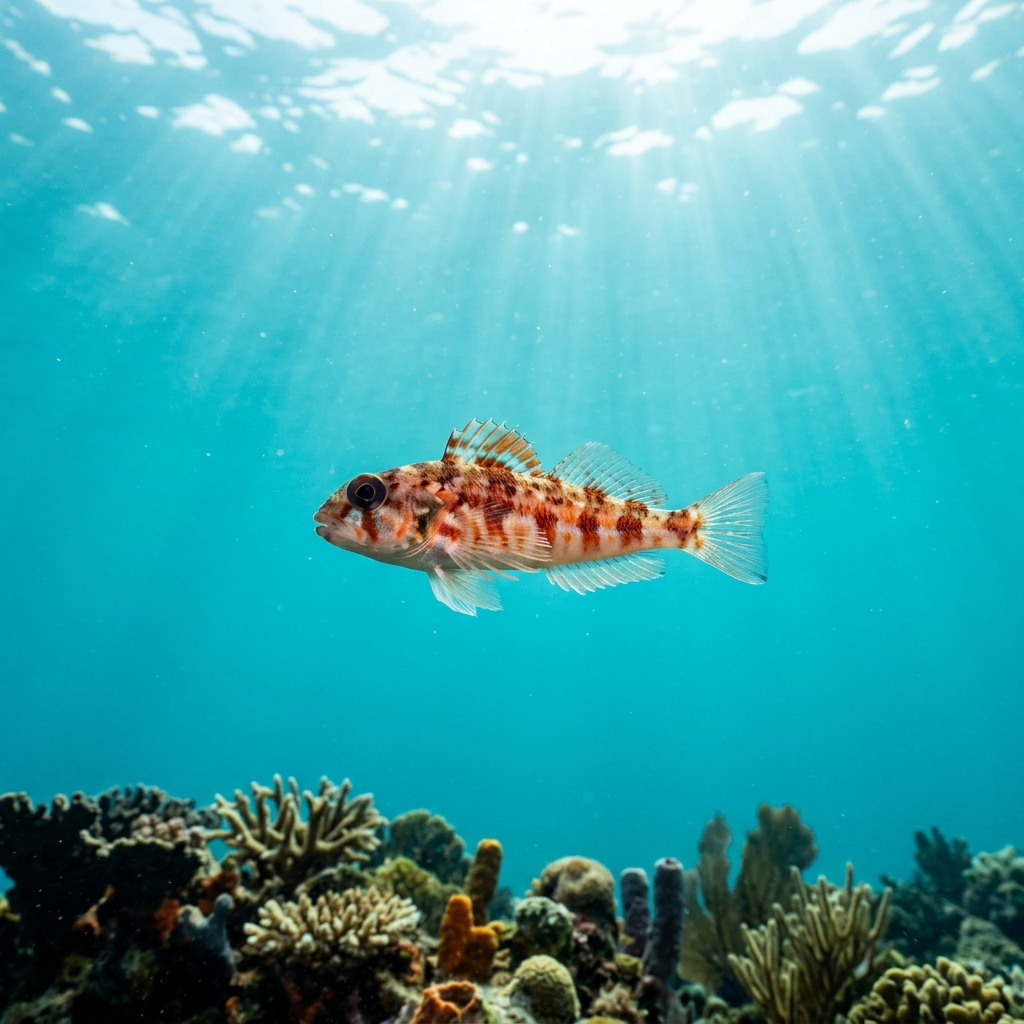
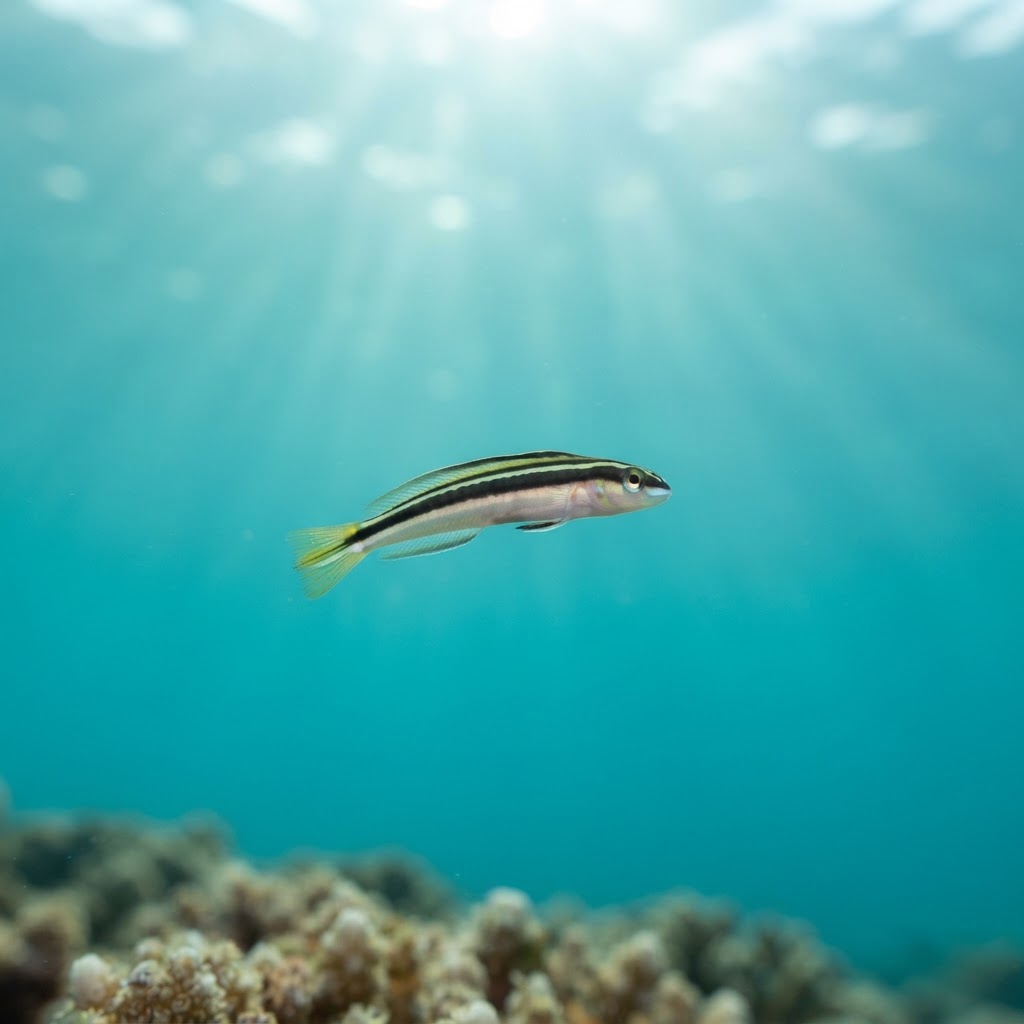
A slim, eel-like blenny barely 4cm long, easy to miss until it darts out from a crevice or the sand. Colouring is variable and mimicry-based, often blue with a dark stripe running along the body, which lets it blend in with cleaner wrasses and other harmless reef fish. Look for the darting, snake-like swimming motion rather than the steady hover of the fish it's copying.
Spends most of its time tucked into reef crevices or holes, darting out in quick, unpredictable bursts rather than swimming steady laps like most blennies. It often mimics the swimming style and colouring of cleaner fish, using the disguise to get close to larger fish, or to divers, before nipping and retreating just as fast. Most encounters are brief: a flash of movement at the edge of vision, then it's gone back into cover.
This fangblenny is an aggressive mimic: it copies the appearance and movement of harmless cleaner wrasses so closely that other fish let it approach, at which point it darts in to bite a chunk of skin or scale rather than parasites.
No clear season shows up in the data, and with a comfortable range of roughly 25 to 28C on Hawaiian reefs it's likely present year-round. Treat any dive trip to Hawaii as a fair shot at spotting one.
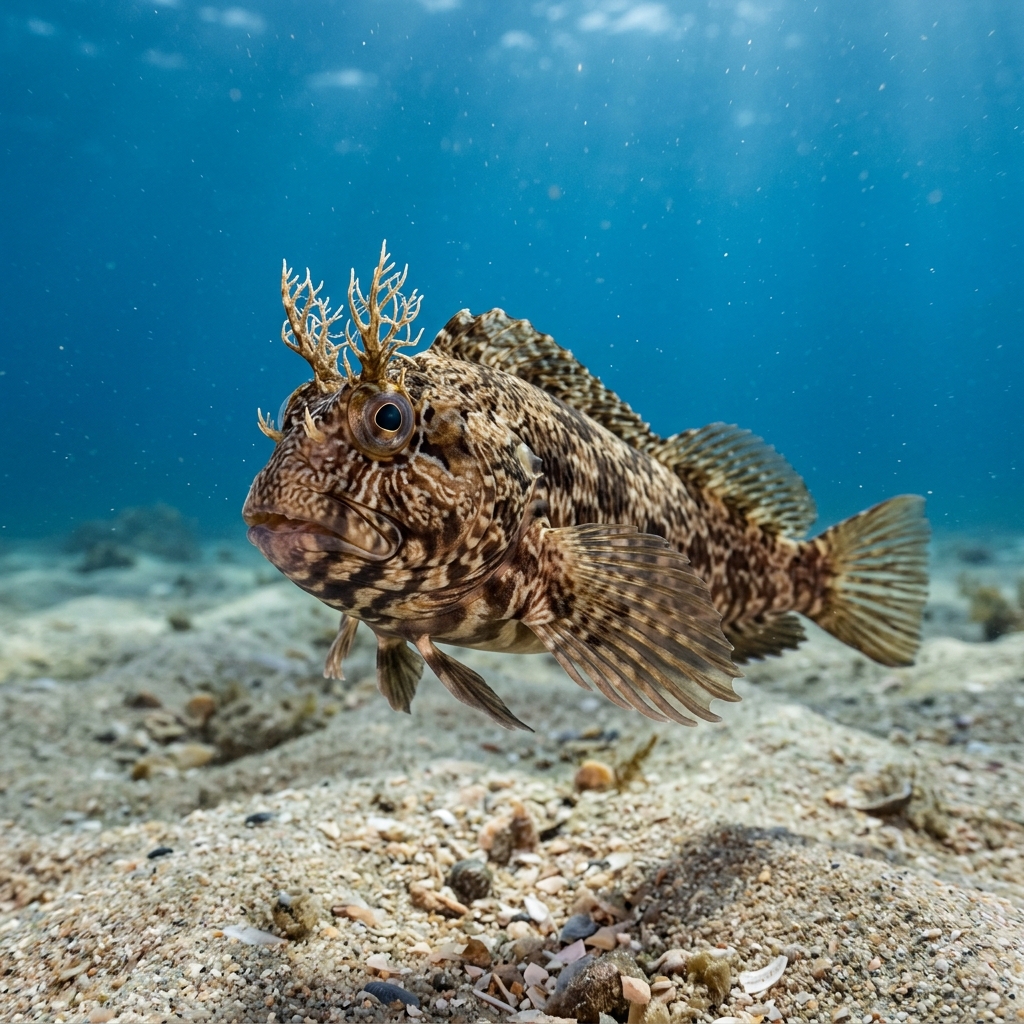
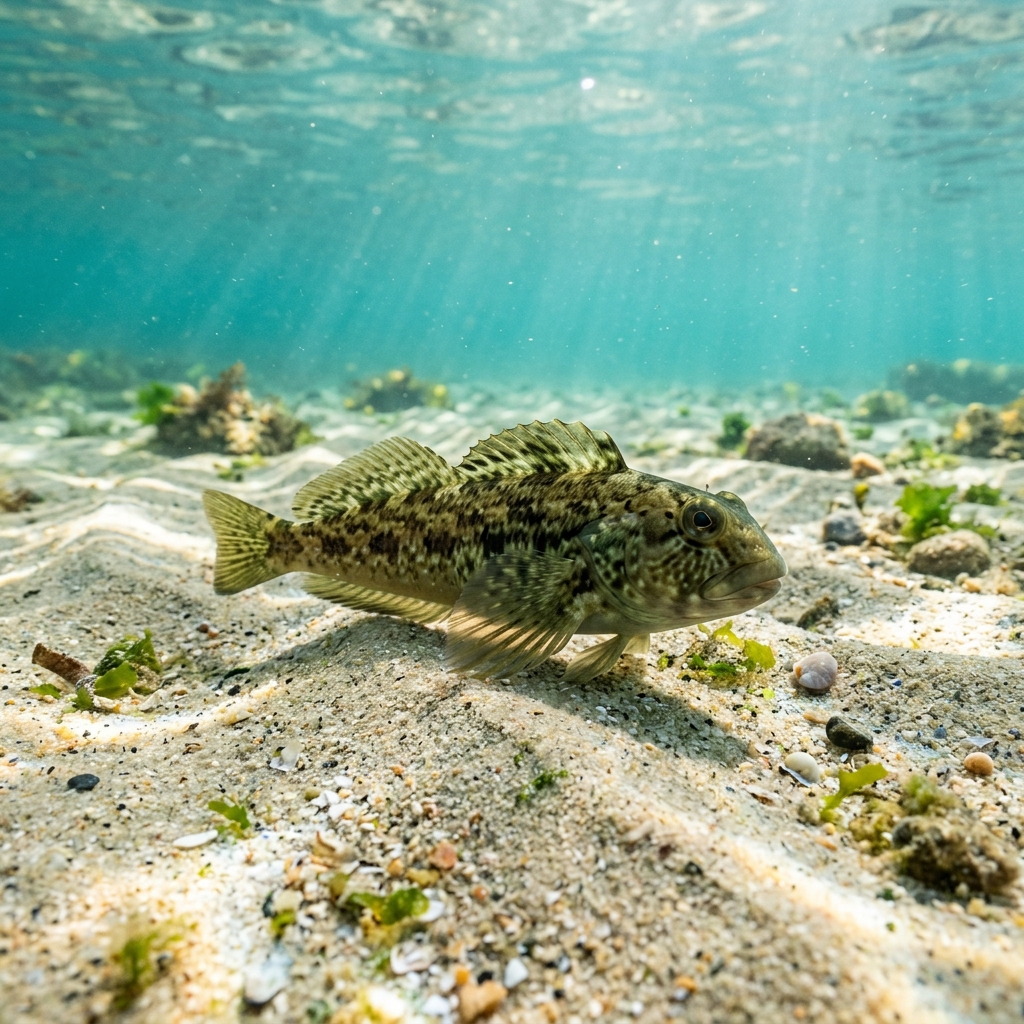
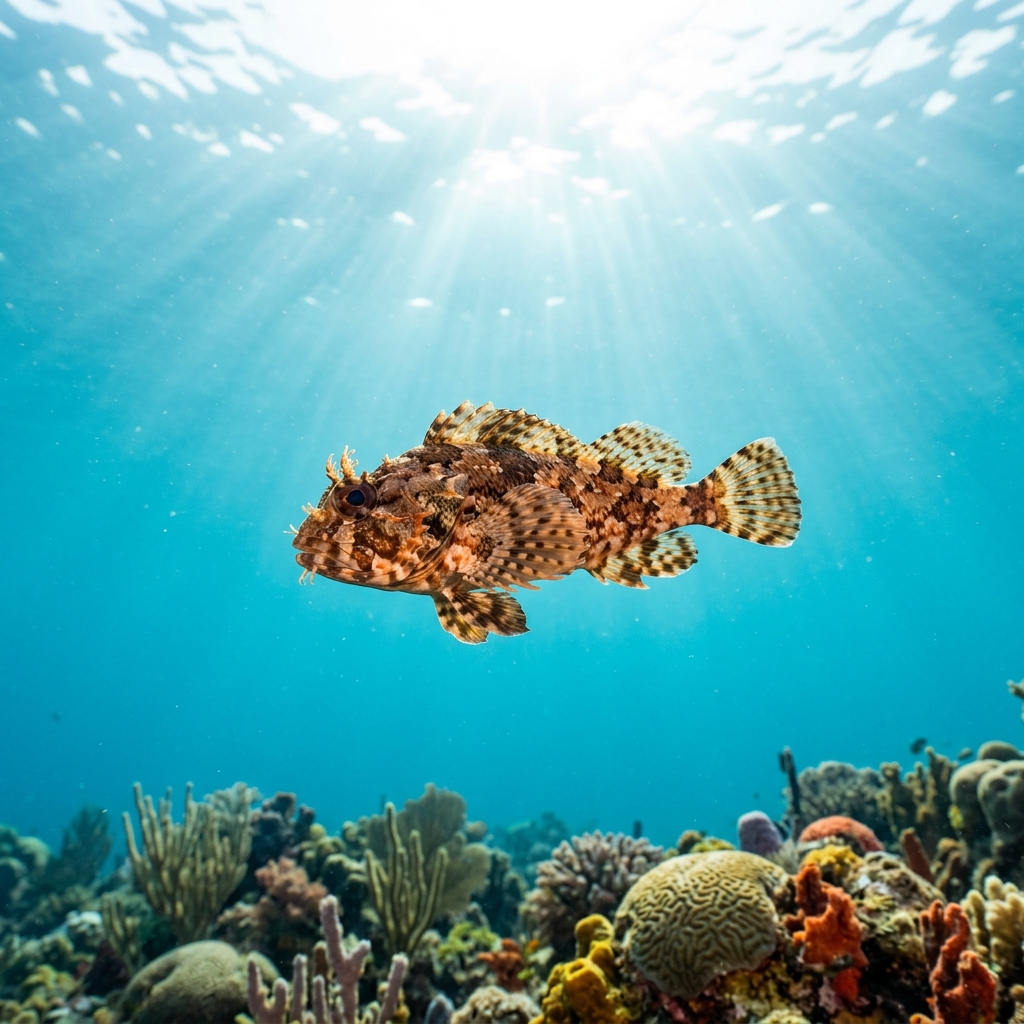
Reef neighbours a diver could mistake it for. Use the identification notes above to tell them apart.
Logged almost exclusively on reefs in Hawaii, where it's the region driving nearly all recorded sightings. Divers in the main Hawaiian Islands have the best odds, though even there it registers as an uncommon find rather than a given.
Mapping where Gosline's Fangblenny is logged…
Sightings are concentrated in Hawaii, which accounts for essentially all logged encounters with this species. It's an uncommon find even there, so don't expect a guaranteed sighting on any single dive.
There's no detected seasonal pattern, and it's recorded in water from about 25 to 28C, conditions that hold year-round on Hawaiian reefs. Any time of year is a reasonable time to look.
They can deliver a quick nip using fang-like teeth, usually to bare skin, though it's more startling than serious. Avoid lingering motionless near reef holes and cracks where one might be hiding.
Look for a slender, eel-shaped body around 4cm long with blue and dark striping, moving in quick darting bursts rather than gliding. Its mimicry of cleaner wrasse colouring and movement is the biggest giveaway once you know to look for the snap-and-retreat behaviour.
They stay small, topping out around 4cm, which is part of why they're easy to overlook on a reef.
It's an aggressive mimic, copying the look and swimming style of harmless cleaner fish to get close to other reef animals, and to divers, before darting in for a quick bite.
Site and sighting data is aggregated from diver logs, iNaturalist and GBIF. For taxonomy and conservation status:
Rusty Blenny
2,605 sites