Haemulon spp.
Gorette (Haemulon spp.) are logged across the Caribbean and Yucatán in 24-29 °C waters year-round. Find where and when divers see them most.
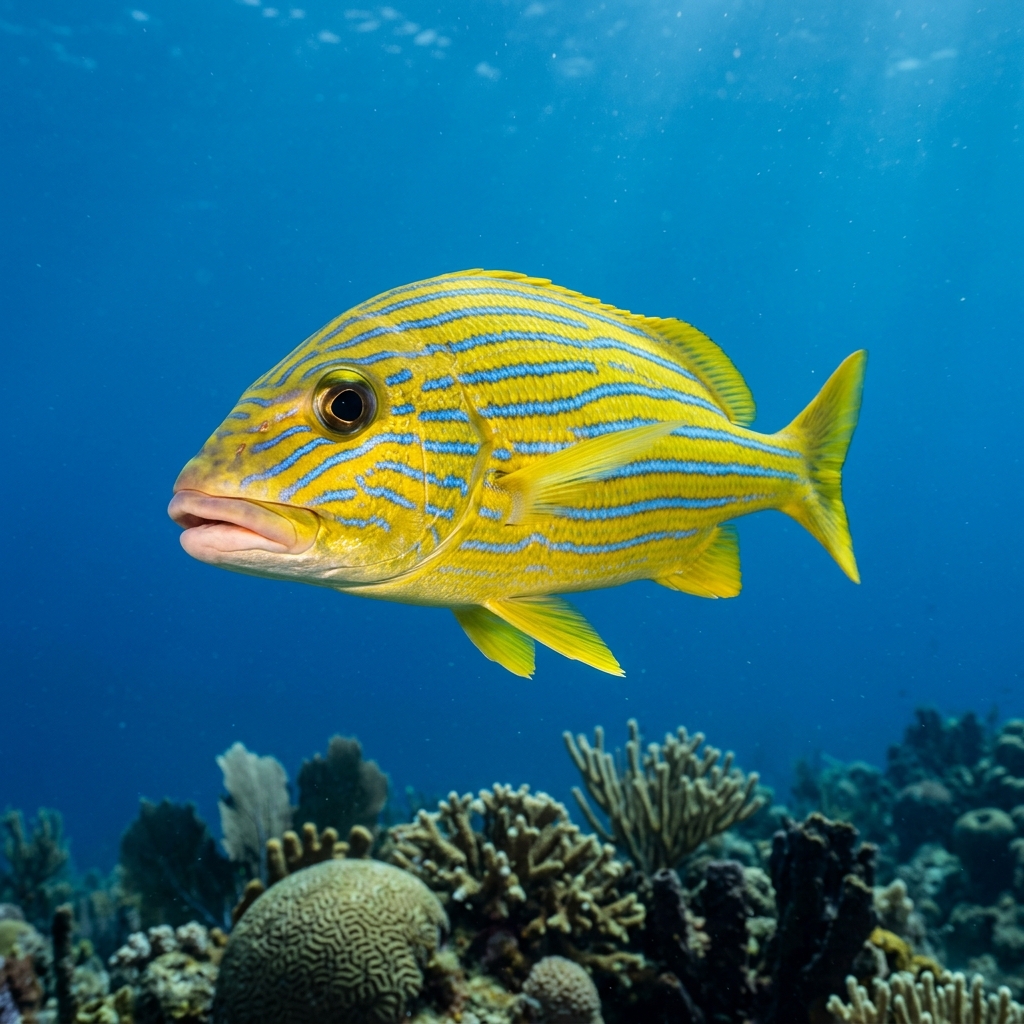
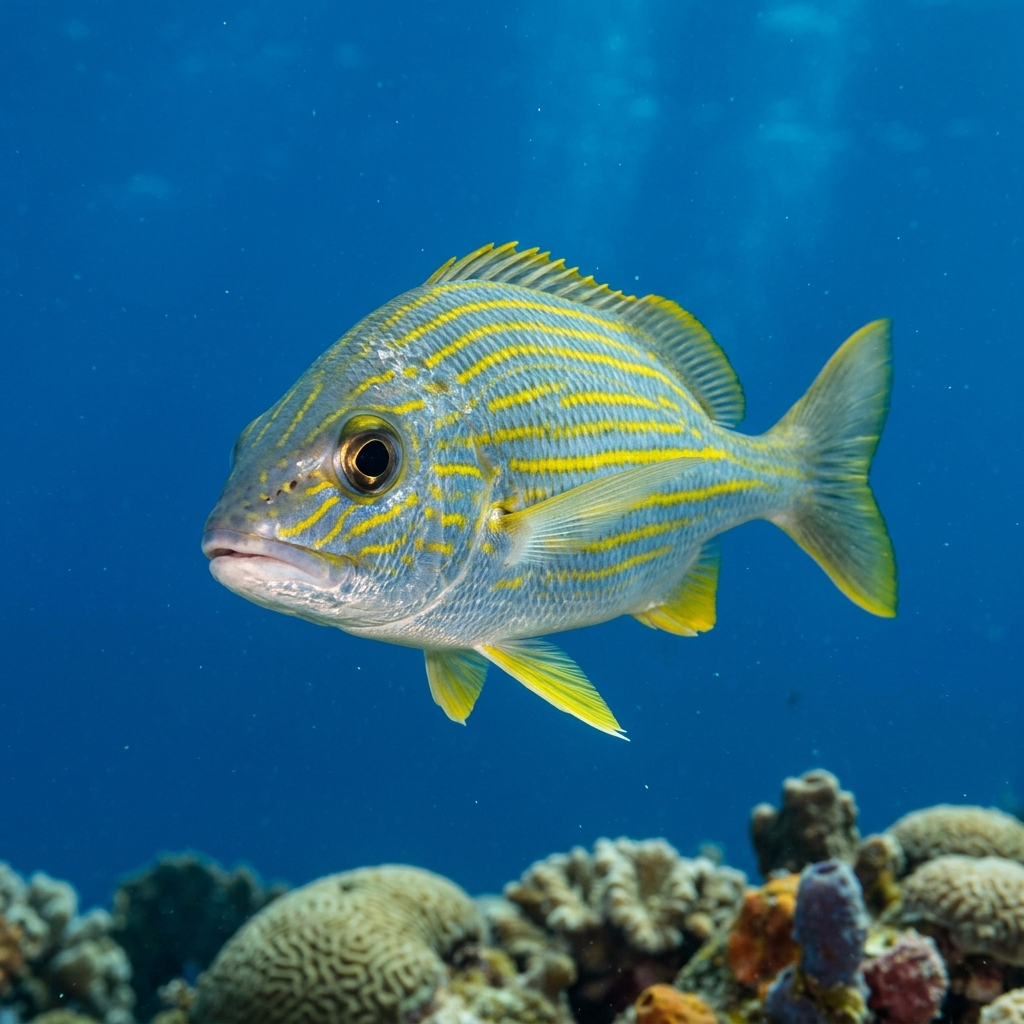
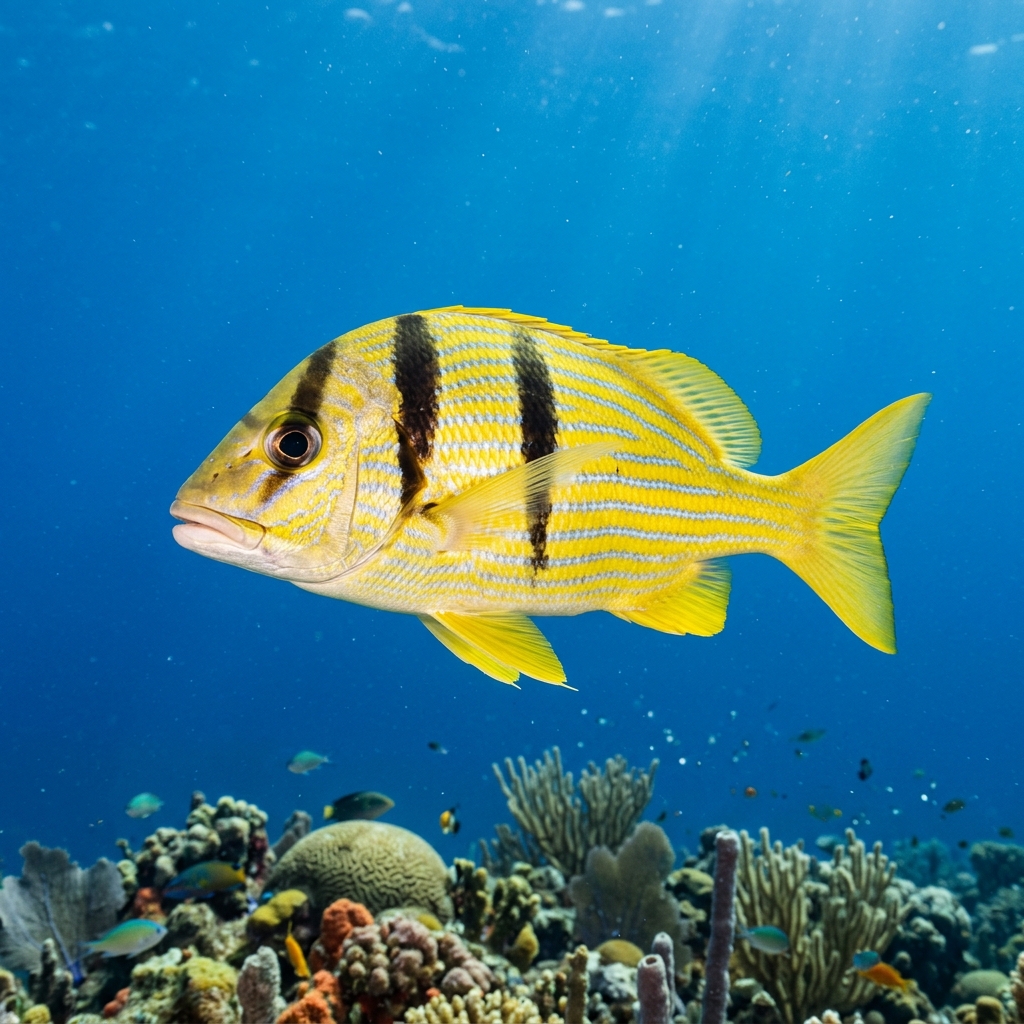
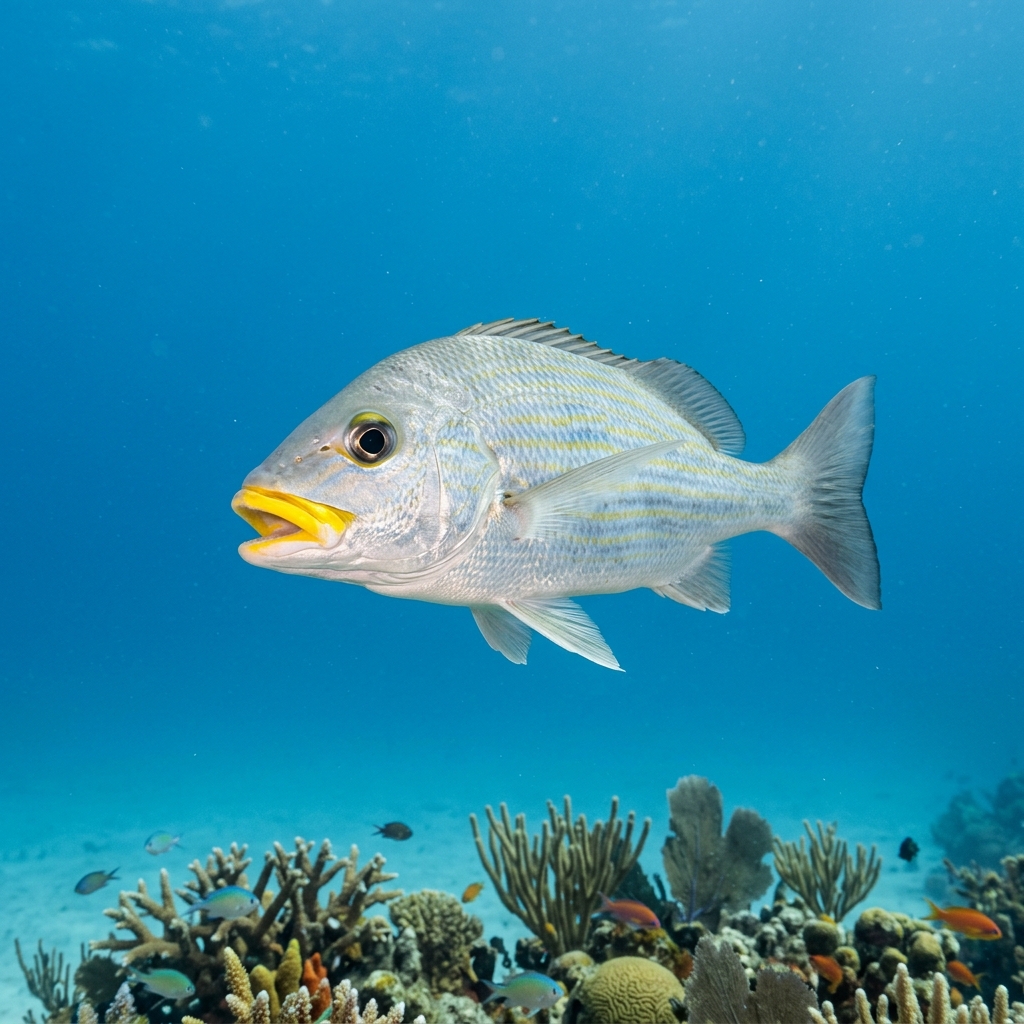
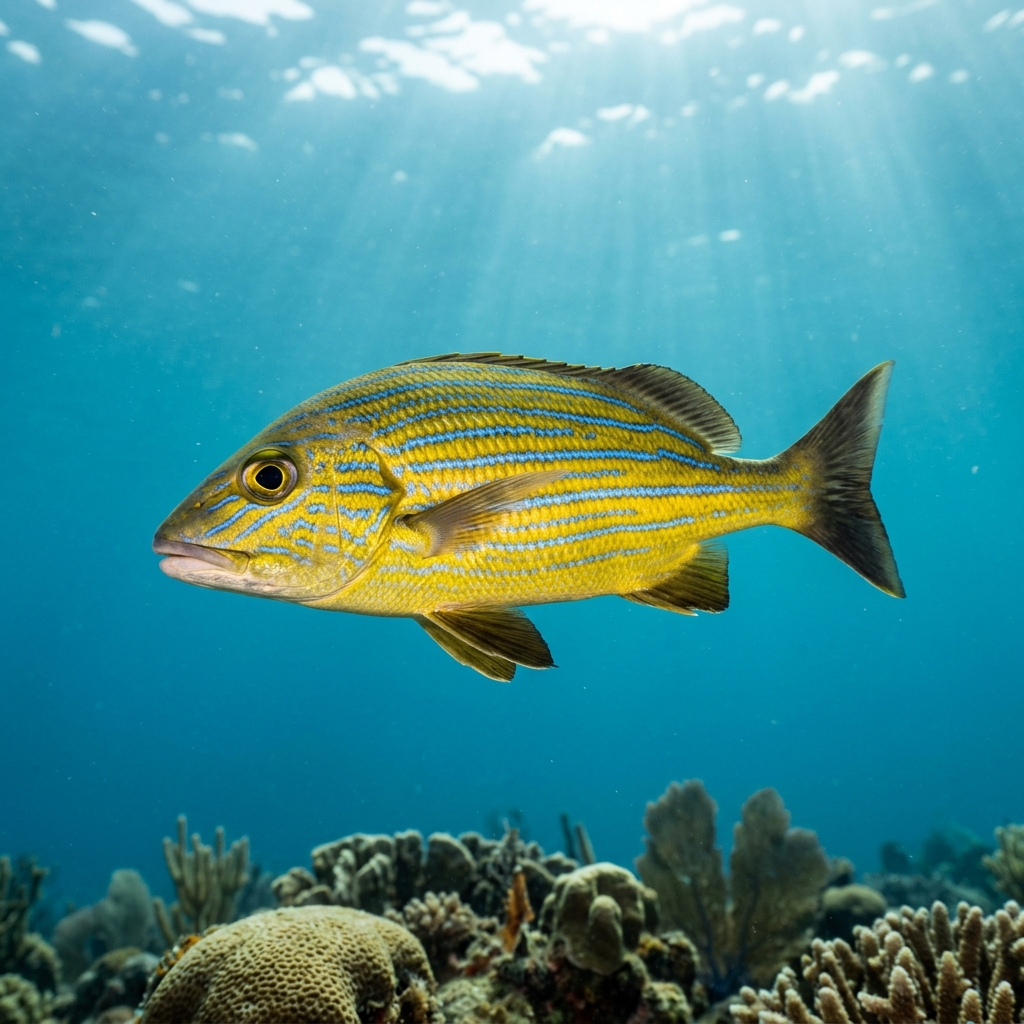
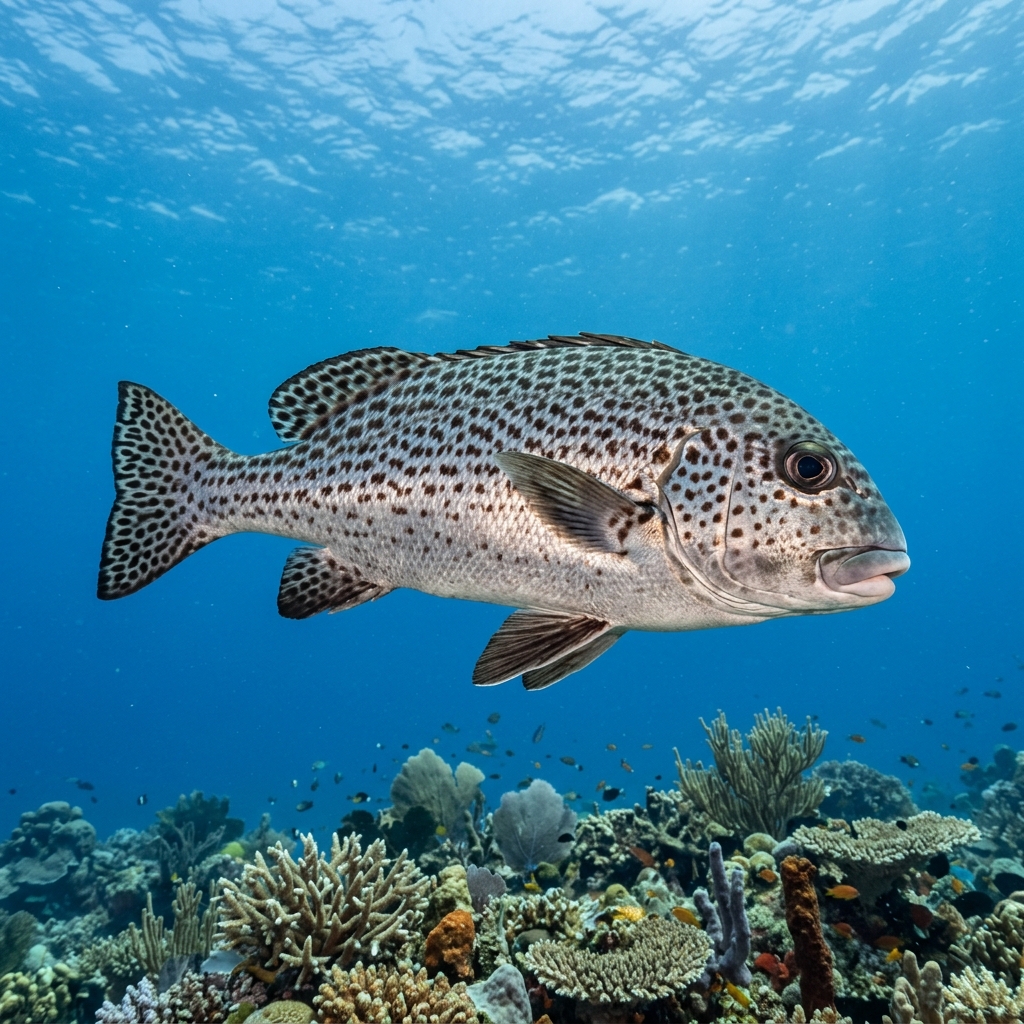
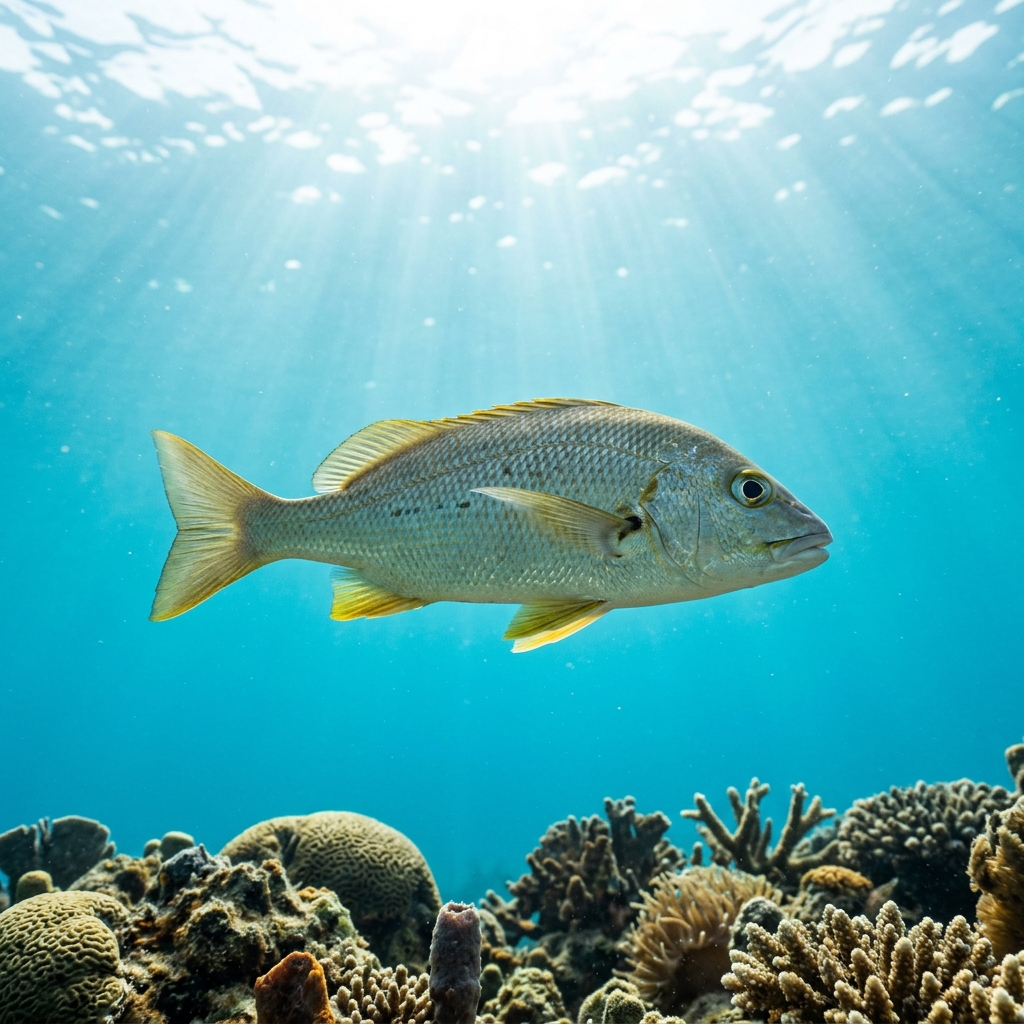
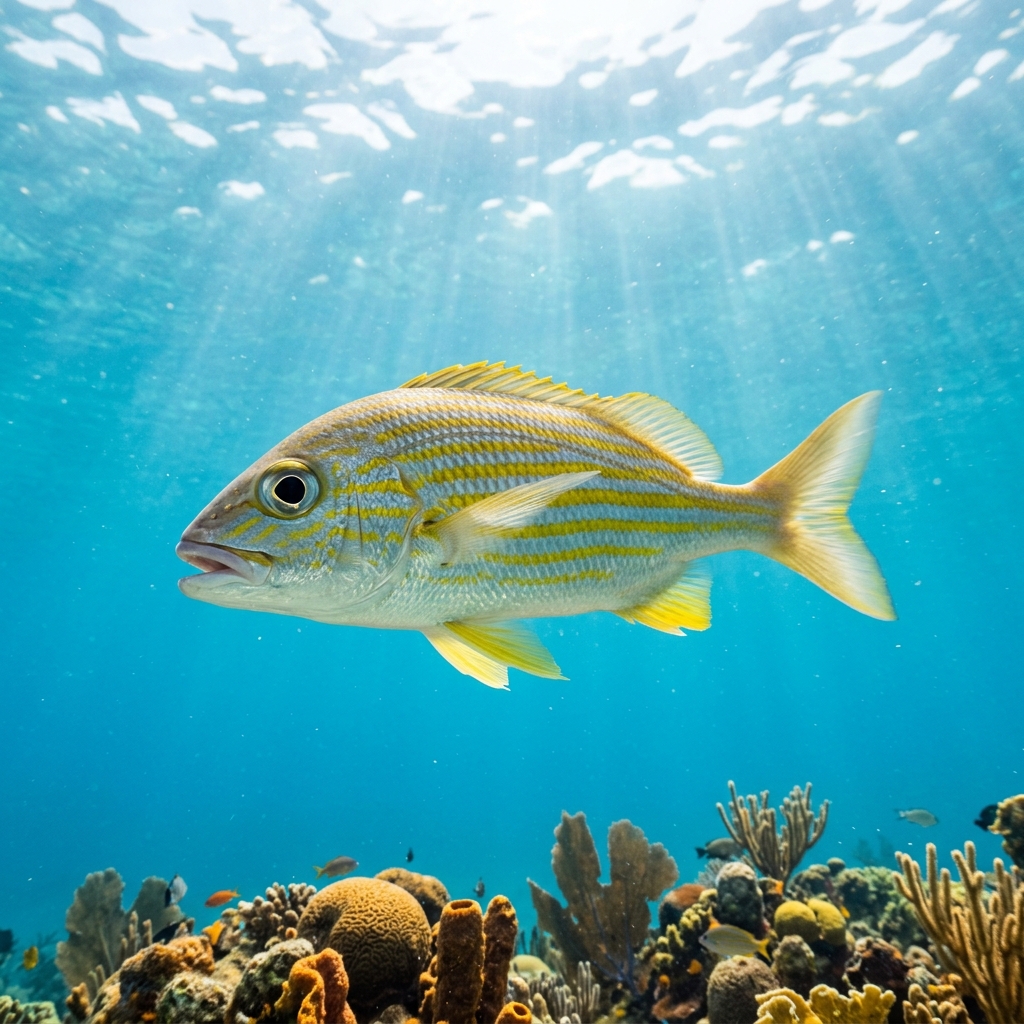
Gorettes are medium-bodied reef fish with deep, laterally compressed frames and slightly humped backs, typically silverish or yellowish-white with bold horizontal stripes or spotted patterns depending on species. The mouth is notably wide and fleshy, and most species flash a vivid orange-red interior when open, which is a reliable in-water clue. Schools often hover in loose formations over coral heads or rocky structures, which helps separate them from more solitary look-alikes. Body size varies across the group but most species encountered on Caribbean reefs fall in the palm-to-forearm range.
Divers most often encounter gorettes hovering in loose to tight schools around coral heads, rocky outcrops, or the base of reef walls, often barely moving during the day. They are relaxed around divers and rarely bolt unless closely approached, making them easy subjects to observe and photograph. At dusk the school tends to break up as individuals move off individually to forage over sand and rubble, catching them mid-transition gives a very different view of the species.
The common name 'grunt' comes directly from what these fish do: they grind their pharyngeal teeth (throat teeth) together to produce an audible grunting sound, which is amplified by the swim bladder. You can sometimes hear it in the water if conditions are quiet.
In the Northern Hemisphere, gorettes are present year-round with no concentrated season, which matches their comfortable temperature niche of roughly 25 to 29 °C across tropical Caribbean and Gulf reefs. Southern Hemisphere sightings concentrate in November to February and April to May, so plan accordingly if diving Brazilian reefs.
Reef neighbours a diver could mistake it for. Use the identification notes above to tell them apart.
Gorettes are most consistently logged across the wider Caribbean, with the Yucatán Peninsula, particularly around Cozumel and the Riviera Maya, standing out as the single strongest region in the data, followed by Florida and the Southeast United States. Strong populations are also recorded in Grand Cayman, Grenada, the British Virgin Islands, Bonaire, and Costa Rica's Papagayo Gulf, and sightings extend to Brazil and Baja California, reflecting how widely the group spans tropical Atlantic and eastern Pacific reefs.
Mapping where Gorette is logged…
Gorettes are logged across a wide sweep of the tropical western Atlantic and eastern Pacific. The Yucatán Peninsula is the top region by a clear margin, with Grand Cayman, Grenada, Florida, Bonaire, the British Virgin Islands, and Costa Rica's Papagayo Gulf also offering reliable sightings. Brazil rounds out the Atlantic spread.
On Caribbean and Gulf reefs in the Northern Hemisphere, gorettes can be seen year-round, they thrive in water between about 25 and 29 °C, which these reefs maintain consistently. If you are diving in the Southern Hemisphere, such as off Brazil, sightings concentrate between November and February and again in April and May.
Look for a deep-bodied, laterally compressed fish with a large fleshy mouth, often in schools near coral or rock. The orange-red mouth interior, visible when the fish opens its mouth or 'grunts', is one of the most reliable field marks across the group. Stripes or spotted patterns on a pale to yellowish body are typical, though exact markings vary by species.
They grind specialised pharyngeal teeth in their throats together to produce an audible grunting sound, which is amplified by the swim bladder. This is a real behaviour divers can sometimes hear underwater in calm conditions, and it is what gives the entire Haemulidae family their common name.
Site and sighting data is aggregated from diver logs, iNaturalist and GBIF. For taxonomy and conservation status:
Haemulon plumierii
Bluestriped Grunt
1,907 sites