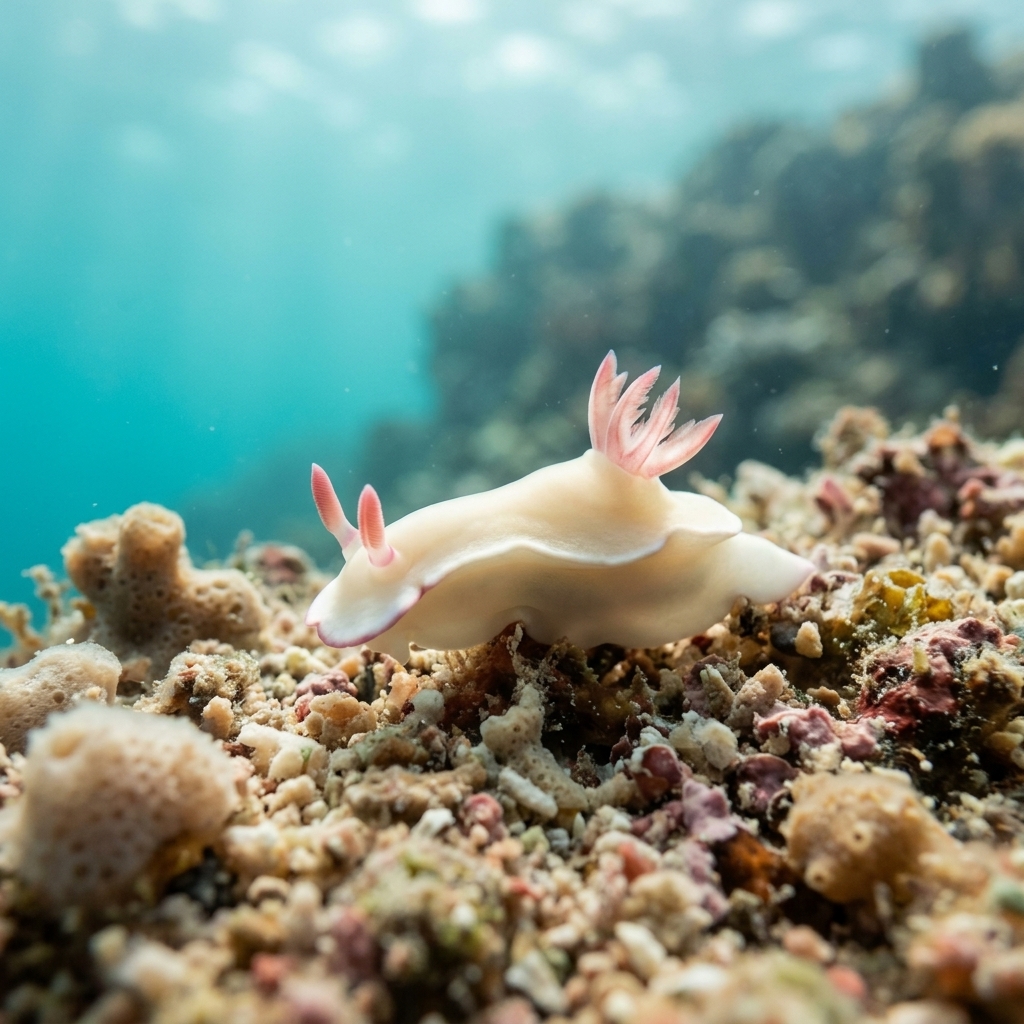
Goniobranchus verrieri
Spot the Pink-eared Rainbow Dorid in the Philippines, where most diver sightings are logged. Best searched Feb, May in warm 22-29 °C reefs.
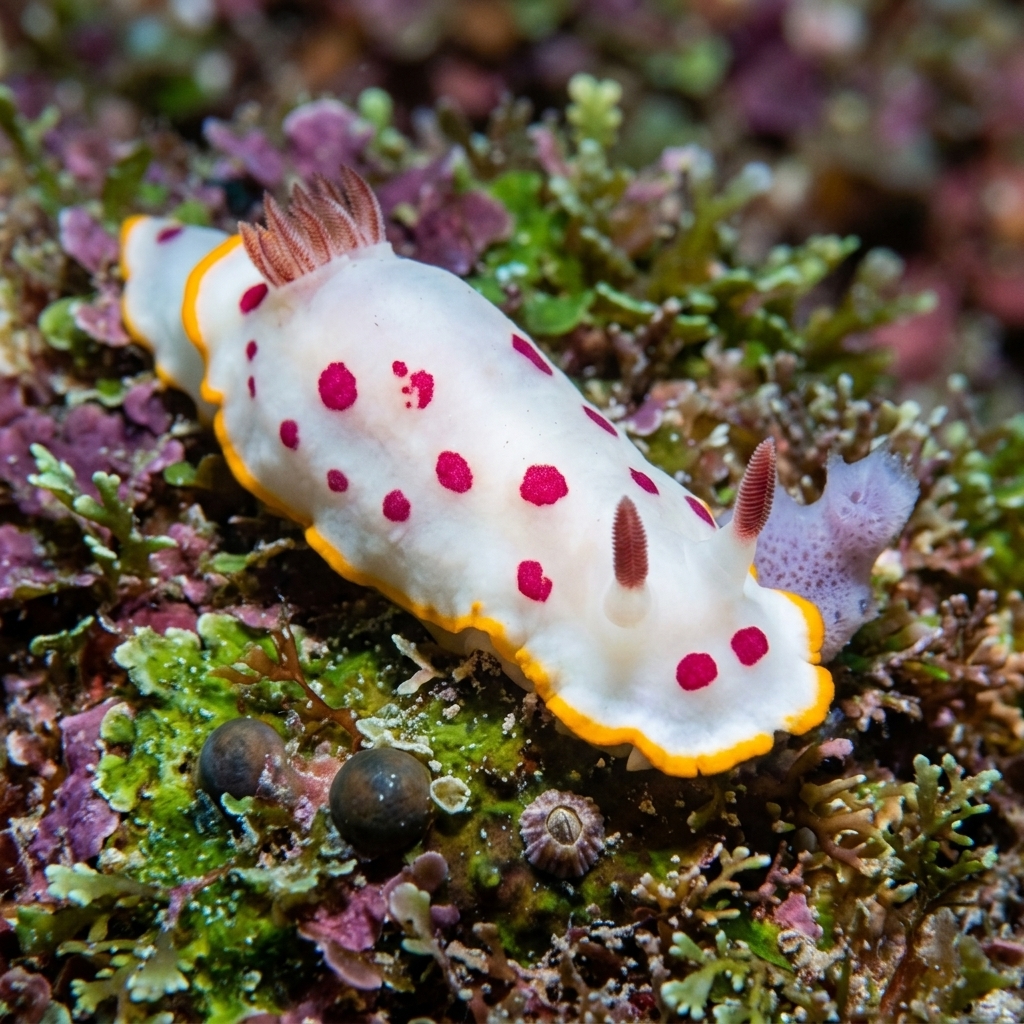
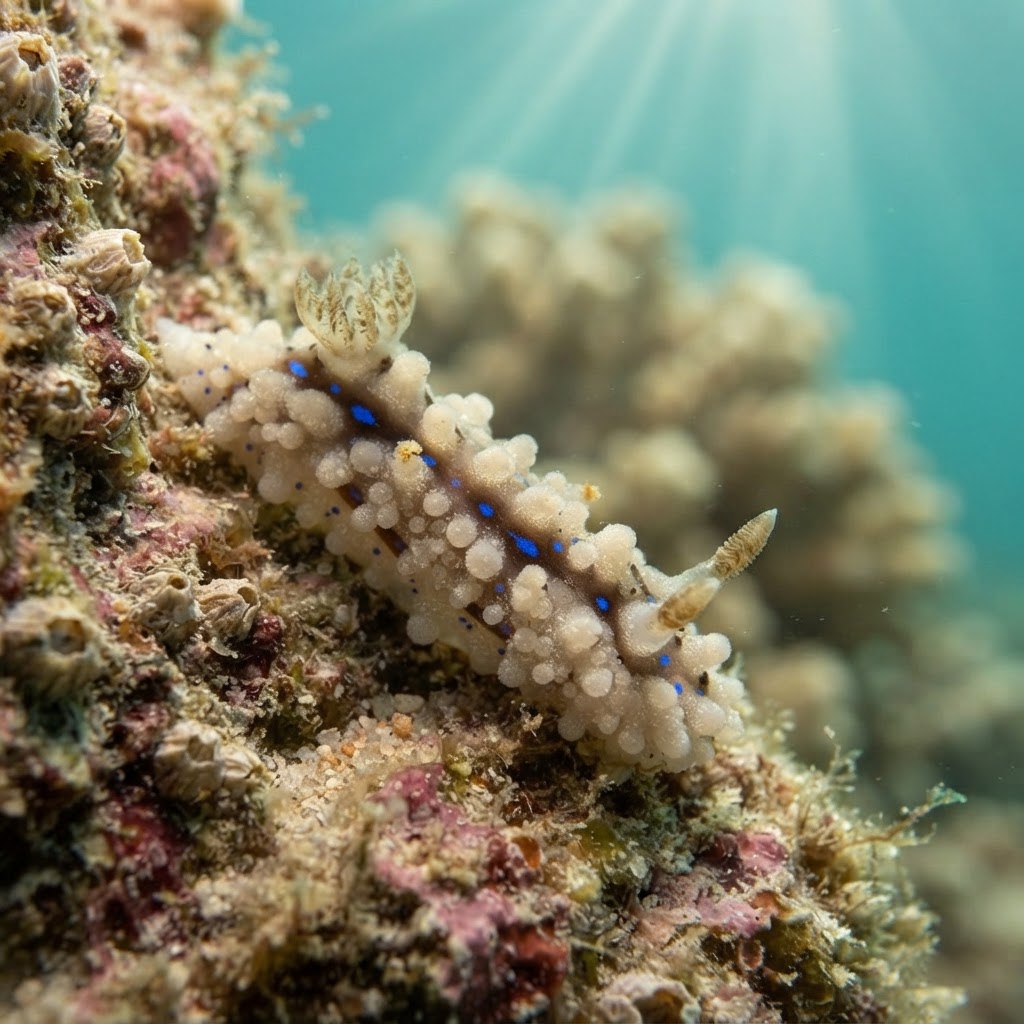
A small dorid nudibranch with a white to cream body decorated with a pattern of coloured spots or blotches across the mantle, and distinctively pink-tipped gill plumes (the feathery structures on its back used for breathing) that give it its name. The rhinophores (sensory tentacles at the front) typically share the same pinkish colouring at the tips, creating an easy anchor point for identification. Look for it moving slowly across encrusting reef surfaces, often no bigger than a coin.
Like most dorids, it spends its time crawling slowly over hard reef surfaces and encrusting growth, grazing on sponges. It tends to ignore divers entirely, which makes close observation straightforward as long as you approach slowly and avoid disturbing the substrate around it. Sightings are typically on shallow to mid-water reef sections rather than in open water.
As a chromodoridid nudibranch, it almost certainly feeds exclusively on sponges and sequesters the sponge's chemical defences into its own mantle tissues, making itself unpalatable to predators. The vivid colouring is thought to advertise this toxicity to would-be attackers.
In the Northern Hemisphere, including the Philippines and Hong Kong, sightings concentrate between February and May, making that the period most worth targeting. In the Southern Hemisphere, the limited data points to January as the peak month in places such as New South Wales.
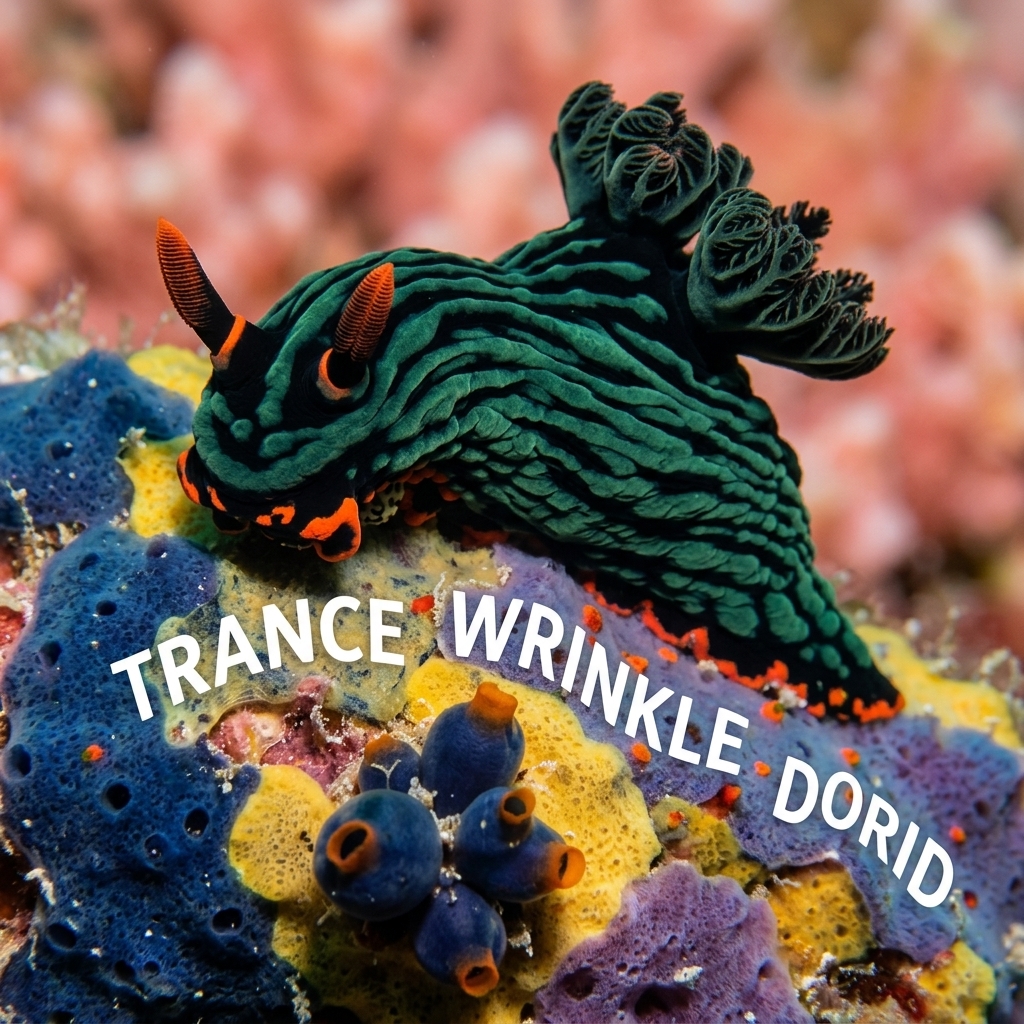
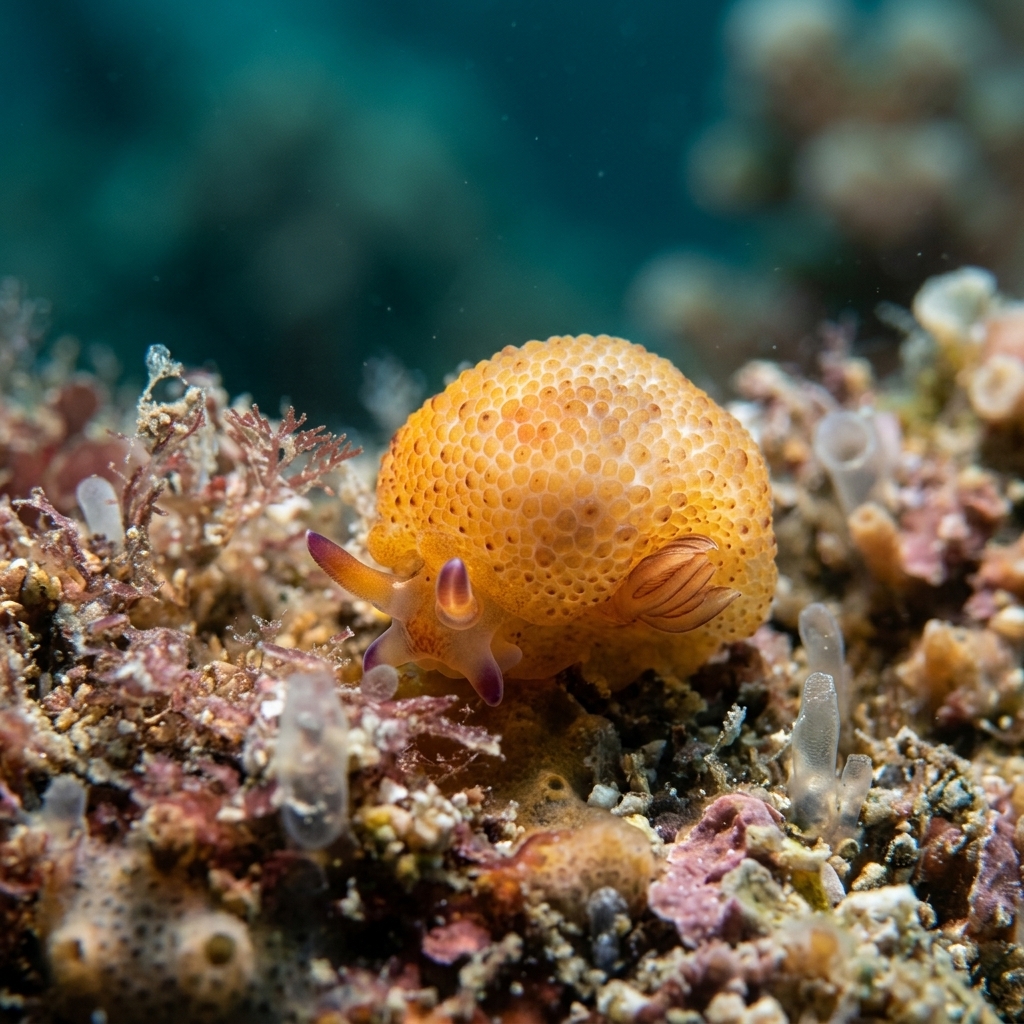
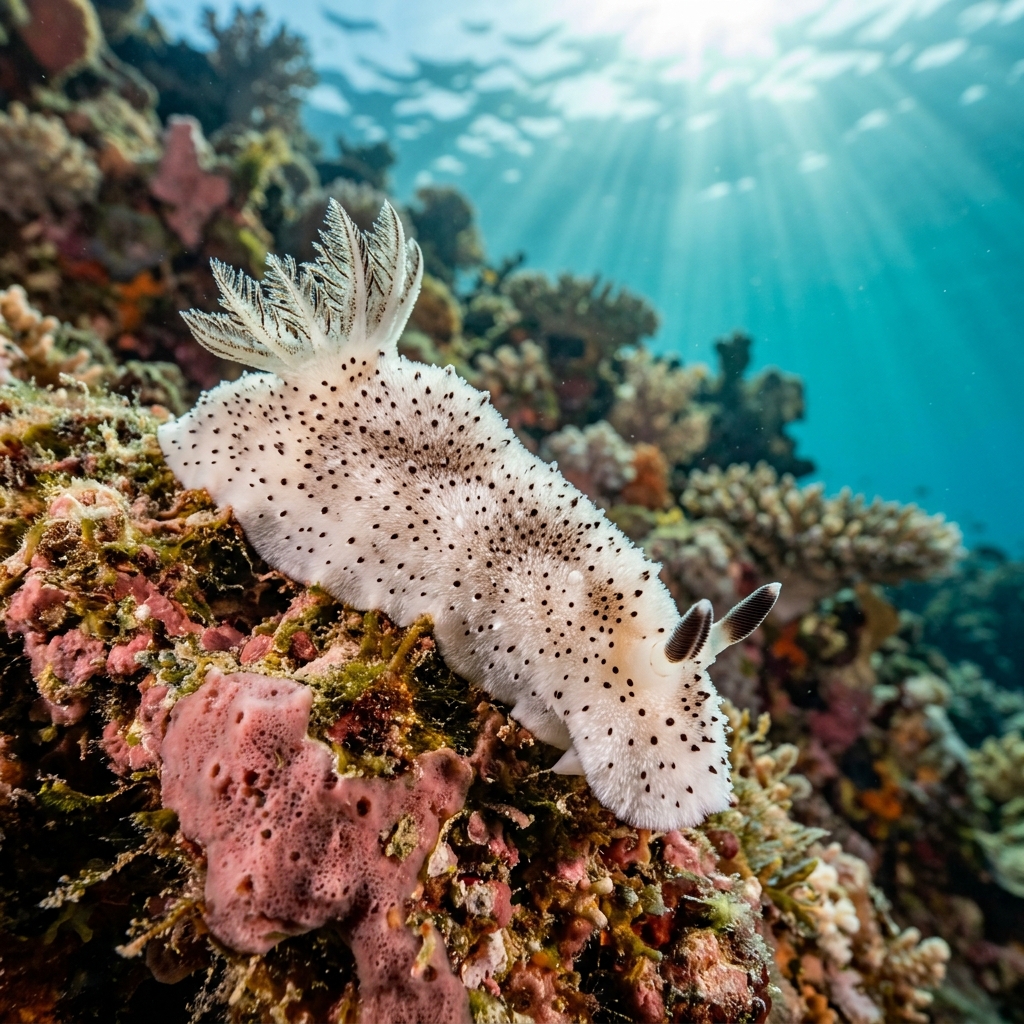
Reef neighbours a diver could mistake it for. Use the identification notes above to tell them apart.
The Philippines accounts for the overwhelming majority of logged sightings, with Luzon and the North, Central Visayas, and East and North Visayas all producing reliable records across a wide spread of sites. Outside the Philippines, divers have also recorded it in New South Wales (Australia), around Nouméa (New Caledonia), Bali and Java (Indonesia), Eilat (Israel), and Sai Kung (Hong Kong), though encounters at those locations are far less frequent.
Mapping where Pink-eared Rainbow Dorid is logged…
The Philippines is by far the top destination, with strong sighting records across Luzon, Central Visayas, and East and North Visayas. Smaller numbers of sightings come from New South Wales in Australia, Nouméa in New Caledonia, Bali and Java in Indonesia, Eilat in Israel, and Sai Kung in Hong Kong.
In the Philippines and other Northern Hemisphere locations, February through May is when sightings cluster most strongly. Divers in the Southern Hemisphere, such as those exploring New South Wales reefs, are most likely to encounter it in January.
Key in on the pink-tipped gill plumes on its back and matching pink tips on the front rhinophores. The mantle is white to cream with a coloured spot or blotch pattern. It moves slowly on the reef surface and is typically coin-sized, which helps separate it from larger look-alikes.
Across all logged dive sites it rates as uncommon to rare, so a sighting is never guaranteed. A small number of sites in the Philippines do produce common sightings, suggesting local population hotspots worth asking dive operators about before you get in the water.
No. Like most nudibranchs, it poses no threat to divers whatsoever. It will not bite, sting, or react aggressively. The main risk is accidentally disturbing it by touching the reef around it, so hover carefully.
Site and sighting data is aggregated from diver logs, iNaturalist and GBIF. For taxonomy and conservation status:
Blue Dragon
3,163 sites