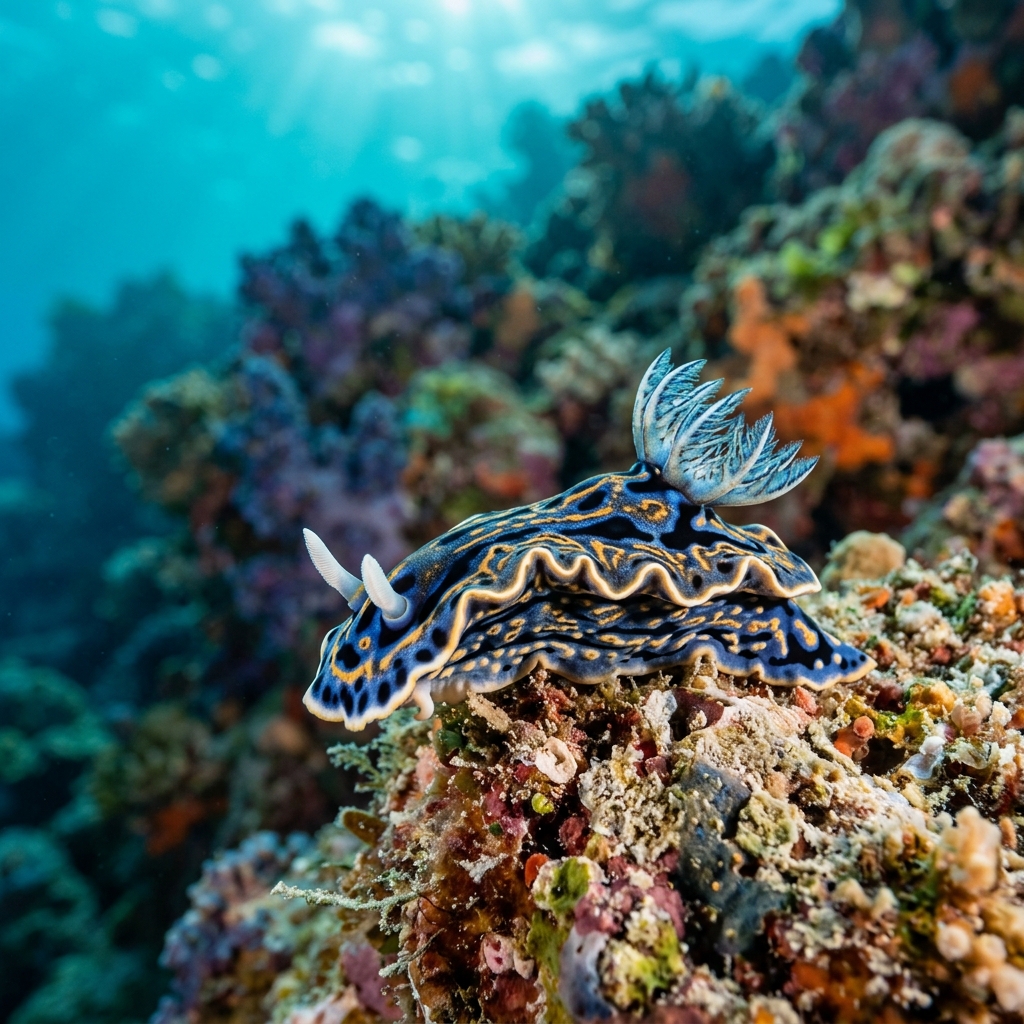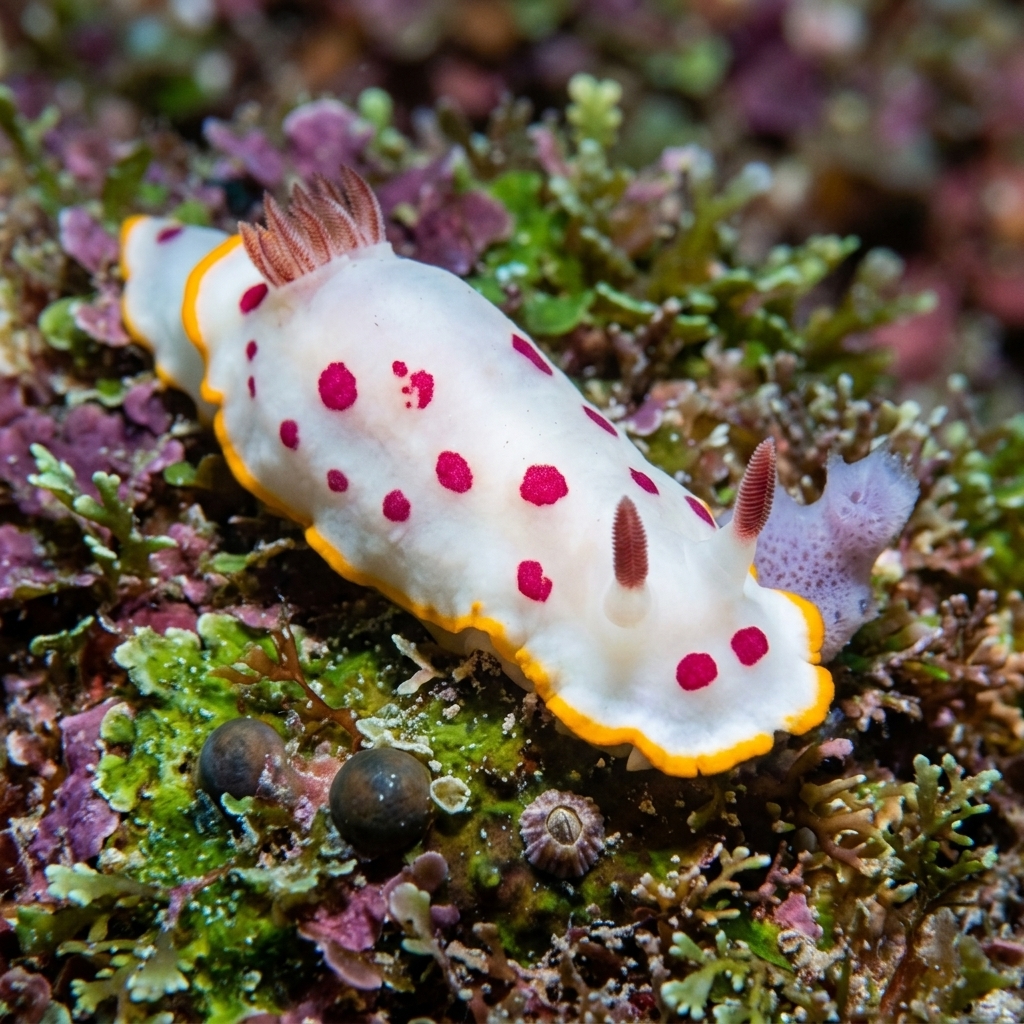
Goniobranchus leopardus
Spot Leopard Chromodoris in the Visayas, Sipadan, and Okinawa. ID tips, best dive regions, and what to expect in 25-29 °C Indo-Pacific waters.
Look for a white or pale cream mantle (the broad, flat outer body surface) peppered with irregularly shaped dark brown to black spots, the leopard pattern that gives this nudibranch its name. The mantle edge is typically lined with a vivid orange or yellow-orange border, and the gills and rhinophores (sensory head projections) are similarly tipped in colour. On the reef it crawls slowly and stays small, so close inspection is needed to catch the spot pattern and coloured fringe together.
Like most chromodorids, it moves slowly across hard and mixed reef substrates, grazing on sponges. Divers typically find it on the reef slope or rubble patches rather than out in the open water column. It shows little reaction to divers beyond continuing its deliberate crawl, so a steady, unhurried approach at close range is the best way to observe it without disturbing it.
Goniobranchus nudibranchs sequester chemical compounds from the sponges they eat and concentrate them in specialised glands along the mantle edge, those bright orange borders are a warning to predators that the animal tastes foul and may be toxic.
No clear seasonal peak has emerged from the data, so this species is treated as present year-round across its range. Its observed temperature niche of roughly 25 to 29 °C aligns with typical tropical reef conditions, meaning any time you're diving warm Indo-Pacific reefs is a reasonable time to search for it.
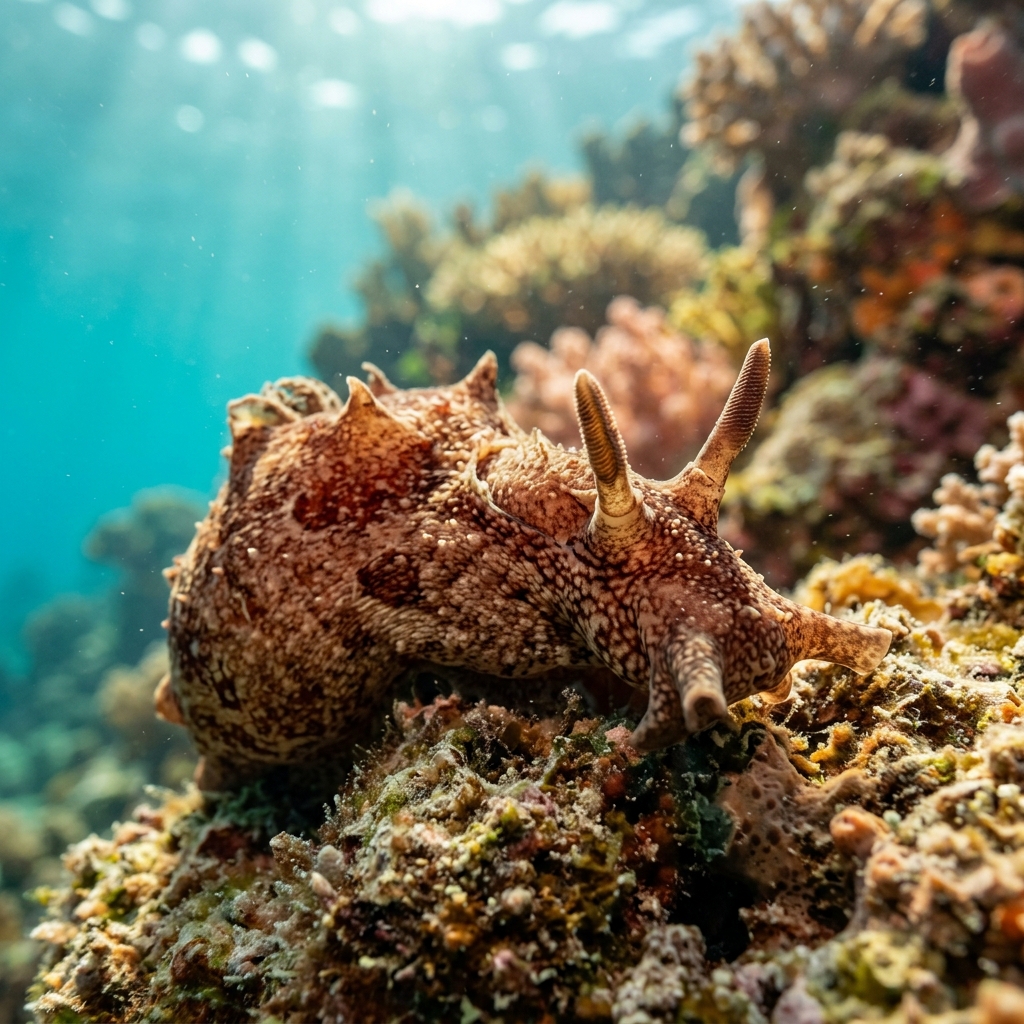
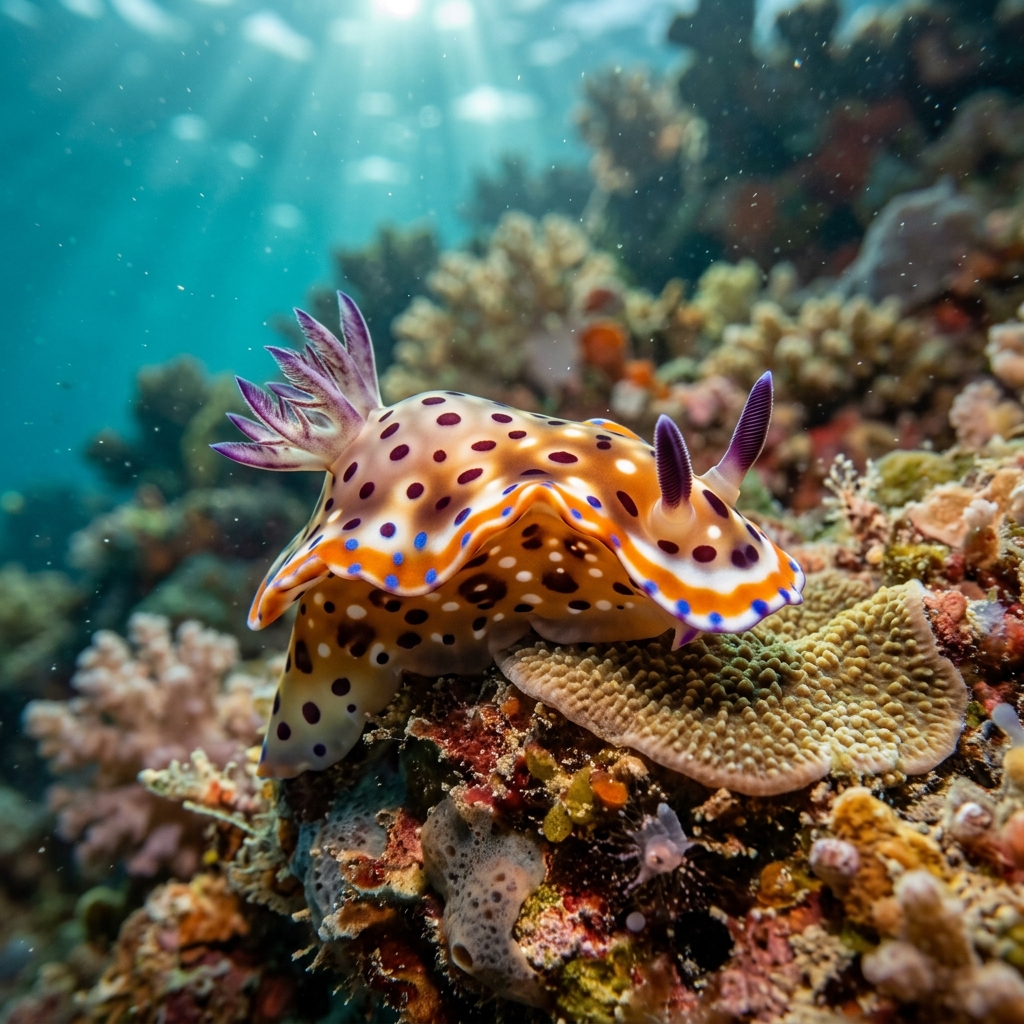
Reef neighbours a diver could mistake it for. Use the identification notes above to tell them apart.
Most sightings come from the Philippines, particularly the Visayas Central region, which dominates the records by a wide margin. Malaysia's Sipadan and East Sabah coast and Japan's Okinawa Islands are the next strongest areas, followed by Bali, Lombok and Java in Indonesia and Nouméa in New Caledonia. Timor-Leste and Australia round out the range, so the Indo-Pacific tropics is squarely where to look.
Mapping where Leopard Chromodoris is logged…
The strongest records are from the Philippines, especially the Visayas Central region. Sipadan and East Sabah in Malaysia, the Okinawa Islands in Japan, and Bali and Lombok in Indonesia are also reliable areas. Smaller numbers of sightings come from New Caledonia, Timor-Leste, and Australia.
There is no confirmed seasonal peak in the data, so it can reasonably be encountered year-round on warm Indo-Pacific reefs. Its observed range of around 25 to 29 °C means it lives in consistently tropical waters where conditions change little between seasons.
The key feature is a white or pale mantle covered in dark, irregular spots arranged like a leopard's coat. Pair that with a bright orange or yellow-orange border running around the mantle edge and coloured gill plumes, and you have a fairly distinctive combination. Slow movement across the reef and a small body size mean you need to look closely at low-lying reef surfaces.
No. Like other chromodorids it is completely harmless to divers. Do not handle it though, nudibranch skin can absorb oils and sunscreen from hands, and physical contact risks injuring the animal.
The vivid orange mantle border and boldly spotted body are aposematic colouration, a visual warning to predators. Goniobranchus nudibranchs feed on sponges and store defensive chemicals from their prey in glands near the mantle edge, making them unpalatable. The bright colours advertise that fact to anything that might otherwise try to eat them.
Site and sighting data is aggregated from diver logs, iNaturalist and GBIF. For taxonomy and conservation status:
Light-spotted Aegires
3,168 sites