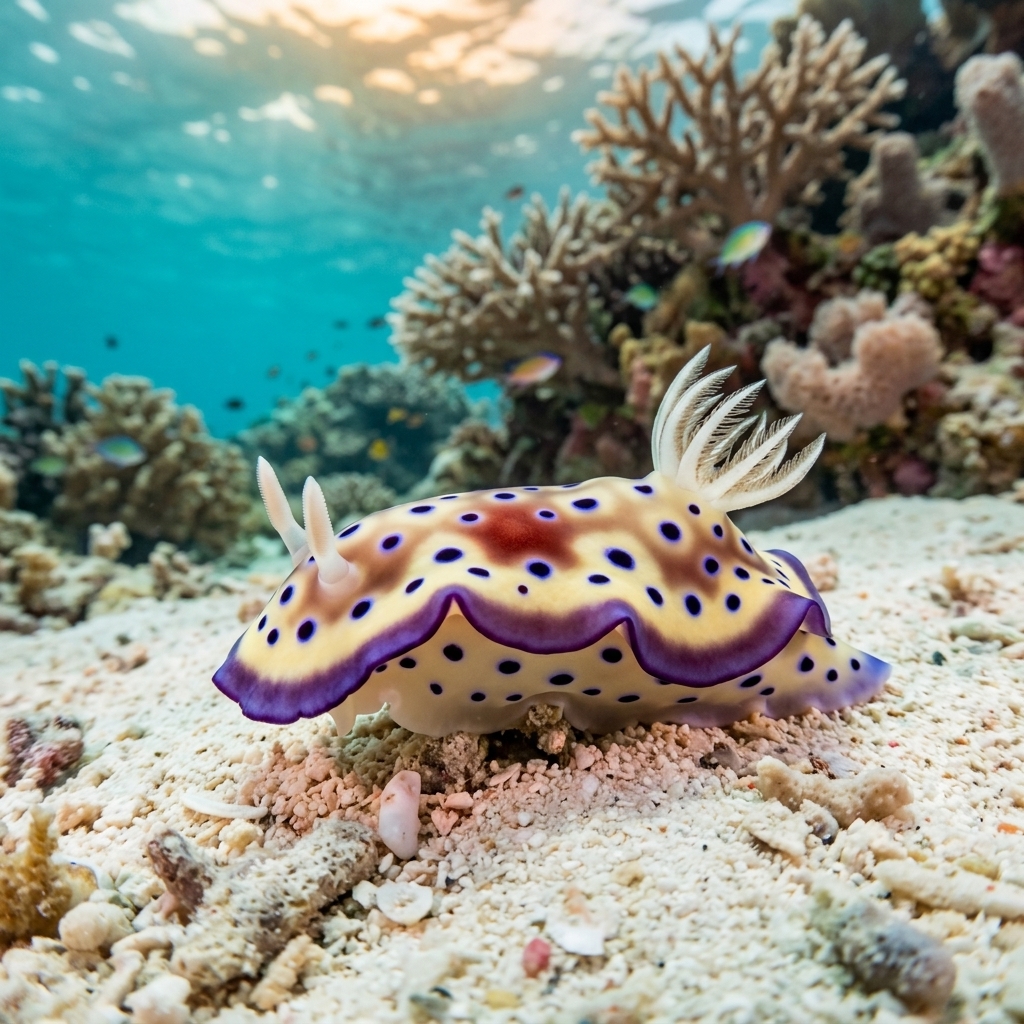
Goniobranchus kuniei
Spot Kunie's Goniobranchus in the Visayas and Sipadan in warm 26-29 °C water. ID tips, best seasons, and top regions for this Indo-Pacific nudibranch.
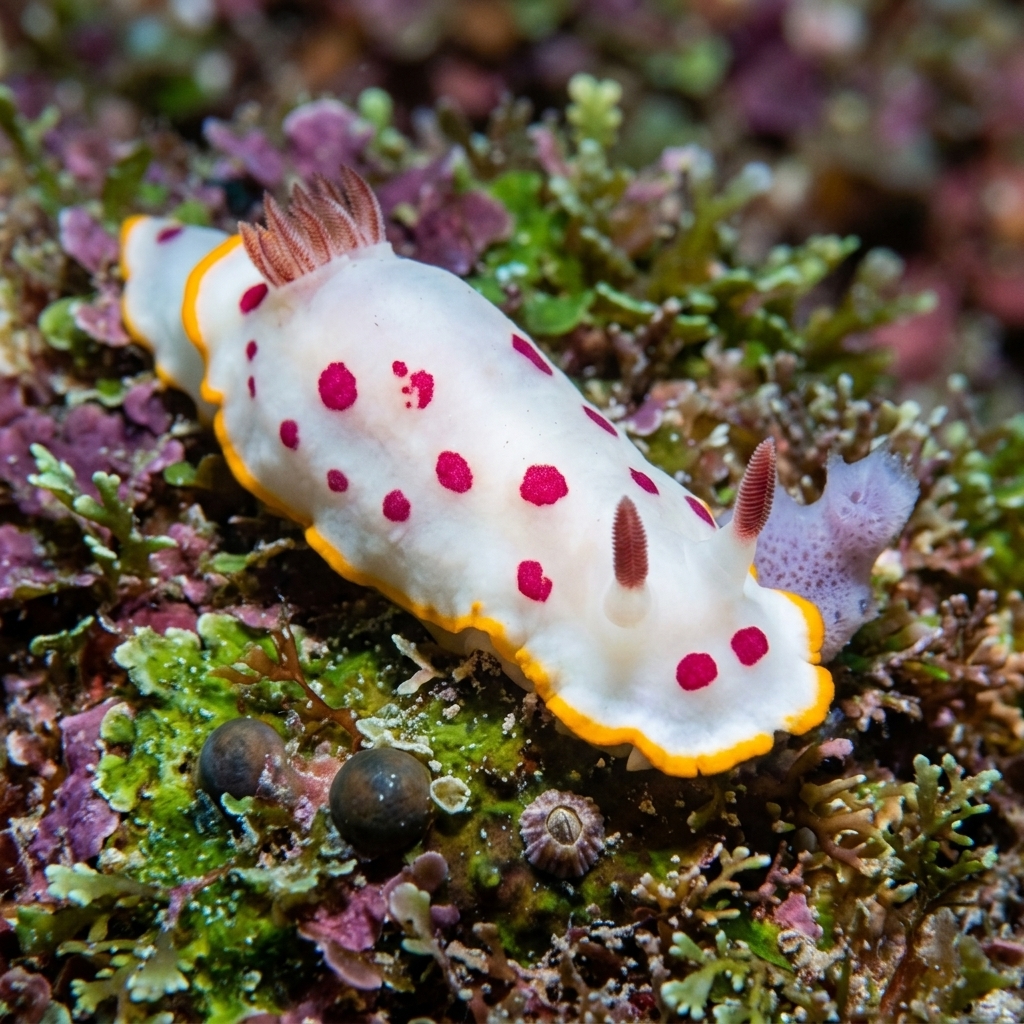
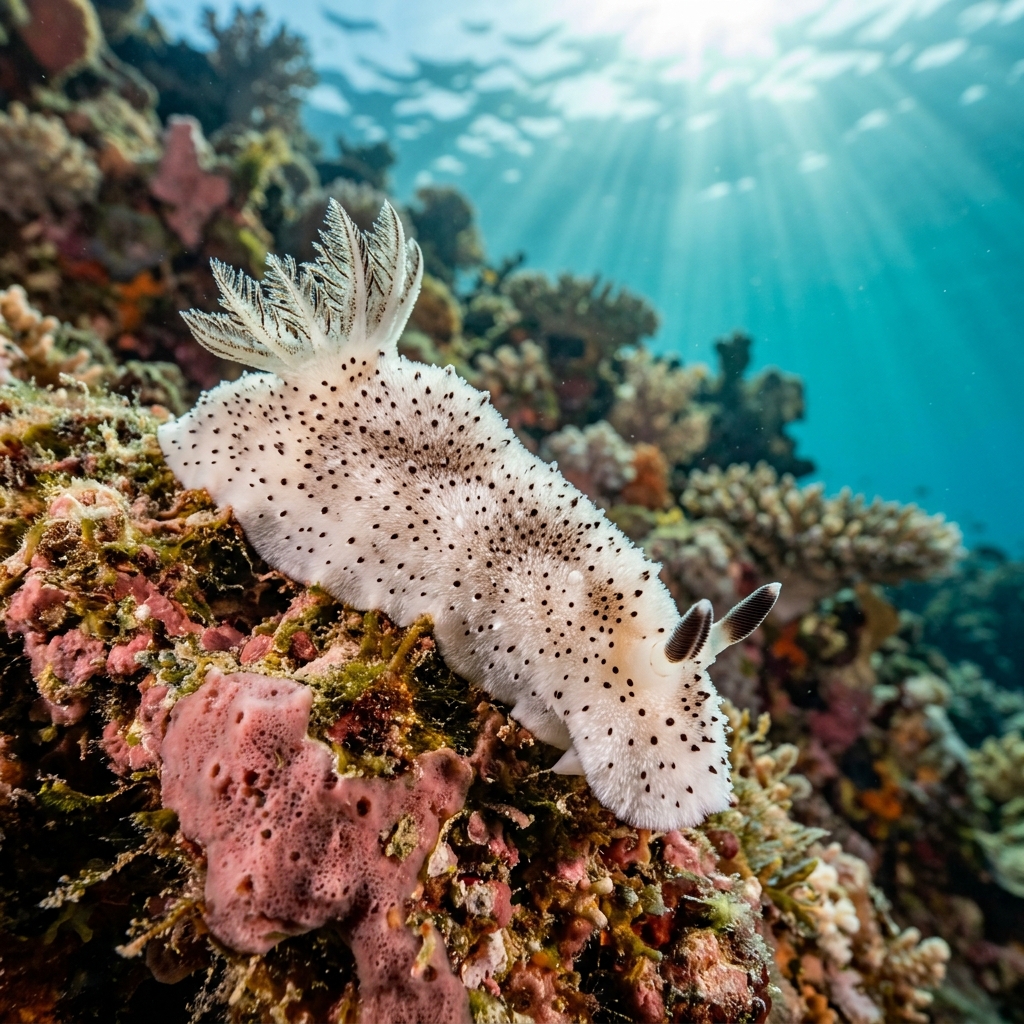
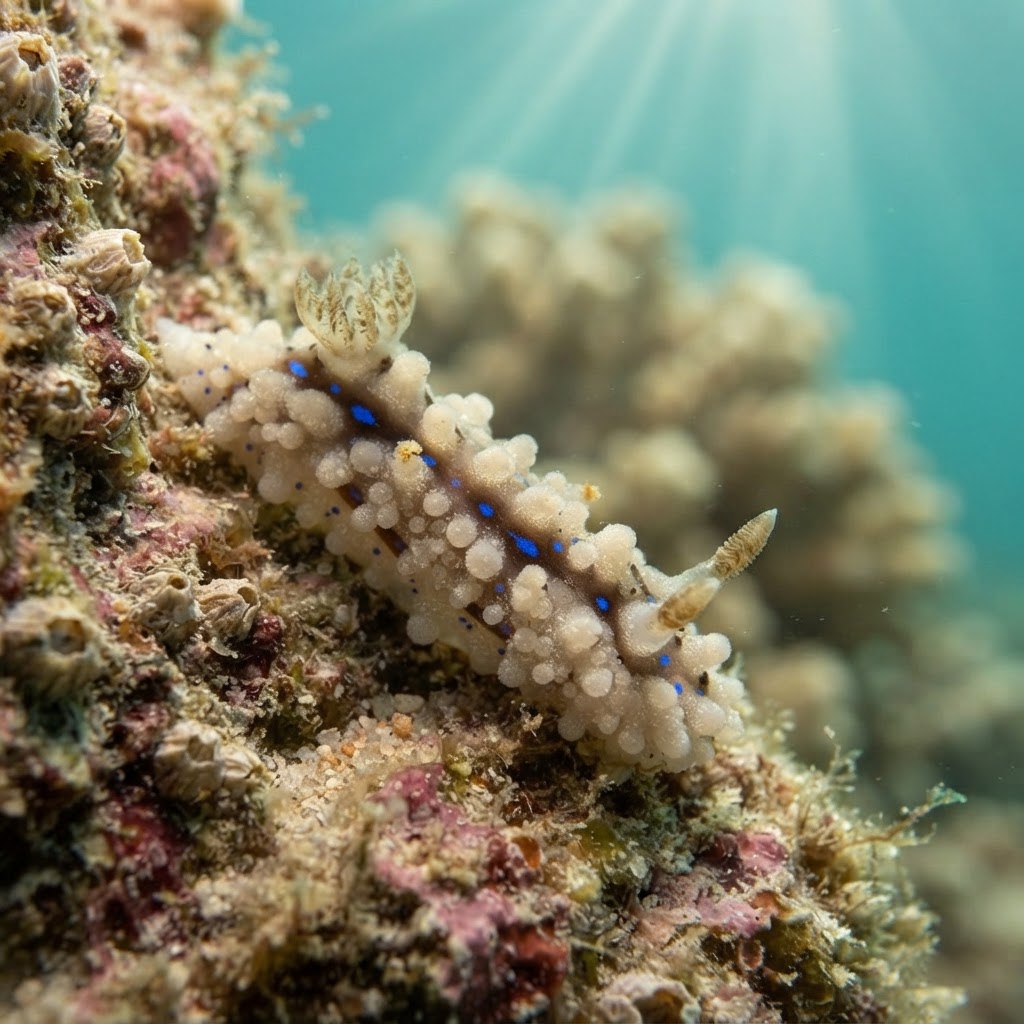
Look for a flattened, oval-mantled nudibranch with a white or cream body edged in a vivid purple or violet band, often with an inner ring of orange or yellow spots running parallel to the mantle margin. The branchial plume (gill crown) at the rear is typically orange or pinkish, making it stand out sharply against pale reef rubble or algae-encrusted rock. It moves slowly and deliberately, so once you pick up the colour pattern it holds still long enough for a good look.
You will almost always find one crawling slowly across hard substrate, rubble, encrusting sponge, or low-profile coral, as it grazes on the sponges it feeds on. It pays little attention to divers and will keep moving at its own unhurried pace, making it straightforward to observe without disturbing it. Most encounters happen during daylight dives, typically in shallower reef zones where sponge growth is dense.
Like other chromodorids, it likely sequesters defensive chemicals from the sponges it eats, storing them in its mantle. Those vivid colours are not decoration, they signal to would-be predators that this small animal is not worth attempting.
Northern Hemisphere sightings concentrate from January through October, so the widest window is roughly the start of the year through early autumn. Its observed temperature niche of roughly 26 to 29 °C ties it closely to warm tropical reefs, where water stays in that range for much of the year.
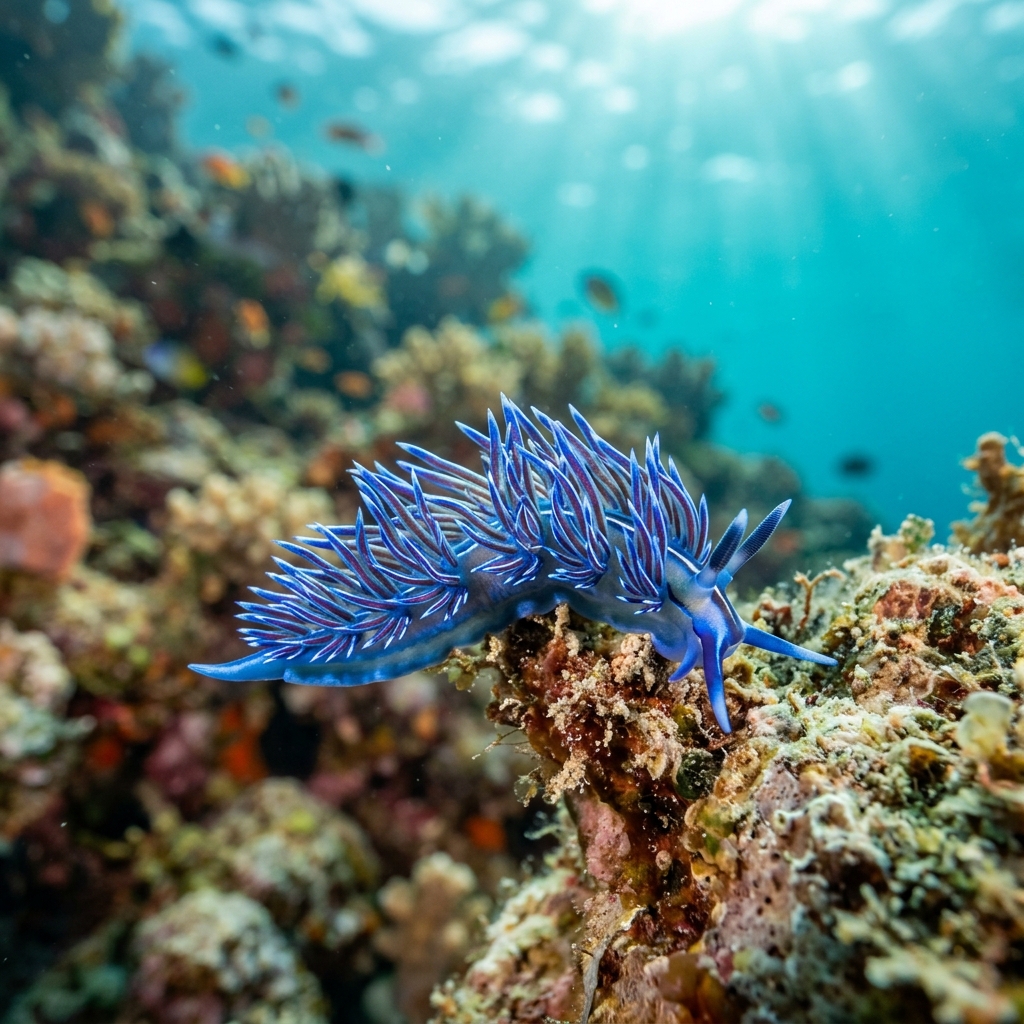
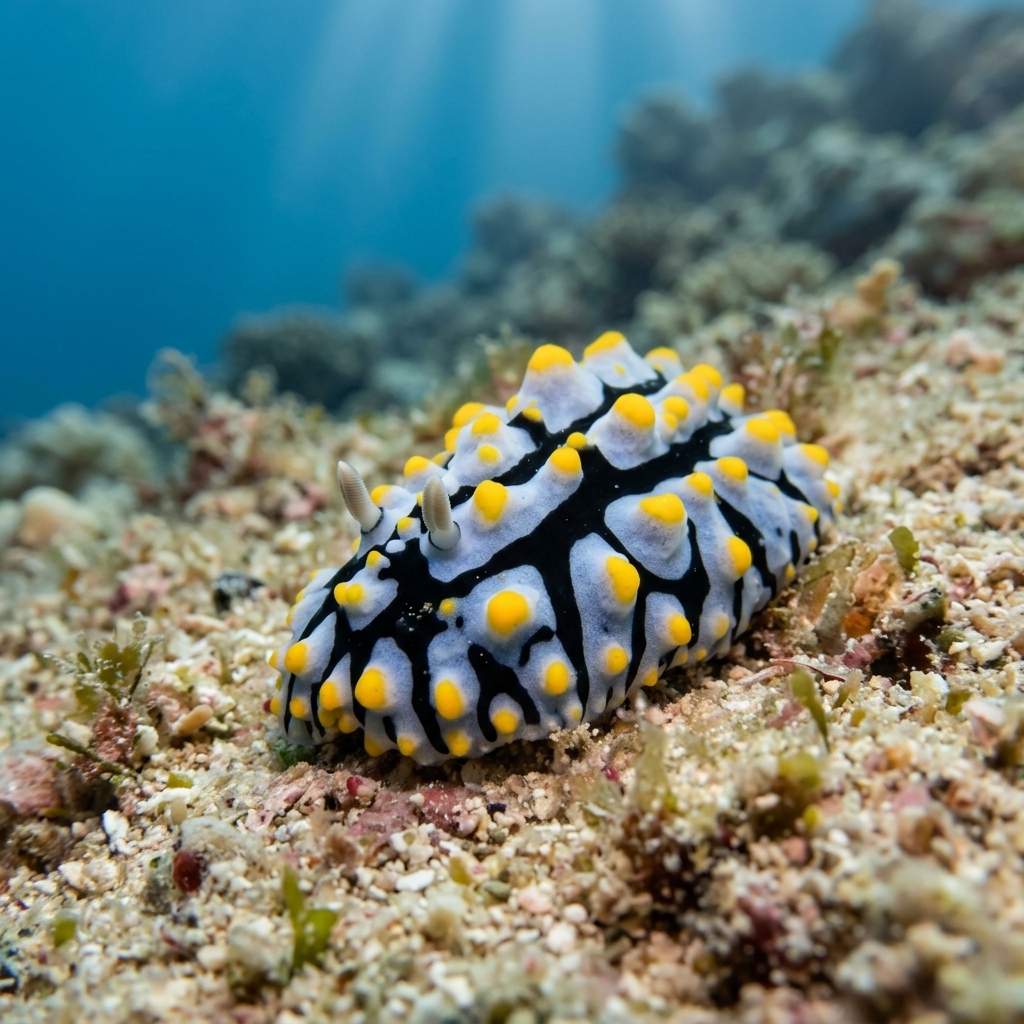
Reef neighbours a diver could mistake it for. Use the identification notes above to tell them apart.
Most commonly logged in the Philippines, particularly across the Visayas and the Luzon and North regions, which together account for the bulk of all recorded sightings. Malaysia is a strong second, with Sipadan and East Sabah standing out as a reliable spot, followed by sites across Nusa Tenggara and Bali in Indonesia. Smaller but consistent records also come from Taiwan, Vanuatu, Vietnam, Australia, and New Caledonia, underlining a broad Indo-Pacific spread.
Mapping where Kunie's Goniobranchus is logged…
The Philippines leads all other destinations, with the Visayas and Luzon regions producing the most sightings. Sipadan and East Sabah in Malaysia are also highly reliable, and Bali and Nusa Tenggara in Indonesia add further options. Smaller populations turn up in Taiwan, Vanuatu, and Vietnam.
In the northern Indo-Pacific, January through October covers the main observation window. Water temperatures between 26 and 29 °C appear to suit it best, so tropical reef destinations hold suitable conditions for most of the year.
Key in on the white or cream mantle edged with a distinct purple band and an inner row of orange or yellow spots. The orange gill plume at the rear is a useful secondary marker. It moves slowly on the reef, so you have time to check the margin pattern before it moves out of view.
It is most typically rated as uncommon at the sites where it appears, with a smaller proportion of sites rating it as common and many rating it rare. Patience and slow, methodical reef scanning give you the best chance of finding one, they blend into rubble patches despite their colours.
No. It poses no risk to divers whatsoever. Like other chromodorids it may carry chemical deterrents in its tissue derived from its sponge diet, but these are a defence against predators, not a hazard to people observing it from a respectful distance.
Site and sighting data is aggregated from diver logs, iNaturalist and GBIF. For taxonomy and conservation status:
Light-spotted Aegires
3,168 sites