Goniobranchus hunterae
An uncommon nudibranch logged mostly off New South Wales, in water between 17.5 and 23.5°C. Here's where and how to spot one.
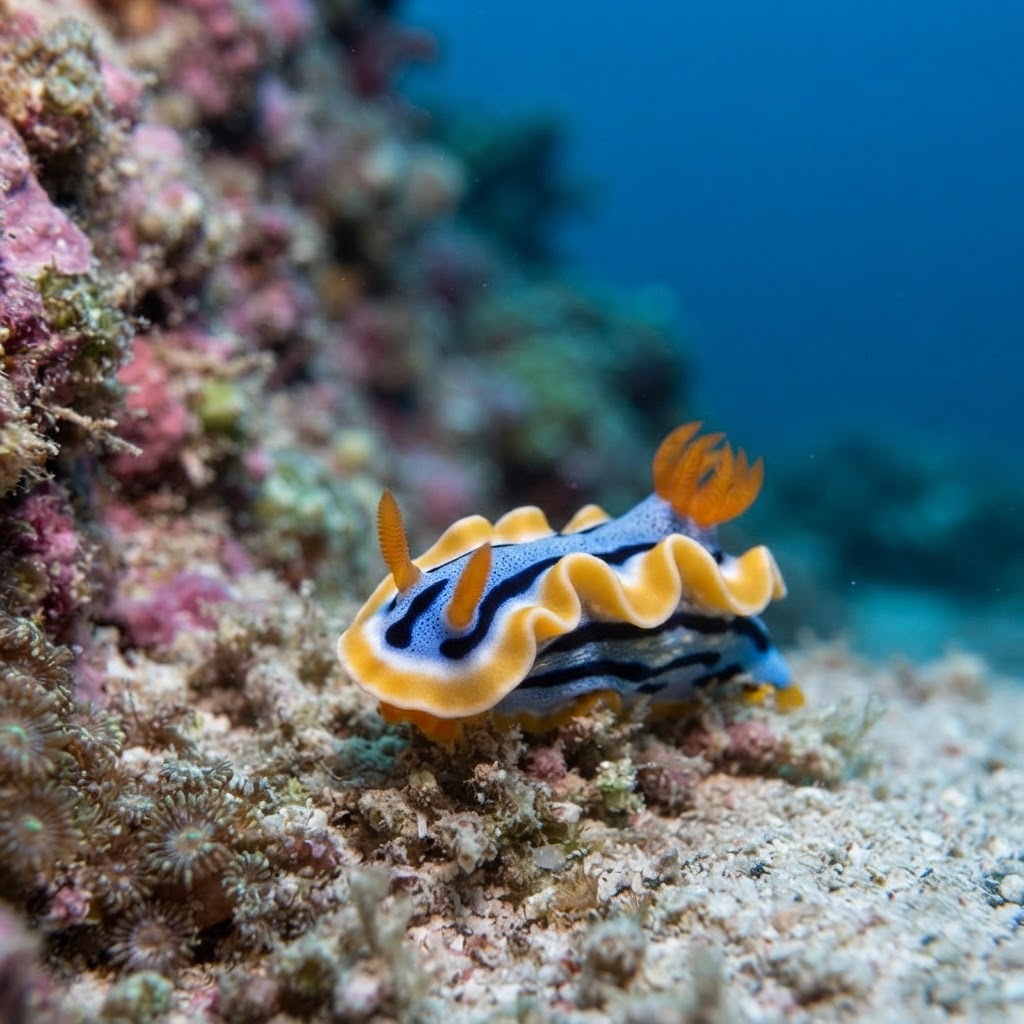
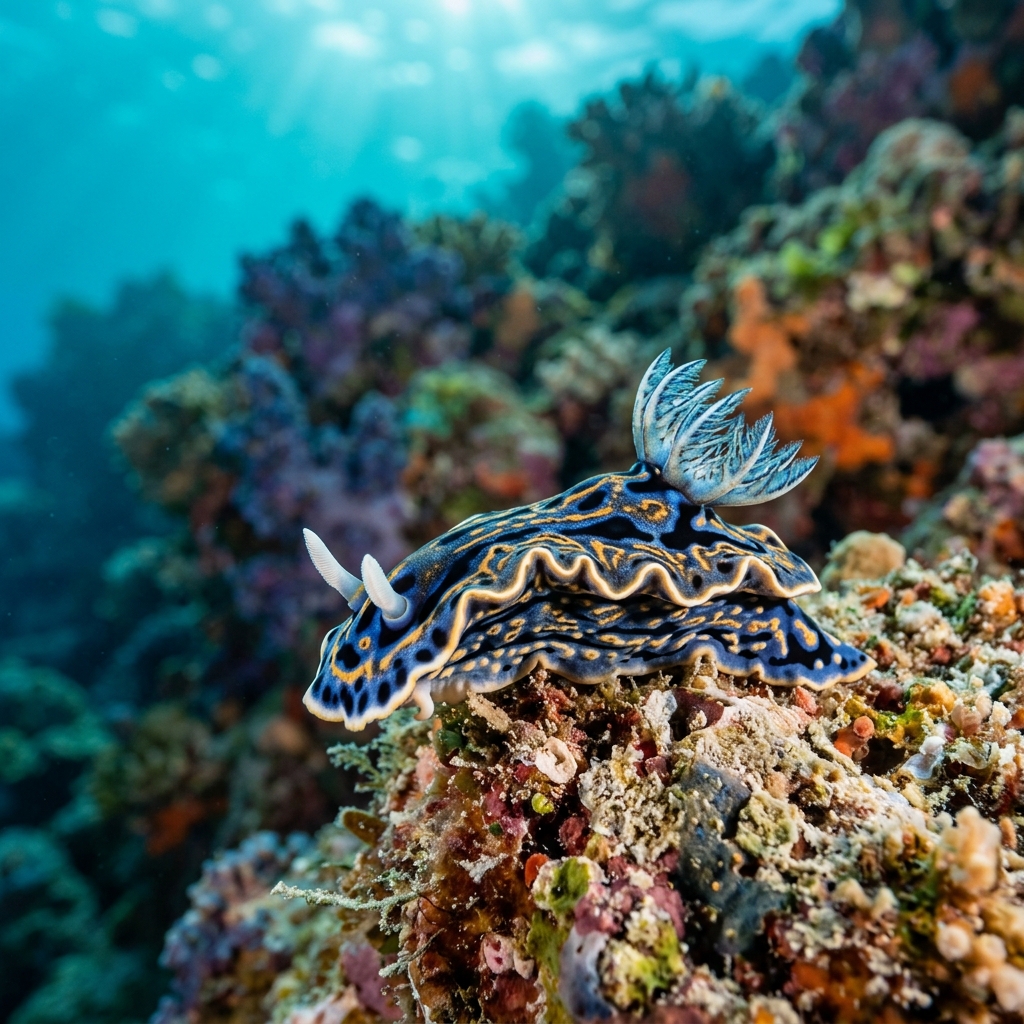
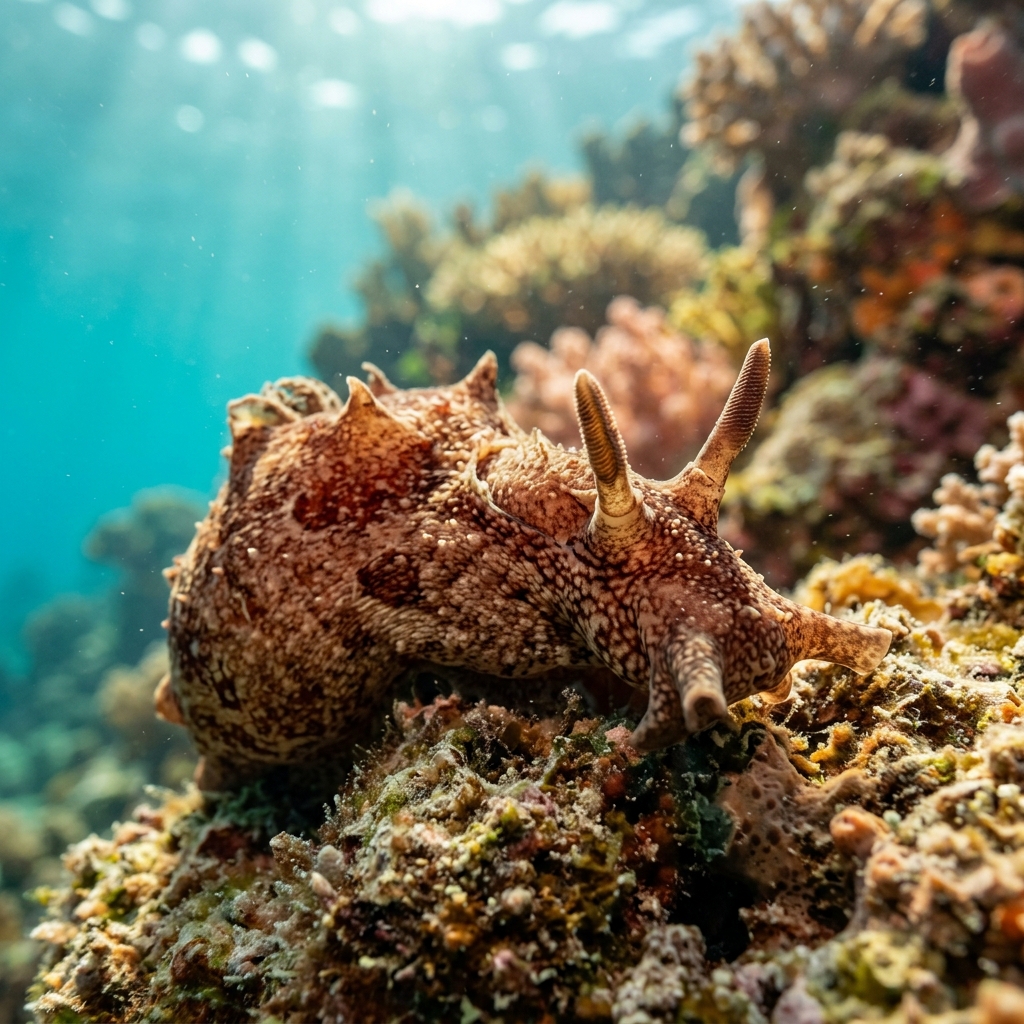
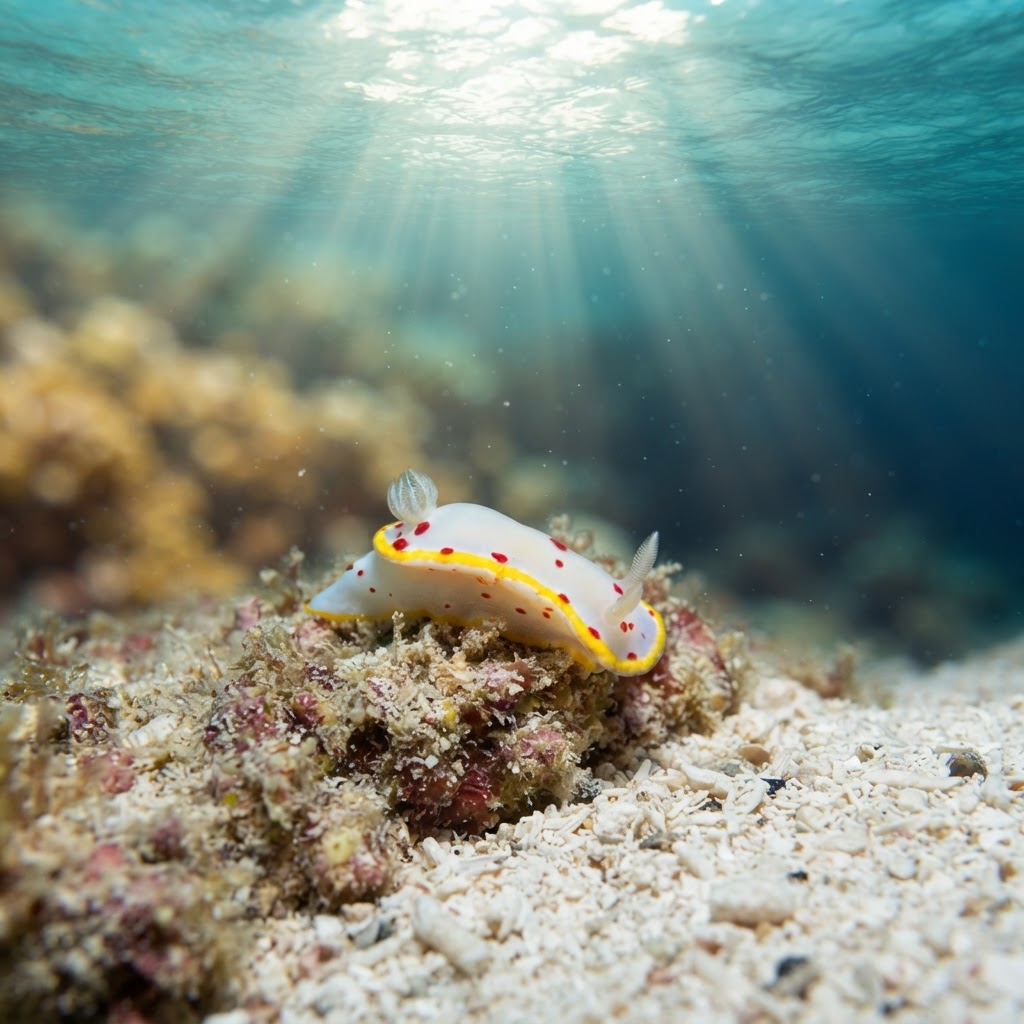
Look for a small, oval-bodied sea slug (nudibranch) with a mantle patterned in the mottled colours typical of the Goniobranchus group, moving slowly across rock or rubble rather than swimming. Its two rhinophores (sensory tentacles) sit forward on the head and a feathery gill cluster shows at the rear, both retractable if disturbed. Size in the water is small enough that most divers only notice it once they slow down and scan the substrate closely.
Divers find it grazing slowly over rock and rubble surfaces, tucked into crevices or moving across sponge-covered reef rather than out in the open. Like most chromodorid nudibranchs, it shows little reaction to divers beyond retracting its rhinophores and gills if bumped or crowded, so a slow approach and a steady light is enough to get a good look.
Like other Goniobranchus species, it likely feeds on sponges and stores chemical compounds from that diet in its tissue as a defence against predators, which is part of why these slugs can afford to be so unbothered by divers.
Sightings don't show a clear seasonal pattern, so treat this as a year-round possibility rather than a species tied to a particular month. It's been logged in water from about 17.5 to 23.5°C, a range that spans much of the year on NSW's temperate reefs.
Reef neighbours a diver could mistake it for. Use the identification notes above to tell them apart.
This one is very much a New South Wales speciality, with sites clustered along the NSW coast accounting for most logged sightings, and a smaller presence recorded in Victoria. Divers searching temperate rocky reefs and sponge gardens in southeastern Australia have the best shot at finding it.
Mapping where Hunter's Goniobranchus is logged…
It's most reliably logged on temperate reef sites in New South Wales, Australia, with a smaller number of records from Victoria. Look for it on rocky reef and rubble areas rather than tropical coral reef.
There's no strong seasonal pattern in the sightings, so it's best treated as a year-round find on NSW reefs. It's been recorded across a water temperature range of roughly 17.5 to 23.5°C.
Look for a small oval nudibranch with a mottled mantle pattern, forward-set rhinophores, and a gill tuft at the rear, crawling slowly over rock or rubble. It's easy to mistake for other Goniobranchus and Chromodoris species without a close look at the mantle pattern.
No, this nudibranch poses no danger to divers. It has no means of harming a diver and simply retracts its gills and rhinophores if disturbed.
Site and sighting data is aggregated from diver logs, iNaturalist and GBIF. For taxonomy and conservation status:
Light-spotted Aegires
3,168 sites