Goniobranchus fidelis
Spot the Fiesta Rainbow Dorid across the Philippines, Malaysia and beyond. Best sightings Feb, Jun in warm 25-29°C tropical reef waters.
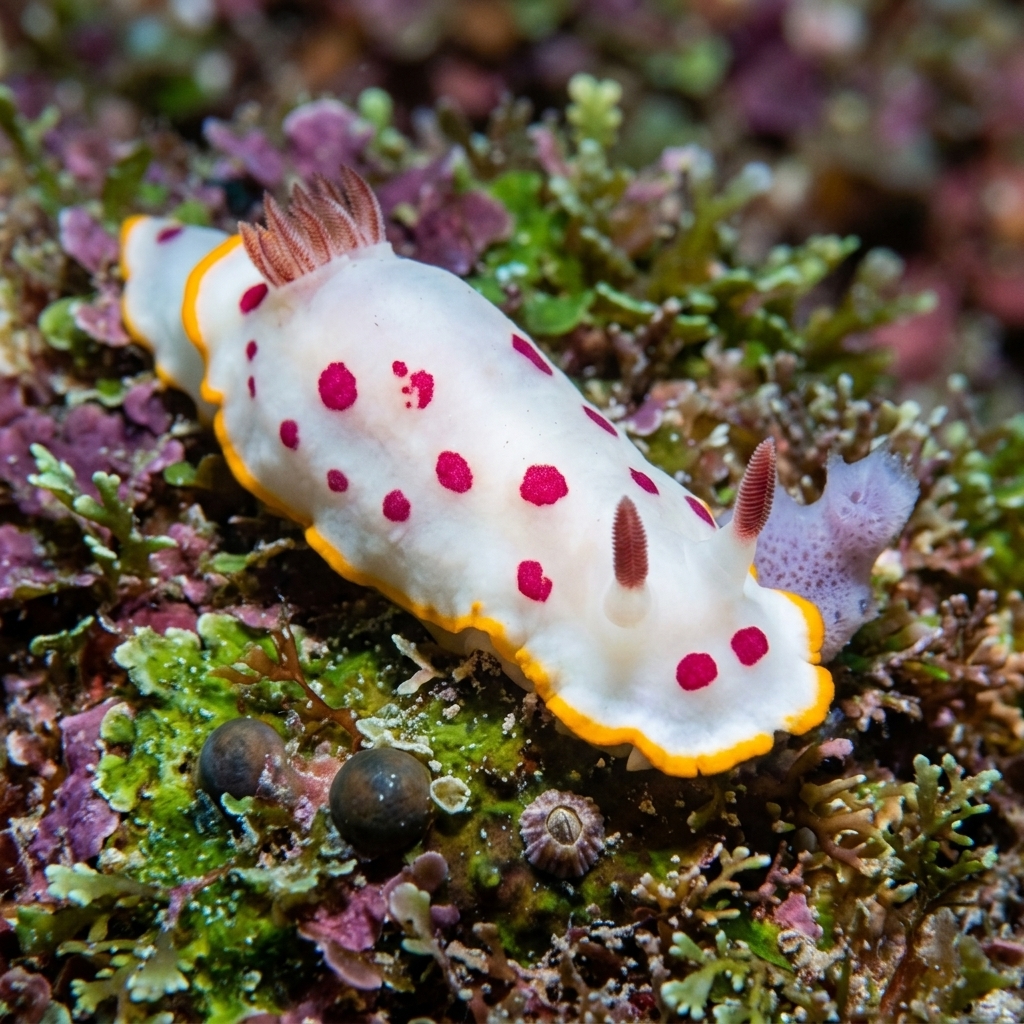
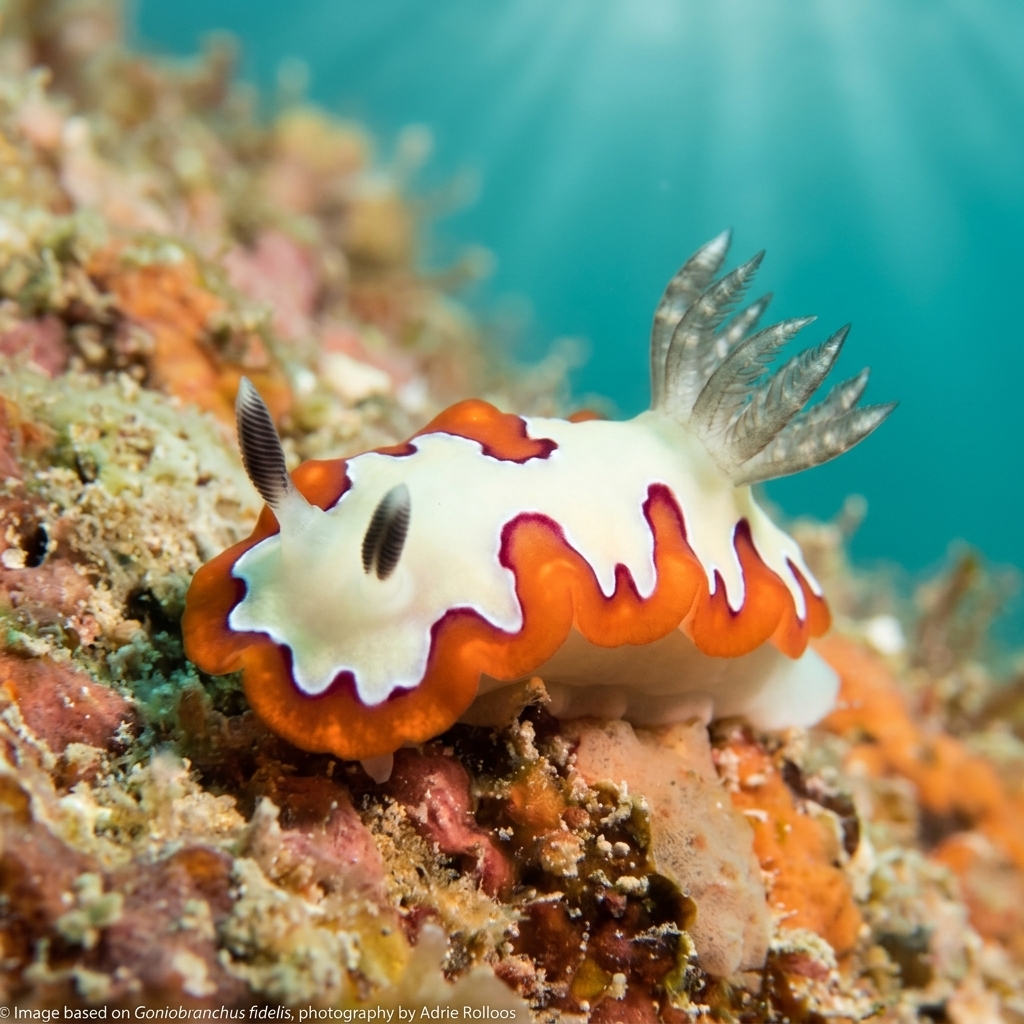
A small, flattened dorid nudibranch with a white to cream body edged by a bold purple or violet marginal band around the mantle. The clustered gill plumes (cerata) at the rear and the pair of rhinophores at the front are typically orange or yellow-tipped, making them pop against the pale body. On the reef, it appears as a slow-moving, vividly rimmed oval, the contrasting border is the fastest field mark to key on.
Like most chromodorid nudibranchs, it spends its time moving slowly across hard substrate and sponge-encrusted reef, grazing on specific sponge species. It shows little reaction to a careful diver and holds position long enough for close observation, but hugs low-relief surfaces and can be easy to miss at a glance against colourful encrusting growth. Look for it during daylight hours on shallow reef slopes and rubble patches.
Goniobranchus nudibranchs sequester defensive chemicals from the sponges they eat, making them unpalatable to most predators, which is likely why they advertise themselves so boldly with bright colours rather than hiding.
In Northern Hemisphere destinations such as the Philippines and Malaysia, sightings concentrate between February and June, align a trip with those months for the best chance. The species' preferred water temperature of 25-29°C keeps it present on tropical reefs beyond that window too, so year-round diving in the right warmth is still viable.
Reef neighbours a diver could mistake it for. Use the identification notes above to tell them apart.
Most commonly logged in the Philippines, particularly across the dive sites of Luzon & North and Western Visayas, where site counts are far ahead of anywhere else. Malaysia is a strong second, with Sipadan & East Sabah and the Perhentian & Redang Islands both producing solid records. Indonesia (Bali, Lombok & Java), Queensland in Australia, and Sri Lanka's East Coast round out the reliable destinations.
Mapping where Fiesta Rainbow Dorid is logged…
The Philippines leads by a wide margin, with strong records from Luzon & North and Western Visayas. Malaysia's Sipadan & East Sabah and the Perhentian & Redang areas are also reliable. Smaller but consistent records come from Bali in Indonesia, Queensland in Australia, and Sri Lanka's East Coast.
Northern Hemisphere sightings peak between February and June, so that window is your best bet in the Philippines and Malaysia. The species favours water temperatures of 25-29°C, meaning warm tropical reefs can hold them outside peak months too.
Look for a small, flattened oval nudibranch with a white to cream body and a distinctive purple or violet border running around the mantle edge. Orange or yellow-tipped gill plumes and rhinophores stand out clearly. That coloured border is the fastest field mark when scanning the reef.
Across its range it is most often rated uncommon, with rare sightings at a large share of logged sites and common sightings at only a handful. It is not a species you can reliably tick on every dive, but patient searching on the right shallow reef in the Philippines or Malaysia does produce results.
No. They pose no threat whatsoever to divers. Like other chromodorid nudibranchs they carry chemical defences derived from their sponge diet, but these are only relevant to predators, not humans. Observe freely, just avoid touching the reef around them.
Site and sighting data is aggregated from diver logs, iNaturalist and GBIF. For taxonomy and conservation status:
Light-spotted Aegires
3,168 sites