Goniobranchus coi
Spot Coi's Goniobranchus in the Philippines and Malaysia. Best odds in Perhentian, Sipadan, and the Visayas, in warm 27-29°C water.
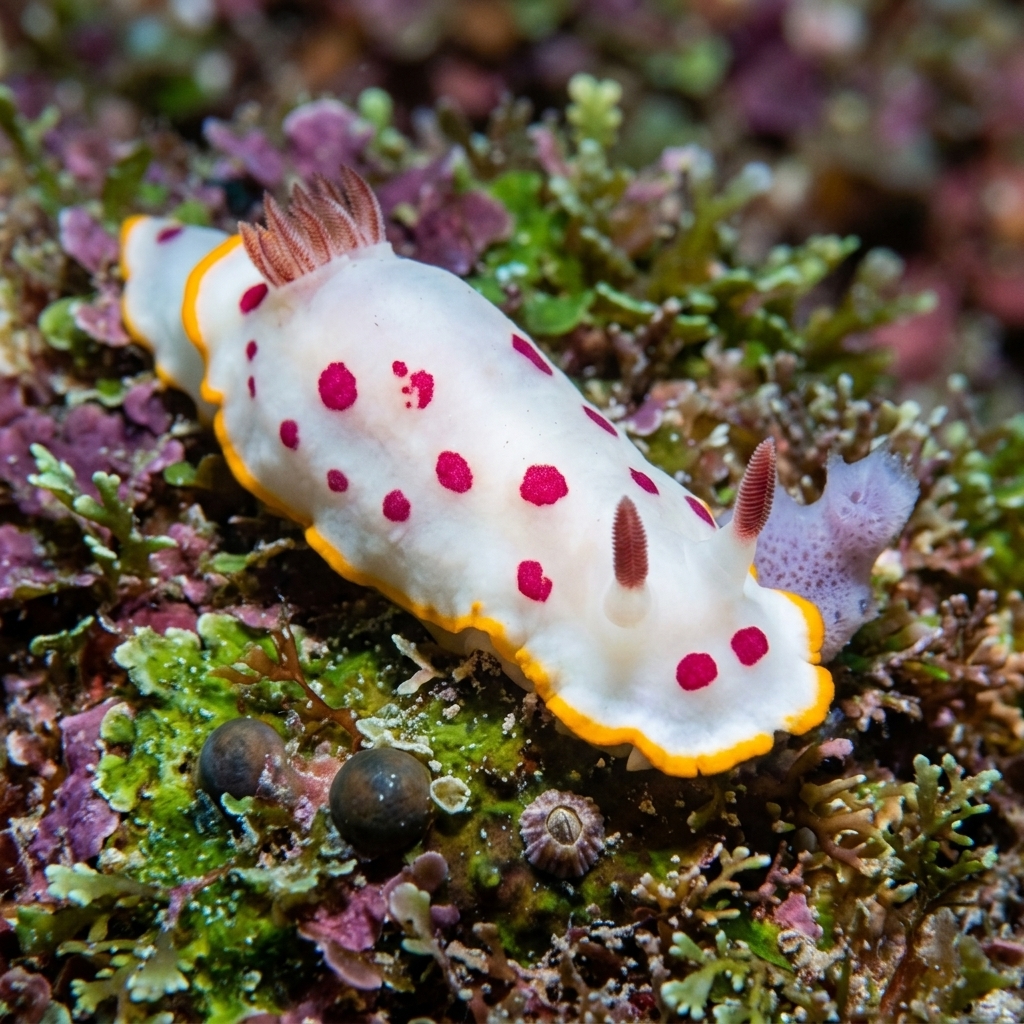
Look for a small, soft-bodied nudibranch with the characteristic Goniobranchus build: a broad, flattened mantle edged in a contrasting border and a cluster of bushy gill plumes (cerata) at the rear. The mantle typically shows a pale background overlaid with vivid spots or blotches, and the gill and rhinophore (chemical-sensing horn) stalks are distinctively coloured. Underwater, concentrate on the mantle edge pattern and gill colour, as these are the most reliable features that separate it from similar species.
Like most chromodorids, Coi's Goniobranchus is a slow-moving, benthic crawler spotted inching across hard coral, rubble, or sponge. Divers typically find it during close reef inspections rather than open-water scans, so a slow, methodical approach at depth pays off. It shows little reaction to divers, but strong currents or clumsy approaches can cause it to curl its mantle defensively.
Goniobranchus nudibranchs are thought to sequester toxic or distasteful compounds from the sponges they feed on, and their bold colouration is a warning signal to would-be predators, a strategy known as aposematism.
In the Northern Hemisphere, sightings concentrate from October through April and again in July and August, making the cooler dry season the strongest window. The species is observed in warm water between roughly 27 and 29°C, consistent with tropical Indo-Pacific reefs year-round in southern sites.
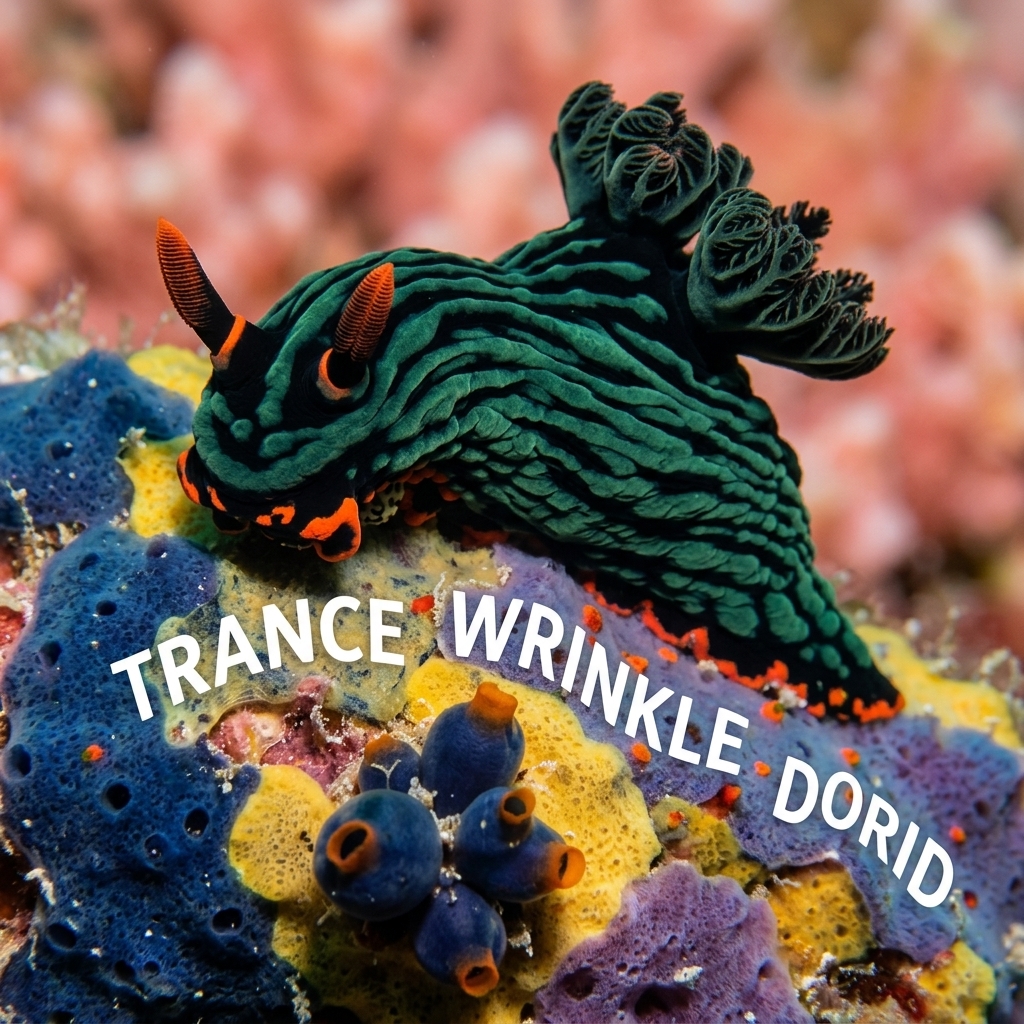
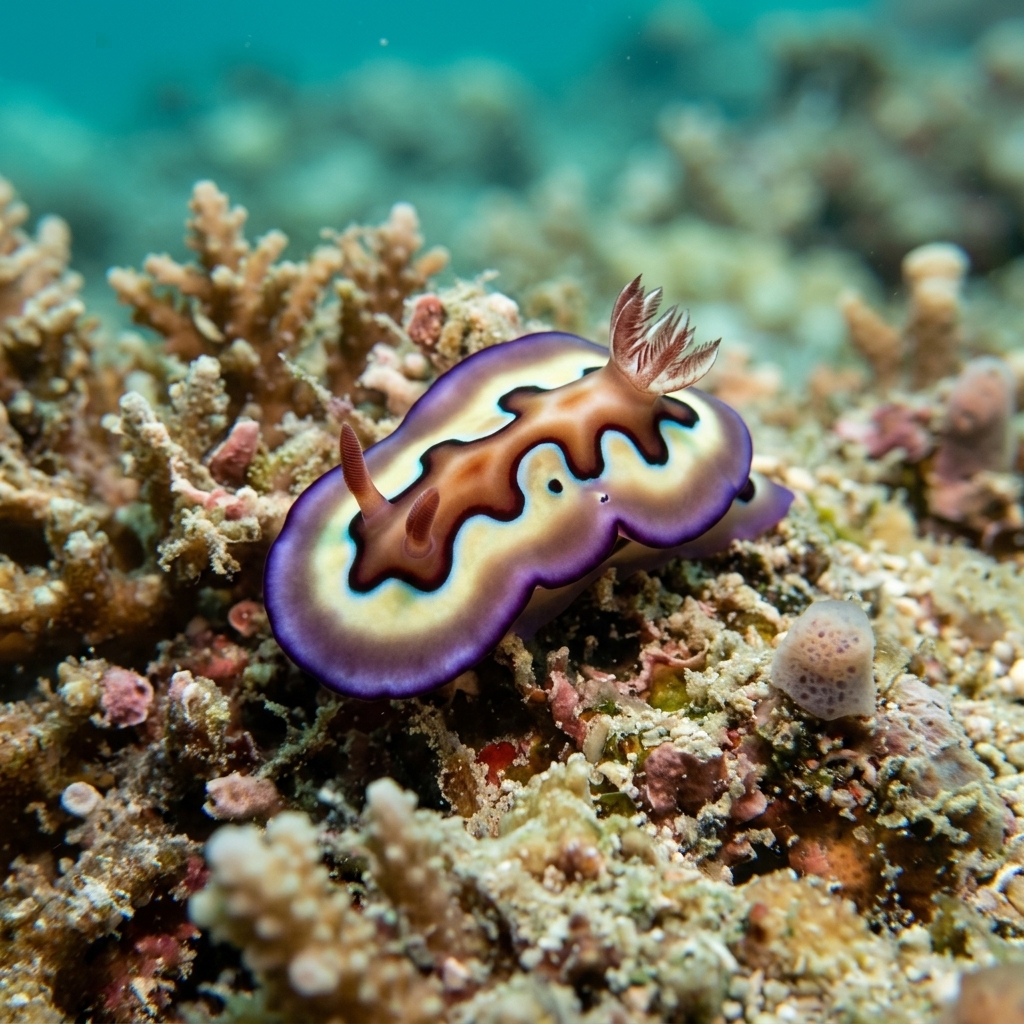
Reef neighbours a diver could mistake it for. Use the identification notes above to tell them apart.
Most sightings come from the Philippines and Malaysia, which together account for the overwhelming majority of logged records. The Perhentian and Redang islands and the Sipadan and East Sabah area of Malaysia are the most productive spots, closely followed by the Central Visayas and East and North Visayas in the Philippines. Okinawa, Japan, rounds out the reliable options in the northern part of the range.
Mapping where Coi's Goniobranchus is logged…
The strongest records are from Malaysia and the Philippines. In Malaysia, Perhentian and Redang islands and the Sipadan and East Sabah area are most productive. In the Philippines, look in the Central Visayas and East and North Visayas. Okinawa, Japan, is also a reliable option.
Northern Hemisphere data shows sightings peak between October and April, with a secondary window in July and August. Diving the Philippines or Malaysia during the October-to-April dry season gives the best odds.
Focus on the mantle edge pattern and the colour of the gill plumes at the rear. Goniobranchus species share a broad, flattened body with a contrasting border around the mantle. The specific combination of background colour, spot or blotch arrangement, and gill colour is what separates Coi's Goniobranchus from similar species like the Splendid Goniobranch.
It is uncommon to rare at most sites where it has been recorded, and only common at a small number of locations. Slow, methodical reef inspections and local guide knowledge give you the best chance of finding one.
No. They pose no risk to divers whatsoever. Like many brightly coloured nudibranchs, they may carry chemical defences against predators, but simply observing them without touching is all that is needed.
Site and sighting data is aggregated from diver logs, iNaturalist and GBIF. For taxonomy and conservation status:
Light-spotted Aegires
3,168 sites