Goniobranchus aureomarginatus
A gold-edged nudibranch mostly logged around New Zealand's North Island, in cool water between 13 and 19C, year-round.
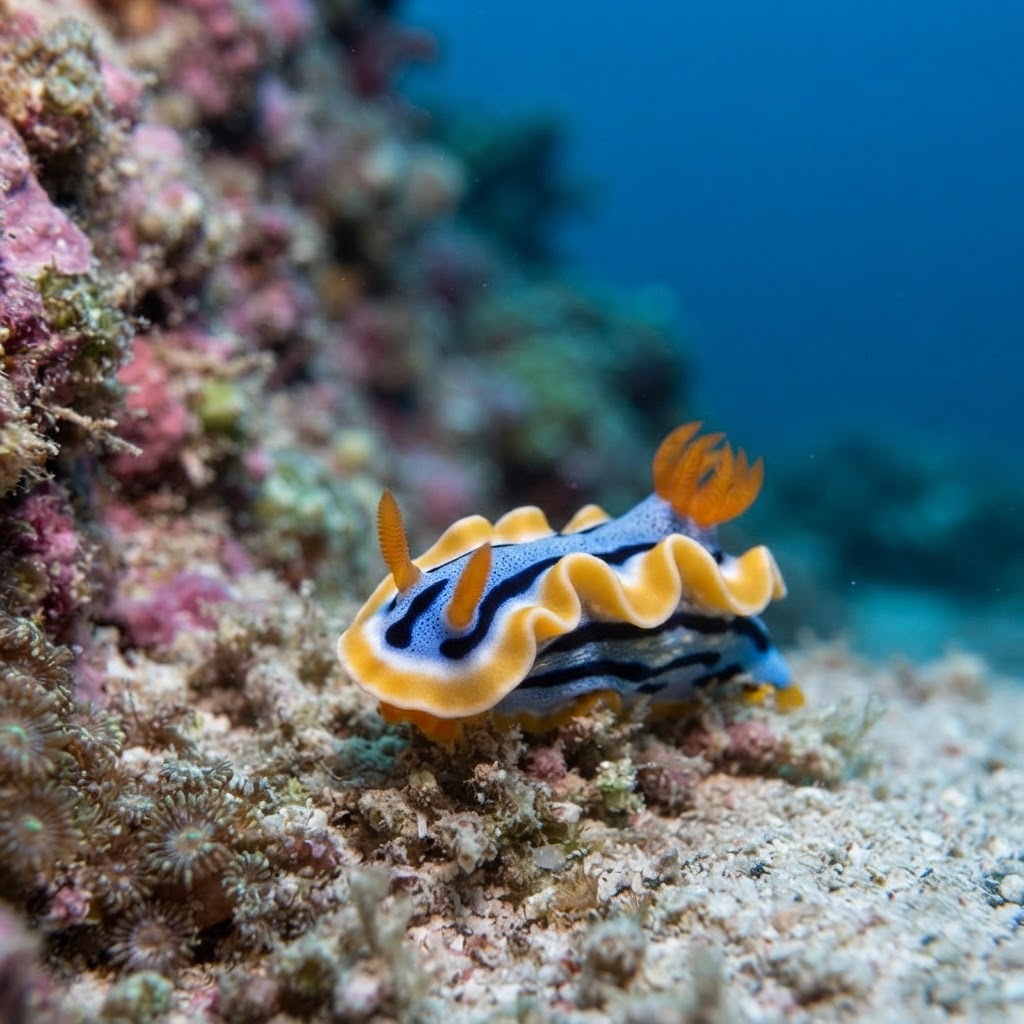
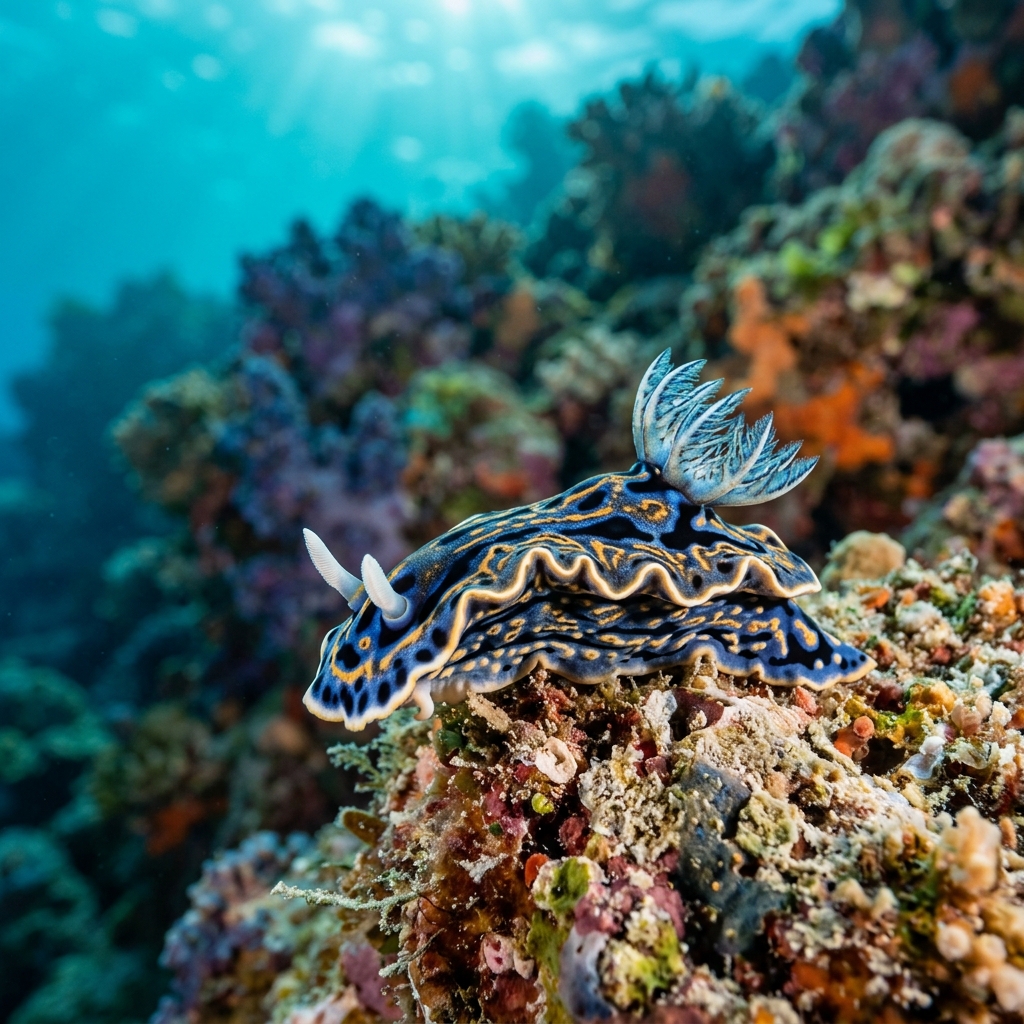
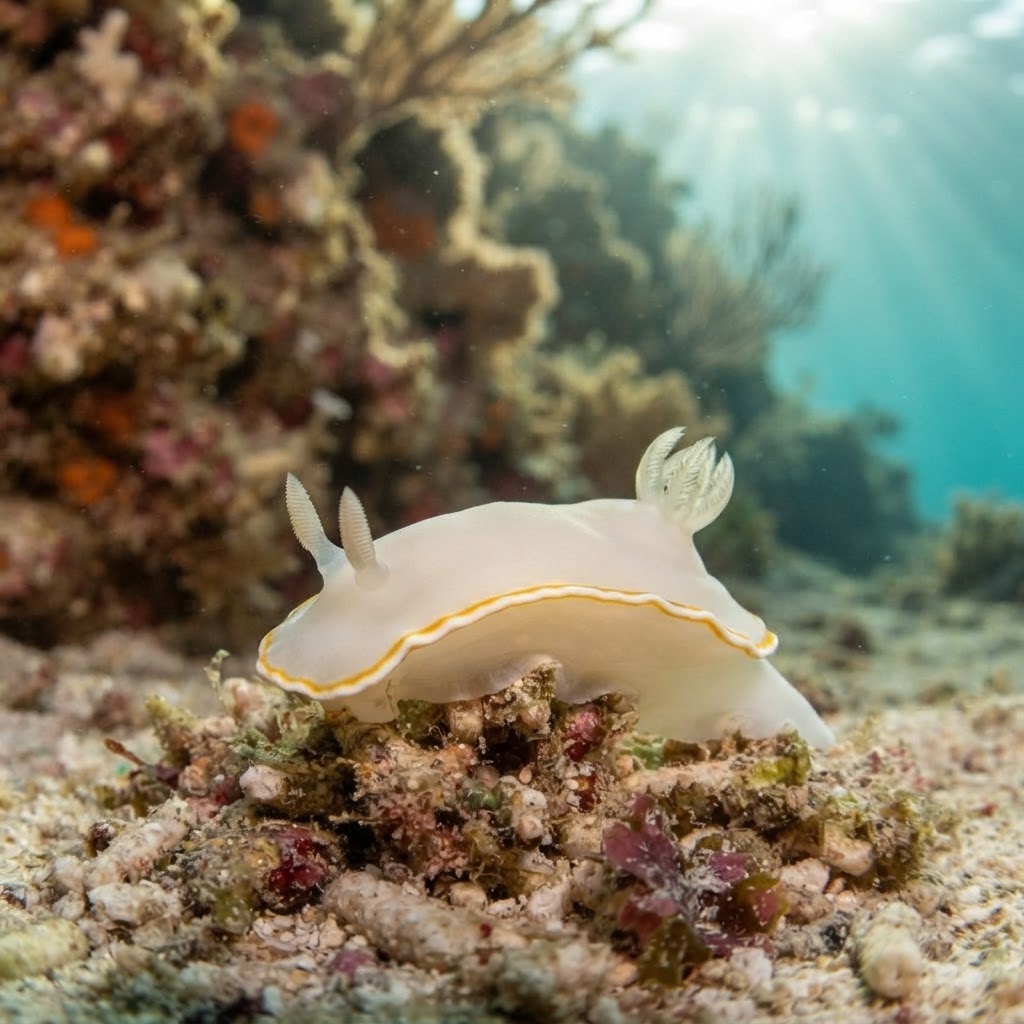
Small, oval-bodied sea slug with a pale to cream mantle edged in a fine gold-yellow line that runs the full border. The surface looks smooth and slightly domed rather than frilled, and the two rhinophores (sensory horns) at the front and the gill cluster at the rear are the parts most divers spot first against the plain background colour. Size in the water reads as small, closer to a fingertip than a hand, so slow, close-focus scanning of rock and rubble is how most divers find one.
Found grazing slowly over rock, rubble and encrusting growth, usually tucked into cracks or low-light corners rather than out on open sand. It shows no reaction to divers beyond continuing to crawl, so a slow pass with a torch along ledges and under overhangs is the best way to pick one out. Most logs come from daytime dives rather than night dives, though its plain colouring means it is easy to swim straight past.
Like other Goniobranchus nudibranchs, it feeds on sponges and takes on chemical compounds from that diet, which is thought to make it unpalatable to predators rather than relying on speed or camouflage to survive.
Sightings show no detected season, and the temperature record (13 to 19.1C) matches cool New Zealand water across most of the year, so treat this as a year-round find rather than a seasonal one.
Reef neighbours a diver could mistake it for. Use the identification notes above to tell them apart.
Logged almost entirely around New Zealand, with the strongest run of sites through the North Island and a single confirmed spot on the South Island. It has not turned up in the wider diver record outside New Zealand waters so far, making it a reason on its own to look closely on North Island rock reefs.
Mapping where Goniobranchus aureomarginatus is logged…
Almost every logged sighting comes from New Zealand, concentrated on North Island dive sites with one confirmed record on the South Island. It has not been documented elsewhere in the diver record so far.
There is no clear seasonal pattern in the sighting data, and the water temperature range it is found in (13 to 19.1C) covers most of the New Zealand diving year, so it can turn up on any dive.
Look for a small, smooth-bodied nudibranch with a pale mantle bordered by a thin gold-yellow line. It sits low and slow on rock or rubble, with rhinophores at the front and a gill cluster at the rear giving it away as a nudibranch rather than a flatworm.
Exact size data is not confirmed for this species, but like most Goniobranchus nudibranchs it stays small, generally in the finger-length range rather than growing to a hand-sized animal.
Most sites log it as rare, with a smaller number reporting it as uncommon, so finding one usually takes a deliberate, slow search of rock and rubble rather than a chance spot.
Site and sighting data is aggregated from diver logs, iNaturalist and GBIF. For taxonomy and conservation status:
Blue Dragon
3,163 sites