Goniobranchus albonares
Spot the Alabaster Rainbow Dorid in Queensland and Bali. Uncommon but findable in warm 20-29 °C waters. Here's how to ID it and where divers log it.
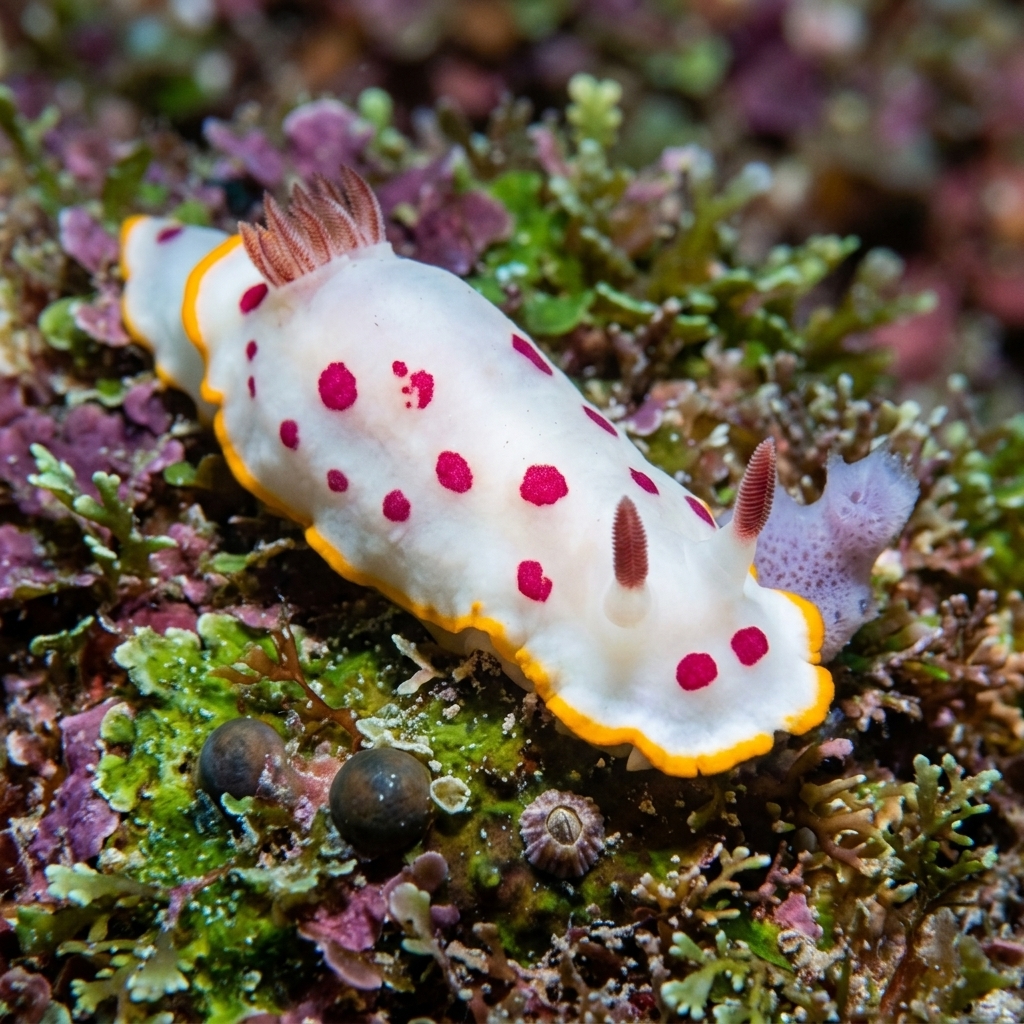
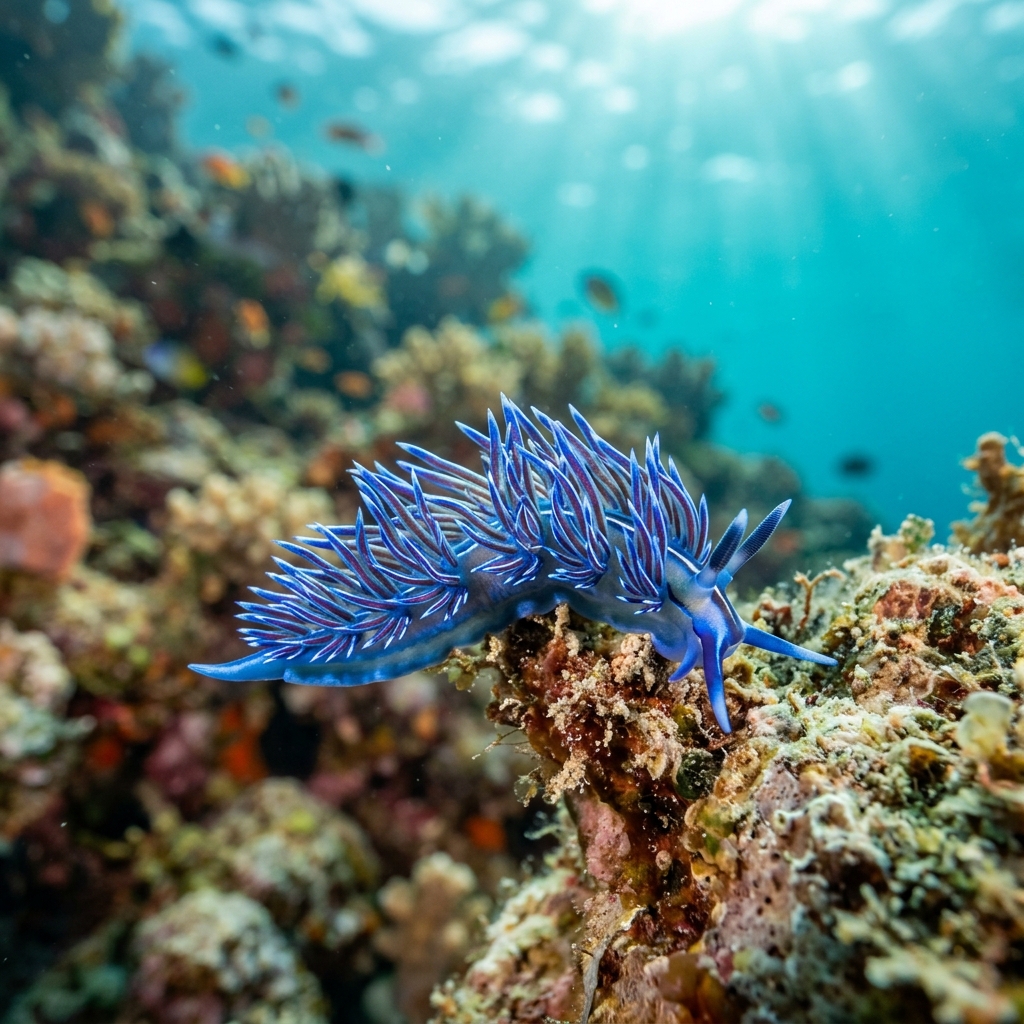
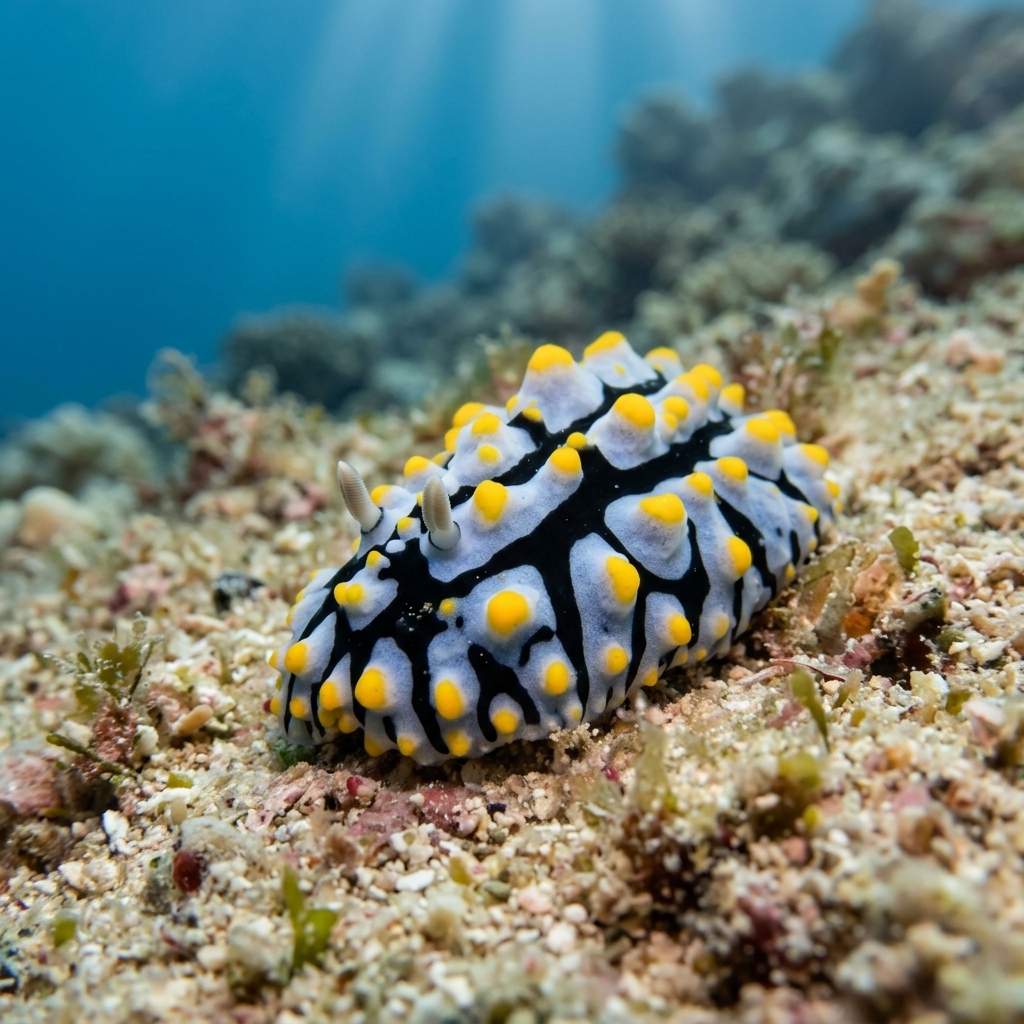
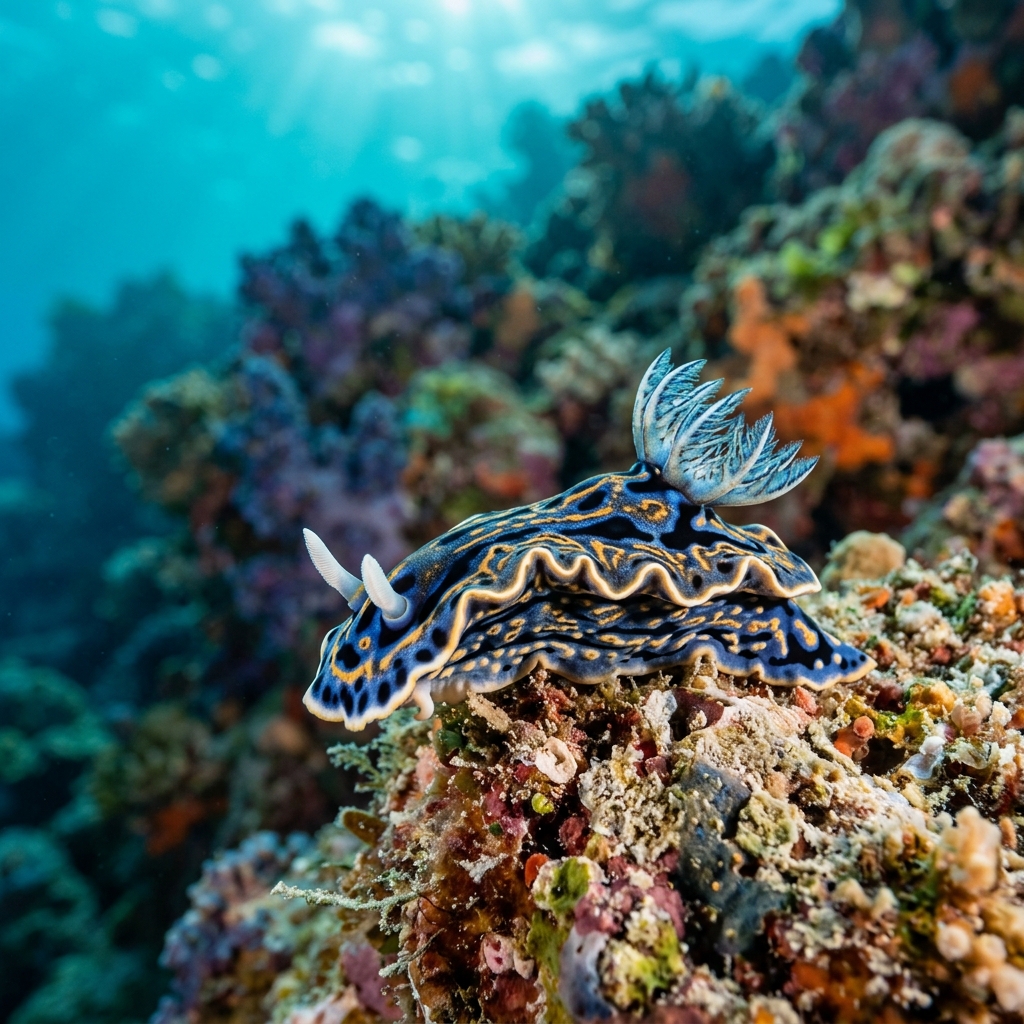
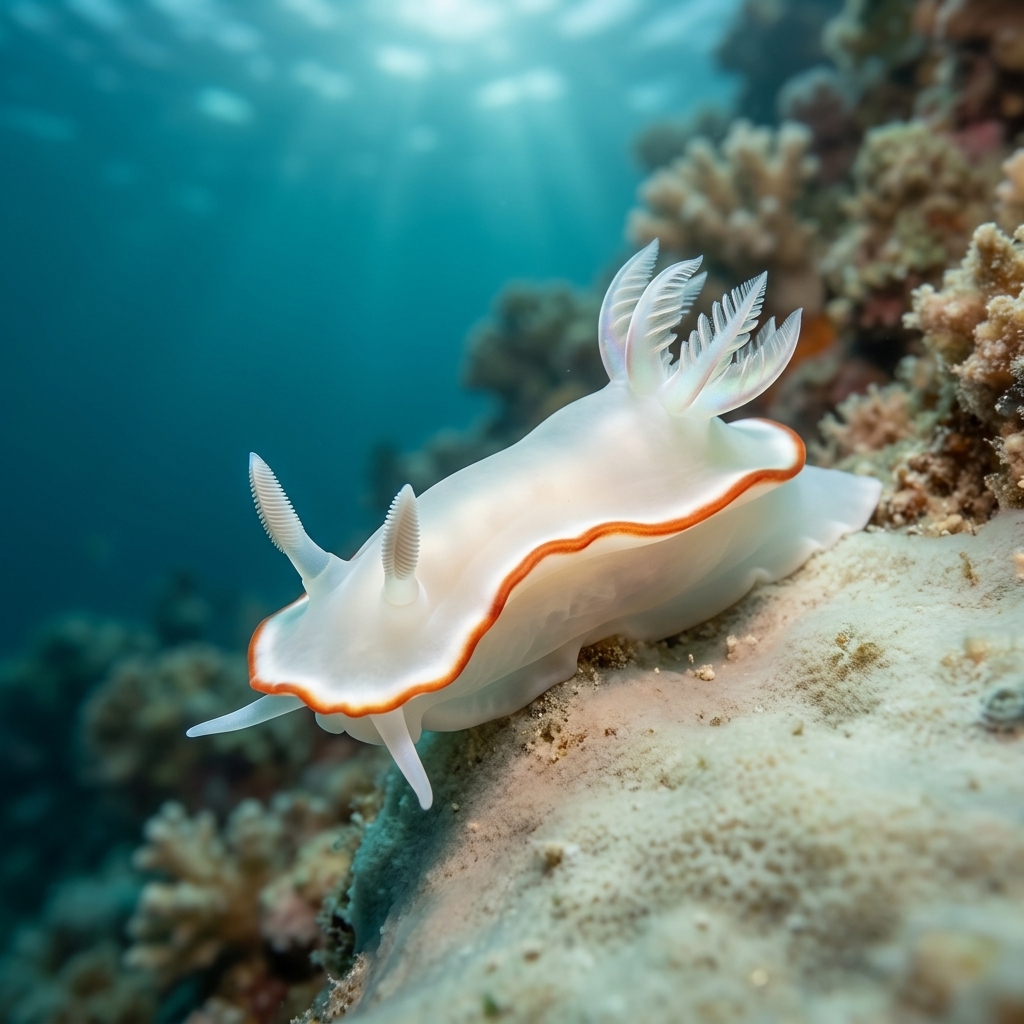
A white-bodied dorid nudibranch (a shell-less mollusc that crawls on the reef), the Alabaster Rainbow Dorid is distinguished by its pale, almost translucent mantle contrasting with vividly coloured gills and rhinophores (the two sensory clubs at the front of the head). The mantle edge typically shows a fine coloured border that gives the animal its 'rainbow' name. At typical nudibranch scale it is a small, flat, slow-moving creature, look carefully on rubble, algae-covered rock, and sponge surfaces to find it.
Like most dorids, the Alabaster Rainbow Dorid is a slow, deliberate crawler found low on the reef, often moving across sponge or encrusting growth on which it feeds. It pays little attention to divers and will not retreat quickly, making close observation easy if you approach calmly and avoid touching the substrate around it. Divers most commonly encounter it during daylight hours when light levels help with spotting the bright gill plume against pale rock.
Goniobranchus dorids are known to advertise their chemical defences through vivid colouration, the colourful gills and mantle border on the Alabaster Rainbow Dorid are a warning to predators that it tastes unpleasant, a strategy called aposematism.
No clear seasonal peak has emerged from the data, so treat this as a year-round target wherever suitable reef habitat exists. It has been observed across a water temperature range of roughly 21 to 29 °C, consistent with the warm tropical and subtropical conditions found year-round in Queensland and Bali.
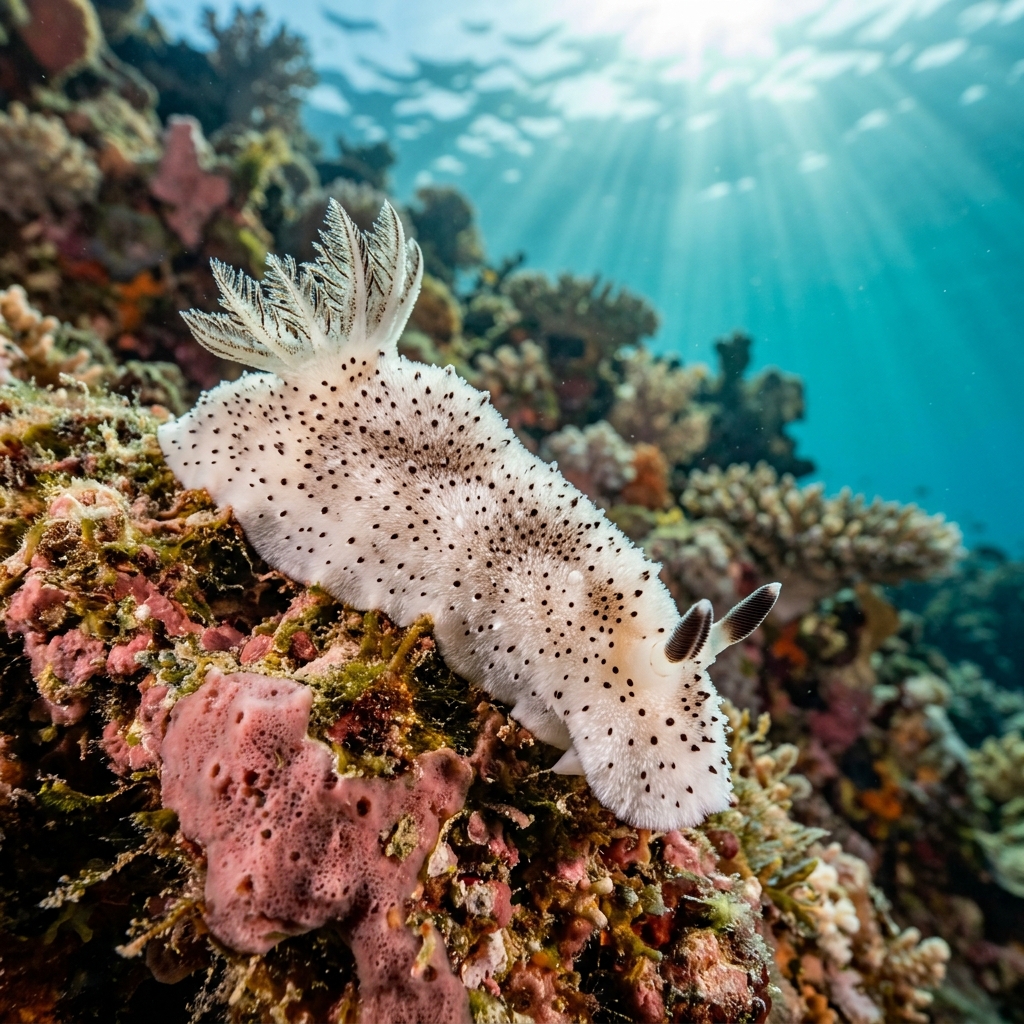
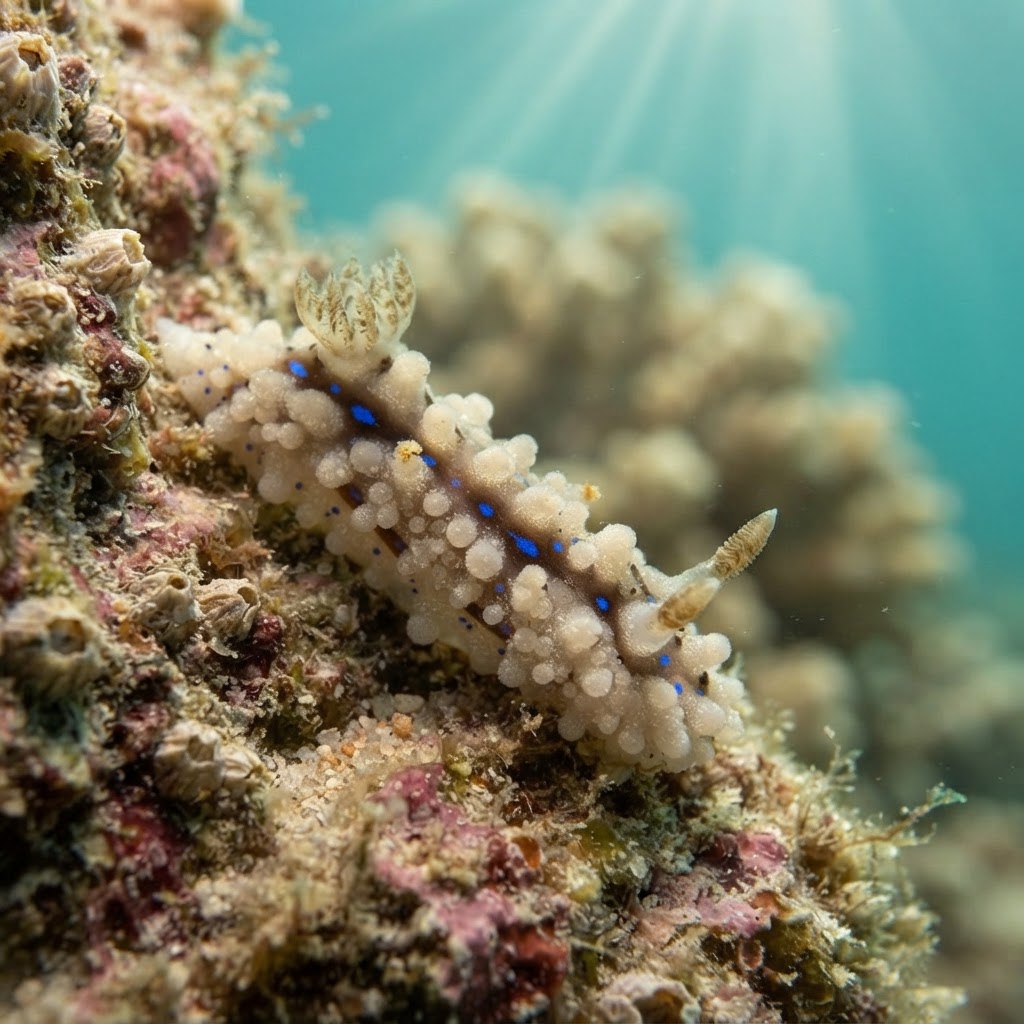
Reef neighbours a diver could mistake it for. Use the identification notes above to tell them apart.
Most sightings come from Queensland, Australia, which accounts for the large majority of logged dive sites. A smaller number of records exist from Bali, Lombok and Java in Indonesia. If you are diving the Great Barrier Reef or tropical Queensland generally, you are in the heartland for this species.
Mapping where Alabaster Rainbow Dorid is logged…
Queensland, Australia is by far the most reliable region, with a strong spread of logged sites across tropical reef systems there. Bali, Lombok and Java in Indonesia also have confirmed sightings. Outside these two regions, records are sparse, so plan your nudibranch search around Queensland or Bali reef dives.
There is no confirmed seasonal peak in the data, so it can be treated as a year-round species. It turns up across water temperatures of roughly 21 to 29 °C, which covers most of the year at its core sites in Queensland and Bali.
Look for a small, flat, white-mantled nudibranch with brightly coloured gill plumes and rhinophores and a coloured border around the mantle edge. The pale 'alabaster' body against vivid gill colour is the key field mark. It moves slowly on sponge or encrusting reef surfaces, which helps, give your eyes a moment to adjust to its scale.
Exact size data for this species is not well documented. As a Goniobranchus dorid it is likely in the range of 1 to 4 cm in length, typical for the family. Underwater they appear quite small, searching slowly and deliberately is the only reliable way to find them.
No. This nudibranch poses no threat to divers. Like other dorids it may carry chemical deterrents in its skin as a defence against predators, but simply observing it during a dive is completely safe. The usual nudibranch etiquette applies, look, don't touch.
Site and sighting data is aggregated from diver logs, iNaturalist and GBIF. For taxonomy and conservation status:
Blue Dragon
3,163 sites