Plectorhinchus flavomaculatus
Pale grey-green sweetlips with gold flecks, logged year-round from Queensland to KwaZulu-Natal in 22-29 C water. Here's where to find it.
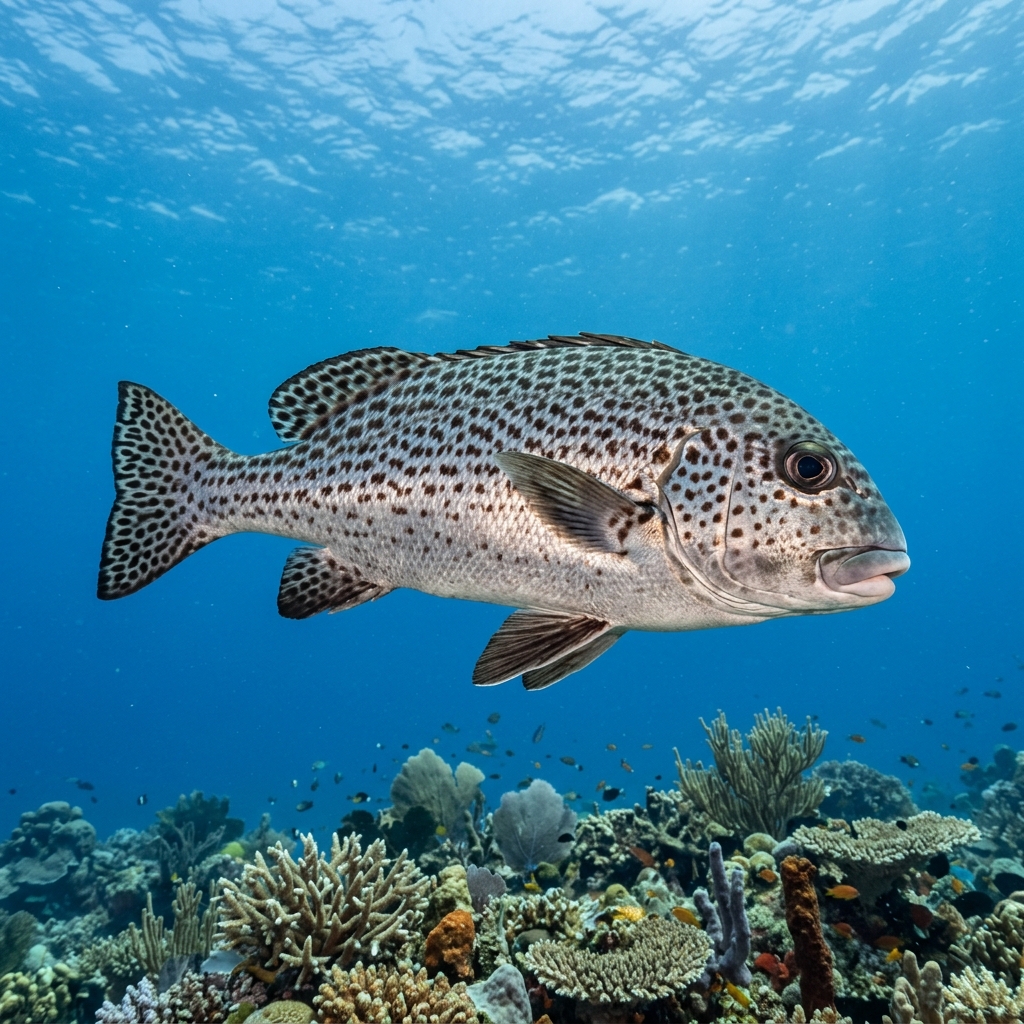
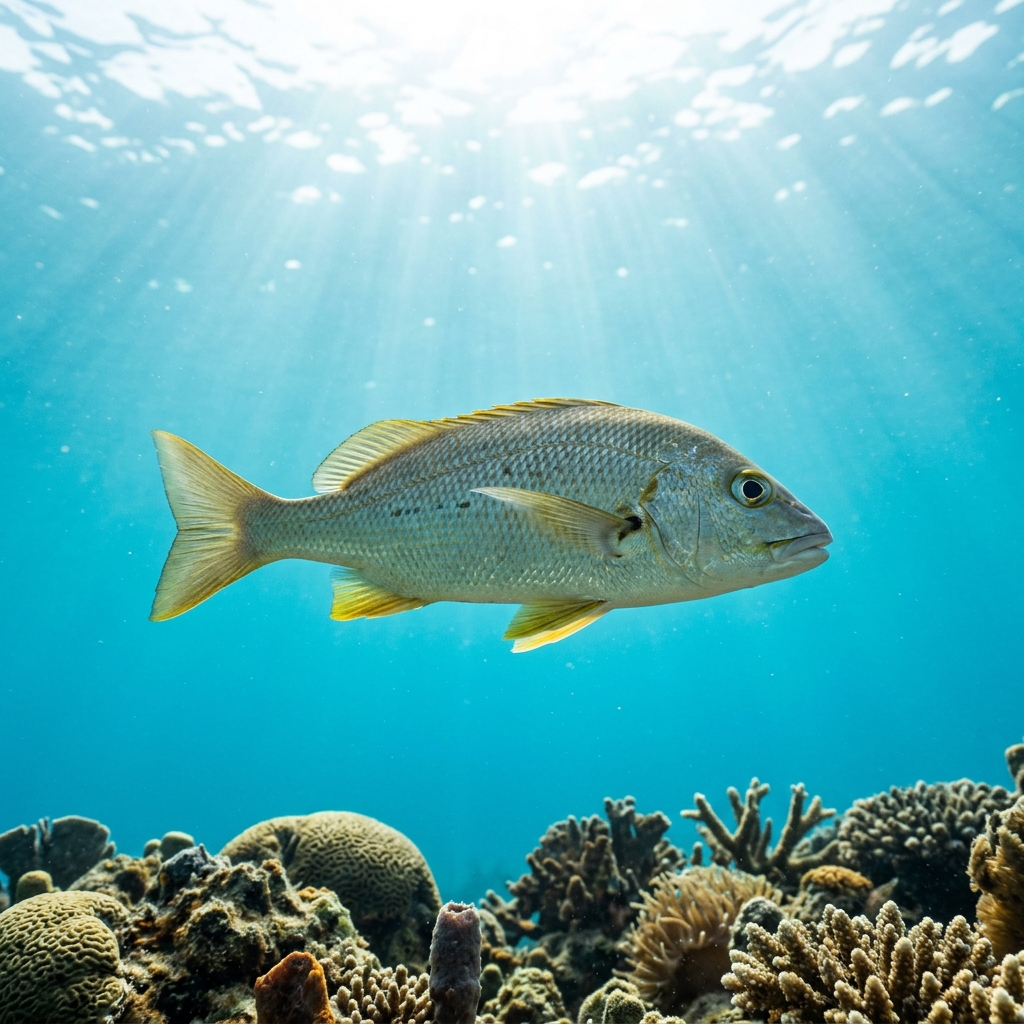
Grows to around 42 cm, with a stocky, deep-bodied shape typical of sweetlips and a blunt, slightly downturned mouth. Body colour is pale grey to olive-green, scattered with small gold-yellow spots that give the species its name, most visible on the upper body and fins. Divers usually spot it hovering close to a ledge or cave mouth rather than out in the open, which combined with the muted background colour makes the gold spotting the key giveaway.
Typically found tucked under ledges, in caves or hovering motionless near overhangs during the day, often solo or loosely grouped with other sweetlips. It tends to hold its position rather than bolt when divers approach, making it an easy, unhurried subject once you find one. Most sightings come from reef-associated sites rather than open sand or rubble, so check structure and shadow first.
Like other sweetlips, juveniles are thought to pick invertebrates and small fish off the reef largely by night, while daytime sightings are mostly of fish resting rather than actively feeding.
No clear seasonal pattern shows up in the sighting data, and its comfortable range of 22 to 29 C covers most of these reefs year-round, so it's best treated as a resident species you can look for on any dive.
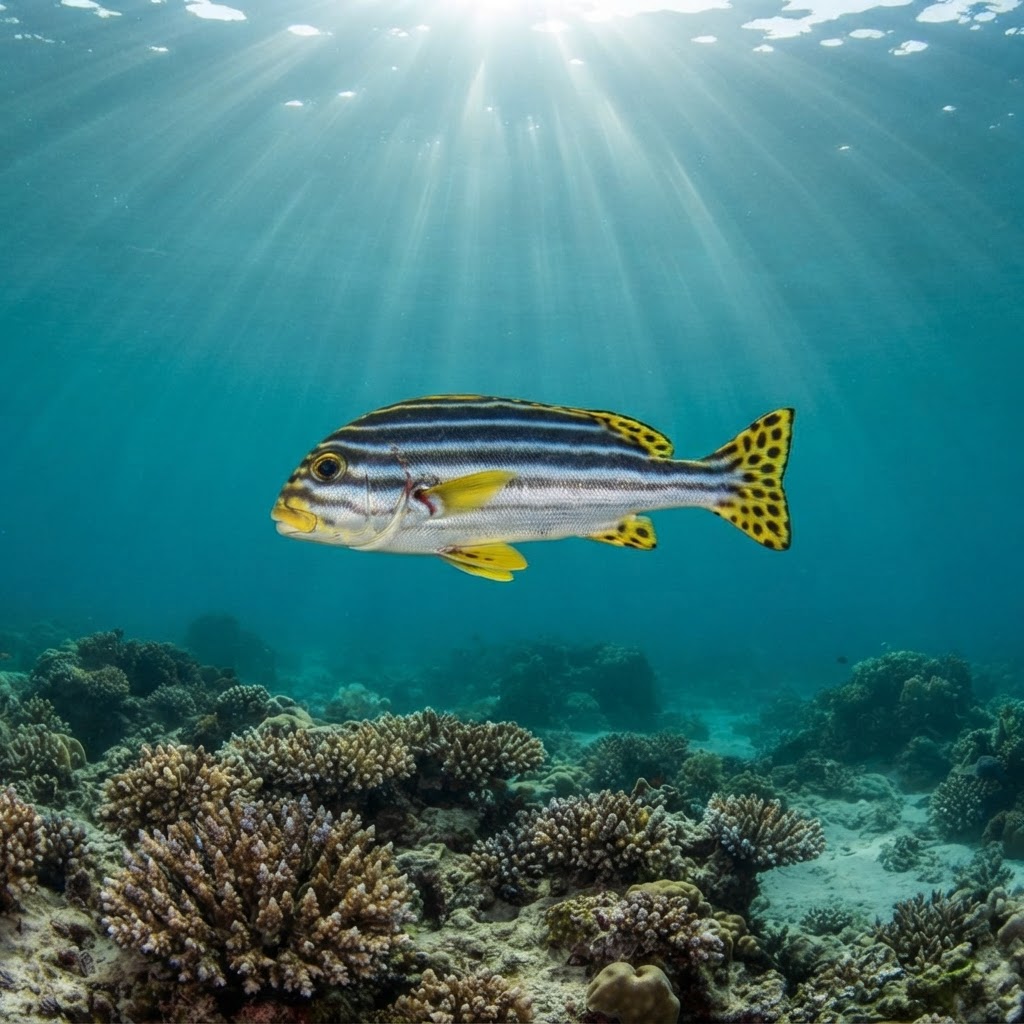
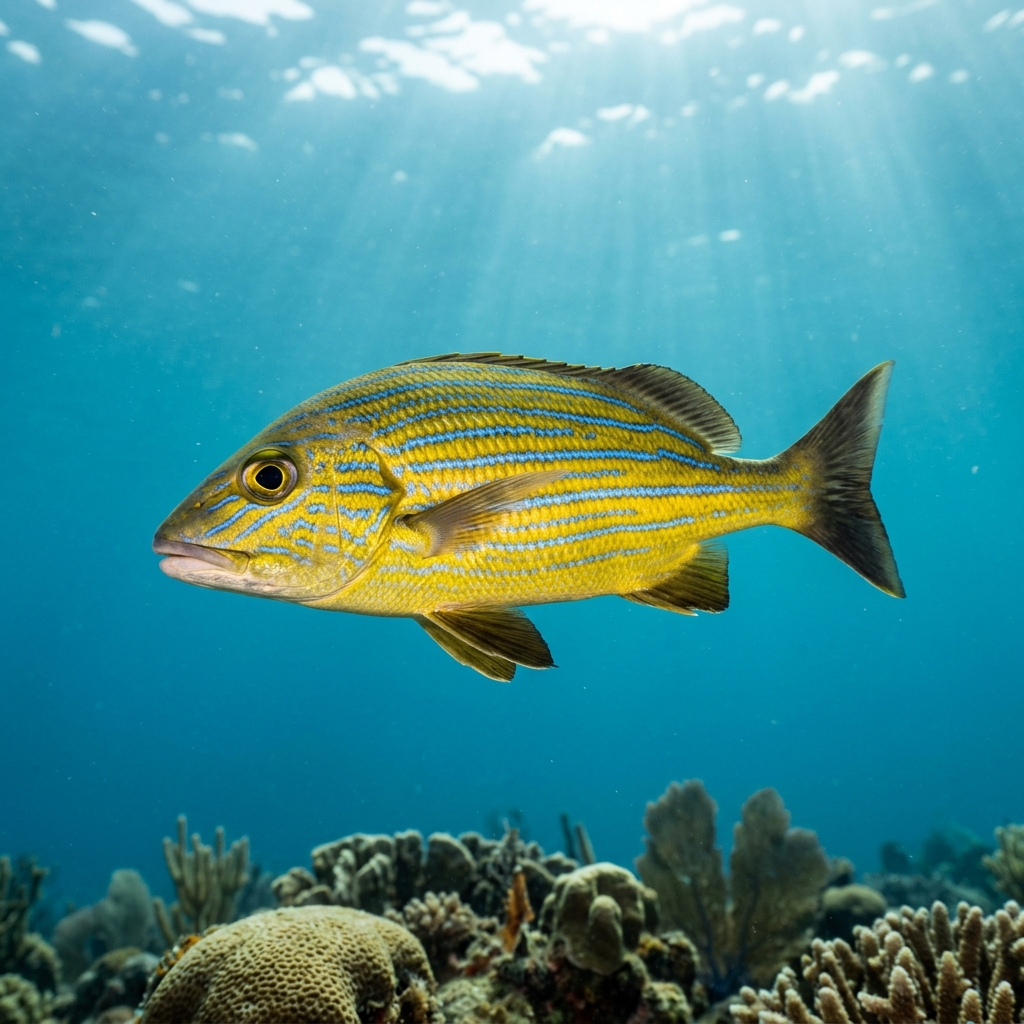
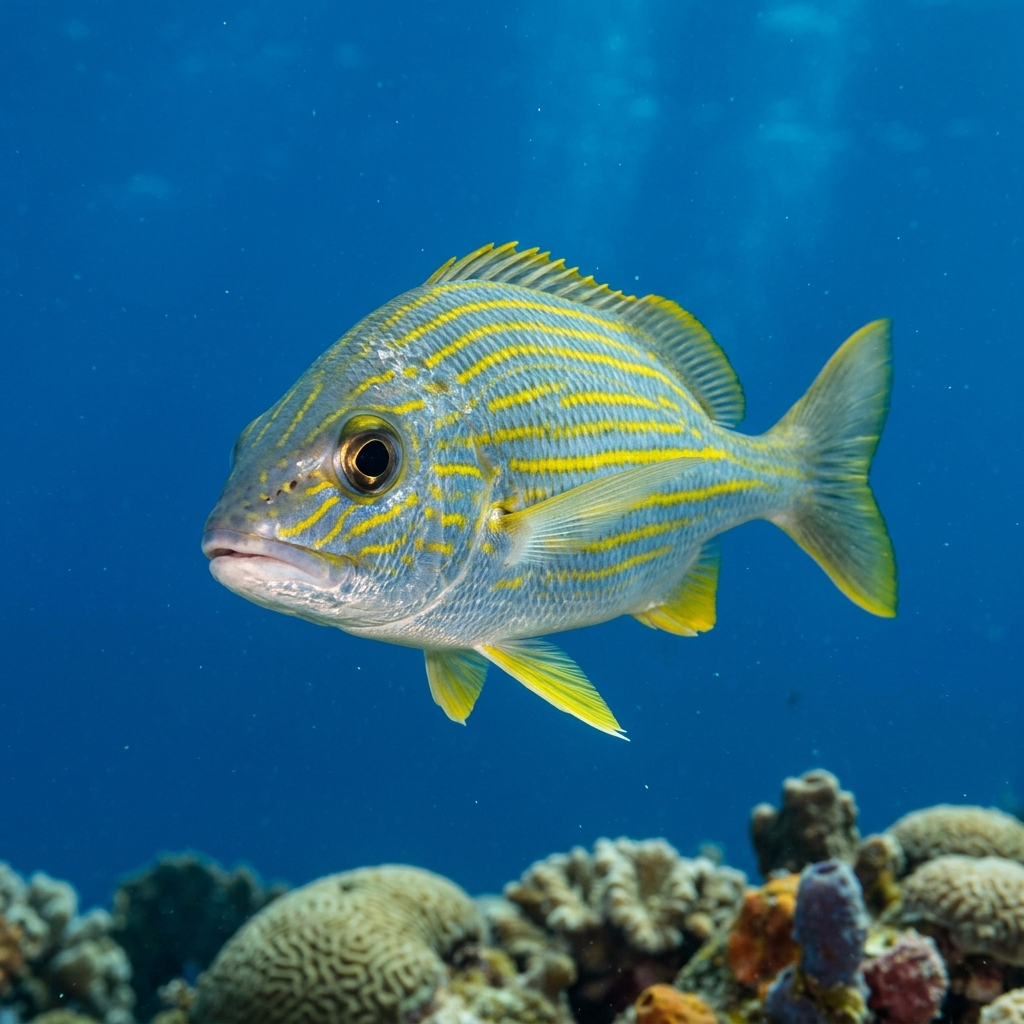
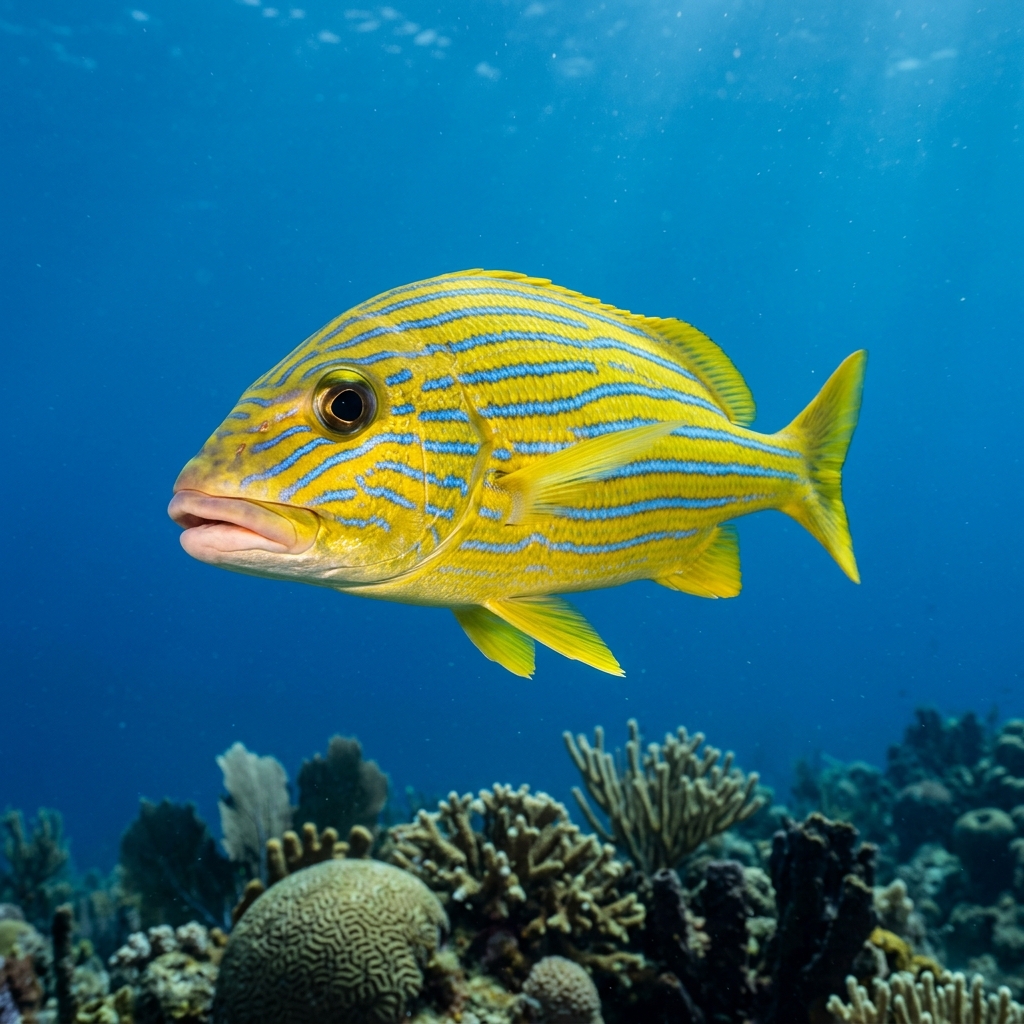
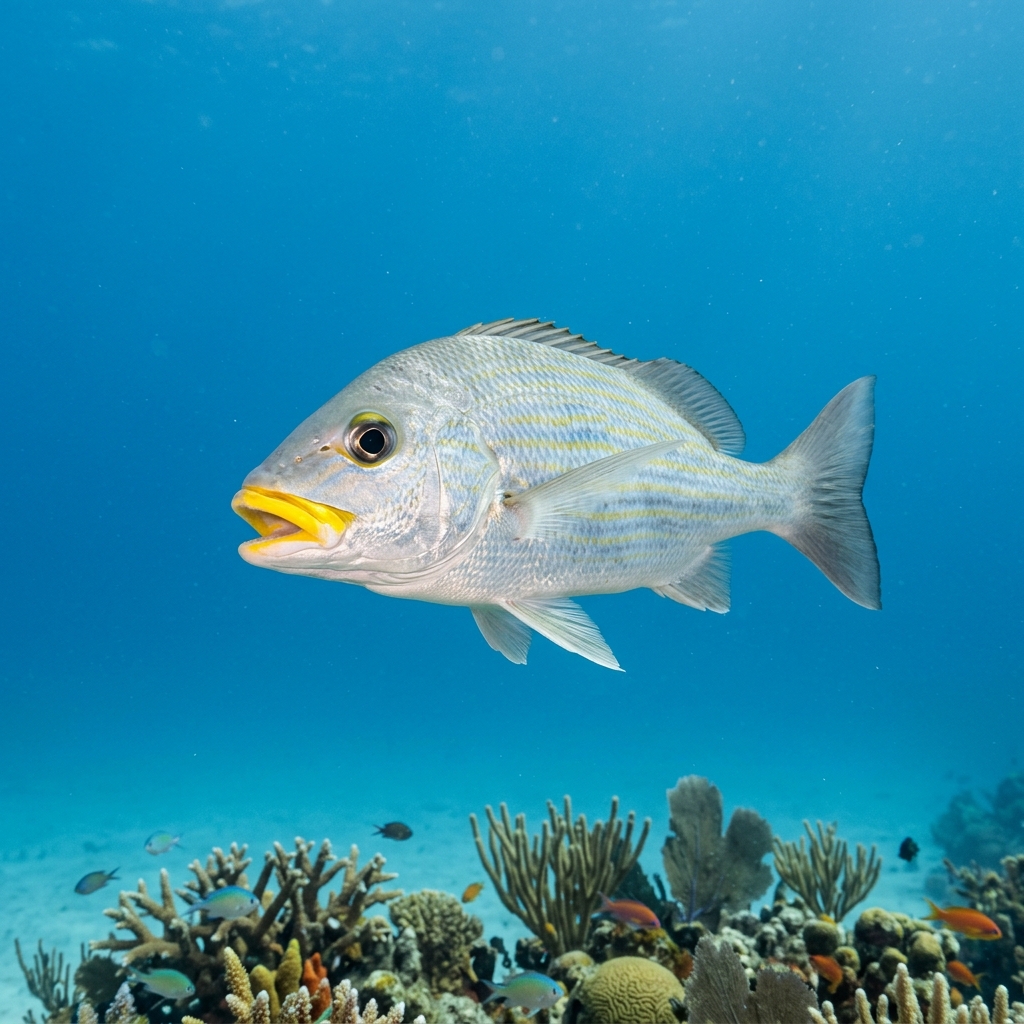
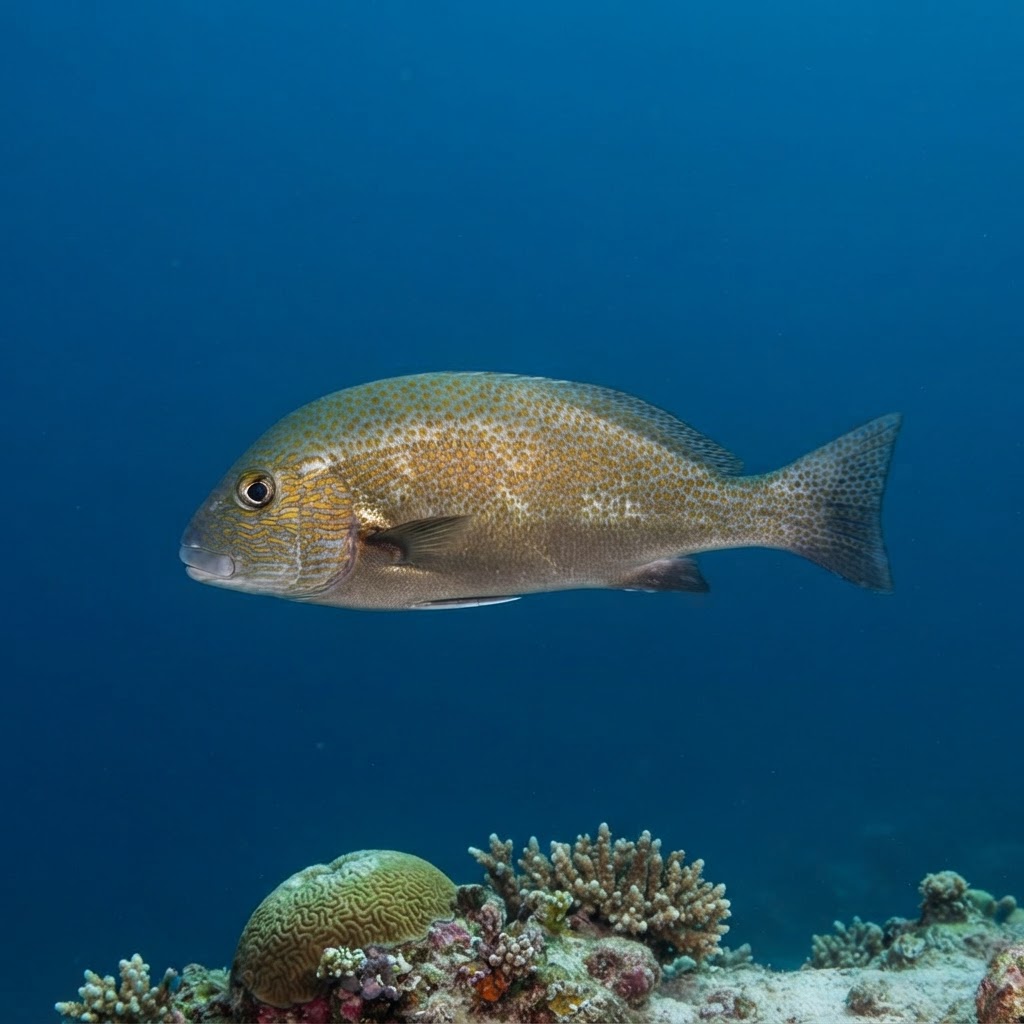
Reef neighbours a diver could mistake it for. Use the identification notes above to tell them apart.
Most consistently logged in Australia, with strong numbers across Queensland, Western Australia and New South Wales, making it one of the more reliable sweetlips for Australian reef divers. Outside Australia it turns up regularly along South Africa's KwaZulu-Natal coast and in Mozambique's Inhambane region, with smaller but steady counts from Kenya's Shimoni area, Zanzibar in Tanzania, and Oman.
Mapping where Goldspotted Sweetlips is logged…
Australia is the strongest bet, especially Queensland, Western Australia and New South Wales. It's also a regular find in South Africa's KwaZulu-Natal and Mozambique's Inhambane region.
There's no strong seasonal signal in sighting data, and it tolerates a wide 22-29 C range, so it's seen on reefs throughout the year rather than during a specific window.
Look for a stocky, grey-green fish around 40 cm long, resting under ledges or in caves, with small gold-yellow spots scattered over its body and fins.
They reach around 42 cm, a medium-sized reef fish that's noticeably bulkier and deeper-bodied than its length suggests.
No. They're calm, reef-associated fish that typically hold still under ledges rather than react defensively to divers.
Site and sighting data is aggregated from diver logs, iNaturalist and GBIF. For taxonomy and conservation status:
Bluestriped Grunt
1,907 sites