Istigobius goldmanni
A small sand-dwelling goby common around the Mamanuca Islands, Fiji, in warm water year-round.
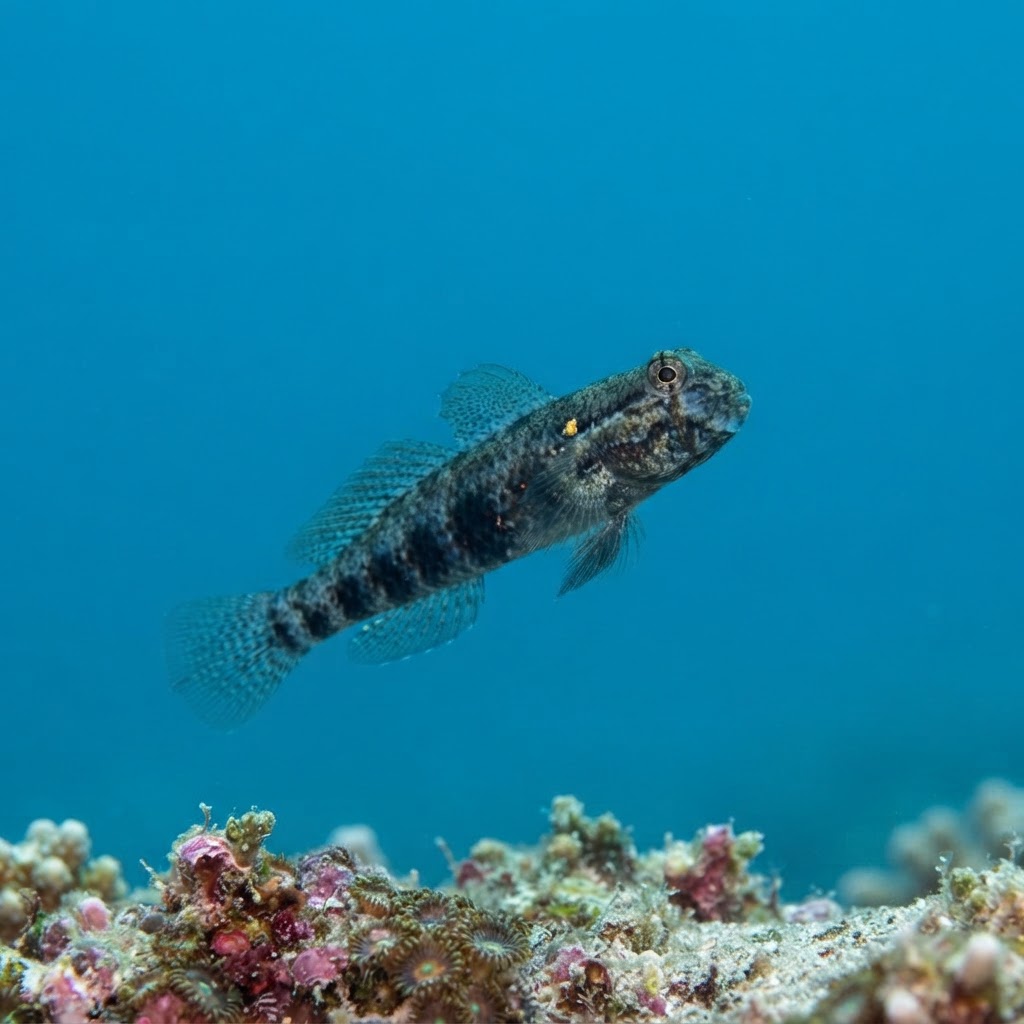
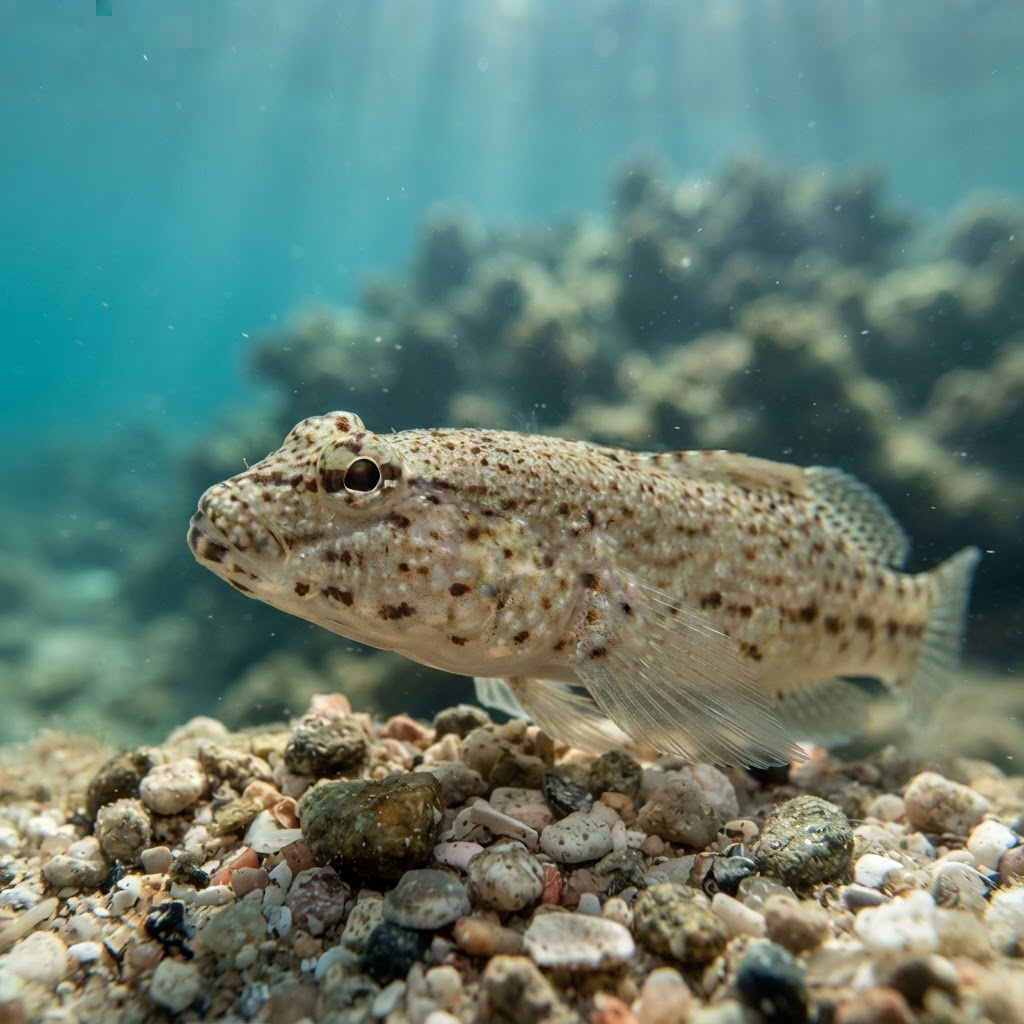
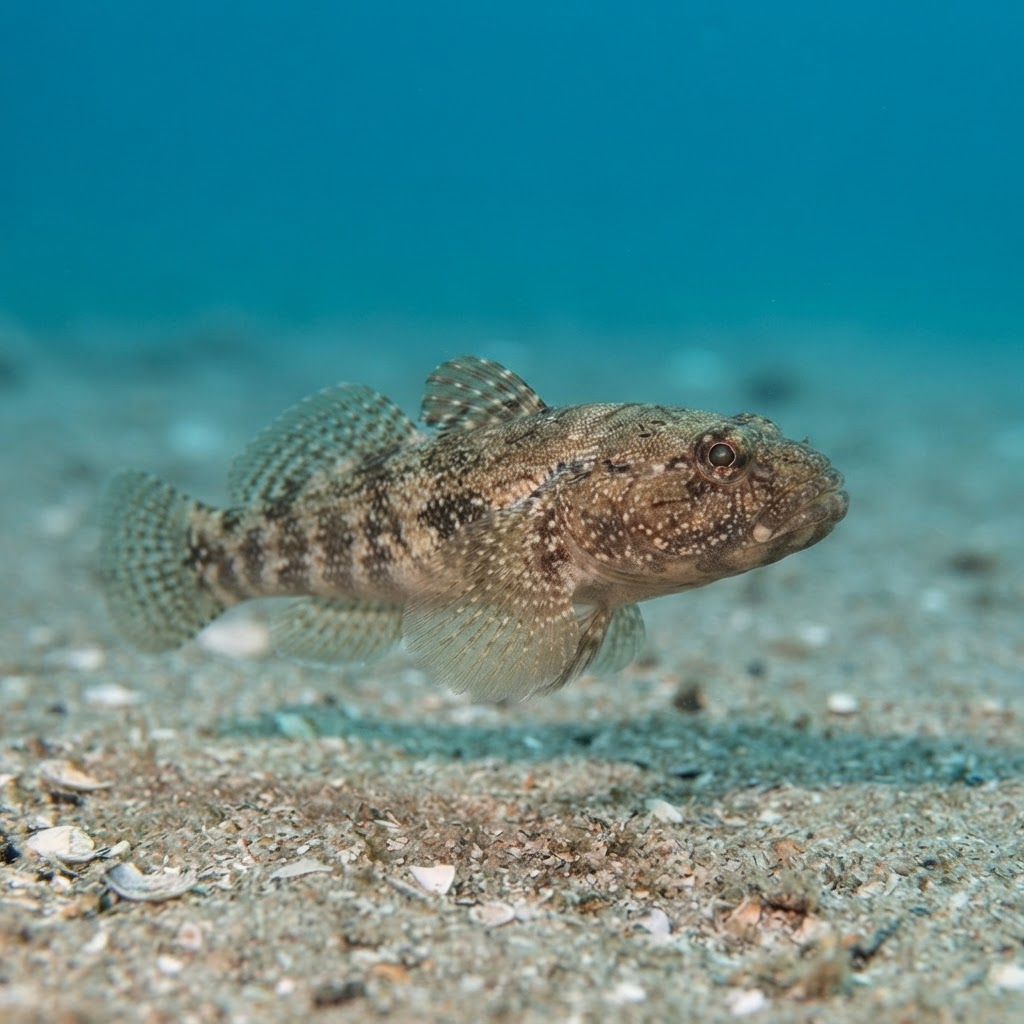
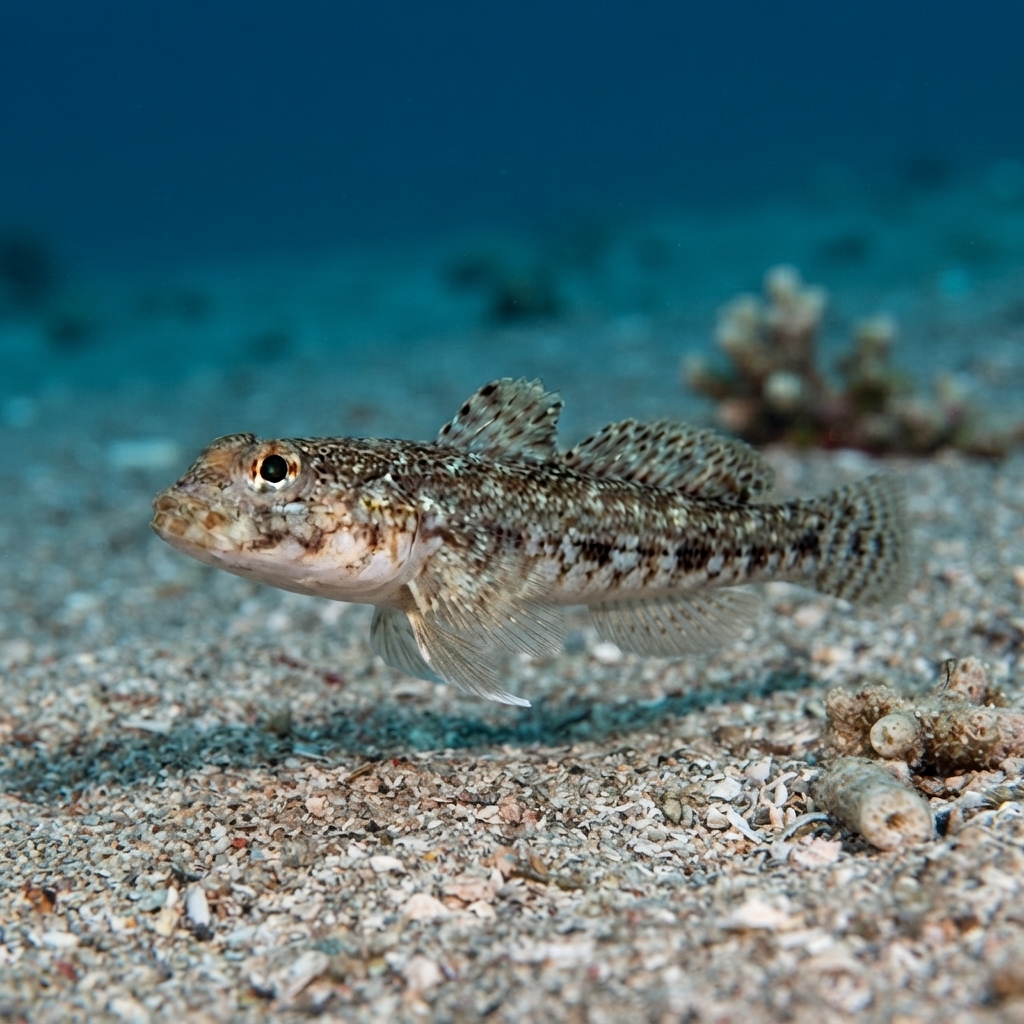
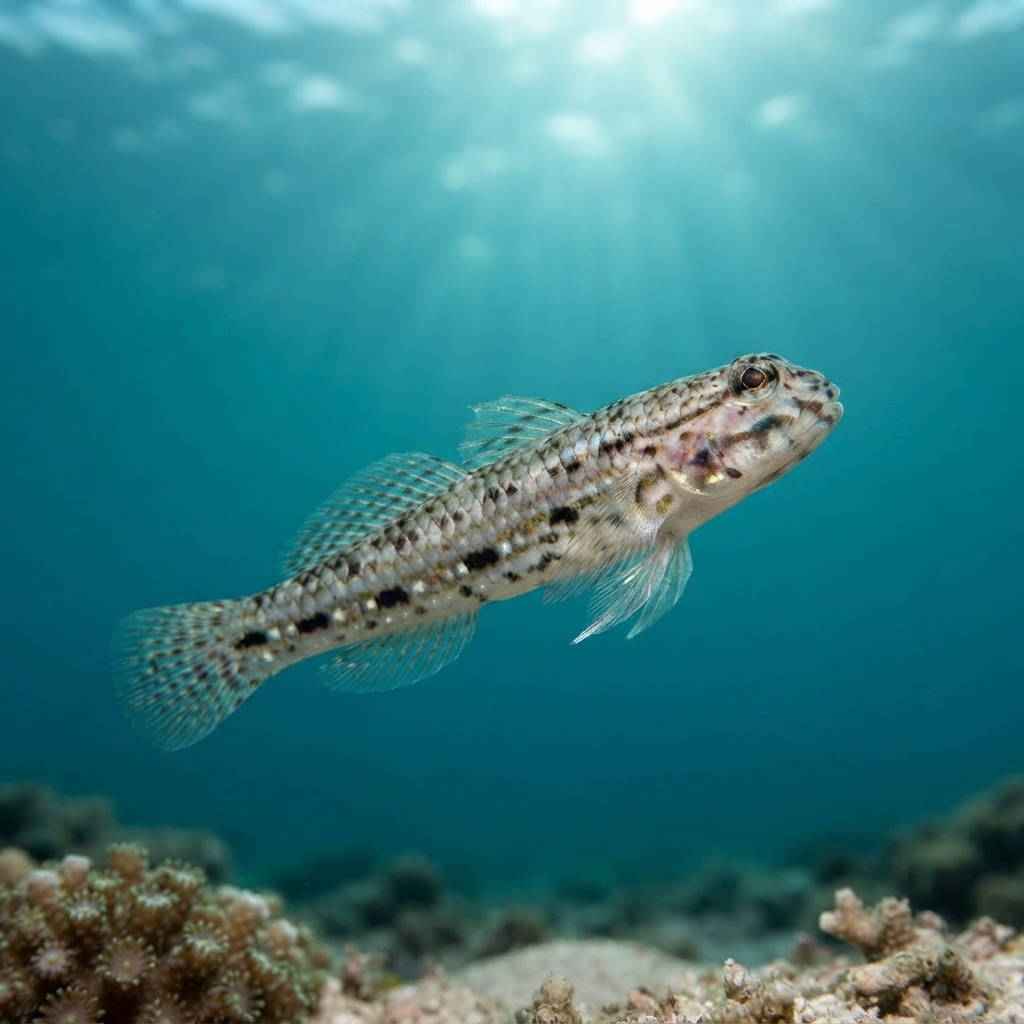
A tiny goby, around 4 cm, with a slender pale body marked by a row of dark blotches or bars running along the flanks toward the tail. It perches propped on its pelvic fins just above sand or rubble rather than swimming freely, and the head often shows fine speckling. At this size you need to get close and look at the sand and rubble patches near coral bases rather than the reef itself.
Spends most of its time perched motionless on sand or rubble near the reef base, darting a short distance to a new perch if a diver gets too close rather than fleeing into cover. It is usually seen alone or scattered loosely with others of its kind rather than in tight groups, low down where the reef meets open sand. Most sightings are logged during typical daytime reef dives rather than night dives.
It belongs to a large genus of small sand and rubble gobies that divers routinely overlook because they sit still and blend into the substrate rather than swimming out to be noticed.
No clear season shows up in the sighting data, and the 23.4 to 29.5C range it's found in covers typical year-round tropical reef temperatures in Fiji and New Caledonia, so any month should work.
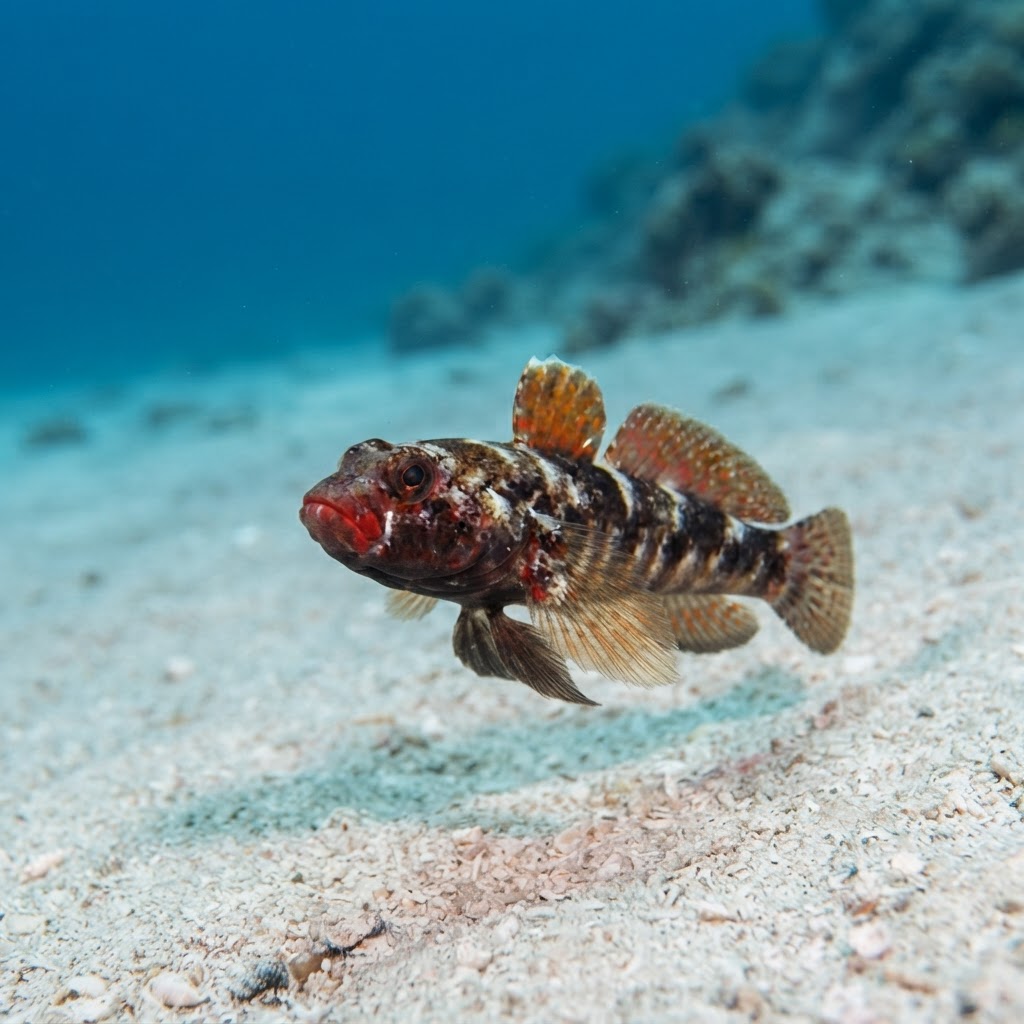
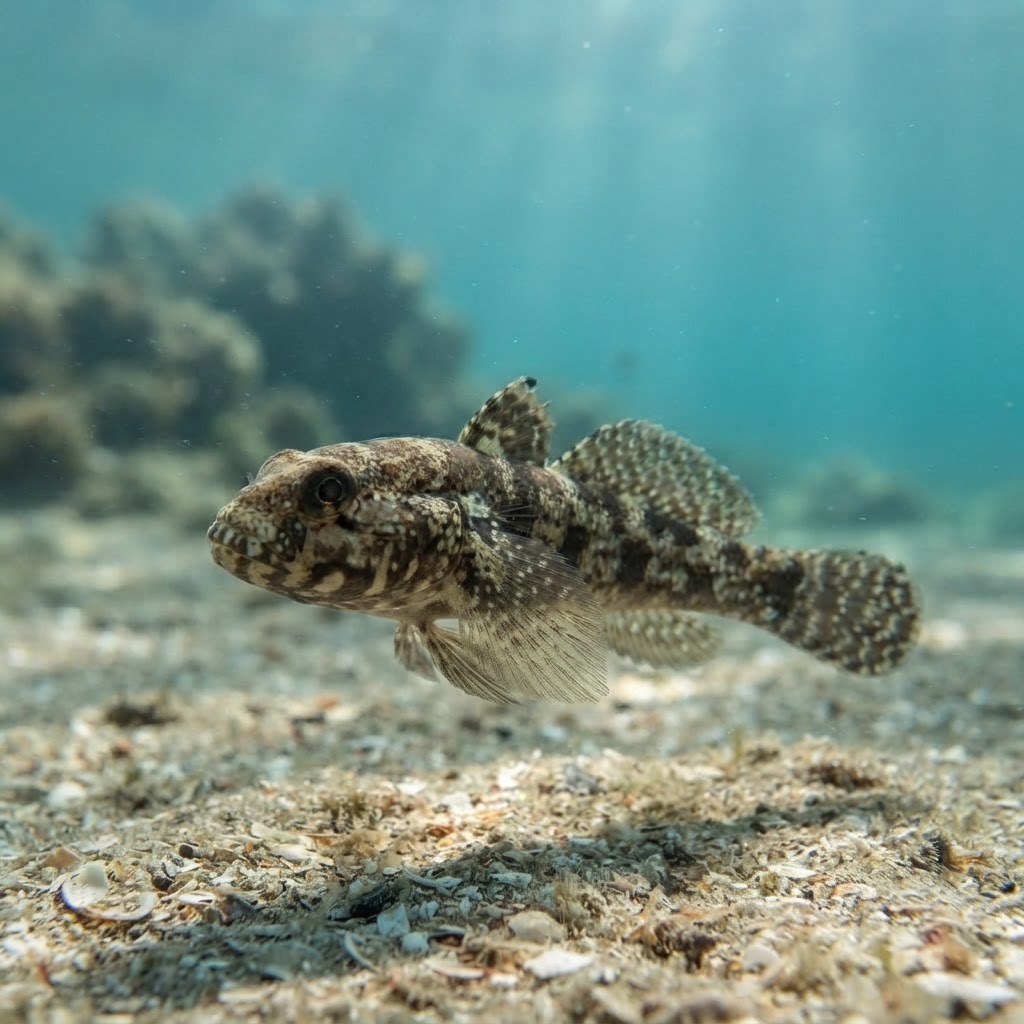
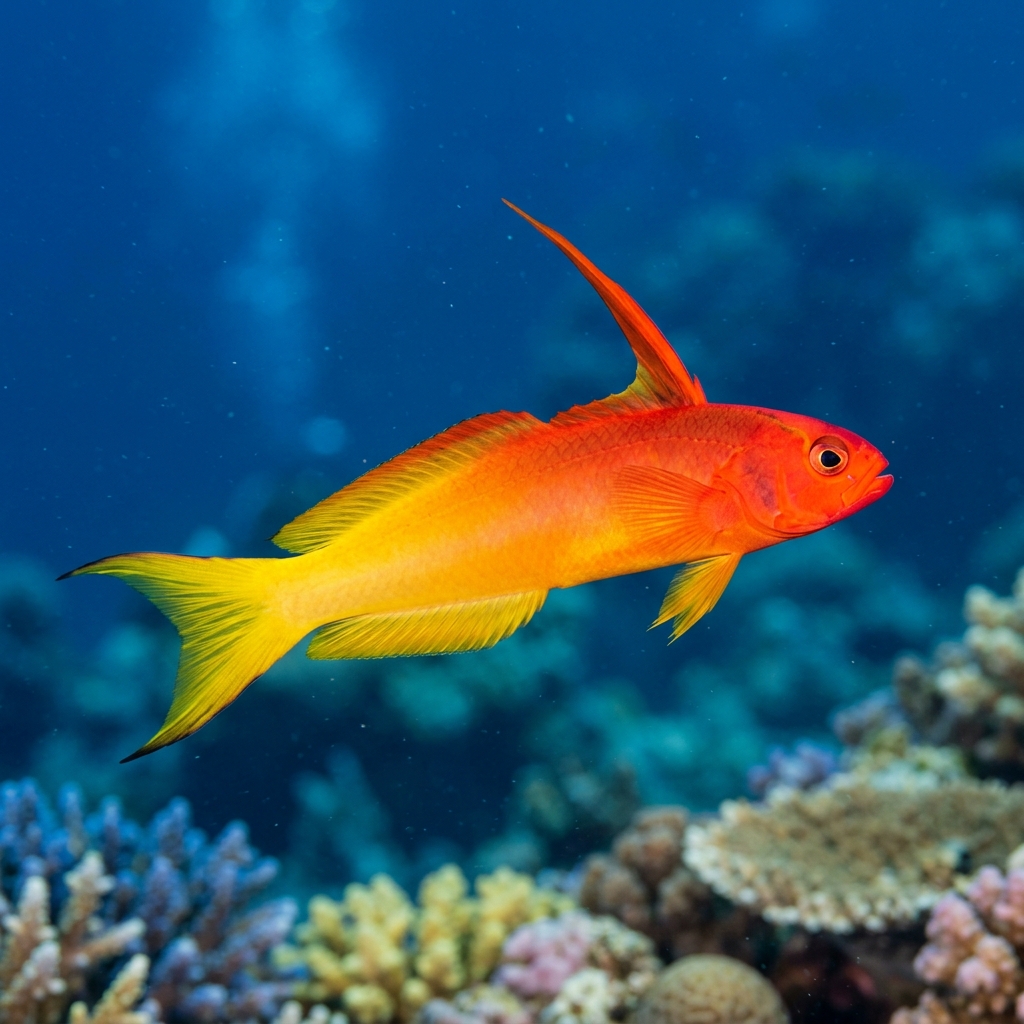
Reef neighbours a diver could mistake it for. Use the identification notes above to tell them apart.
Most reliably logged around the Mamanuca Islands in Fiji, with a second strong population around Nouméa in New Caledonia. Look for it on sandy or rubble patches at reef edges in these two areas rather than open water sites.
Mapping where Goldmann's Goby is logged…
It's most consistently found around the Mamanuca Islands in Fiji, with another good population around Nouméa in New Caledonia. Check sandy patches and rubble near reef bases in both areas.
There's no strong seasonal pattern in the sighting data, and it lives in warm water between roughly 23 and 29.5C year-round, so it can turn up on any dive month to month.
Look for a small, pale goby around 4 cm long perched on sand or rubble near the reef, with a row of dark blotches along its sides. It stays propped on its front fins rather than swimming in the open water column.
They stay small, typically around 4 cm long, making them one of the more easily overlooked fish on a reef unless you're scanning sand and rubble closely.
No. It's a small, harmless reef fish that poses no risk to divers and will simply move a short distance away if approached.
Site and sighting data is aggregated from diver logs, iNaturalist and GBIF. For taxonomy and conservation status:
Slender Goby
806 sites