Plectorhinchus chrysotaenia
Yellow-lined, uncommon, and often overlooked: find Goldlined Sweetlips lurking in West Papua and Malaysia's east coast reefs, 24.7-29C year round.
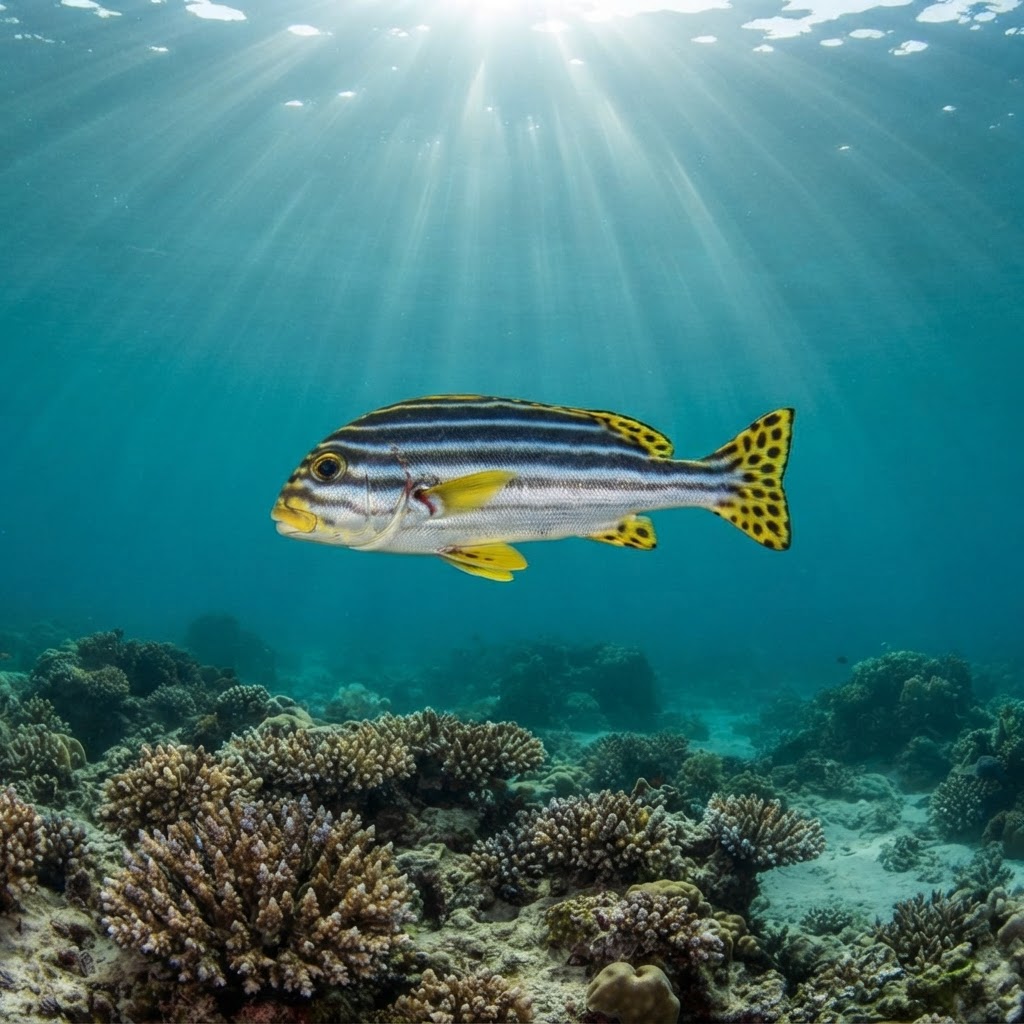
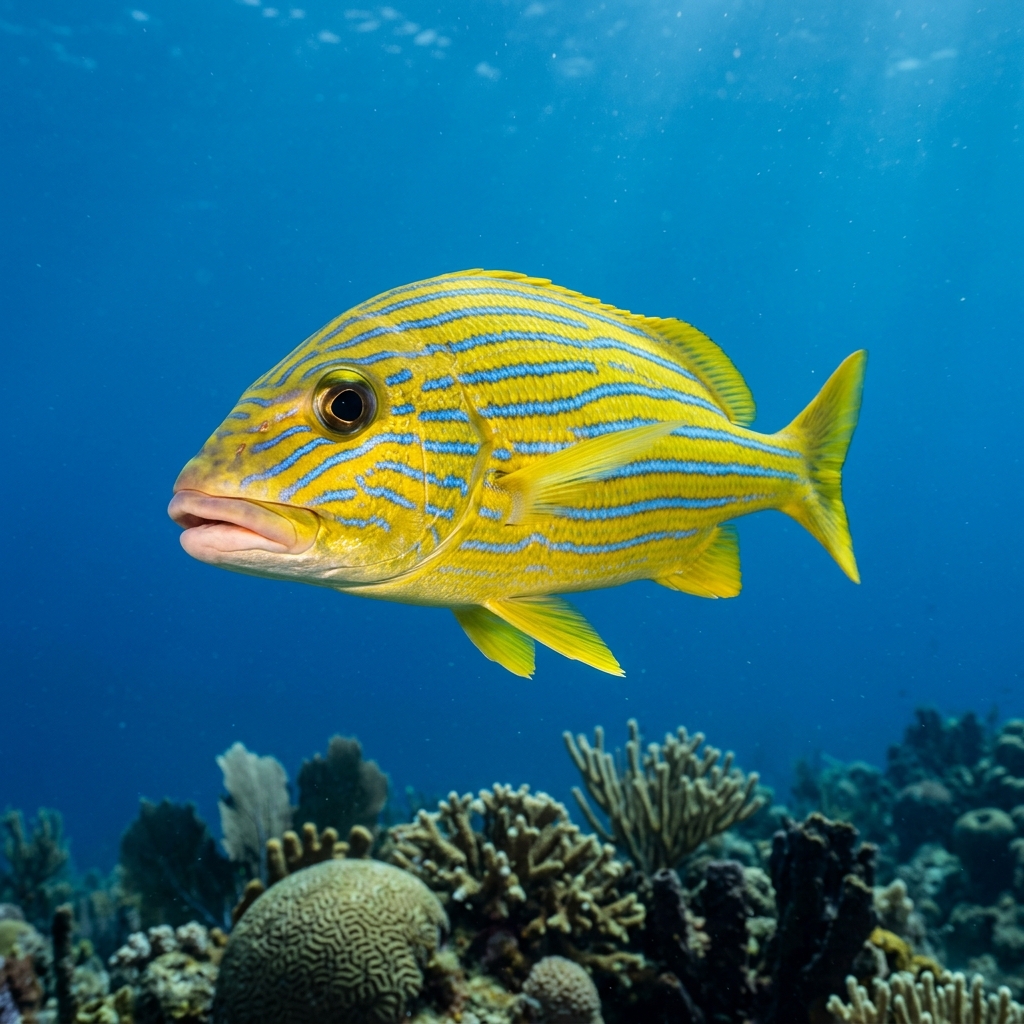
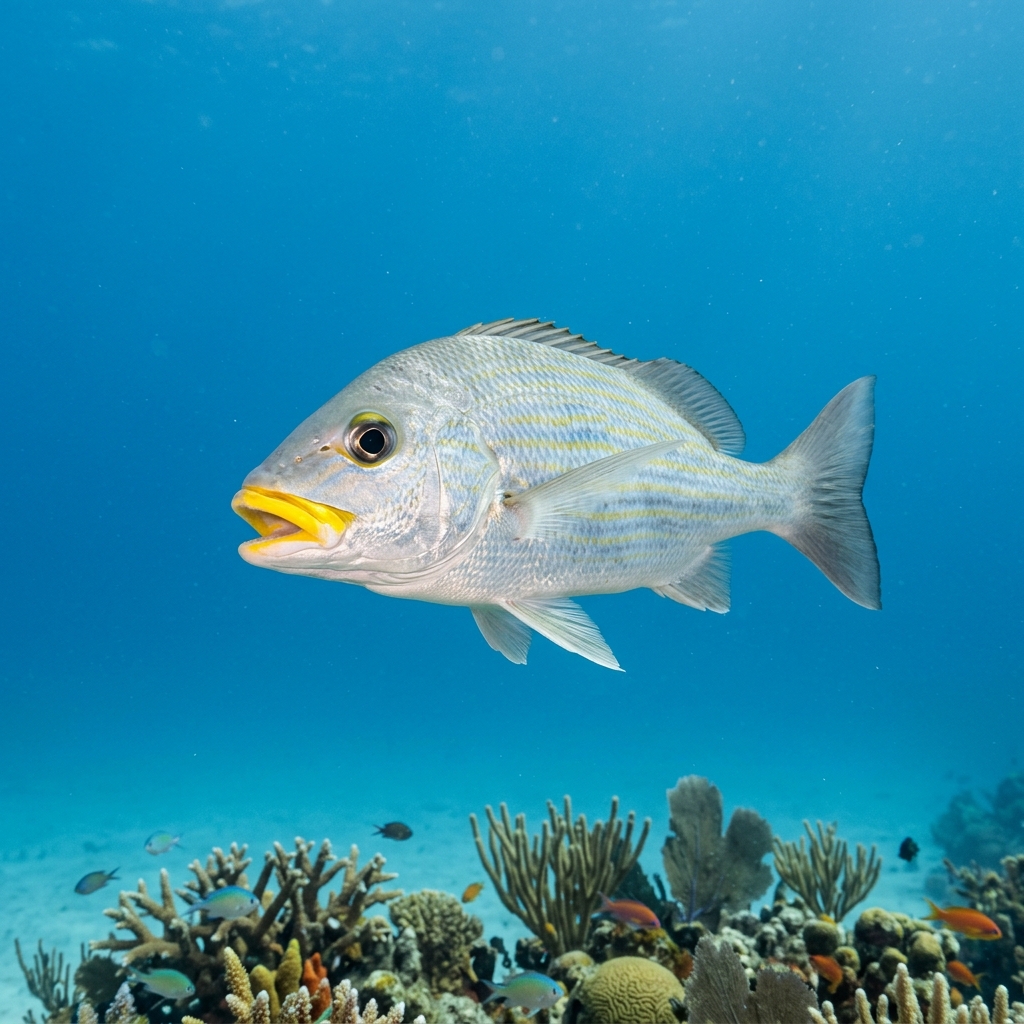
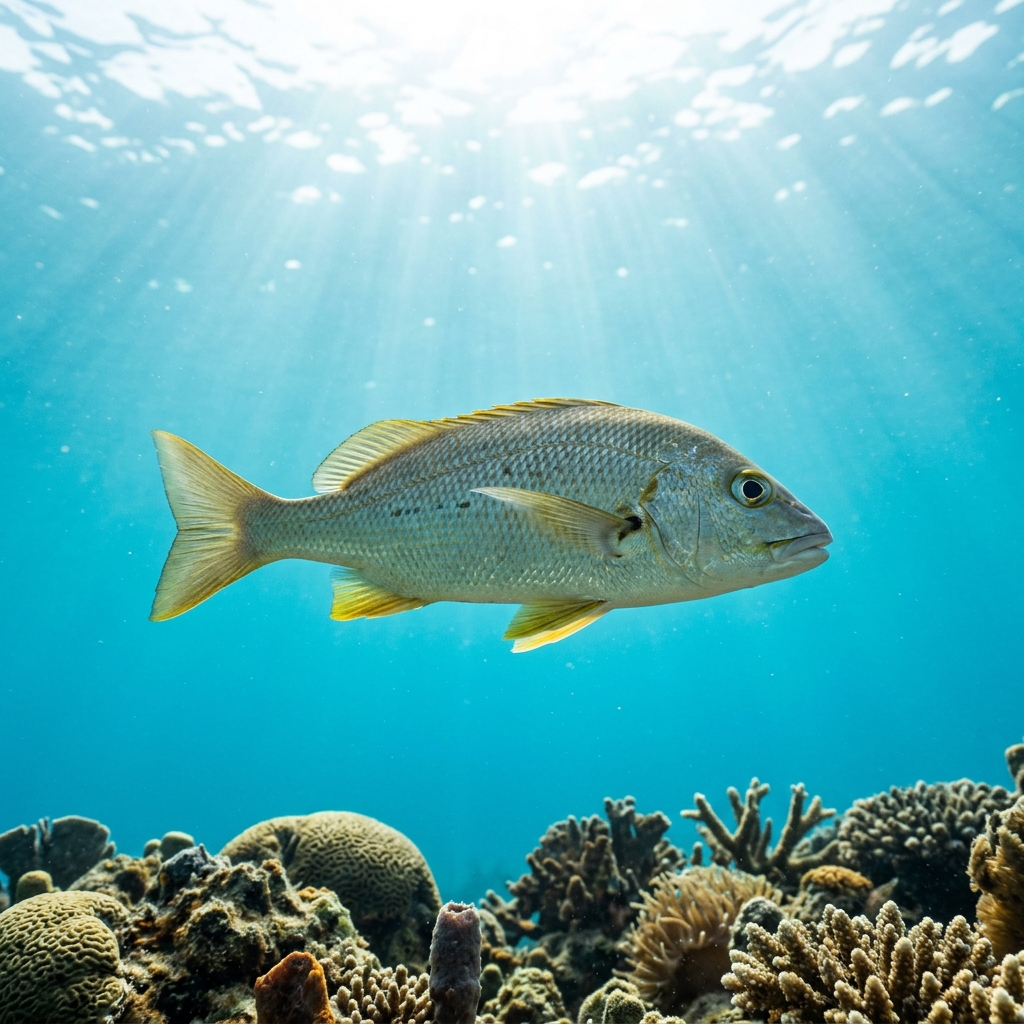
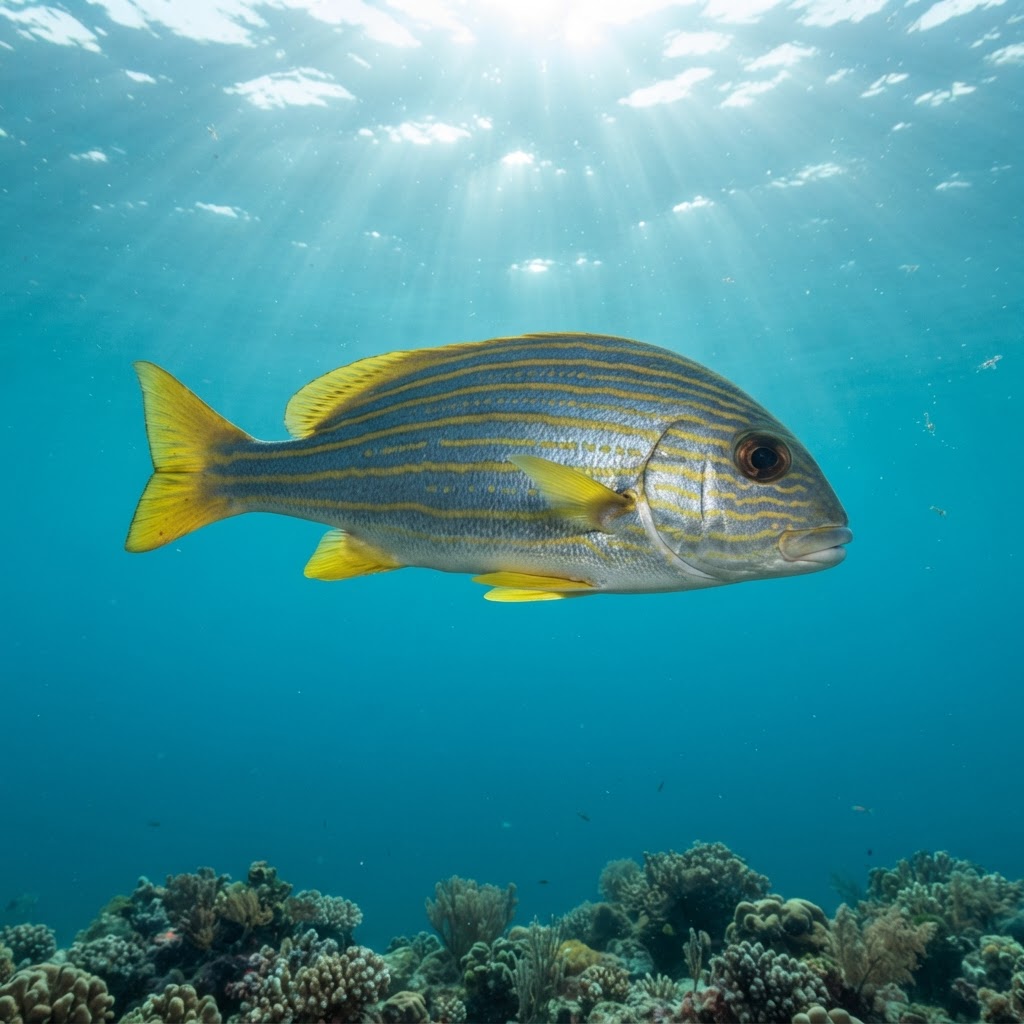
A stocky, deep-bodied fish around 29 cm with a pale grey-to-white body traced by narrow gold-yellow stripes running head to tail. The lips and snout are thick and slightly puffy, a family trait that gives sweetlips their name, and the fins often carry a faint yellow wash. It's usually seen holding still or hovering close to a ledge or overhang rather than swimming openly over open reef.
Divers typically find it tucked under coral ledges, in cave mouths, or hovering motionless in the shade of overhangs rather than out foraging on open sand. It tends to hold its position as divers approach, more inclined to sit tight in cover than bolt, which makes for a good ID look if you spot one. Like other sweetlips it's likely most active around dusk and at night, resting up during the day.
The gold stripes running along the body are the giveaway that separates it from plainer or spotted sweetlips relatives sharing the same reef ledges.
There's no clear seasonal pattern in the sightings data, and the water-temperature niche of 24.7 to 29C spans typical tropical reef conditions all year, so it's essentially a year-round encounter wherever it occurs.
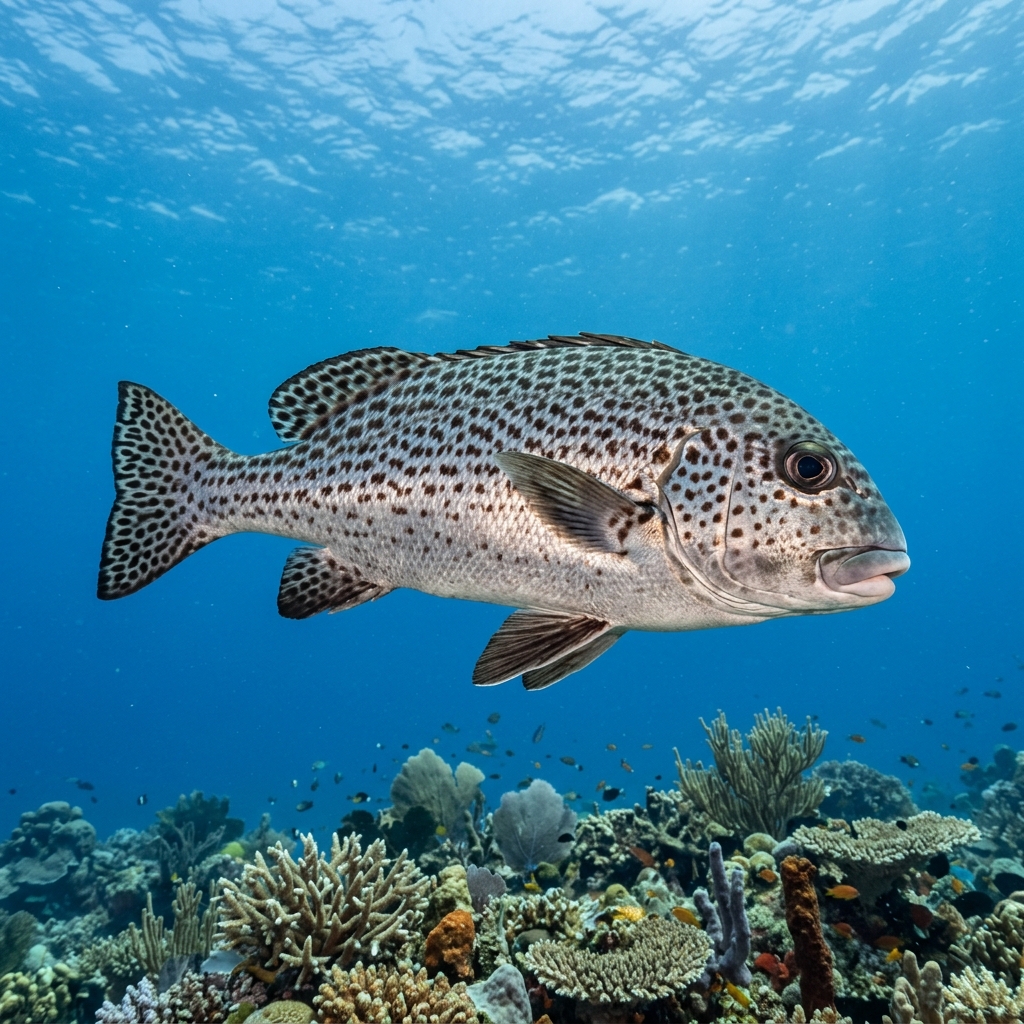
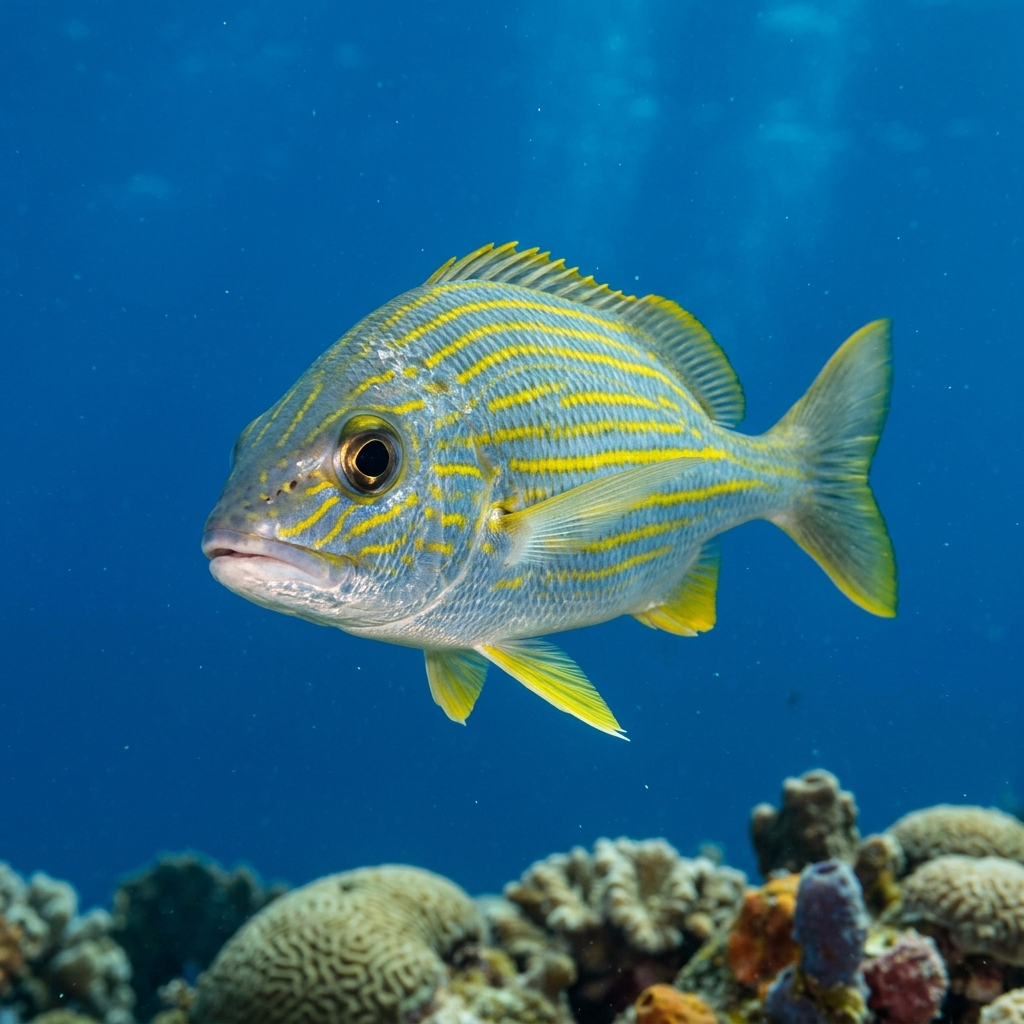
Reef neighbours a diver could mistake it for. Use the identification notes above to tell them apart.
Most reliably found in West Papua and Raja Ampat, Indonesia, and along Peninsular Malaysia's east coast, where it turns up across a solid spread of sites. Smaller but real populations are logged around Port Moresby and Kavieng in Papua New Guinea, on Queensland's reefs in Australia, and near Dili in Timor-Leste. Even in its strongholds it's logged as uncommon to rare more often than common, so treat any sighting as a bit of a find rather than a given.
Mapping where Goldlined Sweetlips is logged…
West Papua and Raja Ampat in Indonesia and Peninsular Malaysia's east coast are the most reliable regions, with smaller populations around Port Moresby and Kavieng in Papua New Guinea, Queensland in Australia, and Dili in Timor-Leste.
There's no strong season in the sightings data. It sits in water between roughly 24.7 and 29C, typical tropical reef conditions year-round, so any month is fair game in its known regions.
Look for a pale grey-white body about 29 cm long marked with narrow gold stripes running lengthwise, thick puffy lips, and a habit of sitting still under ledges or overhangs rather than cruising open reef.
They typically reach around 29 cm, a modest, easy-to-overlook size that suits their habit of tucking into shaded ledges rather than swimming in open water.
At most sites where they're logged, divers report them as uncommon or rare rather than common, so spotting one is a nice bonus rather than a guaranteed sighting even in strongholds like West Papua.
Site and sighting data is aggregated from diver logs, iNaturalist and GBIF. For taxonomy and conservation status:
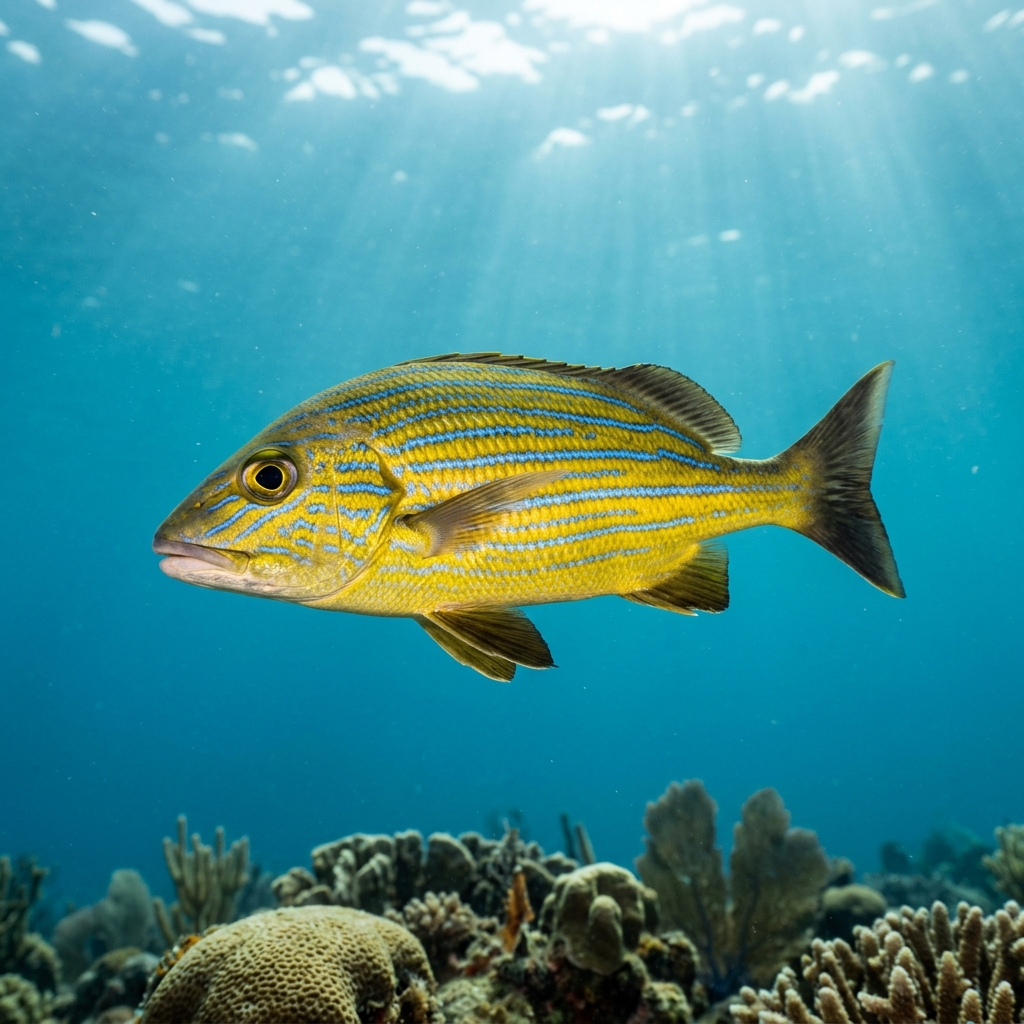
Bluestriped Grunt
1,907 sites