Diversidoris crocea
Small orange-yellow nudibranch logged across Luzon, Philippines, in warm 25-30C reef water, mostly as an uncommon macro find.
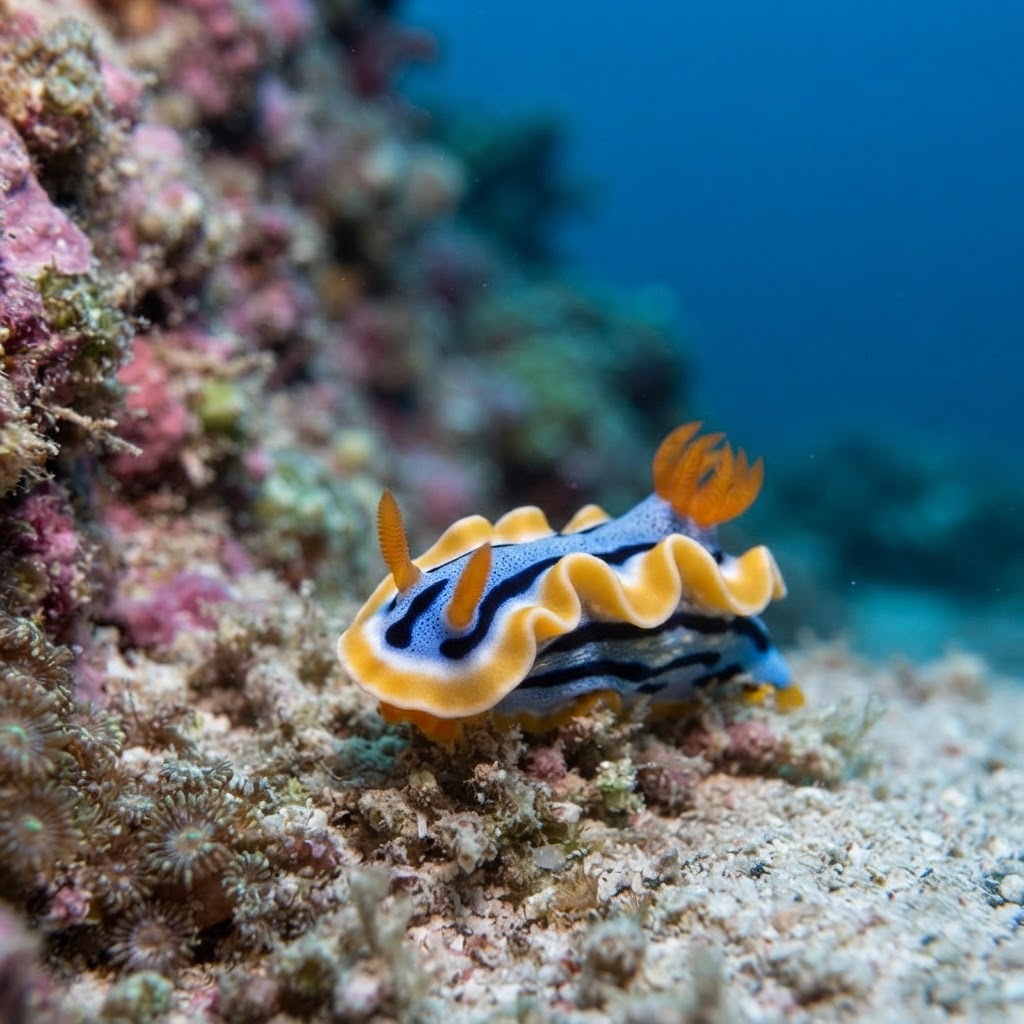
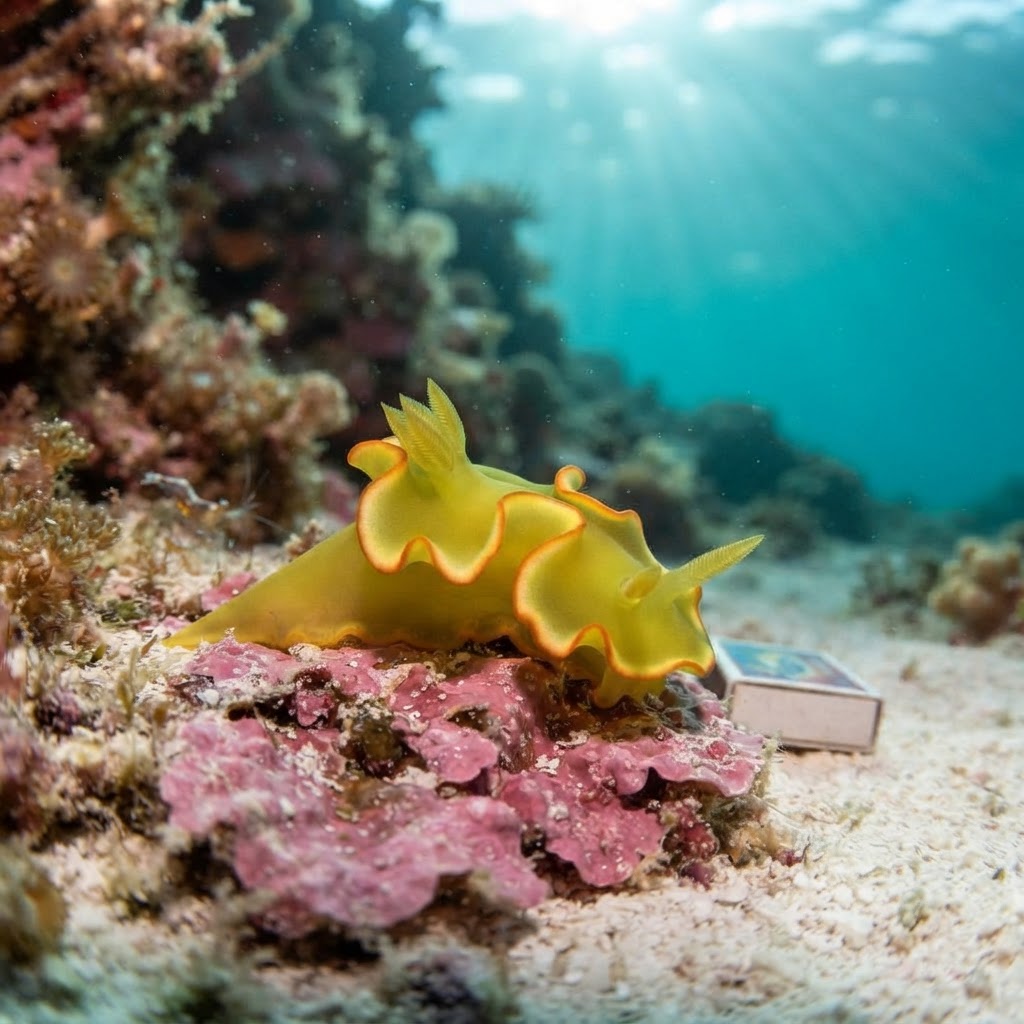
Small, soft-bodied nudibranch with a smooth, rounded body in solid golden-orange to yellow, low to the substrate and easy to miss without a trained eye. The mantle edge is unruffled and the colour runs even across the back, with no bold spots or lines to distinguish it, so it reads as a plain warm-coloured slug against reef rubble or sponge. Look for the pair of feathery gills near the rear and the two rhinophores (small sensory horns) up front, both typical nudibranch markers rather than anything unique to this species.
Divers find it moving slowly over hard substrate and encrusting growth, grazing rather than swimming, which makes it a classic slow-and-look macro subject. It shows no reaction to divers beyond retracting its gills if disturbed, so a careful approach and a steady light are all it takes for a good look. Most logs describe it as uncommon at a given site, so spotting one usually means a deliberate, close scan of the substrate rather than a chance encounter mid-water.
Like other dorid nudibranchs, its bright colour likely signals a chemical or physical defence built up from its diet, warning predators off rather than trying to hide.
Water temperatures at recorded sightings range from about 24.6 to 30.6C, comfortably within tropical reef norms year-round, and there is no clear seasonal pattern in the data. Treat it as a year-round find on Luzon rather than something tied to a particular month.
Reef neighbours a diver could mistake it for. Use the identification notes above to tell them apart.
Almost every logged sighting comes from the Philippines, with Luzon standing out as the region divers most reliably find it. If you are hunting nudibranchs on Luzon's reefs, this is one of the species worth adding to a muck or macro dive checklist.
Mapping where Golden Noumea is logged…
Sightings are concentrated in the Philippines, especially around Luzon, where it turns up on macro and muck dives as an uncommon but reliable find.
There is no strong season in the data. It has been logged across a broad warm-water range of roughly 24.6 to 30.6C, so it is considered a year-round sighting on Luzon's reefs.
Look for a small, smooth-bodied nudibranch in solid golden-orange or yellow with no strong pattern, plus the typical rhinophores up front and feathery gills near the tail. Its plain colouring means it is easy to overlook against similarly toned rubble or sponge.
Exact size data is not available, but as with most species in its family it is a small nudibranch best searched for at close range with a macro lens or careful eye.
No. It poses no threat to divers and can be safely observed and photographed from close range without disturbing it.
Site and sighting data is aggregated from diver logs, iNaturalist and GBIF. For taxonomy and conservation status:
Blue Dragon
3,163 sites