Porites astreoides
Spot Mustard Hill Coral year-round across the Caribbean and Yucatán Peninsula. Learn how to ID its domed, yellow-green surface on reefs from 0-70 m.
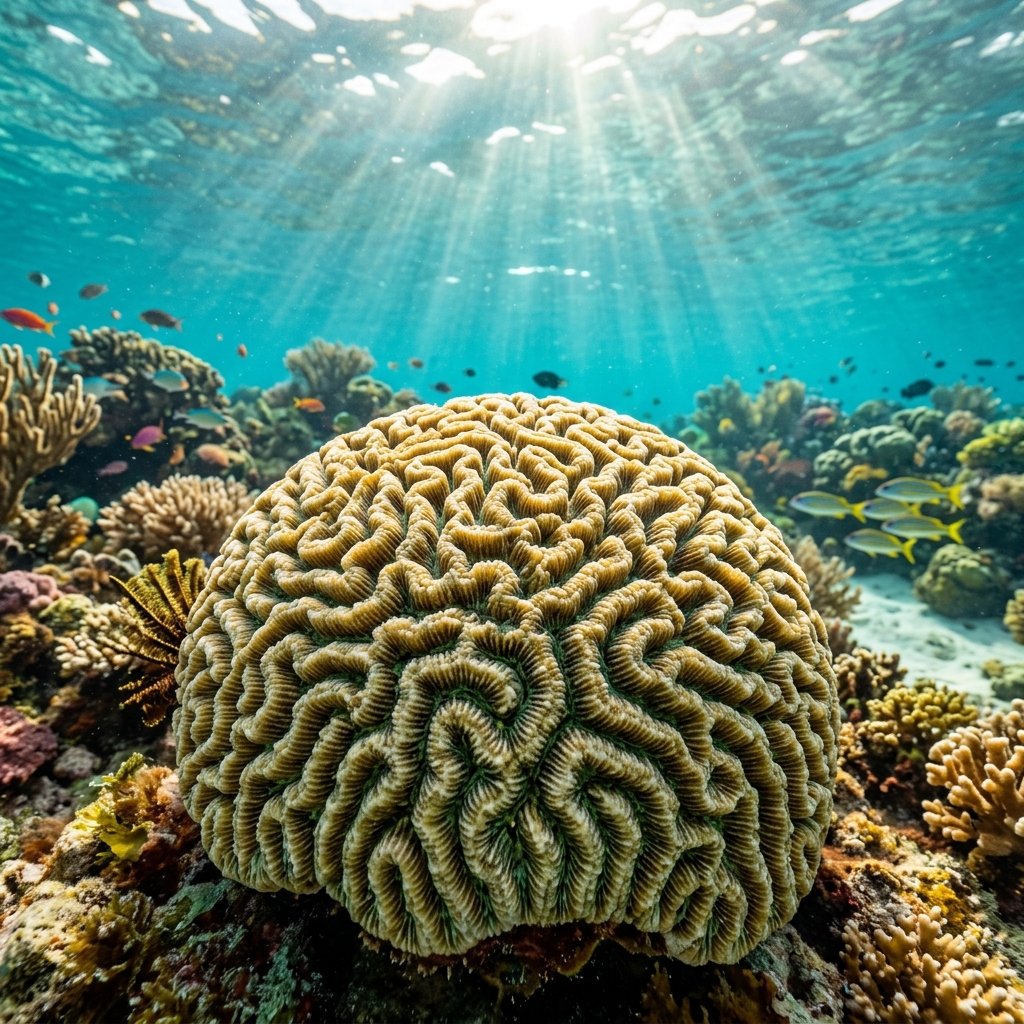
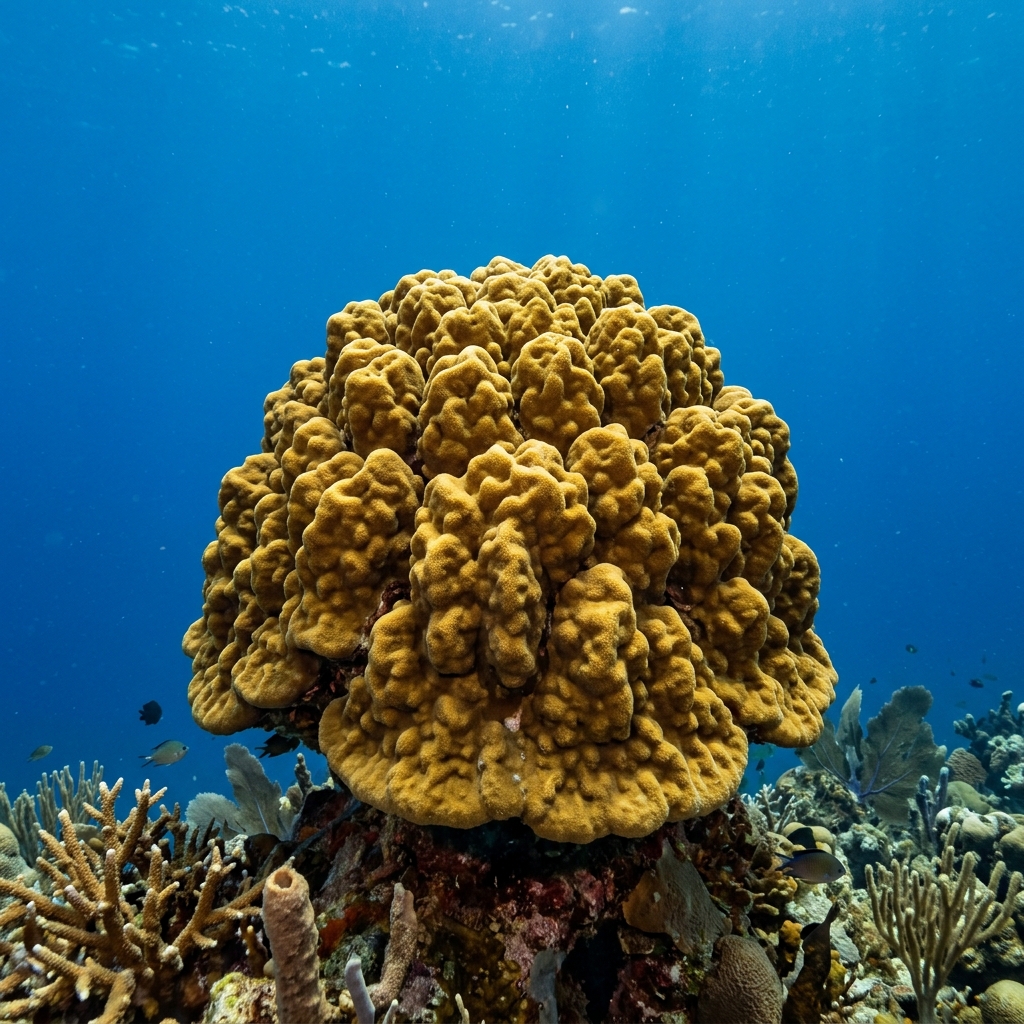
Look for a smoothly domed or mounding colony in shades of yellow, olive-green, or pale mustard, the colour is the first clue and how it earns its name. The surface is covered in tiny, evenly packed corallites (the individual polyp cups) that give it a finely pitted appearance, like a dimpled golf ball at close range. Colonies range from small encrusting patches on hard substrate to larger rounded heads. Unlike brain corals, there are no meandering ridges or valleys.
Mustard Hill Coral sits fixed to the reef and pays no attention to divers whatsoever. During the day the polyps are retracted, so what you see is the colony's textured skeleton surface. On a night dive the polyps extend their feeding tentacles, giving the colony a softer, almost fuzzy look that is worth a second glance. Approach as close as you like for a photo, but keep your fins and hands clear, physical contact damages the tissue and transfers oils.
Mustard Hill Coral is one of the most bleaching-tolerant Caribbean corals, partly because it commonly hosts a mix of symbiotic algae (zooxanthellae) types, which gives it more flexibility during warm-water events than many of its neighbours on the same reef.
It is present year-round with no concentrated season, which makes sense given its observed water temperature range of roughly 25 to 29 °C, a band that describes warm tropical and subtropical reefs throughout the calendar year.
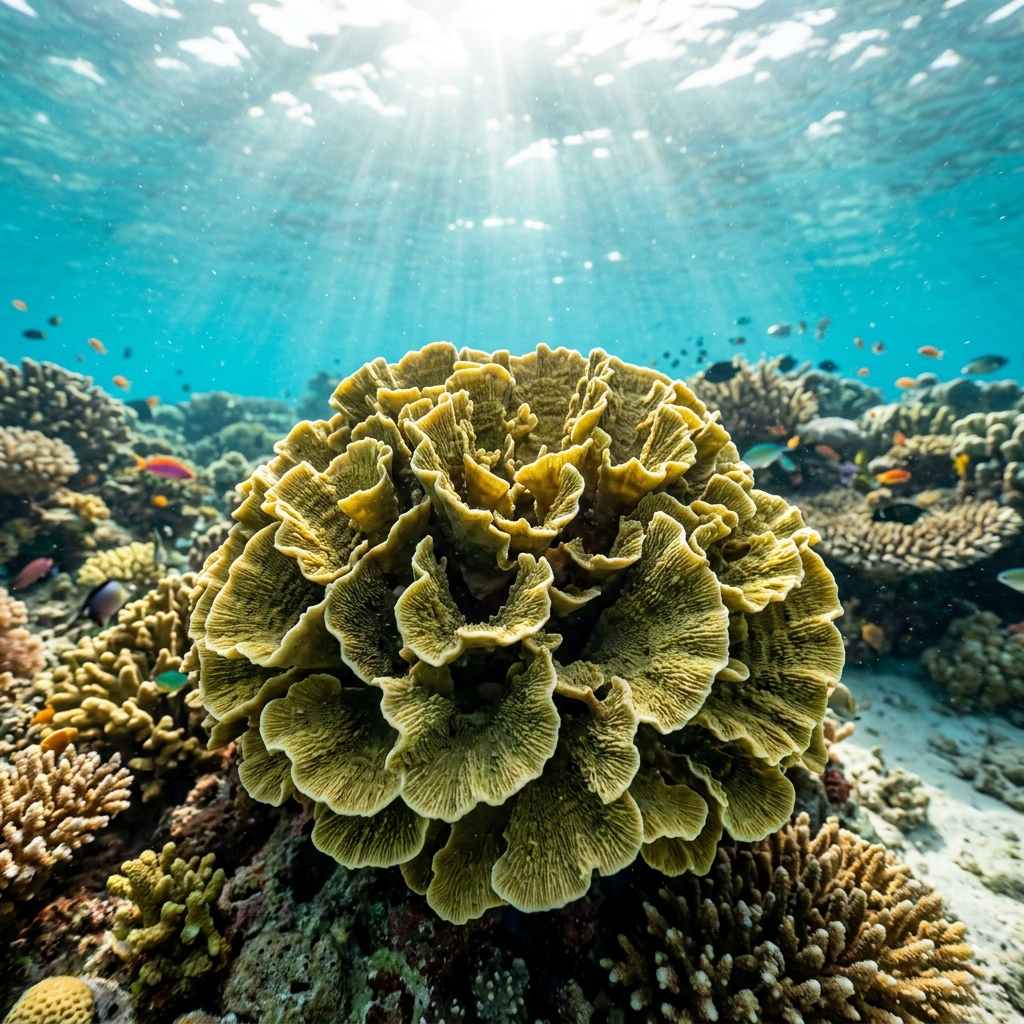
Reef neighbours a diver could mistake it for. Use the identification notes above to tell them apart.
Mustard Hill Coral is most commonly logged across the Caribbean, with the Yucatán Peninsula in Mexico leading all regions by a wide margin. The Cayman Islands, Roatán in Honduras, and the Florida coast are all reliable spots, and strong records also come from Bonaire, Curaçao, and Colombia's Caribbean coast. Outside the Caribbean, populations appear along Brazil's northeast coast and in the Bahamas.
Mapping where Mustard Hill Coral is logged…
It is most reliably found across the Caribbean, with the Yucatán Peninsula in Mexico and the Cayman Islands topping the records. Roatán, Bonaire, Curaçao, the Bahamas, and Florida's reefs are all consistent locations. There are also sightings along Brazil's northeast coast.
Any time of year works. It shows no seasonal peak and is recorded year-round wherever warm tropical reefs exist. Water temperatures in the 25-29 °C range, typical of Caribbean reefs throughout the year, suit it well.
The mounding or dome-shaped colony in a distinctive yellow, olive, or mustard-green colour is the key feature. Up close, the surface has a finely pitted texture from tightly packed corallite cups. There are no ridges or grooves, which separates it from brain corals at a glance.
Colonies range from small encrusting patches just a few centimetres across to rounded heads that can exceed half a metre in diameter. Growth is slow, so the larger heads represent decades of accumulation on the reef.
At night the polyps extend their feeding tentacles, giving the colony a distinctly softer, fuzzier appearance compared to its hard, pitted daytime look. It is one of the easier corals to appreciate on a night dive for exactly this reason.
Site and sighting data is aggregated from diver logs, iNaturalist and GBIF. For taxonomy and conservation status:
Plate Coral
2,991 sites