Calcinus gaimardii
Small reef hermit crab spotted year-round in warm Longdong and Bali waters, tucked into shells on rubble and rock at 22-29C.
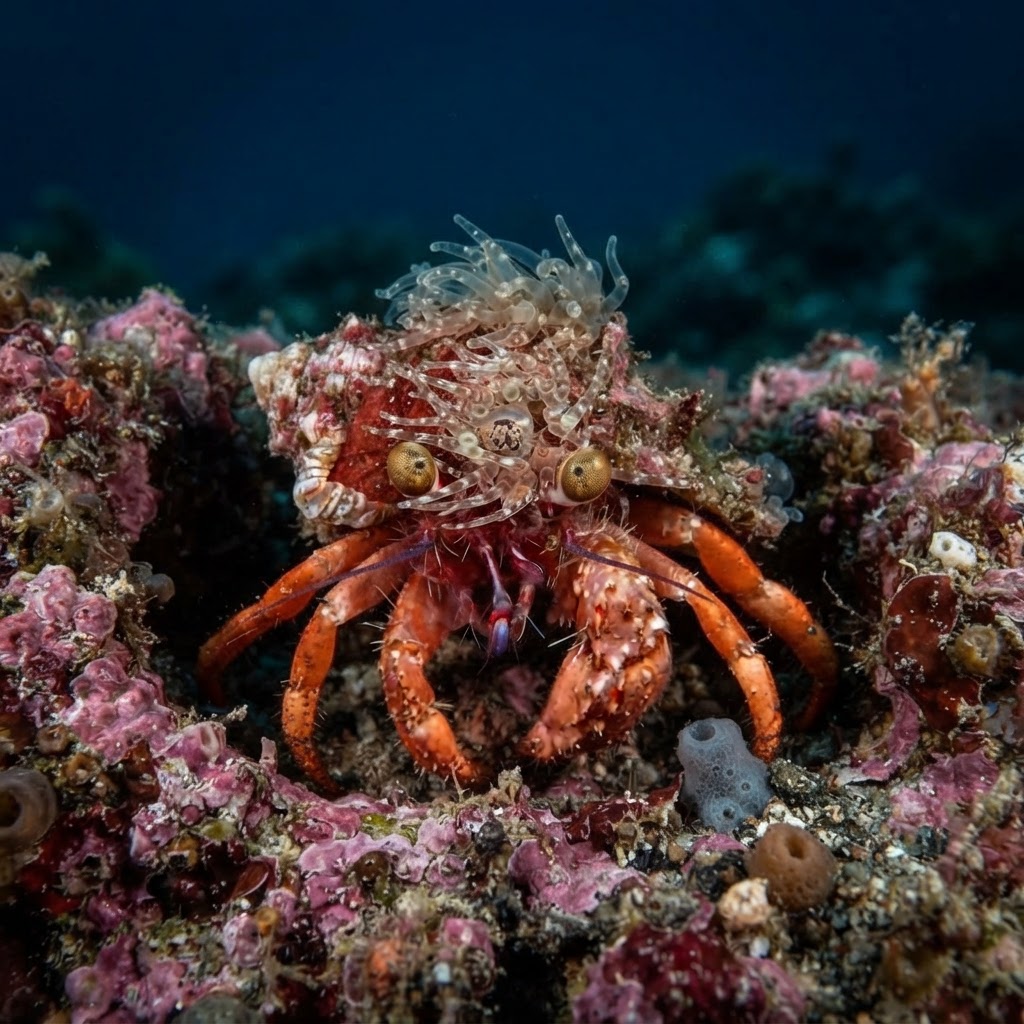
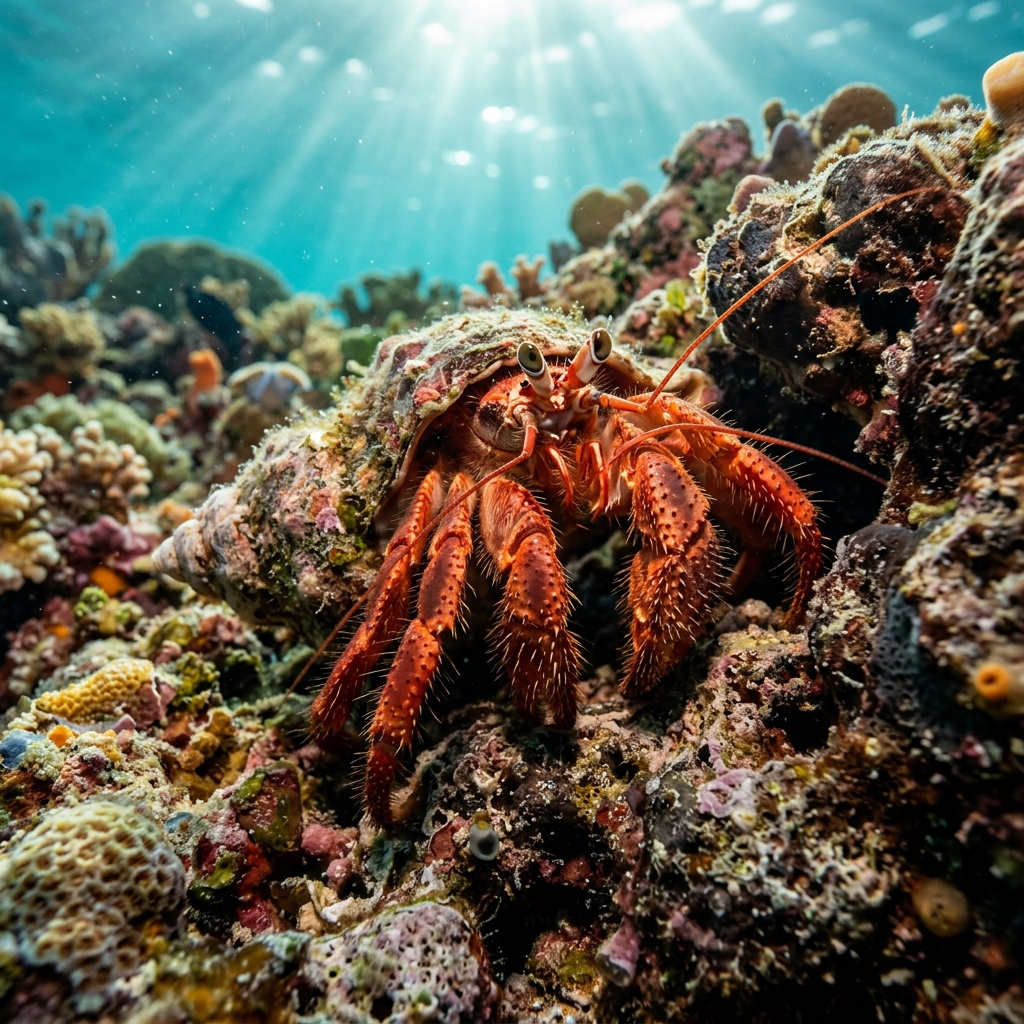
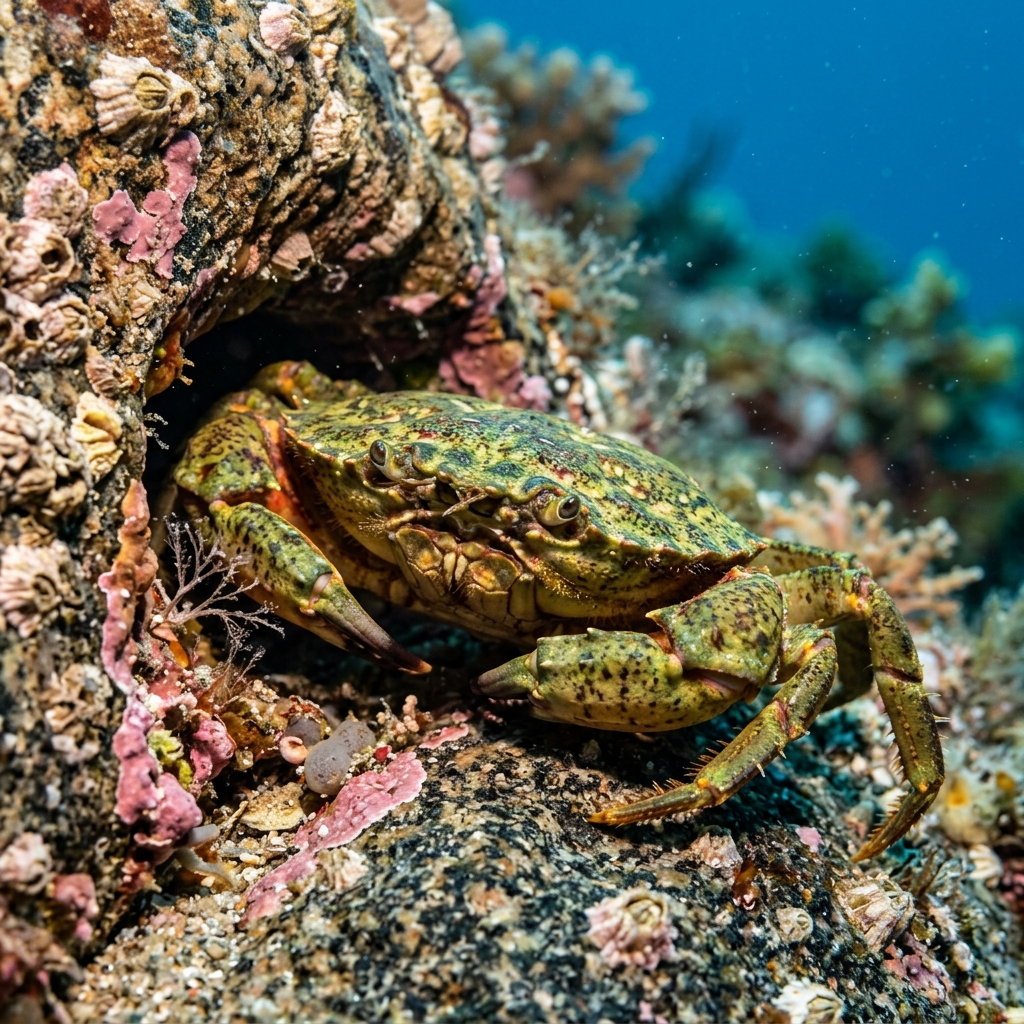
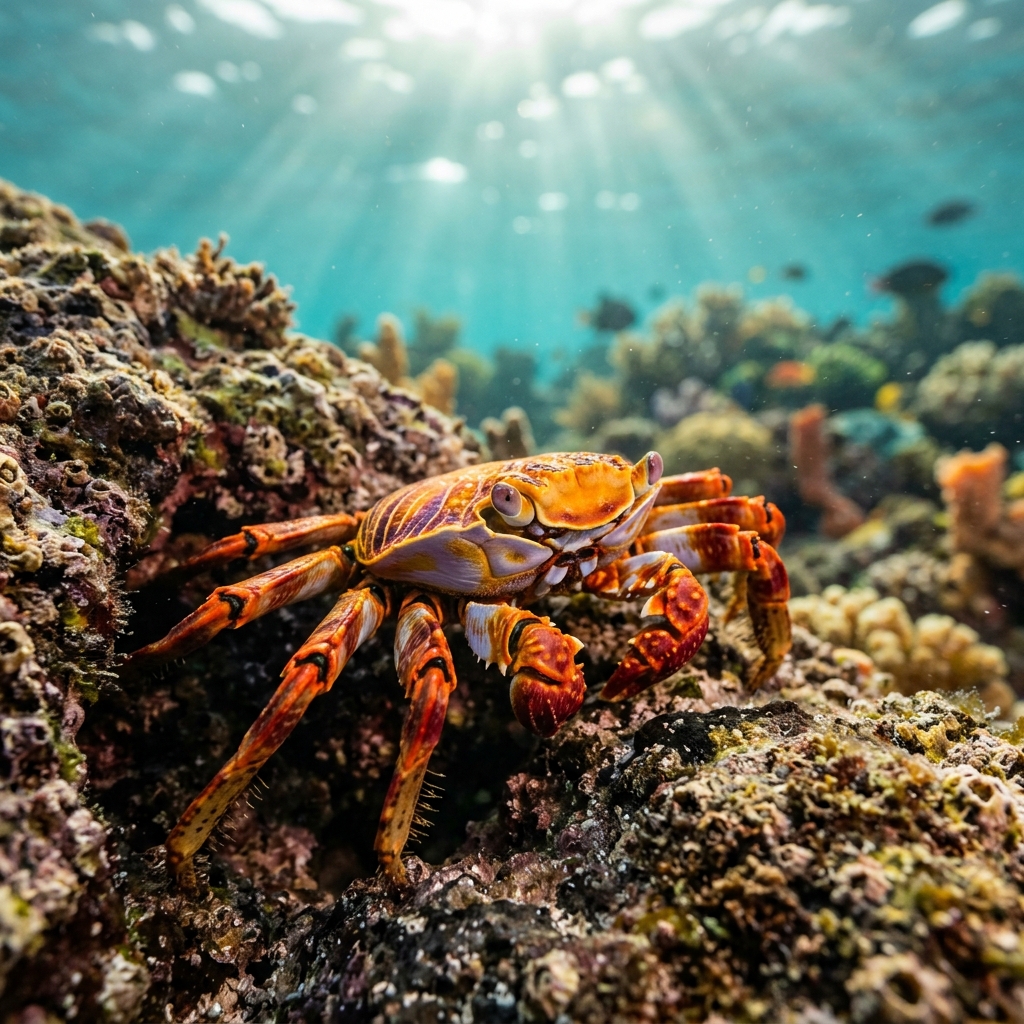
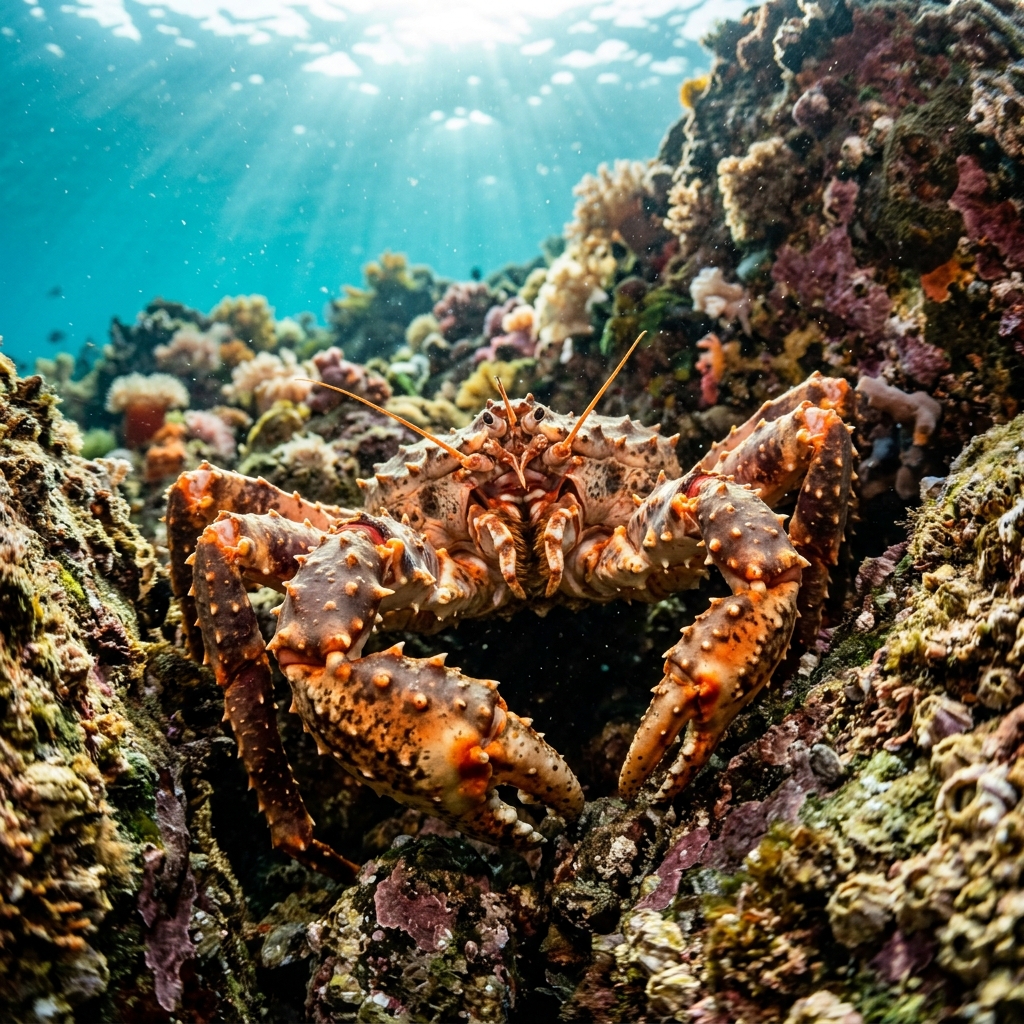
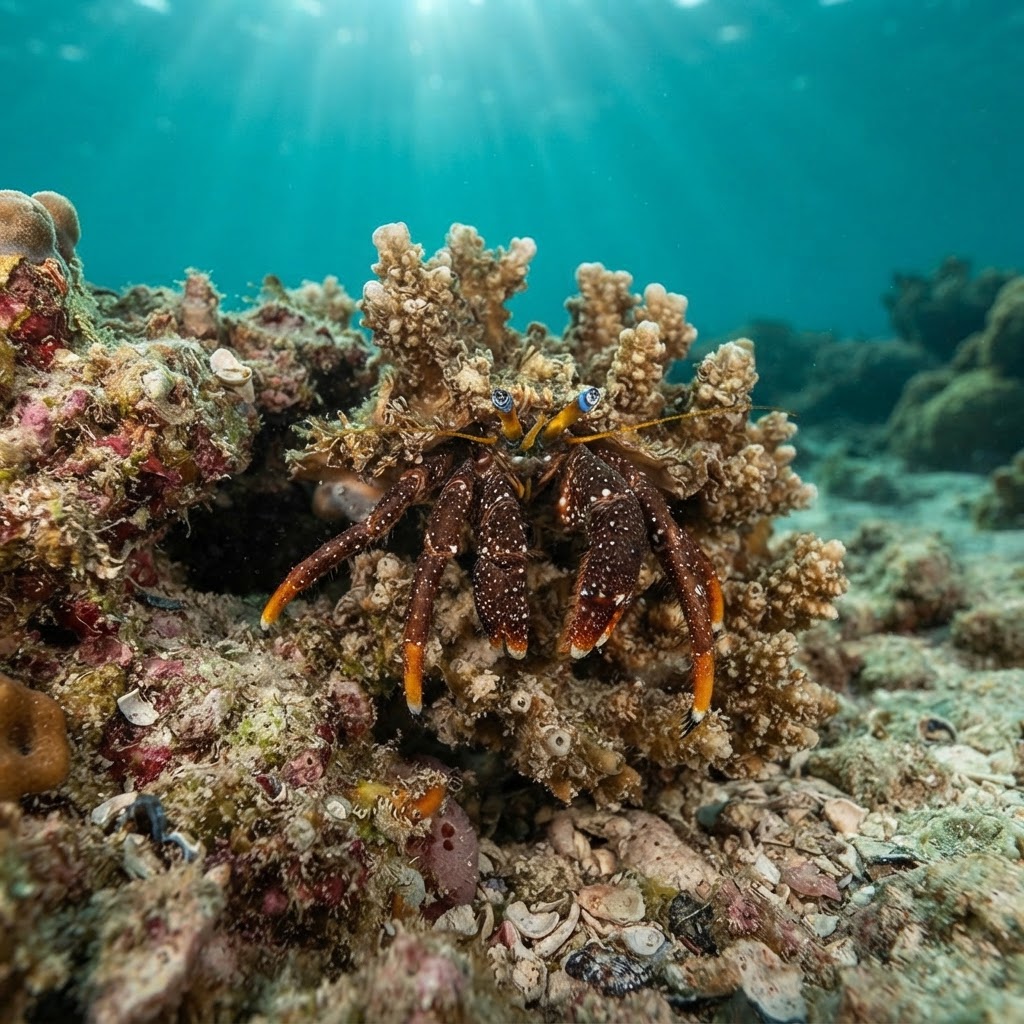
A small hermit crab that shelters in a scavenged snail shell, so most of what you see are its legs and claws rather than a body outline. Look for legs banded or tipped in orange or red against a paler base colour, with eyestalks that are often blue or dark and set close together. It moves in short, jerky steps over rubble and rock rather than swimming or drifting, and will often withdraw fully into its shell the moment a torch beam or hand gets close.
Divers usually find it picking its way slowly across rubble patches, rock crevices, or the base of reef structure, foraging over surfaces rather than out in the open water column. It tends to freeze or retreat into its borrowed shell when a diver's light or hand approaches, then resumes moving once left alone. Sightings lean towards daytime dives on shallower rubble and rocky reef sections rather than deep drop-offs.
Like other hermit crabs, it does not grow its own shell but constantly upgrades to bigger discarded snail shells as it grows, so the same individual can look quite different in size and shell shape from one dive season to the next.
No clear seasonal pattern shows up in the sightings, and its comfort range of roughly 22 to 29.5C covers these reefs for most of the year, so it is a reasonable year-round find rather than a seasonal target.
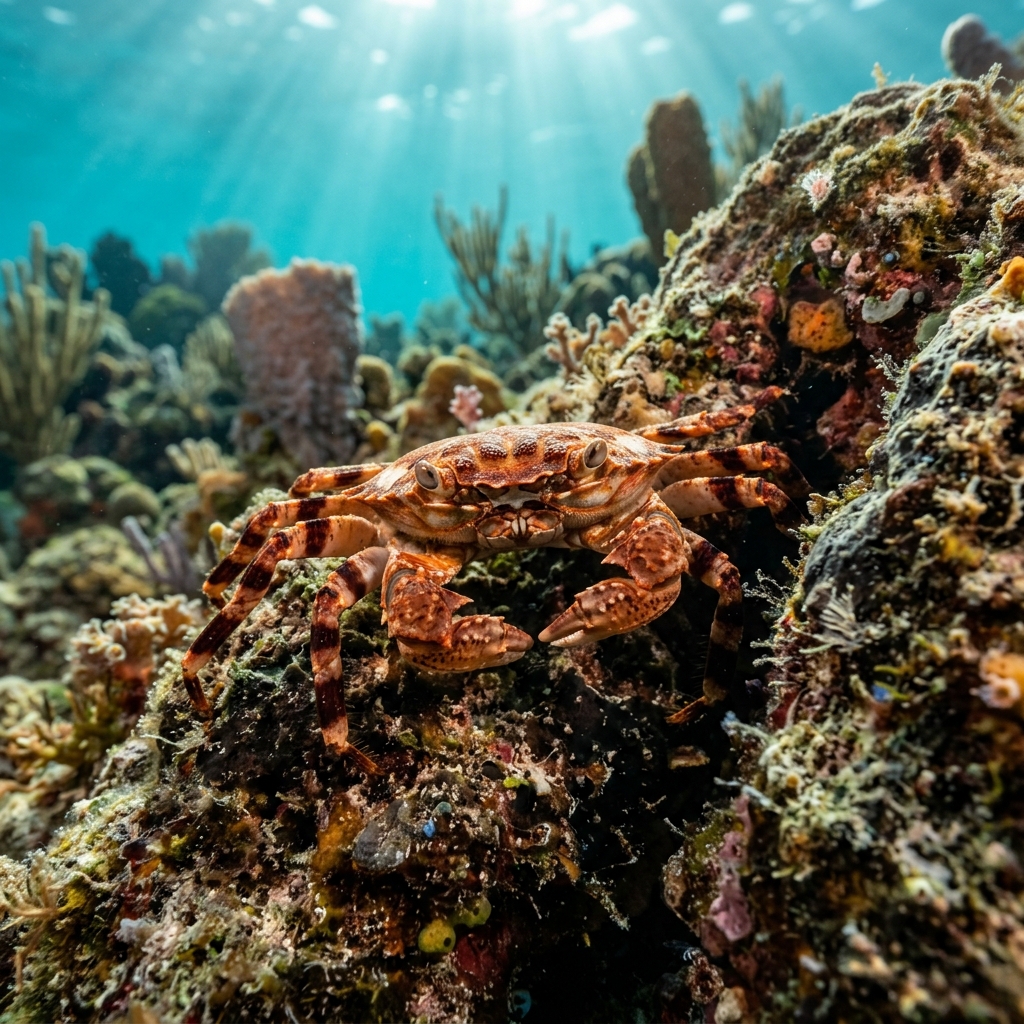
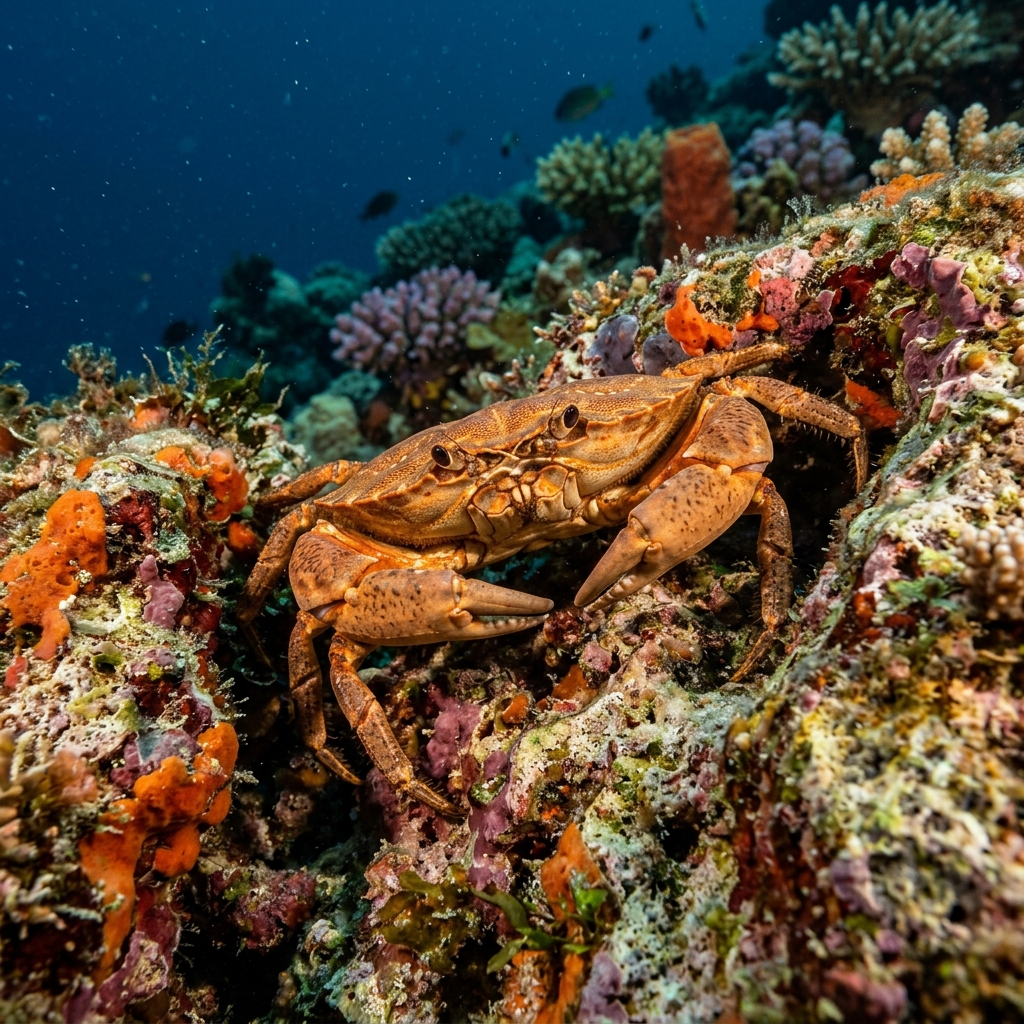
Reef neighbours a diver could mistake it for. Use the identification notes above to tell them apart.
Most reliably logged around Longdong and Xiaoliuqiu in Taiwan, with a further cluster of sightings in Bali, Indonesia. It also turns up on reefs in New South Wales and Queensland in Australia, and has been recorded in the Visayas in the Philippines and at Sai Kung in Hong Kong.
Mapping where Gaimard's Hermit Crab is logged…
It is most consistently logged at Longdong and Xiaoliuqiu in Taiwan and around Bali in Indonesia, with additional sightings in New South Wales and Queensland, Australia, the Visayas in the Philippines, and Sai Kung in Hong Kong.
There is no strong season in the sighting data, and its temperature range of roughly 22 to 29.5C keeps it active on tropical and subtropical reefs year-round, so any time of year is workable.
Look for a small hermit crab in a scavenged shell with legs banded in orange or red and dark blue-ish eyestalks, moving in short steps across rubble or rock rather than swimming.
No, it poses no danger to divers. It is a small, shy reef scavenger that retreats into its shell rather than defending itself against anything diver-sized.
It does not build its own shell but continually trades up to larger abandoned snail shells as it grows, meaning the same crab can look noticeably different in size and shape across separate dives.
Site and sighting data is aggregated from diver logs, iNaturalist and GBIF. For taxonomy and conservation status:
European Green Crab
2,469 sites