Trachinotus rhodopus
Silvery flash with a trailing dorsal fin, most reliably logged off Baja California and Costa Rica's South Pacific coast in 20-29 C water.
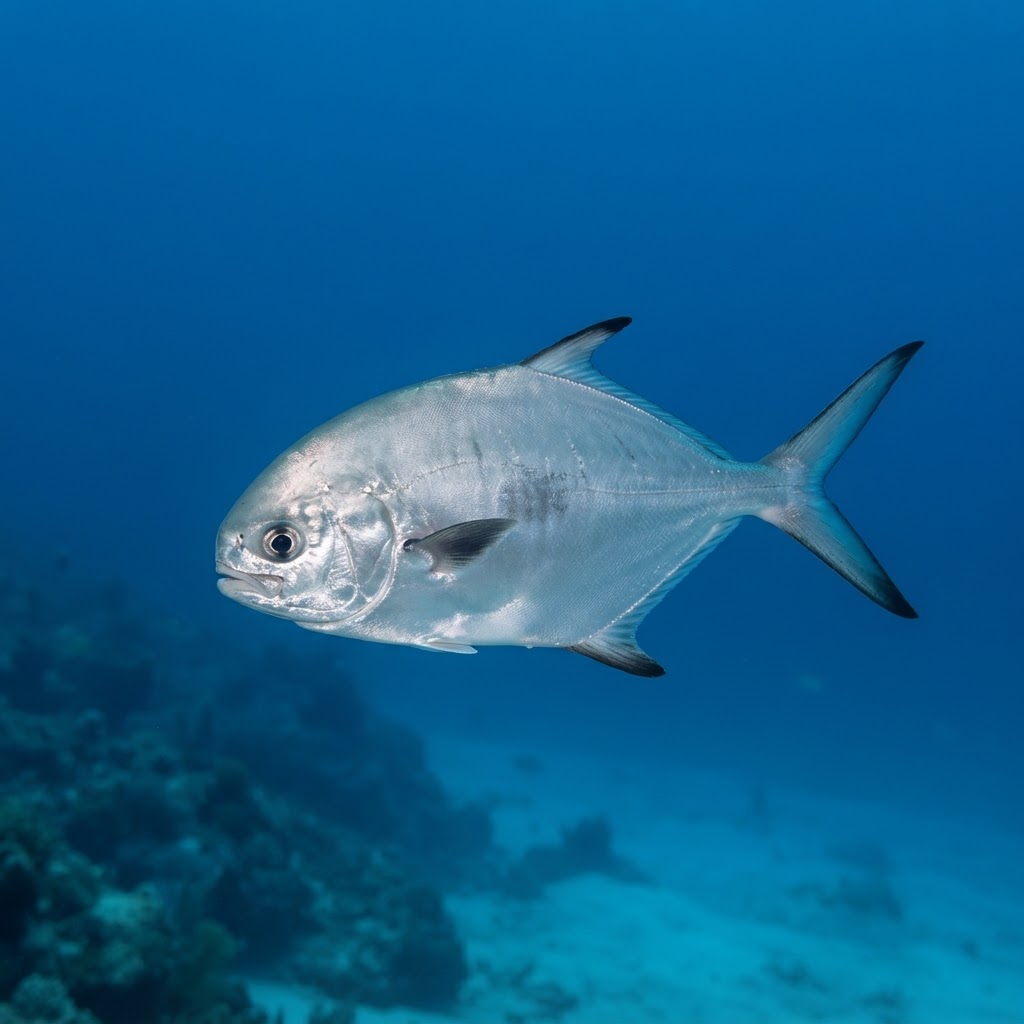
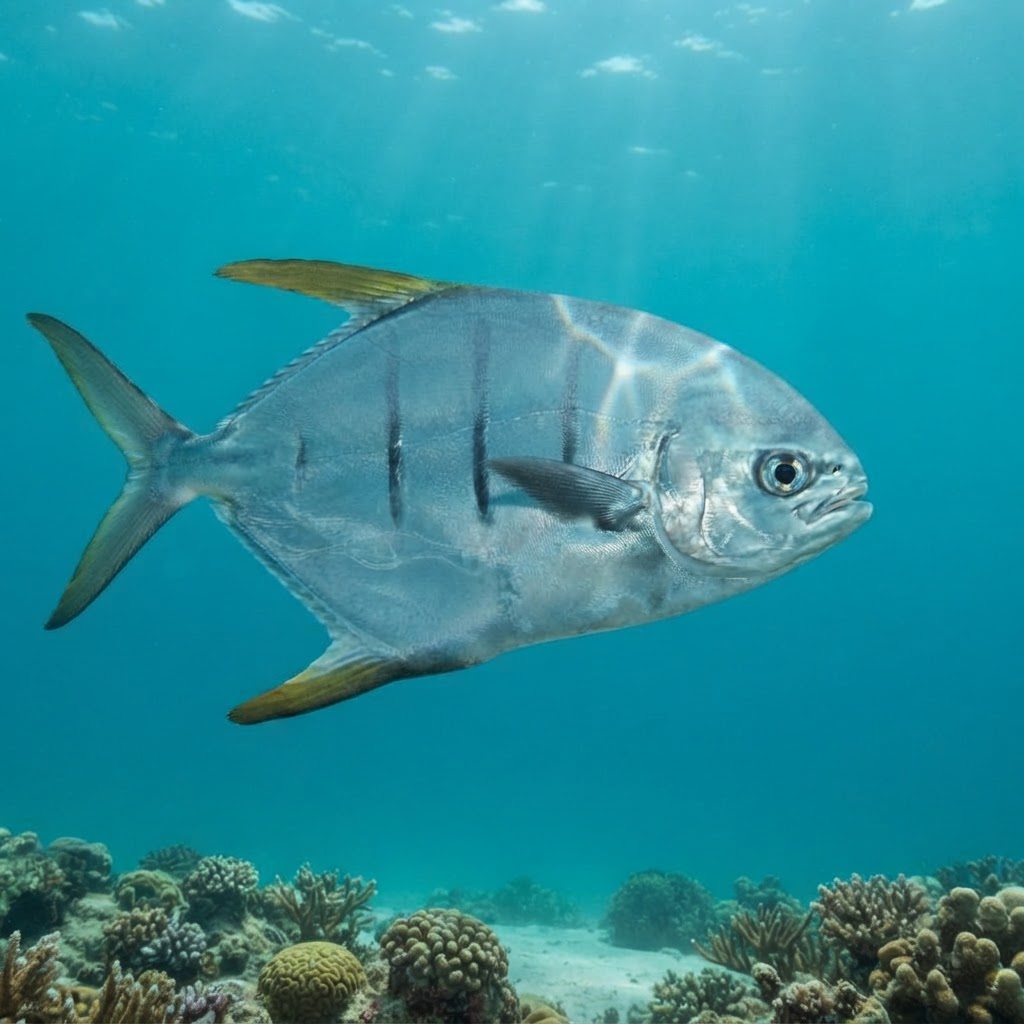
Deep-bodied and silvery with a flattened, disc-like profile typical of pompanos, growing to around 43 cm. The giveaway is the elongated, sail-like filament trailing off the front of the dorsal fin and a similarly extended lobe on the anal fin, which flutter as the fish swims. Look for a faint yellowish wash on the lower flanks and fins against an otherwise plain silver body, with no bold stripes or spots to distract you.
Divers typically spot these pompanos cruising alone or in loose small groups over open sand and rubble patches rather than tight reef structure, often moving at a steady clip in midwater. They're generally uncommon rather than schooling in numbers, and tend to keep a comfortable distance from divers rather than approaching out of curiosity.
That trailing dorsal and anal filament isn't just decorative; it's a shared family trait across pompanos and is thought to help disrupt their outline against open water, making it harder for predators to track a fixed body shape.
Sightings show no clear seasonal pattern, and with a comfortable range of 20.3 to 29.1 C it's logged year-round across its Pacific range rather than during a narrow window.
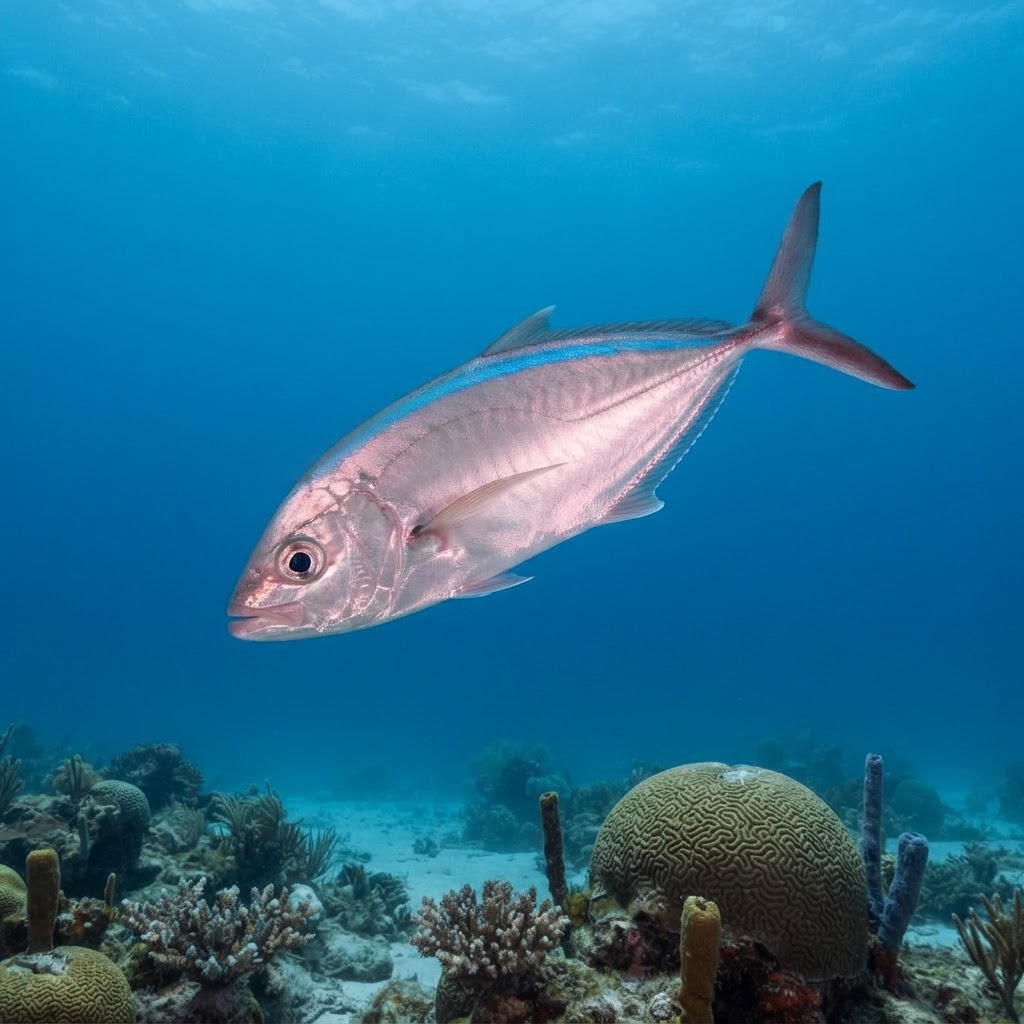
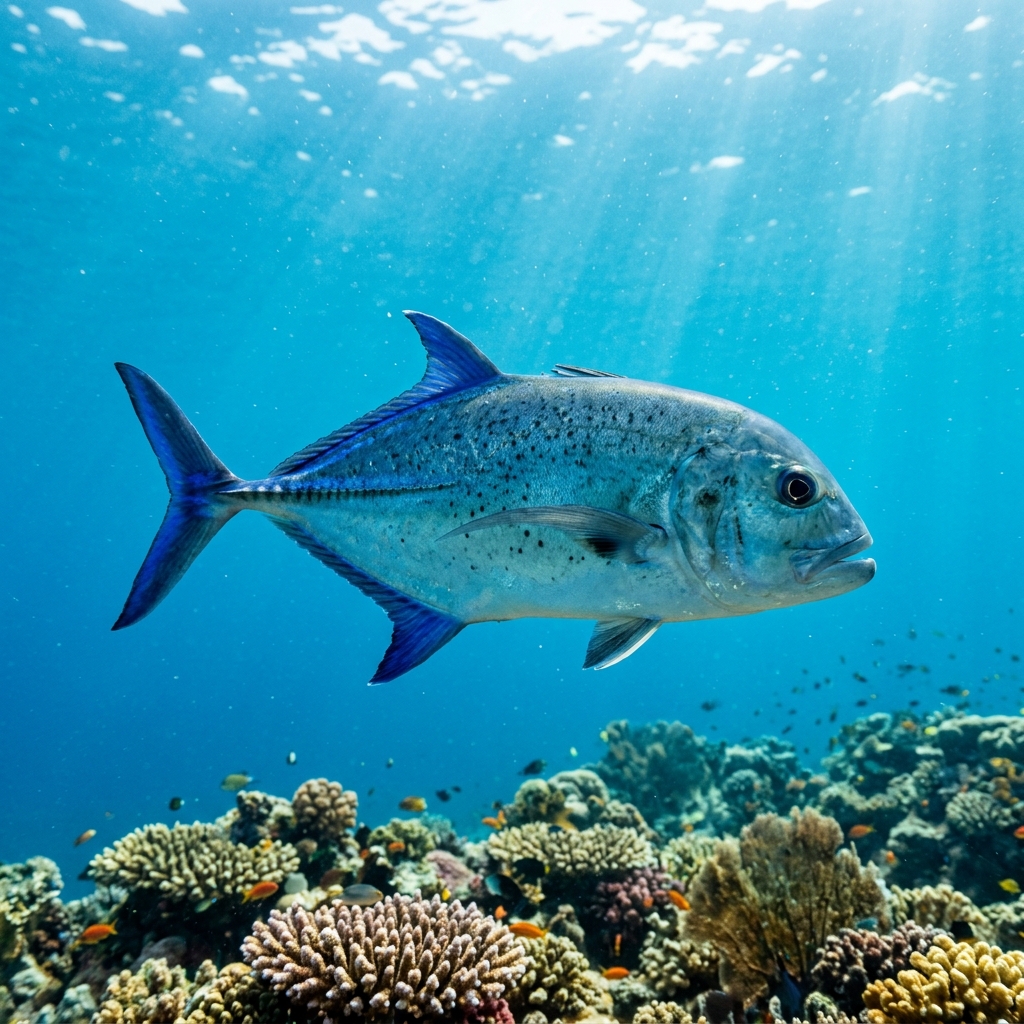
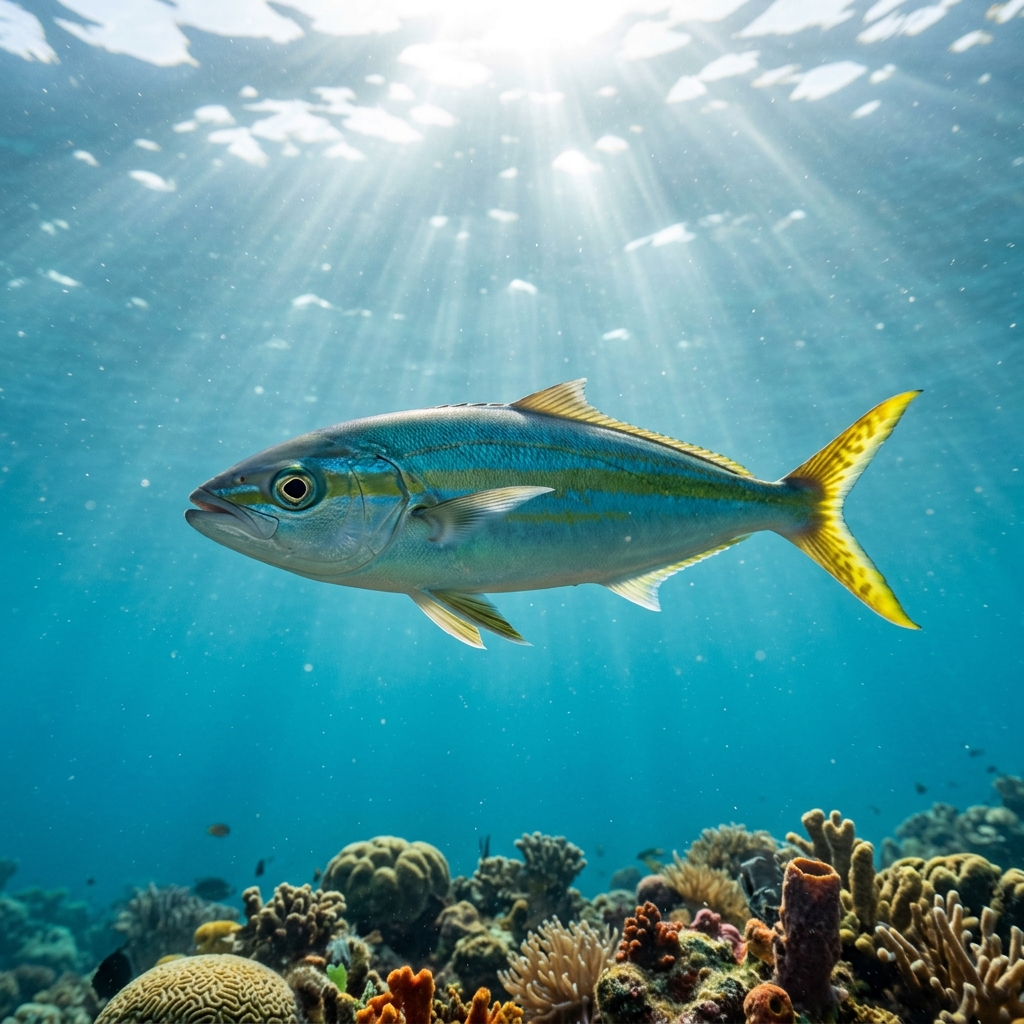
Reef neighbours a diver could mistake it for. Use the identification notes above to tell them apart.
Most consistently logged along Mexico's Baja California coast, followed by Costa Rica's South Pacific and Guanacaste regions, and Panama's Pacific Coast. These are all eastern Pacific sites, so if you're diving the Atlantic or Caribbean side of Central America you won't find this one.
Mapping where Gafftopsail Pompano is logged…
Baja California in Mexico is the strongest region, with good numbers also logged along Costa Rica's South Pacific coast, Guanacaste, and Panama's Pacific Coast. All confirmed sightings are on the eastern Pacific side of Central America.
There's no strong seasonal signal in the data, and the species tolerates a wide temperature band from about 20 to 29 C, so it's a reasonable year-round sighting rather than a seasonal special.
Look for a silvery, deep-bodied fish around 40 cm with a long trailing filament off the front of the dorsal fin and a matching lobe on the anal fin. It usually cruises alone over sand rather than hugging reef structure.
They typically reach around 43 cm in length, a mid-sized member of the jack and trevally family.
No, they pose no threat to divers and tend to keep their distance rather than approach.
Site and sighting data is aggregated from diver logs, iNaturalist and GBIF. For taxonomy and conservation status:
Bigeye Trevally
2,591 sites