Fromia monilis
Spot the Peppermint Sea Star across Sipadan, Palau's Rock Islands and Bali in warm 26-29 °C water. Tips on ID, seasonality and top dive sites.
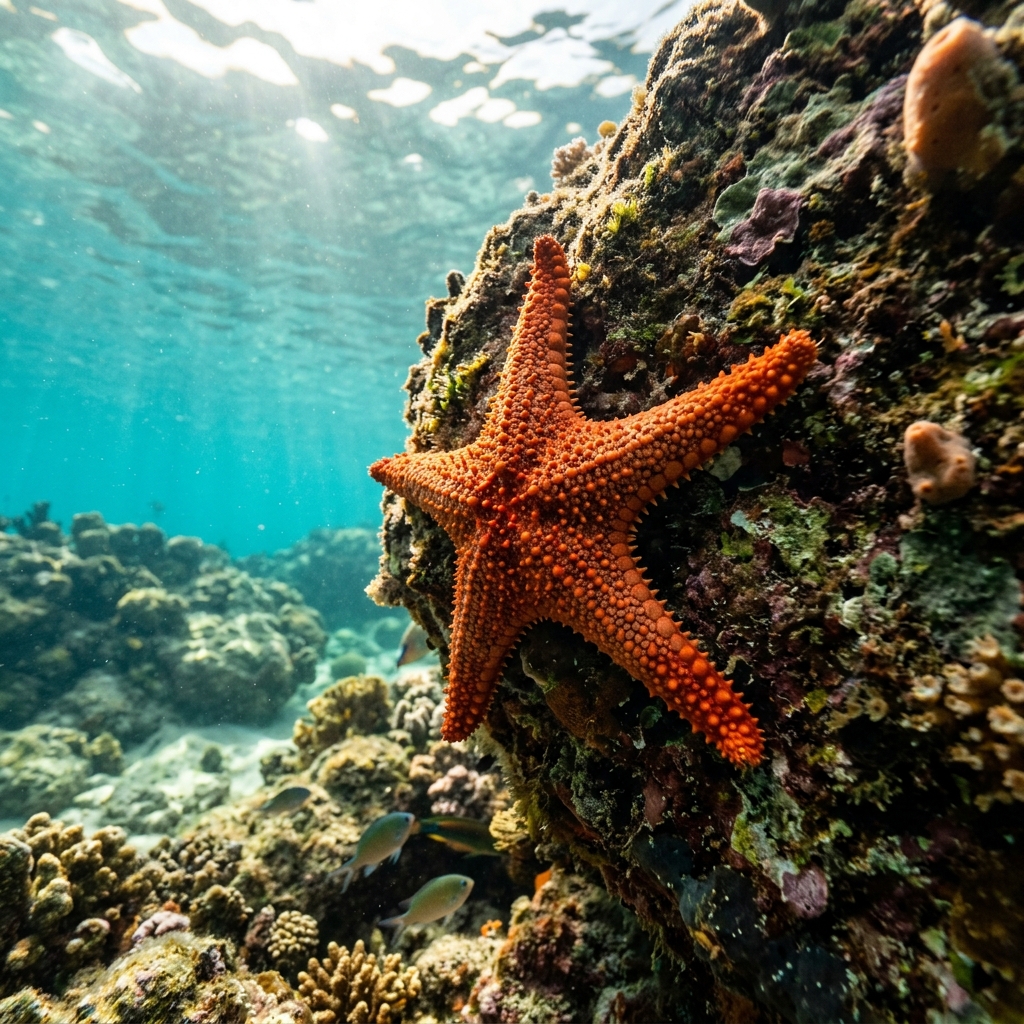
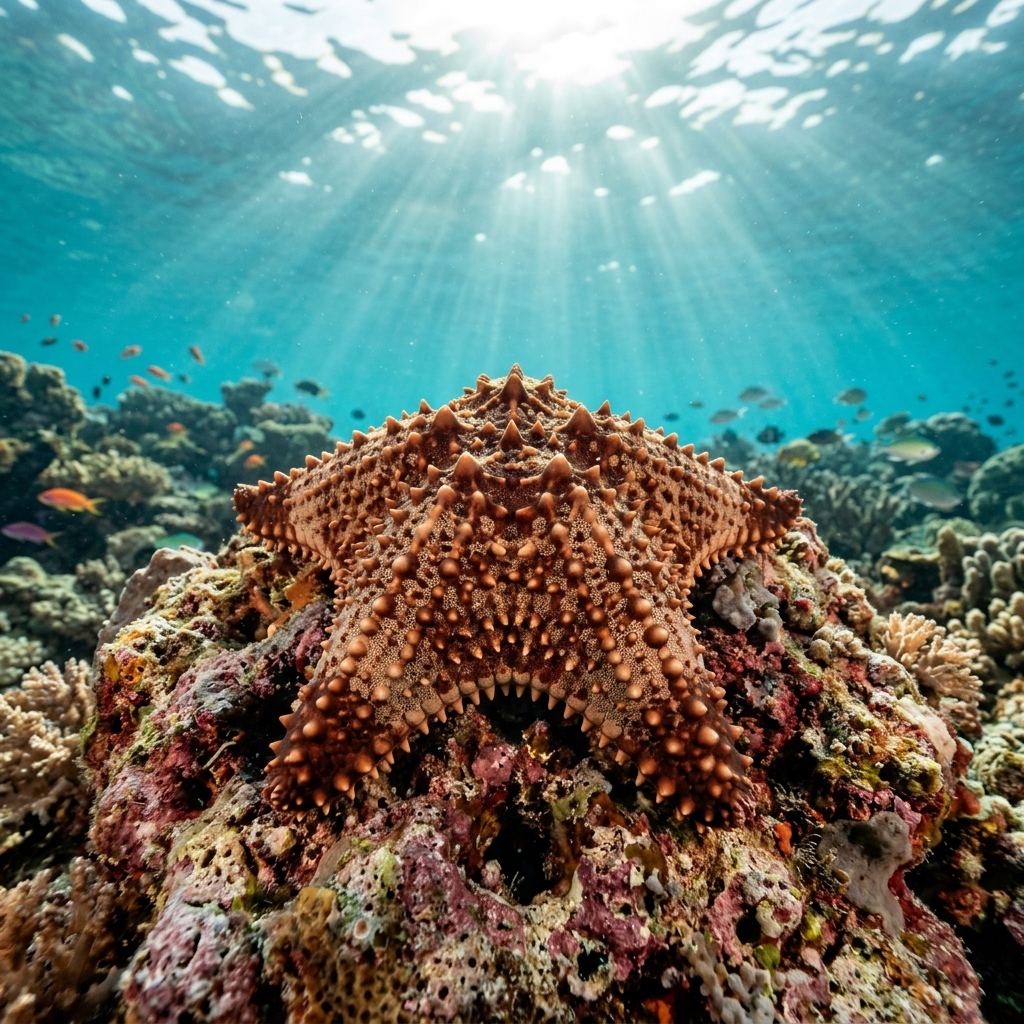
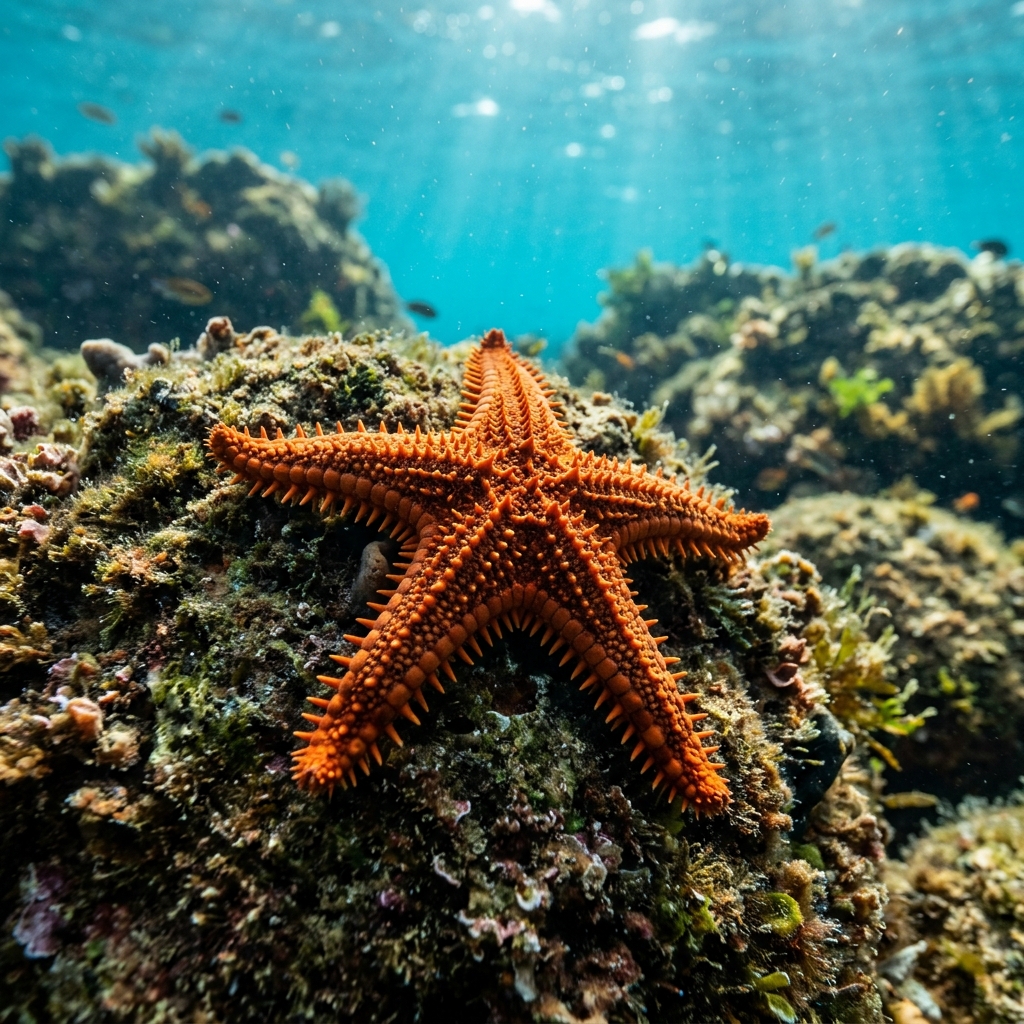
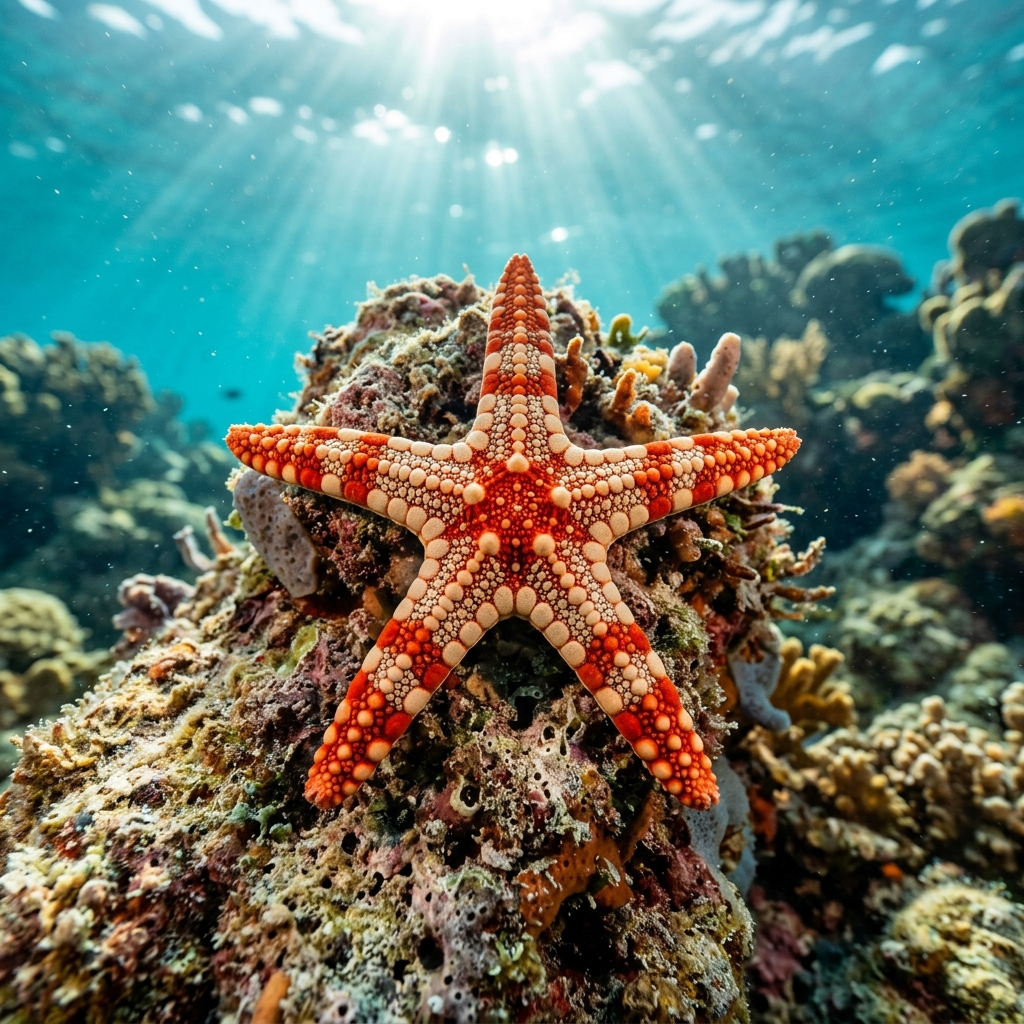
Bold orange-red to brick-red colouration with a network of pale, rounded tubercles (bumps) tipping each plate gives this sea star a distinctive mottled pattern that stands out against the reef. Five relatively slender arms radiate from a small central disc, and the overall look is noticeably tidier and more geometric than most Indo-Pacific sea stars. The contrasting pale spots on a vivid base colour are the key field mark, no other common reef star in the region combines that exact orange-and-white patchwork.
You'll most often find this sea star moving slowly across hard coral rubble, reef walls, or sandy substrate in the shallows to mid-water, foraging over sessile organisms. It pays little attention to divers and tends to stay pressed flat against whatever surface it is crossing. Sightings are typically solitary, encountering more than one in a dive is worth noting.
Like many goniasterid sea stars, Fromia monilis is thought to feed primarily on microorganisms, detritus, and thin organic films coating reef surfaces rather than preying on larger invertebrates, making it a low-key but useful reef cleaner.
Seasonality data for this species is limited, but the available Northern Hemisphere records concentrate between November and April, which aligns with the cooler end of its warm-water preference. In core tropical sites like Sipadan or Palau, the species is present year-round given the consistently warm 26-29 °C water temperatures.
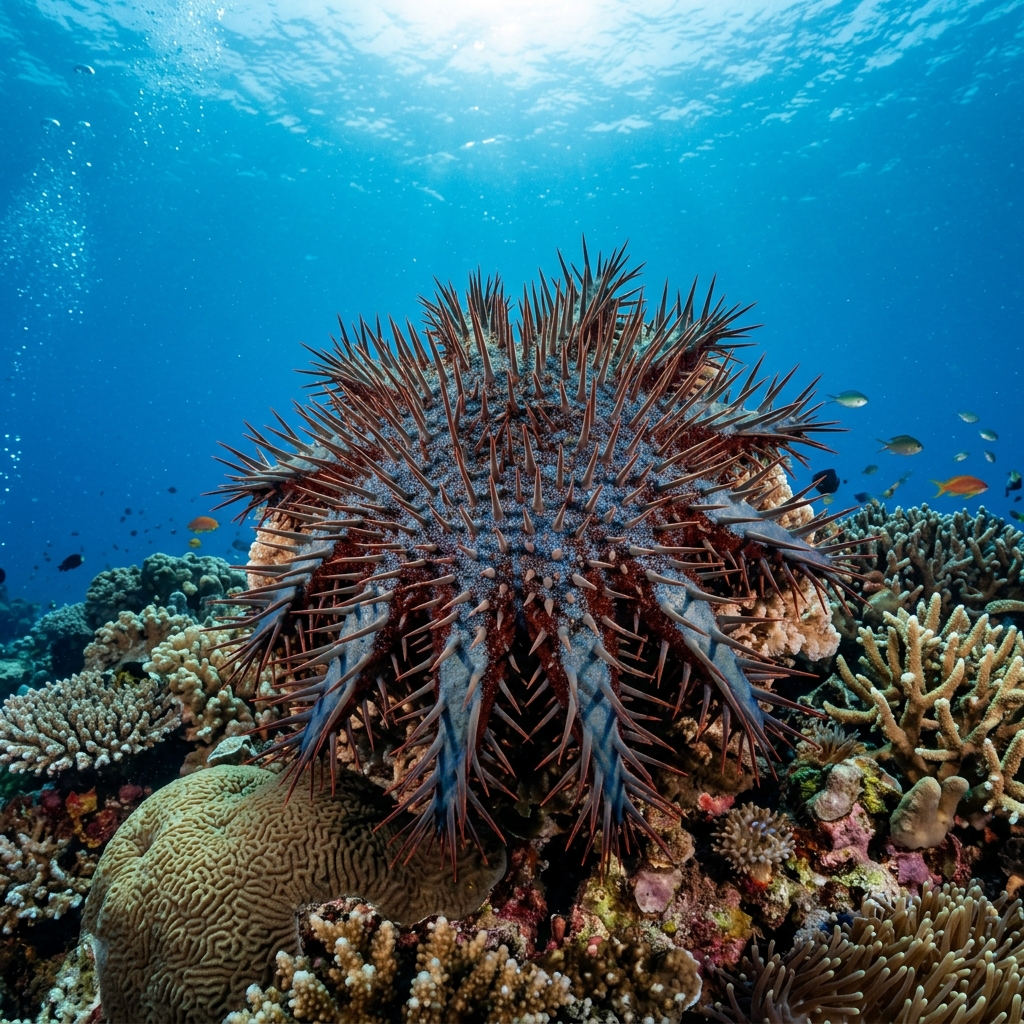
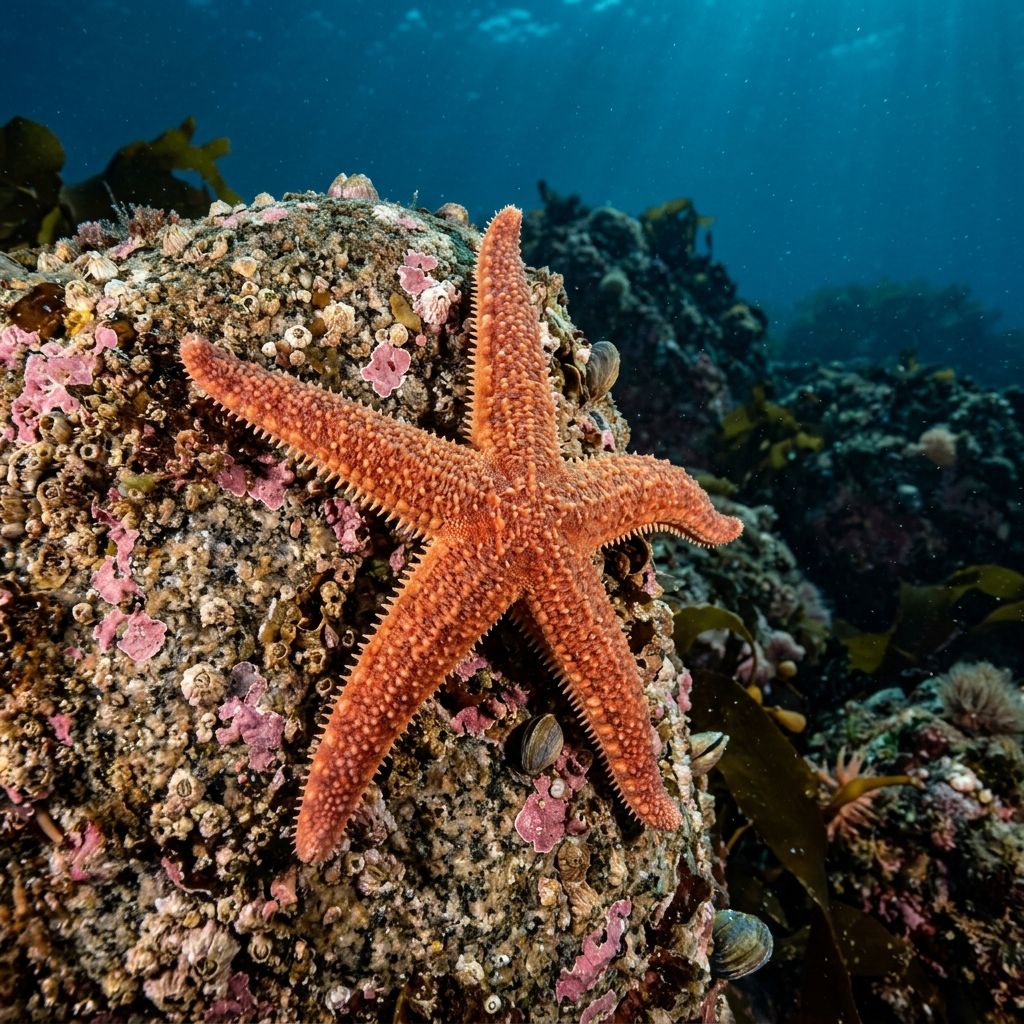
Reef neighbours a diver could mistake it for. Use the identification notes above to tell them apart.
Most sightings come from Malaysia, particularly Sipadan and the broader East Sabah reefs, which account for the largest share of logged sites by a wide margin. Indonesia is the second-strongest destination, with records spread across Nusa Tenggara, the Banda Sea, Sulawesi, and Bali. Palau's Rock Islands and Koror reefs, along with the northern Philippines, also produce regular encounters.
Mapping where Peppermint Sea Star is logged…
The strongest concentration of sightings is in Sipadan and East Sabah, Malaysia. Indonesia, especially Nusa Tenggara, Sulawesi, and Bali, is the next best bet, followed by Palau's Rock Islands and the northern Philippines. Australia and Vanuatu have a smaller number of recorded sites.
Northern Hemisphere records suggest November to April is the most productive window. In year-round tropical destinations such as Sipadan or Palau, where water stays consistently above 26 °C, you have a reasonable chance at any time of year.
Look for five slender arms on a small central disc, vivid orange-red to brick-red colouration, and a neat pattern of pale rounded bumps covering the upper surface. That orange-and-white patchwork is distinctive and separates it from most other Indo-Pacific sea stars at a glance.
Across the sites where it is recorded, sightings are most often rated as uncommon or rare, with only a small proportion of sites reporting it as common. You should treat any sighting as a nice find rather than something you can reliably plan around, even in top locations like Sipadan.
Site and sighting data is aggregated from diver logs, iNaturalist and GBIF. For taxonomy and conservation status:
Common Sea Star
2,271 sites