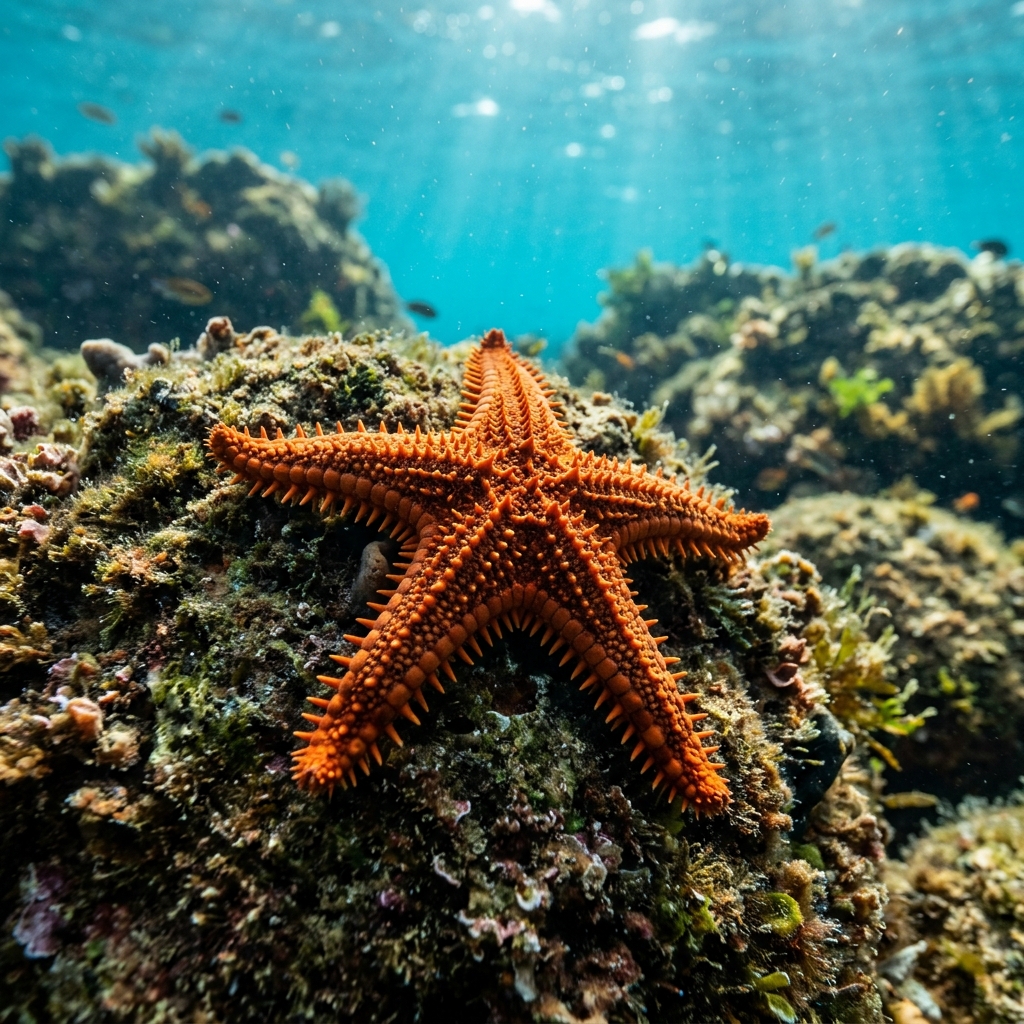
Fromia indica
Spot the Blocked Sea Star in Queensland, Fiji, and Mozambique. A rare but rewarding find on tropical reefs between 23-29°C. Here's what to look for.
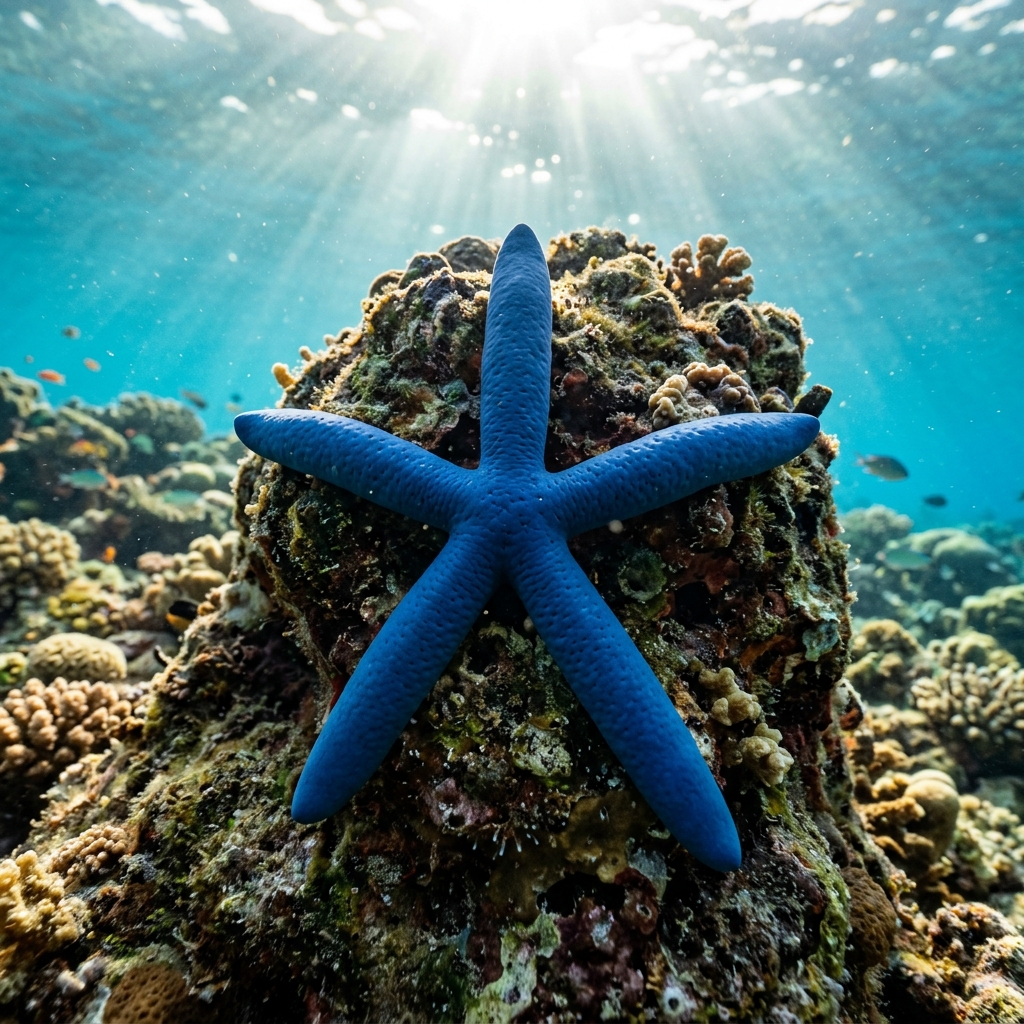
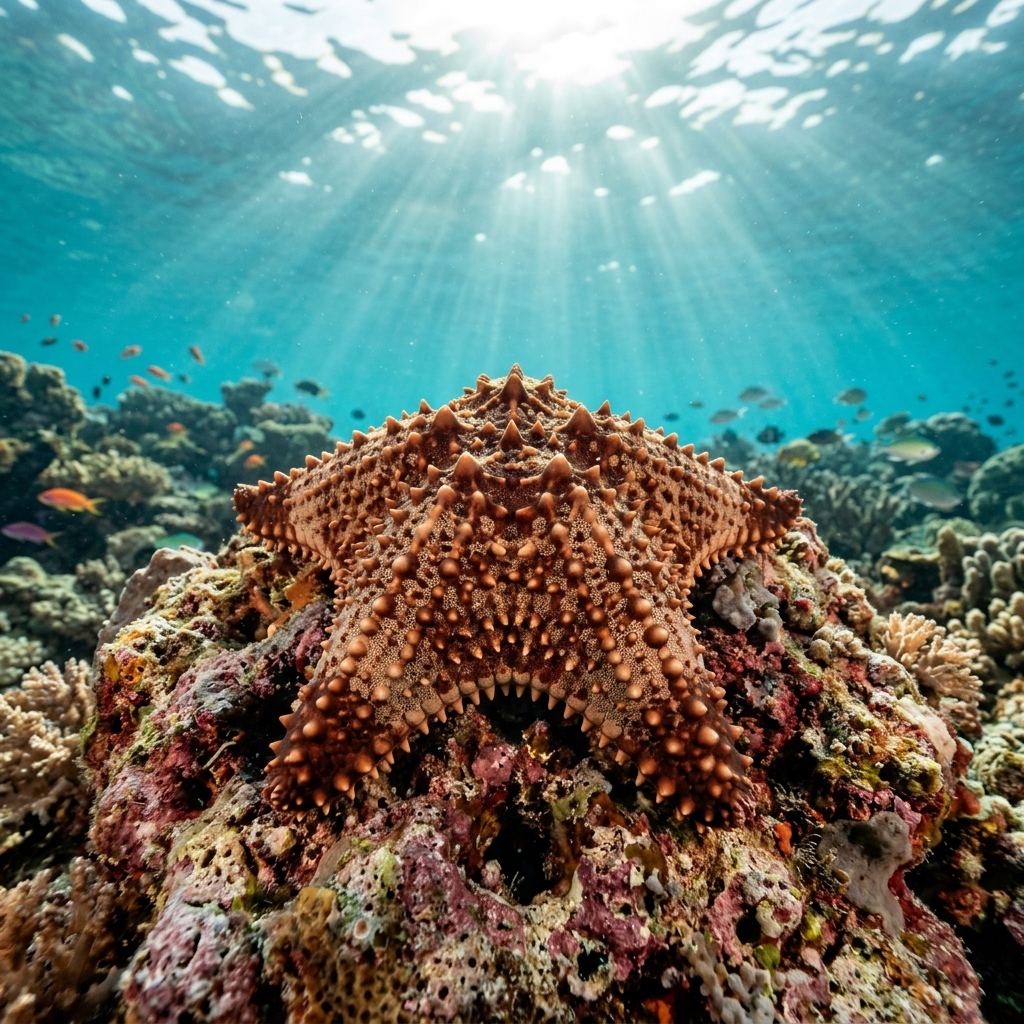
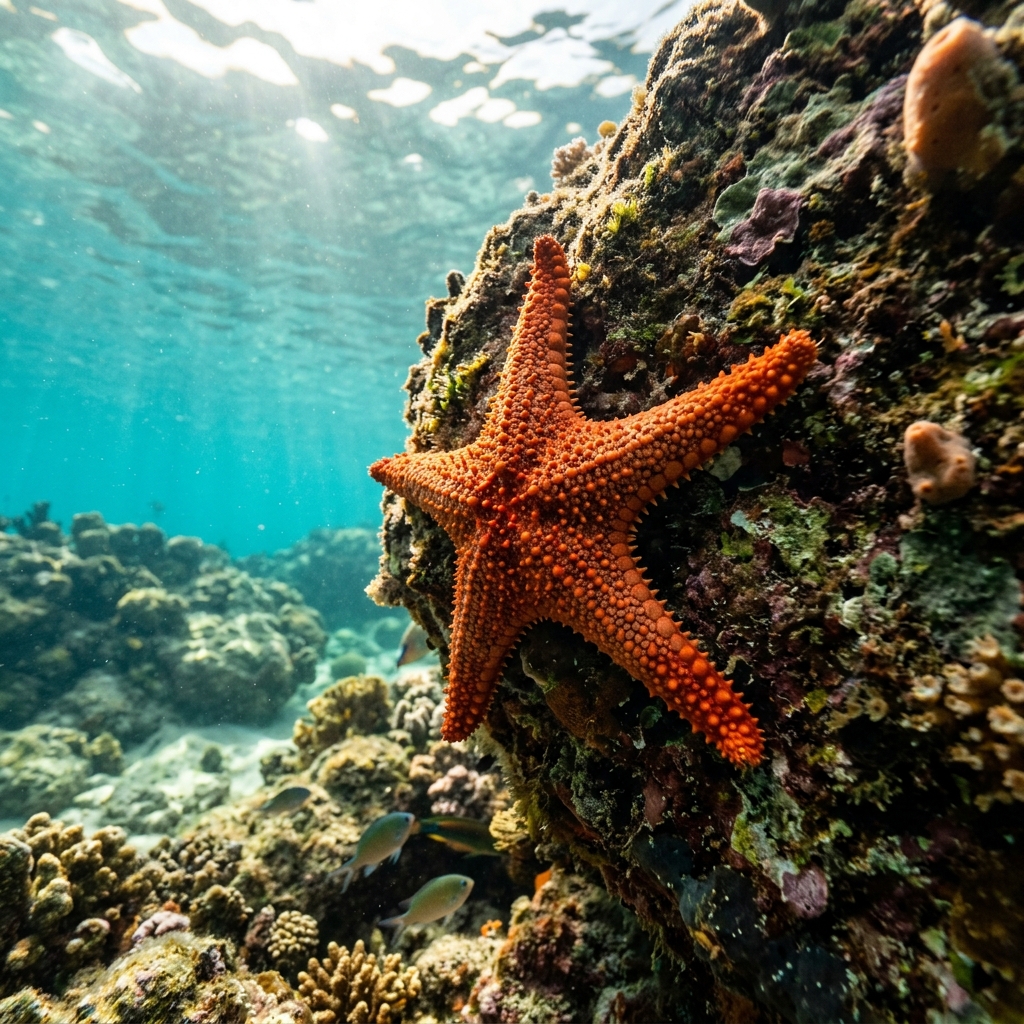
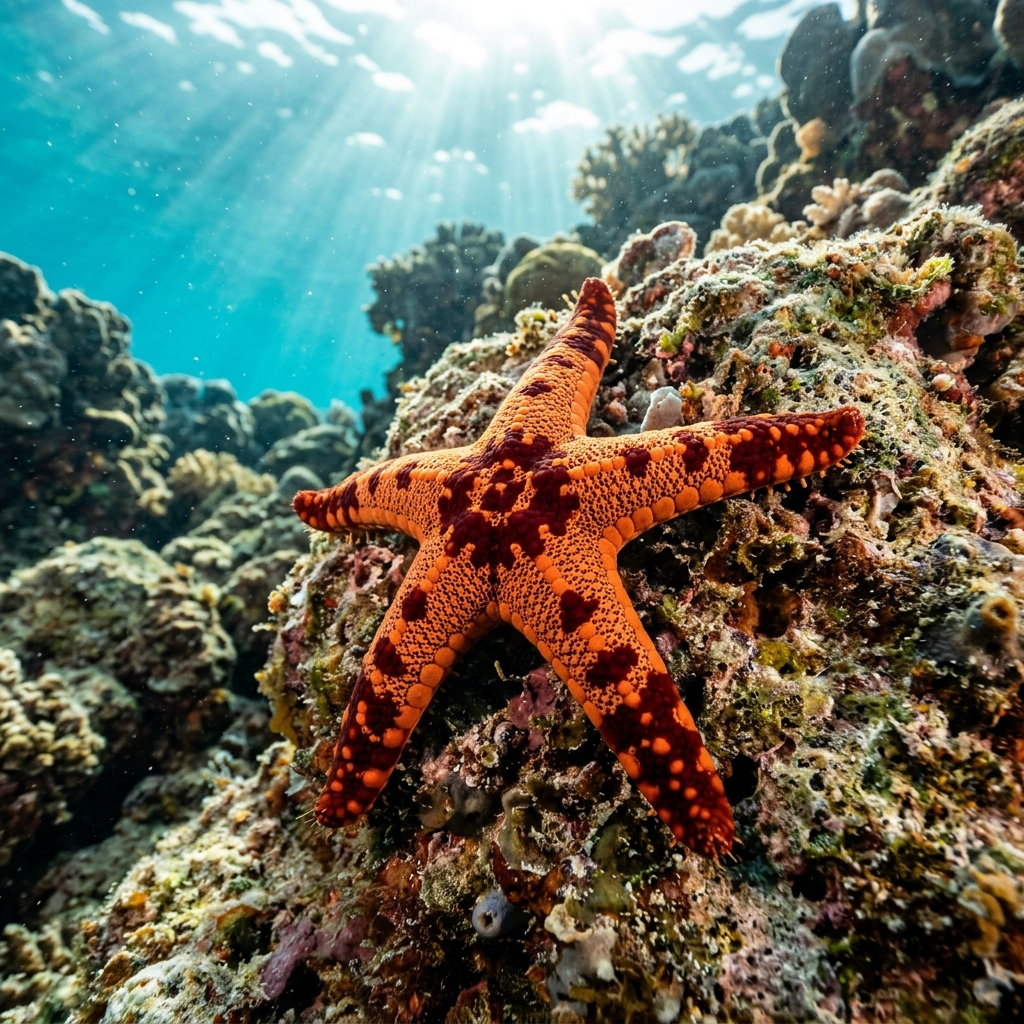
A small, five-armed sea star with a vivid red to orange base colour broken up by a distinctive pale or cream block-like patterning across the arms and central disc, the 'blocked' markings are the key field feature that sets it apart underwater. The arms are relatively slender and taper to rounded tips. Compared to many reef sea stars, it sits low and flat against the substrate, so look for that geometric colour contrast rather than body shape alone.
Blocked sea stars are typically encountered moving slowly across hard reef, rubble, or sandy reef margins, grazing on encrusting organisms. They tend to ignore divers entirely, slow-moving and unhurried, they stay put even when approached closely, which makes careful observation straightforward. Look along the base of coral structures and on rubble patches in moderate depths, where the colour contrast against pale substrate can make them easier to pick out.
Like other Fromia sea stars, it can regenerate a lost arm, a process that may take months but leaves clear visual evidence on individuals you encounter, with one arm noticeably shorter or differently coloured during regrowth.
No clear seasonal peak has emerged from the data, so it is treated as a year-round resident. Its observed temperature range of 23-29°C aligns with permanently warm tropical and subtropical reefs, meaning conditions are generally suitable across all seasons wherever it occurs.
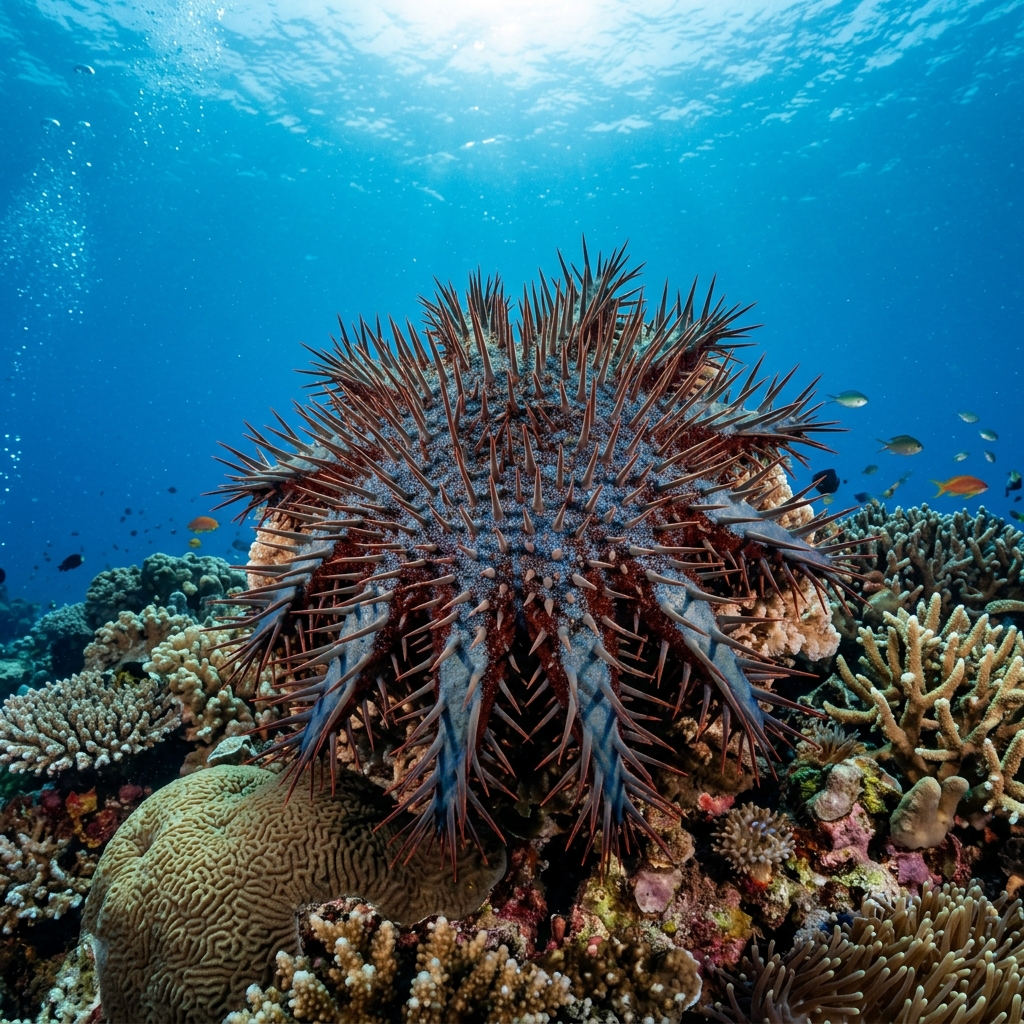
Reef neighbours a diver could mistake it for. Use the identification notes above to tell them apart.
Most logged in Queensland, Australia, which accounts for the largest share of sightings by a considerable margin, the Great Barrier Reef and surrounding reefs are the strongest bet. Outside Australia, it turns up across Taveuni and the Yasawa Islands in Fiji, throughout Bali, Lombok and Java in Indonesia, and in the Ponta do Ouro area of Mozambique, with a smaller presence along the Durban north coast of South Africa and in New Caledonia.
Mapping where Blocked Sea Star is logged…
Queensland, Australia holds by far the most sightings, making it the most reliable region. Further afield, divers have logged it around Taveuni and the Yasawa Islands in Fiji, across Bali, Lombok and Java in Indonesia, in Ponta do Ouro in Mozambique, and along the north coast of South Africa near Durban.
There is no confirmed seasonal peak, available data points to year-round presence. It favours water temperatures between 23 and 29°C, so any time you are diving warm tropical or subtropical reefs in the regions where it occurs is a reasonable time to look.
Look for a small five-armed star with a red or orange body broken by pale, block-like patches across the arms and disc. That contrasting geometric patterning is the standout feature. It sits flat and low on the reef, so scan rubble and hard coral bases carefully.
It is not an easy find. Across all sites where it has been recorded, it is rated rare at the majority of locations and uncommon at most of the rest. Patience and slow, methodical searching along the reef base gives you the best chance.
Site and sighting data is aggregated from diver logs, iNaturalist and GBIF. For taxonomy and conservation status:
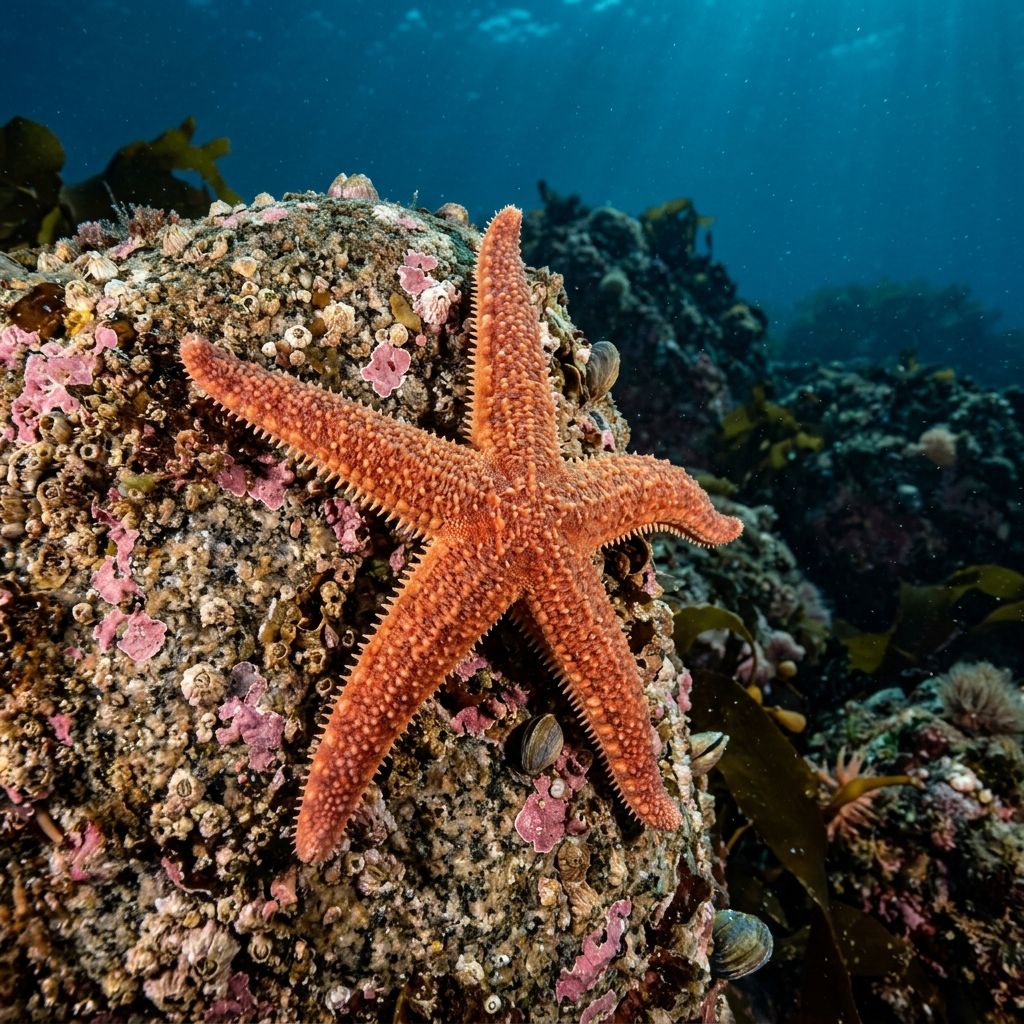
Common Sea Star
2,271 sites