Sebadoris fragilis
A small, uncommon dorid rarely logged outside Milne Bay, Papua New Guinea, on warm reefs between 22 and 29C.
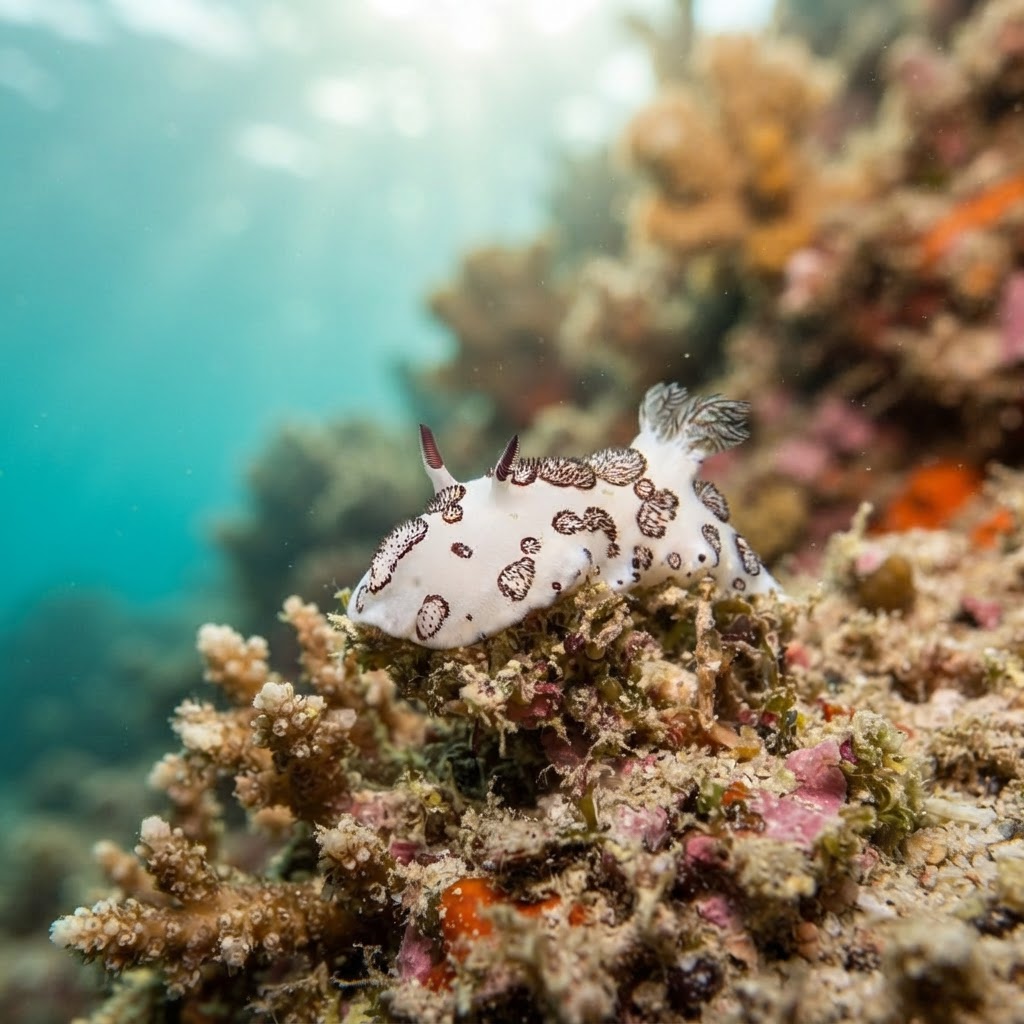
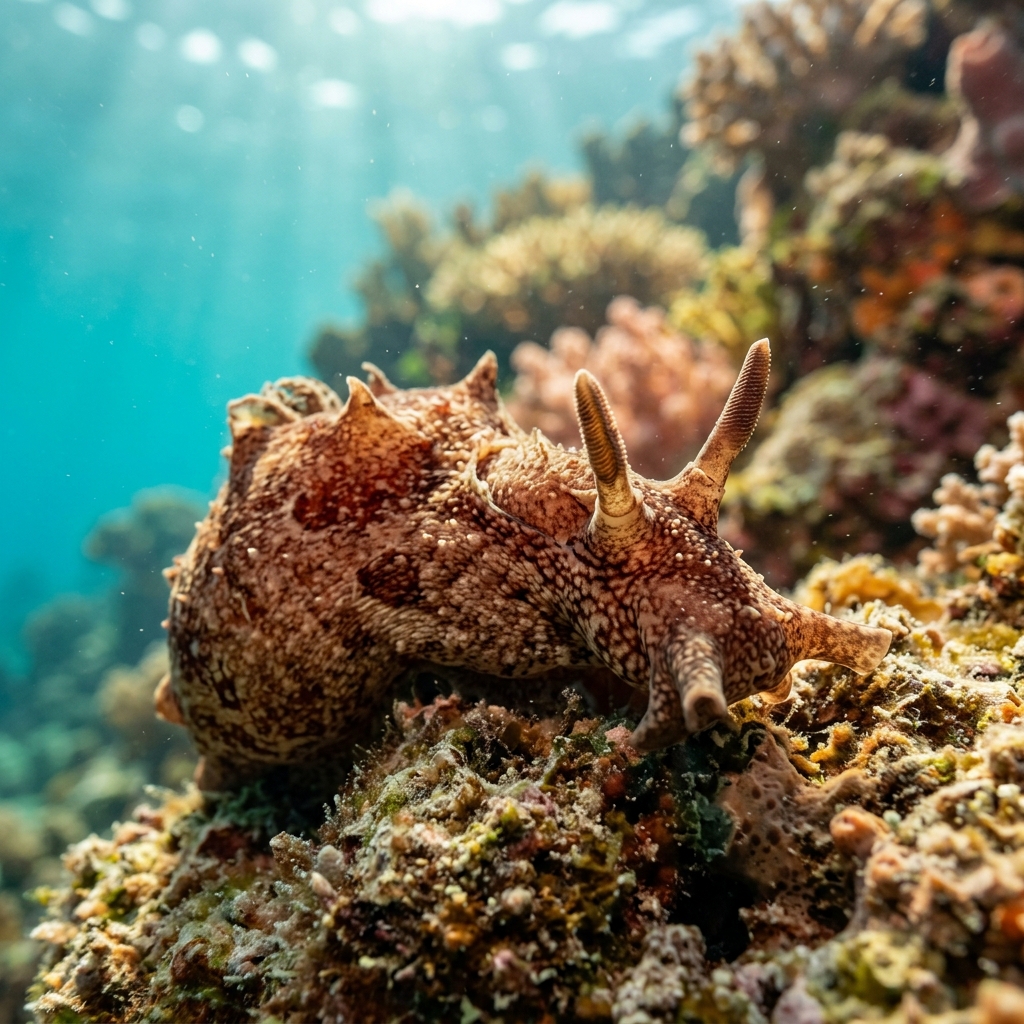
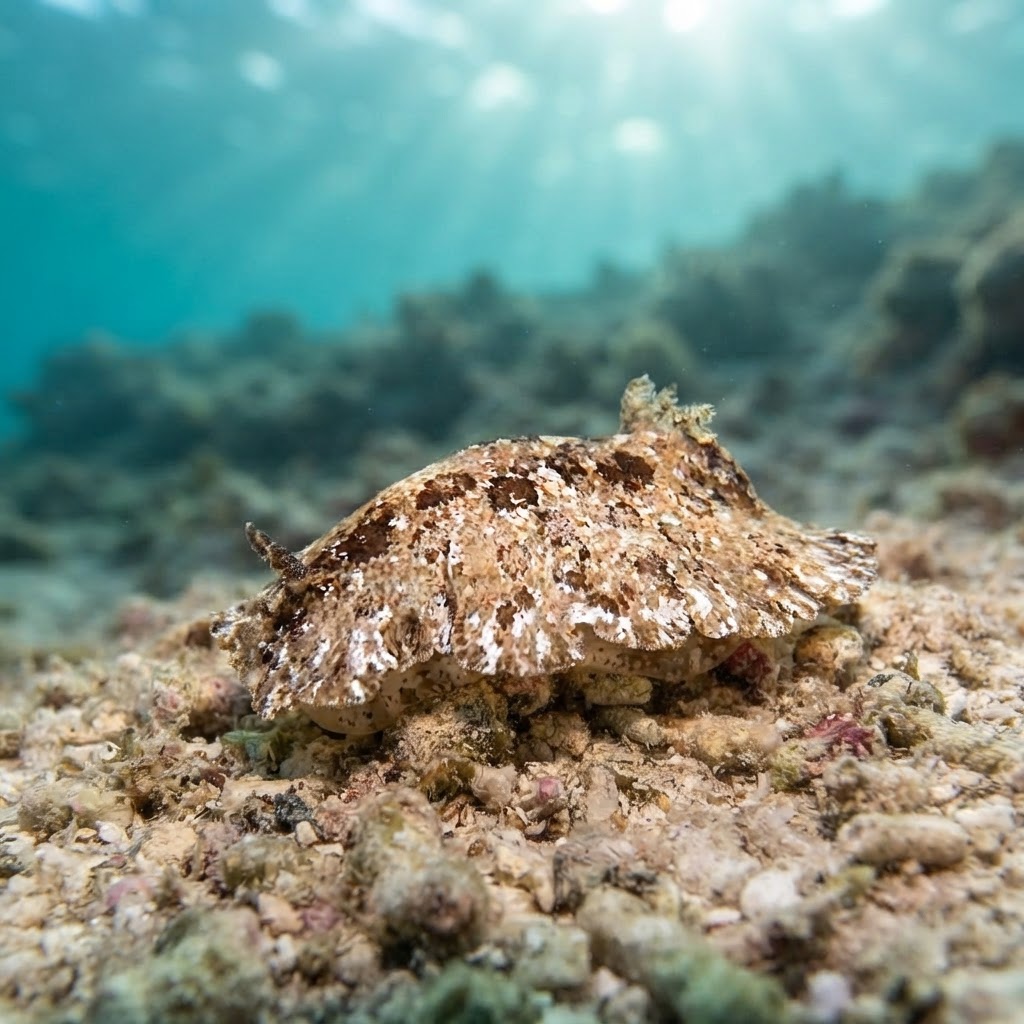
A small dorid nudibranch topping out around 7 cm, with a soft, textured mantle and a body shape typical of the discodorid family: broad, low, and rounded rather than elongated. Look for the pair of feathery gills toward the rear and short rhinophores (sensory tentacles) up front, the two features most divers actually use to confirm a dorid ID. Colouring tends toward mottled, muted tones rather than the loud stripes or spots seen on many reef nudibranchs, which is part of why it is easy to miss on a rubble or sponge-covered bottom.
Like most dorids, it moves slowly across the substrate grazing on sponges, which is where its muted colouring works as camouflage against rubble and encrusting growth. Divers log it as an uncommon find, meaning it takes a deliberate slow, close look at the reef floor rather than a casual swim-by to spot one. It shows no reaction to divers beyond continuing its unhurried crawl, so a careful macro photographer can usually get close without disturbing it.
Like other dorid nudibranchs, it likely feeds on specific sponge species, absorbing compounds from its diet that may help make it unpalatable to predators, a common defence strategy across the family.
Sightings don't show a detectable season, and with a water-temperature niche of roughly 22 to 29C it's living on reefs that stay warm year-round, so there's no particular month to target. Plan around when you're diving Milne Bay generally rather than chasing a seasonal window for this species specifically.
Reef neighbours a diver could mistake it for. Use the identification notes above to tell them apart.
Most records come from Milne Bay in Papua New Guinea, which stands out as the strongest area for this species by a clear margin. Single sightings also come from Nouméa in New Caledonia and Kwajalein Atoll in the Marshall Islands, so it turns up as an occasional find well outside PNG too.
Mapping where Fragile Discodoris is logged…
Milne Bay in Papua New Guinea is by far the most reliable region, with additional single records from Nouméa in New Caledonia and Kwajalein Atoll in the Marshall Islands.
There's no clear season in the sighting data, and its warm-water niche of about 22 to 29C means it's present on tropical reefs throughout the year.
Look for a small, roughly 7 cm dorid with a broad, low, mottled body, short rhinophores up front, and a cluster of feathery gills near the rear. Its muted colouring blends into rubble and sponge-covered substrate, so a slow, close search is usually needed to spot one.
They reach about 7 cm, a fairly average size for a dorid nudibranch, making them a macro-lens subject rather than something spotted from a distance.
No, they pose no danger to divers. They move slowly, have no venomous spines or stinging cells that affect humans, and can be observed and photographed safely at close range.
Like many dorid nudibranchs, it likely feeds selectively on certain sponges and may incorporate defensive compounds from that diet into its own tissue, a strategy that helps deter predators.
Site and sighting data is aggregated from diver logs, iNaturalist and GBIF. For taxonomy and conservation status:
Light-spotted Aegires
3,168 sites