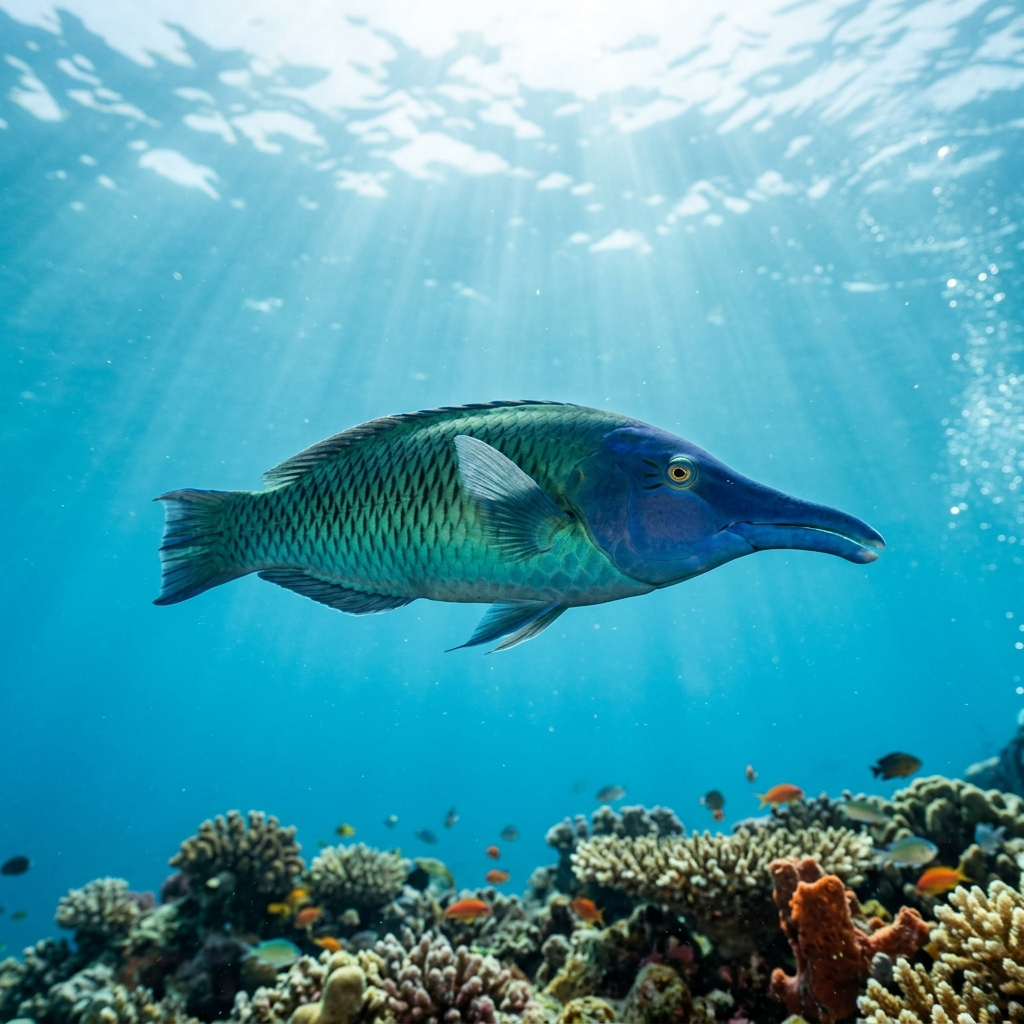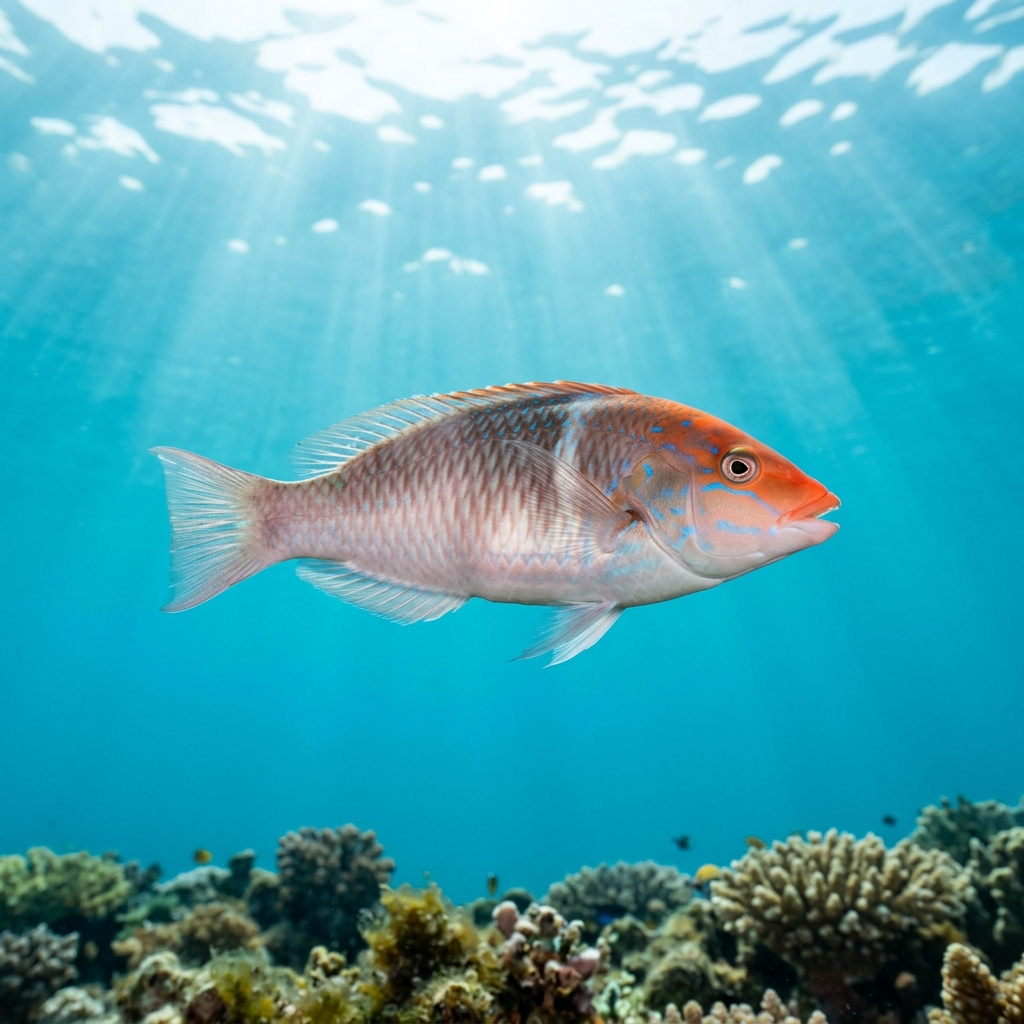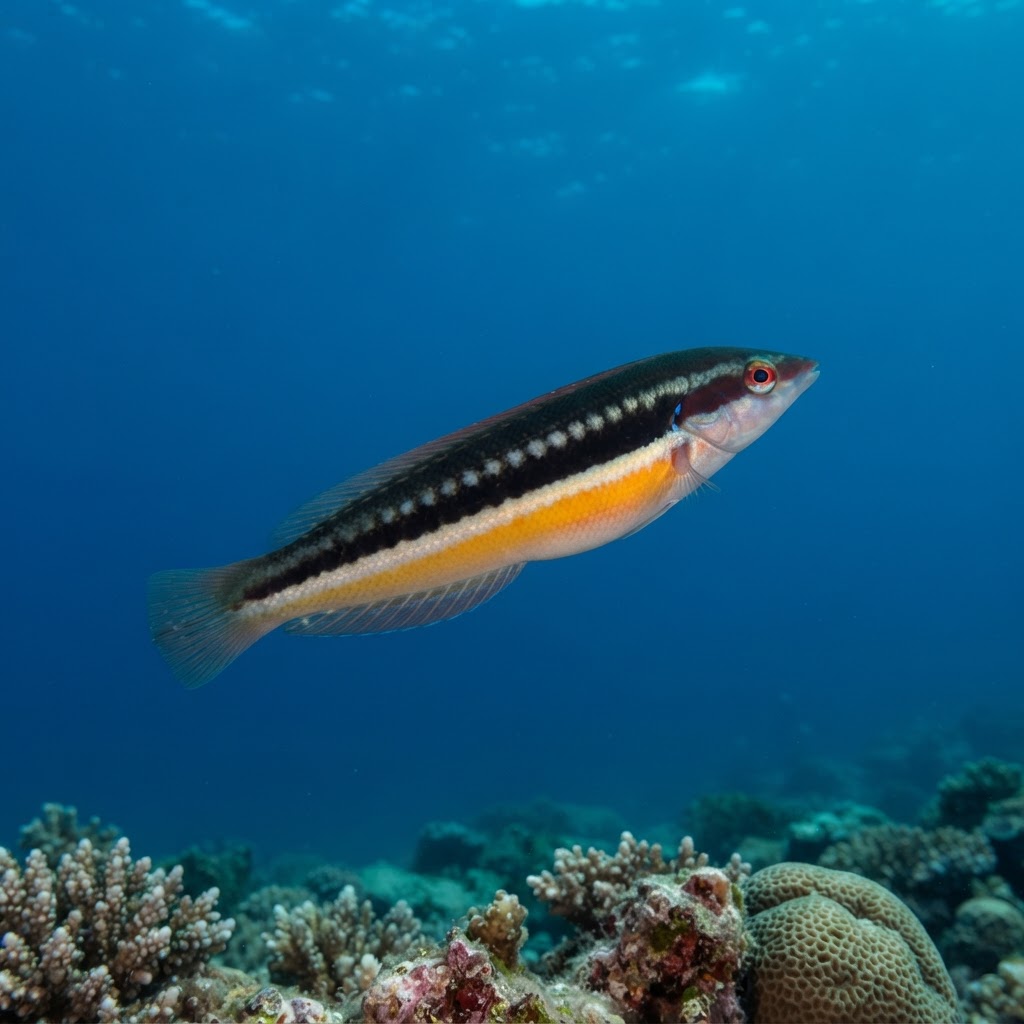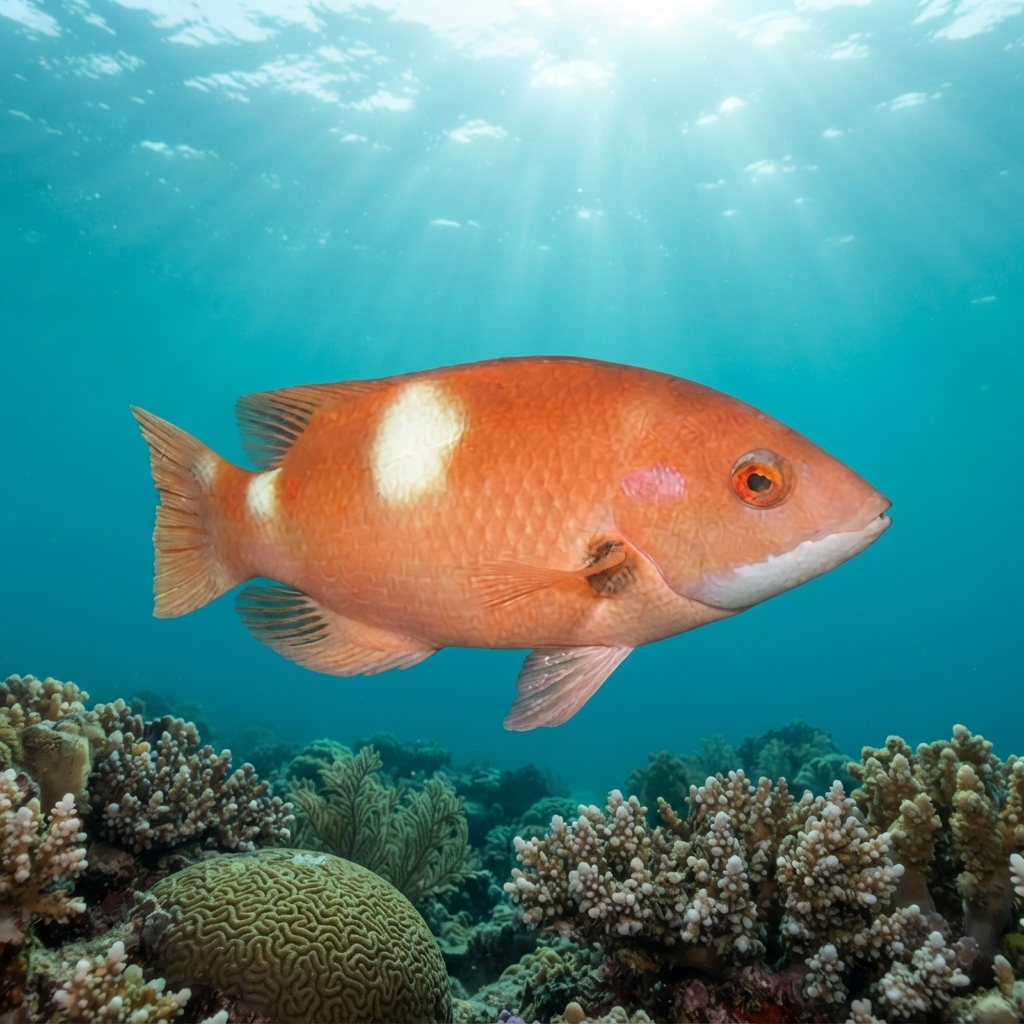
Bodianus frenchii
Rare but rewarding: foxfish turn up on reefs across Western Australia in 17 to 23C water, year-round.
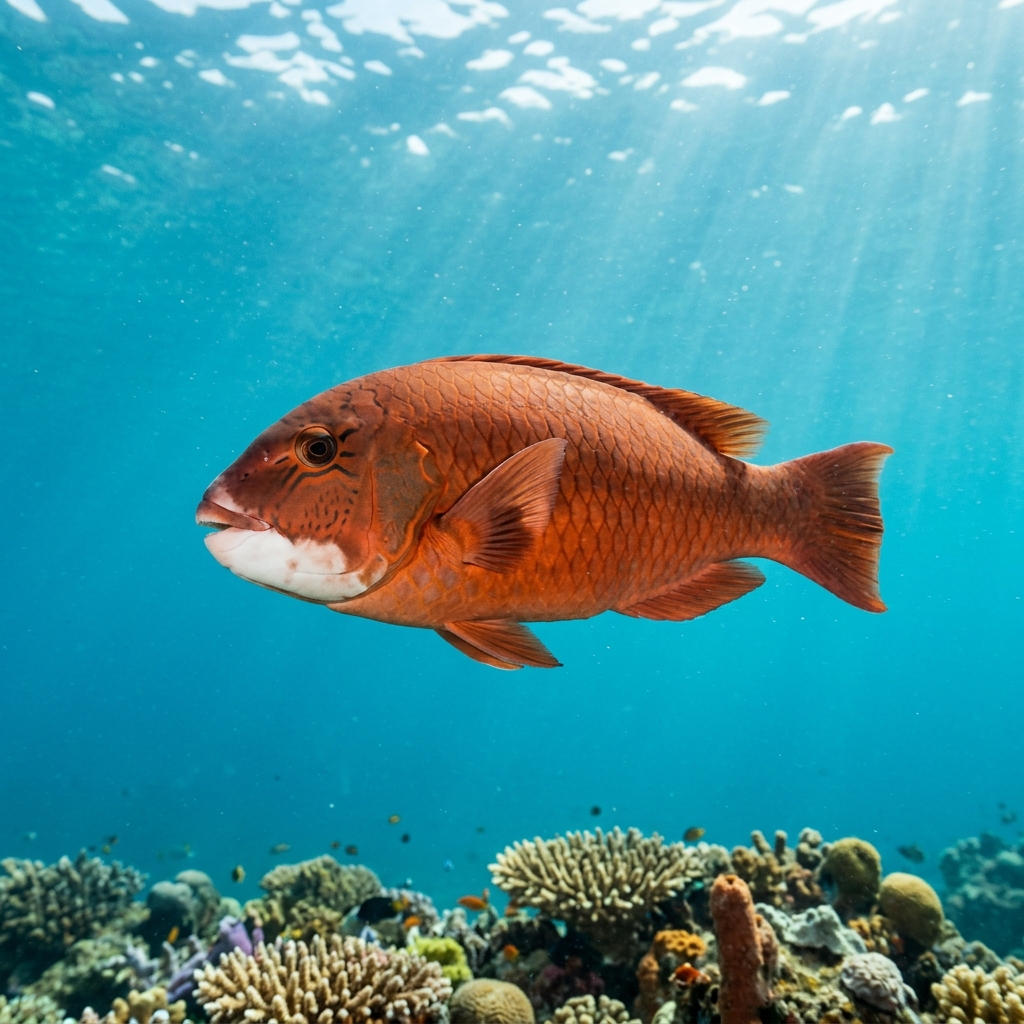
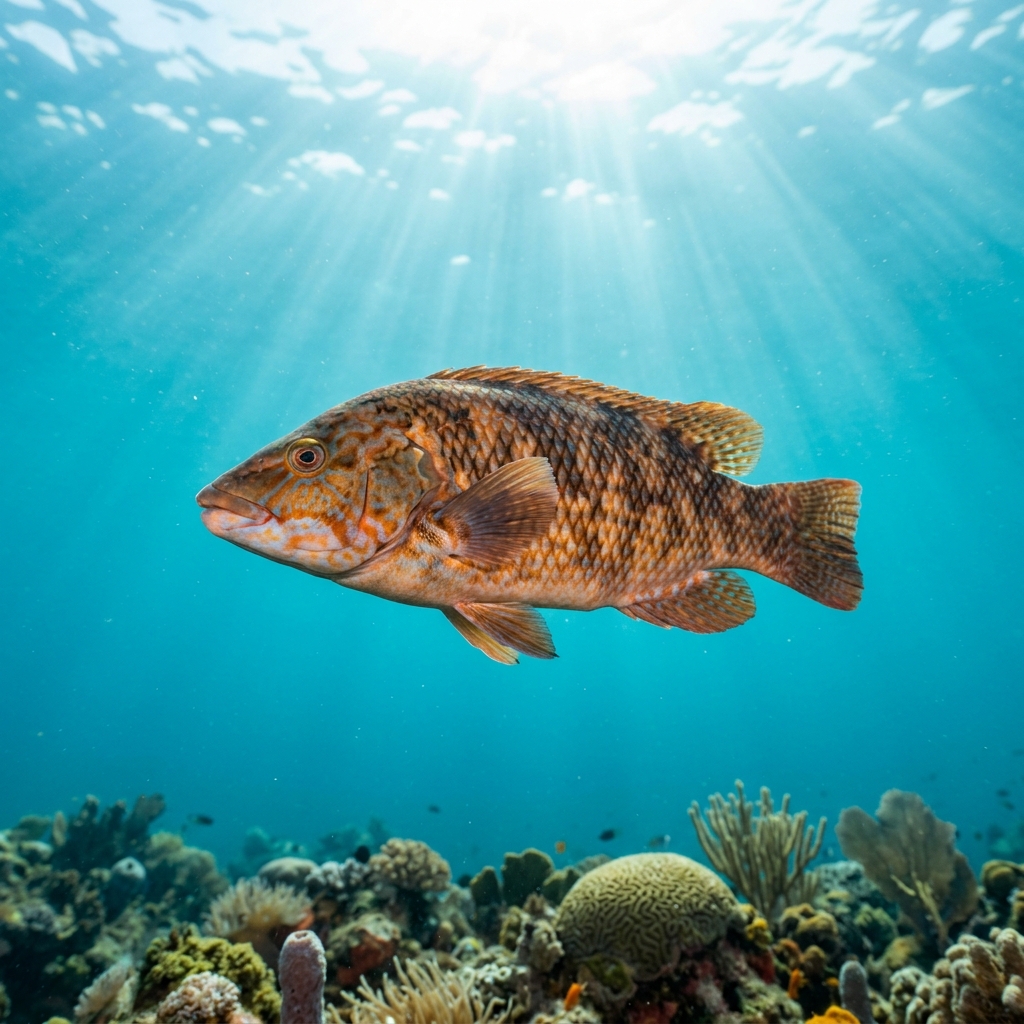
Grows to around 31 cm, with a deep-bodied, slightly humped profile typical of the wrasse family. Adults show a reddish to orange-brown body broken up with pale, blotchy patches, and a steep forehead that gives the face a blunt, almost snub-nosed look. Look for it hovering close to reef structure rather than out in open water, where its patchy colouring breaks up its outline against rock and sponge.
Divers typically find foxfish tucked close to reef structure, ledges, and rocky outcrops rather than cruising in the open, matching its low-key, rarely-to-uncommonly-seen status at most sites. It's not a fish that rushes off when divers approach, but it's not bold either, more likely to hold its position near cover and let you come to it. Look for it working over rock and sponge habitat where its blotched colouring keeps it camouflaged.
Like many wrasses in the Bodianus genus, foxfish are thought to change sex over their lifetime, with individuals starting out as one sex and later shifting as they mature.
Sighting records don't show a clear season, and with a water-temperature niche of roughly 17 to 23C it seems to sit comfortably across the cooler and warmer ends of Western Australia's temperate diving calendar, so treat it as a year-round possibility.
Reef neighbours a diver could mistake it for. Use the identification notes above to tell them apart.
Every logged sighting in the data comes from Australia, and specifically Western Australia, making it the place to look for this one. Sites there report it as either rare or uncommon, so it's a species you might tick off on a temperate reef dive rather than one you can plan a whole trip around.
Mapping where Foxfish is logged…
Western Australia is the region where foxfish are actually logged by divers, with sightings spread across numerous reef sites there rather than concentrated in one spot. It hasn't been recorded diving elsewhere in the current data.
There's no strong seasonal pattern in the sighting data, and its temperature niche of roughly 17 to 23C spans much of Western Australia's diving calendar, so it's realistic to look for it year-round.
Look for a deep-bodied wrasse around 31 cm with a reddish-orange body broken by pale blotches and a steep, blunt forehead. It tends to sit close to rock and reef structure rather than swim in open water.
Foxfish typically reach around 31 cm in length, a solid mid-sized wrasse rather than a giant of the reef.
No, foxfish pose no danger to divers. They're a shy, reef-associated wrasse with no venomous spines or aggressive behaviour to worry about.
Foxfish belong to a wrasse genus known for changing sex during their lifetime, so an individual you see today may not have been born the sex it currently displays.
Site and sighting data is aggregated from diver logs, iNaturalist and GBIF. For taxonomy and conservation status:
Bird Wrasses
3,632 sites