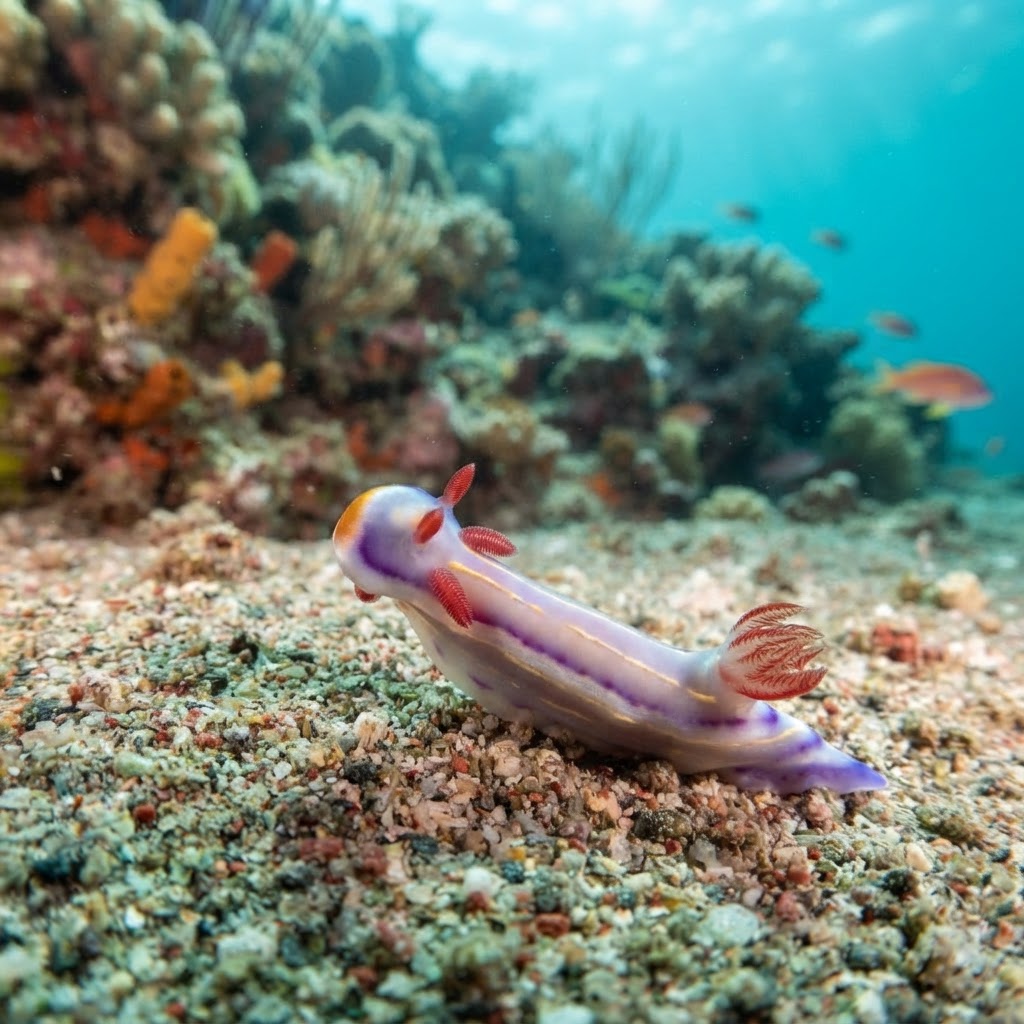
Thorunna florens
A translucent nudibranch logged mostly around Maluku, Indonesia, in warm water between 21 and 30C, on the muck and reef slopes divers love.
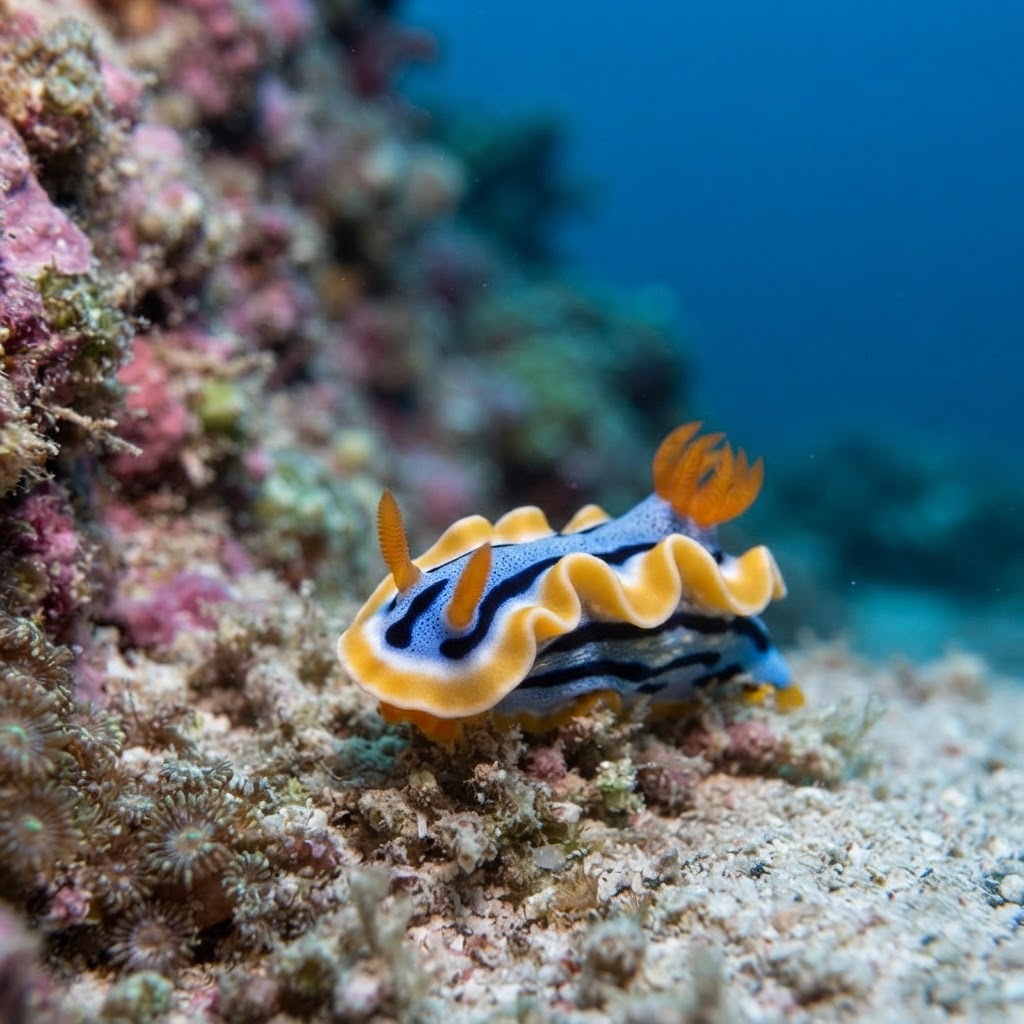
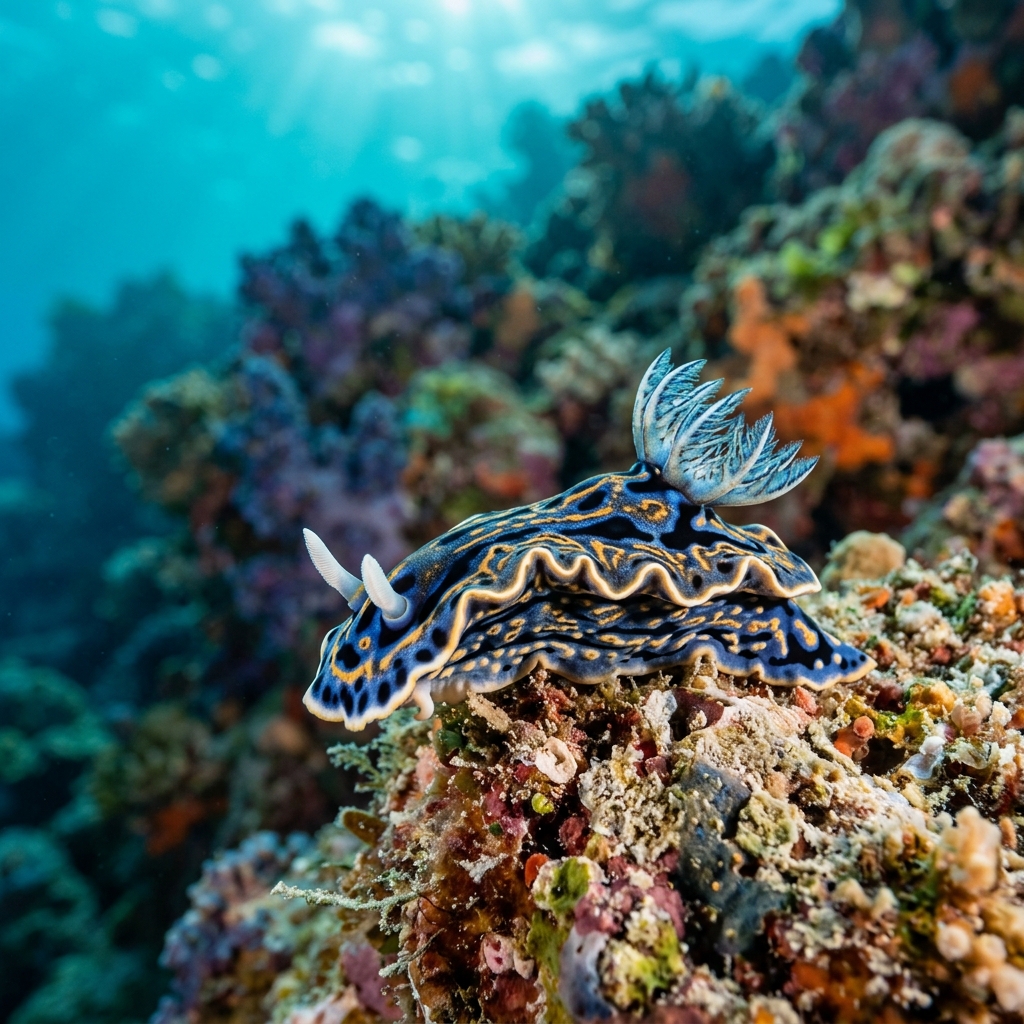
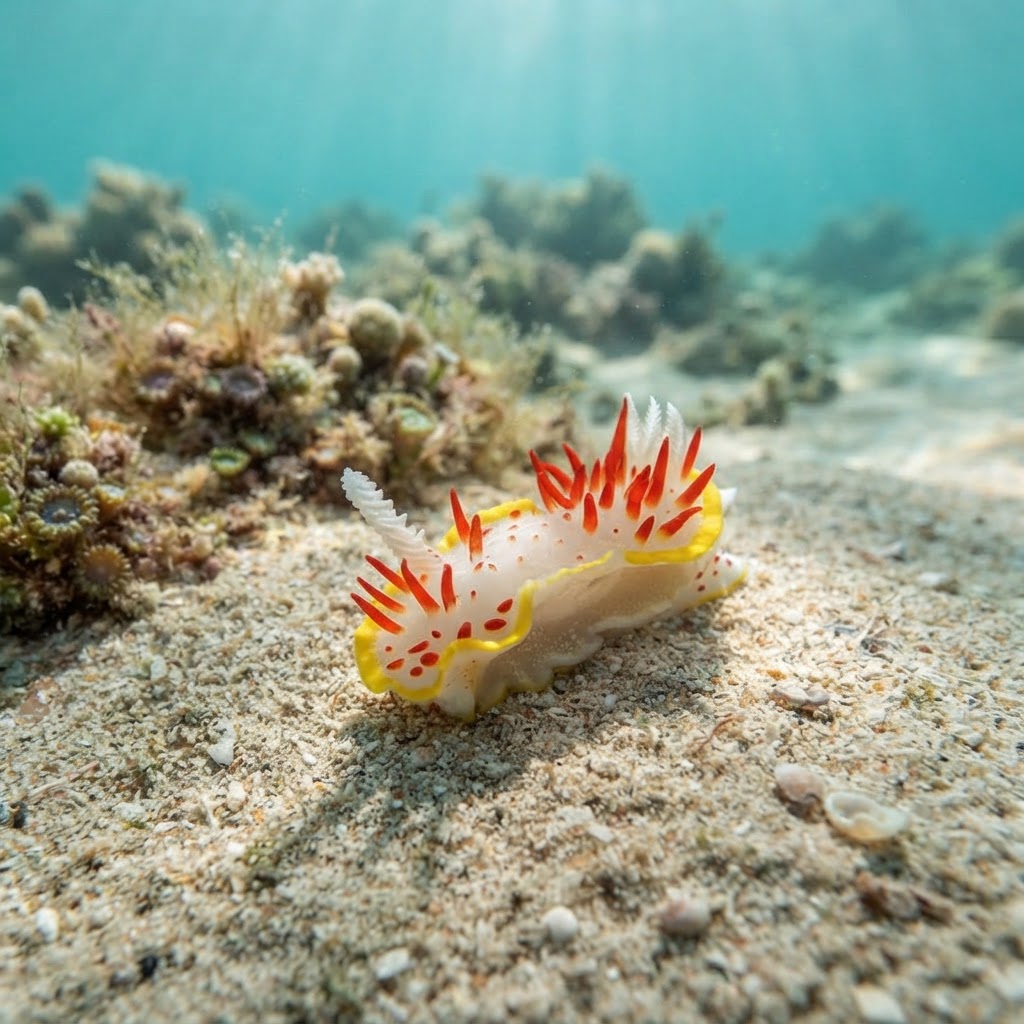
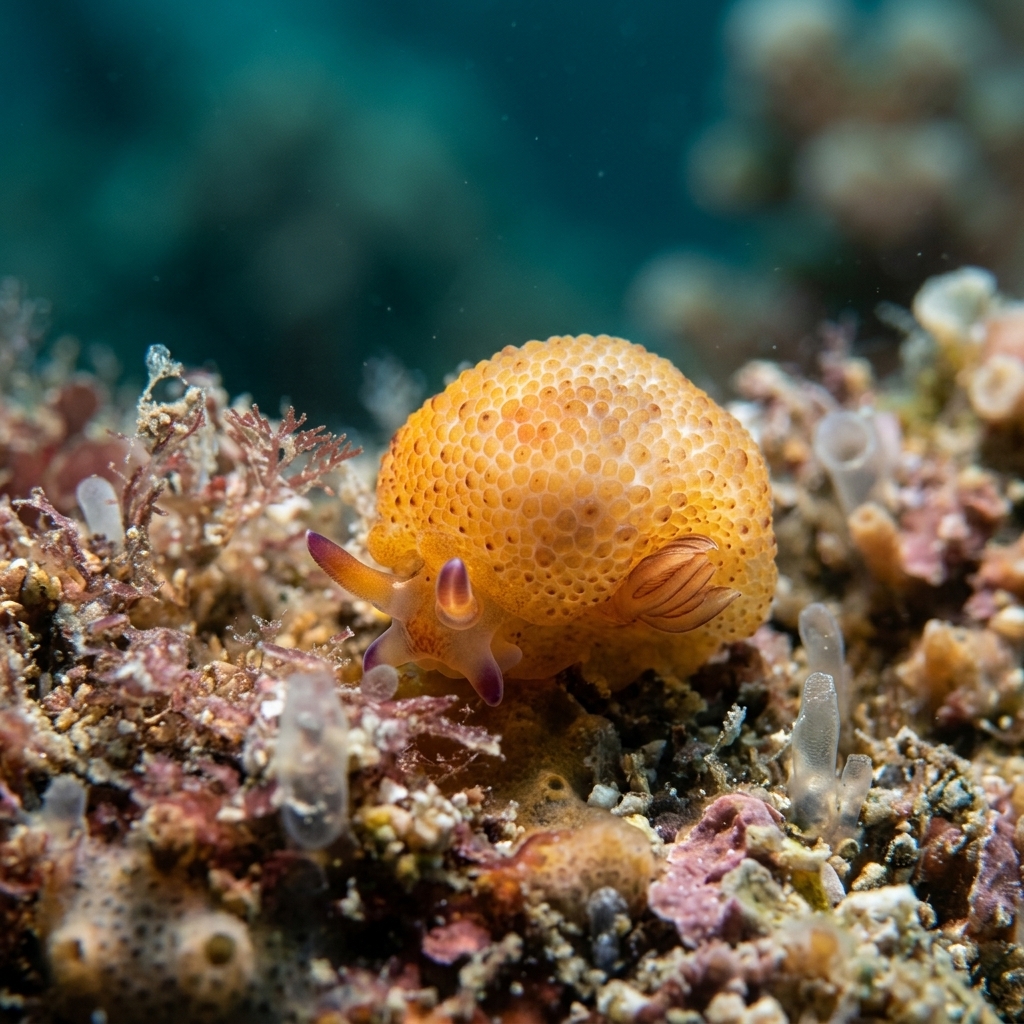
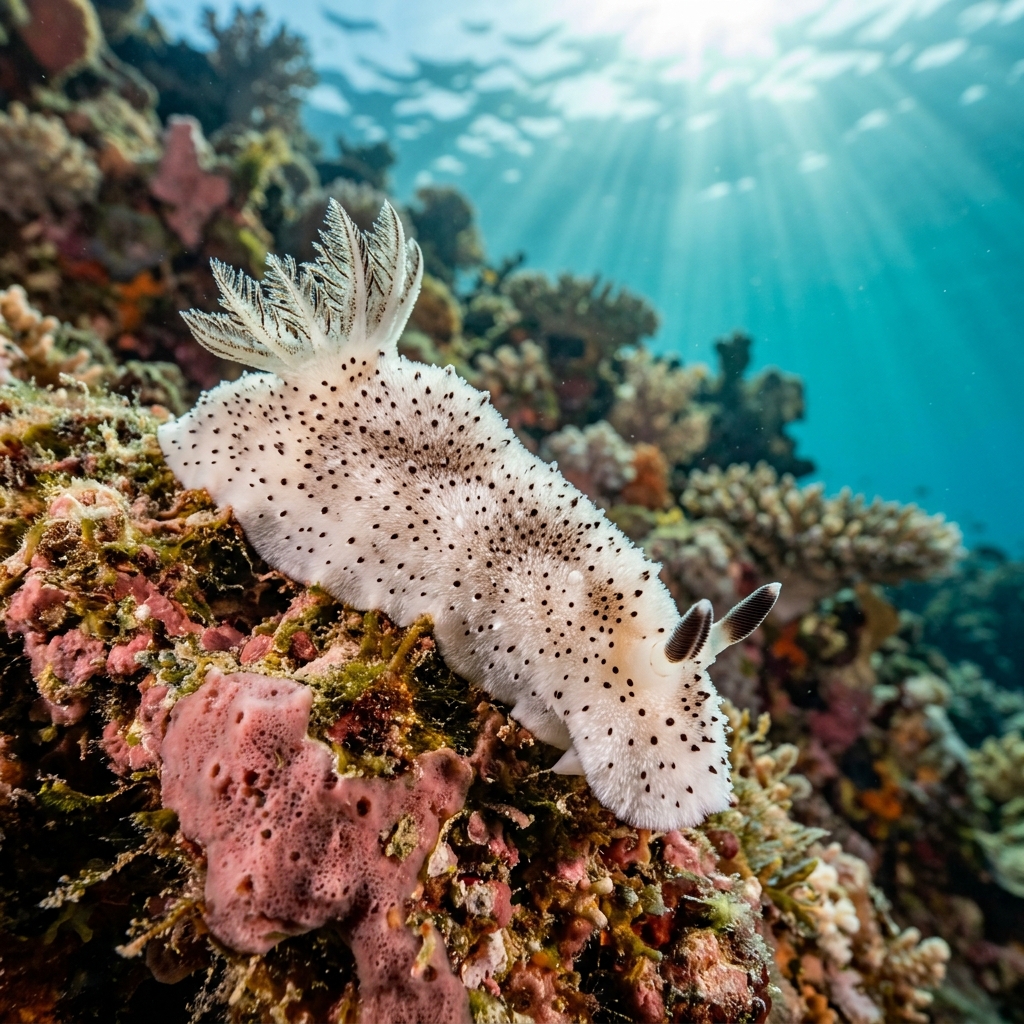
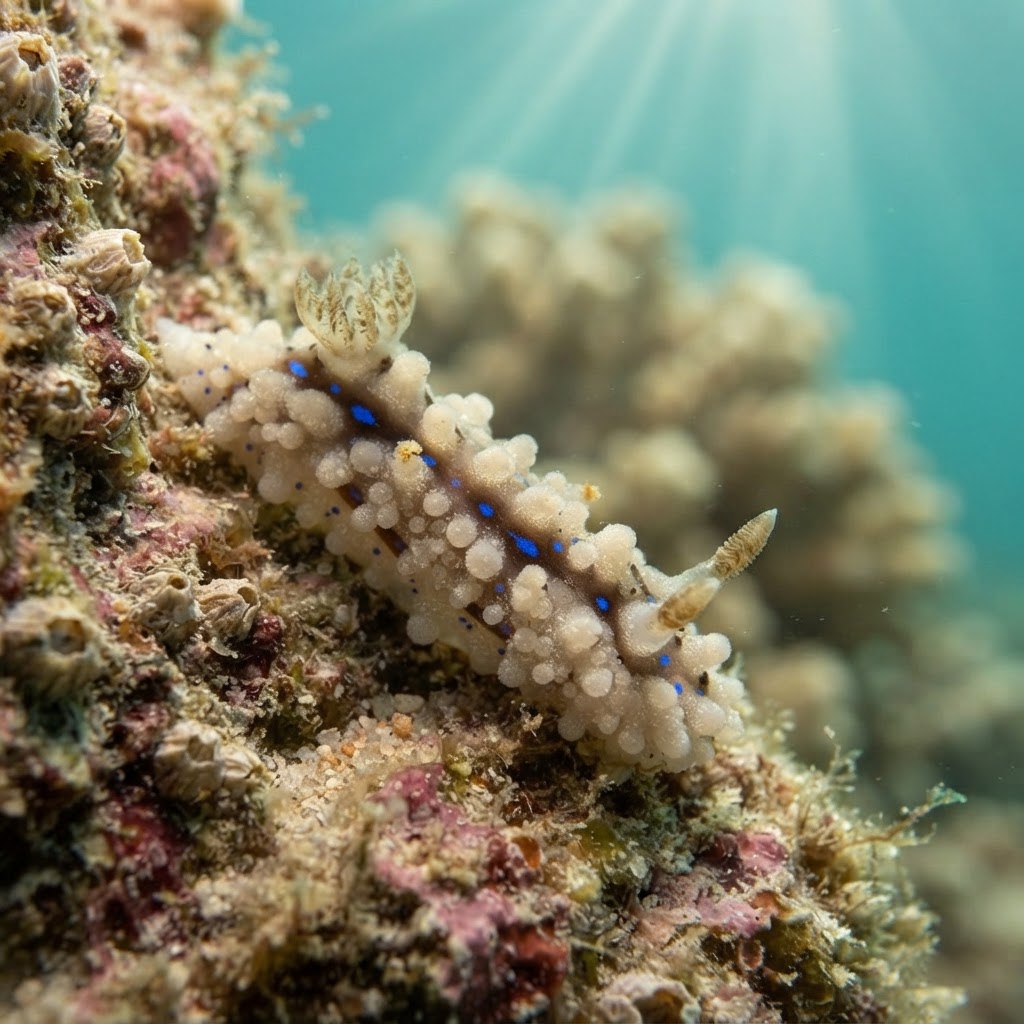
A small, translucent-bodied nudibranch with a soft, almost see-through look that lets internal organs show faintly through the skin. Look for the exposed gill cluster (the feathery tuft) near the rear and the pair of sensory rhinophores up front, both typically edged or tipped with a contrasting pale or yellow line. It sits low and slow on the substrate, so size in the water reads as small and easy to swim past without a guide pointing it out.
Divers find it parked on the reef or rubble substrate, moving at the usual nudibranch crawl while grazing rather than reacting to a torch or camera. It shows no flight response and will sit still for close-focus photography, which is exactly how most divers get their shot. Expect it on both day and night dives, since it is not reported to be a strict nocturnal feeder.
Like other members of Chromodorididae, it almost certainly feeds on sponges and stores compounds from that diet in its tissue as a chemical defence, which is part of why it can afford to sit exposed on the reef in plain sight.
No clear seasonal pattern shows up in the sightings, and the observed temperature range of 21.4 to 29.7C spans typical tropical reef conditions year-round, so any month is fair game on a Maluku or Luzon dive trip.
Reef neighbours a diver could mistake it for. Use the identification notes above to tell them apart.
Most reliably logged in Indonesia, with Maluku standing out as the strongest region and additional sightings from Sulawesi. Outside Indonesia, it turns up in the Philippines, particularly around Luzon, so these two countries cover the great majority of confirmed sightings.
Mapping where Flowering Thorunna is logged…
Maluku in Indonesia is the strongest region for sightings, with further records from Sulawesi and from Luzon in the Philippines. It is logged as uncommon at most of these sites, so treat it as a bonus find rather than a guaranteed spot on a muck dive.
There is no detected season in the sighting data, and the water temperatures it has been recorded in, roughly 21 to 30C, cover normal year-round conditions in Indonesia and the Philippines. Plan around the dive site and season that suits the rest of your trip rather than around this species.
Check for a translucent body with an exposed gill tuft at the rear and a pair of rhinophores up front, often edged in a pale or yellow tone. It is small, slow-moving and usually found sitting still on reef or rubble rather than swimming.
No. It poses no threat to divers and is safe to photograph up close without any special precautions.
As a member of the Chromodorididae family, it almost certainly grazes on sponges, and likely repurposes chemical compounds from that diet as a defence against predators.
Site and sighting data is aggregated from diver logs, iNaturalist and GBIF. For taxonomy and conservation status:
Blue Dragon
3,163 sites