Cheilinus chlorourus
Blotchy, reef-hugging wrasse turning up from Koh Tao to the Society Islands, most often spotted solo in warm 25-29C water.
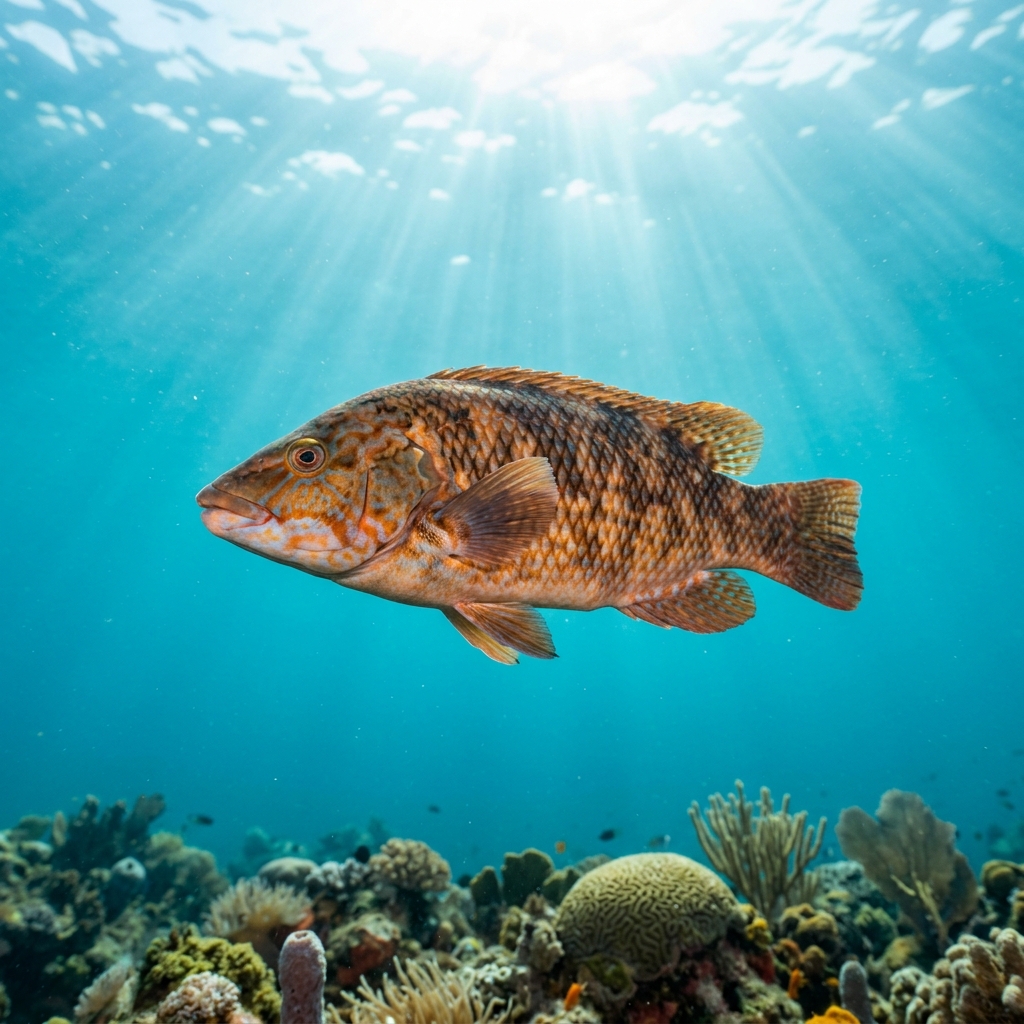
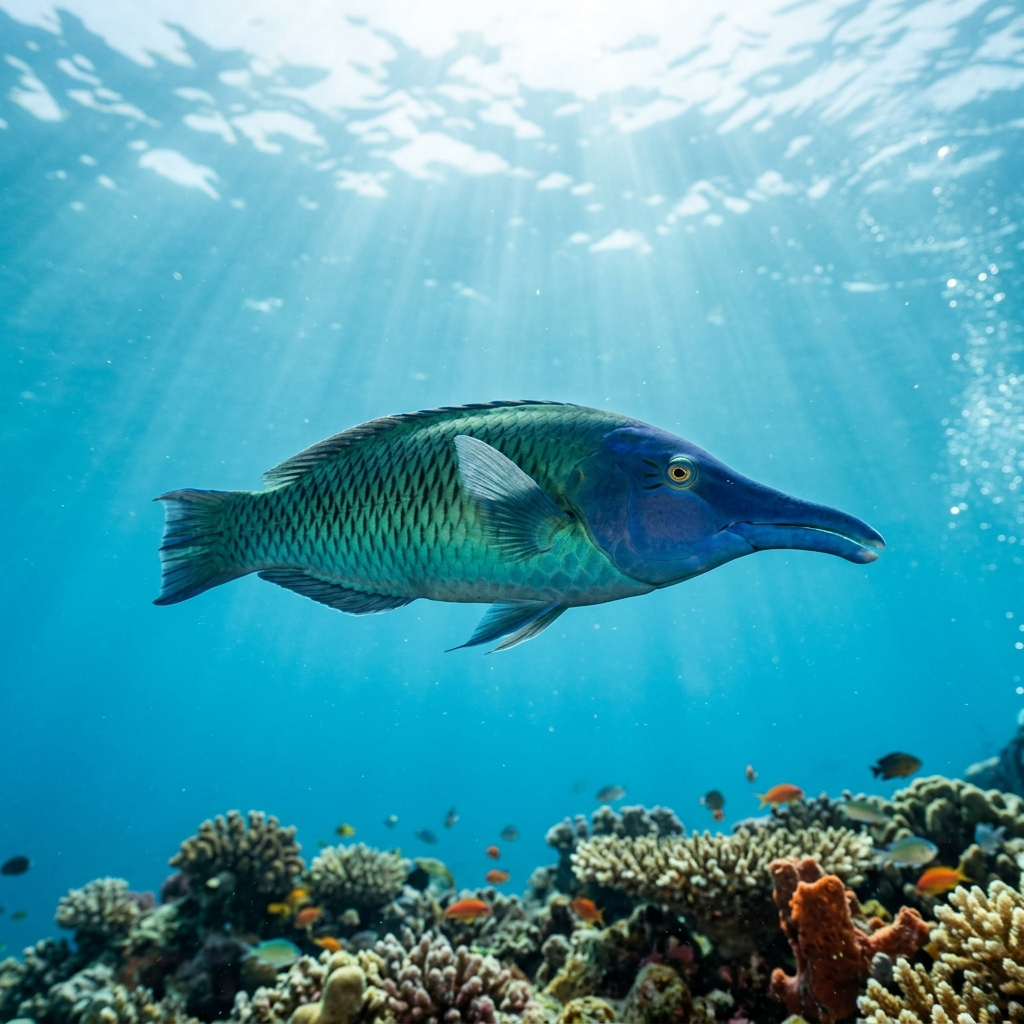
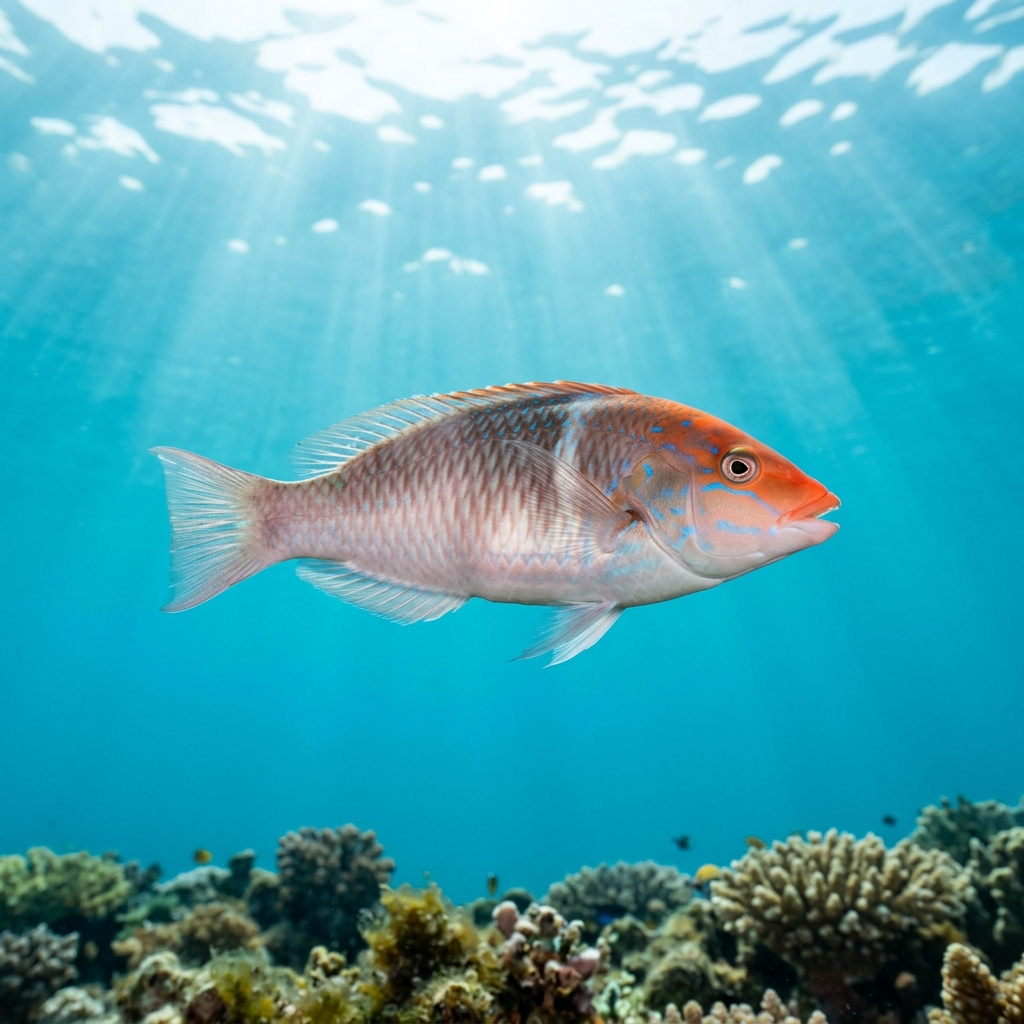
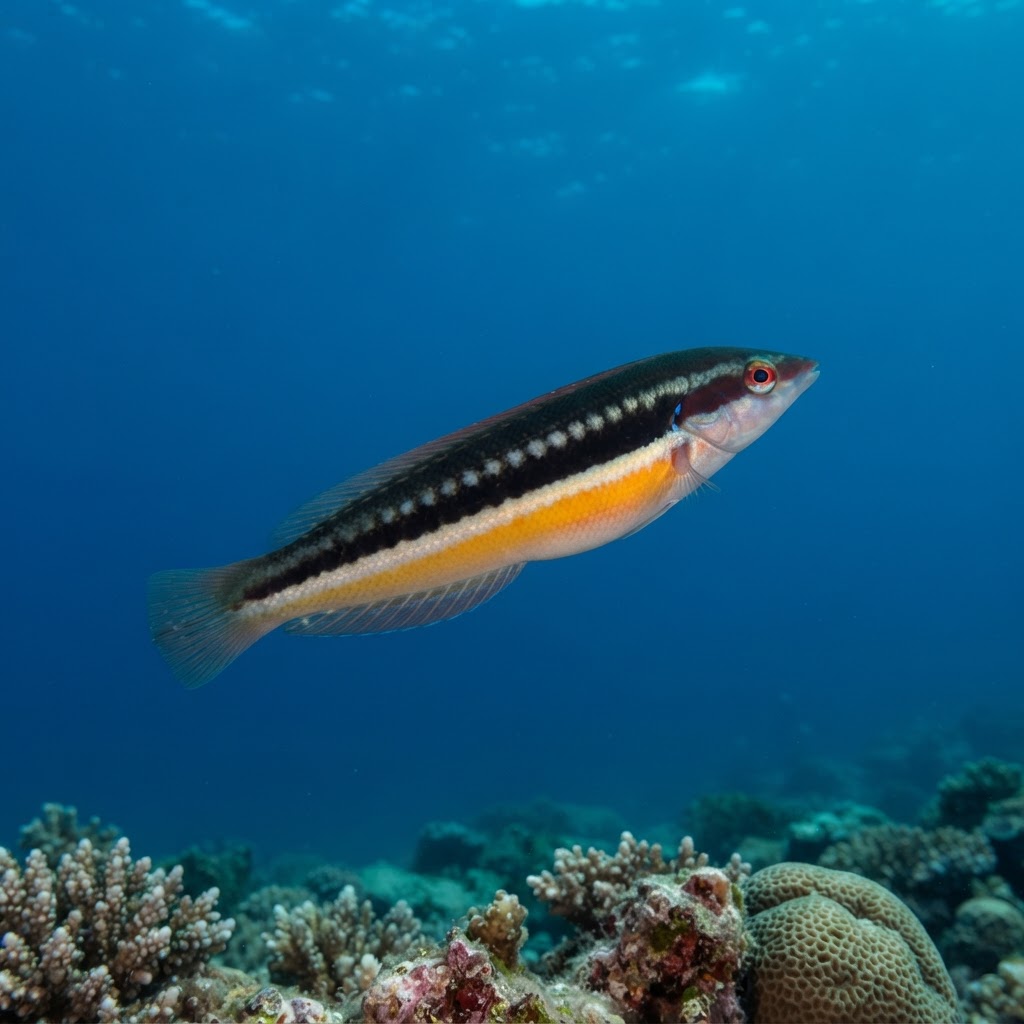
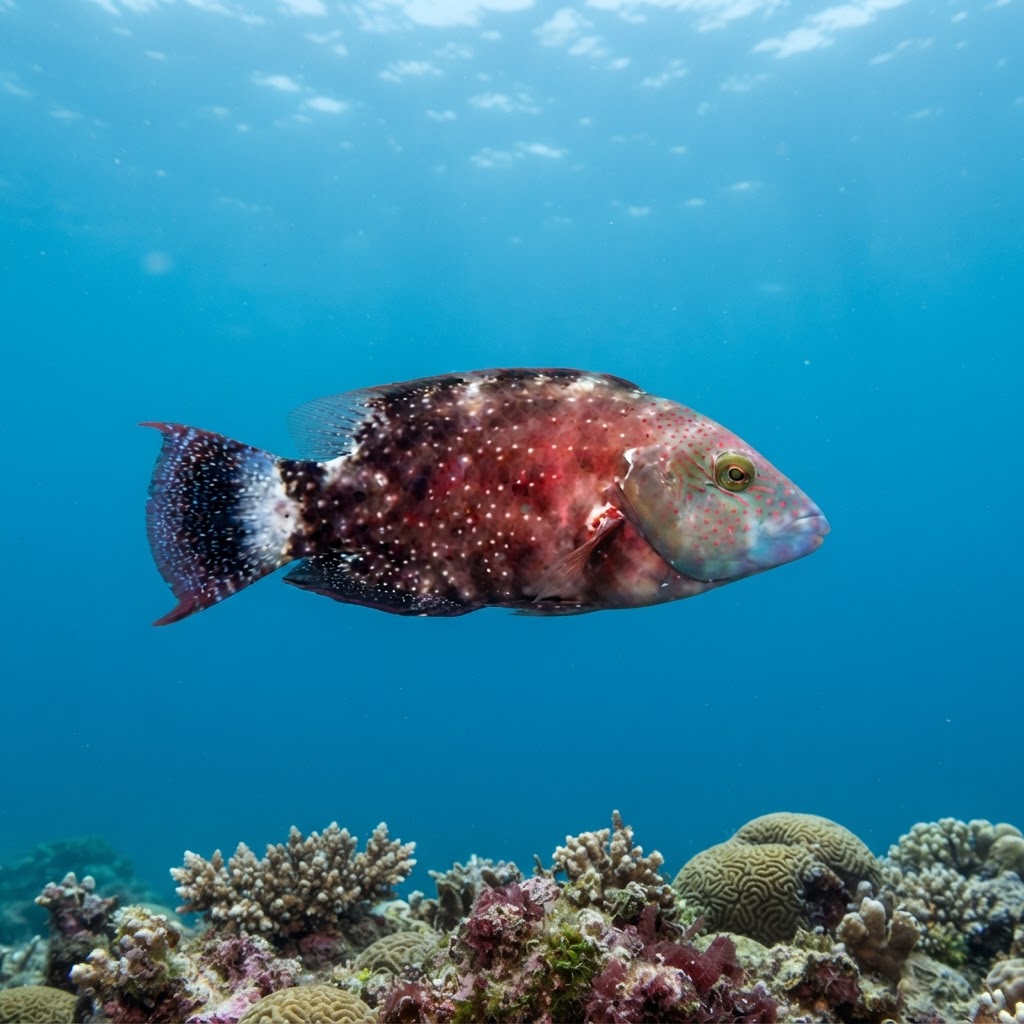
Chunky, torpedo-shaped wrasse around 31 cm, with a mottled olive-green to brown body covered in pale blotches and fine reticulated (net-like) markings. Look for the pink-orange lines radiating across the face and a thick-lipped mouth, both good giveaways at a distance. It swims with slow, deliberate pumps of the pectoral fins rather than a fast dart, which helps separate it from smaller, quicker wrasses on the same reef.
Usually found alone, cruising slowly over rubble patches, coral bommies and sandy edges of the reef while picking at hard-shelled prey. It tends to sit low in the water column rather than schooling in open water, and most divers describe it as uncommon rather than a guaranteed sighting even on reefs where it is present. It is not particularly shy but will keep a steady distance rather than approach divers.
That thick-lipped mouth is built for crushing hard-shelled invertebrates such as molluscs and crustaceans, a diet that makes it a useful reef predator of armoured prey most other fish leave alone.
Comfortable in 25.0 to 29.3 C year-round, so it turns up on tropical reefs in any month rather than following a tight season. Divers log it consistently across all the top regions without a clear seasonal spike.
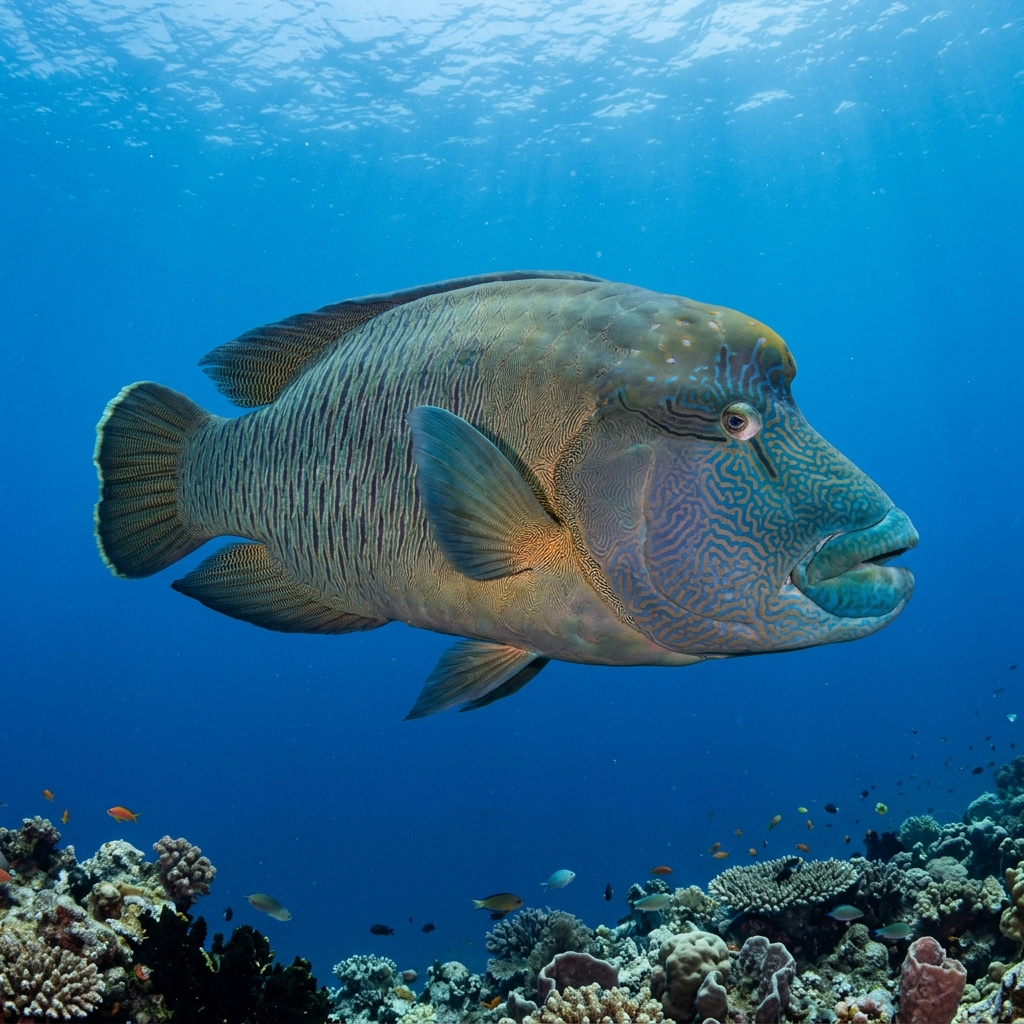
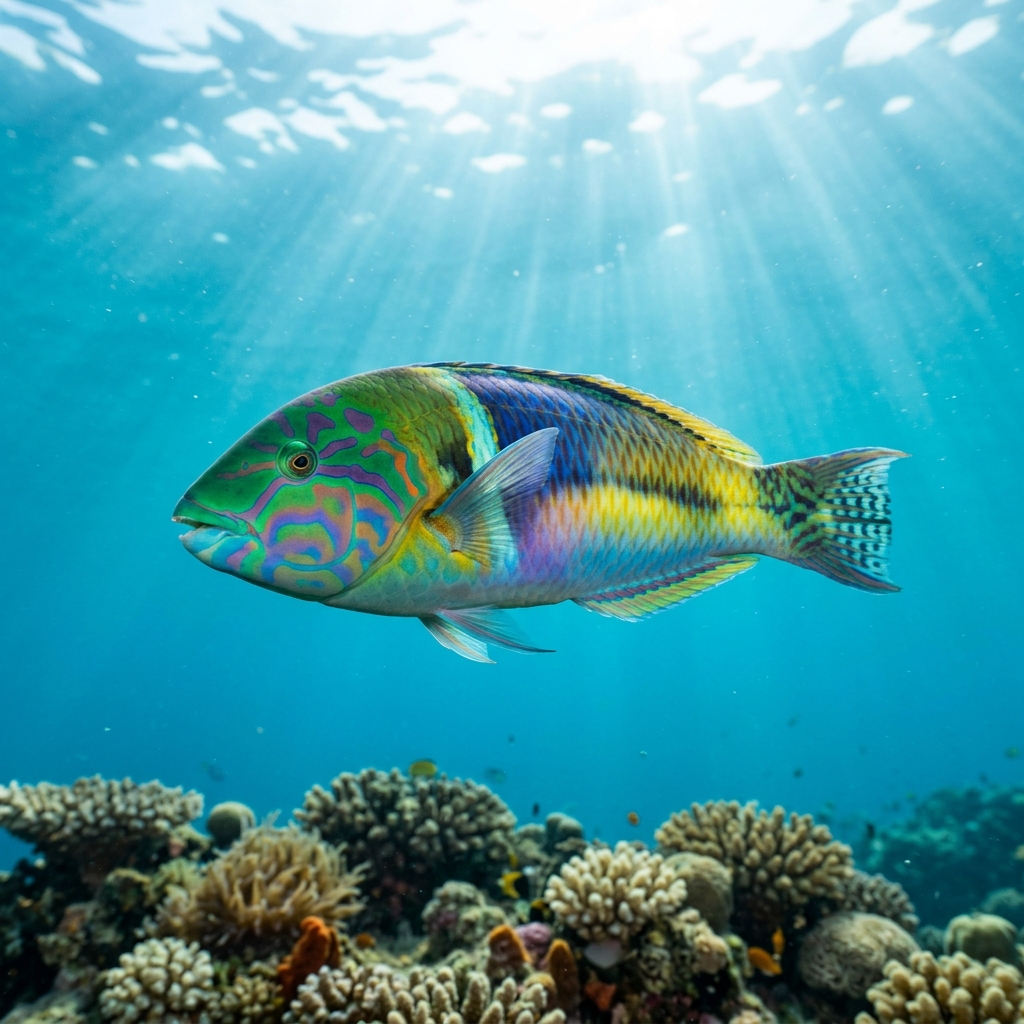
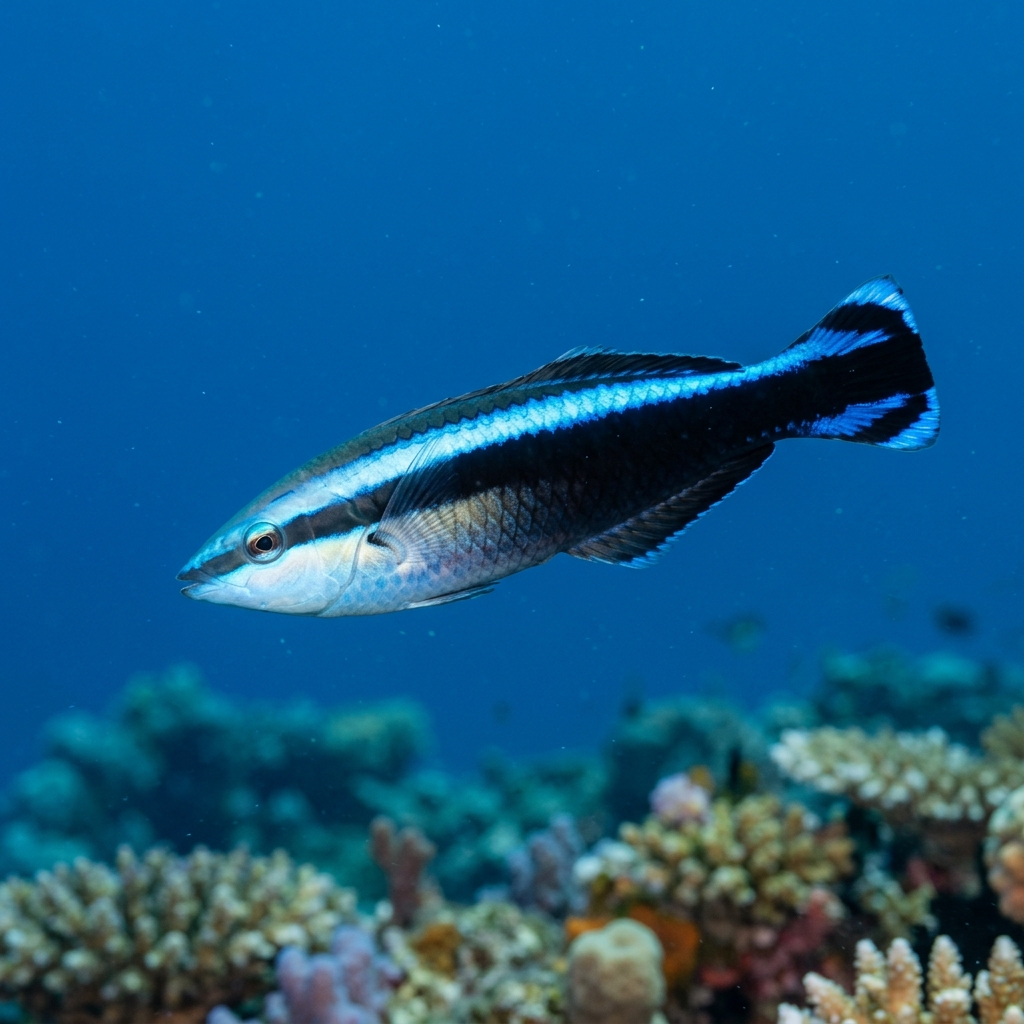
Reef neighbours a diver could mistake it for. Use the identification notes above to tell them apart.
Most commonly logged in Malaysia, especially Peninsular Malaysia's east coast and Sabah, and a strong presence across Thailand's Koh Tao, Koh Lipe and Phuket sites. Also a reliable find in French Polynesia's Society Islands, the Philippine Visayas, and on reefs in Queensland, Indonesia, Fiji and New Caledonia.
Mapping where Floral Wrasse is logged…
Best odds are in Malaysia, particularly the Peninsular Malaysia east coast and Sabah, and across Thailand's Koh Tao, Koh Lipe and Phuket. It also shows up reliably in French Polynesia's Society Islands and the Philippine Visayas.
No strong season shows up in diver logs, and it favours warm reef water between 25 and 29.3 C, so it is seen year-round on tropical reefs rather than at a specific time of year.
Look for a stocky, olive to brown wrasse around 30 cm with pale mottled blotches over the body and pink-orange lines fanning across the face. It moves slowly over rubble and coral rather than darting, and is usually seen alone.
They typically reach about 31 cm, a mid-sized wrasse easily distinguished from much larger reef wrasses like the Napoleon Wrasse, which can grow well over a metre.
It feeds on hard-shelled reef invertebrates such as molluscs and crustaceans, using its thick lips and strong jaws to crush through shells other reef fish cannot tackle.
Site and sighting data is aggregated from diver logs, iNaturalist and GBIF. For taxonomy and conservation status:
Bird Wrasses
3,632 sites