Petroscirtes mitratus
A small, well-camouflaged blenny found year-round in the Mamanuca Islands, Fiji, in warm 25-29C reef water. Here's how to find one.
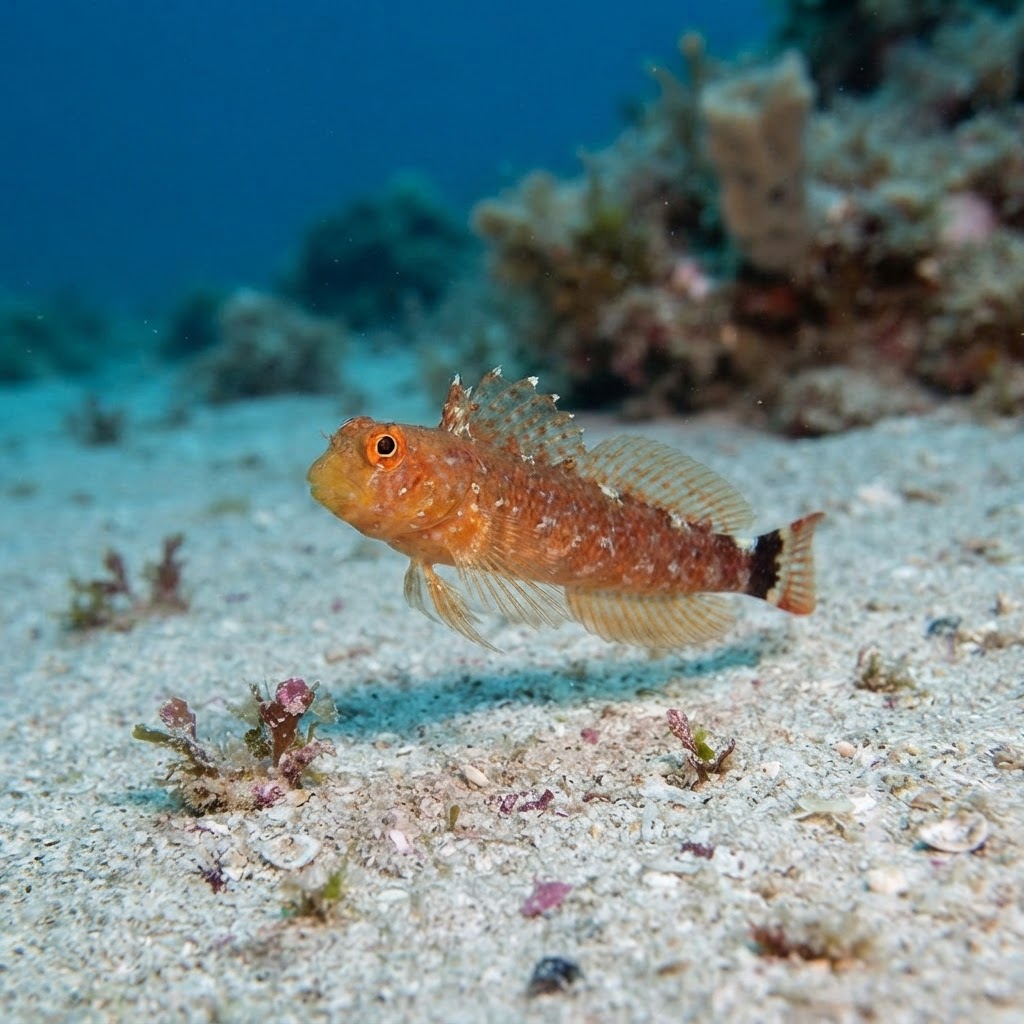
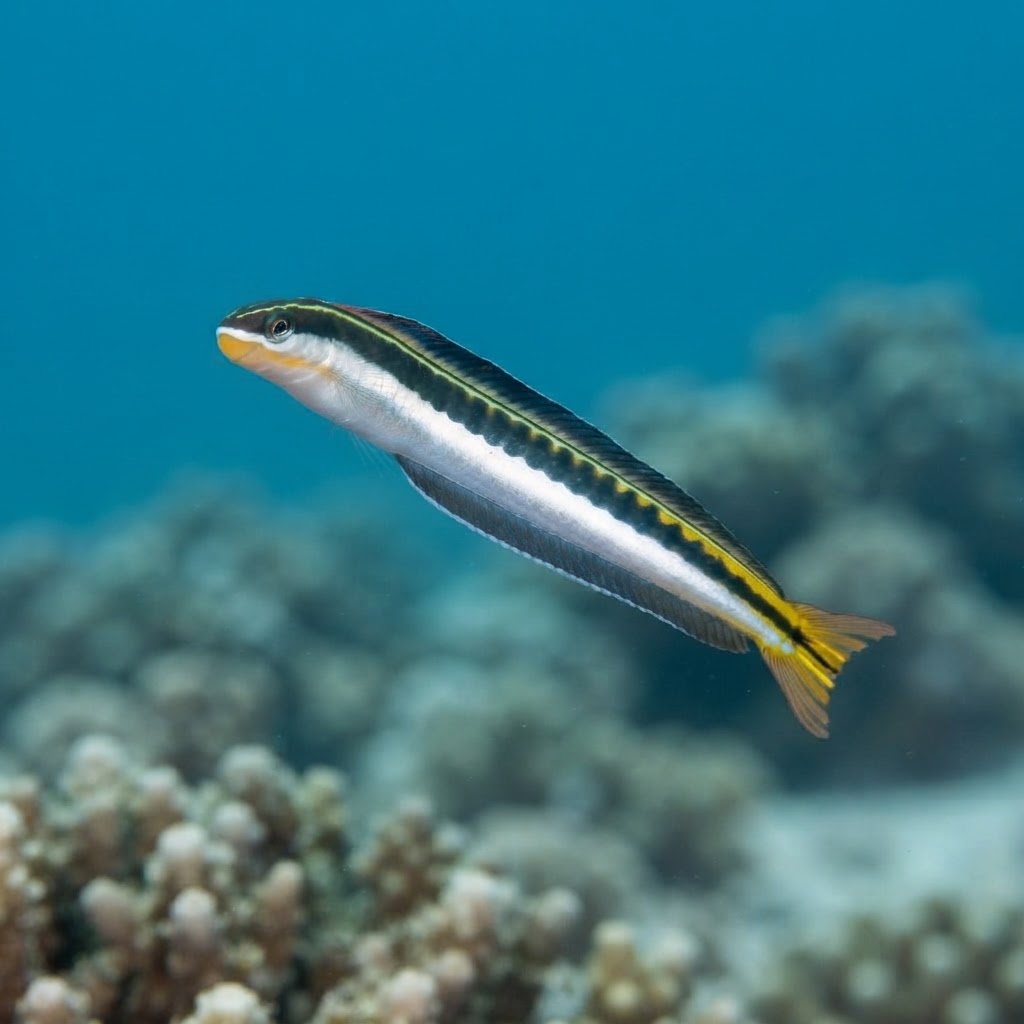
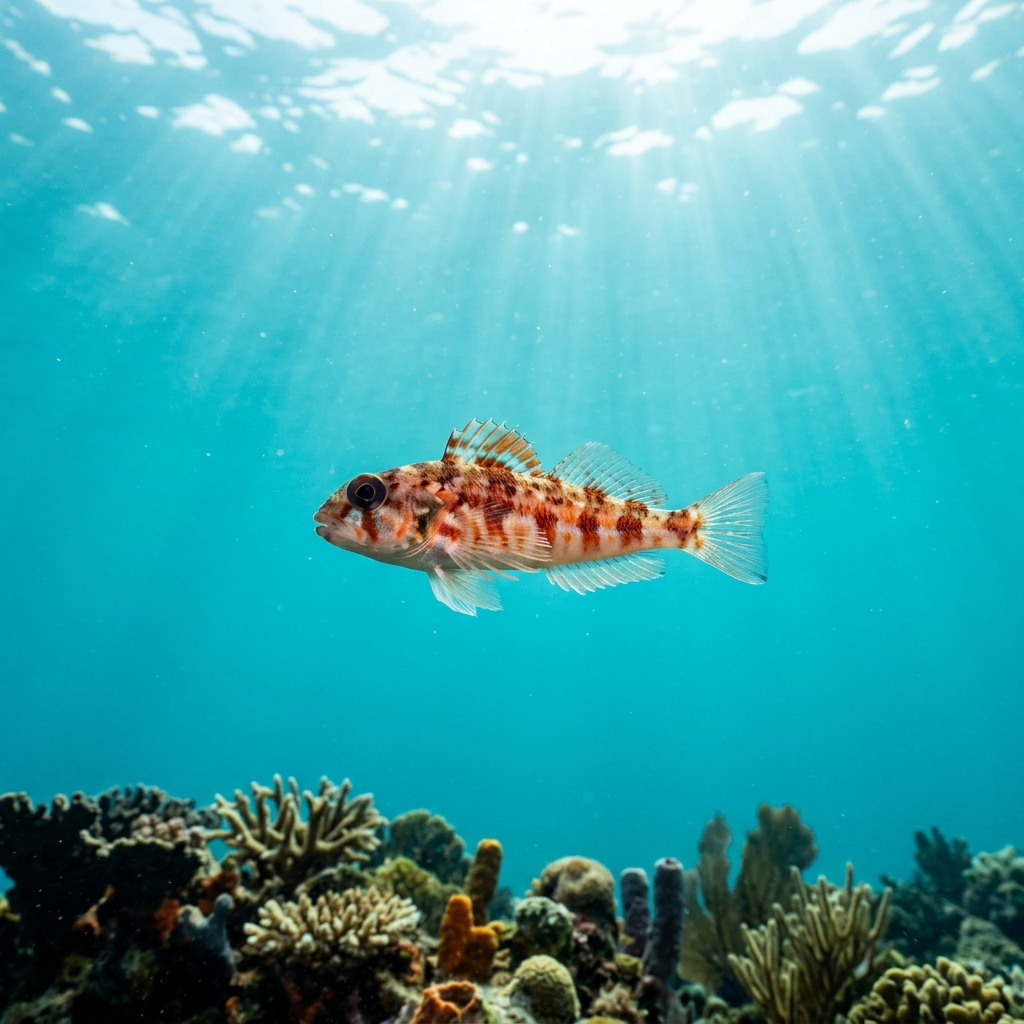
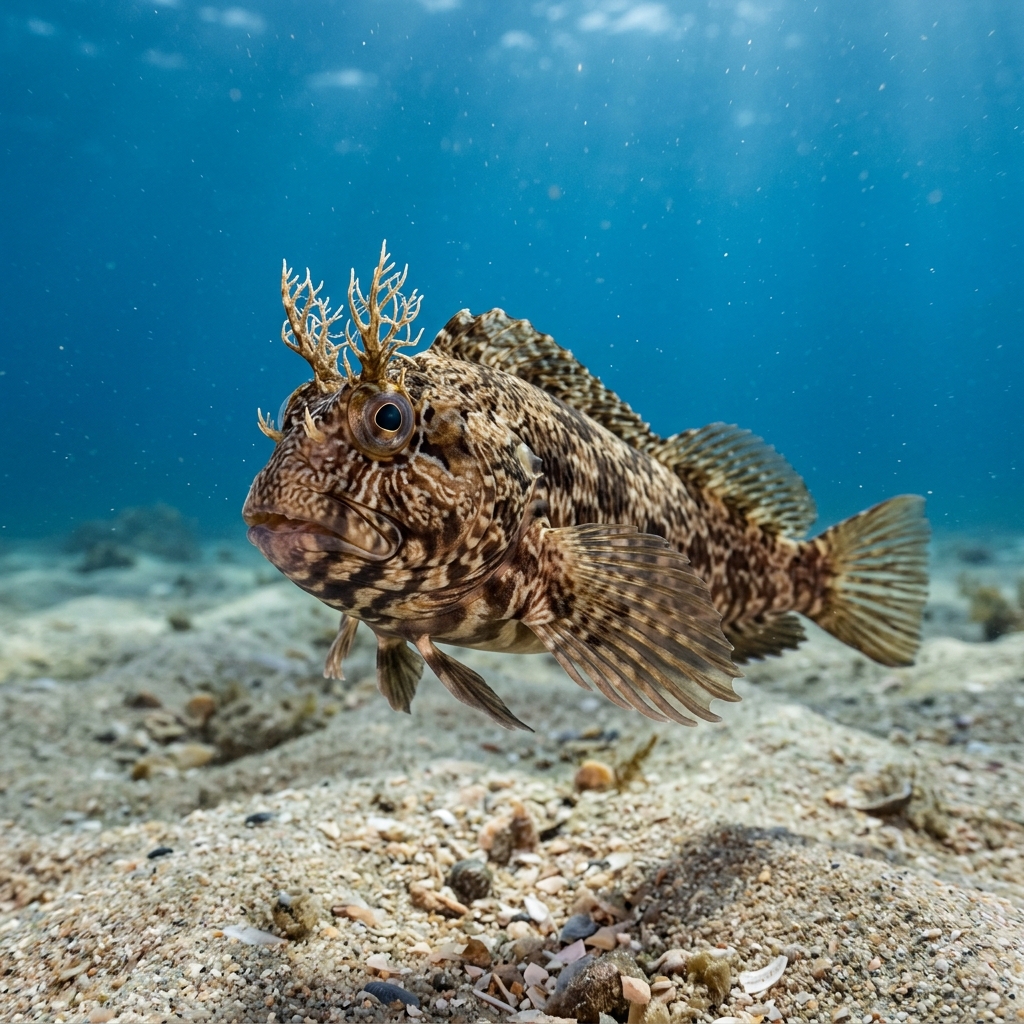
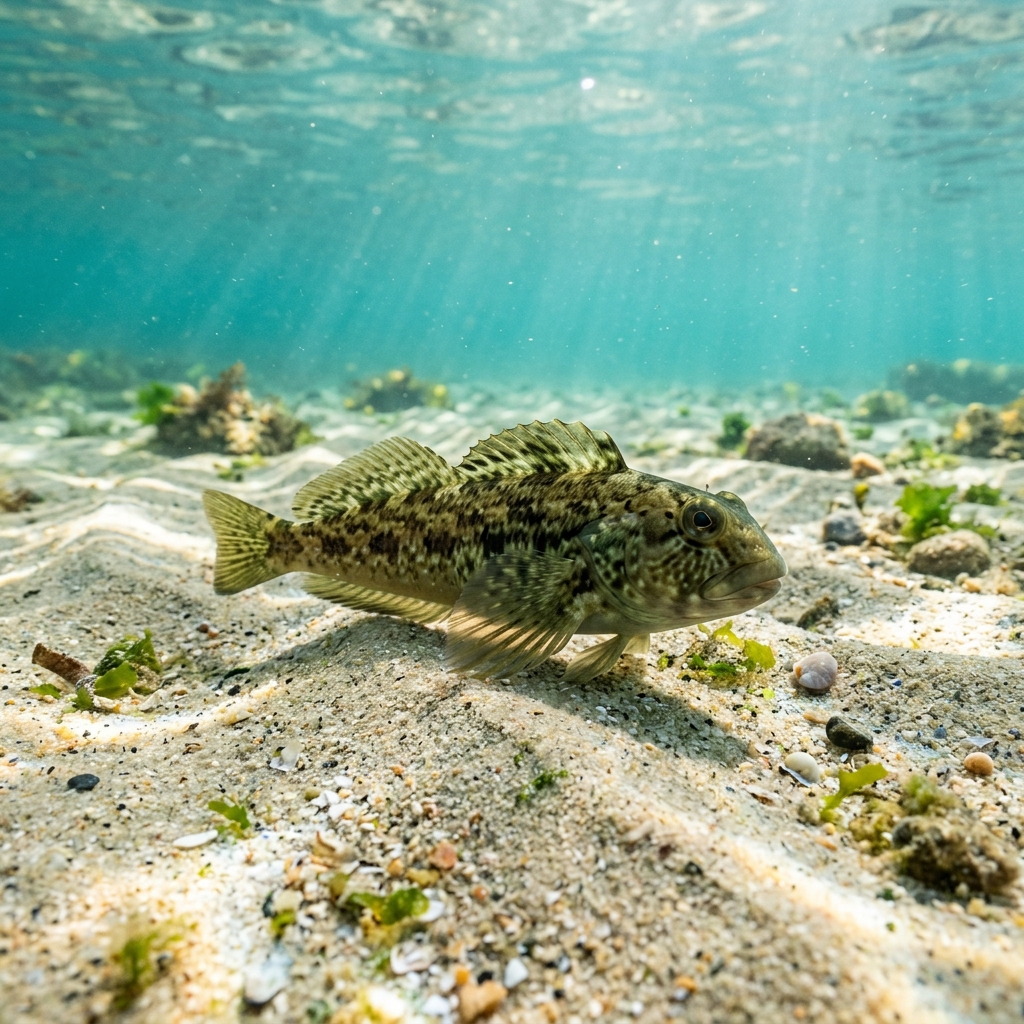
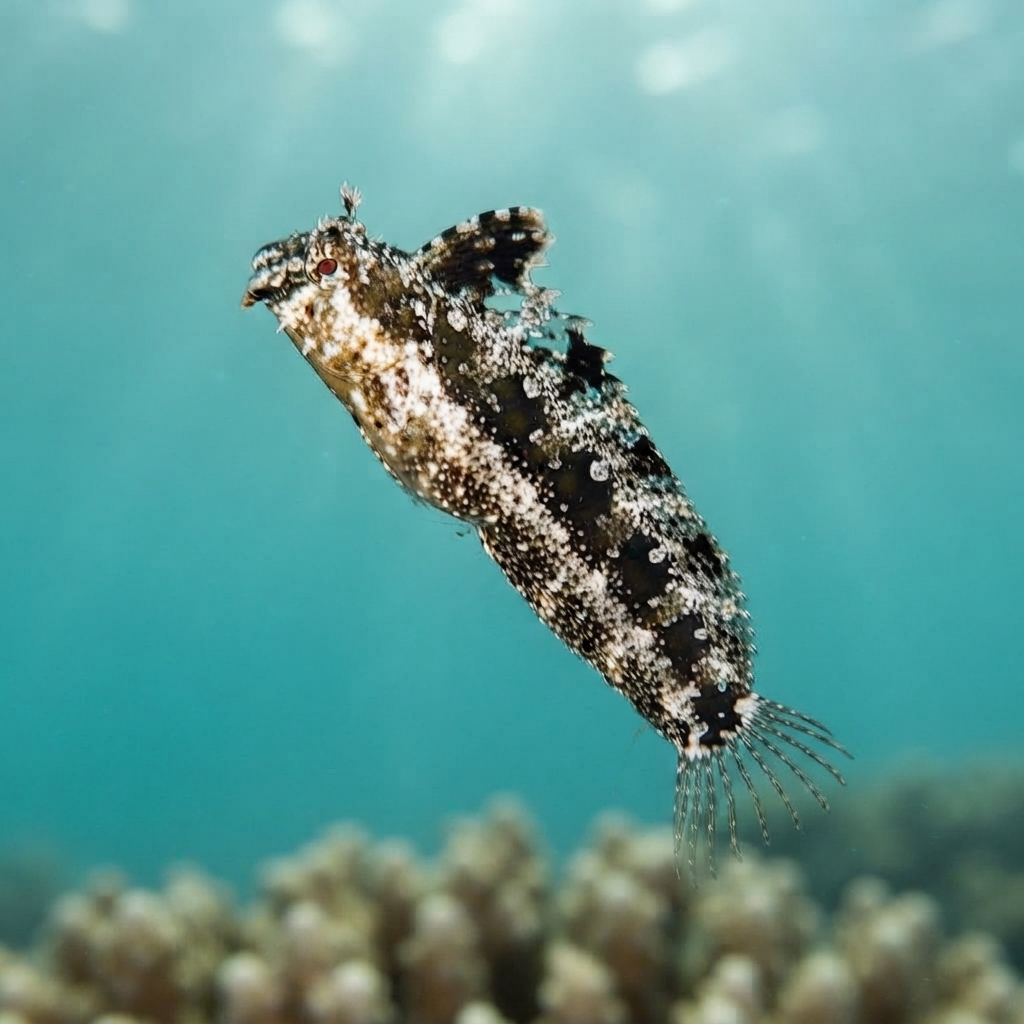
A tiny, elongated fish at only around 6cm, easy to swim straight past unless you're looking at rubble and coral rubble patches closely. Body is mottled brown to olive with fine patterning that breaks up its outline, and it has the blunt-faced, no-scale look typical of blennies rather than a streamlined fish shape. Look for it perched on the bottom or wedged into a small crevice rather than swimming in open water.
Divers typically find this one sitting still on rubble, sand, or low reef structure rather than out swimming, relying on its dull mottled colouring to blend in rather than bolting for cover. It's logged as uncommon to rare at most sites, so seeing one usually comes down to slow, close-focus scanning of the substrate rather than expecting it to come to you. It doesn't react much to a calm, close approach, which is part of why it's so easy to miss.
Like other fangblennies in its genus, this species carries small venom-grooved fangs used defensively rather than for feeding, which is a useful bit of trivia given how harmless and overlooked it looks on the reef.
No clear seasonal pattern shows up in the sighting data, and its comfort range of 25 to 29.3C matches tropical reefs year-round, so any month is reasonable for a dive trip built around finding one.
Reef neighbours a diver could mistake it for. Use the identification notes above to tell them apart.
Most reliably logged around the Mamanuca Islands in Fiji, with a good number of sightings also coming from Apra Harbor in Guam. Smaller numbers turn up at Eilat in Israel and in Sulawesi, Indonesia, so it's a wide-ranging but thinly recorded species across the Indo-Pacific and Red Sea.
Mapping where Floral Blenny is logged…
The strongest sightings come from the Mamanuca Islands in Fiji and Apra Harbor in Guam, with additional records from Eilat in Israel and Sulawesi in Indonesia. It's logged as uncommon at most of these sites, so treat a sighting as a bonus rather than a guarantee.
There's no detected seasonal pattern, and its recorded temperature range of 25 to 29.3C spans typical tropical reef conditions all year, so it can turn up on any dive regardless of month.
Look for a small, roughly 6cm fish with a mottled brown and olive pattern resting on rubble or low reef structure rather than swimming freely. Its blunt head and lack of visible scales are typical blenny traits that separate it from small reef fish of a similar size.
They stay small, reaching roughly 6cm in length, which makes them easy to overlook against rubble and reef debris.
No, they pose no threat to divers and are not considered dangerous. They're small, sedentary, and generally ignore a calm, close approach.
Site and sighting data is aggregated from diver logs, iNaturalist and GBIF. For taxonomy and conservation status:
Rusty Blenny
2,605 sites