Petrolisthes eriomerus
A tiny flattened crab tucked under rocks in British Columbia's cold water, spotted year-round from 7.5 to 13.5C.
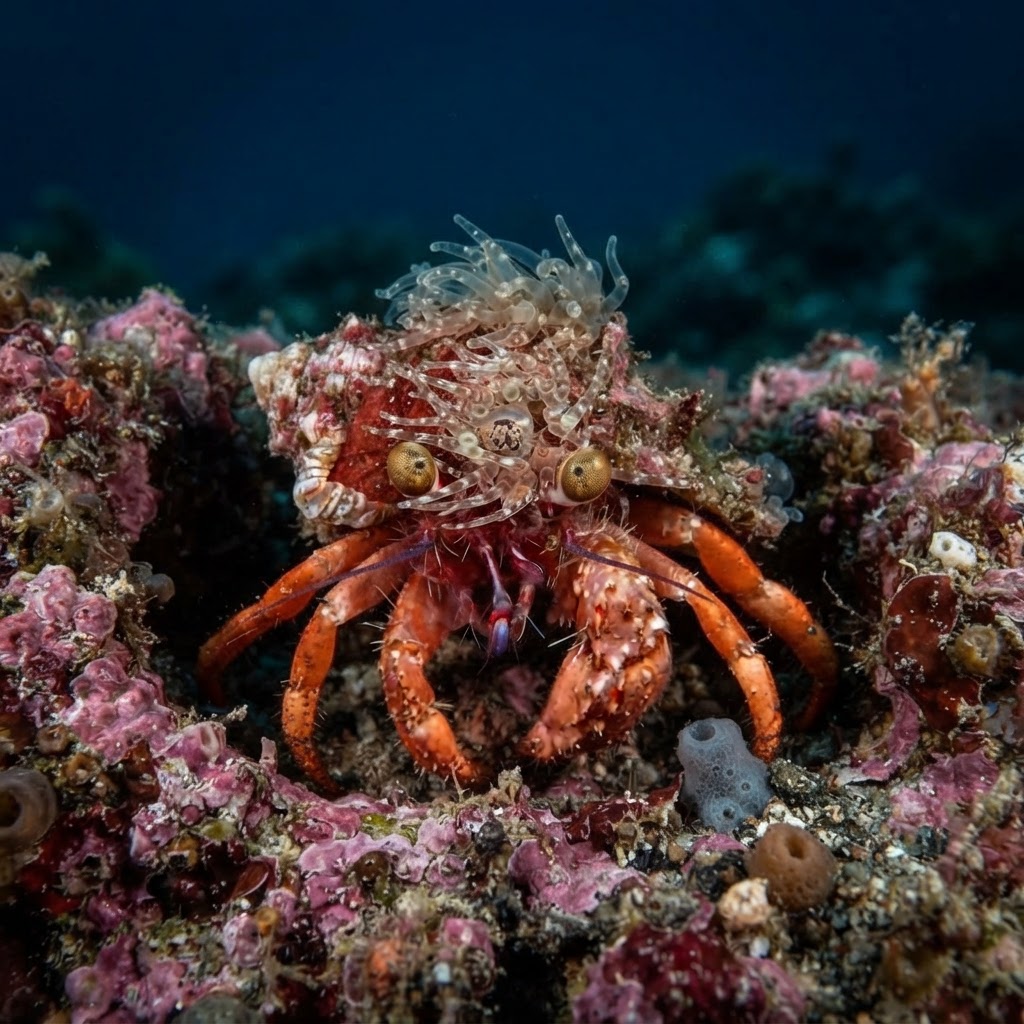
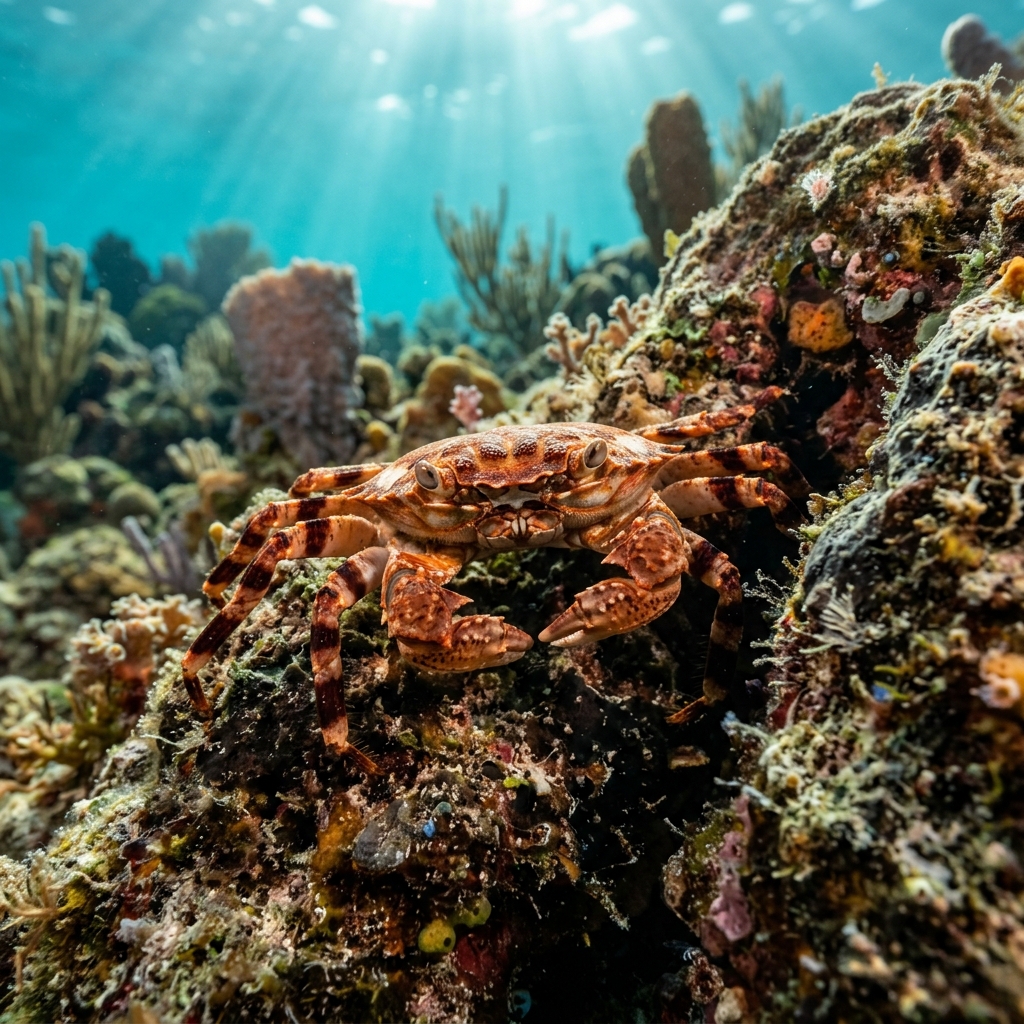
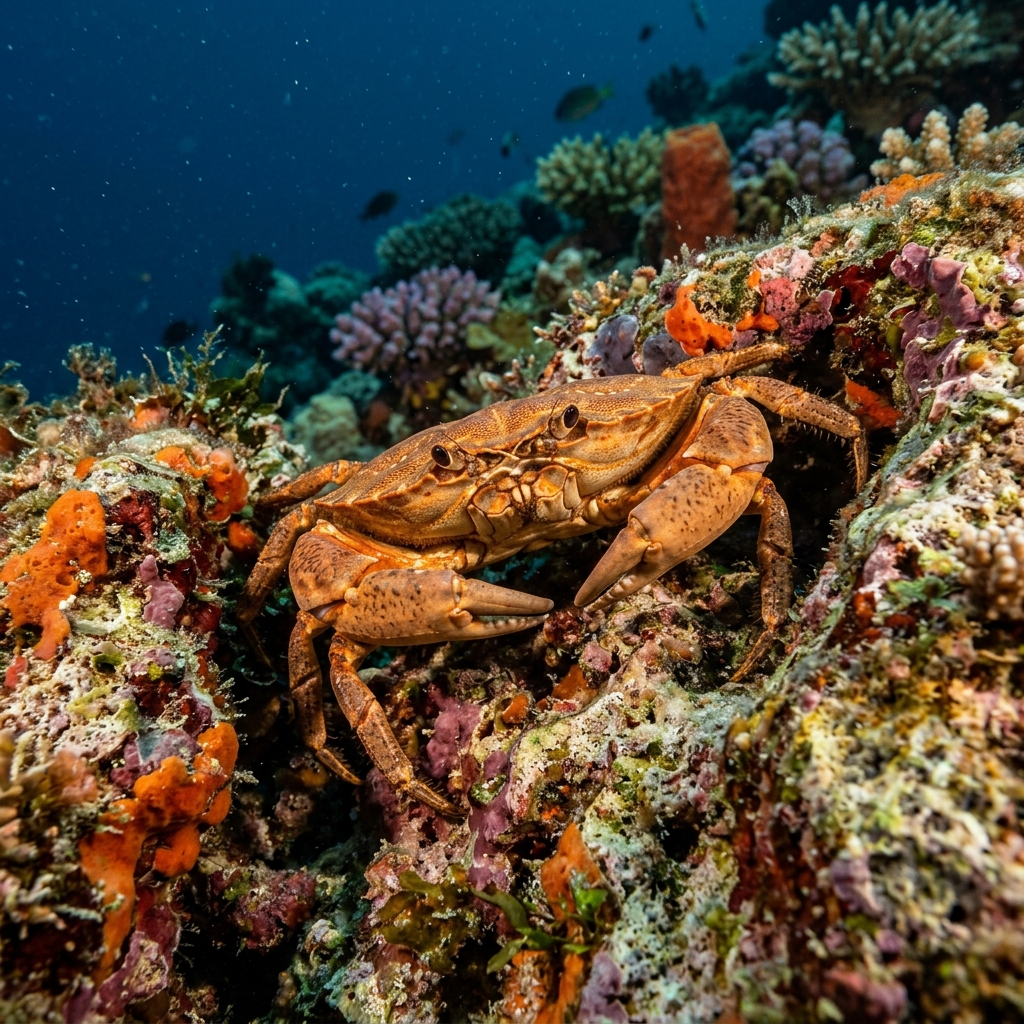
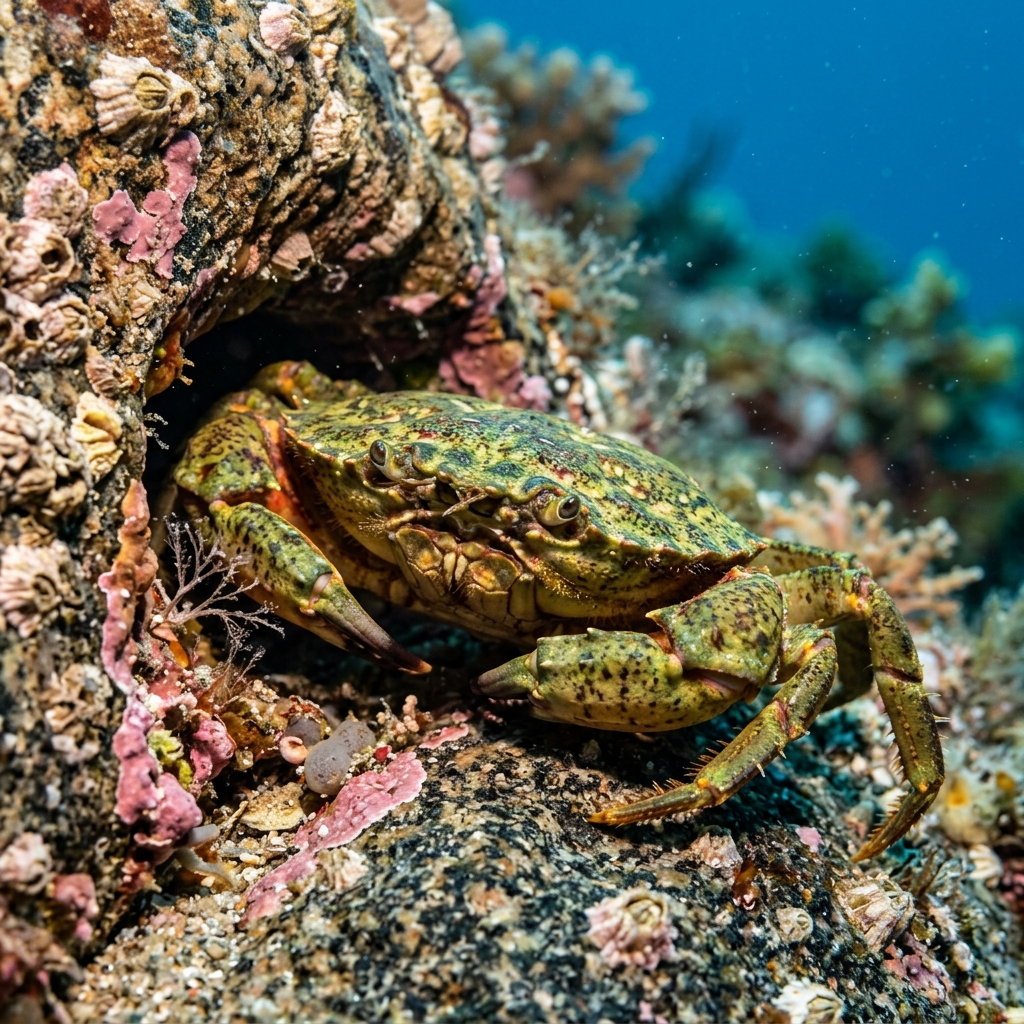
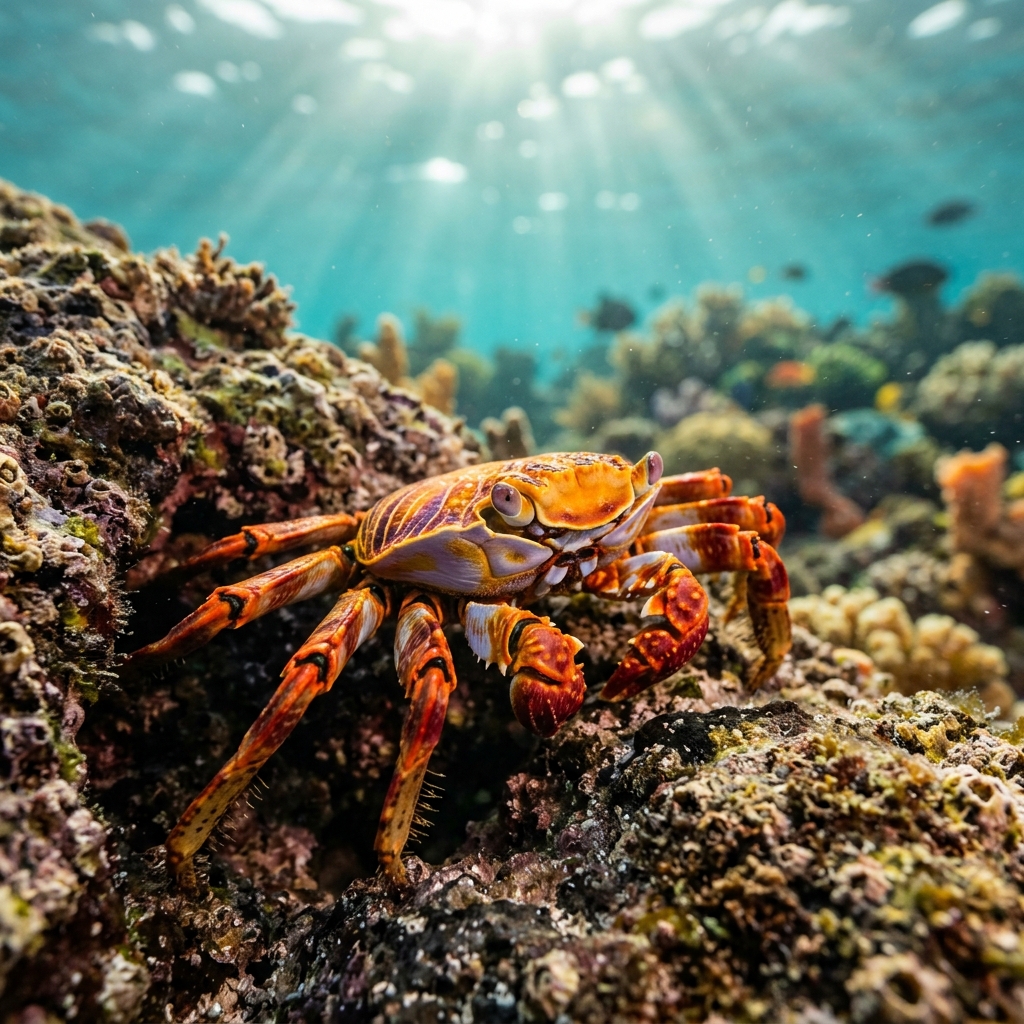
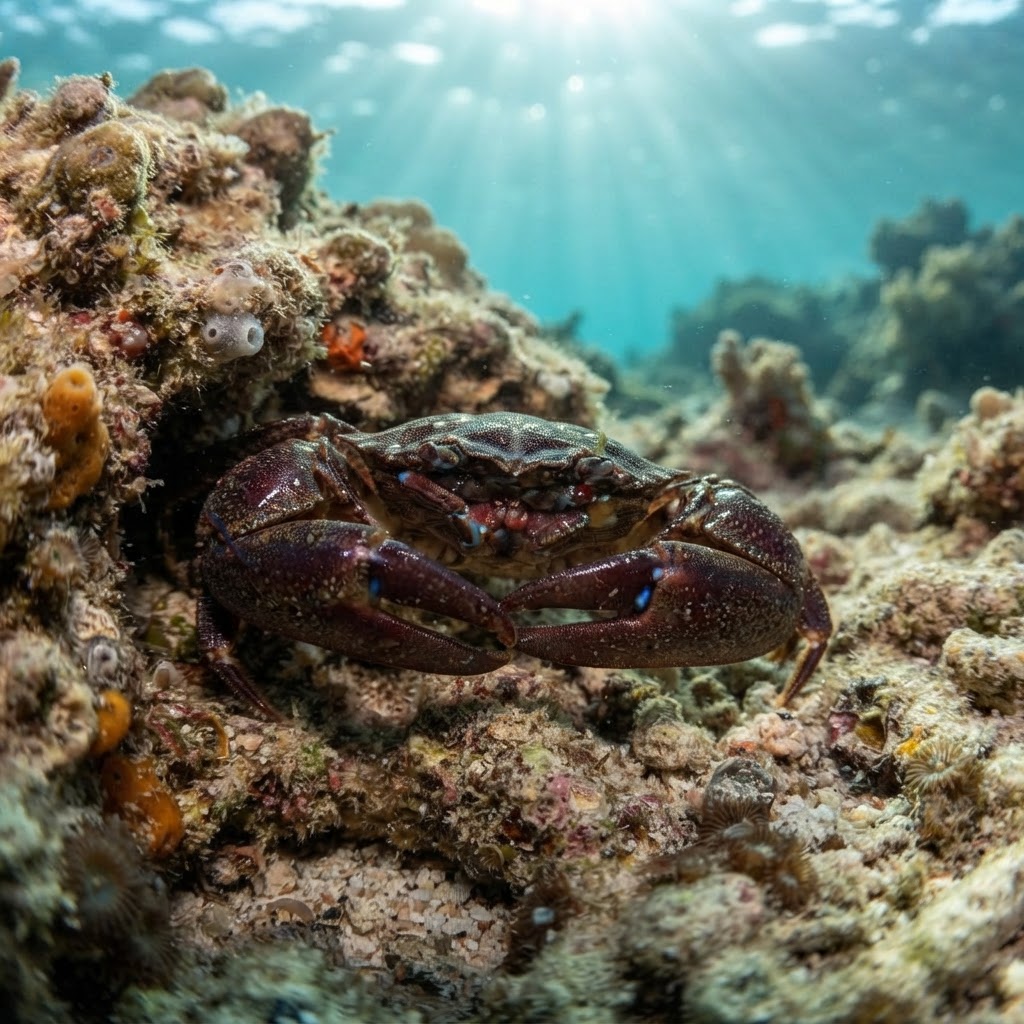
Small, flattened, fan-shaped body rarely more than a couple of centimetres across, coloured in mottled reddish-brown to grey tones that blend into rock and cobble. The claws are noticeably flattened and broad, held out to the sides rather than forward, and the long antennae sweep back over the shell. Look for it wedged into crevices or clinging to the underside of loose rocks rather than out in the open.
Divers usually find it flattened against the underside of a rock or wedged into a crevice, using its fan-like feathery mouthparts to filter tiny food particles from the water rather than actively hunting. It tends to hold still or scuttle sideways deeper into cover when a light or hand gets close, so a slow careful look under loose cobble is how most divers actually spot one. It is logged most often as an uncommon find, meaning it takes a bit of searching rather than showing up in the open on a typical dive.
Like other porcelain crabs it can shed a claw to escape a predator's grip and simply regrow it later, a handy trick given how exposed those flattened claws are when it is wedged into a crevice.
Sightings show no real seasonal pattern, and with a water-temperature niche of 7.5 to 13.5C it stays active in cold water through the year, so any month is fair game in British Columbia and the Pacific Northwest.
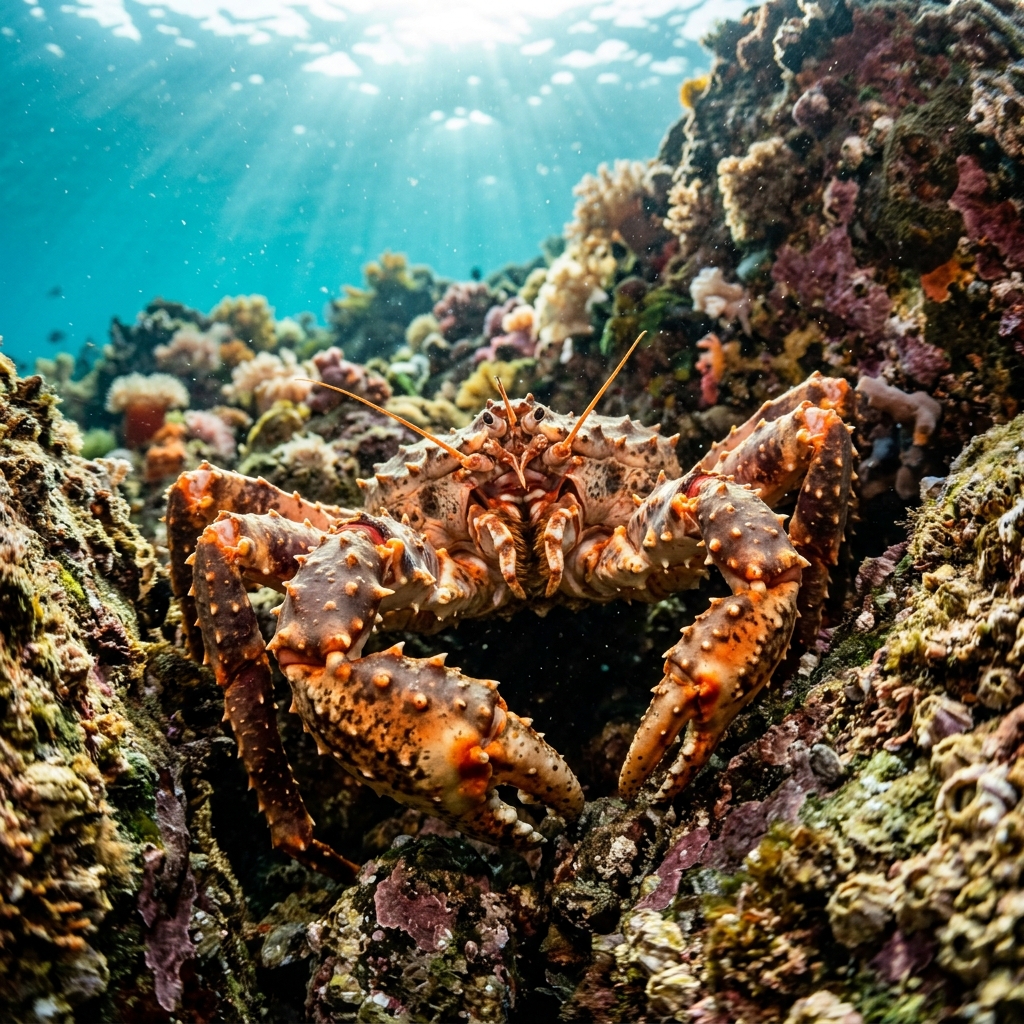
Reef neighbours a diver could mistake it for. Use the identification notes above to tell them apart.
Most reliably logged along British Columbia, especially around sites in that region, with a smaller but steady presence through the Pacific Northwest of the United States and occasional logs in Alaska and California. This is a cold-water Pacific species, so sightings cluster on the northeast Pacific coast rather than anywhere tropical.
Mapping where Flattop Porcelain Crab is logged…
British Columbia is the strongest region for sightings, with additional logs across the Pacific Northwest, Alaska, and California. It is a cold-water northeast Pacific species, so look under rocks on temperate coastal dives rather than tropical reefs.
There is no strong seasonal pattern in the data, and it tolerates a cold water-temperature range of 7.5 to 13.5C, so it can turn up on dives in British Columbia and the Pacific Northwest at any time of year.
Check under loose rocks and in crevices for a small, flattened, fan-shaped crab in mottled reddish-brown tones, with broad flattened claws held out sideways and long antennae swept back over the shell.
It stays small, typically only a couple of centimetres across the body, which is part of why it is easy to miss unless you are checking under rocks closely.
No, it poses no danger to divers. It is a tiny, retreating crab that hides under rocks rather than approaching or defending itself against anything as large as a diver.
It can drop a claw on purpose to escape a predator's grip, a defence called autotomy, and then regrow the lost limb over subsequent moults.
Site and sighting data is aggregated from diver logs, iNaturalist and GBIF. For taxonomy and conservation status:
European Green Crab
2,469 sites