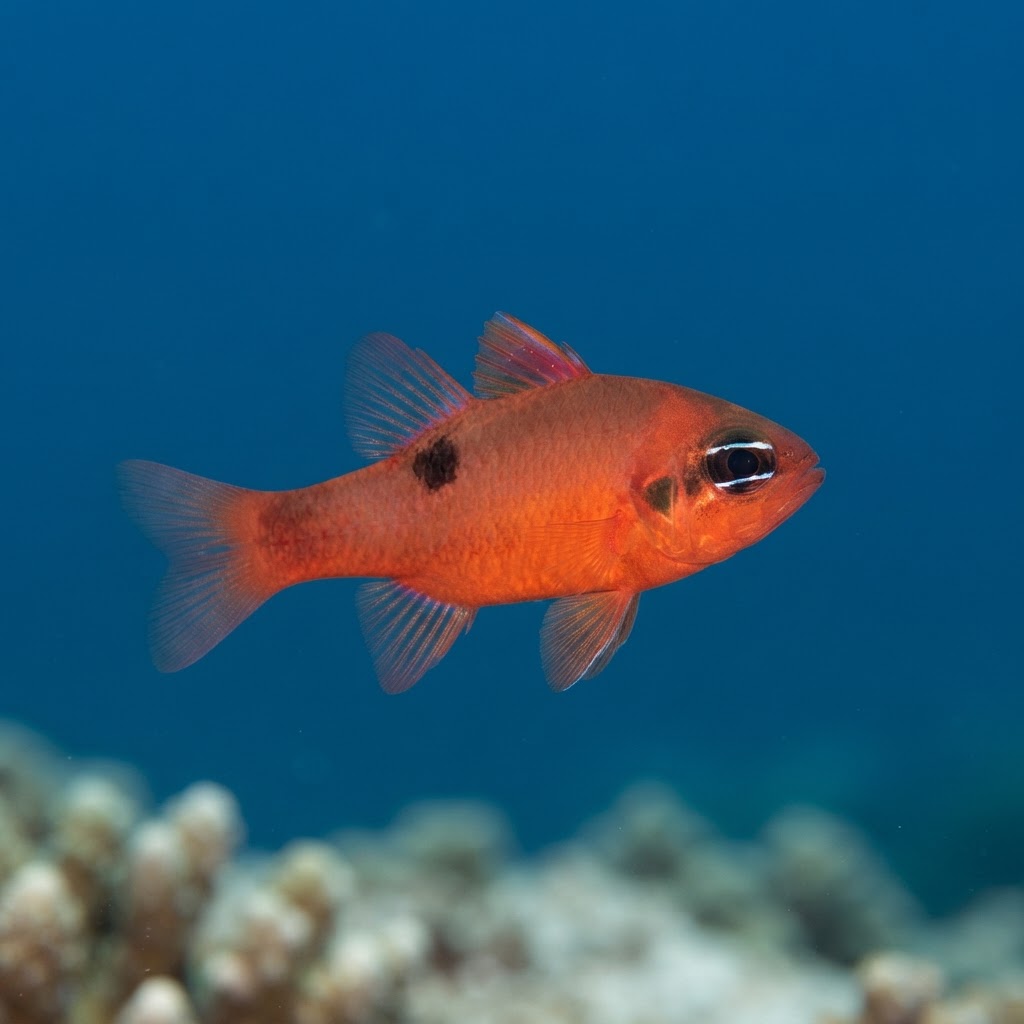
Apogon maculatus
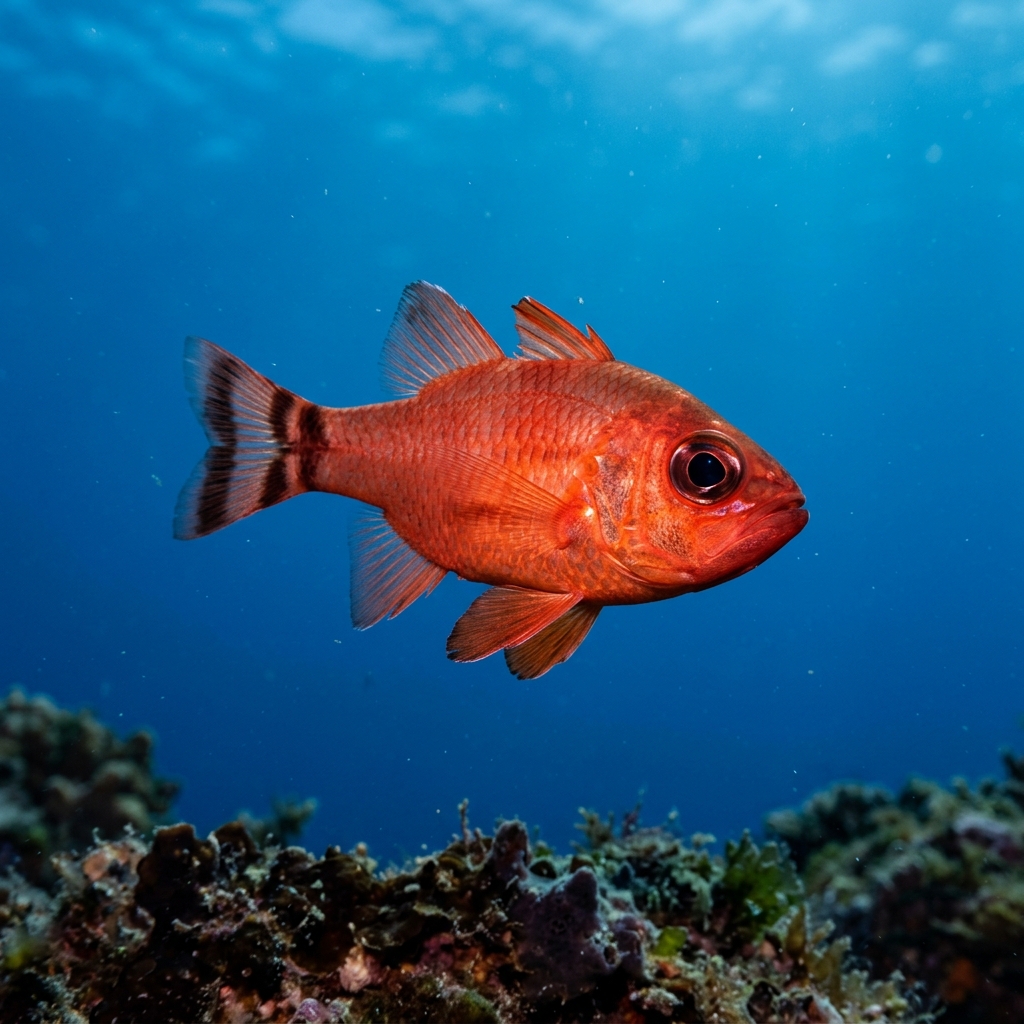
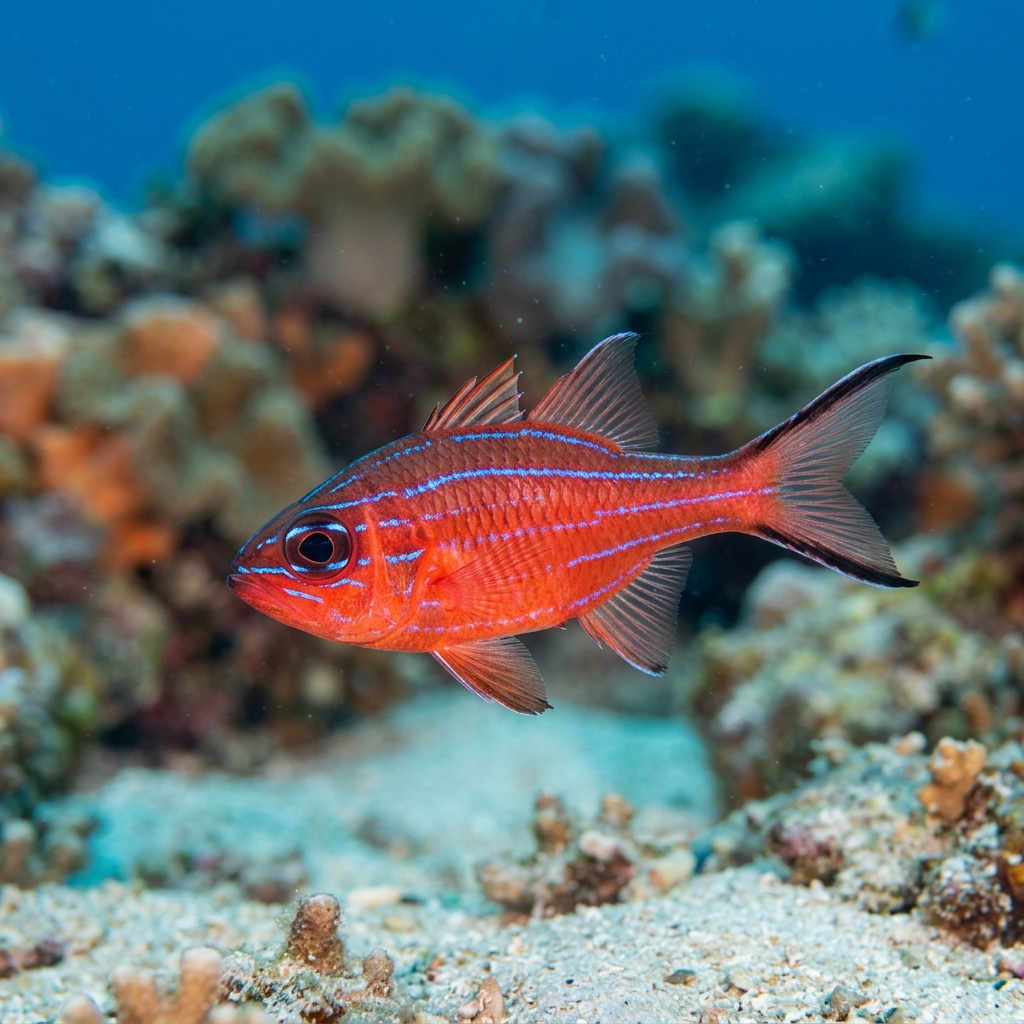
Bright red cardinalfish with big dark eyes, tucked into reef crevices from Bonaire to Florida. Look for them after dark in 23-28C water, year-round.
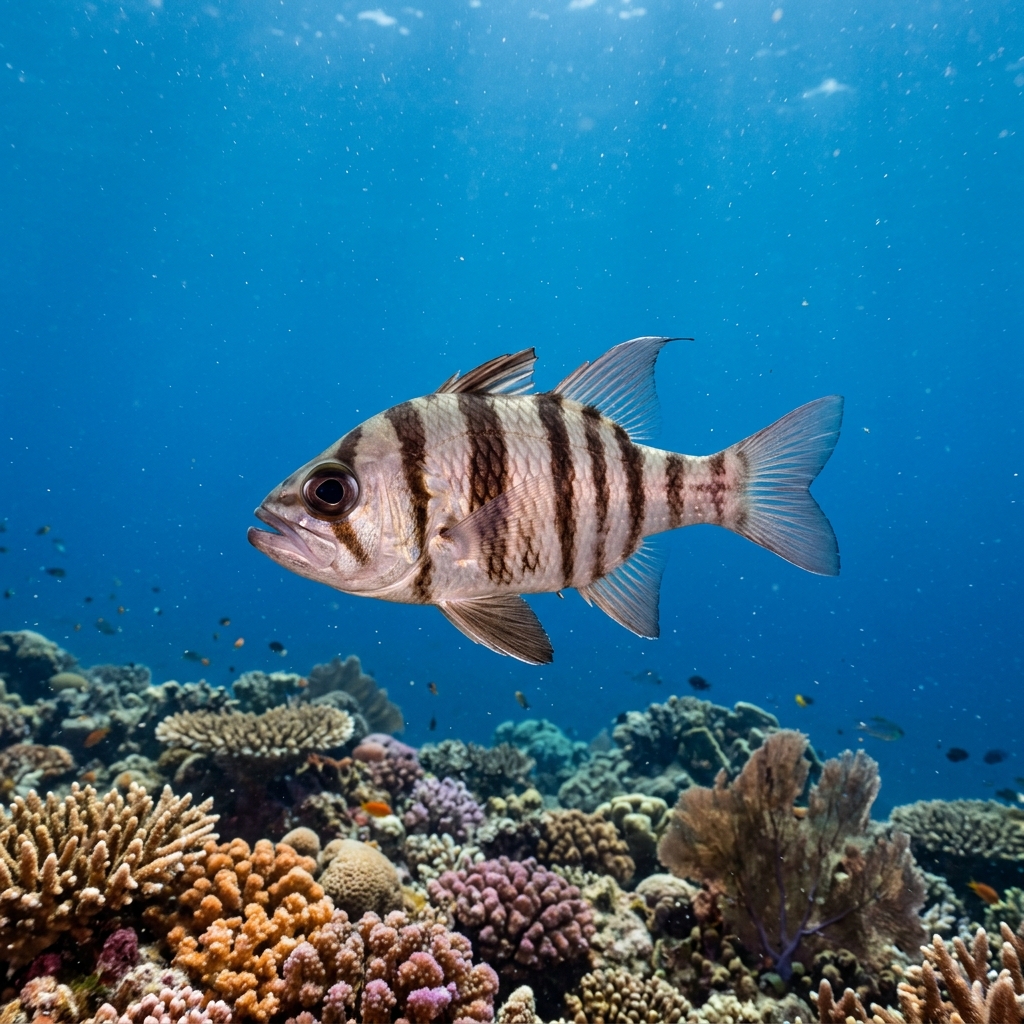
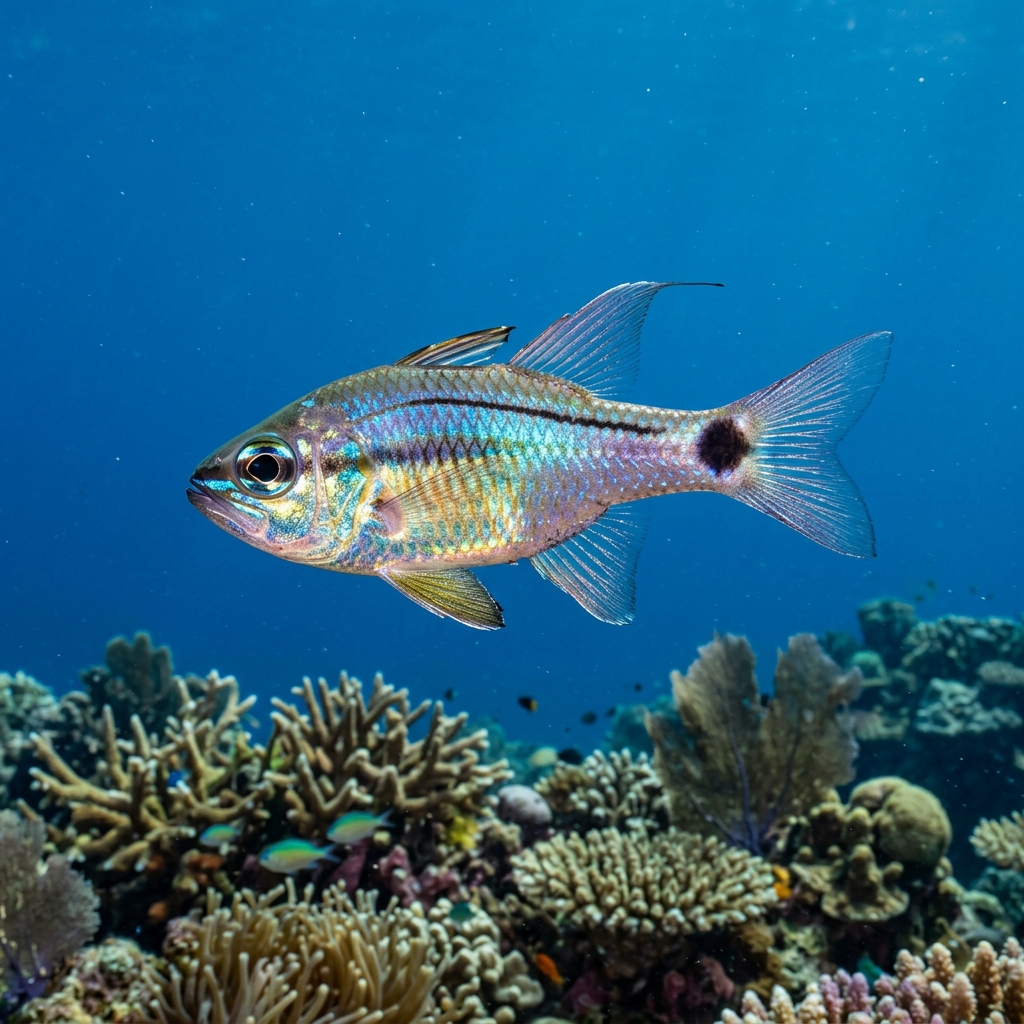
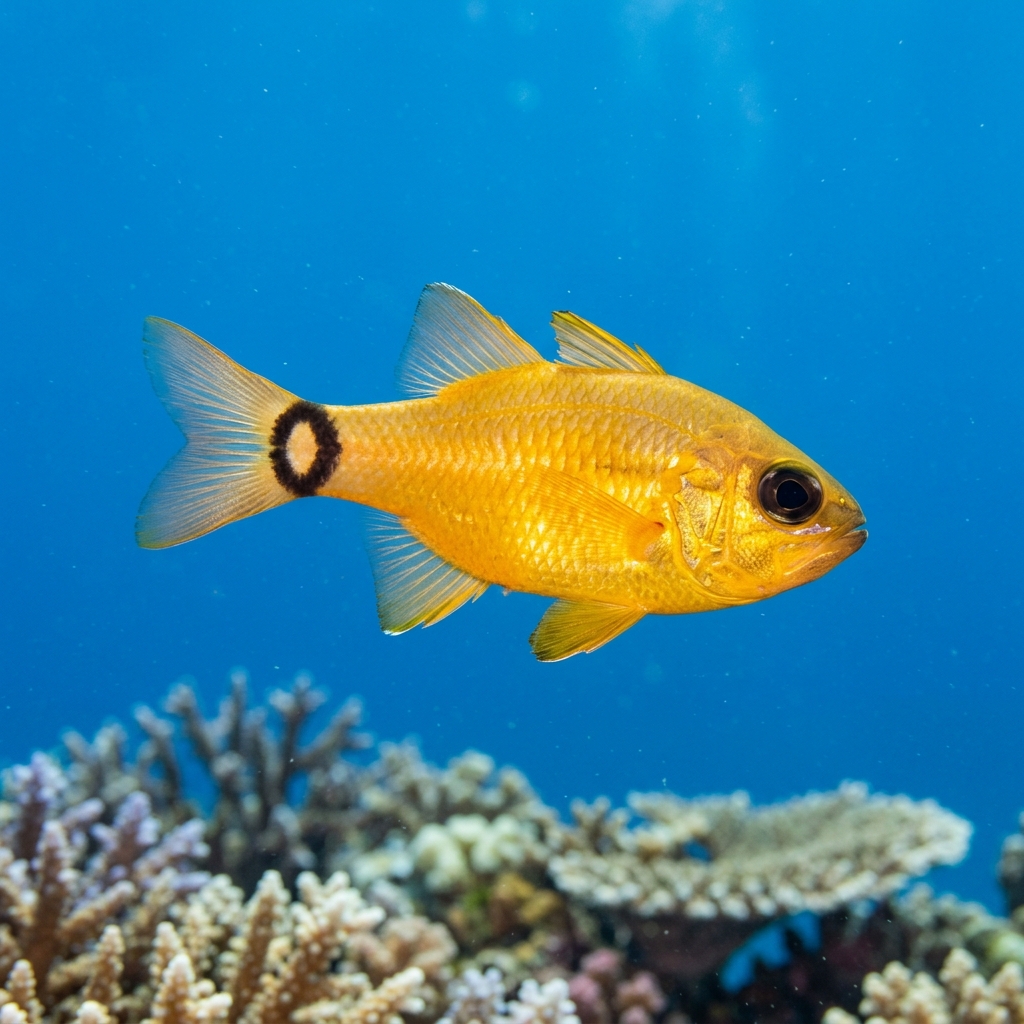
Small, deep-bodied fish around 7 cm, coloured a solid orange-red with no strong stripes, which sets it apart from most other cardinalfish on the reef. Look for the oversized, dark eye and a small black spot near the base of the tail and another below the second dorsal fin. It hovers close to cover rather than swimming in open water, so divers usually see it as a red glint inside a crevice before the whole fish comes into focus.
Spends daylight hours wedged into reef crevices, under ledges or beside sponges, often solo or in loose small groups with other cardinalfish. Becomes noticeably more active after dark, when it moves out to feed on small crustaceans and zooplankton just off the reef structure. It tolerates divers well at close range but retreats quickly into cover if a torch beam lingers or a diver gets too close.
Like other cardinalfish, males of this species are mouthbrooders, carrying the fertilised eggs in their mouths until the young hatch, a detail that makes courtship pairs worth watching for on a slow drift past a ledge.
No strong season shows up in the sightings data, and its comfortable range of 22.9 to 28C matches Caribbean and Florida reef temperatures year-round, so any month works. Night dives improve your odds since it becomes more active and visible once light drops.
Reef neighbours a diver could mistake it for. Use the identification notes above to tell them apart.
Most consistently logged in the United States, especially Florida, and across the wider Caribbean including Martinique's Saint-Pierre and Les Anses-d'Arlet, Sint Eustatius, Bonaire's Leeward Coast, the Yucatán Peninsula in Mexico, and sites in Jamaica, Guadeloupe and Aruba. It's a reef-crevice regular rather than a headline species, so expect to search ledges and swim-throughs rather than open water.
Mapping where Flamefish is logged…
Florida in the United States has the strongest concentration of logged sightings, alongside Martinique, Sint Eustatius, Bonaire's Leeward Coast and Mexico's Yucatán Peninsula. Check reef crevices, ledges and swim-throughs rather than open sand or blue water.
There's no clear seasonal pattern in the data, and its preferred water temperature of roughly 23 to 28C is available year-round across its Caribbean range. Night dives generally give better sightings since it becomes more active once the sun goes down.
Look for a small, solid red-orange fish about 7 cm long with a noticeably large dark eye and a black spot near the tail base. It sits tucked into crevices and ledges rather than swimming openly, so a red glow inside a hole is often the first clue.
They stay small, topping out around 7 cm, which is typical for cardinalfish. That size, plus their crevice-hugging habit, means a slow, close look is usually needed to spot one.
Males are mouthbrooders, holding fertilised eggs inside their mouths until the young are ready to hatch. It's a trait shared across the cardinalfish family and worth watching for during courtship on a reef ledge.
Site and sighting data is aggregated from diver logs, iNaturalist and GBIF. For taxonomy and conservation status:
Iridescent Cardinalfish
1,781 sites