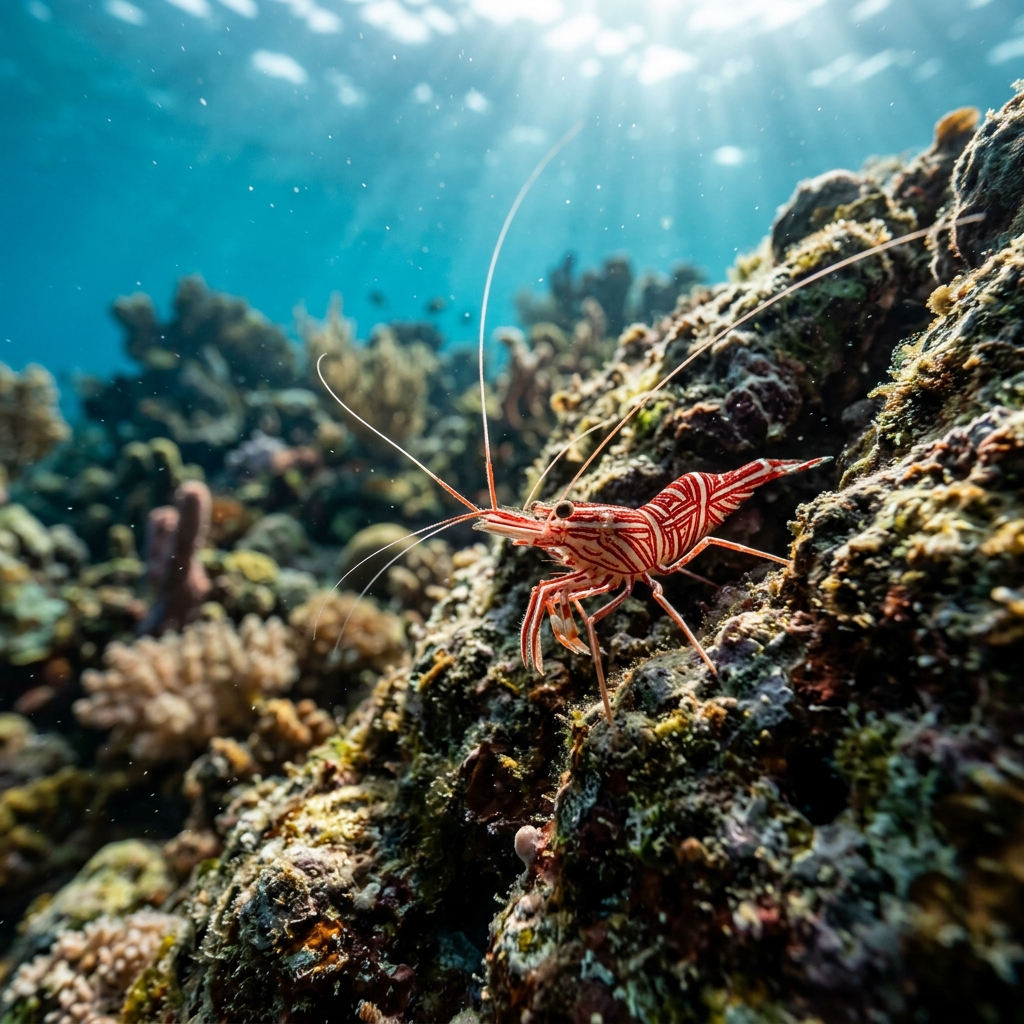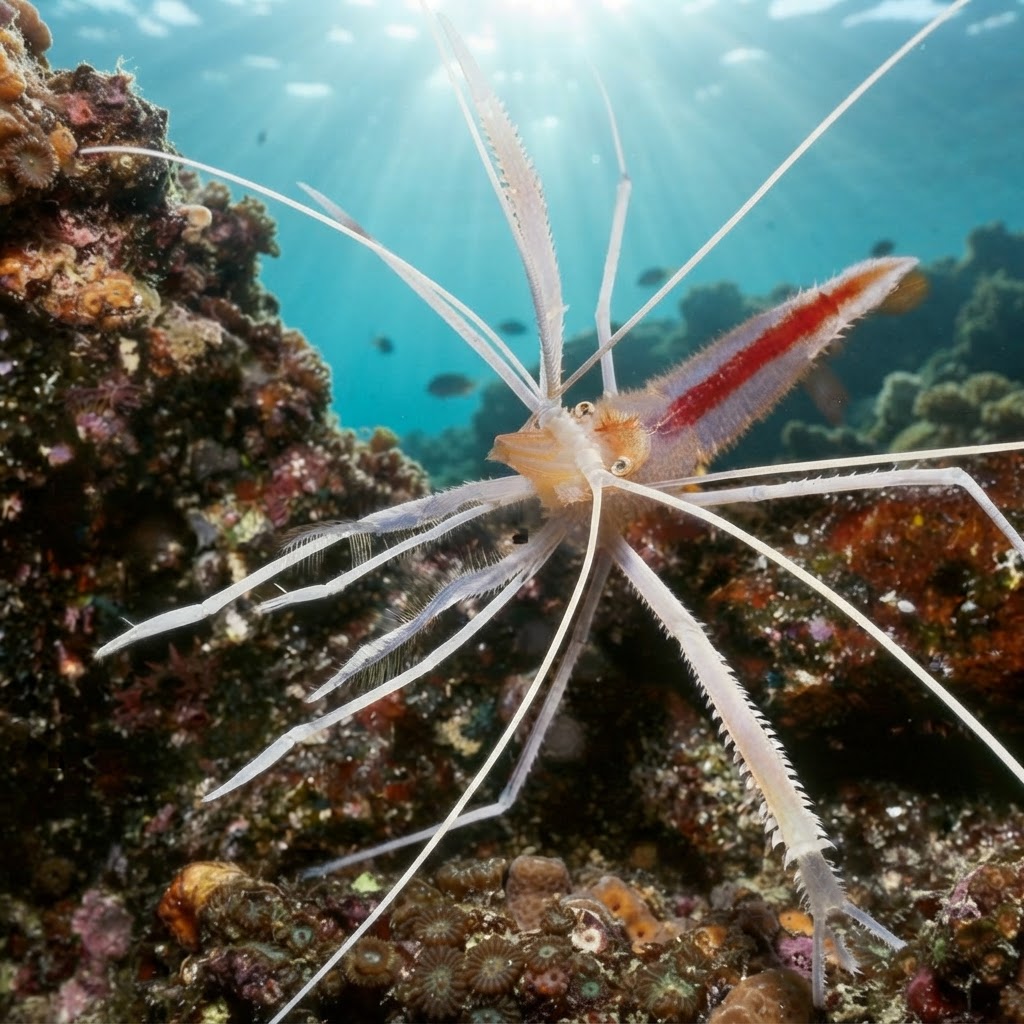
Stenopus pyrsonotus
A striking banded shrimp logged in Hawaii's reefs, comfortable in 22 to 28C water and reported year-round.
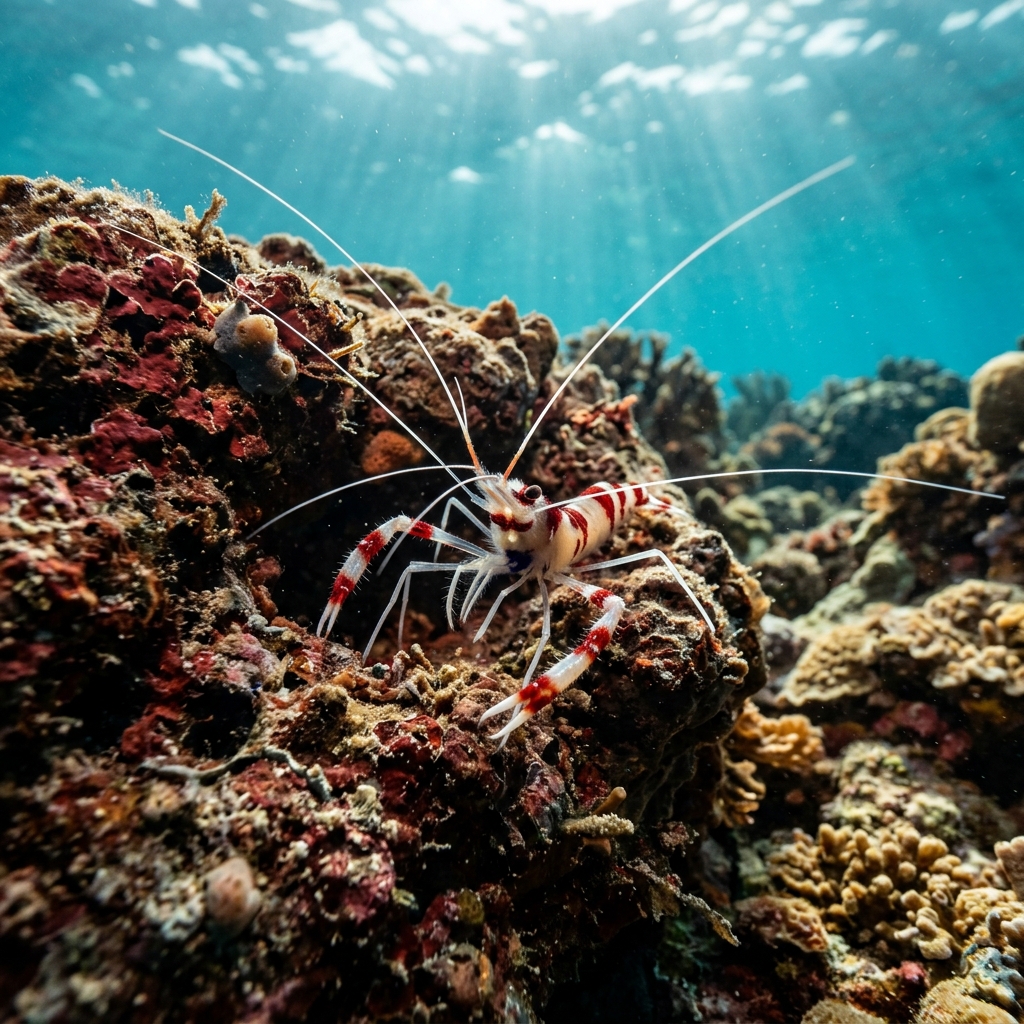
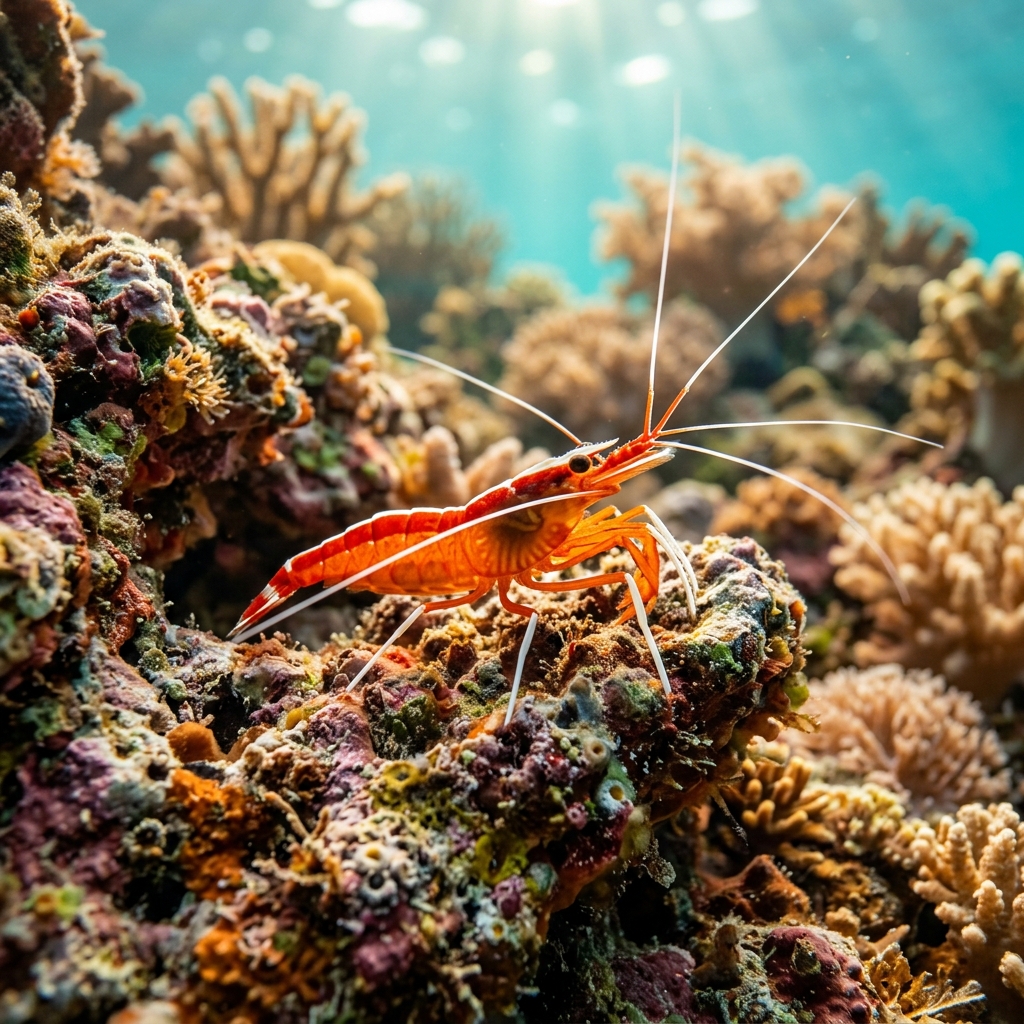
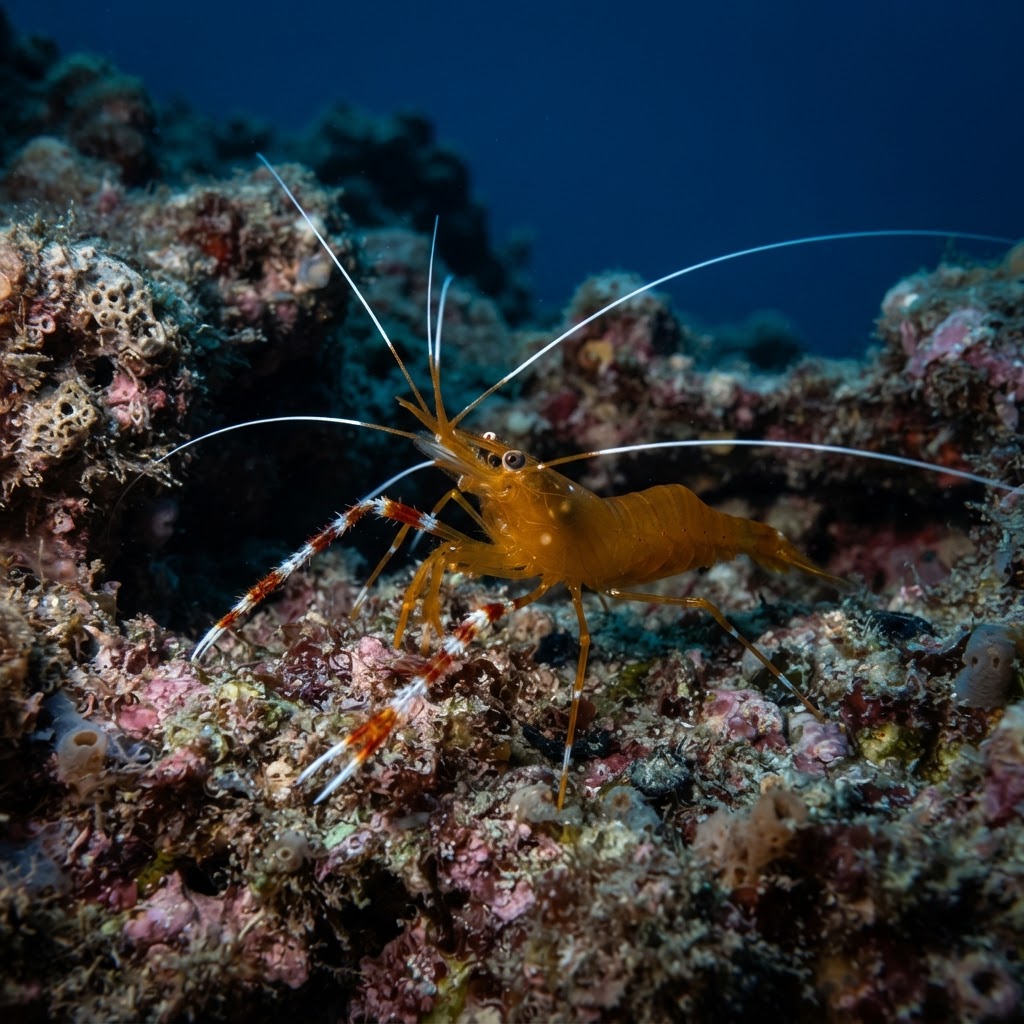
Look for a slender, long-antennae shrimp with a bold reddish-orange stripe running down its back, flanked by white and darker banding along the body and legs. It sits low against rock or coral rubble rather than swimming in open water, and the antennae, often longer than the body, are usually the first thing that catches a diver's torch beam. Like other Stenopus species it holds its front claws forward and moves in short, deliberate steps rather than darting.
Divers find it tucked into crevices and overhangs on the reef, often paired up the way many Stenopus shrimp do, rather than out in the open. It tends to hold its ground when a light passes over it, retreating only a short distance into cover rather than bolting, which makes it a workable subject for a patient macro shot.
Its long white antennae, waved slowly in the current, are a key giveaway even before the body colour is visible in a torch beam.
Recorded water temperatures span 22.3 to 28.3C, a range that holds through the year on Hawaiian reefs, and there is no clear seasonal pattern in the sightings, so treat it as a year-round find.
Reef neighbours a diver could mistake it for. Use the identification notes above to tell them apart.
Sightings so far come from Hawaii, United States, where it has been logged as a reliable find at reef sites in that region. There is not yet enough data to point to other countries, so Hawaii is currently the place to look for this species.
Mapping where Flameback Coral Shrimp is logged…
Confirmed sightings so far are concentrated in Hawaii, United States, where it has been logged as a reliable find on local reefs. Other regions may host it, but the current dive data points to Hawaii as the place to search.
There is no strong seasonal pattern in the sightings, and it has been recorded across a water temperature range of 22.3 to 28.3C, so it is considered a year-round find on Hawaiian reefs.
Check for a bold reddish-orange stripe down the back, contrasting pale and dark banding, and antennae often longer than the body. It sits tucked into crevices rather than swimming freely, moving in slow, deliberate steps.
No, they pose no threat to divers. They are small reef crevice dwellers that retreat into cover rather than react aggressively when approached.
Exact size data is not confirmed for this species, but like other Stenopus shrimp it is a small, slender crevice-dweller best appreciated with a macro lens rather than a wide shot.
Site and sighting data is aggregated from diver logs, iNaturalist and GBIF. For taxonomy and conservation status:
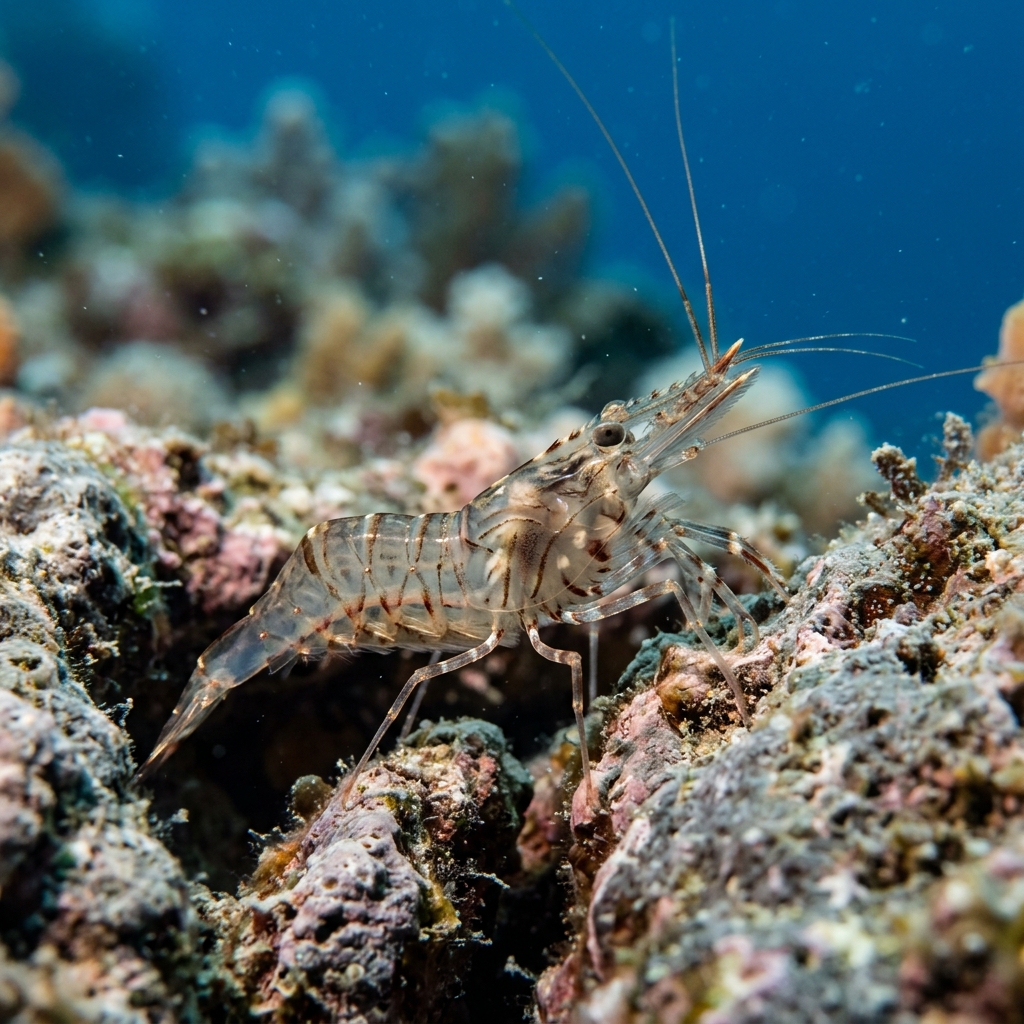
Rockpool Prawn
2,179 sites