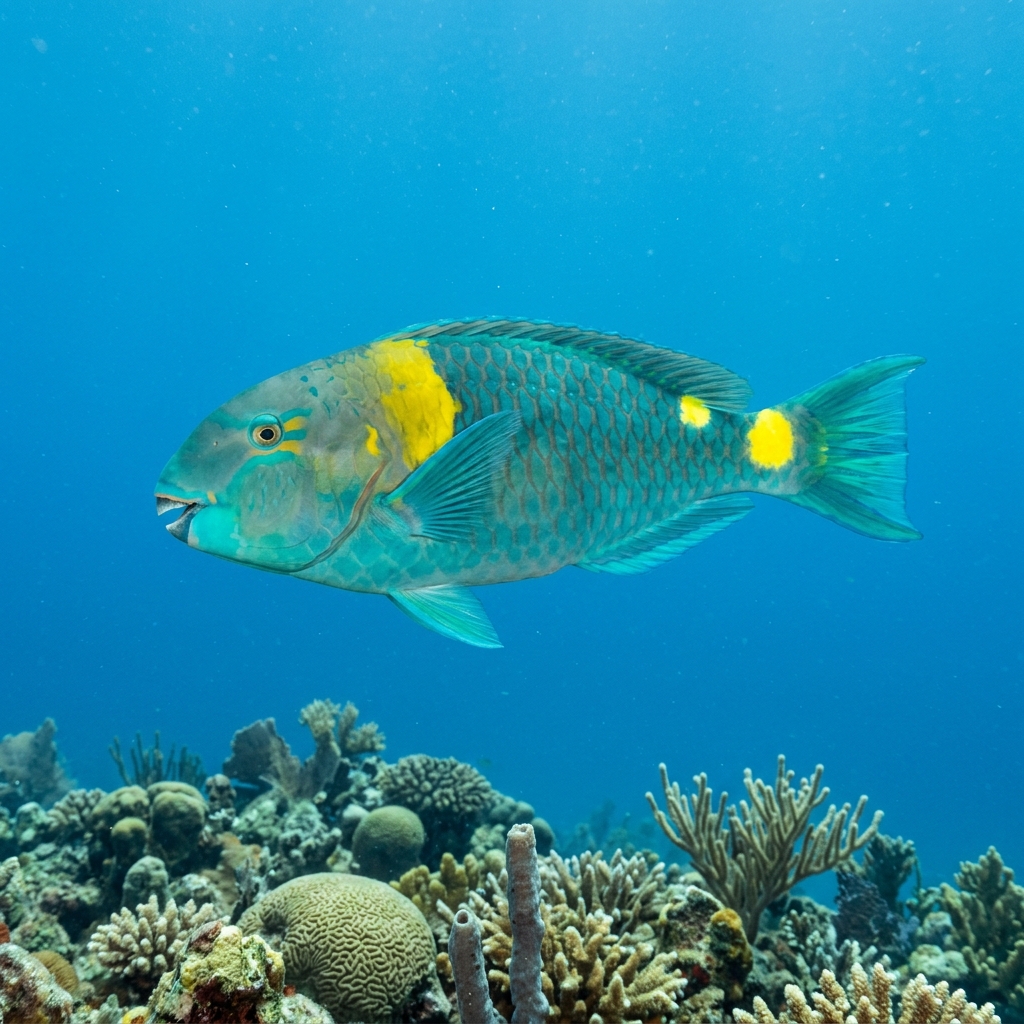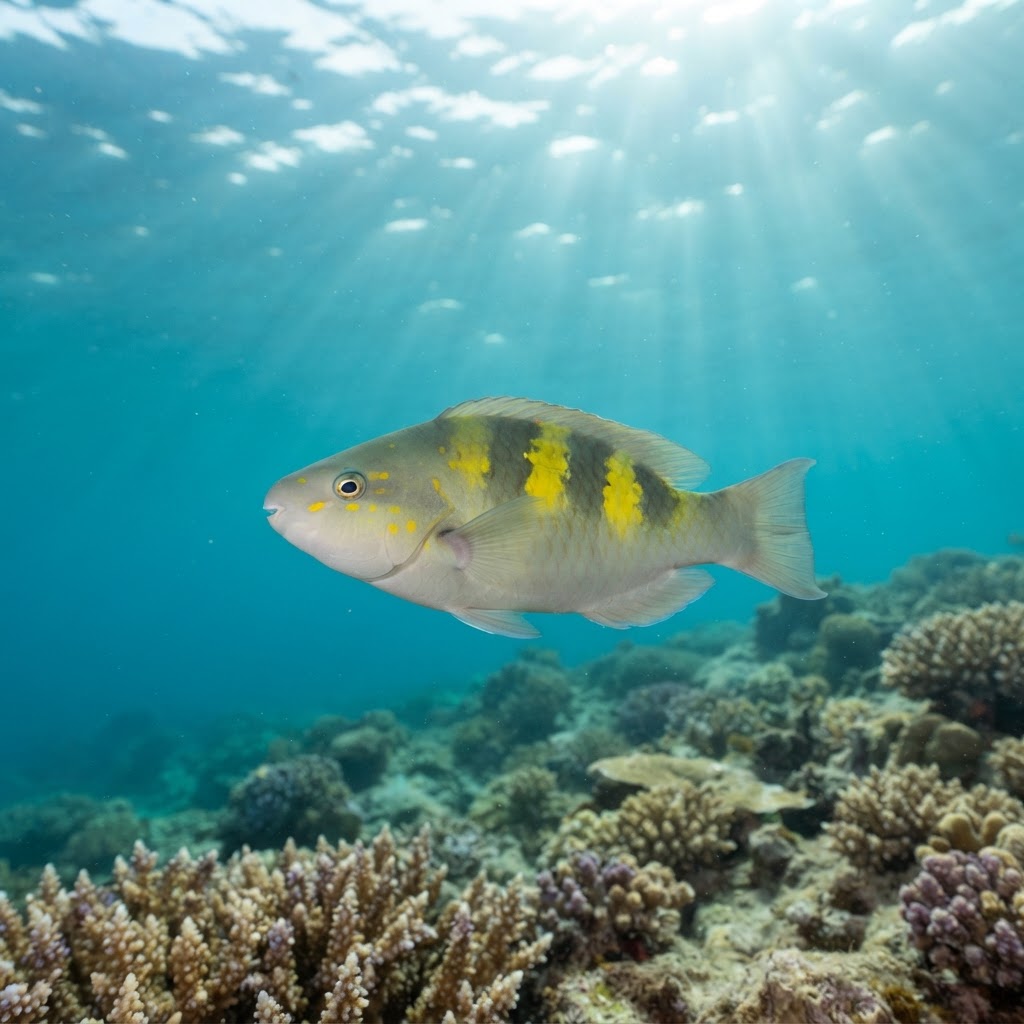
Scarus scaber
Look for this uncommon parrotfish across the Maldives' Central Atolls and Thailand's Koh Lipe, in warm 25-29C reef water year-round.
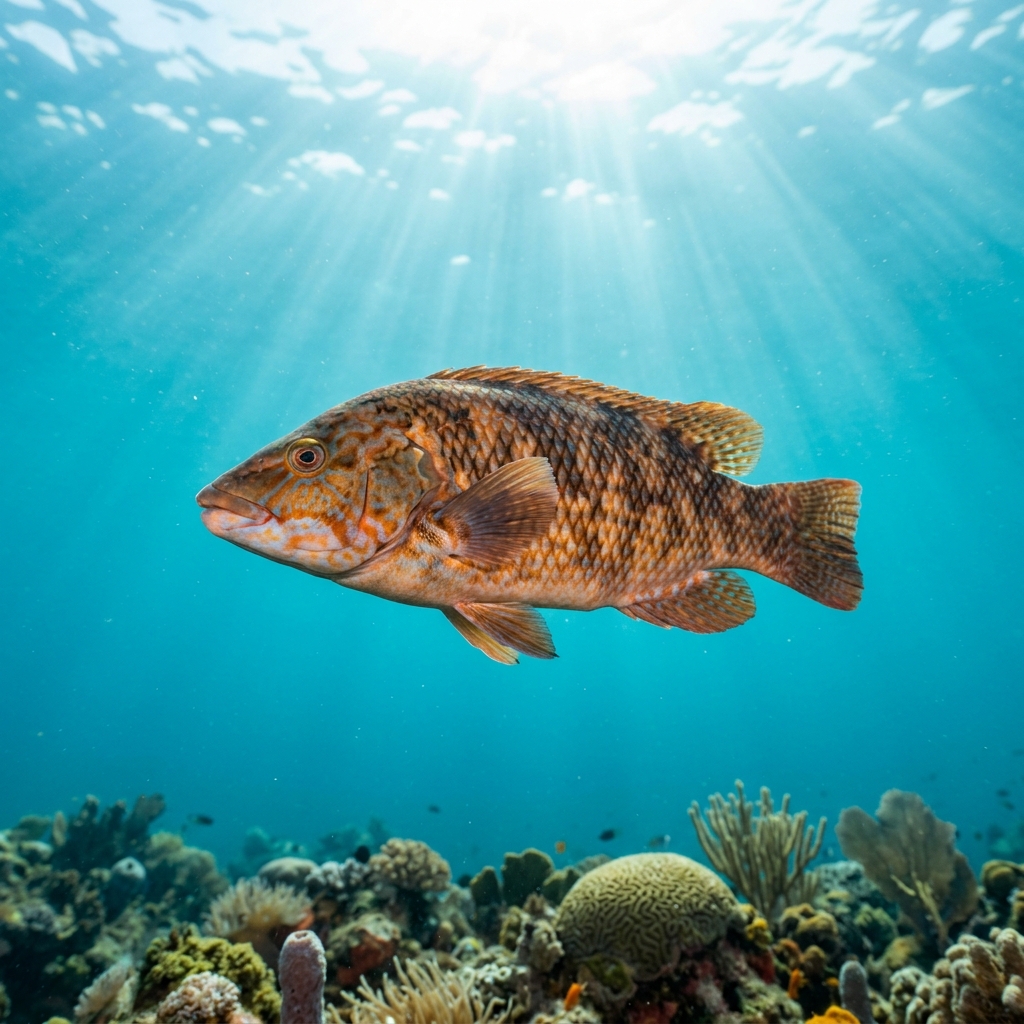
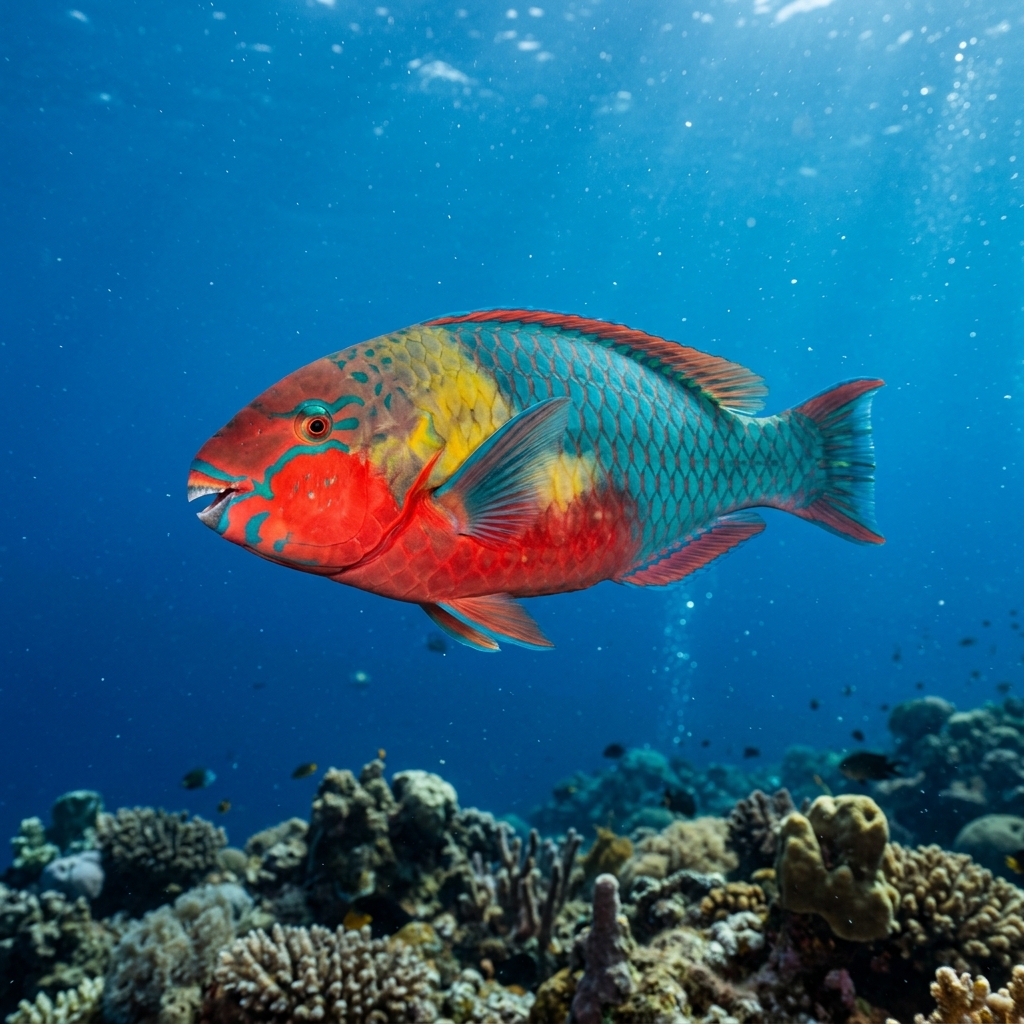
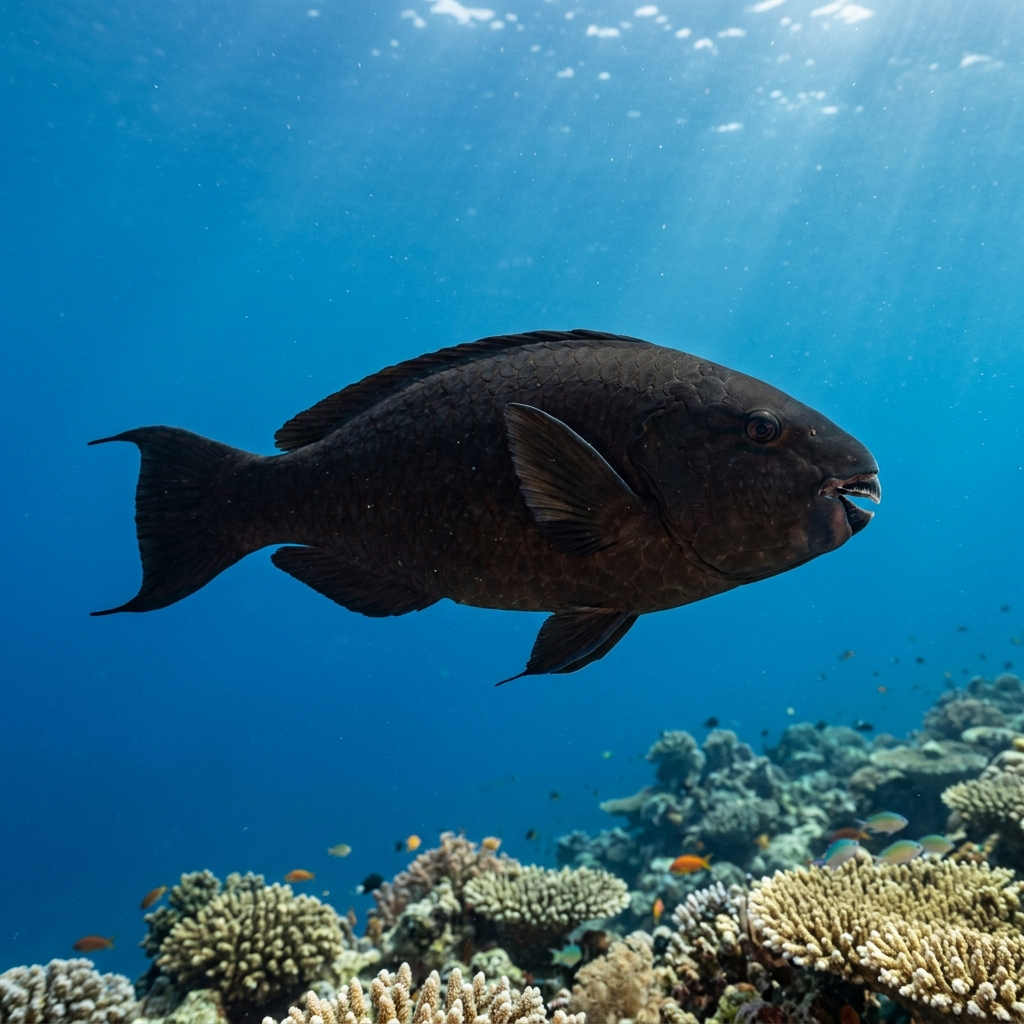
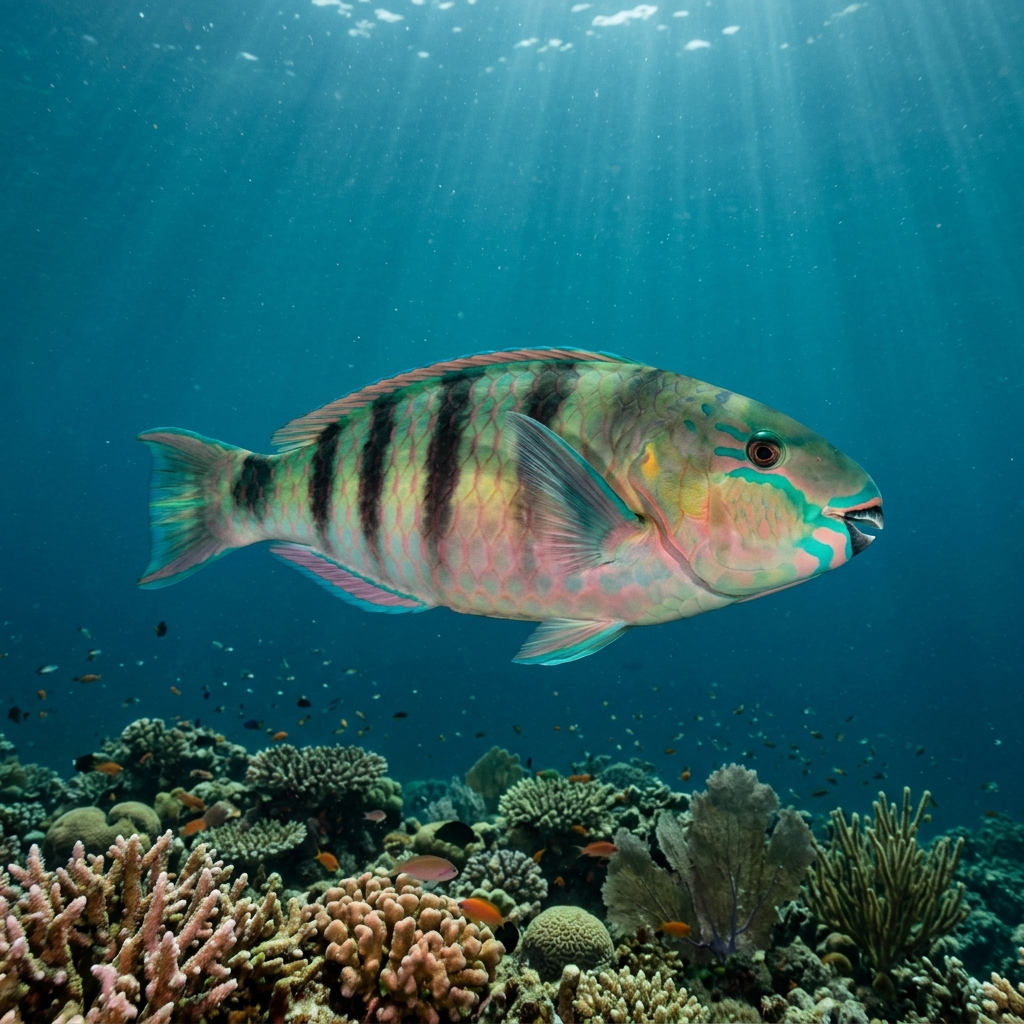
A medium-sized parrotfish, growing to around 26 cm, with a stocky body and the fused beak-like teeth typical of the group. Look for a row of pale, saddle-shaped blotches along the upper back and sides, set against a mottled olive-brown to grey base colour that gives the species its name. It moves over the reef in short bursts as it grazes, rather than cruising in open water like some larger wrasse relatives.
Divers typically spot this parrotfish picking at algae and reef substrate during the day, working a patch of coral rubble or rock with quick, deliberate bites. It tends to stay low over the reef structure and is generally unbothered by divers at a reasonable distance, though it will dart for cover if approached too directly. Most sightings come from daytime reef dives rather than night dives, in keeping with typical parrotfish grazing habits.
Like other parrotfish, it grinds up coral rock and algae with its fused teeth as it feeds, and the resulting sand is part of how reef systems generate fine sediment over time.
Water temperatures across its range sit comfortably between 25 and 29.3C year-round, and there is no clear seasonal spike in sightings, so any month is a reasonable bet on the reefs where it is logged. Divers should expect an uncommon but plausible encounter rather than a guaranteed one on any given dive.
Reef neighbours a diver could mistake it for. Use the identification notes above to tell them apart.
This is one of the more dependable parrotfish sightings in the Maldives, especially through the Central Atolls, where it turns up at far more sites than anywhere else in its range. Outside the Maldives, it is a regular find in Thailand around Koh Lipe and Khao Lak, and it holds a steady presence on reefs in Mauritius (Grand Baie, Trou aux Biches), Reunion's Saint-Leu, Lakshadweep in India, and Nosy Be in Madagascar.
Mapping where Fivesaddle Parrotfish is logged…
The most reliable region is the Central Atolls of the Maldives, where it is logged far more often than anywhere else. Good secondary spots include Koh Lipe and Khao Lak in Thailand, plus reefs in Mauritius, Reunion, Lakshadweep and Nosy Be in Madagascar.
There is no strong season in the sighting data, and water temperatures stay in a comfortable 25 to 29.3C range year-round across its range, so it can be seen on most months on the reefs where it occurs.
Check for a stocky, roughly 26 cm parrotfish with an olive-brown, mottled body and a line of pale saddle-shaped patches along the back. It grazes low over reef rubble with a parrotfish's characteristic beak-like mouth, distinguishing it from slimmer, more open-water wrasses.
They typically reach around 26 cm in length, making them a mid-sized member of the parrotfish and wrasse family rather than one of the larger reef grazers.
No, they pose no danger to divers. They are grazing reef fish that will simply move away if approached too closely.
They use fused, beak-like teeth to scrape and grind algae and rock material off the reef surface, a feeding style shared by other parrotfish that contributes to natural reef sand production over time.
Site and sighting data is aggregated from diver logs, iNaturalist and GBIF. For taxonomy and conservation status:
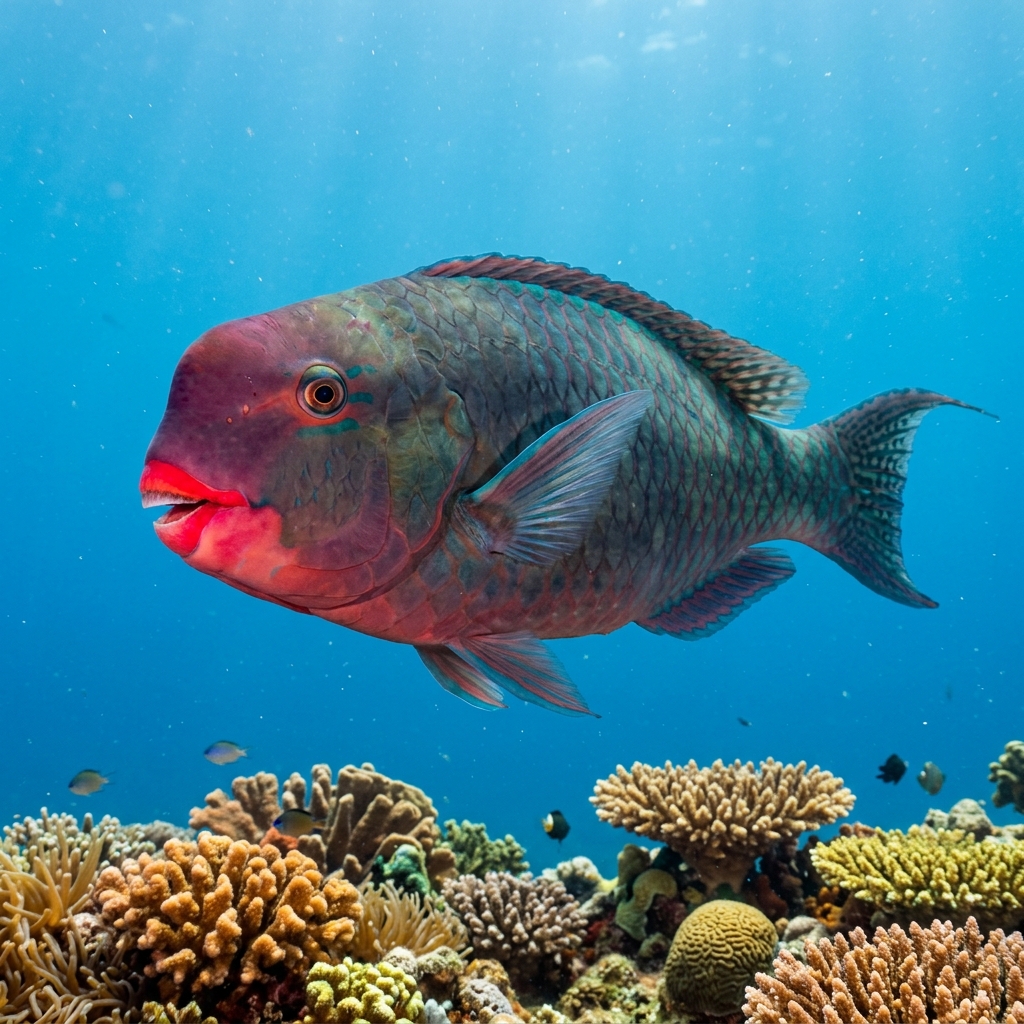
Redlip Parrotfish
2,789 sites