Canthigaster compressa
A small blue-lined puffer logged across Sabah, Bali and the Visayas at 26.6-29.3C reefs, year-round and usually solo on the sand edge.
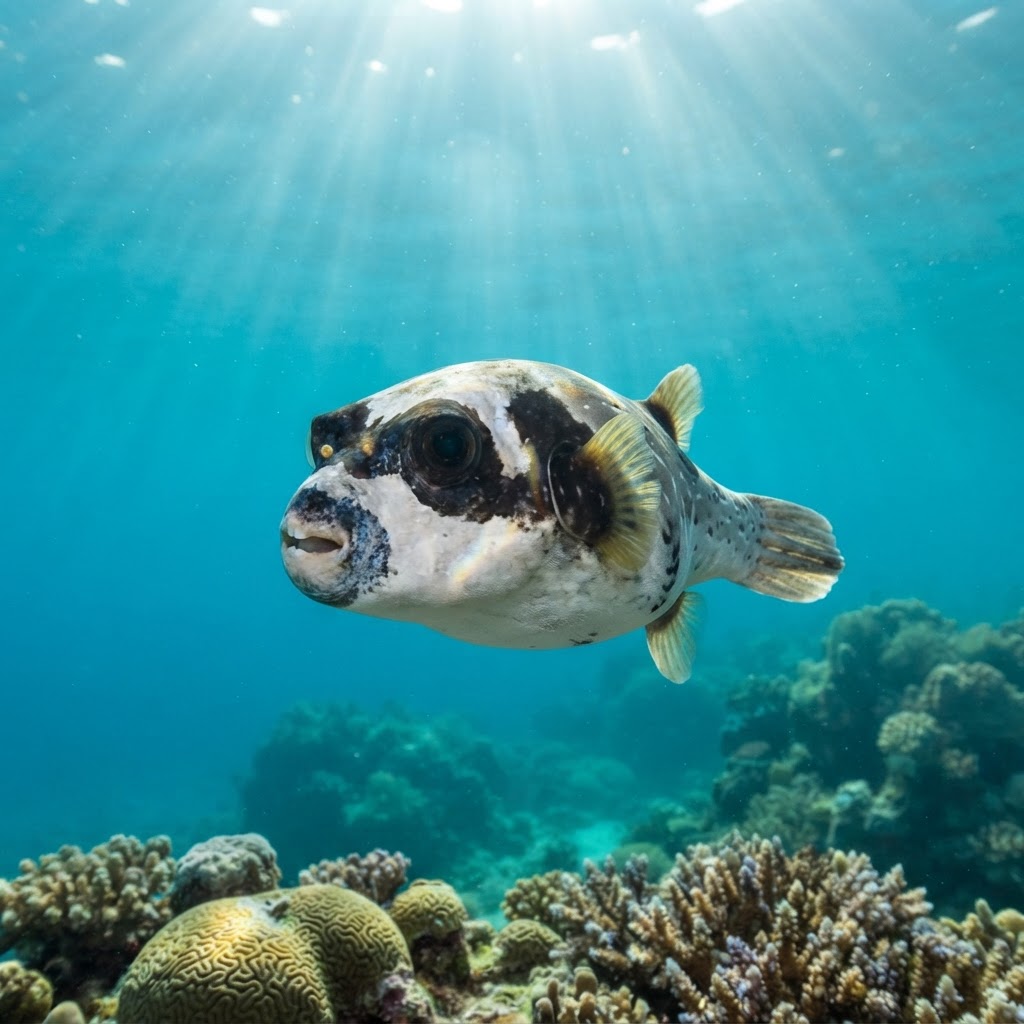
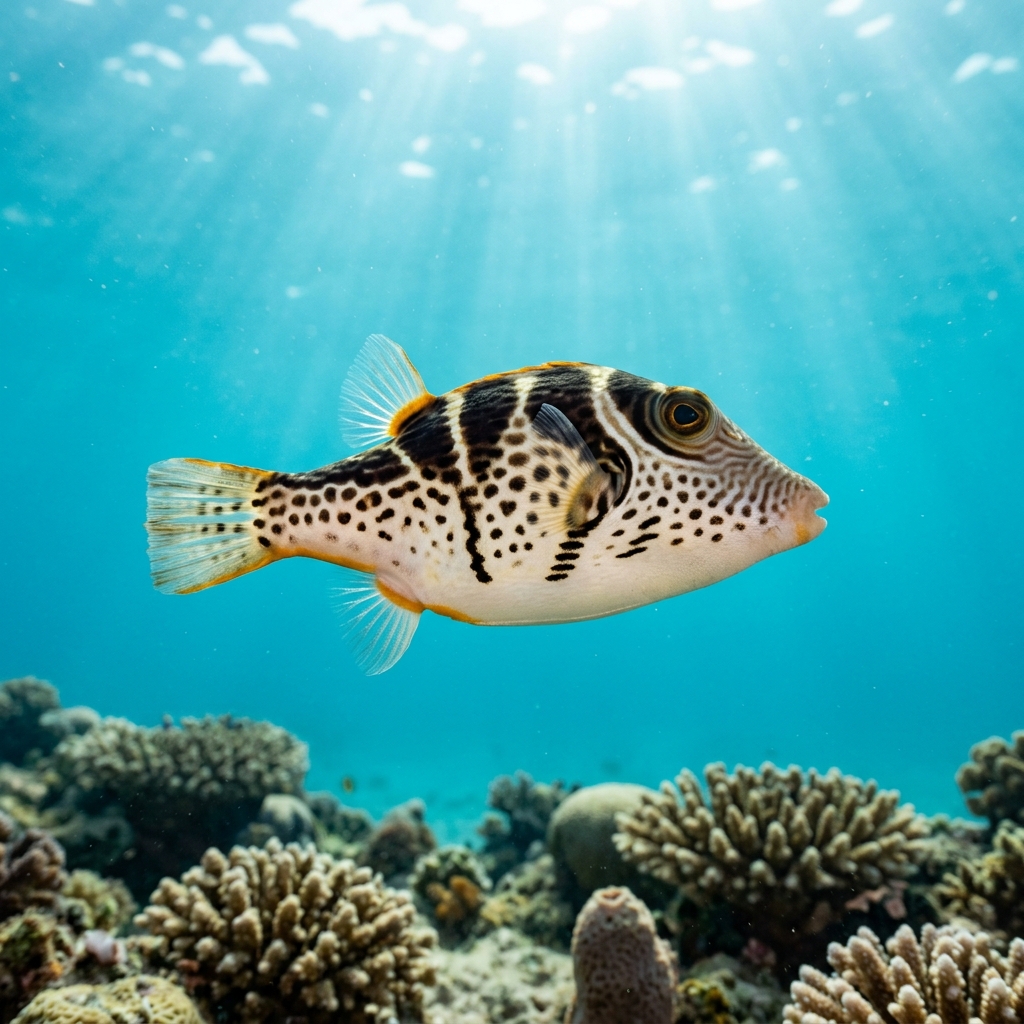
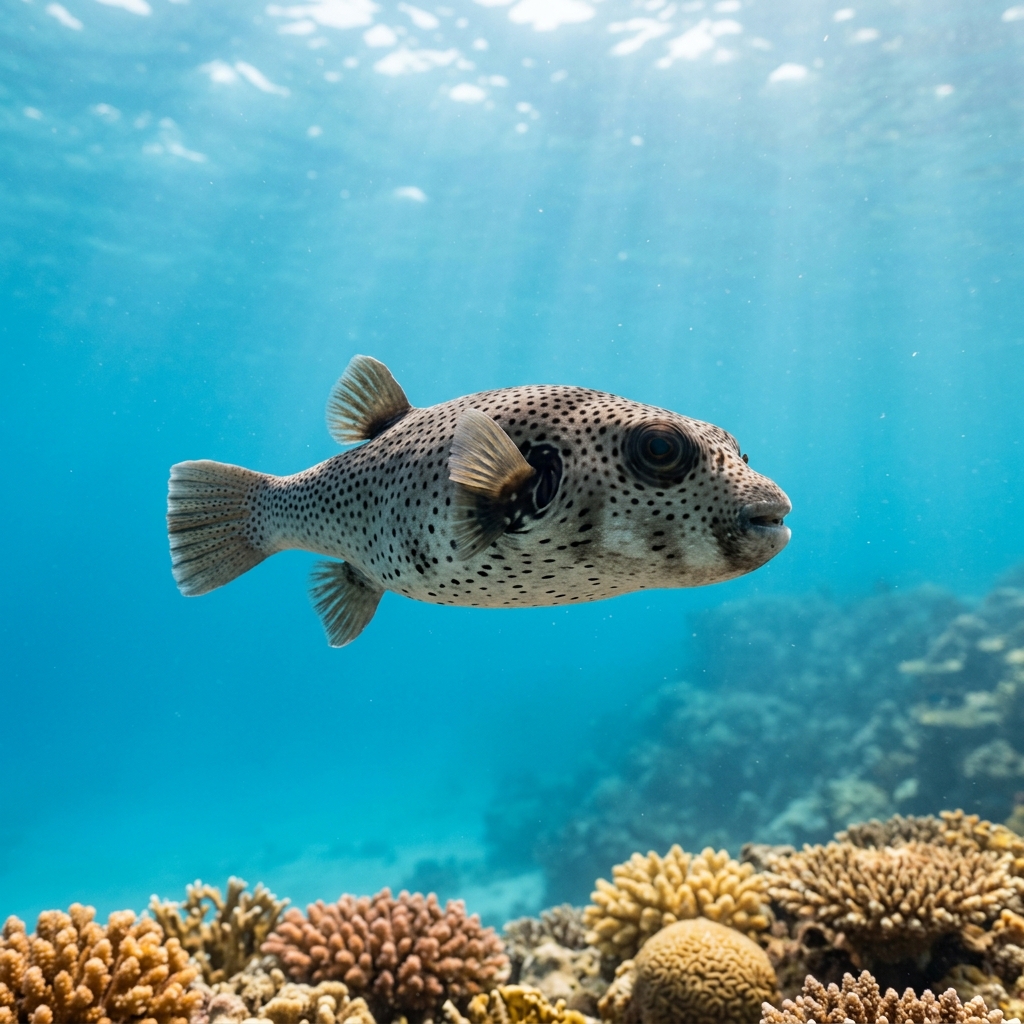
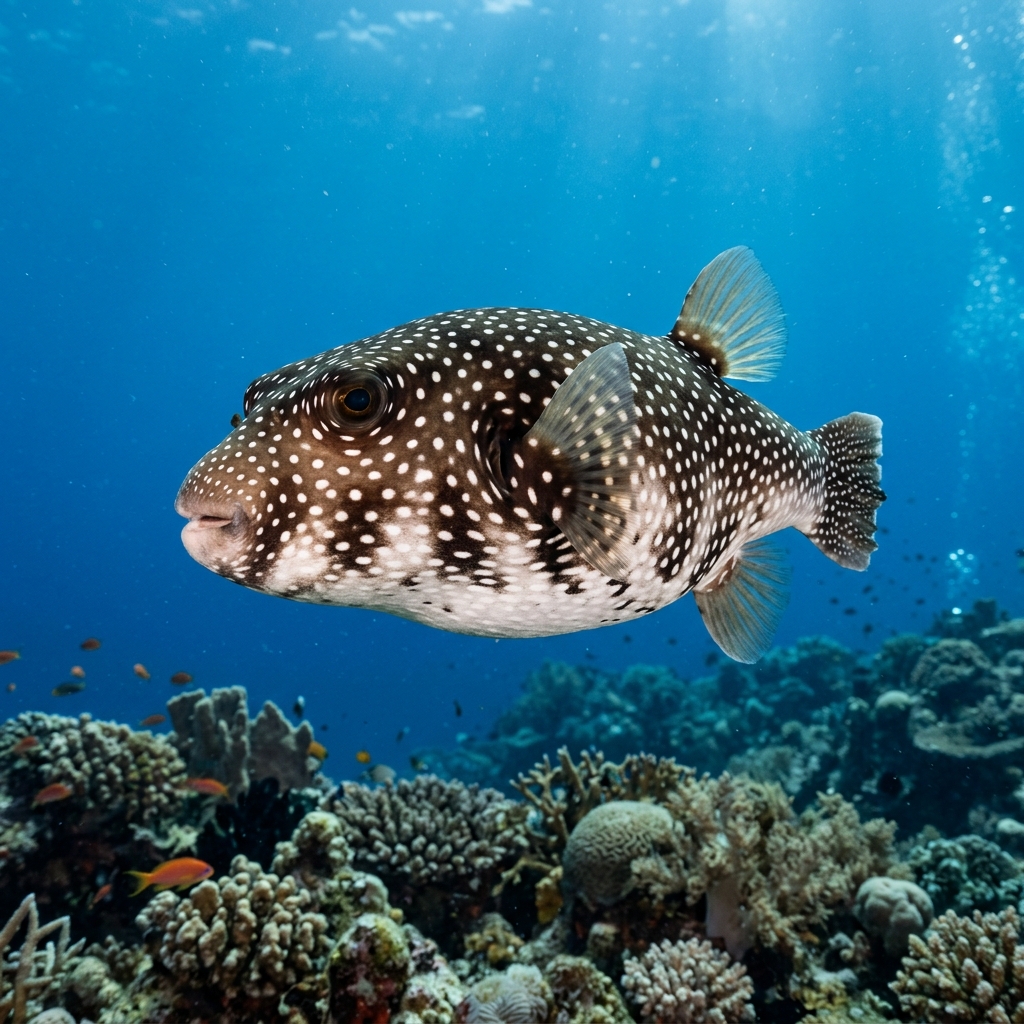
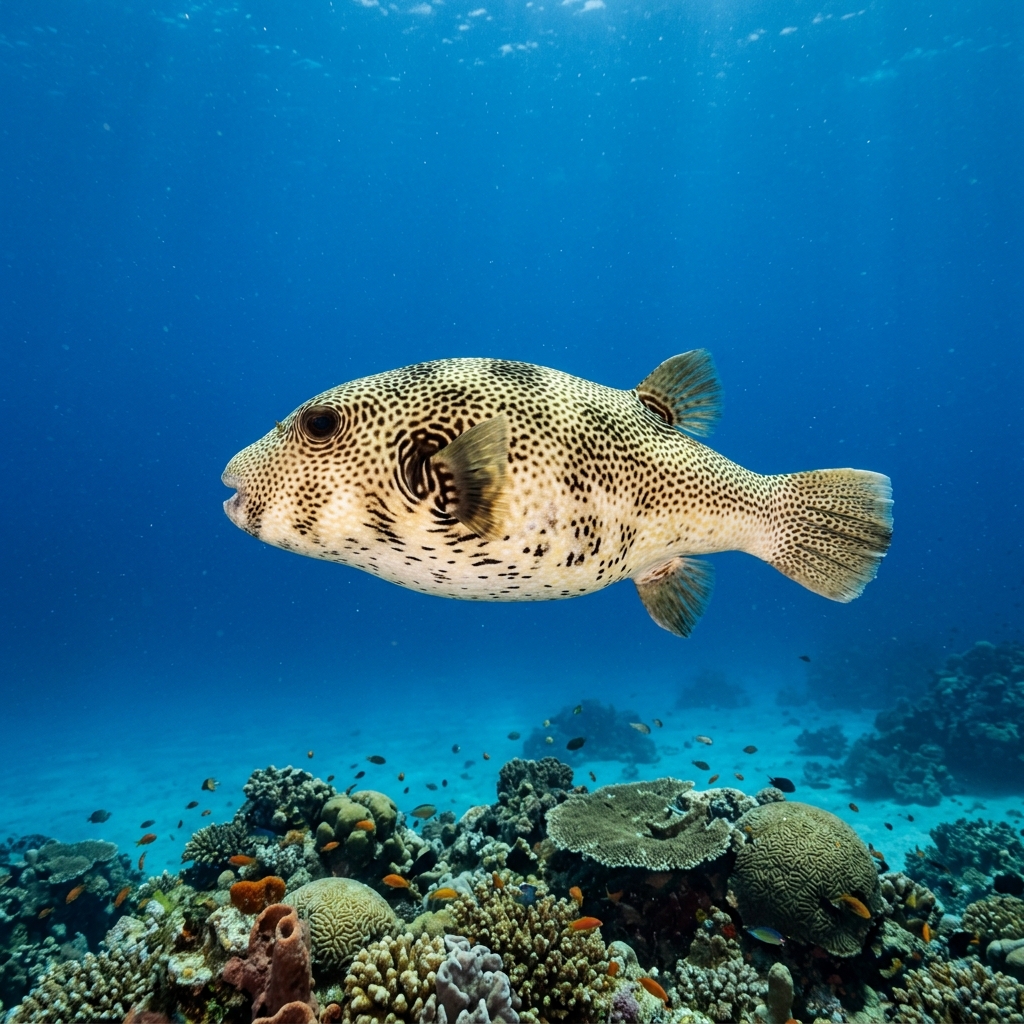
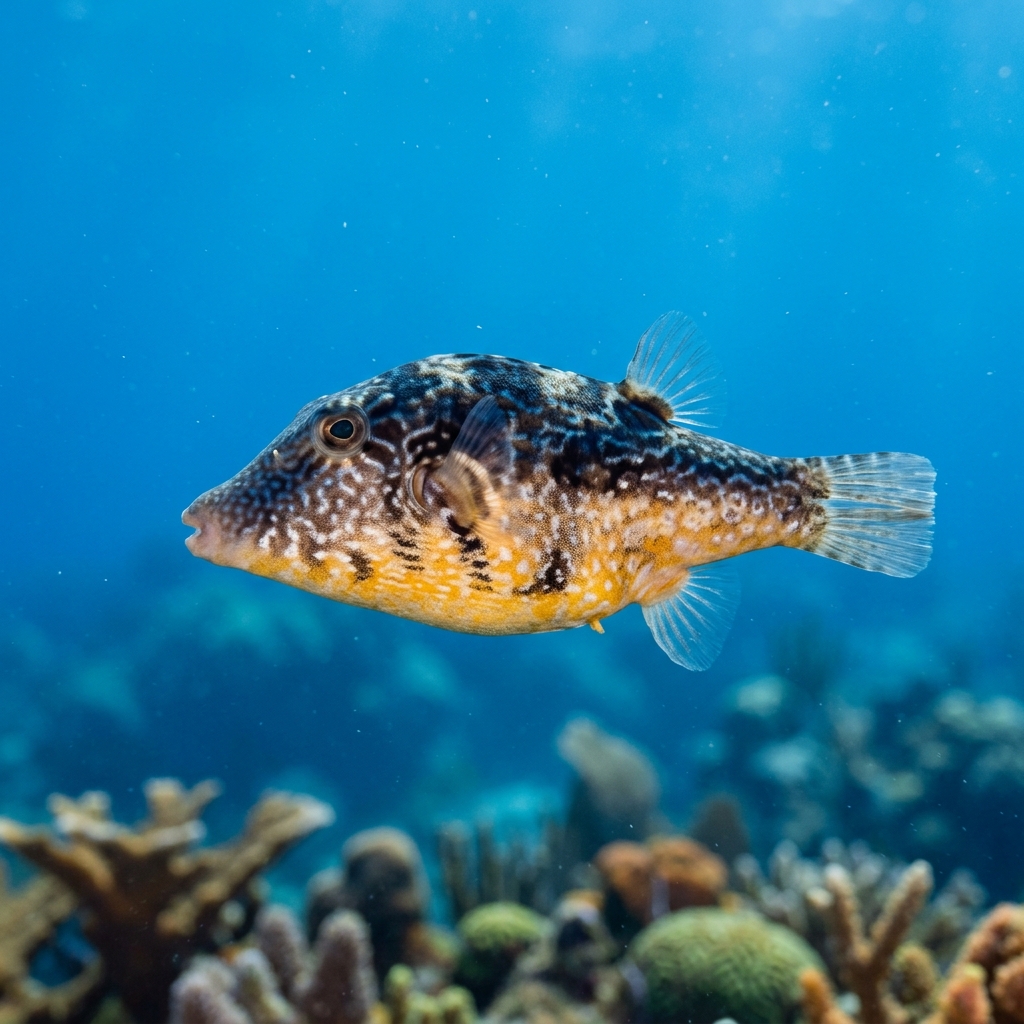
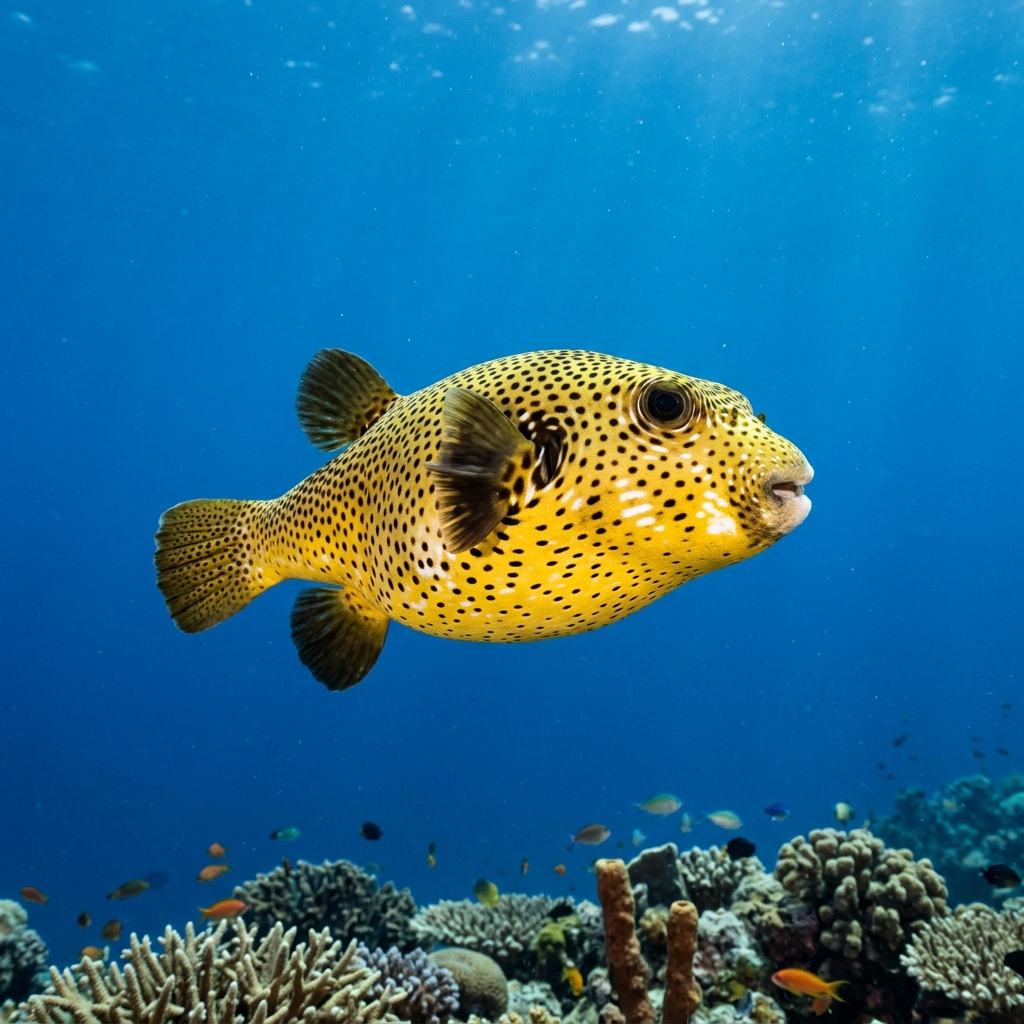
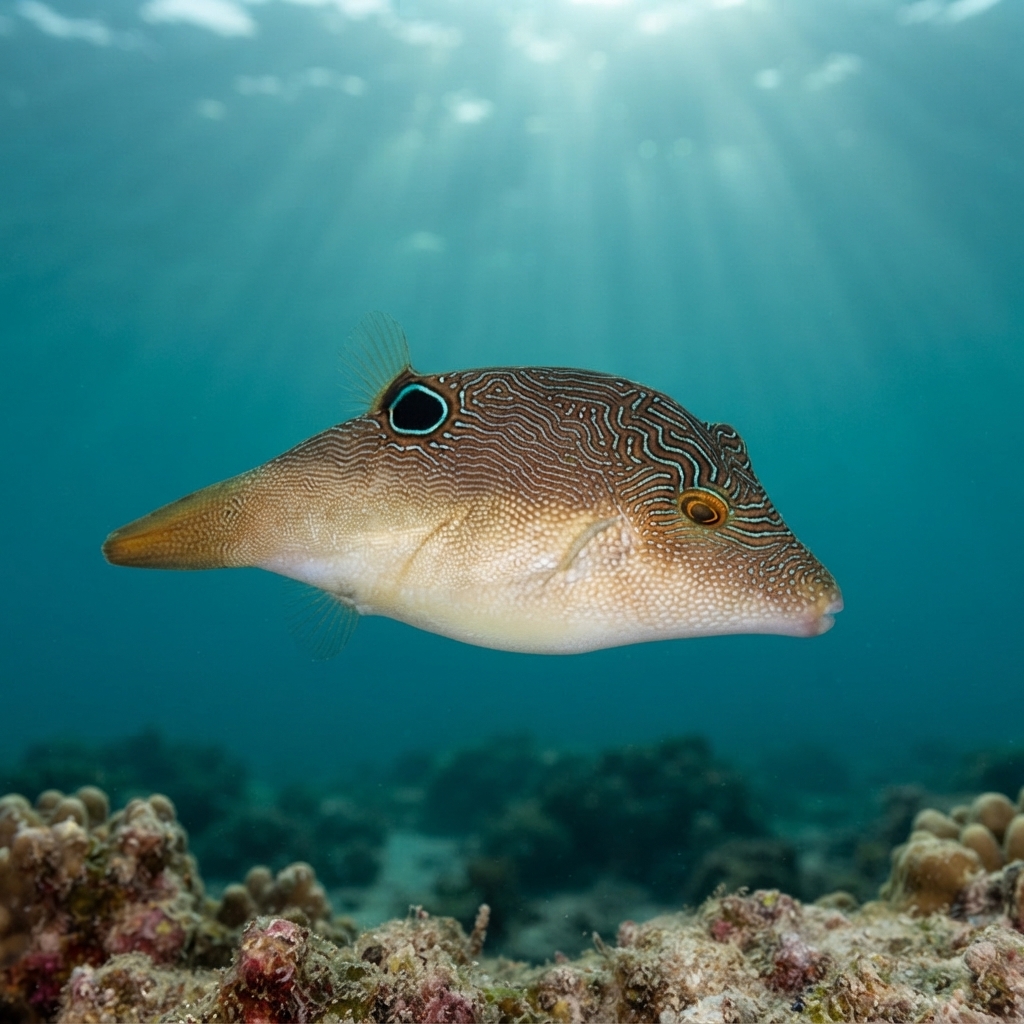
A pocket-sized pufferfish at around 8cm, with a compressed, torpedo-shaped body and an olive to grey-brown back covered in fine, close-set blue squiggles that look like a fingerprint pressed into the skin. The belly is pale and unmarked, and the face carries the same fine blue lines running toward the eye. Look for it hovering low over rubble or sand patches rather than out in open water.
Usually seen alone, hovering just above sand, rubble or low coral growth while it picks at small invertebrates, and generally ignoring passing divers rather than darting for cover. It sits low in the water column and close to structure, which makes it easy to swim past without noticing until you slow down and scan the substrate. Most logs mark it as an uncommon sighting, so it rewards divers who take the time to look rather than cruise by.
Like other pufferfish, it can inflate by gulping water if seriously threatened, but its main defence is a mildly toxic skin and flesh that makes most reef predators leave it alone, so it rarely bothers fleeing from divers.
No clear season shows up in the sightings, and with a comfortable range of 26.6 to 29.3C it stays on these reefs year-round, so any month works for a trip to Sabah, Bali or the Visayas.
Reef neighbours a diver could mistake it for. Use the identification notes above to tell them apart.
Most reliably logged in Sabah in Malaysia, the Visayas in the Philippines, and Bali, Maluku and Sulawesi in Indonesia, with a smaller but steady presence around Dili in Timor-Leste. It turns up on reef slopes and rubble patches throughout Indonesia, Malaysia and the Philippines, making it a realistic find on almost any Coral Triangle reef dive rather than a specialty target.
Mapping where Fingerprint Toby is logged…
Strongest populations are logged in Sabah, Malaysia, the Visayas in the Philippines, and Bali, Maluku and Sulawesi in Indonesia, with sightings also reported around Dili, Timor-Leste. It is a widespread Coral Triangle species rather than one tied to a single dive destination.
There is no detected seasonal pattern, and the water temperatures it is found in, 26.6 to 29.3C, hold steady year-round across its range, so it can be seen on any month's dive.
Look for a small, compressed puffer around 8cm long with fine blue squiggly lines covering an olive-brown back, a pale unmarked belly, and matching thin lines running across the face toward the eye.
They stay small, typically around 8cm long, making them one of the more easily overlooked pufferfish on a reef.
No, they pose no threat to divers and will typically just carry on feeding as you pass. Like most pufferfish their skin and flesh carry natural toxins, but this is only a concern if handled or eaten, never simply by diving near one.
Site and sighting data is aggregated from diver logs, iNaturalist and GBIF. For taxonomy and conservation status:
Valentini Pufferfish
2,830 sites