Plocamopherus ceylonicus
An uncommon find on Queensland reefs, this frilled white-and-orange nudibranch rewards divers who slow down and scan the substrate.
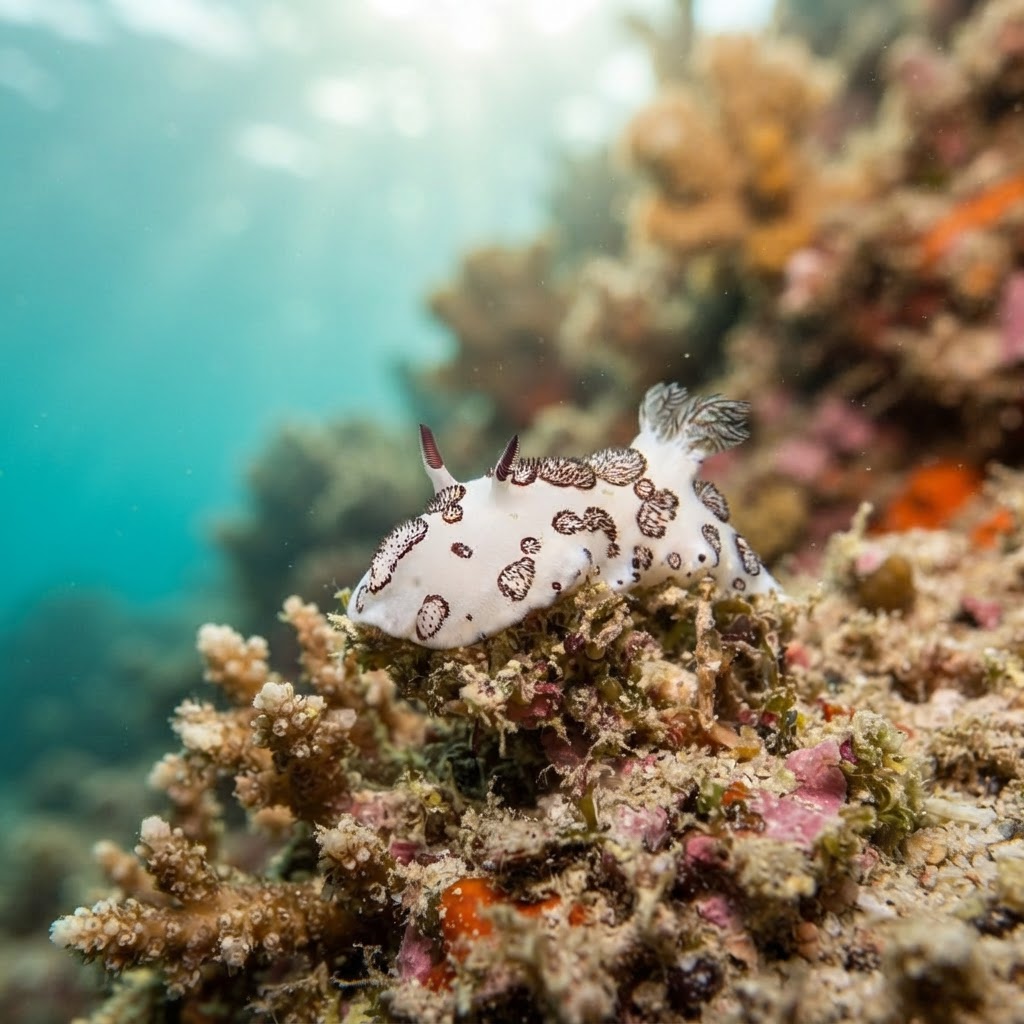
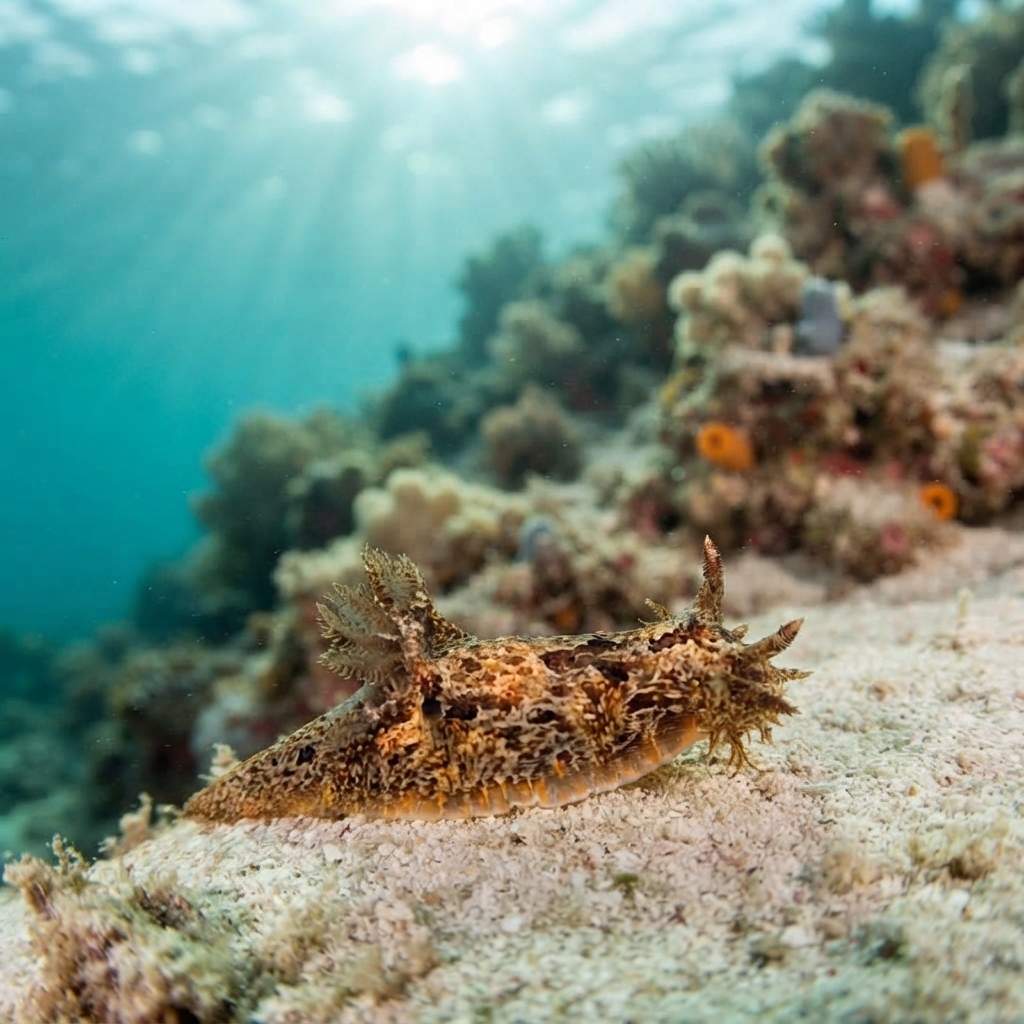
A small, soft-bodied sea slug with a pale to translucent white body edged in fine, lace-like frills along its mantle, giving it a filigreed look under torchlight. Bright orange or yellow tips punctuate the rhinophores (the paired sensory tentacles on the head) and the gill cluster on the back, creating small glowing points against the pale body. It moves slowly across rubble and rocky substrate, staying low and easy to overlook unless you are running a light across the reef.
Divers find it moving slowly over rubble, rock, and low-relief reef substrate, usually during the day rather than tucked away nocturnally. Like other dorid nudibranchs it grazes on sessile invertebrates such as sponges or bryozoans as it crawls, showing little reaction to divers beyond continuing its slow patrol. Because it is small and pale, most sightings happen when a diver is already scanning close to the bottom rather than swimming past at speed.
The frilly projections along its mantle are not just decorative, they increase surface area for gas exchange and may help disperse chemical defences absorbed from its prey, a trick many dorid nudibranchs share.
Sightings show no detectable seasonal pattern, and the observed water temperature range of 20 to 29.5C spans most of the year on Queensland reefs, so it can turn up in any month. There is no strong case yet for targeting a particular season over another.
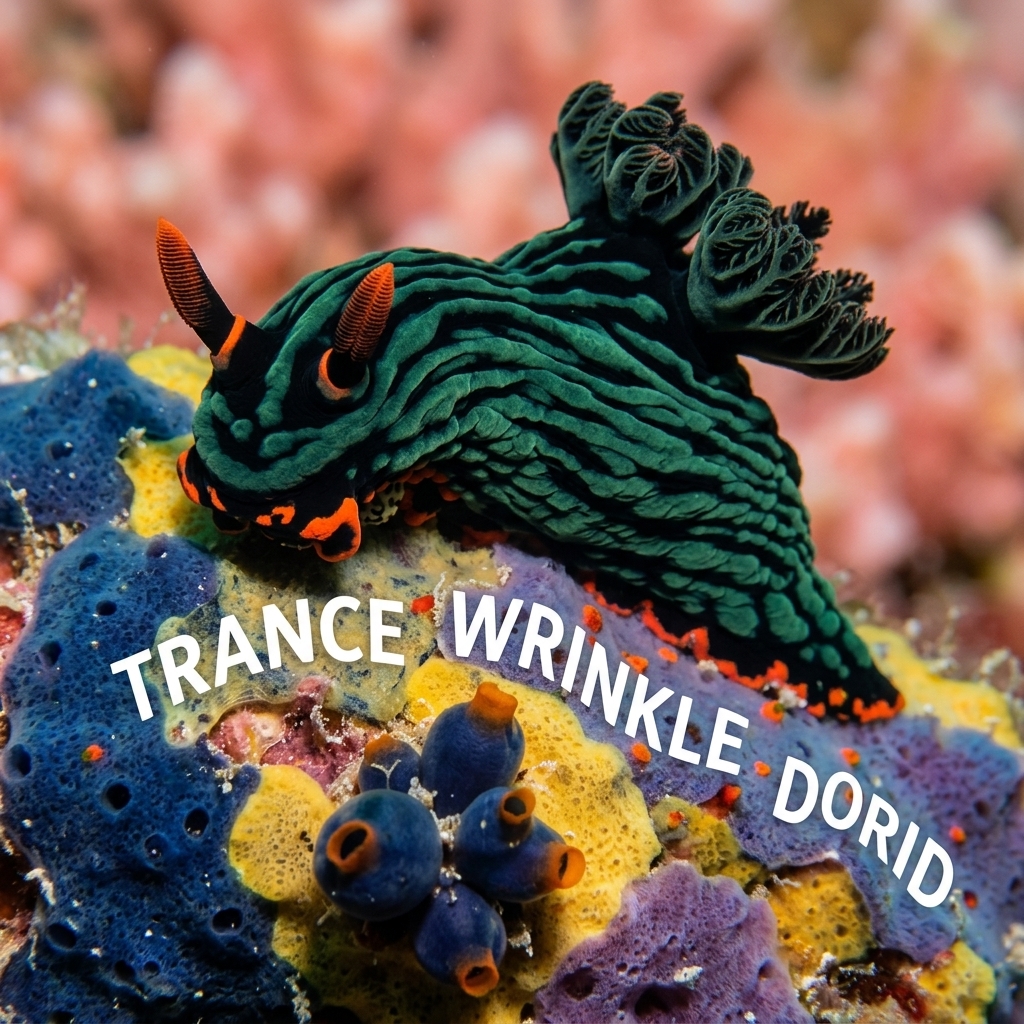
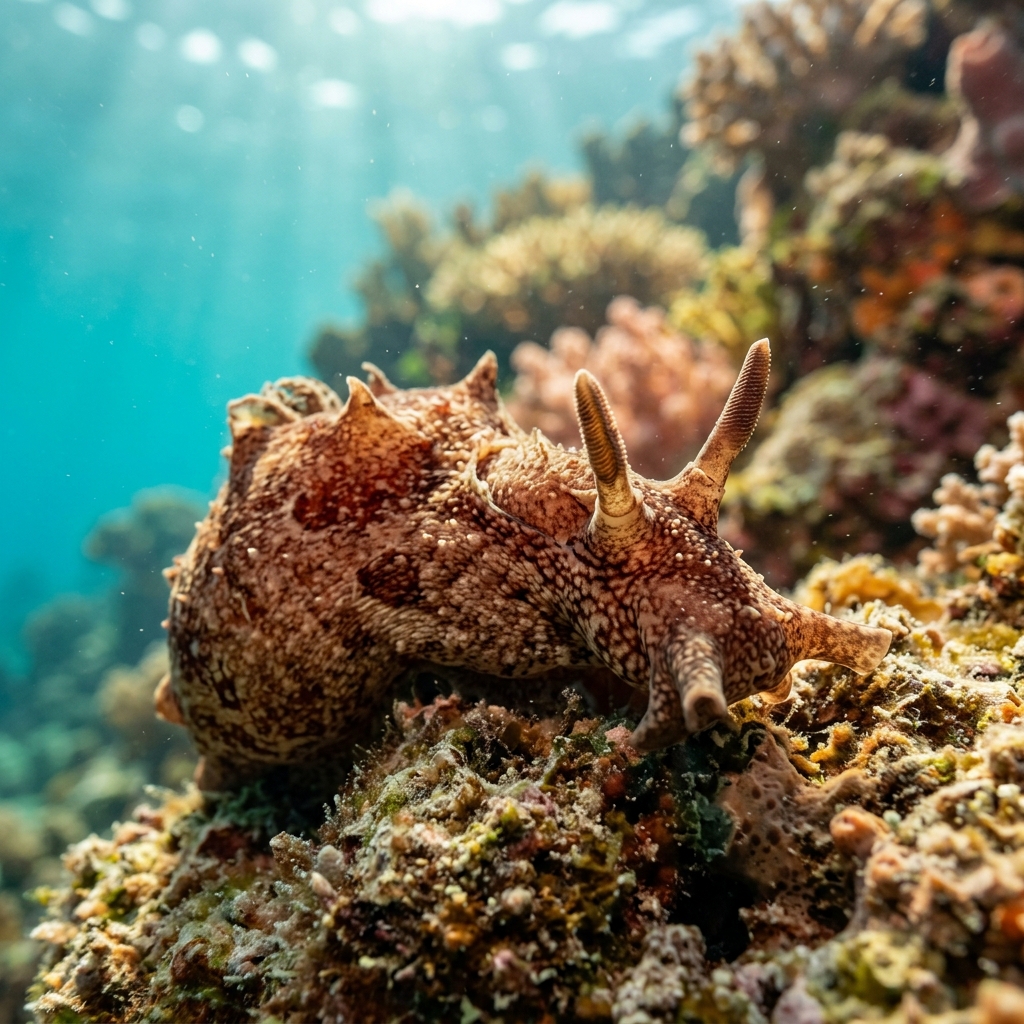
Reef neighbours a diver could mistake it for. Use the identification notes above to tell them apart.
Every logged sighting in the data comes from Queensland, Australia, making it the only confirmed region for this species so far. Divers targeting the Great Barrier Reef and nearby Queensland dive sites have the best documented chance of a find, though it is logged as uncommon even there, so treat any sighting as a bonus rather than a guarantee.
Mapping where Filigreed Lightbulb Dorid is logged…
All confirmed sightings so far come from Queensland, Australia, making it the region to target if you want a realistic shot at finding one.
There is no clear season in the data. It has been logged across a wide temperature range from 20 to 29.5C, suggesting it can be spotted year-round on Queensland reefs.
Look for a small, pale to translucent nudibranch with lacy, frilled mantle edges and orange-tipped rhinophores and gills. It moves slowly over rubble and rock, so a slow scan with a torch is the best way to spot one.
No. It poses no danger to divers and can be observed and photographed safely without any need for caution.
Its frilled mantle edges likely serve double duty for breathing and chemical defence, a common strategy among dorid nudibranchs that absorb toxins from the sponges they graze on.
Site and sighting data is aggregated from diver logs, iNaturalist and GBIF. For taxonomy and conservation status:
Light-spotted Aegires
3,168 sites