Chrysiptera taupou
Bright orange-and-blue damselfish common on reefs around Nouméa and Viti Levu, active year-round in 25-29C water.
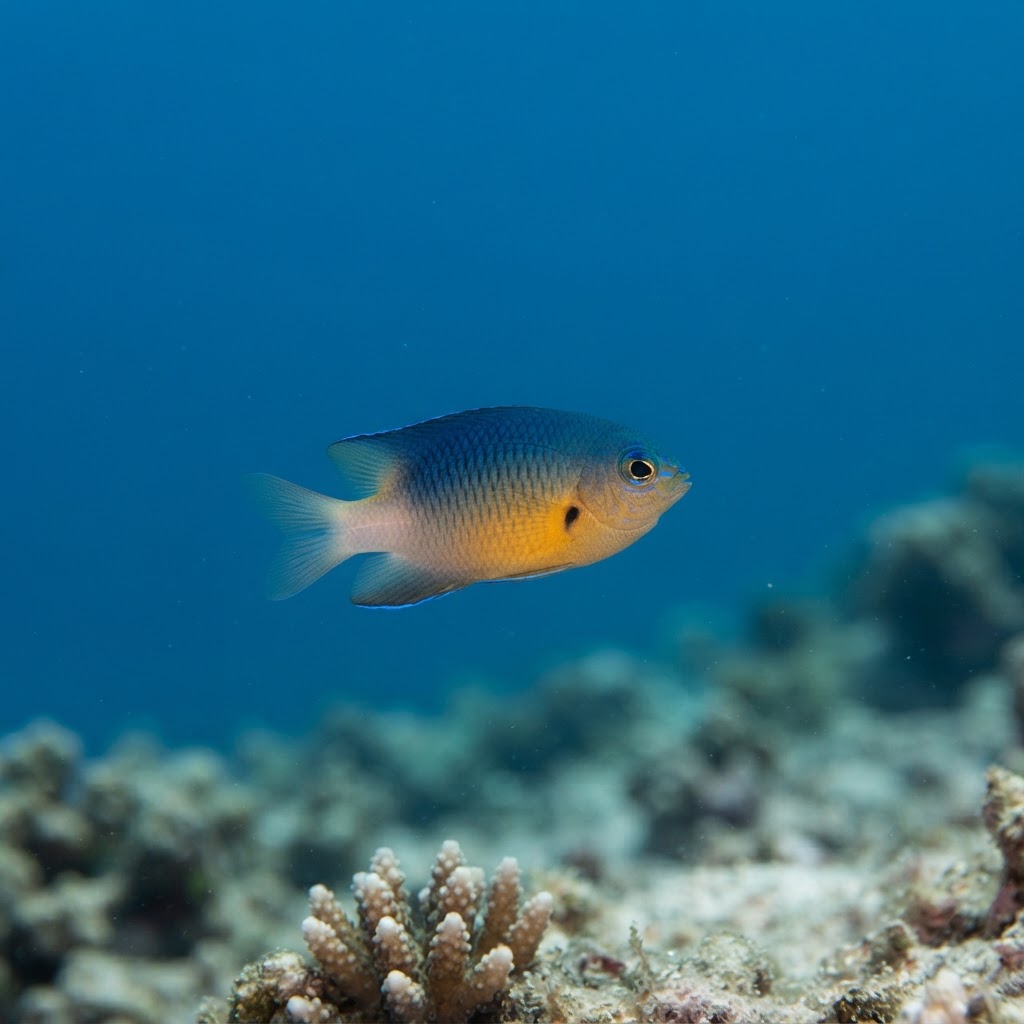
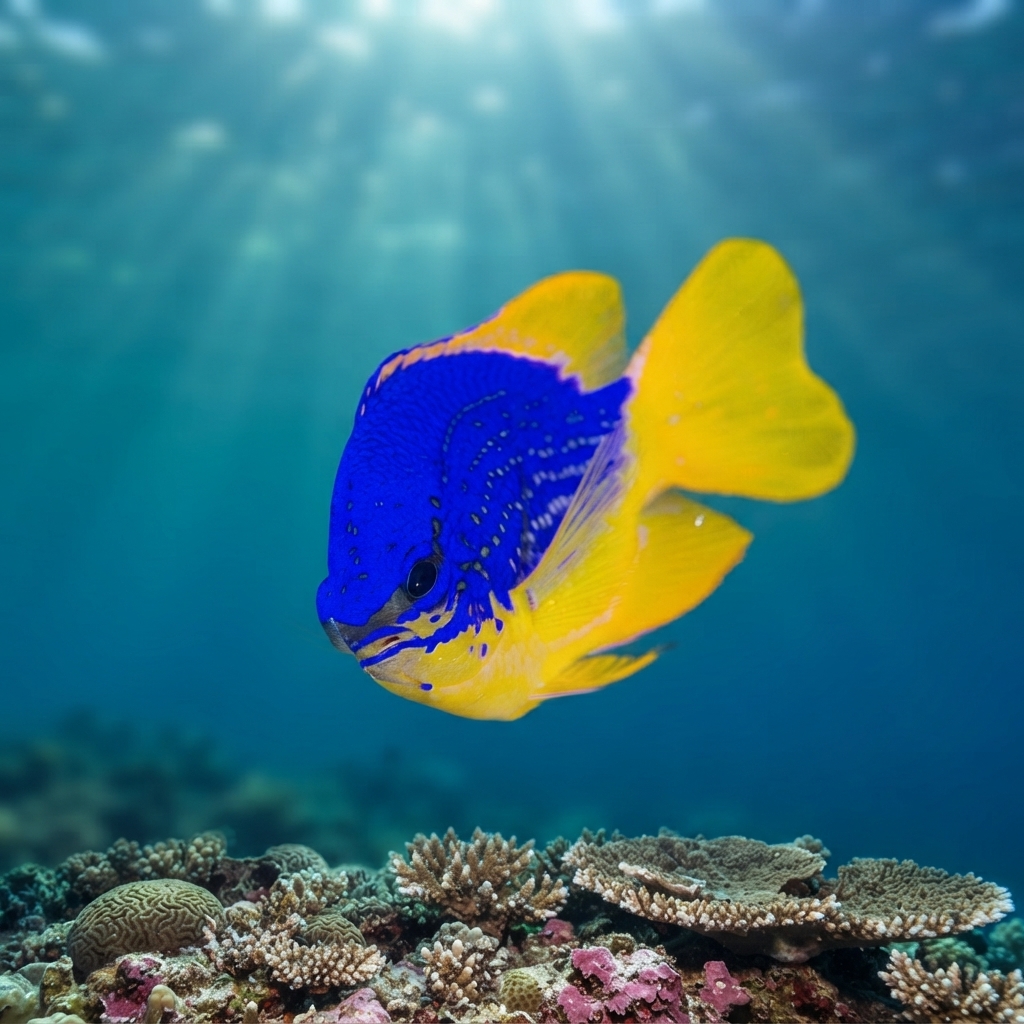
A small, deep-bodied damselfish around 5 cm, with a vivid orange to yellow body and a mask of iridescent blue spots scattered across the head and upper back. Look for a dark blotch or bar near the base of the tail, a useful marker when the rest of the body colour washes out under ambient light. It holds a stubby, compressed shape typical of damselfish, more oval than streamlined.
Expect to find it hovering close to a favourite bit of coral rubble or branching coral in the 0 to 10 m range, darting out to feed on plankton and algae before ducking straight back to cover. It holds its ground more than it flees, often flaring at passing divers rather than bolting, a classic damselfish response to anything that gets too close to its patch. Most sightings come from shallow reef flats and lagoon-edge reef where light and coral cover are both good.
Like most damselfish it is territorial out of proportion to its size, and will chase off fish many times its own length if they stray too near its patch of coral.
No clear season shows up in the sighting data, and with a comfortable range of 25.2 to 29.4C it stays active on shallow reefs all year, so any month works for a dive trip built around it.
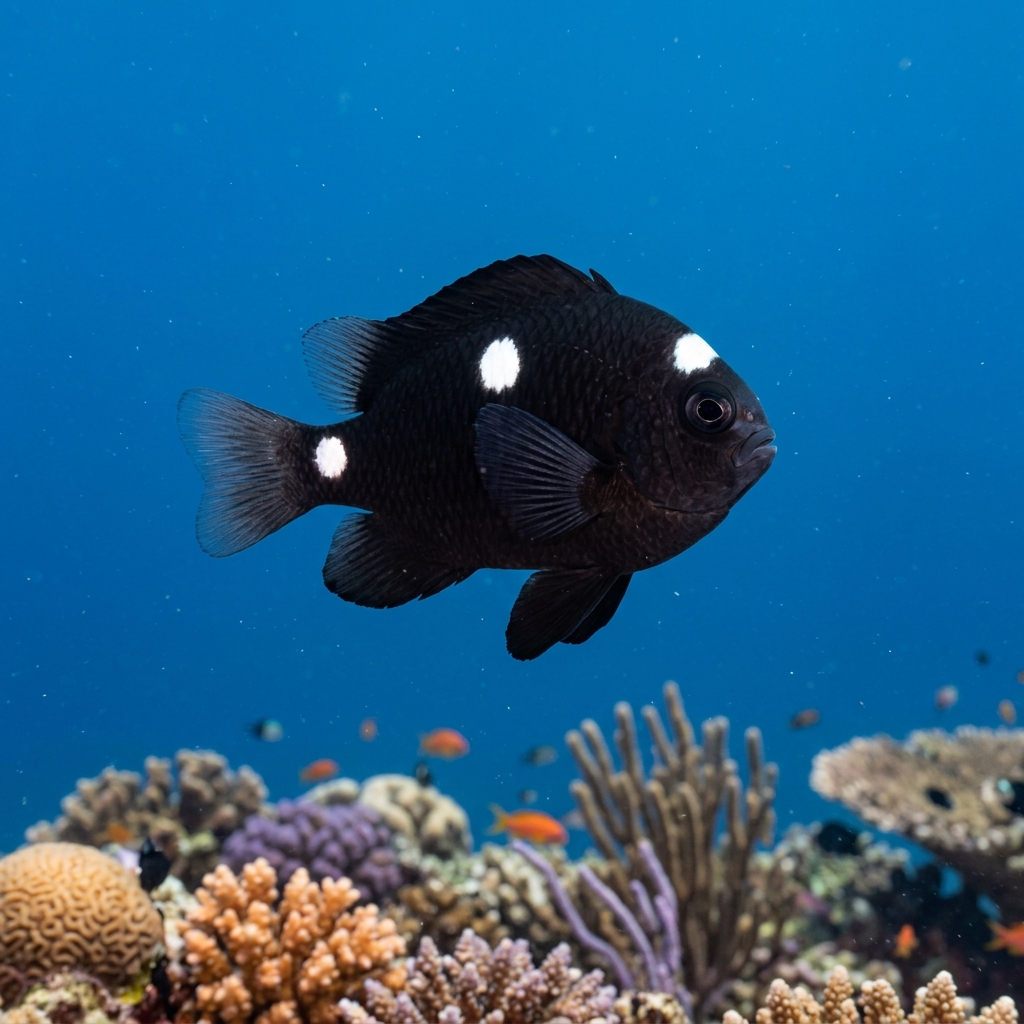
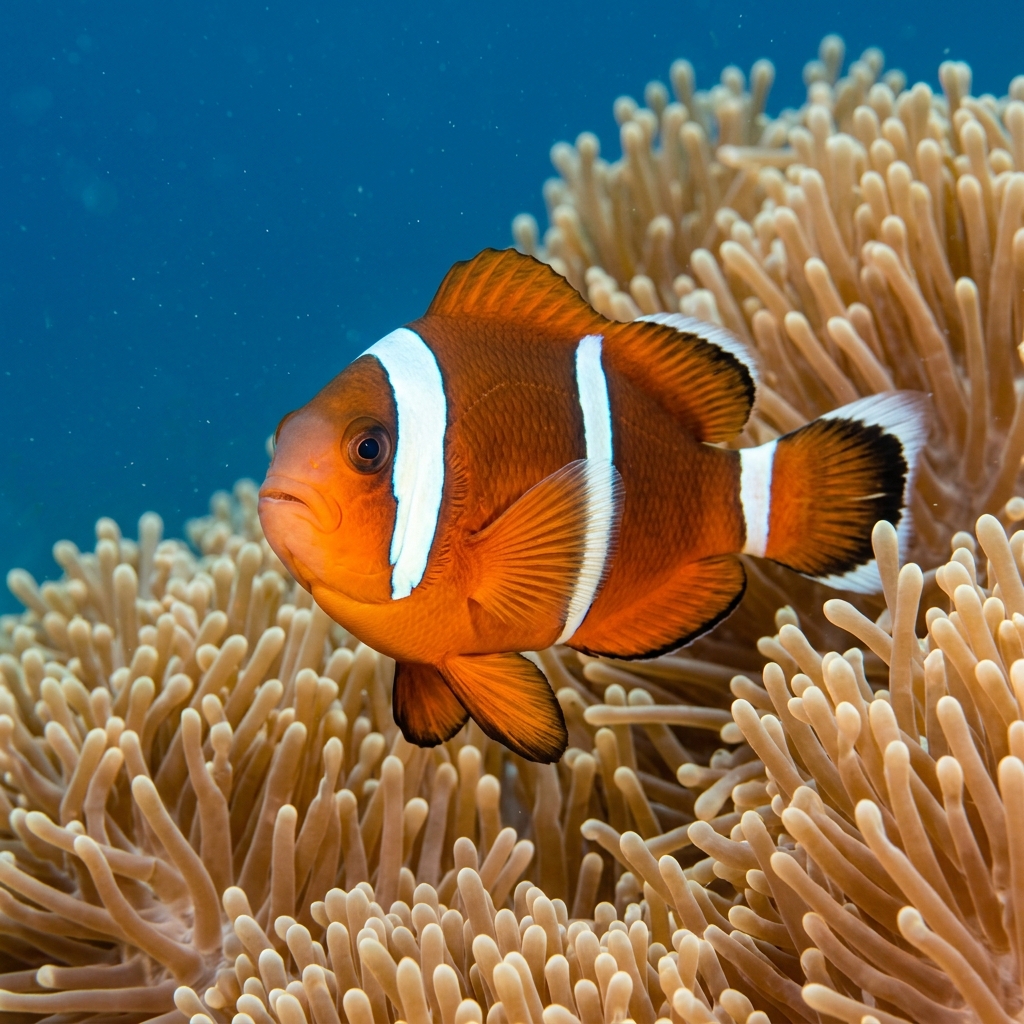
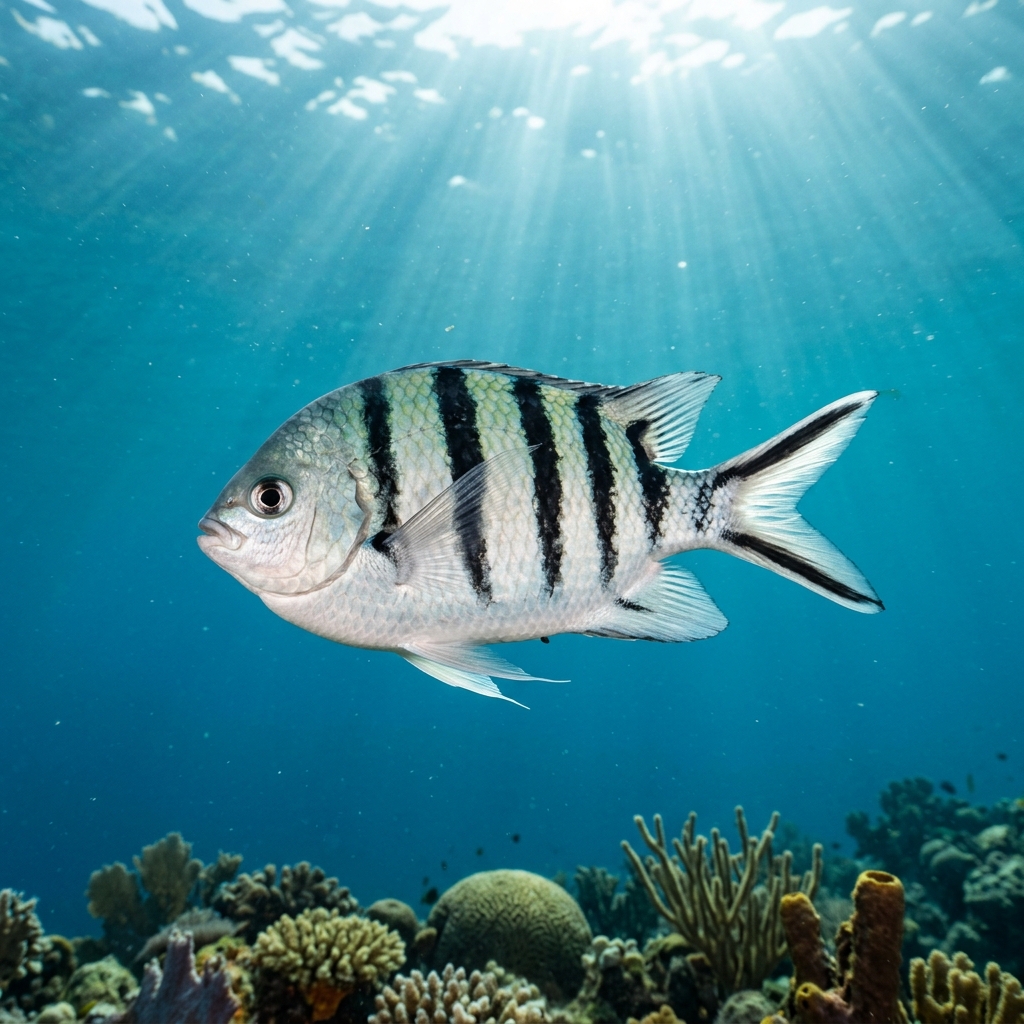
Reef neighbours a diver could mistake it for. Use the identification notes above to tell them apart.
Most reliably logged on reefs around Viti Levu and the Mamanuca Islands in Fiji, and around Nouméa and Île des Pins in New Caledonia. Also a regular find on Efate in Vanuatu and around Alofi in Niue, making it a fixture across shallow reef flats and lagoon edges through the western South Pacific.
Mapping where Fiji Damselfish is logged…
It turns up widely on shallow reefs around Viti Levu and the Mamanuca Islands in Fiji, around Nouméa in New Caledonia, on Efate in Vanuatu, and around Alofi in Niue.
There is no strong seasonal pattern in the sightings, and the water stays in a comfortable 25 to 29C range year-round on these reefs, so it is a fair bet on any month's trip.
Look for a small orange fish, around 5 cm, with scattered iridescent blue spots on the head and a dark patch near the tail base. It tends to sit close to a favoured piece of coral rather than roam open water.
They stay small, topping out around 5 cm, which is typical for damselfish in the Chrysiptera genus.
No. They are harmless to divers, though a resident fish may dart aggressively at your mask or hand if you get too close to its patch of coral.
They defend a small patch of reef with surprising intensity for their size, chasing off much larger fish that wander too close, a behaviour typical of territorial damselfish.
Site and sighting data is aggregated from diver logs, iNaturalist and GBIF. For taxonomy and conservation status:
Dascyllus
3,697 sites