Felimida macfarlandi
Spot Macfarland's Chromodorid on California's Pacific Coast in cool 14-21°C water. Best sightings run January to May. ID tips inside.
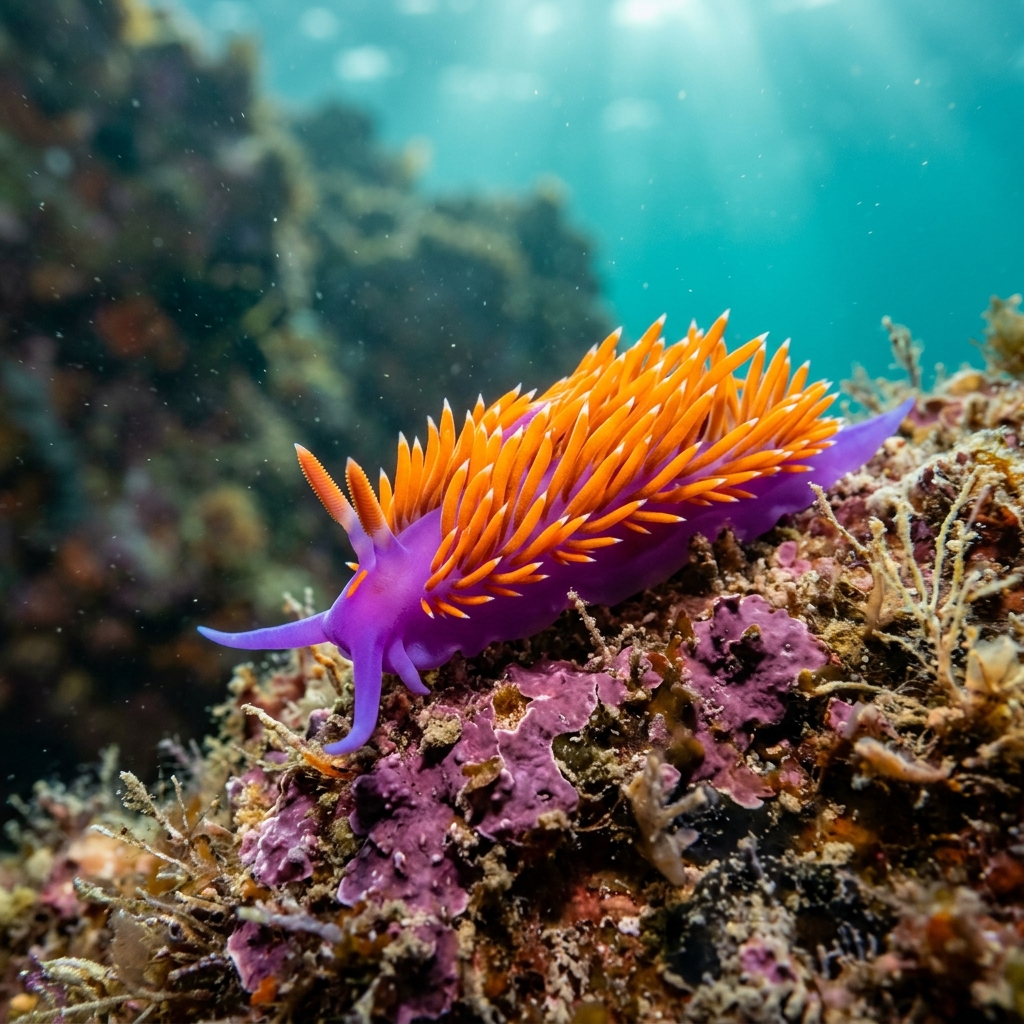
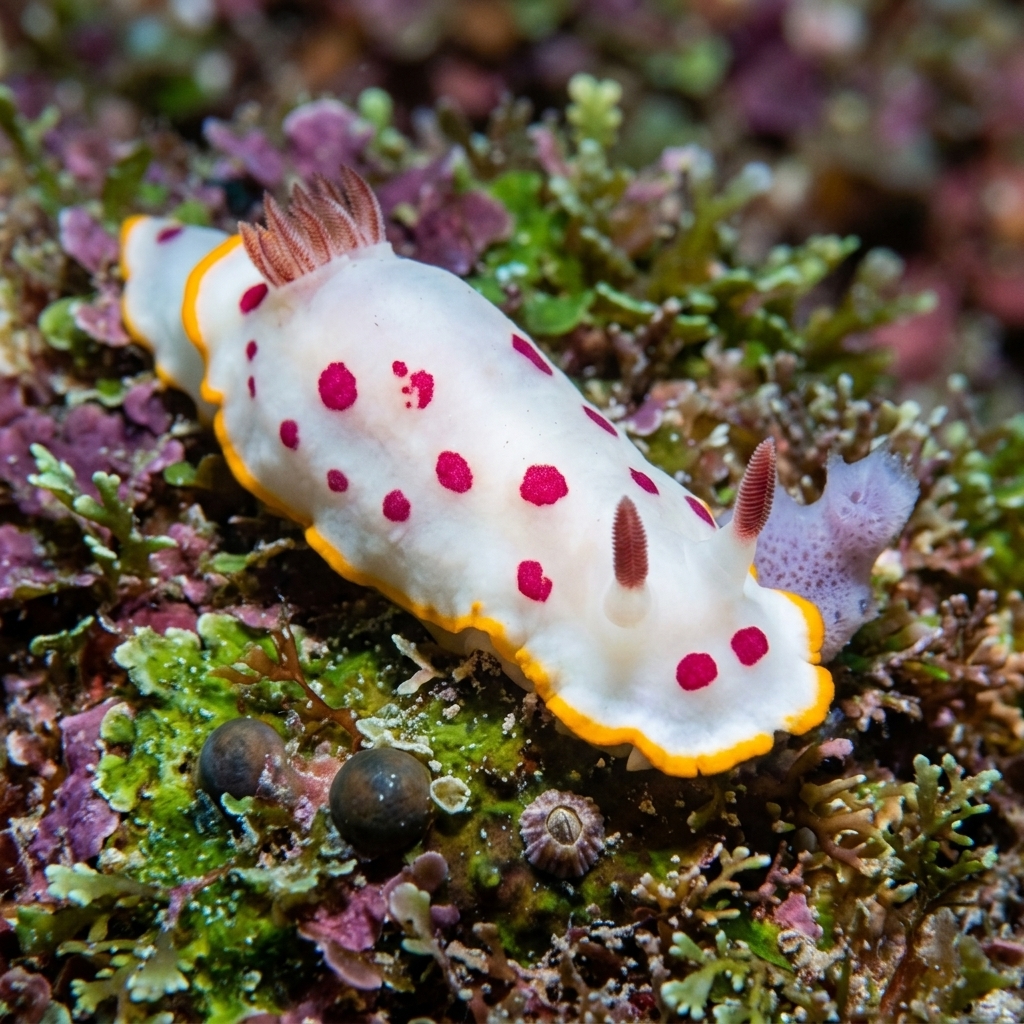
A small, strikingly patterned nudibranch with a white or pale body edged in a bold orange-red marginal band and a central purple or violet patch running along the notum (the top surface of the body). The gills and rhinophores (the paired sensory stalks at the head) are typically deep purple or reddish, making them stand out against the pale ground colour. Found in cool temperate water, it tends to sit in the open on rocky reef surfaces, which makes the colour contrast pop even on low-visibility dives.
You will typically find one crawling slowly across encrusting organisms on rocky reef walls or boulders, grazing on sponges or bryozoans. It shows little concern about diver presence and will continue moving steadily if you approach calmly. Like most nudibranchs, it is most rewarding to look for during a slow, low-profile dive at depth where surge is minimal.
Like other chromodorids, Macfarland's Chromodorid sequesters chemical compounds from the sponges it feeds on and uses them as a chemical defence, making its bright colours a real warning signal to predators rather than mere decoration.
Sightings concentrate between January and May in Northern Hemisphere waters, which aligns with the cooler seasonal temperatures in the 14-21°C range that this species favours.
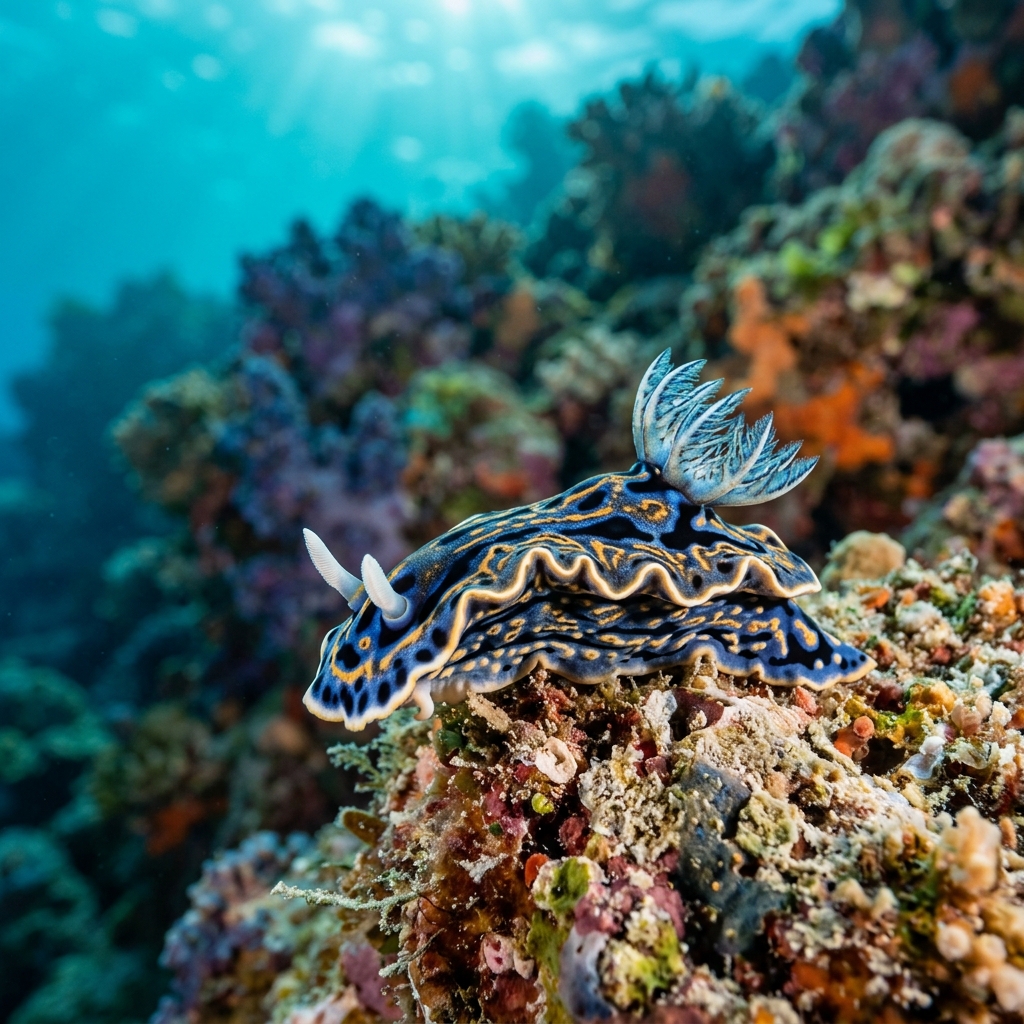
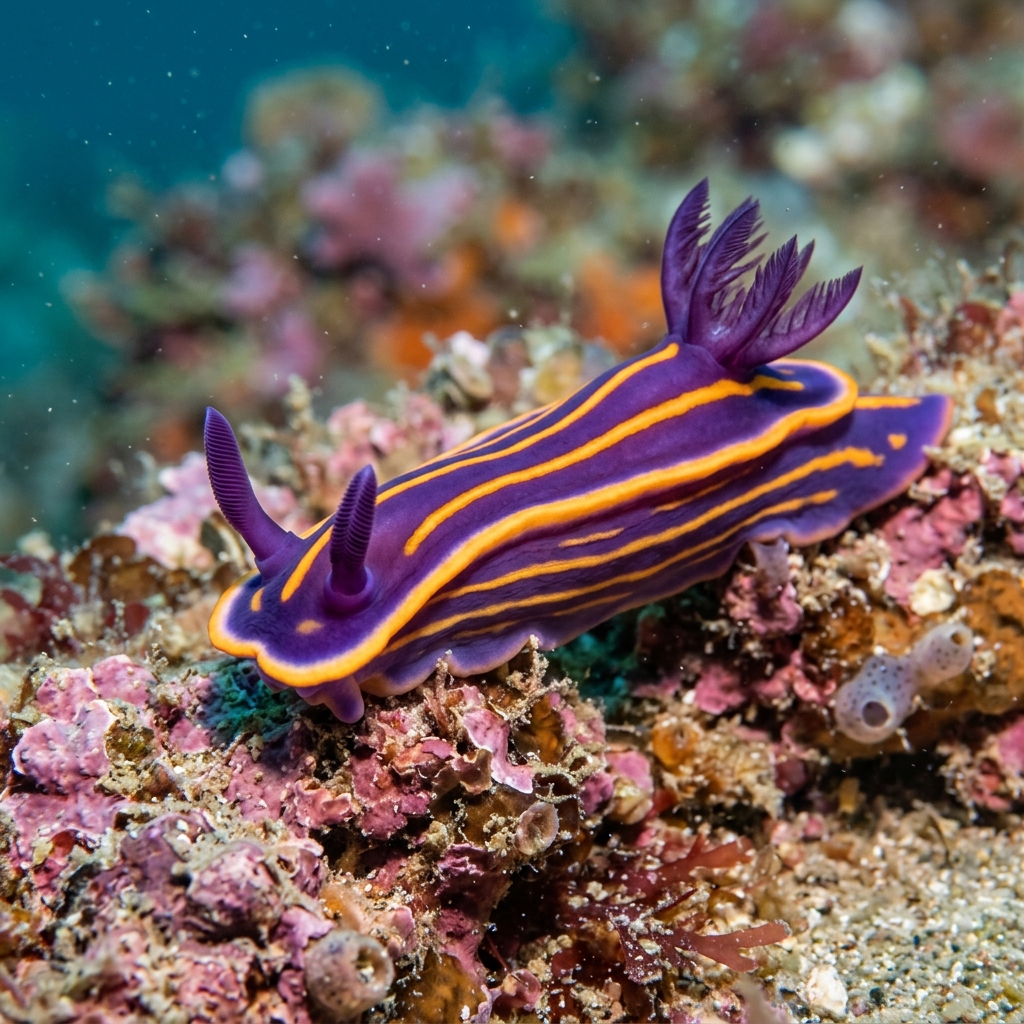
Reef neighbours a diver could mistake it for. Use the identification notes above to tell them apart.
All logged sightings come from the United States Pacific Coast, making this a firmly North American temperate species. Dive sites stretch along the California and Pacific seaboard, with the vast majority of records concentrated within that single region. If you are diving rocky reefs anywhere along the US Pacific Coast, this is the nudibranch to search for.
Mapping where Macfarland's Chromodorid is logged…
All recorded sightings are from the US Pacific Coast. Rocky reef dives along the California coastline give you the best realistic chance of an encounter. It has not been reliably logged anywhere outside the United States.
Sightings peak between January and May on the Pacific Coast. This cool-water species is most active during the colder months when water temperatures sit in the 14-21°C range.
Look for a pale-bodied nudibranch with a vivid orange-red border around the notum and a central violet or purple patch. The gills and rhinophores are typically deep purple or reddish. This colour combination, combined with its temperate Pacific Coast location, separates it from most other nudibranchs in the area.
It is classed as uncommon to rare across all logged sites on the Pacific Coast. You are unlikely to see one on every dive, so slow methodical searches on rocky reef walls, rather than open-water swimming, improve your odds significantly.
Site and sighting data is aggregated from diver logs, iNaturalist and GBIF. For taxonomy and conservation status:
Blue Dragon
3,163 sites