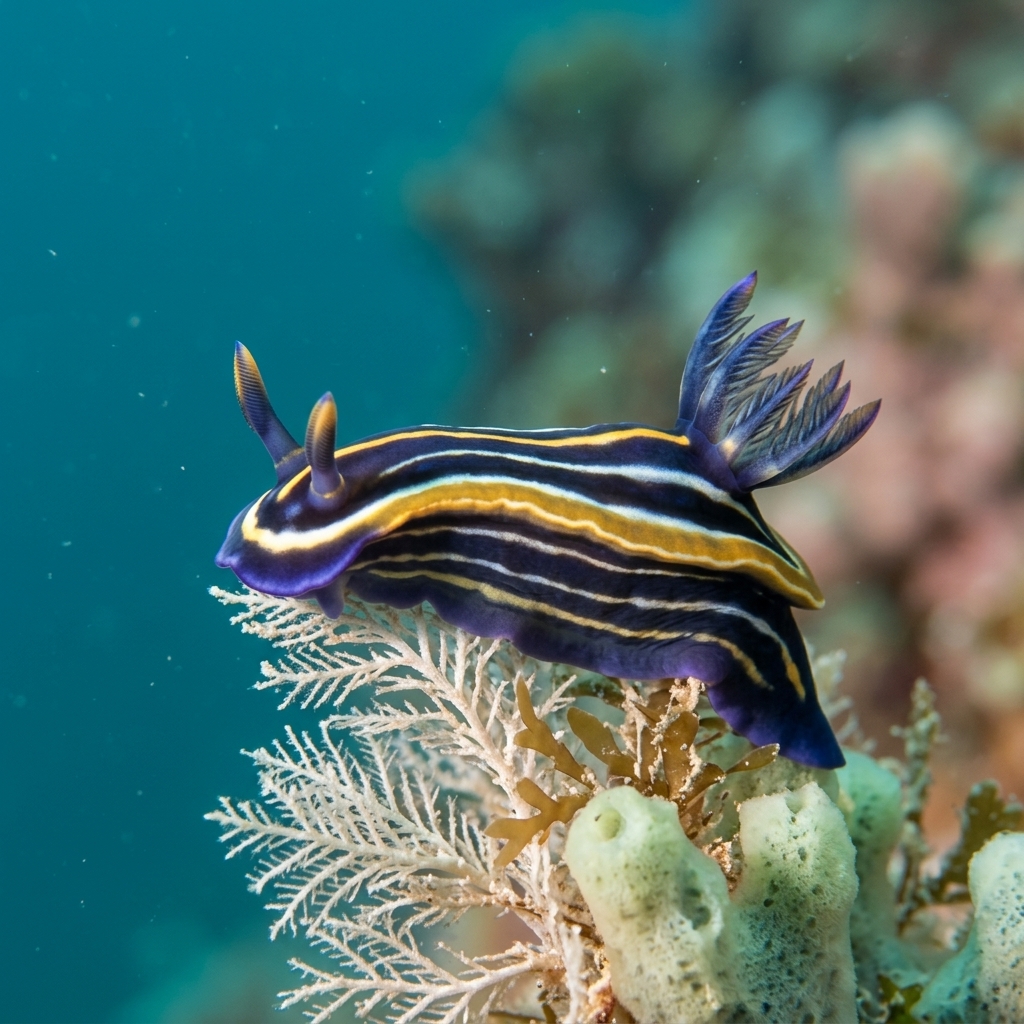
Felimare ruthae
Spot the Gold Line Sea Goddess across Caribbean reefs from Guadeloupe to Grand Cayman. Sightings peak Apr, Sep in warm waters of 25-29 °C.
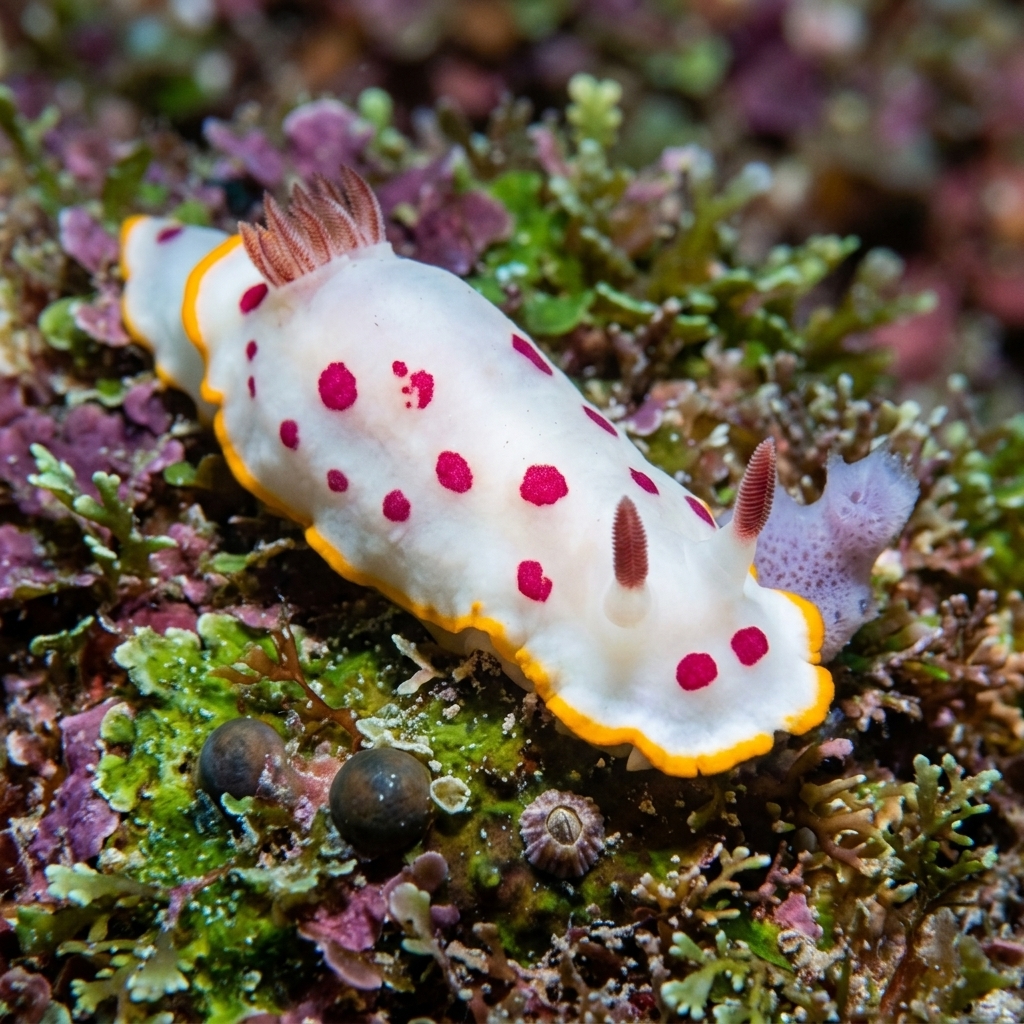
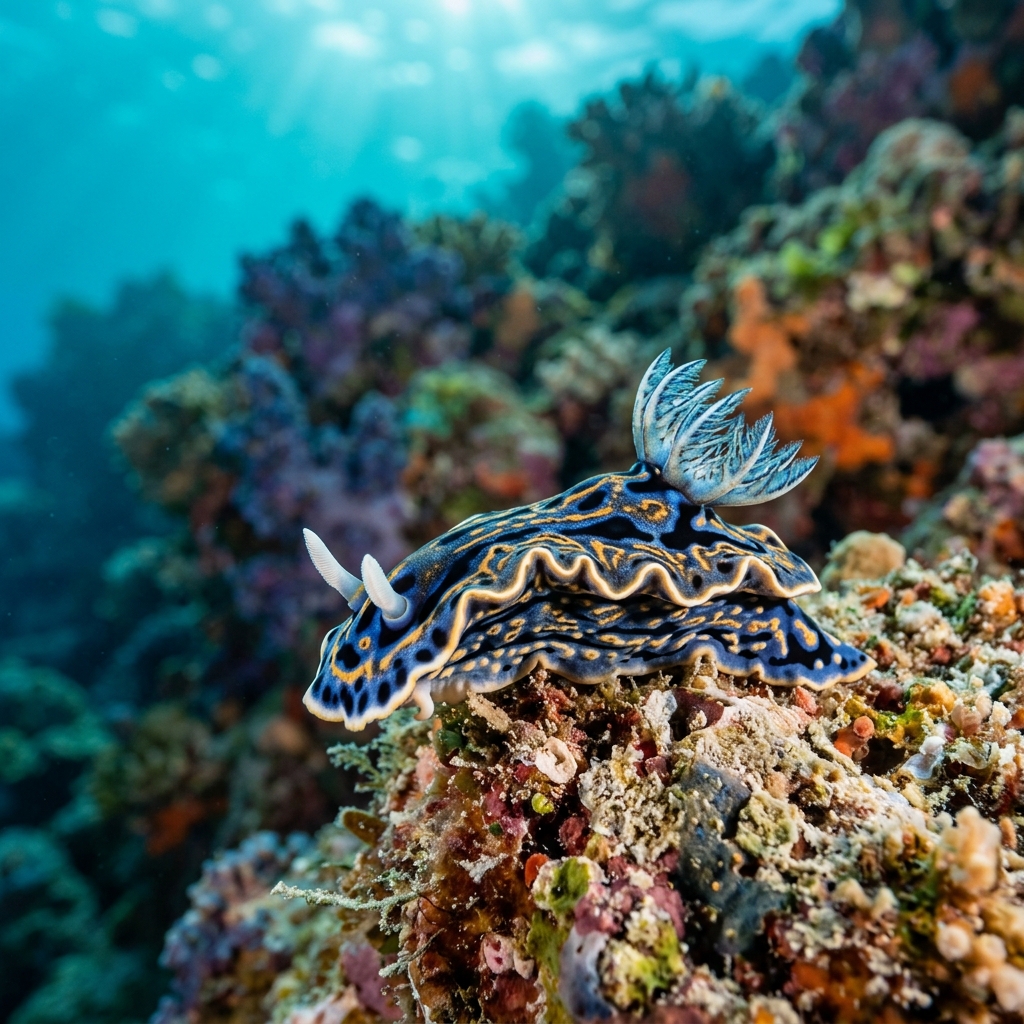
Look for a small chromodorid nudibranch (a shell-less mollusc with exposed gill plumes on its back) with a deep blue or violet body edged by a bold gold or yellow marginal line running the full length of the mantle. The gill plumes and rhinophores (the sensory horns at the head) are typically tipped with contrasting colour, which helps separate it from plain blue nudibranchs at a glance. Underwater it looks compact and slow-moving, creeping across encrusting sponges or coral rubble.
Most encounters involve a single individual moving slowly across sponge or rubble substrate, grazing as it goes. Like other chromodorids, it is unhurried and largely ignores divers, making it relatively easy to observe if you are patient and stay close to the bottom. It is typically a reef-slope and wall animal, found where encrusting sponges are plentiful.
The gold marginal line is not just decoration: chromodorids in this family sequester defensive chemicals from the sponges they eat and advertise that toxicity through bright warning colouration, so a predator that ignores those golden edges tends to regret it.
Based on sighting records, April through September is the most productive window across the Caribbean. Water temperatures in the 25-29 °C range align with this period, and the species is logged too infrequently outside these months to suggest a reliable year-round pattern.
Reef neighbours a diver could mistake it for. Use the identification notes above to tell them apart.
The Gold Line Sea Goddess is most consistently logged across the eastern Caribbean, with Guadeloupe holding the greatest spread of recorded sites across both Basse-Terre and Grande-Terre. Grand Cayman is the single most concentrated region in the data, followed by Grenada Island, the Saba Marine Park, and the Man of War Shoal Marine Park in Sint Maarten. Colombia's Caribbean Coast and the islands of Saint Martin and Anguilla round out the known range.
Mapping where Gold Line Sea Goddess is logged…
The Gold Line Sea Goddess is a Caribbean specialist. Guadeloupe, Grand Cayman, Grenada, Sint Maarten, and Saba are the most reliably reported locations in the data, with additional sightings from Saint Martin, Colombia's Caribbean Coast, and Anguilla.
Sightings concentrate between April and September across the Caribbean. The species is recorded in water temperatures of 25-29 °C, which corresponds with the warmer months in its range. Outside this window, encounters are much less frequently reported.
Key in on the vivid gold or yellow line tracing the full outer edge of the mantle against a deep blue or violet body. The contrasting-tipped gill plumes on the back and the small, compact shape help confirm the ID. If the marginal line is white or lacks gold tones, consider a similar chromodorid.
Across its range it is most often logged as uncommon, and at many sites divers record it as rare. Only a handful of sites report it as common. Patient searching close to the substrate, especially over encrusting sponges, gives the best chance of a sighting.
No. Gold Line Sea Goddess pose no risk to divers. Like most chromodorids they carry chemical defences derived from their sponge diet, but these are only relevant to would-be predators. Observe without touching and you will have no issues.
Site and sighting data is aggregated from diver logs, iNaturalist and GBIF. For taxonomy and conservation status:
Blue Dragon
3,163 sites