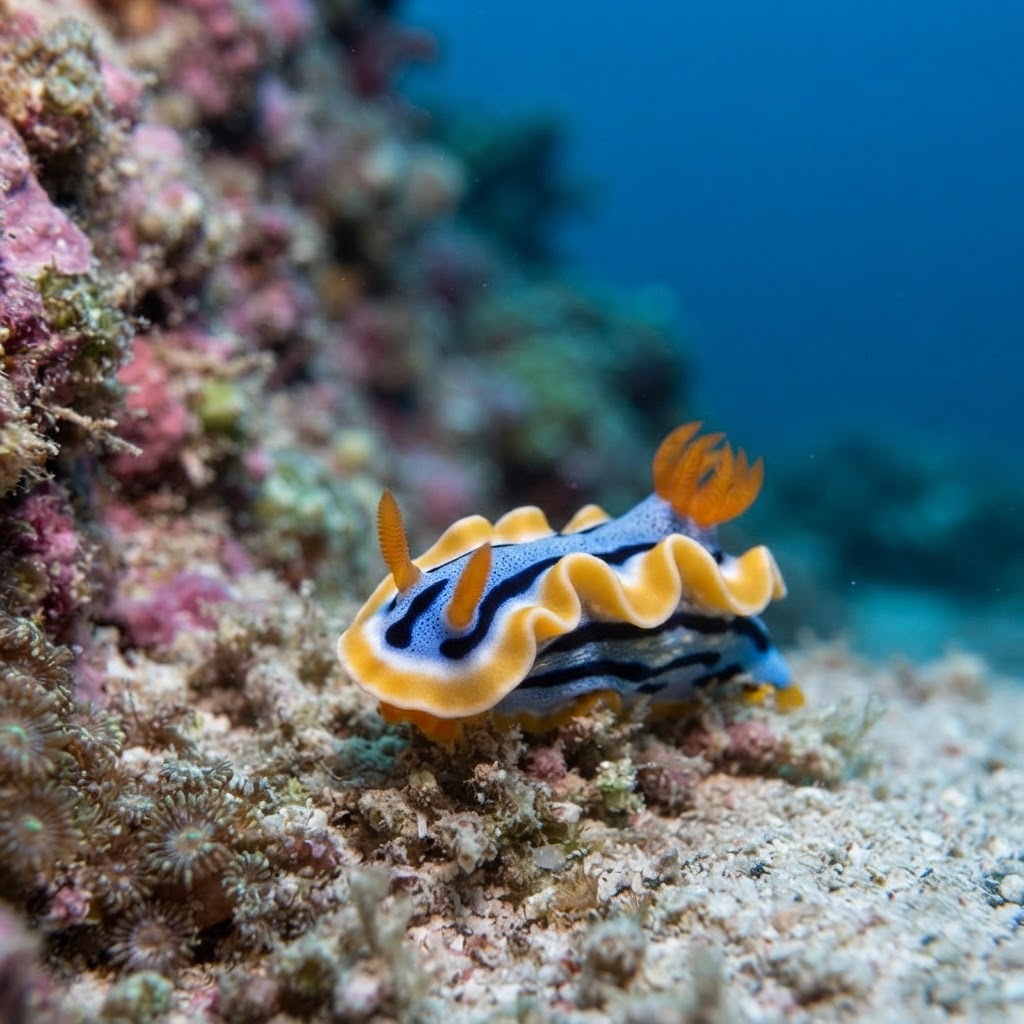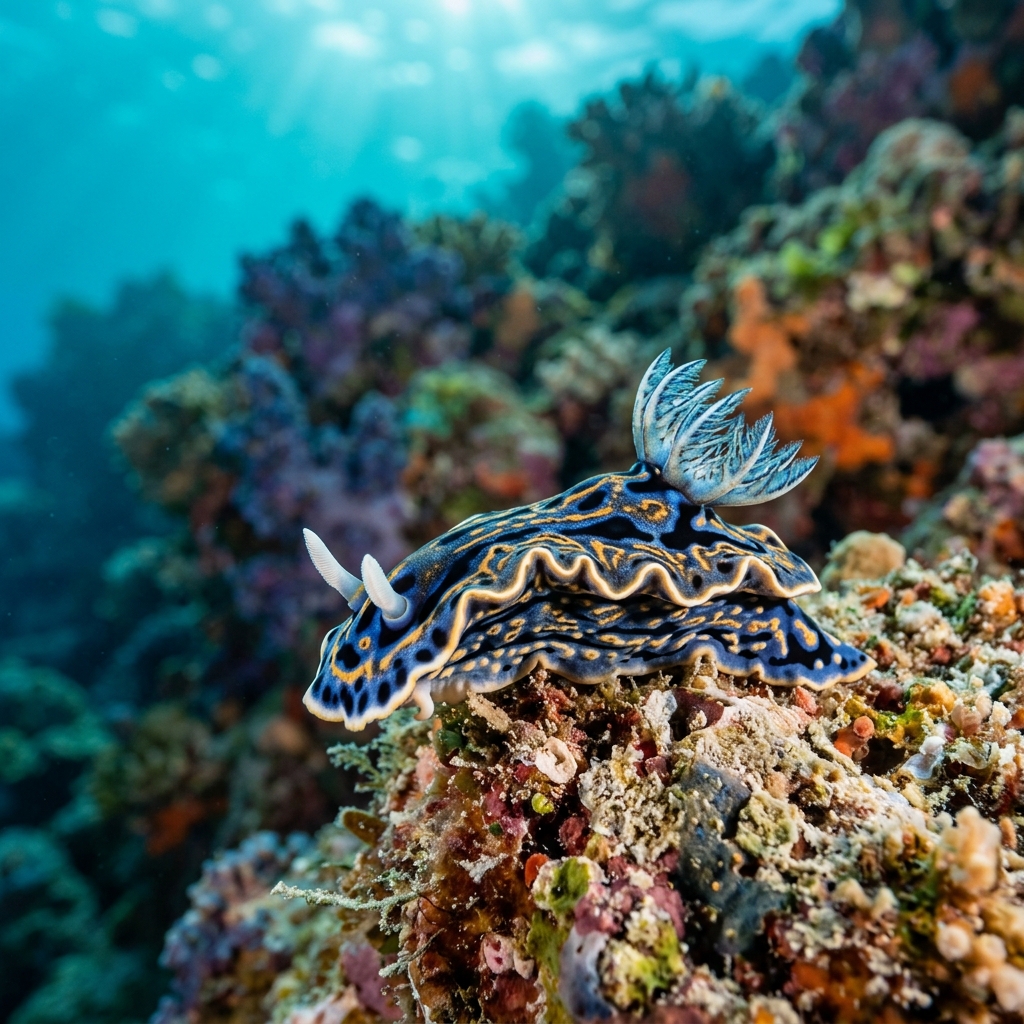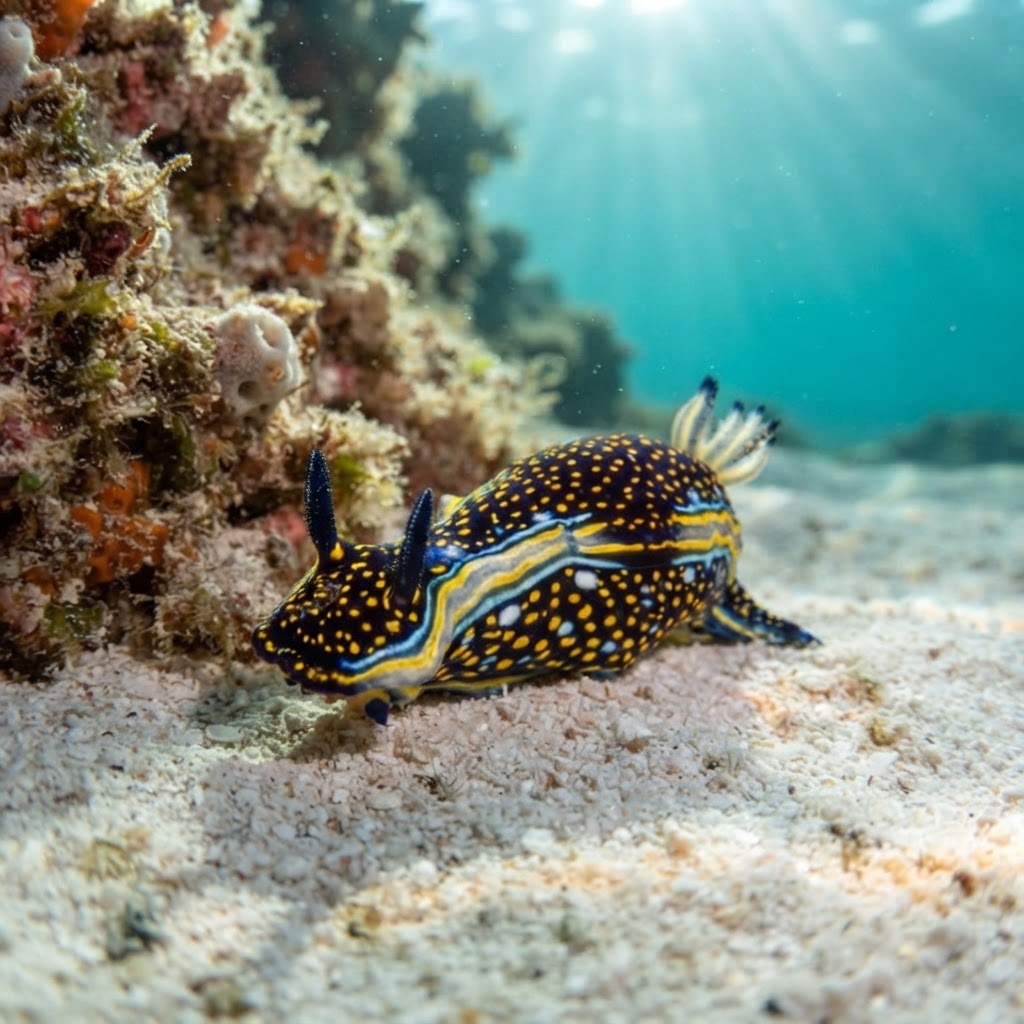
Felimare agassizii
Blue-and-orange nudibranch found on reefs from Baja California to Costa Rica's Central Pacific, in 23-29C water, year-round.
Look for a deep blue to purple body with a scatter of orange-yellow spots or patches running down the back, and a matching orange-tipped rhinophore and gill cluster at the rear. Body length stays small, typically a few centimetres, so it is often spotted by divers scanning rock and rubble slopes closely rather than swimming past. The bright contrast between the dark body and the orange gill tuft is the quickest ID cue underwater.
Found crawling slowly over rock and rubble bottoms, usually tucked into crevices or moving across algae-covered surfaces where it grazes. It shows no reaction to divers beyond continuing its slow crawl, making it an easy macro subject once spotted, and most sightings come from divers running a torch or close scan along the substrate rather than mid-water. Logged as uncommon to rare at most sites, so finding one usually takes a deliberate slow, close look rather than a casual pass.
Like other chromodorid nudibranchs, it likely feeds on specific sponges and stores or repurposes their chemical defences in its own tissue, which is part of why its colours stay so bold despite having no shell to hide in.
No clear seasonal pattern shows up in the sighting data, and its comfortable water-temperature range of roughly 23 to 29C spans what these reefs offer most of the year, so it is a fair bet on any dive in Baja California or Costa Rica's Central Pacific regardless of month.
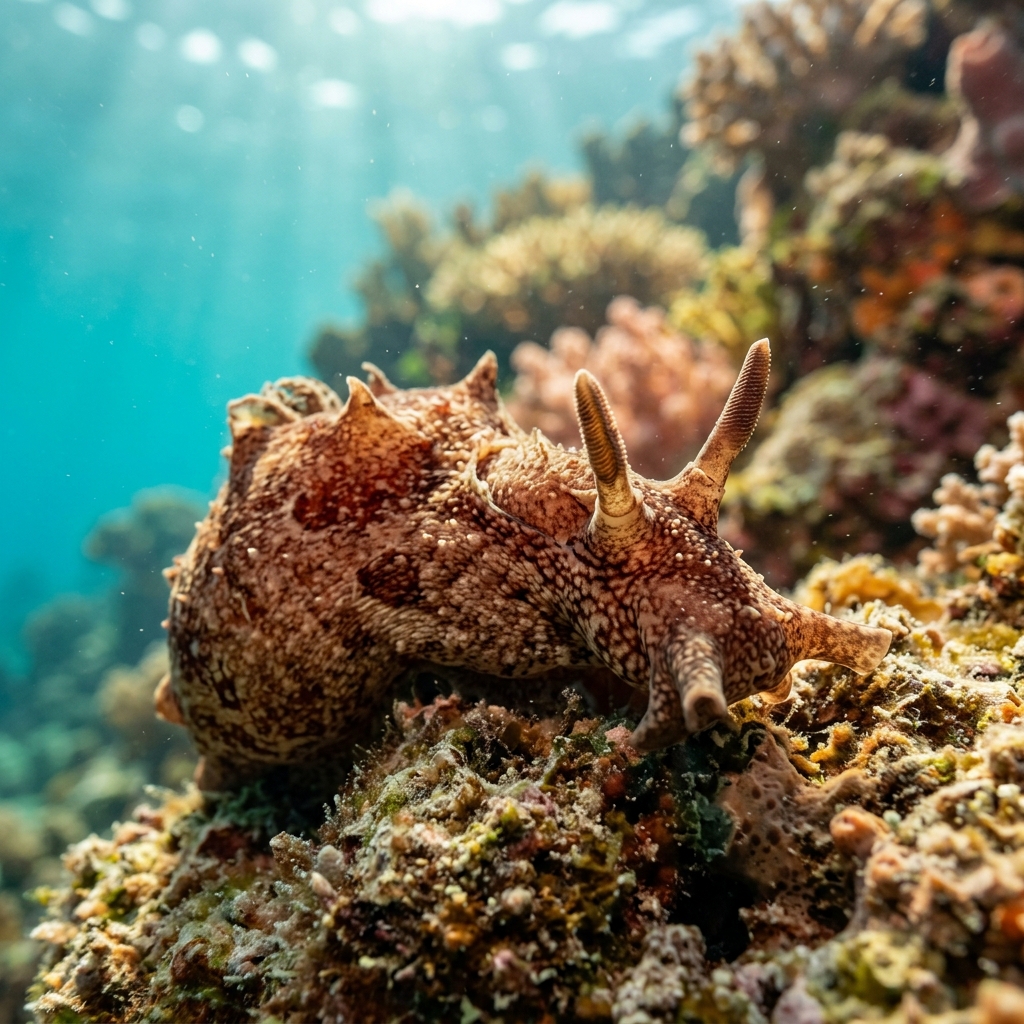
Reef neighbours a diver could mistake it for. Use the identification notes above to tell them apart.
Most reliably logged in Mexico, especially around Baja California and the Pacific Coast, with a strong secondary population on Costa Rica's Central Pacific coast. These rocky reef and reef-rubble sites in the eastern Pacific are where nearly all recorded sightings cluster, so divers targeting this species should plan trips to those two countries rather than elsewhere.
Mapping where Agassiz's Chromodorid is logged…
It shows up most consistently in Mexico, particularly Baja California and the Pacific Coast, with another solid population along Costa Rica's Central Pacific coast. Outside these two countries it has not been well documented by divers.
There is no strong seasonal signal in sighting records, and its preferred water temperature of roughly 23 to 29C is typical for these regions most of the year, so it can turn up on any dive trip to Baja California or Costa Rica.
Check for a small, deep blue to purple body with scattered orange-yellow spots and an orange-tipped gill cluster at the back end. It moves slowly across rock and rubble and rarely reaches more than a few centimetres long.
Exact size data is not documented, but like most chromodorid nudibranchs it stays small, generally in the few-centimetre range, making it a species divers need to look closely for rather than spot from a distance.
No. It has no known risk to divers and simply crawls across the reef surface, safe to observe and photograph up close without any special precautions.
Like related chromodorid nudibranchs, it probably feeds on chemically defended sponges and repurposes those compounds for its own defence, which may explain why it can afford such bold colouring with no shell for protection.
Site and sighting data is aggregated from diver logs, iNaturalist and GBIF. For taxonomy and conservation status:
Light-spotted Aegires
3,168 sites